About Rainbow's End
Rainbow's End is a top dive site located in the Somosomo Strait, a channel separating Taveuni and Vanua Levu islands, known as the 'Soft Coral Capital of the World'. The site is celebrated for its extensive and colorful coral gardens, thriving due to the nutrient-rich currents flowing through the strait. Depths at Rainbow's End range from 10 to 30 meters, accommodating various diving experiences. The topography is characterized by stunning coral formations and potential for diverse marine encounters throughout the dive. This location is particularly famous for its spectacular coral ecosystems, making it a focal point for divers visiting Taveuni Island. While vibrant soft corals are a year-round attraction, the site also hosts schools of barracuda and frequent sightings of Napoleon wrasse, especially during morning dives. The constant tidal flow in the Somosomo Strait ensures a continuous supply of food for the thriving marine ecosystem, leading to remarkable biodiversity. Divers typically visit Rainbow's End during morning dives, especially on an incoming tide, to experience optimal conditions and the most vivid coral displays. It is a favored spot for capturing the quintessential beauty of Fijian reefs.
Highlights
Expansive coral gardensVibrant soft coral displaysSomosomo Strait biodiversityBarracuda schoolsNapoleon wrasse sightingsMorning dive conditions
Season calendar
Best months to dive here
Jan
Feb
Mar
Apr
May
Jun
Jul
Aug
Sep
Oct
Nov
Dec
Excellent
Good
Off-Season
May – Oct
Dry season with best visibility up to 35m. Cooler water brings manta rays. Peak soft coral season.
Apr & Nov
Transition months with good conditions. Fewer tourists and competitive liveaboard rates.
Dec – Mar
Wet season with higher rainfall and reduced visibility. Warmer water. Cyclone season possible.
Dive site facts: Rainbow's End
- Depth
- 10–30 m
- Current
- Moderate to strong (tidal dependent)
- Visibility
- 15–30 m
- Water temperature
- 24–30°C
- Entry
- Boat
- Level
- Intermediate
- Dive type
- Reef, coral garden, drift
- Region / port
- Taveuni Island, Somosomo Strait
- Coordinates
- -17.3888, 115.711
Conditions & Currents
Currents at Rainbow's End are influenced by the Somosomo Strait's tidal flows, which funnel water between Vanua Levu and Taveuni. An incoming tide is considered ideal for experiencing the most vibrant soft coral displays as corals expand to feed. While these currents supply vital nutrients and create stunning visual effects, divers should be prepared for moderate to potentially strong flows, particularly during peak tidal changes. This means proficient buoyancy control and potentially drift diving techniques may be employed. Visibility can range from 15 to 30 meters, with the clearest conditions typically observed in cooler, drier months. Water temperatures vary, usually between 24-26°C in winter and 27-30°C in summer, so wetsuit choice should be appropriate for warmth and comfort given potential currents.
Marine life & sighting chances
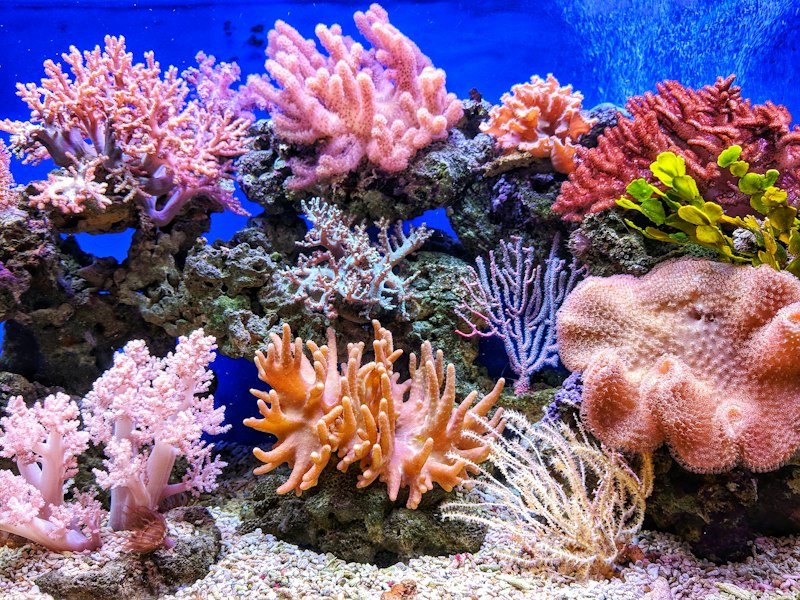
Soft Corals
Year-round · common
Barracuda schools
Year-round · occasional
Napoleon wrasse
Year-round (mornings) · occasional
Reef sharks
Year-round · occasional
Hard corals
Year-round · common
Anemonefish
Year-round · common
Manta rays
May-October · occasional
Whitetip reef sharks
Year-round · occasionalGrey reef sharks
Year-round · occasional
Tuna
Year-round · occasionalDive profile & how the dive runs
Dives at Rainbow's End typically commence with a boat descent to explore the vibrant coral gardens, starting around 10-15 meters. The dive profile follows the reef's contours, gradually descending to depths of up to 30 meters to observe the broader coral structures and potential pelagic encounters. Divers navigate through fields of soft corals that bloom with incoming tides, looking for schools of barracuda and Napoleon wrasse. The turn point is determined by air consumption and bottom time, with a gradual ascent along the reef. Safety stops are often conducted on shallower coral shelves or pinnacles, where reef fish are abundant, allowing for a relaxed three-minute stop while observing the final reef activity.
Underwater photography
Rainbow's End offers exceptional opportunities for wide-angle photography, capturing the expansive, colorful coral gardens and the dramatic reef topography. A wide-angle lens is essential to encompass the vast soft coral displays, especially during an incoming tide when they are fully extended. For macro subjects, the hard coral patches and crevices may yield interesting small critters, requiring a dedicated macro lens or a wet macro converter. Good buoyancy control is paramount to avoid damaging the delicate corals and to hold position in potential currents. Natural light is often sufficient for the shallower sections due to excellent visibility, but strobes will enhance color saturation, especially for deeper coral walls and to fill in shadows.
Combine with nearby dive sites
Getting there & logistics
Access to Rainbow's End is primarily from Taveuni Island, often requiring a boat trip of around 40 minutes to the dive site. Most dive resorts on Taveuni offer daily trips to the Somosomo Strait, which includes this site. The nearest international airport is Nadi (NAN) on Viti Levu, followed by a domestic flight to Matei Airport (TVU) on Taveuni. Liveaboards operating in the Somosomo Strait also feature Rainbow's End in their itineraries, often combining it with other famous sites like the Great White Wall. There are no specific park fees mentioned for this site, but dive operations will include costs for boat travel and guiding. Trip lengths typically range from 7 to 10 days for a comprehensive Fijian dive experience.
Safety & environment
Dive safety in Fiji, including at Rainbow's End, adheres to international standards. Divers should always carry dive accident insurance, with organizations like DAN offering comprehensive coverage that includes emergency evacuations. The nearest recompression chamber is located in Suva on Viti Levu, necessitating a potentially lengthy medical evacuation in case of a serious dive incident. Site-specific hazards at Rainbow's End primarily involve managing currents, which can vary from mild to strong depending on tidal phases; always follow your dive guide's instructions regarding entry, route, and exit strategies. Be mindful of boat traffic, especially during surface intervals. Divers should be proficient in buoyancy control to avoid damaging the pristine coral ecosystems.
Who it suits, and who it doesn't
Suited for
- Advanced Open Water divers comfortable with currents
- Divers seeking vibrant soft coral gardens
- Underwater photographers focusing on wide-angle reefscapes
- Marine life enthusiasts interested in pelagic and reef species
- Divers looking for morning dives with optimal conditions
Less suited for
- Beginner divers without current experience
- Divers prone to seasickness on longer boat rides
- Divers expecting only macro photography opportunities
- Those uninterested in drift diving
- Divers with limited bottom time due to depth sensitivity
FAQ
Rainbow's End FAQ
What is the best time of day to dive Rainbow's End?
Morning dives are generally recommended for Rainbow's End. This timing often coincides with calmer surface conditions before sea breezes pick up, and it is frequently aligned with an incoming tide. An incoming tide is crucial as it stimulates the soft corals, causing them to expand and display their most vibrant colors while feeding.
What kind of marine life can I expect to see at Rainbow's End?
Rainbow's End is teeming with diverse marine life, primarily known for its extensive soft coral gardens, especially the 'Dendronephthya' species. Divers can frequently encounter schools of barracuda and Napoleon wrasse. Other reef inhabitants, such as various reef sharks and numerous colorful reef fish, are also common sightings.
Are there strong currents at Rainbow's End?
Yes, Rainbow's End is located in the Somosomo Strait, which is known for its strong tidal currents. These currents are vital for the health of the soft corals, making them bloom. While specific conditions vary, divers should be prepared for moderate to strong currents, and often dives here are conducted as drift dives.
What is the typical depth range for diving at Rainbow's End?
The dive site at Rainbow's End offers a range of depths, typically from 10 meters down to 30 meters. This allows for exploration of both shallower coral gardens and deeper reef structures. Divers can enjoy varied marine ecosystems across this depth spectrum.
Is Rainbow's End suitable for all diver levels?
Rainbow's End is generally recommended for intermediate to advanced divers. The presence of moderate to strong currents requires good buoyancy control and comfort with drift diving. While accessible, less experienced divers may find the conditions challenging, making prior current diving experience beneficial.
Why dive Rainbow's End from a liveaboard?
Rainbow's End is one of Fiji's signature dive sites. A liveaboard sleeps you on the water and puts you in the water for three to four guided dives per day, including dawn and night dives that day-boat operators rarely offer. You skip the daily commute back to port and reach quieter, less-crowded sites in the same region on a single trip.
Below are the liveaboards that include Rainbow's End on their Fiji itineraries.
Liveaboards diving Rainbow's End
These liveaboards may visit Rainbow's End on selected itineraries, the exact dive sites depend on departure, weather and conditions.

Nai'a
Fiji
16 guests37 m
Dive sites similar to Rainbow's End
Same character, same waters, six more sites divers love for the exact same reasons.Compare seasons, access and liveaboard routes, then pick the site that fits your trip best.
© EsriMaxar, Earthstar, GIS
Agincourt Reef
Australia
Agincourt Reef sits on the outer edge of the Great Barrier Reef, roughly 60–72 km off Port Douglas in Far North Queensland, at the southern end of the true ribbon reefs that run…
- Suitable for
- Beginner
- Current
- Moderate
- Access
- Dayboat
- Depth
- 2–20 m
- Theme
- Reef / Wall
Ahe Atoll, a remote and authentic destination in French Polynesia, offers a dive experience deeply intertwined with its local pearl farming community.
- Suitable for
- Advanced
- Current
- Strong
- Access
- Liveaboard or dayboat
- Depth
- 5–22 m
- Theme
- Channel / Drift
© EsriMaxar, Earthstar, GIS
Alacrity Shoal
Fiji
Alacrity Shoal is a premier dive site in Fiji, renowned for its spectacular drift diving opportunities and rich marine biodiversity.
- Suitable for
- Advanced
- Current
- Strong
- Access
- Liveaboard or dayboat
- Depth
- 12–40 m
- Theme
- Drift / Seamount
Alibaba is a renowned drift dive located within the Garuae Pass in northern Fakarava, a UNESCO Biosphere Reserve in the Tuamotu Archipelago.
- Suitable for
- Intermediate
- Current
- Strong
- Access
- Liveaboard only
- Depth
- 5–30 m
- Theme
- Reef
© EsriMaxar, Earthstar, GIS
Aliko Reef
Micronesia
Aliko Reef is a prominent dive site within Yap, Micronesia, characterized by a captivating underwater topography that blends a mini-wall with an expansive coral plateau.
- Suitable for
- Intermediate
- Current
- Mild
- Access
- Dayboat
- Depth
- 6–15 m
- Theme
- Reef / Wall
© EsriMaxar, Earthstar, GIS
Amity Point
Australia
Amity Point is a popular shore diving destination located at the northwestern tip of North Stradbroke Island, within the protected waters of Moreton Bay.
- Suitable for
- Beginner
- Current
- Moderate
- Access
- Shore / dayboat
- Depth
- 5–15 m
- Theme
- Reef