About Mini White Wall
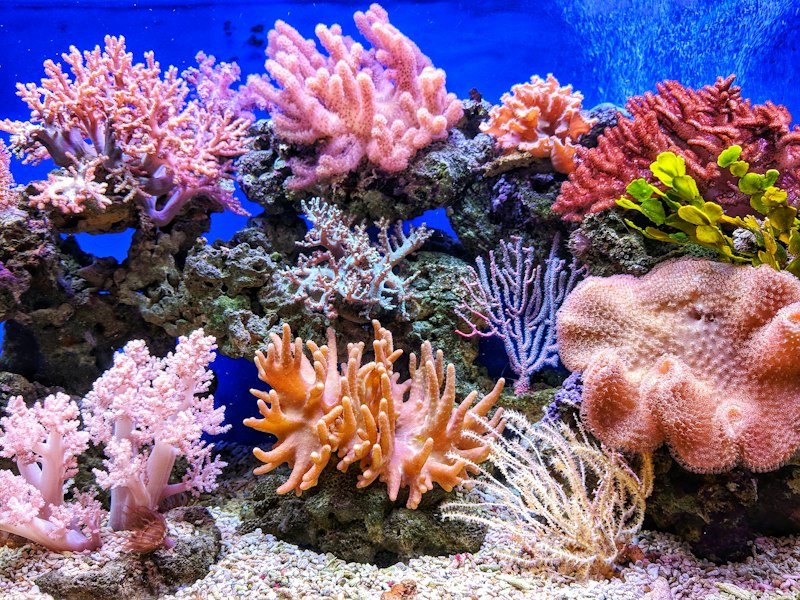
Mini White Wall is a captivating patch reef situated within the renowned Somosomo Strait, a narrow channel between Taveuni and Vanua Levu islands in Fiji. This location is famous for its exceptional soft coral gardens, sustained by the robust tidal currents that funnel nutrient-rich waters through the strait. As a submerged patch reef, Mini White Wall thrives with life, particularly during the ebb and flow of tides. The consistent water movement ensures a continuous supply of food, fostering a spectacular display of diverse corals and attracting a wide array of reef fish. The reef's topography contributes to its visual appeal, featuring intricate formations adorned with vibrant marine organisms. Divers here can expect to encounter reef scenes as vivid and varied as those depicted in prominent diving publications. The site is characterized by an abundance of colorful soft corals and active marine ecosystems. The diving experience often involves drift diving, leveraging the powerful currents that are a hallmark of the Somosomo Strait, creating an engaging and dynamic underwater journey.
Highlights
Vibrant soft coral gardensDynamic patch reef ecosystemNutrient-rich Somosomo StraitAbundant reef fishTide-generated currentsWorld-class biodiversity
Season calendar
Best months to dive here
Jan
Feb
Mar
Apr
May
Jun
Jul
Aug
Sep
Oct
Nov
Dec
Good
Dive site facts: Mini White Wall
- Depth
- 8–25 m
- Current
- Moderate to strong, tide-dependent
- Visibility
- 60–80 feet (18–24 m)
- Water temperature
- 24–28°C (75–82°F)
- Entry
- Boat / Drift entry
- Level
- Intermediate, drift experience beneficial
- Dive type
- Reef, Wall, Drift, Coral garden
- Region / port
- Taveuni, Fiji
- Coordinates
- -17.4868, 115.597
Conditions & Currents
Mini White Wall is known for its tide-generated currents, which are a defining characteristic of the Somosomo Strait. These currents play a crucial role in delivering nutrients to the reef, sustaining its vibrant ecosystem. Divers should anticipate drift diving as the norm, with the current moving them along the reef's formations. The strength of these currents is influenced by the moon cycle, with the slackest conditions occurring during the half moon and the strongest during the full and new moons. Proper briefing on current direction, entry, and exit procedures is essential to ensure a safe and enjoyable dive, allowing divers to flow with the water and conserve energy. Visibility can fluctuate slightly with the seasons, but the dynamic currents consistently deliver a rich particulate load that supports the extensive coral growth.
Marine life & sighting chances
Soft corals
Year-round · common
Hard corals
Year-round · common
Reef fish
Year-round · common
Butterflyfish
Year-round · common
Bannerfish
Year-round · commonMollusks
Year-round · common
Anemones
Year-round · common
Eels
Year-round · occasional
Turtles
Year-round · occasional
Whitetip reef sharks
Year-round · occasional
Grey reef sharks
Year-round · occasional
Schooling barracuda
Year-round · occasional
Schooling jacks
Year-round · occasionalDive profile & how the dive runs
Diving Mini White Wall typically involves a drift dive, commencing with a negative entry to quickly descend onto the vibrant patch reef. Divers follow the prevailing current, which carries them along the reef’s contours, allowing for observation of the rich soft coral growth and diverse fish life. The dive plan accounts for the moon phase, as current strength varies significantly, dictating entry timing and the overall drift speed. The route often involves staying close to the reef structure to appreciate the macro life and colorful corals while keeping an eye out for pelagics in the blue. As the dive progresses, depth is gradually reduced, and the safety stop is performed in the mid-water column while drifting, with the boat tracking the divers for a comfortable surface pickup. Maintaining buoyancy and streamlining is crucial for an effortless drift.
Underwater photography
Mini White Wall provides excellent opportunities for wide-angle photography, capturing the expansive soft coral gardens and the overall reef topography that thrives in the currents. A wide-angle lens is ideal for showcasing the vibrant color palette and the density of marine life. For close-up shots of smaller reef inhabitants and individual coral polyps, a macro lens can yield stunning results, particularly in areas with less current. Strobes are highly recommended to bring out the true colors of the soft corals, which can appear muted in natural light at depth. Practicing excellent buoyancy control is paramount, especially during drift dives, to avoid contact with the delicate corals and to maintain a stable platform for sharp images. Divers should be mindful of current strength, as it can affect camera stability and the ability to compose shots.
Combine with nearby dive sites
- Great White Wall
The Great White Wall, a world-renowned dive site in Fiji, is located within the Somosomo Strait, a narrow channel between Vanua Levu and…
- Rainbow's End
Rainbow's End is a top dive site located in the Somosomo Strait, a channel separating Taveuni and Vanua Levu islands, known as the 'Soft…
- Sam's Point
Sam's Point is one of the celebrated patch reefs found within the Somosomo Strait, a narrow channel between Vanua Levu and Taveuni in Fiji.
- Annie's Bommie
Annie's Bommie is a celebrated dive site located on the Rainbow Reef in Fiji's Somosomo Strait, nestled between the islands of Taveuni and…
- Fish Factory
The Fish Factory dive site is situated on Taveuni's Vuna Reef, renowned for its rich biodiversity and calm surface conditions, making it an…
Getting there & logistics
Access to Mini White Wall primarily begins with international flights to Nadi International Airport (NAN) on Viti Levu. From Nadi, domestic flights or ferry services connect travelers to Taveuni, the island where most dive operators servicing the Somosomo Strait are based. Dive trips to Mini White Wall are typically organized by local dive resorts and day boats. Liveaboards operating in Fiji also visit the Somosomo Strait, offering multi-day itineraries that include this site. There are no specific park fees mentioned for this particular site, but overall conservation efforts are in place for Fiji's reefs. It’s advisable to confirm all logistical details with your chosen dive operator, including transfers and any potential local fees, ensuring a smooth travel and diving experience.
Safety & environment
Diving at Mini White Wall, like other sites in the Somosomo Strait, requires careful attention to currents, making a thorough dive briefing essential. Divers should possess intermediate or advanced certification, with experience in drift diving highly beneficial. Always dive with proper training and equipment, including a surface marker buoy (SMB) for safety in open water. Dive accident insurance, such as that offered by DAN, is strongly recommended due to the remote location. While specific recompression chamber locations were not detailed, emergency evacuations can be complex and expensive in Fiji. Familiarize yourself with emergency procedures and maintain constant awareness of your buddy and the dive master. Never exceed your training limits and always follow the guidance of your dive professionals.
Who it suits — and who it doesn't
Suited for
- Intermediate to advanced divers comfortable with currents
- Photographers seeking vibrant soft coral opportunities
- Divers interested in diverse reef ecosystems
- Those who enjoy dynamic drift diving experiences
- Travelers looking for world-class soft coral displays
Less suited for
- Absolute beginner divers with no current experience
- Divers uncomfortable with potential strong drifts
- Individuals with poor buoyancy control
- Divers seeking purely calm, stationary dive sites
FAQ
Mini White Wall FAQ
What makes Mini White Wall special?
Mini White Wall stands out as a vibrant patch reef within the Somosomo Strait, renowned for its extraordinary soft coral growth. The strong, nutrient-rich currents flowing through the strait sustain an incredibly diverse and colorful ecosystem, making it a spectacular dive for experiencing Fiji's world-class marine biodiversity.
Are the currents strong at Mini White Wall?
Yes, Mini White Wall is known for its significant currents, which are driven by the tides in the Somosomo Strait. These currents are vital for the reef's health but mean that dives are typically drift dives. Dive operators carefully plan dives around the moon cycle, as current strength varies from moderate to strong, making good buoyancy and dive planning essential.
What kind of marine life can I expect to see?
You can expect to see an explosion of marine life, including an abundance of colorful soft and hard corals, which are the main attraction. The site is also teeming with diverse reef fish, such as butterflyfish and bannerfish. Occasionally, divers may spot larger species like reef sharks, barracuda, and jacks, especially when currents are active.
Is Mini White Wall suitable for beginners?
Mini White Wall is generally recommended for intermediate to advanced divers due to the strong currents typical of the Somosomo Strait. Divers should be comfortable with drift diving and possess good buoyancy control. While experienced guides are always present, absolute beginners may find the conditions challenging.
How is visibility at Mini White Wall?
Visibility at Mini White Wall is generally very good, often ranging between 60 to 80 feet (18-24 meters). While the currents bring in rich nutrients that can sometimes introduce particulate matter, these nutrients are also what feed the vibrant ecosystem. The best visibility typically occurs during the cooler, drier months from May to October.
Why dive Mini White Wall from a liveaboard?
Mini White Wall is one of Fiji's signature dive sites. A liveaboard sleeps you on the water and puts you in the water for three to four guided dives per day, including dawn and night dives that day-boat operators rarely offer. You skip the daily commute back to port and reach quieter, less-crowded sites in the same region on a single trip.
Below are the liveaboards that include Mini White Wall on their Fiji itineraries.
Liveaboards diving Mini White Wall
These liveaboards may visit Mini White Wall on selected itineraries — the exact dive sites depend on departure, weather and conditions.
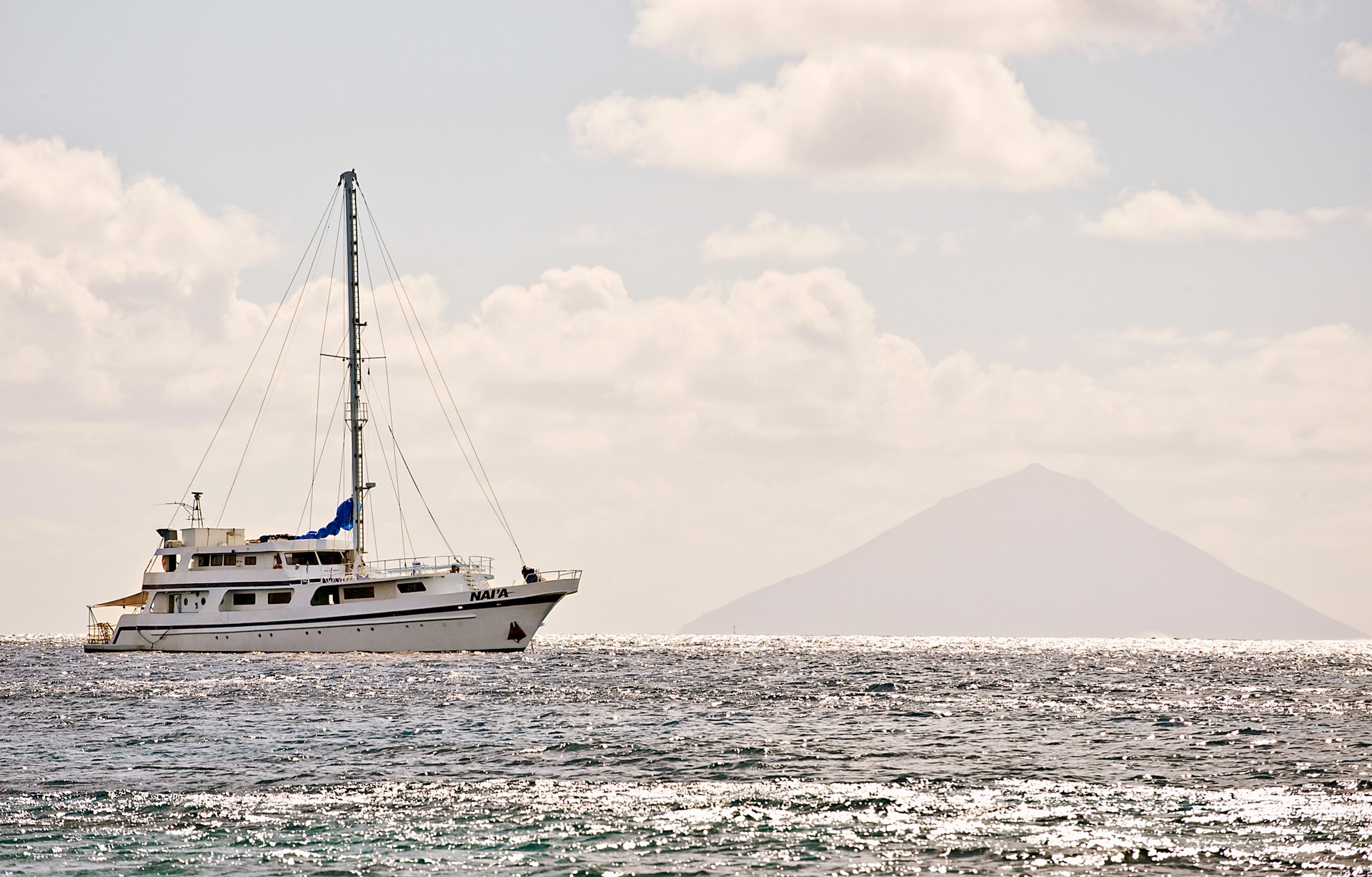
Nai'a
Fiji
16 guests36.576 m
$547/day
Dive sites similar to Mini White Wall
Same character, same waters — six more sites divers love for the exact same reasons.Compare seasons, access and liveaboard routes — then pick the site that fits your trip best.
© Esri — Maxar, Earthstar, GIS
Jim's Alley
Fiji
Jim's Alley is a renowned soft coral garden located off Gau Island in Fiji's Koro Sea, forming part of a multi-stop diving itinerary in the region.
- Suitable for
- Beginner
- Current
- Mild
- Access
- Liveaboard only
- Depth
- ≤ 21 m
- Theme
- Reef
© Esri — Maxar, Earthstar, GIS
Manta Channel, situated off Kadavu Island in Fiji, is a world-class dive destination primarily celebrated for its frequent sightings of manta rays.
- Suitable for
- Advanced
- Current
- Strong
- Access
- Liveaboard or dayboat
- Depth
- 8–20 m
- Theme
- Channel / Drift
© Esri — Maxar, Earthstar, GIS
Sam's Point
Fiji
Sam's Point is one of the celebrated patch reefs found within the Somosomo Strait, a narrow channel between Vanua Levu and Taveuni in Fiji.
- Suitable for
- Advanced
- Current
- Strong
- Access
- Dayboat
- Depth
- 8–27 m
- Theme
- Reef / Drift
© Esri — Maxar, Earthstar, GIS
Rainbow's End
Fiji
Rainbow's End is a top dive site located in the Somosomo Strait, a channel separating Taveuni and Vanua Levu islands, known as the 'Soft Coral Capital of the World'.
- Suitable for
- Intermediate
- Current
- Moderate
- Access
- Liveaboard or dayboat
- Depth
- 10–30 m
- Theme
- Reef / Drift
© Esri — Maxar, Earthstar, GIS
Wilkes Passage
Fiji
Wilkes Passage is a dive site located within the Malolo Barrier Reef in Fiji's Mamanuca Group, southwest of Nadi on Viti Levu.
- Suitable for
- Intermediate
- Current
- Moderate
- Access
- Dayboat
- Depth
- 15–20 m
- Theme
- Reef / Drift
© Esri — Maxar, Earthstar, GIS
Makogai Island
Fiji
Makogai Island, located in Fiji's Lomaiviti Group and visible from Wakaya Island, is home to a significant marine sanctuary.
- Suitable for
- Intermediate
- Current
- Moderate
- Access
- Liveaboard only
- Depth
- 3–18 m
- Theme
- Reef