About Les Sept Frères (Seven Brothers Islands)
The Seven Brothers Islands, known locally as Les Sept Frères or Sawabi islands, form a volcanic and largely untouched archipelago situated off Djibouti's eastern coast, at the strategic Bab el-Mandeb strait where the Red Sea converges with the Indian Ocean. This remote location offers an unparalleled diving experience for those seeking pristine underwater environments. The submarine topography is characterized by impressive walls, steep slopes, and expansive plateaus that descend into deep waters. These features, combined with persistent currents, cultivate an incredibly rich and diverse marine ecosystem. Both hard and soft corals flourish, creating vivid reef structures that teem with life, drawing in significant pelagic activity. The currents flowing from the open ocean are a defining aspect of diving here, bringing with them nutrient-dense upwellings. These conditions create exciting drift dives and attract a remarkable array of large marine life, including schools of trevally, barracuda, and tuna. Grey reef sharks are common, and hammerhead sharks, manta rays, and pilot whales are occasional visitors. During specific seasons, juvenile whale sharks are also present. The remote nature of the islands ensures that dive sites remain uncrowded and largely undisturbed, offering an exclusive and immersive experience. Diving conditions here are best suited for advanced divers comfortable with strong currents and deeper waters, although some sites offer shallower options ranging from 5 to 20 meters. Access to these exceptional sites is typically via liveaboard, which is the most efficient way to explore this dynamic marine environment. Excellent visibility, often exceeding 30 meters, and comfortable water temperatures between 25°C and 30°C enhance the opportunity to observe abundant marine life and stunning coral formations.
Highlights
Volcanic island topographyStrong ocean currentsRich pelagic encountersAbundant reef sharksManta ray sightingsJuvenile whale sharks (seasonal)Pristine coral gardensDramatic drop-offs
Season calendar
Best months to dive here
Jan
Feb
Mar
Apr
May
Jun
Jul
Aug
Sep
Oct
Nov
Dec
Good
Dive site facts: Les Sept Frères (Seven Brothers Islands)
- Depth
- 5–40 m+
- Typical dive
- 15–40 m, 50–60 min
- Current
- Strong, unpredictable
- Visibility
- 10–35 m+
- Water temperature
- 24–33°C
- Entry
- Liveaboard tender / negative entry
- Level
- Advanced upwards
- Dive type
- Drift, wall, pelagic, reef
- Night dive
- Possible
- Region / port
- Djibouti
- Coordinates
- 12.45, 43.4167
Conditions & Currents
Diving at Les Sept Frères is characterized by strong and sometimes unpredictable currents, especially at the more exposed sites. These currents originate from the open ocean and bring rich upwellings, necessitating comfort with drift diving techniques. Entry is often a negative descent to avoid being pushed off target. While some areas are more sheltered, most dives involve dynamic water movement that attracts significant pelagic activity.
Marine life & sighting chances

Whale shark
October–February · common
Manta ray
October–February · common
Grey reef shark
common
Hammerhead shark
occasional
Barracuda
common
Trevally
common
Tuna
common
Pilot whale
occasional
Dolphin
common
Snapper
common
Hard coral
common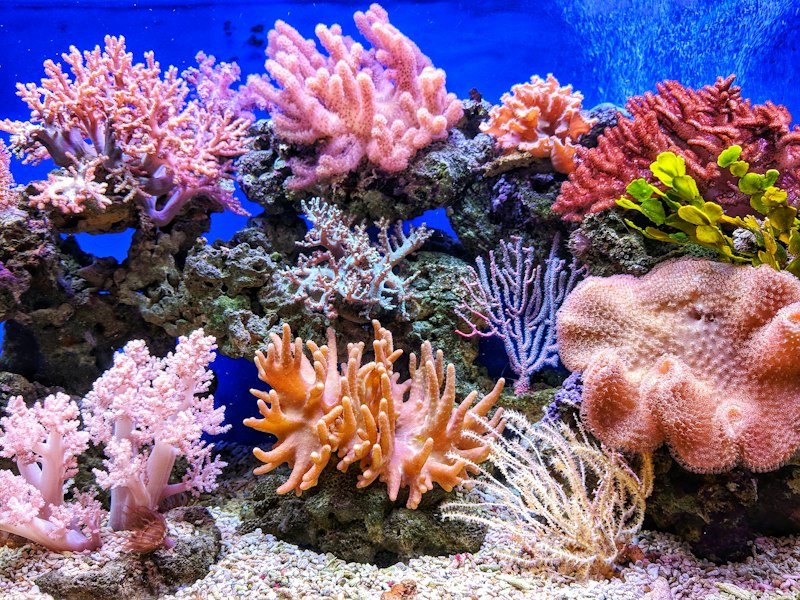
Soft coral
common
Nudibranch
occasional
Moray eel
commonDive profile & how the dive runs
Dives at Les Sept Frères typically commence with a tender boat dropping divers directly onto the site, often requiring a negative entry due to the strong currents. The route is usually a drift dive along a wall or plateau, with the guide leading the group to conserve energy. Depths vary significantly, from shallower coral gardens at 5-20 meters to deeper sections exceeding 40 meters, particularly at sites like Rhounda Khomaytou. Turn points are dictated by current strength and air consumption, ensuring the group remains cohesive. Safety stops are often performed in the blue, deploying an SMB, or in more sheltered areas if conditions allow, ensuring proper ascent from these dynamic waters.
Underwater photography
Capturing the vibrant marine life and dramatic topography of Les Sept Frères requires adaptability. For wide-angle shots, a fisheye or rectilinear wide-angle lens is essential to encompass the expansive coral formations, steep walls, and large pelagic species such as whale sharks and manta rays. Given the frequent strong currents, maintaining good buoyancy is crucial to avoid disturbing delicate corals and to hold position for shots. External strobes are highly recommended to bring out the true colors of the corals and marine life, especially at deeper points or on cloudy days. When encountering large animals, prioritize respectful distance and avoid flash photography directly at their eyes. For macro photography, look closely in more sheltered cracks and crevices or along less exposed reef sections, particularly in sites like the Japanese Gardens for nudibranchs and crustaceans. Fast shutter speeds will be beneficial for capturing schooling fish in current.
Combine with nearby dive sites
- Gulf of Tadjoura – Whale Shark Area
Known for seasonal juvenile whale shark encounters.
- Le Goubet (Ghoubbet al-Kharab)
A nursery for juvenile whale sharks and home to the tectonic fissure.
- Moucha Island Reef
Features pristine coral reefs and diverse marine life.
- Maskali Garden
Offers vibrant coral gardens and good local biodiversity.
Getting there & logistics
Access to Les Sept Frères is predominantly via liveaboard cruises, as there are no dive resorts directly servicing the islands. Most trips depart from Djibouti City, the nation's capital, which is served by Djibouti-Ambouli International Airport (JIB). Typical liveaboard itineraries range from 7 to 10 days, often combining dives at Les Sept Frères with sites in the Gulf of Tadjoura. Travelers should arrange for an e-Visa prior to arrival, which is then picked up at the airport. Park fees may apply and are usually included in liveaboard packages. It is advisable to confirm all logistics, including transfers and any additional fees, with your liveaboard operator. The remote nature of these sites makes liveaboard the definitive way to experience the area's marine contrasts.
Safety & environment
Diving in Les Sept Frères involves strong currents and deeper profiles, necessitating a high level of dive training and fitness. The nearest recompression chamber is located in Djibouti City, meaning emergency evacuations from the remote islands can be complex and time-consuming. Comprehensive dive insurance, covering medical emergencies and evacuation, is not just recommended but essential. Divers must be comfortable with negative entries and drift diving techniques. Always carry a Surface Marker Buoy (SMB) for safety stops and to signal the boat. Maintain excellent buoyancy control to prevent accidental contact with corals, especially in strong currents. Follow your dive guide's instructions precisely, as conditions can change rapidly. Dehydration is a risk due to the warm climate; ensure adequate hydration between dives.
Who it suits — and who it doesn't
Suited for
- Advanced divers comfortable with strong currents
- Experienced drift divers
- Underwater photographers seeking pelagic action
- Divers interested in remote, pristine environments
- Whale shark and manta ray enthusiasts
Less suited for
- Beginner divers or those new to currents
- Divers uncomfortable with deep diving
- Individuals prone to seasickness on liveaboards
- Those expecting resort-based diving with multiple amenities
- Divers with limited physical fitness
FAQ
Les Sept Frères (Seven Brothers Islands) FAQ
What kind of marine life can I expect to see at Les Sept Frères?
Les Sept Frères is renowned for its diverse marine life, especially large pelagic species. You can frequently encounter large schools of barracuda, trevally, and tuna, alongside grey reef sharks. Seasonal sightings include manta rays, pilot whales, and numerous juvenile whale sharks, particularly from November to January. The healthy coral reefs also host a variety of reef fish and occasional macro life like nudibranchs.
Is Les Sept Frères suitable for beginner divers?
Due to the consistent presence of strong currents and the potential for deeper dives, Les Sept Frères is generally not recommended for beginner divers. It is best suited for advanced divers who are comfortable with drift diving techniques, negative entries, and have experience in dynamic underwater conditions. Some shallower sites exist, but the overall experience caters to more experienced individuals.
What are the typical diving conditions like?
Diving conditions at Les Sept Frères are characterized by strong, sometimes unpredictable currents that bring nutrient-rich waters from the open ocean. Visibility is often excellent, typically ranging from 10 to 35 meters or more. Water temperatures are warm, usually between 25°C and 30°C. Surface conditions can be choppy, and tender boat entries and negative descents are common.
How do I get to Les Sept Frères and what kind of accommodation is available?
The primary way to access Les Sept Frères is via liveaboard boat from Djibouti City. There are no land-based accommodations or dive resorts directly at the islands due to their remote and volcanic nature. Liveaboards typically offer multi-day trips, combining dives at Les Sept Frères with other sites in the Gulf of Tadjoura, providing accommodation and meals onboard for the duration of the trip.
When is the best time to see whale sharks at Les Sept Frères?
The peak season for whale shark encounters at Les Sept Frères, and in Djibouti generally, runs from November to January. During these months, nutrient-rich waters attract juvenile whale sharks to feed, offering excellent opportunities for both divers and snorkelers to observe these magnificent creatures. While sightings can occur outside this period, they are less frequent.
What is the recommended dive gear for this site?
Given the warm water temperatures, a 3mm wetsuit or shorty is usually sufficient for thermal protection. However, due to strong currents, a sturdy BCD, powerful fins, and reliable dive computer are essential. Divers should always carry an SMB (Surface Marker Buoy) and a whistle, and consider a reef hook for observing marine life in strong current without exertion. A dive torch is useful for exploring crevices and bringing out colors.
Why dive Les Sept Frères (Seven Brothers Islands) from a liveaboard?
Les Sept Frères (Seven Brothers Islands) is one of Djibouti's signature dive sites. A liveaboard sleeps you on the water and puts you in the water for three to four guided dives per day, including dawn and night dives that day-boat operators rarely offer. You skip the daily commute back to port and reach quieter, less-crowded sites in the same region on a single trip.
Below are the liveaboards that include Les Sept Frères (Seven Brothers Islands) on their Djibouti itineraries.
Liveaboards diving Les Sept Frères (Seven Brothers Islands)
These liveaboards may visit Les Sept Frères (Seven Brothers Islands) on selected itineraries — the exact dive sites depend on departure, weather and conditions.
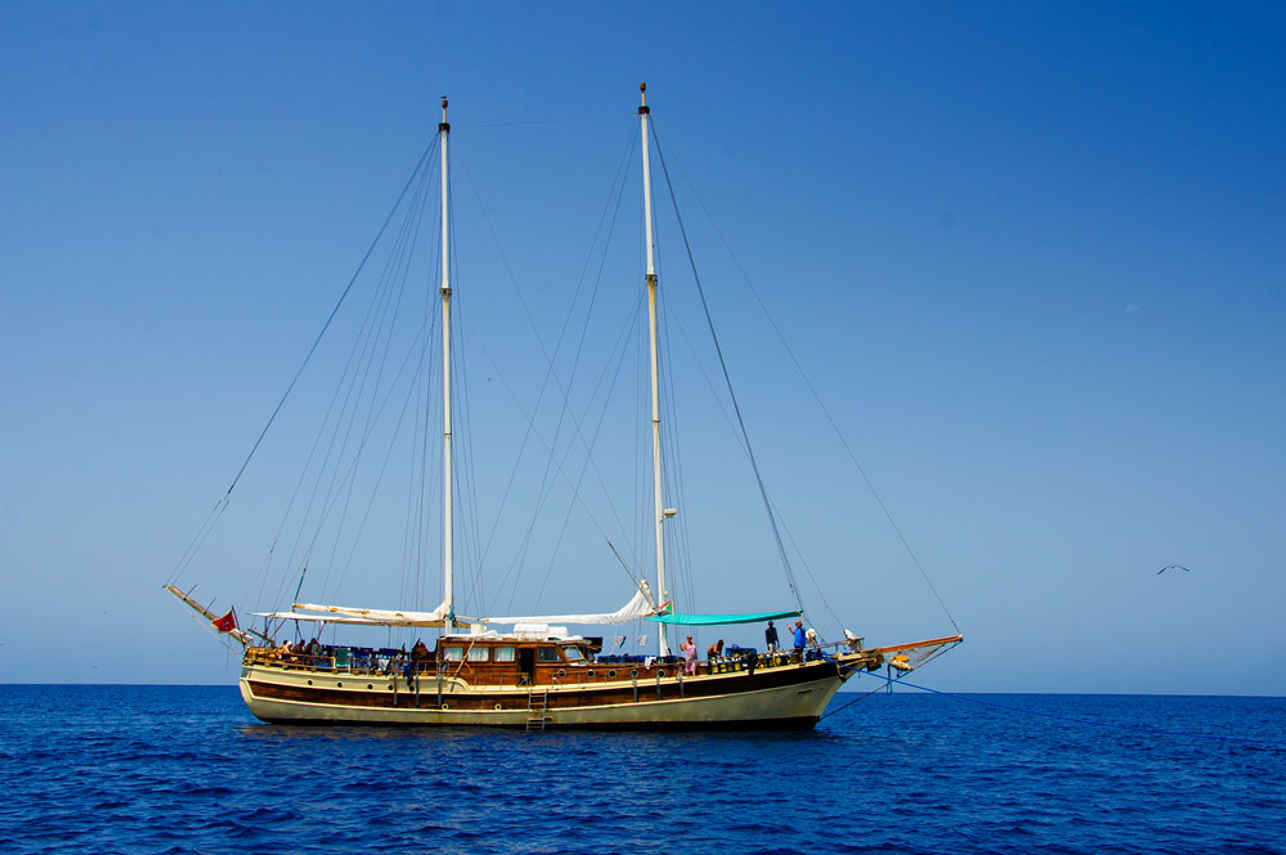
Elegante
Djibouti
14 guests25 m
$209/day
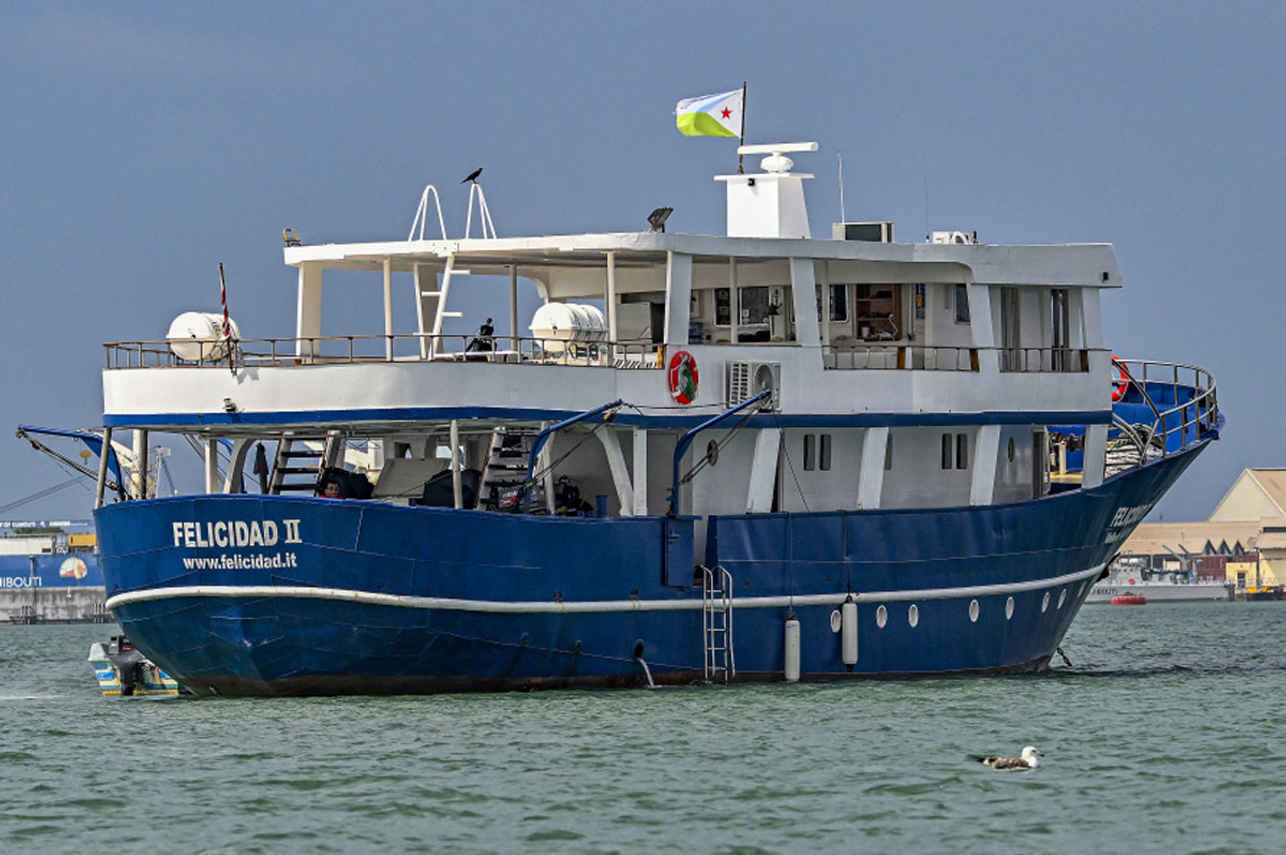
Felicidad II
Djibouti
18 guests30 m
$188/day
Dive sites similar to Les Sept Frères (Seven Brothers Islands)
Same character, same waters — six more sites divers love for the exact same reasons.Compare seasons, access and liveaboard routes — then pick the site that fits your trip best.
© Esri — Maxar, Earthstar, GIS
Ghoubbet al Kharab
Djibouti
Ghoubbet al Kharab, also known as the Devil’s Goblet, is a deep bay connected to the Gulf of Tadjourah and the open ocean in Djibouti.
- Suitable for
- Advanced
- Current
- Strong
- Access
- Liveaboard only
- Depth
- 5–200 m
- Theme
- Drift / Reef
© Esri — Maxar, Earthstar, GIS
Moucha wrecks
Djibouti
The Moucha wrecks, including the notable Orchard Reefer and Le Fon, offer a distinctive dive experience within Djibouti's Gulf of Tadjoura, contrasting with the region's prevalent coral reefs.
- Suitable for
- Advanced
- Current
- Moderate
- Access
- Liveaboard or dayboat
- Depth
- 5–50 m
- Theme
- Wreck / Reef
© Esri — Maxar, Earthstar, GIS
Sable Blanc Reef
Djibouti
Sable Blanc Reef is a vibrant coral ecosystem located in Djibouti, nestled where the Red Sea meets the Gulf of Aden.
- Suitable for
- Intermediate
- Current
- Strong
- Access
- Shore / dayboat
- Depth
- 5–30 m
- Theme
- Drift / Reef
© Esri — Maxar, Earthstar, GIS
Cape Rouge
Djibouti
Cape Rouge is a notable dive site in Djibouti, known for its pristine underwater environment where the Red Sea meets the Indian Ocean.
- Suitable for
- Advanced
- Current
- Mild
- Access
- Liveaboard or dayboat
- Depth
- 15–40 m
- Theme
- Reef
© Esri — Maxar, Earthstar, GIS
La Vierge Rouge
Djibouti
La Vierge Rouge is situated in Djibouti, a unique diving destination where the Red Sea converges with the Indian Ocean.
- Suitable for
- Intermediate
- Current
- Moderate
- Access
- Liveaboard only
- Depth
- 15–40 m
- Theme
- Reef
© Esri — Maxar, Earthstar, GIS
Le Sec Aux Boutres
Djibouti
Le Sec Aux Boutres is a distinguished dive site located near Arta, Djibouti, celebrated for its rich marine biodiversity and stunning underwater scenery.
- Suitable for
- Intermediate
- Current
- Mild
- Access
- Dayboat
- Depth
- 10–30 m
- Theme
- Reef