About Ras Bir
Ras Bir, located in northern Djibouti near the Obock lighthouse, offers a distinct, rugged charm that sets it apart from more manicured coastal areas. This site, referred to as an "end-of-the-road" destination, experiences wind-exposed conditions and features unmanicured shores, with more driftwood than typical beach amenities. The waters are swimmable, though currents can be strong, and snorkeling is considered average. Despite its rustic nature, it's a popular escape for locals, offering a laid-back atmosphere. The topography here consists of pristine waters meeting rugged terrain, with hiking trails nearby. While not primarily a dive destination or specifically noted for extensive coral reefs, its location near the Red Sea and Gulf of Aden confluence suggests potential for marine life, particularly larger pelagic species that thrive in nutrient-rich waters and currents. However, specific dive-related marine life is not detailed for Ras Bir itself. The broader region is known for vibrant ecosystems with over 200 species of corals, sponges, and large schools of fish, as well as seasonal whale shark aggregations. Dive characteristics typically include strong currents in the general area, requiring careful navigation. Access is often described as requiring a 4x4 vehicle due to sandy terrain. Given the potential for pushy currents and its less-developed nature, the dive experience might be best suited for those comfortable with more variable conditions. The absence of specific dive briefs for Ras Bir implies it's not a primary scuba destination, but rather a picturesque coastal area ideal for other adventures.
Highlights
Underwater cliffsPelagicsCoral wallsCurrent diving
Season calendar
Best months to dive here
Jan
Feb
Mar
Apr
May
Jun
Jul
Aug
Sep
Oct
Nov
Dec
Good
Dive site facts: Ras Bir
- Depth
- 1–20 m
- Typical dive
- 5–15 m, 45–60 min
- Current
- Mild to moderate
- Visibility
- 10–25 m
- Water temperature
- 24–28°C
- Entry
- Shore / Tender
- Level
- Beginner to advanced
- Dive type
- Reef, pelagic, shore access
- Night dive
- Not specified
- Region / port
- Gulf of Aden, Djibouti
- Coordinates
- 12.71, 43.42
Conditions & Currents
Currents at Ras Bir can vary from mild to occasionally pushy, particularly further offshore and around the headland. Divers exploring the shallow coral gardens close to shore will generally experience calmer conditions. For those venturing on boat trips into deeper channels or near the cape, stronger currents are possible due to the site's exposure and position near the Gulf of Aden. Visibility generally remains good during the cooler months, though localized plankton blooms can temporarily reduce it, especially when pelagic encounters are frequent. Entry from shore is typically straightforward for snorkeling and shallow dives, while boat-based entries are standard for deeper or pelagic-focused excursions. Always consult local guides on daily conditions to plan your dive safely.
Marine life & sighting chances

Whale shark
November-January · occasional
Manta ray
November-January · occasional
Dolphin
occasional
Green sea turtle
occasional
Clownfish
common
Parrotfish
common
Corals (soft and hard)
commonDive profile & how the dive runs
For shore-based exploration, divers can enter directly from the sandy beach into the shallow coral gardens. Begin by swimming outwards, observing clownfish and parrotfish among the hard and soft corals. The reef gradually slopes to depths of 5–15 meters, offering ample time for observation. For those seeking deeper or pelagic encounters, boat trips depart from the area. These excursions typically involve a tender drop-off near channels or cleaning stations where pelagic species are expected. Depths during these dives can reach 20 meters or more, following the contours of the reef or observing marine life in open water. Safety stops are conducted in the calmer, shallower sections of the reef or in open water before surfacing near the boat.
Underwater photography
Ras Bir's dual nature makes it ideal for both wide-angle and macro photography. For the shallow coral gardens and accessible reef fish, a wide-angle lens captures the vibrant ecosystem effectively. Natural light is often sufficient in the shallows, but an external strobe can enhance color and detail. When aiming for seasonal encounters with whale sharks, manta rays, or dolphins from a boat, a wide-angle lens is essential, and fast shutter speeds are recommended. Be mindful of potential currents, especially with larger rigs. For macro subjects found in tide pools or among smaller reef formations, a dedicated macro lens will yield excellent results. Always maintain excellent buoyancy to avoid disturbing the delicate coral and marine life.
Combine with nearby dive sites
- Les Sept Frères (Seven Brothers Islands)
Known for healthy reefs and pelagic encounters, requiring a liveaboard.
- Gulf of Tadjoura – Whale Shark Area
A prime location for seasonal whale shark sightings, often accessed via boat trips.
- Khor Ambado Reef
Another local reef offering diverse marine life and accessible diving.
- Moucha Island Reef
Part of a marine protected area, known for its healthy coral ecosystems.
Getting there & logistics
Access to Djibouti typically involves flying into Djibouti-Ambouli International Airport (JIB). From there, Ras Bir is about 20 kilometers south of Djibouti City, reachable by local transport or pre-arranged transfers. Day trips for diving and snorkeling can be arranged with local operators, often departing from Djibouti City or nearby ports. For multi-day diving experiences targeting pelagics or more remote sites like the Seven Brothers Islands, liveaboards are the most common option, typically departing from Djibouti City and offering itineraries of 5-7 days. Permits or park fees may apply for diving in designated marine protected areas, and these are usually included in liveaboard or tour operator packages.
Safety & environment
While Ras Bir offers accessible diving, all divers should hold appropriate certification and insurance. The nearest recompression chamber is located in Djibouti City, approximately 20 kilometers away. Emergency evacuation procedures would involve land transport to the city, which can be challenging depending on local road conditions. Dive insurance covering medical emergencies and evacuation is highly recommended. Specific hazards at Ras Bir include potentially strong currents, especially outside the immediate shore area, and boat traffic from local skiffs. Always dive with a buddy, follow local guide instructions, and avoid touching or harassing marine life. Be aware of tidal changes when exploring rocky coves.
Who it suits — and who it doesn't
Suited for
- Beginner snorkelers
- Divers seeking accessible shore entry
- Underwater photographers (macro and wide-angle)
- Travelers looking for uncrowded sites
- Divers interested in seasonal pelagic encounters
Less suited for
- Divers expecting luxury resort amenities
- Those uninterested in independent exploration
- Divers seeking only advanced wreck diving
- Individuals sensitive to remote, rustic conditions
FAQ
Ras Bir FAQ
What kind of marine life can I expect to see at Ras Bir?
Ras Bir's shallow coral gardens are home to vibrant reef fish like clownfish and parrotfish, as well as a variety of hard and soft corals. Seasonally, boat trips from the area offer opportunities to encounter larger pelagic species such as whale sharks, manta rays, and dolphins.
Is Ras Bir suitable for beginner divers or snorkelers?
Yes, Ras Bir is particularly well-suited for snorkelers and beginner divers due to its accessible shallow coral gardens directly off the beach. The calm, clear waters in these areas provide an excellent environment for introductory marine exploration without the need for complex boat dives.
When is the best time of year to visit Ras Bir for diving?
The ideal time for diving and snorkeling at Ras Bir is between November and March. During these months, the water temperatures are comfortable, visibility is generally good, and there's a higher chance of seasonal encounters with whale sharks and manta rays.
Are there strong currents at Ras Bir?
Currents at Ras Bir can vary. While the immediate shore area with its coral gardens is generally calm, stronger currents can be encountered further offshore, especially when exploring deeper channels or near the headland. It's always advisable to check local conditions with guides before entering the water.
What unique geological features can be found at Ras Bir?
Ras Bir is framed by dramatic black lava formations and rocky coves, which are remnants of volcanic activity. At low tide, these formations reveal interesting tide pools and offer unique photographic opportunities, showcasing the rugged natural beauty of the Djiboutian coastline.
Why dive Ras Bir from a liveaboard?
Ras Bir is one of Djibouti's signature dive sites. A liveaboard sleeps you on the water and puts you in the water for three to four guided dives per day, including dawn and night dives that day-boat operators rarely offer. You skip the daily commute back to port and reach quieter, less-crowded sites in the same region on a single trip.
Below are the liveaboards that include Ras Bir on their Djibouti itineraries.
Liveaboards diving Ras Bir
These liveaboards may visit Ras Bir on selected itineraries — the exact dive sites depend on departure, weather and conditions.
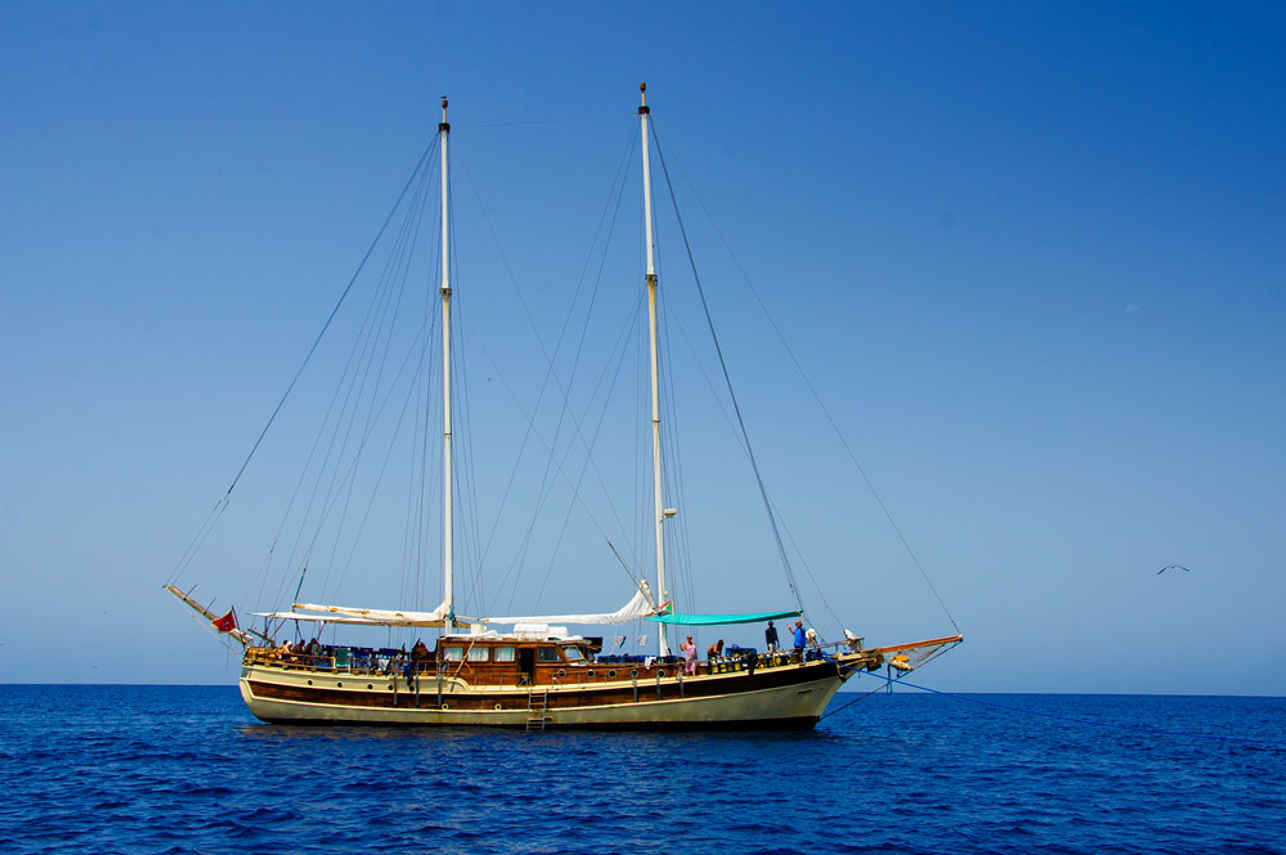
Elegante
Djibouti
14 guests25 m
$209/day
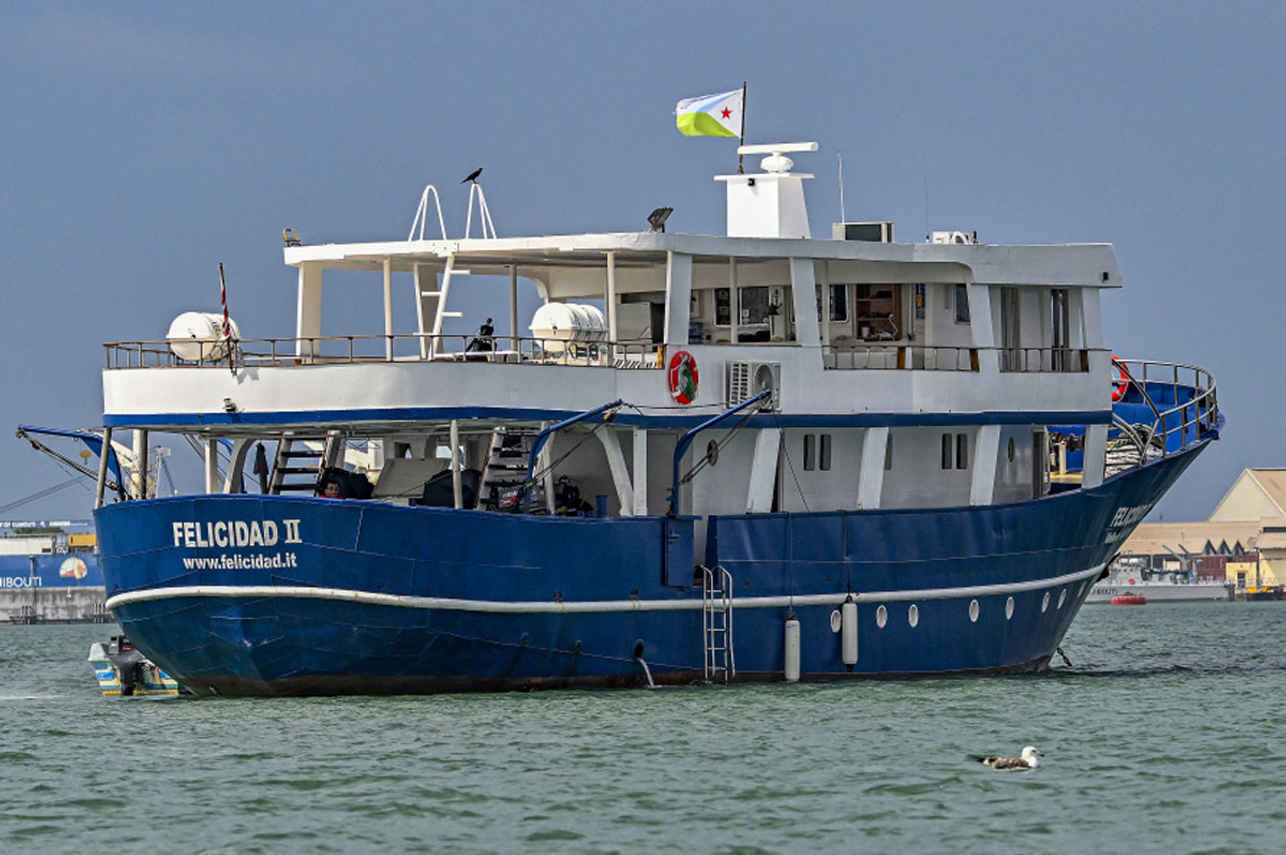
Felicidad II
Djibouti
18 guests30 m
$188/day
Dive sites similar to Ras Bir
Same character, same waters — six more sites divers love for the exact same reasons.Compare seasons, access and liveaboard routes — then pick the site that fits your trip best.
© Esri — Maxar, Earthstar, GIS
Ghoubbet al Kharab
Djibouti
Ghoubbet al Kharab, also known as the Devil’s Goblet, is a deep bay connected to the Gulf of Tadjourah and the open ocean in Djibouti.
- Suitable for
- Advanced
- Current
- Strong
- Access
- Liveaboard only
- Depth
- 5–200 m
- Theme
- Drift / Reef
© Esri — Maxar, Earthstar, GIS
Moucha wrecks
Djibouti
The Moucha wrecks, including the notable Orchard Reefer and Le Fon, offer a distinctive dive experience within Djibouti's Gulf of Tadjoura, contrasting with the region's prevalent coral reefs.
- Suitable for
- Advanced
- Current
- Moderate
- Access
- Liveaboard or dayboat
- Depth
- 5–50 m
- Theme
- Wreck / Reef
© Esri — Maxar, Earthstar, GIS
Sable Blanc Reef
Djibouti
Sable Blanc Reef is a vibrant coral ecosystem located in Djibouti, nestled where the Red Sea meets the Gulf of Aden.
- Suitable for
- Intermediate
- Current
- Strong
- Access
- Shore / dayboat
- Depth
- 5–30 m
- Theme
- Drift / Reef
© Esri — Maxar, Earthstar, GIS
Cape Rouge
Djibouti
Cape Rouge is a notable dive site in Djibouti, known for its pristine underwater environment where the Red Sea meets the Indian Ocean.
- Suitable for
- Advanced
- Current
- Mild
- Access
- Liveaboard or dayboat
- Depth
- 15–40 m
- Theme
- Reef
© Esri — Maxar, Earthstar, GIS
La Vierge Rouge
Djibouti
La Vierge Rouge is situated in Djibouti, a unique diving destination where the Red Sea converges with the Indian Ocean.
- Suitable for
- Intermediate
- Current
- Moderate
- Access
- Liveaboard only
- Depth
- 15–40 m
- Theme
- Reef
© Esri — Maxar, Earthstar, GIS
Le Sec Aux Boutres
Djibouti
Le Sec Aux Boutres is a distinguished dive site located near Arta, Djibouti, celebrated for its rich marine biodiversity and stunning underwater scenery.
- Suitable for
- Intermediate
- Current
- Mild
- Access
- Dayboat
- Depth
- 10–30 m
- Theme
- Reef