About Khor Ambado Reef
Khor Ambado Reef is a notable dive site located within Djibouti's Gulf of Tadjoura, an area celebrated for its exceptional marine biodiversity where the Red Sea meets the Gulf of Aden. This region is distinguished by its unique blend of volcanic underwater landscapes, healthy coral gardens, and rich nutrient upwellings that sustain a vibrant ecosystem. Divers can anticipate encountering a wide array of reef fish, rays, and turtles, with the possibility of spotting larger pelagic species attracted by the rich waters. The topography of Khor Ambado Reef typically features sloping coral gardens transitioning into deeper sections, providing varied habitats for marine life. Depths can range from shallower coral formations suitable for less experienced divers to deeper zones that appeal to those seeking more advanced exploration. The reef structure itself is robust, showcasing a kaleidoscope of hard and soft corals that provide shelter and feeding grounds for countless species. The marine life here is abundant year-round, but specific seasons enhance the chances of encountering particular species, such as juvenile whale sharks during their feeding season from October to February. These plankton-rich waters support a complex food web, making every dive an opportunity for discovery. Visibility generally remains excellent, though it can vary with nutrient blooms, which paradoxically often bring in more pelagic action. Diving at Khor Ambado Reef usually involves boat access from nearby ports, with typical dive profiles incorporating a slow drift along the reef line, allowing divers to fully immerse themselves in the underwater scenery. The site is often part of liveaboard itineraries exploring the Gulf of Tadjoura, offering divers a chance to experience Djibouti's unique blend of volcanic beauty and prolific marine ecosystems.
Highlights
Vibrant coral gardensDiverse reef fish populationsOccasional pelagic encountersHealthy hard and soft coralsSheltered Gulf of Tadjoura locationClear, warm waters
Season calendar
Best months to dive here
Jan
Feb
Mar
Apr
May
Jun
Jul
Aug
Sep
Oct
Nov
Dec
Excellent
Good
Dive site facts: Khor Ambado Reef
- Depth
- 5–40m+
- Typical dive
- 12–25m, 50–60 min
- Current
- Mild to moderate
- Visibility
- 15–35m+
- Water temperature
- 24–33°C
- Entry
- Boat / Tender (often negative entry for drift)
- Level
- Open Water Diver, current experience helpful
- Dive type
- Reef, drift, coral gardens
- Night dive
- Possible
- Region / port
- Gulf of Tadjoura, Djibouti
- Coordinates
- 11.59, 43.05
Conditions & Currents
Currents at Khor Ambado Reef can be influenced by the massive tidal shifts characteristic of the region where the Red Sea meets the Gulf of Aden, particularly within the Gulf of Tadjoura. While September generally sees moderate currents, offering calm sea states within the Gulf, divers should always be prepared for potential variations. Drift diving is a common technique here, necessitating strong buoyancy control and an understanding of how to move with the current. Entry and exit procedures will typically be guided by the dive master, often involving negative entries for drift dives to quickly descend below the surface current. Visibility, while often good, can fluctuate, especially during periods of increased nutrient upwelling, which can attract a greater diversity of marine life.
Marine life & sighting chances

Whale shark
Oct-Feb · occasional
Manta ray
Oct-Feb · occasional
Reef shark
Year-round · common
Marine turtle
Year-round · common
Dolphin
Year-round · occasional
Barracuda
Year-round · common
Trevally
Year-round · common
Snapper
Year-round · common
Angelfish
Year-round · common
Butterflyfish
Year-round · common
Parrotfish
Year-round · common
Nudibranch
Year-round · occasional
Crustacean
Year-round · commonDive profile & how the dive runs
Dives at Khor Ambado Reef typically commence with a boat drop, often upstream of the site to facilitate a drift. Upon entry, divers will perform a negative descent to quickly get below any surface currents and begin their exploration along the reef's contour. The dive master will lead, guiding the group along a path that follows the natural current, allowing divers to conserve air and energy. Depths will generally range from 10-25 meters, exploring the vibrant coral gardens and looking for reef inhabitants and passing pelagics. The turn point is determined by air consumption and no-decompression limits, with the group ascending gradually. The safety stop is usually conducted while drifting, and a surface marker buoy (SMB) is deployed to signal the boat for pickup, which will track the divers' position throughout the dive.
Underwater photography
Khor Ambado Reef offers excellent opportunities for both wide-angle and macro photography, thanks to its diverse topography and rich marine life. For wide-angle shots, consider a fisheye or wide rectilinear lens to capture the expansive coral gardens and schools of fish. Optimal lighting conditions for coral landscapes are often found in the late morning to early afternoon, when sunlight can best penetrate the water. For macro subjects like nudibranchs and small crustaceans, a dedicated macro lens will be essential. Employ strobes with diffusers for both wide-angle and macro to bring out true colors and minimize backscatter, especially if nutrient-rich waters slightly reduce visibility. Maintain impeccable buoyancy control to avoid disturbing the delicate corals and ensure clear, focused shots, as contact with the reef is strictly prohibited.
Combine with nearby dive sites
- Les Sept Frères (Seven Brothers Islands)
Known for strong currents and pelagic encounters, offering diverse diving from walls to reefs.
- Gulf of Tadjoura – Whale Shark Area
A prime location for juvenile whale shark encounters, particularly from October to February.
- Moucha Island Reef
Features vibrant coral gardens and diverse reef fish, suitable for warm-up or relaxing dives.
- Le Goubet (Ghoubbet al-Kharab)
A deep bay known for its unique topography, including a tectonic fissure, and frequent whale shark sightings.
Getting there & logistics
Access to Khor Ambado Reef typically involves flying into Djibouti-Ambouli International Airport (JIB). From there, divers usually transfer to a liveaboard vessel departing from Djibouti City. Most dive trips exploring the Gulf of Tadjoura, including Khor Ambado Reef, are part of multi-day liveaboard itineraries, often 7-8 nights, allowing extensive exploration of various sites. While there are no specific park fees for Khor Ambado itself, liveaboard packages generally include all necessary permits and port fees. It's common for itineraries to combine this site with other notable locations in the Gulf of Tadjoura, such as the whale shark feeding grounds and the Seven Brothers Islands, maximizing diverse marine encounters.
Safety & environment
While diving at Khor Ambado Reef, maintaining situational awareness, especially regarding currents, is paramount. The nearest recompression chamber is located in Djibouti City, emphasizing the importance of conservative dive planning. Divers should always have comprehensive dive insurance that covers emergency medical evacuation, as the logistics of transport from remote sites can be complex. Adherence to dive guide instructions, particularly concerning entry and exit procedures for drift dives, is crucial. Divers should be proficient in deploying a Delayed Surface Marker Buoy (DSMB) and familiar with hand signals for effective buddy communication. Avoiding contact with marine life and fragile corals helps preserve the ecosystem and prevents potential injuries.
Who it suits — and who it doesn't
Suited for
- Open Water Divers comfortable with boat entries
- Divers seeking vibrant coral reef ecosystems
- Underwater photographers targeting macro and wide-angle
- Those interested in occasional pelagic encounters
- Liveaboard enthusiasts exploring diverse sites
Less suited for
- New divers without buoyancy control skills
- Divers uncomfortable with potential currents
- Individuals expecting guaranteed whale shark sightings
- Those preferring shore-based diving
- Divers who disregard environmental guidelines
FAQ
Khor Ambado Reef FAQ
What kind of marine life can I expect to see at Khor Ambado Reef?
Khor Ambado Reef is teeming with diverse marine life, including a wide variety of reef fish like angelfish, butterflyfish, and parrotfish. You can also spot marine turtles, various rays, and reef sharks. During the peak season from October to February, there is a good chance of encountering juvenile whale sharks and manta rays.
Is Khor Ambado Reef suitable for beginner divers?
Yes, Khor Ambado Reef can be suitable for Open Water certified divers, especially if they are comfortable with boat entries and have good buoyancy control. While currents can be mild to moderate, dive guides will provide thorough briefings, and the shallower sections offer a gentle introduction to the reef. Experience with drift diving is beneficial but not strictly required with proper guidance.
What are the typical water conditions at Khor Ambado Reef?
The water temperature at Khor Ambado Reef is warm year-round, ranging from 24°C to 33°C. Visibility is generally excellent, often exceeding 15 meters, though it can occasionally be affected by nutrient upwellings that bring in more pelagic life. Currents are typically mild to moderate, making for comfortable drift dives.
How do I get to Khor Ambado Reef?
To reach Khor Ambado Reef, you will typically fly into Djibouti-Ambouli International Airport (JIB). From there, divers usually board a liveaboard vessel departing from Djibouti City. Khor Ambado Reef is a popular stop on liveaboard itineraries exploring the Gulf of Tadjoura, making it easily accessible as part of a multi-day dive trip.
Are there any specific safety considerations for diving at this site?
For safety at Khor Ambado Reef, strong buoyancy control is important due to potential currents. Always follow your dive guide's instructions, especially during drift dives and when deploying your surface marker buoy for pickup. Comprehensive dive insurance covering emergency evacuation is highly recommended. Conservative dive planning is advised, given the location of the nearest recompression chamber in Djibouti City.
When is the best time for whale shark encounters at Khor Ambado Reef?
The prime season for encountering juvenile whale sharks in the Gulf of Tadjoura, including areas near Khor Ambado Reef, is from October to February. During these months, nutrient-rich waters attract these magnificent creatures to feed, offering excellent opportunities for both divers and snorkelers to observe them.
Why dive Khor Ambado Reef from a liveaboard?
Khor Ambado Reef is one of Djibouti's signature dive sites. A liveaboard sleeps you on the water and puts you in the water for three to four guided dives per day, including dawn and night dives that day-boat operators rarely offer. You skip the daily commute back to port and reach quieter, less-crowded sites in the same region on a single trip.
Below are the liveaboards that include Khor Ambado Reef on their Djibouti itineraries.
Liveaboards diving Khor Ambado Reef
These liveaboards may visit Khor Ambado Reef on selected itineraries — the exact dive sites depend on departure, weather and conditions.
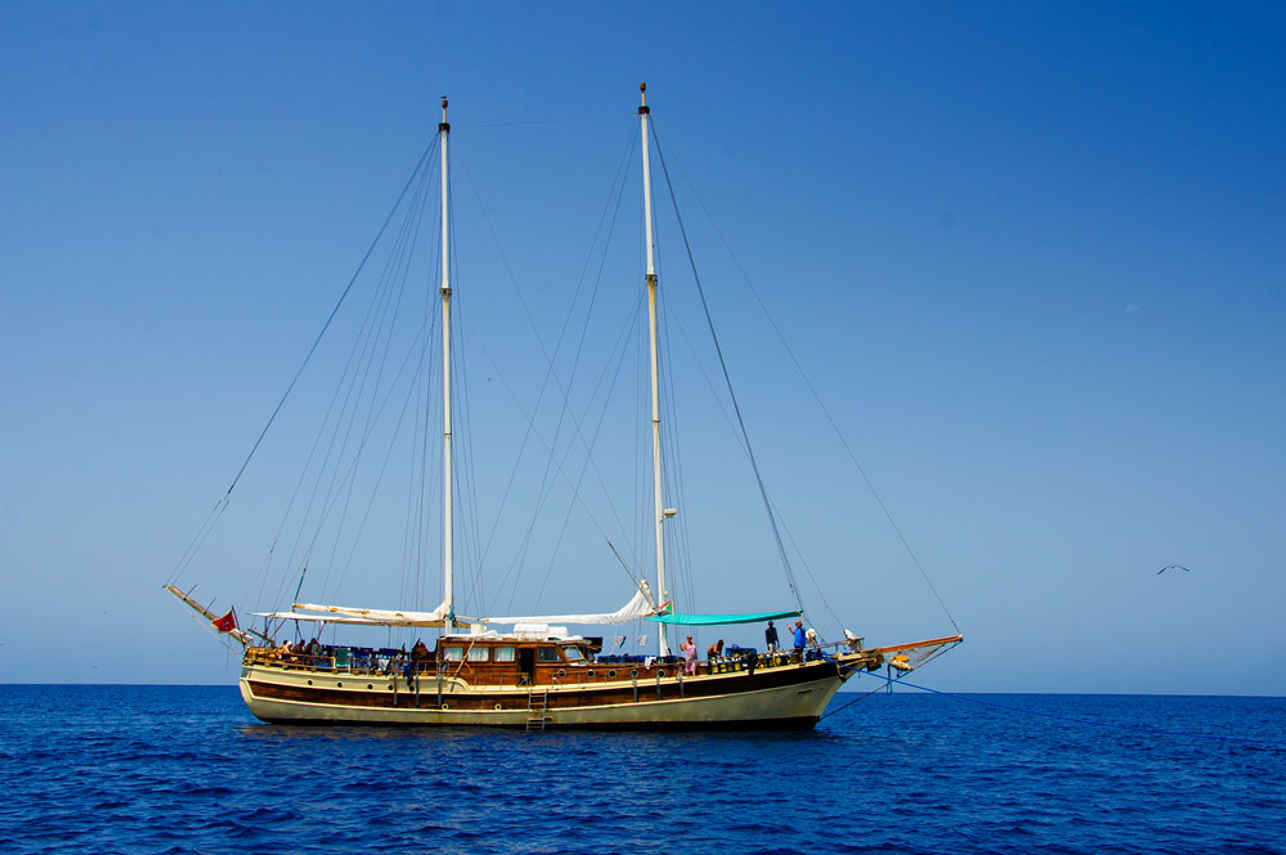
Elegante
Djibouti
14 guests25 m
$209/day
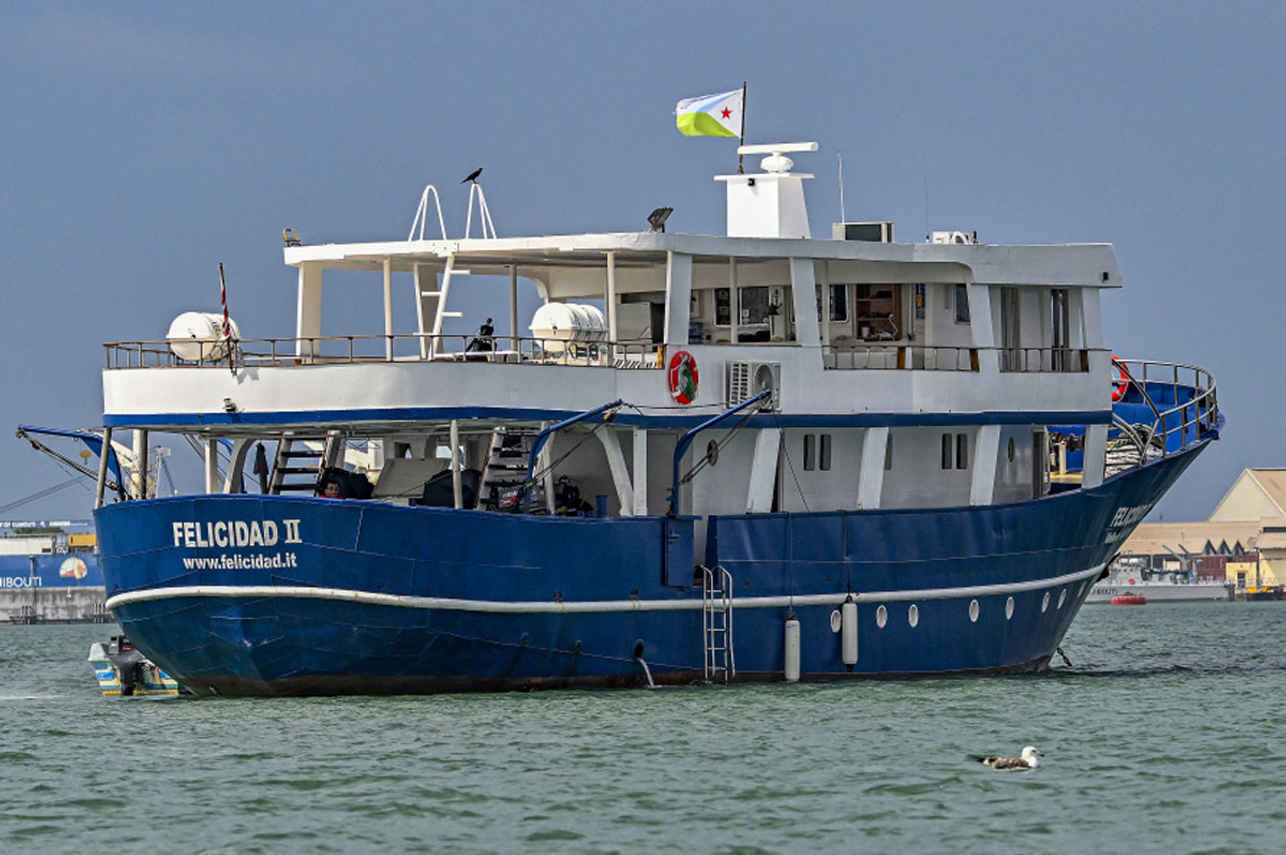
Felicidad II
Djibouti
18 guests30 m
$210/day
Dive sites similar to Khor Ambado Reef
Same character, same waters — six more sites divers love for the exact same reasons.Compare seasons, access and liveaboard routes — then pick the site that fits your trip best.
© Esri — Maxar, Earthstar, GIS
Ghoubbet al Kharab
Djibouti
Ghoubbet al Kharab, also known as the Devil’s Goblet, is a deep bay connected to the Gulf of Tadjourah and the open ocean in Djibouti.
- Suitable for
- Advanced
- Current
- Strong
- Access
- Liveaboard only
- Depth
- 5–200 m
- Theme
- Drift / Reef
© Esri — Maxar, Earthstar, GIS
Moucha wrecks
Djibouti
The Moucha wrecks, including the notable Orchard Reefer and Le Fon, offer a distinctive dive experience within Djibouti's Gulf of Tadjoura, contrasting with the region's prevalent coral reefs.
- Suitable for
- Advanced
- Current
- Moderate
- Access
- Liveaboard or dayboat
- Depth
- 5–50 m
- Theme
- Wreck / Reef
Cathedral in Djibouti is primarily recognized as a world-class shark diving destination, distinct from the Philippines' Pescador Cathedral.
- Suitable for
- Intermediate
- Current
- Strong
- Access
- Liveaboard or dayboat
- Depth
- 12–30 m
- Theme
- Cave & cavern / Reef
© Esri — Maxar, Earthstar, GIS
Sable Blanc Reef
Djibouti
Sable Blanc Reef is a vibrant coral ecosystem located in Djibouti, nestled where the Red Sea meets the Gulf of Aden.
- Suitable for
- Intermediate
- Current
- Strong
- Access
- Shore / dayboat
- Depth
- 5–30 m
- Theme
- Drift / Reef
© Esri — Maxar, Earthstar, GIS
Cape Rouge
Djibouti
Cape Rouge is a notable dive site in Djibouti, known for its pristine underwater environment where the Red Sea meets the Indian Ocean.
- Suitable for
- Advanced
- Current
- Mild
- Access
- Liveaboard or dayboat
- Depth
- 15–40 m
- Theme
- Reef
© Esri — Maxar, Earthstar, GIS
La Vierge Rouge
Djibouti
La Vierge Rouge is situated in Djibouti, a unique diving destination where the Red Sea converges with the Indian Ocean.
- Suitable for
- Intermediate
- Current
- Moderate
- Access
- Liveaboard only
- Depth
- 15–40 m
- Theme
- Reef