About Henry Leith
The Henry Leith is a compelling wreck dive situated off Madang, Papua New Guinea, specifically on the western side of Wongat Island within the sheltered Madang Lagoon. This small coastal freighter was intentionally scuttled in the 1980s to create an artificial reef for divers, and it now rests at a maximum depth of 20 meters, making it an easy and enjoyable dive for many. Measuring 33 meters in length, the vessel offers abundant exploration opportunities. Divers can peer into the bridge, inspect the rudder, investigate various hatches, and discover the remains of a truck and other equipment within its hold. The wreck's structure is largely intact and provides a fascinating blend of human history and natural colonization. Over the decades, the Henry Leith has transformed into a thriving ecosystem, completely overgrown with a magnificent array of corals. You'll encounter large black coral trees, radiant gorgonians, soft corals, and dense forests of sea whips. This rich coral growth attracts a wide variety of marine life, establishing the wreck as a vibrant habitat for numerous fish species. The sheltered location within the calm Madang Lagoon ensures typically mild to non-existent currents and generally excellent visibility, creating ideal conditions for unhurried exploration and underwater photography. The site is often combined with other dives around Wongat Island, including the nearby B-25 Mitchell Bomber wreck, offering a diverse historical and biological experience.
Highlights
Artificial reef wreckOvergrown with diverse coralsIntact coastal freighterEasy access and mild conditionsRich marine life habitatLocated in Madang Lagoon
Season calendar
Best months to dive here
Jan
Feb
Mar
Apr
May
Jun
Jul
Aug
Sep
Oct
Nov
Dec
Excellent
Good
Dive site facts: Henry Leith
- Depth
- 10–20 m
- Typical dive
- 15–20 m, 50–60 min
- Current
- Mild to none
- Visibility
- 25–40 m
- Water temperature
- 27–30°C
- Entry
- Boat / easy descent
- Level
- Intermediate
- Dive type
- Wreck, reef
- Night dive
- Possible
- Region / port
- Madang, Papua New Guinea
- Coordinates
- 6.3313° S, 149.5835° E
Conditions & Currents
The Henry Leith is located within the calm, sheltered waters of the Madang Lagoon, particularly near Wongat Island, which typically results in mild to non-existent currents. This protected environment ensures a relaxed and safe dive experience, making it suitable for divers across various skill levels. The minimal water movement allows for unhurried exploration of the wreck without concerns about drift. Entry and exit procedures are generally straightforward from the boat, often concluding with safety stops in the shallow fringing corals or reef tops. Visibility usually remains excellent due to the lagoon's sheltered nature, enhancing the overall dive quality.
Marine life & sighting chances

Trevally
common
Batfish
common
Snappers
common
Lionfish
common
Sweetlips
common
Nudibranchs
common
Shrimps
common
Longnose hawkfish
occasional
Flatworms
occasional
Black coral trees
common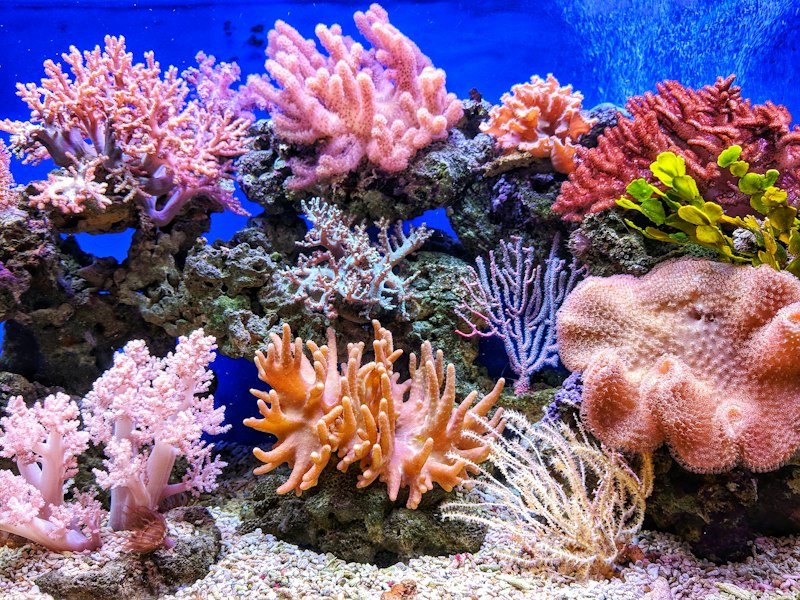
Soft corals
common
Gorgonians
common
Sea whips
commonDive profile & how the dive runs
Your dive at the Henry Leith typically begins with a boat ride from the dive center to the sheltered waters on the western side of Wongat Island. Upon arrival, you'll make an easy descent to the wreck, which rests on the seabed at 20 meters. The dive usually starts by exploring the bow section, where winches and other equipment are visible. You can then proceed along the 33-meter length of the freighter, investigating hatches and peering into the bridge. The hold contains remnants of a truck and other items, offering interesting details. The wreck's surfaces are completely encrusted with diverse corals, attracting numerous fish species. As you explore, maintain neutral buoyancy to protect the delicate coral growth. The maximum depth of 20 meters allows for good bottom time. The dive often concludes with a gradual ascent to a safety stop in the shallower areas nearby, possibly around the fringing reefs of Wongat Island, before surfacing.
Underwater photography
The Henry Leith wreck provides excellent opportunities for both wide-angle and macro photography. For wide-angle shots, consider a fisheye or wide-angle lens to capture the entire 33-meter vessel, especially when positioning yourself to show its relationship with the surrounding coral growth. Natural light is often sufficient in the relatively shallow 20-meter depth and clear lagoon waters, but strobes are highly recommended to bring out the vibrant colors of the soft corals, gorgonians, and black coral trees that densely cover the wreck. When focusing on the details of the vessel, such as the bridge or the contents of the hold, external lights can help illuminate darker areas. Macro photographers will find plenty of subjects among the smaller critters that inhabit the wreck, including nudibranchs, shrimps, and longnose hawkfish, often found nestled within the corals. Maintain excellent buoyancy control to avoid disturbing the delicate coral ecosystems and silting the wreck.
Combine with nearby dive sites
- The Bomber
A B-25 Mitchell Bomber wreck near Wongat Island, providing a historical complement to the Henry Leith.
- Magic Passage
A popular channel dive known for its walls covered in corals and masses of pelagic fish.
- Planet Rock
A seamount located offshore, renowned for large schools of pelagic fish and sharks.
- Barracuda Point
A vibrant wall dive attracting schools of trevally, barracuda, and other reef fish.
- The Quarry
A reef section with a dramatic drop-off to over 600 meters.
Getting there & logistics
Diving the Henry Leith typically begins from Madang, a coastal village on the main island of New Guinea. The primary access point for divers is the Madang Resort, which houses Niugini Dive Adventures, a local dive center that organizes boat trips to various sites, including the Henry Leith. Guests generally fly into Madang's local airport (Madang Airport, MAG) after connecting through larger hubs like Port Moresby (POM). Trips to the Henry Leith are usually day trips, often combined with other nearby sites like the B-25 Bomber at Wongat Island. Most itineraries involve staying at a land-based resort, though liveaboards use Madang as a jumping-off point for broader regional cruises. No specific marine park fees or permits beyond standard dive operator costs are typically mentioned for this site.
Safety & environment
For divers exploring the Henry Leith in Madang, Papua New Guinea, comprehensive dive insurance is strongly recommended, covering emergency medical care and evacuation. The nearest recompression chamber facilities are limited in PNG, with primary chambers located in Port Moresby and Rabaul, meaning evacuation for severe cases could be lengthy and complex. Divers should be self-sufficient and follow all instructions from their dive guides. Site-specific hazards are minimal due to the sheltered lagoon conditions, with mild to non-existent currents, contributing to a safer diving environment. However, proper wreck diving procedures should always be followed, especially if entering the wreck, to avoid entanglement or disturbing sediments. Always dive within your certified limits and conduct thorough pre-dive safety checks.
Who it suits — and who it doesn't
Suited for
- Wreck enthusiasts seeking accessible sites
- Divers interested in historical underwater structures
- Photographers aiming for vibrant coral and marine life
- Divers looking for mild current conditions
- Intermediate divers seeking to gain wreck experience
Less suited for
- Divers seeking extreme deep wreck challenges
- Those uninterested in coral-encrusted artificial reefs
- Beginners without basic wreck training for penetration
- Divers exclusively seeking large pelagic encounters
- Those who prefer strong drift dives
FAQ
Henry Leith FAQ
What is the history of the Henry Leith wreck?
The Henry Leith was a small coastal freighter that was intentionally scuttled in the 1980s. Its purpose was to create an artificial reef for divers to explore, contributing to the rich underwater attractions of the Madang region. This deliberate sinking has allowed the vessel to transform into a thriving marine habitat.
What kind of marine life can be seen on the Henry Leith?
The wreck is completely covered in a diverse array of corals, including large black coral trees, soft corals, gorgonians, and sea whips. This dense growth attracts numerous fish species such as trevally, batfish, snappers, lionfish, and sweetlips. Smaller critters like nudibranchs, shrimps, and longnose hawkfish are also commonly found.
Is the Henry Leith suitable for beginner divers?
The Henry Leith is generally considered an easy dive, resting at a maximum depth of 20 meters in calm, sheltered waters with mild to non-existent currents. While suitable for many divers, an 'intermediate' level is recommended, likely due to it being a wreck dive, ensuring divers are comfortable with buoyancy control and navigating around a structure.
What are the typical diving conditions at the Henry Leith?
Diving conditions at the Henry Leith are typically excellent due to its location within the sheltered Madang Lagoon. Currents are usually mild or absent, and visibility ranges from 25 to 40 meters. Water temperatures are warm, between 27-30°C, making for comfortable dives year-round, though visibility can be reduced during the wet season.
Can you penetrate the Henry Leith wreck?
Sources indicate that divers can 'peer into the bridge' and 'investigate a few hatches,' as well as observe the 'remains of a truck and other junk' in the hold. While this suggests some accessible internal areas, it does not explicitly state that full penetration is permitted or recommended. Any entry should only be attempted by appropriately trained and experienced wreck divers under guide supervision.
Why dive Henry Leith from a liveaboard?
Henry Leith is one of Papua New Guinea's signature dive sites. A liveaboard sleeps you on the water and puts you in the water for three to four guided dives per day, including dawn and night dives that day-boat operators rarely offer. You skip the daily commute back to port and reach quieter, less-crowded sites in the same region on a single trip.
Below are the liveaboards that include Henry Leith on their Papua New Guinea itineraries.
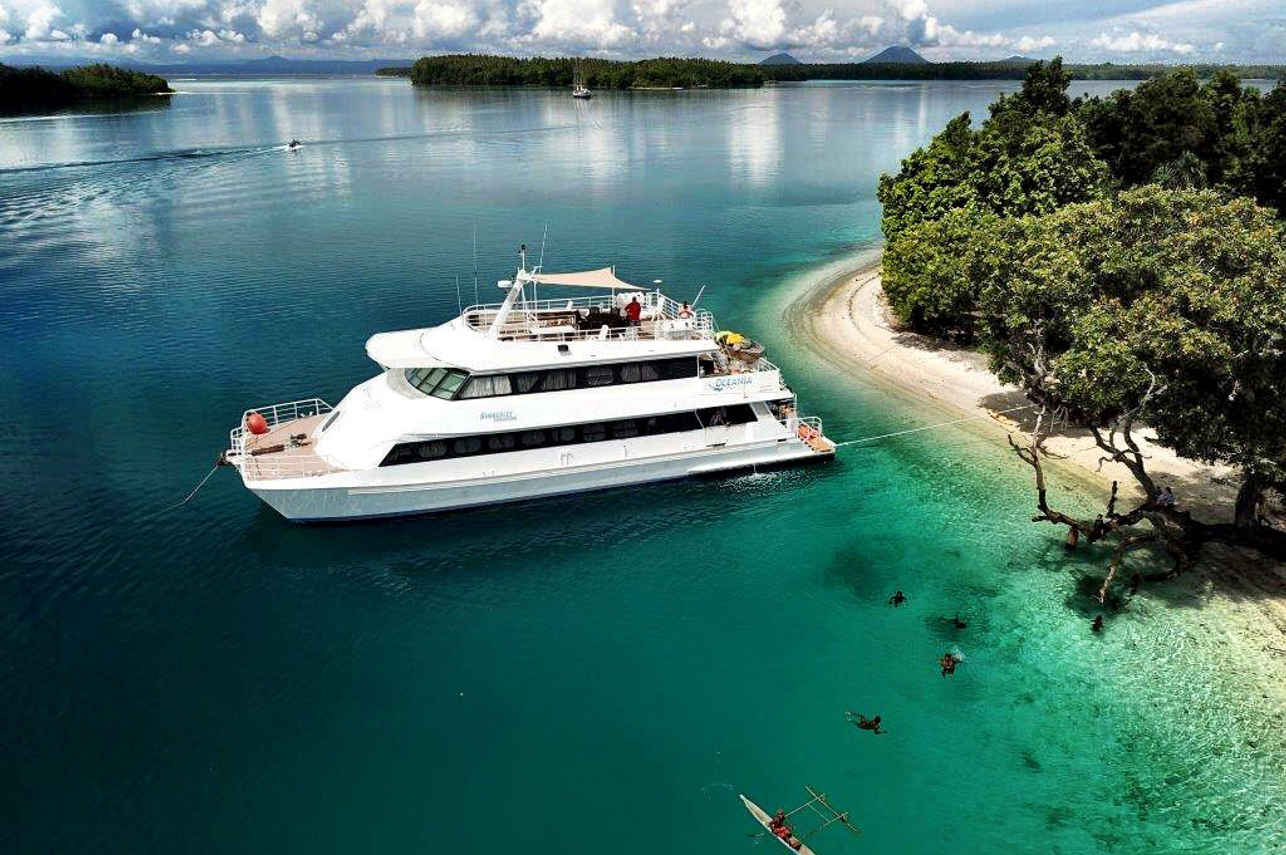
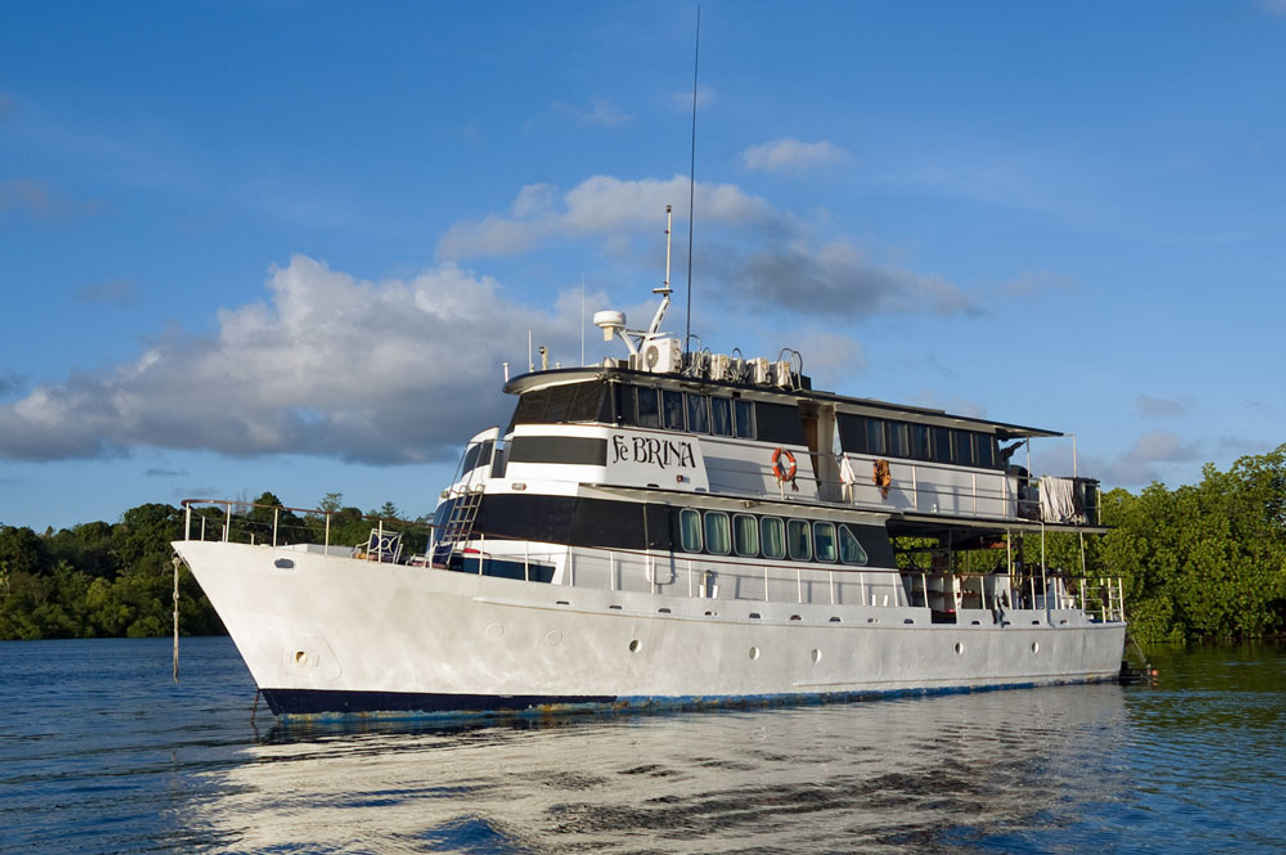
Liveaboards diving Henry Leith
These liveaboards may visit Henry Leith on selected itineraries — the exact dive sites depend on departure, weather and conditions.
Dive sites similar to Henry Leith
Same character, same waters — six more sites divers love for the exact same reasons.Compare seasons, access and liveaboard routes — then pick the site that fits your trip best.
© Esri — Maxar, Earthstar, GIS
Giants at Home
Papua New Guinea
Giants at Home is a unique dive site nestled in a protected, shallow bay within Milne Bay, Papua New Guinea, specifically known as a thriving manta ray cleaning station.
- Suitable for
- Beginner
- Current
- Mild
- Access
- Liveaboard only
- Depth
- 1–8 m
- Theme
- Reef
© Esri — Maxar, Earthstar, GIS
Lissenung Island Reef
Papua New Guinea
Lissenung Island Reef is the house reef surrounding approximately two-thirds of Lissenung Island, located near Kavieng in Papua New Guinea.
- Suitable for
- Beginner
- Current
- Moderate
- Access
- Shore / dayboat
- Depth
- 2–10 m
- Theme
- Reef
© Esri — Maxar, Earthstar, GIS
Banana Bommie
Papua New Guinea
Banana Bommie is a prominent and highly regarded dive site situated at the northern mouth of Milne Bay in Papua New Guinea.
- Suitable for
- Advanced
- Current
- Moderate
- Access
- Liveaboard only
- Depth
- ≤ 40 m
- Theme
- Reef / Pinnacle
© Esri — Maxar, Earthstar, GIS
End Bommie
Papua New Guinea
End Bommie is a renowned dive site located in Bootless Bay, near Port Moresby, Papua New Guinea.
- Suitable for
- Advanced
- Current
- Strong
- Access
- Liveaboard or dayboat
- Depth
- 6–30 m
- Theme
- Reef / Wall
Lauadi is a celebrated dive site within Milne Bay, Papua New Guinea, specifically recognized as the origin point of muck diving.
- Suitable for
- Beginner
- Current
- Moderate
- Access
- Shore / dayboat
- Depth
- 8–25 m
- Theme
- Reef
© Esri — Maxar, Earthstar, GIS
George's Wreck
Papua New Guinea
George's Wreck is a renowned dive site near Rabaul in Papua New Guinea, famous for its historical significance as a Japanese minelayer that reportedly ran aground after an Allied attack.
- Suitable for
- Advanced
- Current
- Moderate
- Access
- Liveaboard only
- Depth
- 12–60 m
- Theme
- Wreck / Reef