About End Bommie
End Bommie is a renowned dive site located in Bootless Bay, near Port Moresby, Papua New Guinea. This impressive site is characterized by walls richly covered with large seafans, which provide ideal habitats for many smaller, unique marine creatures. The bommie rises from the seafloor, acting as a magnet for a diverse array of fish and invertebrates, creating a vibrant underwater ecosystem. Diving at End Bommie typically involves exploring these coral-laden walls, where depths can reach up to 30 meters. The topography supports a variety of life across different zones, from the base to shallower sections. The strong currents often present here are a key factor in the site's rich biodiversity, bringing in ample food and attracting larger pelagic species. While the currents demand attention from divers, they contribute significantly to the site's reputation. End Bommie is particularly famous for frequent sightings of the Lacy Scorpionfish, a master of camouflage, along with Leopard Sharks. The combination of strong currents and abundant marine life makes this a dynamic and rewarding dive. The site is accessible year-round, with specific periods offering optimal visibility and conditions. It's often combined with other dives in the Port Moresby area, providing a comprehensive experience of the region's underwater treasures.
Highlights
Lacy Scorpionfish sightingsWalls covered in large seafansStrong currents, rich marine lifeLeopard SharksDiverse coral ecosystemPristine underwater topography
Season calendar
Best months to dive here
Jan
Feb
Mar
Apr
May
Jun
Jul
Aug
Sep
Oct
Nov
Dec
Good
Dive site facts: End Bommie
- Depth
- Up to 30 m
- Current
- Strong
- Visibility
- 20–40 m
- Water temperature
- 25–30°C
- Entry
- Day boat / Liveaboard
- Level
- Intermediate to Advanced, current experience helpful
- Dive type
- Reef, wall, drift, macro, big_animals
- Region / port
- Port Moresby, Bootless Bay
- Coordinates
- 6.4163° S, 149.4405° E
Conditions & Currents
End Bommie is known for potentially strong currents, which are a defining characteristic of the site. These currents are beneficial, bringing abundant nutrients that support a thriving marine ecosystem and attract larger marine life. Divers should be prepared for varying current strengths and directions, which may necessitate drift diving techniques. Efficient air management is essential, especially when exploring deeper sections or navigating against the flow. Visibility at End Bommie can be excellent, ranging from 20 to 40 meters, though strong currents can sometimes stir up sediment. Water temperatures are consistently warm, typically between 25°C and 30°C. Due to the currents, an intermediate or advanced certification with current diving experience is recommended to fully enjoy and safely navigate this vibrant site.
Marine life & sighting chances

Lacy Scorpionfish
common
Leopard Shark
occasional
Nudibranchs
common
Ghost Pipefish
occasional
Pygmy Seahorses
occasional
Barracudas
occasional
Trevally
occasional
Reef Sharks
occasional
Eagle Ray
occasional
Manta Ray
occasional
Sea Turtles
occasional
Octopus
occasional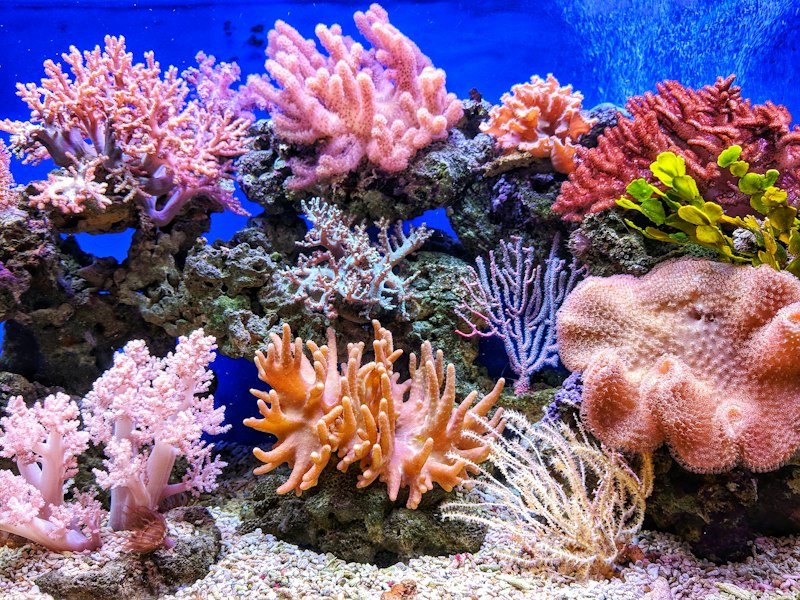
Soft Corals
common
Hard Corals
commonDive profile & how the dive runs
Dives at End Bommie typically begin with a boat drop directly onto the bommie. Divers descend along the main coral formation, exploring its walls covered with large seafans. The dive plan often involves circling the bommie at various depths, starting deeper around 30 meters to search for species like Leopard Sharks and then gradually ascending. The strong currents may necessitate a drift dive profile, allowing divers to be carried along the reef. Particular attention is paid to finding the camouflaged Lacy Scorpionfish among the corals. The dive concludes with a gradual ascent, often incorporating a safety stop in shallower, sheltered areas before surfacing for boat pick-up.
Underwater photography
End Bommie presents excellent opportunities for both macro and wide-angle photography, though the often-strong currents require solid buoyancy control. For wide-angle shots, a fisheye or wide rectilinear lens is ideal to capture the expansive coral walls, large seafans, and schools of barracuda or trevally. For macro subjects, such as the site's famous Lacy Scorpionfish, pygmy seahorses, or diverse nudibranchs, a 60mm or 100mm macro lens is recommended. Close-focus wide-angle can also be effective for capturing smaller critters within their coral environment. Strobes are essential to bring out the vibrant colors of the soft corals and cryptic marine life. Patience is key when seeking out camouflaged species, and careful observation of your guide's hand signals can lead to rare finds.
Combine with nearby dive sites
- Suzie's Bommie
Another significant bommie dive known for pygmy seahorses and diverse marine life.
- Loloata Island
A nearby resort and area offering a variety of dive sites, including muck dives, reefs, and pinnacles.
- The Pinnacles
Comprises three coral outcrops known for diverse coral cover and schools of reef fish.
- Sandy Passage
A drift dive site with regular sightings of eagle rays and mobulas.
Getting there & logistics
Access to End Bommie is primarily via day boat trips or liveaboards operating out of Port Moresby. The main international gateway is Jacksons International Airport (POM) in Port Moresby, with direct flights from Singapore, Australia, Hong Kong, Bali, and Japan. Divers typically stay at resorts in the Port Moresby area, such as Loloata Island Resort, which offers daily dive excursions within Bootless Bay. The dive center at Loloata operates two boats and serves over 30 moored sites within 10 to 30 minutes of the resort. Liveaboards also include Port Moresby in their itineraries. Dive gear bags can often be left at the dive center upon arrival, and divers are required to present certification cards and insurance details.
Safety & environment
Diving at End Bommie requires careful attention to safety protocols, especially given the potential for strong currents. Divers should ensure they are appropriately certified for intermediate to advanced conditions and have recent experience with current diving. A hyperbaric facility is available in Port Moresby, less than 30 minutes from Loloata Island Resort, for recompression needs. A fee of Kina 2 (approximately 0.50 US cents) is charged per dive towards its maintenance. All divers are strongly advised to have comprehensive diving insurance, such as DAN, to cover potential medical treatment costs, which can be significant. The dive center reserves the right to refuse diving to uninsured individuals. Always follow your dive guide's instructions, maintain good buoyancy control, and monitor air consumption closely.
Who it suits — and who it doesn't
Suited for
- Intermediate to advanced divers comfortable with currents
- Underwater photographers seeking unique macro subjects
- Marine life enthusiasts interested in endemic species
- Divers seeking vibrant reef ecosystems
- Those who appreciate challenging and rewarding dives
Less suited for
- Beginner divers without current experience
- Divers with poor buoyancy control
- Individuals prone to seasickness in choppy conditions
- Divers who prefer calm, current-free environments
FAQ
End Bommie FAQ
What kind of marine life can I expect to see at End Bommie?
End Bommie is celebrated for its incredible biodiversity. You can frequently spot the intricately camouflaged Lacy Scorpionfish, a local highlight. Other notable sightings include Leopard Sharks, various nudibranchs, ghost pipefish, and occasionally larger pelagic species like barracudas, trevally, reef sharks, and eagle rays.
Are the currents always strong at End Bommie?
End Bommie is known for strong currents, which are a key factor in attracting and sustaining its rich marine life. While currents can vary in strength, divers should always be prepared for moderate to strong conditions. These currents often make for exciting drift dives and bring in nutrients, enhancing the overall underwater experience.
What is the best time of year to dive End Bommie?
While End Bommie can be dived year-round, the optimal period is generally from November to early December. During these months, conditions typically offer calm seas and excellent visibility, maximizing the diving experience. The wet season from January to March might see reduced visibility.
What depth does End Bommie reach, and is it suitable for all divers?
End Bommie descends to depths of around 30 meters. Due to the potential for strong currents and the depth, this site is best suited for intermediate to advanced divers who are comfortable and experienced in such conditions. Beginners are advised to gain more experience before attempting this dive.
Where is End Bommie located and how do I get there?
End Bommie is situated in Bootless Bay, near Port Moresby, Papua New Guinea. Divers typically access the site via day boat trips from resorts in the Port Moresby area, such as Loloata Island Resort. International flights land at Jacksons International Airport (POM) in Port Moresby, serving as the main entry point.
Why dive End Bommie from a liveaboard?
End Bommie is one of Papua New Guinea's signature dive sites. A liveaboard sleeps you on the water and puts you in the water for three to four guided dives per day, including dawn and night dives that day-boat operators rarely offer. You skip the daily commute back to port and reach quieter, less-crowded sites in the same region on a single trip.
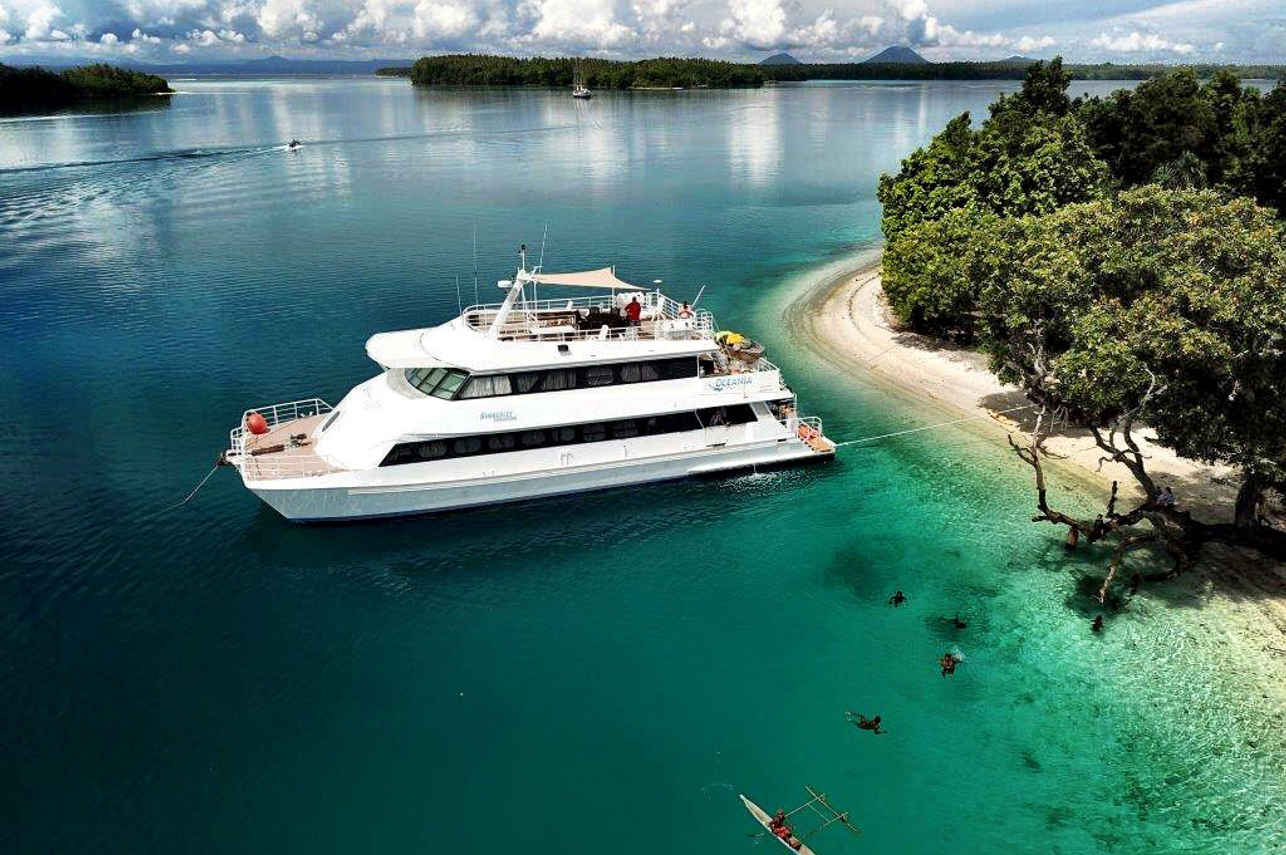
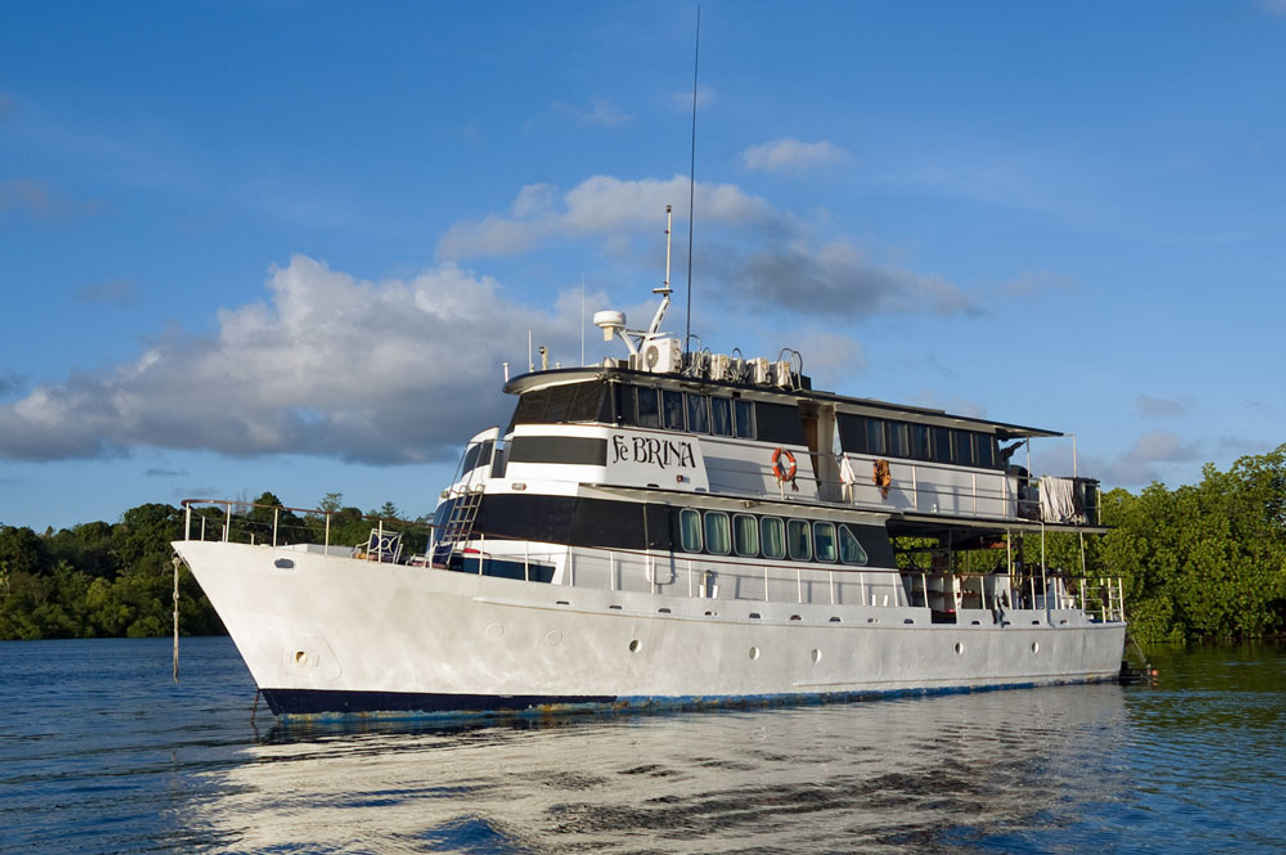
Below are the liveaboards that include End Bommie on their Papua New Guinea itineraries.
Liveaboards diving End Bommie
These liveaboards may visit End Bommie on selected itineraries — the exact dive sites depend on departure, weather and conditions.
Dive sites similar to End Bommie
Same character, same waters — six more sites divers love for the exact same reasons.Compare seasons, access and liveaboard routes — then pick the site that fits your trip best.
© Esri — Maxar, Earthstar, GIS
Giants at Home
Papua New Guinea
Giants at Home is a unique dive site nestled in a protected, shallow bay within Milne Bay, Papua New Guinea, specifically known as a thriving manta ray cleaning station.
- Suitable for
- Beginner
- Current
- Mild
- Access
- Liveaboard only
- Depth
- 1–8 m
- Theme
- Reef
© Esri — Maxar, Earthstar, GIS
Lissenung Island Reef
Papua New Guinea
Lissenung Island Reef is the house reef surrounding approximately two-thirds of Lissenung Island, located near Kavieng in Papua New Guinea.
- Suitable for
- Beginner
- Current
- Moderate
- Access
- Shore / dayboat
- Depth
- 2–10 m
- Theme
- Reef
© Esri — Maxar, Earthstar, GIS
Bermuda Drop
Papua New Guinea
Bermuda Drop is a notable wall drift dive located near Kavieng, Papua New Guinea, offering an experienced diver a journey along an impressive underwater cliff.
- Suitable for
- Advanced
- Current
- Moderate
- Access
- Liveaboard only
- Depth
- 3–26 m
- Theme
- Wall / Drift
© Esri — Maxar, Earthstar, GIS
Banana Bommie
Papua New Guinea
Banana Bommie is a prominent and highly regarded dive site situated at the northern mouth of Milne Bay in Papua New Guinea.
- Suitable for
- Advanced
- Current
- Moderate
- Access
- Liveaboard only
- Depth
- ≤ 40 m
- Theme
- Reef / Pinnacle
Lauadi is a celebrated dive site within Milne Bay, Papua New Guinea, specifically recognized as the origin point of muck diving.
- Suitable for
- Beginner
- Current
- Moderate
- Access
- Shore / dayboat
- Depth
- 8–25 m
- Theme
- Reef
© Esri — Maxar, Earthstar, GIS
George's Wreck
Papua New Guinea
George's Wreck is a renowned dive site near Rabaul in Papua New Guinea, famous for its historical significance as a Japanese minelayer that reportedly ran aground after an Allied attack.
- Suitable for
- Advanced
- Current
- Moderate
- Access
- Liveaboard only
- Depth
- 12–60 m
- Theme
- Wreck / Reef