About Pinnacles
The Turks and Caicos Islands are home to some of the Caribbean's most celebrated wall dives, characterized by an abundant underwater ecosystem. Divers frequently encounter a diverse array of marine life, including various shark species, sea turtles, and vibrant coral formations. Known for exceptional visibility and minimal currents, the region presents an optimal environment for divers of all skill levels and underwater photographers. The archipelago consists of 40 islands and cays situated about 550 miles southeast of Miami. The islands are encircled by pristine turquoise waters and feature over 1,000 square miles of healthy coral reefs. The main draw for divers is the dramatic vertical wall diving, alongside clear, warm waters and the opportunity to explore the world's third-largest barrier reef. Diving depths vary, allowing exploration of unique geological features such as spur and groove formations, sand chutes, and canyons. Marine life in Turks & Caicos is extensive, featuring attractions like sea turtles, orange elephant ear sponges, gray reef sharks, angelfish, eagle rays, horse-eye jacks, lobsters, snapper, and nurse sharks. During the winter months, humpback whales are a significant draw, and occasional sightings of hammerheads and manta rays also occur. Conditions are generally favorable for diving, with warm and calm waters. Most dives in the region are suitable for all levels, and many liveaboards offer multiple dives per day. Certification requirements may vary for specific sites or deeper sections of walls.
Highlights
Two prominent pinnacle formationsStrong currents attracting pelagicsShark and dolphin actionVertical wall divingVivid coral gardensPotential for whale song in seasonSandy areas with stingrays
Season calendar
Best months to dive here
Jan
Feb
Mar
Apr
May
Jun
Jul
Aug
Sep
Oct
Nov
Dec
Excellent
Good
Off-Season
Jan – Apr
Best visibility, whale season, calm seas, perfect conditions
May – Jul & Nov – Dec
Great diving with warm water and good visibility
Aug – Oct
Hurricane season but still diveable with warmer water
Dive site facts: Pinnacles
- Depth
- 15 m+ (50 ft+)
- Current
- Strong
- Visibility
- 15–45 m (50–150 ft)
- Water temperature
- 22–28 °C (72–82 °F)
- Entry
- Liveaboard / Day boat
- Level
- Advanced
- Dive type
- Wall, pinnacle, drift, big_animals
- Night dive
- Possible
- Region / port
- French Cay, Turks & Caicos
- Coordinates
- 21.8447, -72.1917
Conditions & Currents
Pinnacles is frequently enveloped in strong currents, which are a defining characteristic of this dive site. These currents are a key factor in attracting the rich pelagic life observed here, including various sharks and schools of spadefish. Divers should be prepared for active drift diving conditions, making proper buoyancy control and current experience essential. Entry is typically a negative descent to avoid being swept away from the pinnacles. Dive briefings emphasize staying close to the reef structure and maintaining buddy contact, as navigation relies on moving with the current. Visibility at French Cay, where Pinnacles is located, is generally excellent, ranging from 15 to 45 meters (50 to 150 feet), which helps divers track the reef even in stronger flows. Due to the dynamic nature of the currents and the depths involved, precise gas planning and adherence to dive profiles are
Marine life & sighting chances

Shark
common
Dolphin
occasional
Spadefish
common
Stingray
common
Humpback whale
January-April · occasional
Gorgonian fan
common
Black coral
commonCoral
common
Eagle ray
occasionalDive profile & how the dive runs
Diving at Pinnacles typically begins with a negative entry and rapid descent directly onto the reef, usually around 15 meters (50 feet), to avoid being swept away by the prevailing strong currents. The dive often follows the contour of the two large, side-by-side pinnacles that give the site its name, rising from the seabed. Divers explore along the reef ridge and the dramatic vertical wall that drops into the abyss, keeping an eye out for pelagic action in the blue. The route can involve exploring nearby sandy areas where stingrays are known to forage. Due to currents, this is often a drift dive, with the boat tracking divers from the surface. Ascent and safety stops are carefully coordinated with the dive guide and boat crew, often involving a surface marker buoy deployment to signal the boat for pickup down-current.
Underwater photography
Pinnacles, with its strong currents and pelagic encounters, is an excellent site for wide-angle photography. A dome port and powerful strobes are highly recommended to capture the expansive wall formations, schools of spadefish, and potential shark or dolphin sightings. Given the frequent presence of currents, maintaining excellent buoyancy control is crucial to avoid contact with the fragile coral and to hold your position for shots. Be prepared for fast-moving subjects and adjust camera settings accordingly for dynamic action. While macro opportunities exist, the site's main draw and photographic strength lie in its dramatic wide-angle potential.
Combine with nearby dive sites
- Double D
Another French Cay site known for two large peaks and pelagic encounters.
- G Spot
A French Cay site with a distinct reef ridge, large black corals, and nurse sharks.
- Shark Hotel
Off Northwest Point, a great place to spot reef sharks.
- Amphitheater
A Northwest Point wall dive with a unique bowl-shaped formation attracting marine life.
- Magic Mushroom
A West Caicos site identified by a mushroom-shaped rock, leading to a vibrant reef and sand chutes.
Getting there & logistics
Access to Pinnacles and other French Cay dive sites is primarily via liveaboard vessels or day boats departing from Providenciales. Divers typically fly into Providenciales International Airport (PLS), which has direct flights from major hubs in the US, Canada, and the UK. Liveaboards like the Turks & Caicos Explorer II often include French Cay in their itineraries, offering multiple dives daily over a 5.5-day period, departing each Saturday. These trips provide comprehensive diving experiences, including transfers from PLS. Park fees are generally incorporated into liveaboard or dive package costs. Combining French Cay with West Caicos and Northwest Point is a common itinerary for extended dive trips.
Safety & environment
For dive emergencies in Turks & Caicos, the nearest recompression chamber is located in Providenciales. Evacuation protocols are well-established by local dive operators, typically involving boat transfer to shore and then land transport to medical facilities. Divers are strongly advised to hold comprehensive dive-specific insurance covering medical treatment and emergency evacuation. At Pinnacles, specific hazards include strong and potentially unpredictable currents, requiring divers to stay vigilant, maintain excellent buoyancy, and strictly adhere to the dive guide's instructions. A surface marker buoy is essential for every diver, and proper air management is crucial given the depths and dynamic conditions.
Who it suits, and who it doesn't
Suited for
- Experienced divers comfortable with strong currents
- Underwater photographers focusing on wide-angle pelagic shots
- Divers seeking dramatic wall and pinnacle topography
- Those interested in shark and large animal encounters
- Liveaboard enthusiasts seeking remote, uncrowded sites
Less suited for
- Beginner divers or those without current diving experience
- Divers who prefer calm, sheltered reef environments
- Individuals sensitive to motion sickness on choppy seas
- Photographers primarily interested in macro subjects
FAQ
Pinnacles FAQ
What kind of currents can be expected at Pinnacles?
Pinnacles is frequently known for its strong currents. These dynamic conditions are a major draw, as they attract a significant amount of pelagic marine life, including various shark species and schools of spadefish. Divers should be proficient in drift diving techniques and comfortable with varying current strengths to safely enjoy this site.
What unique topographical features does Pinnacles offer?
The site is named for its two distinct, large pinnacle-like peaks that rise from the ocean floor. These formations are often surrounded by vibrant coral gardens and lead to a dramatic vertical wall that plunges into the deep. Divers can explore the reef ridge, the wall, and nearby sandy areas where marine life congregates.
What marine life is commonly seen at Pinnacles?
Divers at Pinnacles frequently encounter various shark species and large schools of spadefish attracted by the currents. Stingrays are also common in the sandy areas, and there are occasional sightings of dolphins and eagle rays. During the winter months from January to April, humpback whales migrate through the area, offering a chance to hear their songs underwater.
Is Pinnacles suitable for all dive levels?
Pinnacles is best suited for advanced divers who are experienced and comfortable with strong currents. The site's dynamic conditions, deep wall diving, and potential for rapid descents require excellent buoyancy control, good air consumption management, and the ability to handle drift diving scenarios. Beginners or those uncomfortable with currents may find it challenging.
How is Pinnacles typically accessed?
This dive site is predominantly accessed via liveaboard diving vessels, or sometimes by day boats, departing from Providenciales. Its location in the French Cay area often makes it part of multi-day itineraries that also include other renowned sites in West Caicos and Northwest Point. Liveaboard operations are well-equipped to manage the logistics of diving in these more remote areas.
Why dive Pinnacles from a liveaboard?
Pinnacles is one of Turks & Caicos's signature dive sites. A liveaboard sleeps you on the water and puts you in the water for three to four guided dives per day, including dawn and night dives that day-boat operators rarely offer. You skip the daily commute back to port and reach quieter, less-crowded sites in the same region on a single trip.
Below are the liveaboards that include Pinnacles on their Turks & Caicos itineraries.
Liveaboards diving Pinnacles
These liveaboards may visit Pinnacles on selected itineraries, the exact dive sites depend on departure, weather and conditions.
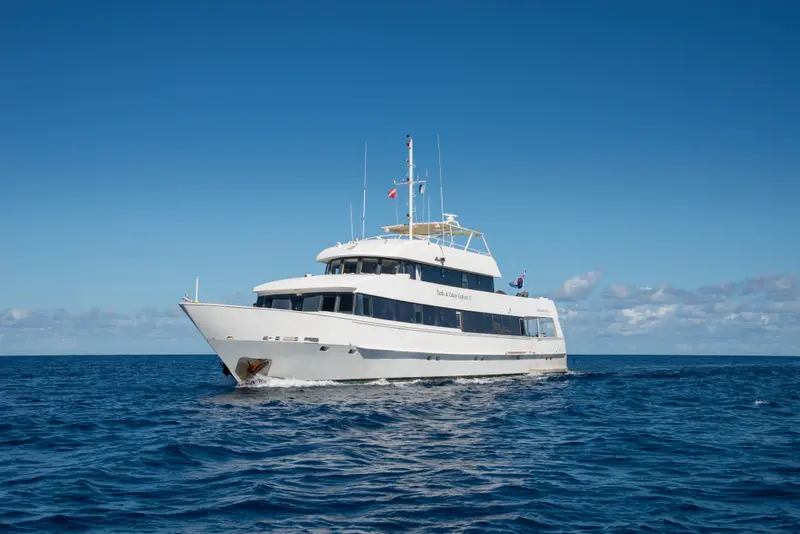
Turks and Caicos Explorer II
Turks & Caicos
20 guests
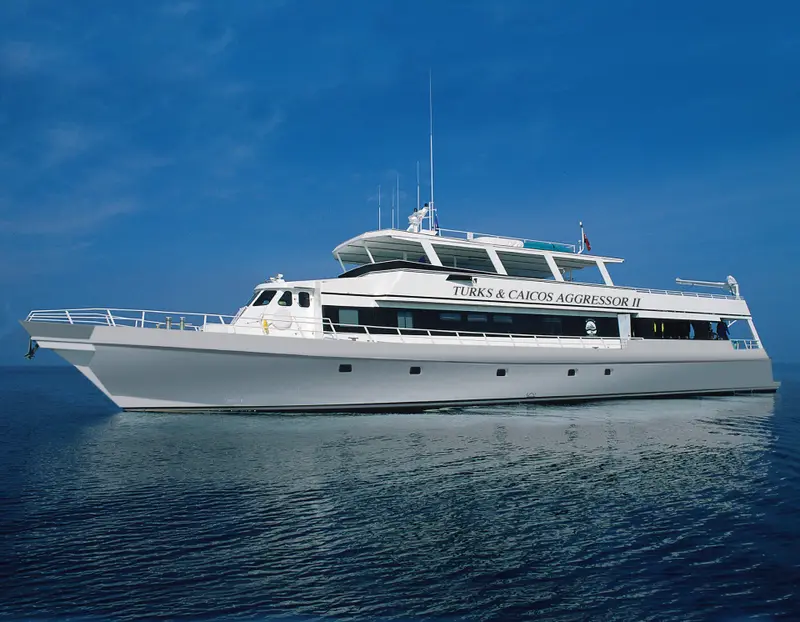
Turks & Caicos Aggressor II
Turks & Caicos
18 guests37 m
Dive sites similar to Pinnacles
Same character, same waters, six more sites divers love for the exact same reasons.Compare seasons, access and liveaboard routes, then pick the site that fits your trip best.
© EsriMaxar, Earthstar, GIS
3 Fathom Wall
Cayman Islands
3 Fathom Wall is an exciting and fish-filled dive site located in the Cayman Islands, specifically at the intersection of the renowned Bloody Bay Wall.
- Suitable for
- Intermediate
- Current
- Mild
- Access
- Liveaboard only
- Depth
- ≤ 3000 m
- Theme
- Reef
While specific details for a dive site named "3 Riff" are not present in the provided sources, general diving conditions and characteristics for the Dominican Republic…
- Suitable for
- Advanced
- Current
- Mild
- Access
- Dayboat
- Depth
- 30–55 m
- Theme
- Reef
The dive site known as 3 Rocks is located off the coast of Sosúa in Puerto Plata, Dominican Republic, offering an accessible and lively underwater experience.
- Suitable for
- Beginner
- Current
- Mild
- Access
- Dayboat
- Depth
- 2–8 m
- Theme
- Reef
4 Amigos is a notable dive site located in the Bay Islands of Honduras, an area renowned for its extensive Mesoamerican Barrier Reef System, which is the world's second-longest.
- Suitable for
- Intermediate
- Current
- Moderate
- Access
- Liveaboard or dayboat
- Depth
- 9–40 m
- Theme
- Reef
© EsriMaxar, Earthstar, GIS
6 Toed Cat
Mexico
The dive site known as "6 Toed Cat" is not a recognized dive location in Mexico; rather, it refers to the polydactyl felines, many with six toes, that inhabit the Ernest Hemingway Home and Museum in Key West, Florida.
- Suitable for
- Beginner
- Current
- Mild
- Access
- Liveaboard or dayboat
- Depth
- —
- Theme
- Reef
© EsriMaxar, Earthstar, GIS
Aaron's Backyard
Honduras
Aaron's Backyard is a noted dive site within the Roatan Marine Park in Honduras, part of the extensive Mesoamerican Barrier Reef System.
- Suitable for
- Intermediate
- Current
- Moderate
- Access
- Liveaboard or dayboat
- Depth
- 9–40 m
- Theme
- Reef