About Flinders Reef - China Wall
Flinders Reef's China Wall is a spectacular dive site located within Australia's Coral Sea Marine Park, offering an immersive experience into a vibrant, untouched marine ecosystem. This iconic site features a dramatic vertical wall, richly adorned with a diverse array of soft corals and sea whips that thrive in the nutrient-rich currents. Its remote location, accessible primarily by liveaboard, ensures pristine conditions and abundant marine life rarely disturbed by human activity. The topography of China Wall is defined by its sheer drop-off, which plunges into deeper waters and provides a home for both reef-dwelling species and pelagic visitors. Divers explore intricate ledges and crevices, observing a transition from shallow reef life to deeper water inhabitants. The site is a magnet for large marine animals, particularly manta rays that frequent cleaning stations on the reef top during specific seasons, and leopard sharks often found resting on the sandy bottom. Water temperatures generally range from 24°C in winter to 29°C in summer, with visibility frequently exceeding 30 meters, making it ideal for photography and observing marine interactions. While currents can vary, the drift diving experience allows divers to effortlessly glide along the wall, observing the vibrant tableau of corals and fish without extensive finning. The best time to visit is during the dry season from June to November for optimal weather and marine encounters, although the wet season also offers unique sightings of juvenile fish and manta rays.
Highlights
Dramatic vertical coral wallManta ray cleaning stationsLeopard shark sightingsDense soft coral gardensPristine remote ecosystemExceptional visibility
Season calendar
Best months to dive here
Jan
Feb
Mar
Apr
May
Jun
Jul
Aug
Sep
Oct
Nov
Dec
Excellent
Good
Dive site facts: Flinders Reef - China Wall
- Depth
- 8–35 m
- Current
- Moderate to strong (drift)
- Visibility
- 30–60 m
- Water temperature
- 24–29 °C
- Entry
- Tender / negative entry
- Level
- Advanced Open Water Diver
- Dive type
- Wall, drift, pelagic
- Night dive
- Possible
- Region / port
- Coral Sea, Australia
- Coordinates
- -17.72, 148.45
Conditions & Currents
Flinders Reef - China Wall can experience varying currents, typical of remote oceanic sites. Dive operations usually involve drift diving, allowing divers to move effortlessly along the wall with the prevailing flow. Dive briefings are crucial for understanding current direction, entry procedures (which might be negative entry), and exit strategies, ensuring all divers are prepared for the dynamic conditions. While strong currents can occur, they are generally manageable for experienced divers and contribute to the rich marine diversity found here. Divers should remain streamlined and aware of their buddy, as currents can occasionally separate pairs. It is essential for each diver to carry a DSMB and know its proper deployment in case of separation or surfacing away from the boat, which will track the group.
Marine life & sighting chances

Manta ray
May to September · common
Leopard shark
common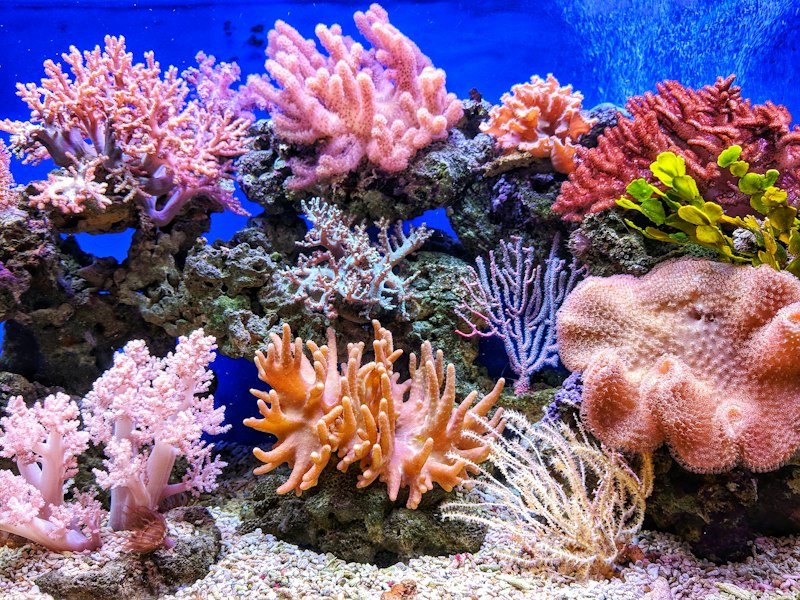
Soft coral
common
Sea whip
common
Reef fish
common
Turtles
occasional
Reef sharks
occasional
Potato cod
occasional
Sweetlips
occasional
Coral trout
occasional
Triggerfish
occasionalDive profile & how the dive runs
Diving at China Wall typically begins with a tender drop or negative entry, allowing divers to quickly descend to the reef. The dive follows the contours of the vertical wall, utilizing the current for a relaxed drift. Divers will explore depths ranging from the reef top, around 5-10 meters, down to 30 meters or more along the wall. The route often involves observing cleaning stations for manta rays on the upper reef and scanning the sandy ledges at deeper sections for resting leopard sharks. Turn points are usually dictated by gas consumption or the group's position relative to the liveaboard, which tracks divers from the surface. Safety stops are conducted in the shallower, current-protected areas of the reef before ascending to the surface, where the liveaboard will be waiting for pick-up.
Underwater photography
China Wall offers fantastic opportunities for both wide-angle and macro photography. For wide-angle shots, a fisheye or wide-angle lens is ideal to capture the grandeur of the coral-covered wall, manta rays, and schooling fish. Strong external strobes are essential to bring out the vibrant colors of the soft corals and sea whips, which are often illuminated by natural light due to excellent visibility. For macro enthusiasts, numerous small reef creatures can be found among the corals and crevices. Buoyancy control is paramount, especially during drift dives, to avoid damaging the delicate corals and to maintain stable shots. Always be respectful of marine life, giving animals ample space and avoiding harassment for a photograph.
Combine with nearby dive sites
- Bougainville Reef
Bougainville Reef, situated approximately 150 km south of Osprey Reef in the Coral Sea, is a remote and pristine dive destination off…
- Osprey Reef - North Horn
Osprey Reef's North Horn is a world-renowned dive site in the Coral Sea, located about 350 kilometers offshore from Queensland, Australia…
- Cod Hole
Cod Hole is a renowned dive site located at the northern end of Ribbon Reef #10, approximately 240 kilometers north of Cairns, Australia…
- Ribbon Reef No. 9
Ribbon Reef No.
- Steve's Bommie
Steve's Bommie, located on Ribbon Reef No.
- Pixie Pinnacle
Pixie Pinnacle is a renowned dive site located between Ribbon Reefs #9 and #10, off the coast of Cooktown, Queensland.
Getting there & logistics
Access to Flinders Reef - China Wall is exclusively via liveaboard, typically departing from Cairns, Queensland. Major airports serving the region include Cairns Airport (CNS). Liveaboard trips usually range from 3 to 7 nights, combining Flinders Reef with other remote Coral Sea and Great Barrier Reef sites like the Ribbon Reefs or Osprey Reef. There are no specific entry fees for the dive site itself beyond the liveaboard package, which covers all permits and marine park fees. Operators such as Spirit of Freedom and Rum Runner frequently include China Wall in their itineraries, providing an opportunity to explore multiple pristine locations on a single journey.
Safety & environment
Diving at Flinders Reef - China Wall requires adherence to strict safety protocols due to its remote location and potential for currents. All divers should have comprehensive dive insurance covering remote medical evacuation and hyperbaric treatment. The nearest recompression chamber is in Townsville, necessitating air evacuation in a serious emergency, which can be costly and time-consuming. Divers must be proficient in drift diving techniques and comfortable with deep dives. Always maintain excellent buoyancy control to protect the fragile coral environment. Follow your dive guide's instructions precisely, especially regarding entry, exit, and buddy procedures, and ensure you are equipped with an audible signaling device and an SMB for surface visibility.
Who it suits — and who it doesn't
Suited for
- Experienced drift divers
- Advanced Open Water Divers
- Underwater photographers
- Pelagic enthusiasts
- Coral reef admirers
Less suited for
- Beginner divers (Open Water)
- Divers uncomfortable with currents
- Those prone to seasickness
- Divers seeking shallow, static dives
- Budget-conscious travelers
FAQ
Flinders Reef - China Wall FAQ
What kind of marine life can I expect to see at China Wall?
China Wall is renowned for its diverse marine life, including frequent sightings of manta rays at cleaning stations, particularly from May to September. You can also expect to see leopard sharks resting on sandy ledges, various species of reef sharks, and a vibrant array of reef fish amidst the dense soft coral gardens and sea whips.
What are the typical dive conditions at Flinders Reef - China Wall?
Dive conditions at China Wall are generally excellent, with water temperatures ranging from 24-29°C and exceptional visibility often exceeding 30 meters. Currents can be moderate to strong, making it an ideal site for drift diving. The best weather conditions, including clear skies and lower humidity, are usually found during the dry season from June to November.
Is Flinders Reef - China Wall suitable for beginner divers?
Flinders Reef - China Wall is best suited for experienced divers, particularly those with Advanced Open Water Diver certification and experience with drift diving. The site's remote location and potential for currents require a higher level of comfort and skill than beginner-friendly sites. It is not recommended for Open Water Divers or those uncomfortable with dynamic conditions.
How do I get to Flinders Reef - China Wall?
Flinders Reef - China Wall is a remote site accessible only via liveaboard boat trips, typically departing from Cairns, Queensland. These liveaboard expeditions often last several days, combining China Wall with other dive sites in the Coral Sea and Great Barrier Reef region. There are no day trip options due to its distance from the mainland.
What is the best time of year to dive China Wall for manta rays?
Manta rays are commonly spotted at the cleaning stations on the reef top of China Wall between May and September. During these months, the cooler water temperatures and prevailing currents create ideal conditions for these majestic creatures to congregate, offering excellent opportunities for encounters.
Why dive Flinders Reef - China Wall from a liveaboard?
Flinders Reef - China Wall is one of Australia's signature dive sites. A liveaboard sleeps you on the water and puts you in the water for three to four guided dives per day, including dawn and night dives that day-boat operators rarely offer. You skip the daily commute back to port and reach quieter, less-crowded sites in the same region on a single trip.
Below are the liveaboards that include Flinders Reef - China Wall on their Australia itineraries.
Liveaboards diving Flinders Reef - China Wall
These liveaboards may visit Flinders Reef - China Wall on selected itineraries — the exact dive sites depend on departure, weather and conditions.
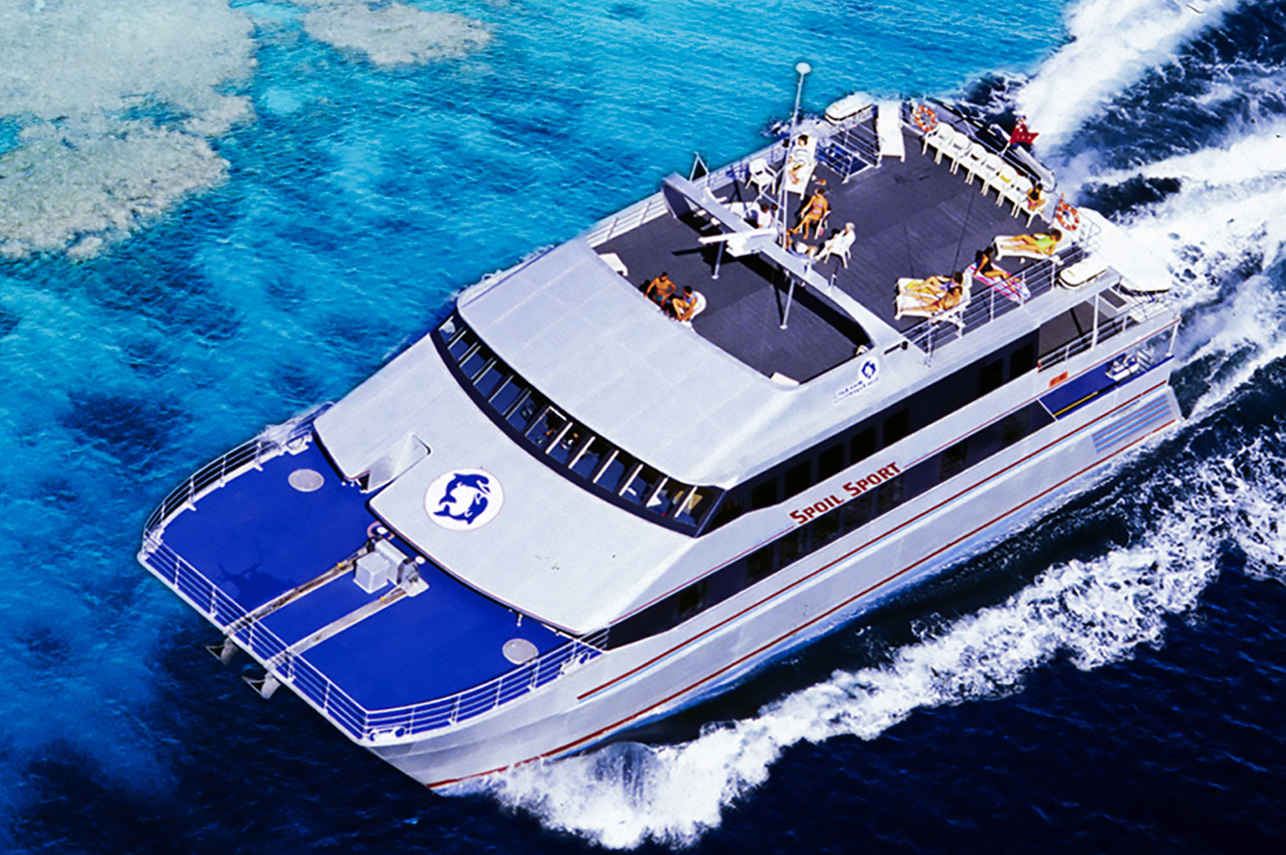
Spoilsport
Australia
28 guests30 m
$403/day
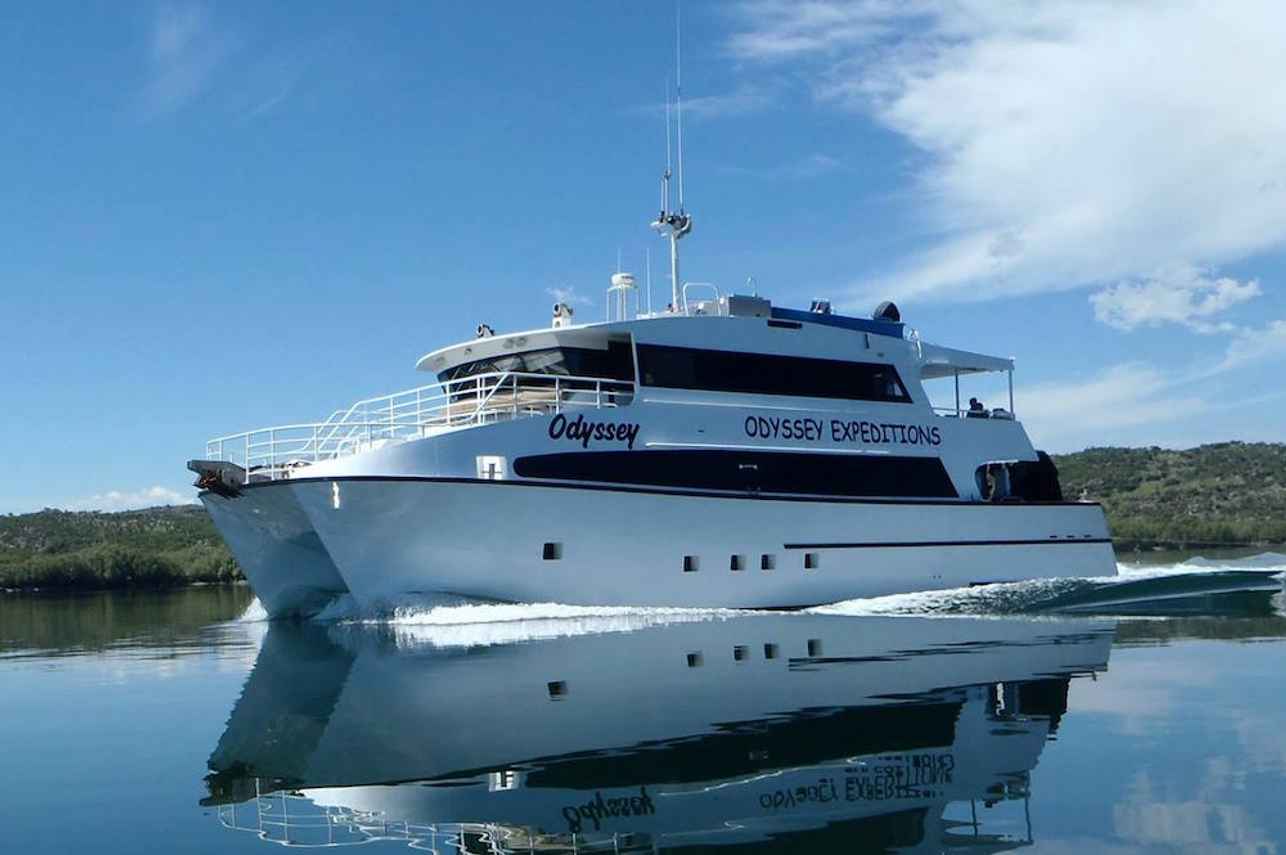
Odyssey Liveaboard
Australia
20 guests24 m
$392/day
Dive sites similar to Flinders Reef - China Wall
Same character, same waters — six more sites divers love for the exact same reasons.Compare seasons, access and liveaboard routes — then pick the site that fits your trip best.
© Esri — Maxar, Earthstar, GIS
Challenger Bay
Australia
Challenger Bay, nestled on Ribbon Reef #10, approximately 176 kilometers north of Port Douglas, is a renowned dive site on the remote northern Great Barrier Reef.
- Suitable for
- Advanced
- Current
- Moderate
- Access
- Liveaboard only
- Depth
- 5–30 m
- Theme
- Reef
© Esri — Maxar, Earthstar, GIS
Trochus Sanctuary
Micronesia
Trochus Sanctuary is a distinctive dive site located north of the mid-point of Kosrae, southwest of the island's airport.
- Suitable for
- Beginner
- Current
- Mild
- Access
- Dayboat
- Depth
- 5–13 m
- Theme
- Reef
© Esri — Maxar, Earthstar, GIS
Bare Island East
Australia
Bare Island East is a highly regarded shore dive in Sydney, celebrated for its diverse and colourful sponge gardens.
- Suitable for
- Intermediate
- Current
- Mild
- Access
- Shore / dayboat
- Depth
- 2–11 m
- Theme
- Reef
© Esri — Maxar, Earthstar, GIS
Raine Island
Australia
Raine Island is a pivotal dive site located in the Far Northern Great Barrier Reef, approximately 85 kilometers east-north-east of Cape Grenville and just over 4 nautical miles south of the island itself.
- Suitable for
- Advanced
- Current
- Strong
- Access
- Liveaboard only
- Depth
- 5–40 m
- Theme
- Reef / Wall
© Esri — Maxar, Earthstar, GIS
Neptune Islands
Australia
The Neptune Islands, nestled at the mouth of South Australia's Spencer Gulf, offer an unparalleled opportunity to encounter great white sharks.
- Suitable for
- Advanced
- Current
- Strong
- Access
- Liveaboard or dayboat
- Depth
- 5–15 m
- Theme
- Drift
© Esri — Maxar, Earthstar, GIS
Walung Drop-Off
Micronesia
Walung Drop-Off is a well-known dive site situated off the southwest coast of Kosrae in the Federated States of Micronesia.
- Suitable for
- Intermediate
- Current
- Moderate
- Access
- Dayboat
- Depth
- ≤ 30 m
- Theme
- Wall / Reef