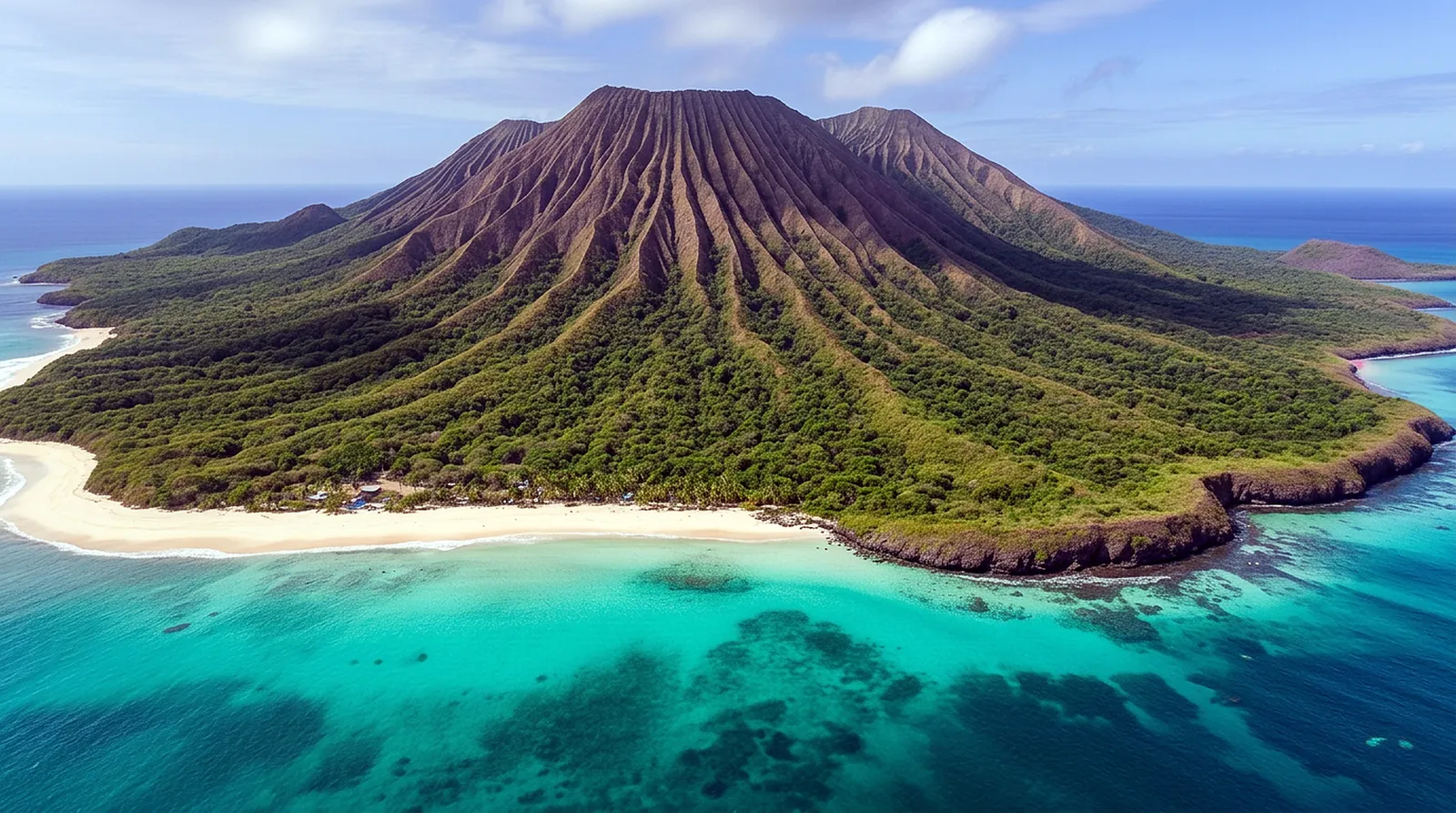
Conditions in May
So, you're eyeing a dive trip to Komodo in May? Excellent choice! May in Komodo is a fantastic transition month, often marking the sweet spot between the end of the rainy season and the full swing of the drier, more bustling high season. This means you’ll often benefit from calmer seas and good visibility, without the peak crowds. Generally, the sea state begins to settle down significantly after the monsoon, offering smoother sailing and more comfortable diving conditions. While you might still encounter an occasional scattered shower, these are usually brief and don't typically impact your diving schedule.
Water temperatures in May are pleasantly warm, hovering around a comfortable 27-29°C (81-84°F) in the north and central areas. However, be prepared for cooler thermoclines in the south, particularly around sites like Manta Alley, where temperatures can dip to 22-24°C (72-75°F) as nutrient-rich upwellings bring bountiful food for the pelagics. Visibility during May is typically excellent, often ranging from 20-30 meters, especially in the central and northern parts of the park. In the south, visibility can vary more due to the plankton-rich waters that attract larger marine life, sometimes dropping to 15-20 meters, but it's a trade-off many are happy to make for the exceptional encounters.
Currents are, as always in Komodo, a defining feature. May typically sees the currents easing slightly compared to the more extreme flows of the dry season, but they are still very much present and an integral part of the Komodo diving experience. You can expect mild to strong currents, which are precisely what make Komodo’s reefs so vibrant and teeming with life. Your experienced dive guides will, of course, navigate these with expertise, ensuring you drift safely along vibrant walls and over healthy coral gardens.
What you will see
May in Komodo is a stellar time for marine life sightings, as the waters truly begin to pulse with activity. This period is particularly good for pelagic encounters. While mantas are a year-round resident, May sees consistent sightings, especially at cleaning stations like Manta Point and Makassar Reef (also known as Manta City). The upwelling in the south, coupled with warming surface waters, creates a perfect storm of conditions that brings these majestic creatures right into view. You can expect to see multiple individuals gracefully gliding overhead, often in aggregations, making for unforgettable encounters.
Beyond the mantas, sharks are a common sight. You’ll regularly encounter white-tip and black-tip reef sharks patrolling the reefs, particularly in current-swept areas. Grey reef sharks are also frequently spotted, especially at deeper pinnacle sites. Keep an eye out for impressive schooling barracuda, trevally, and fusiliers forming shimmering silver walls around you. As for macro life, Komodo never disappoints, and May is no exception. Look for pygmy seahorses on gorgonian fans, colorful nudibranchs, frogfish camouflaged on sponges, and a myriad of tiny critters hidden on the reef.
May also offers a good chance to spot some of Komodo's more elusive residents. While not guaranteed, eagle rays and mobula rays are often seen cruising the blue. Keep your fingers crossed for sightings of oceanic sunfish (Mola Mola), which occasionally make an appearance in the cooler, deeper waters, particularly in the southern reaches. The vibrant hard and soft coral gardens are at their prime, teeming with reef fish of every color imaginable, providing a kaleidoscopic backdrop to every dive.
Top dive sites this month
Given the favorable conditions and burgeoning marine life in May, several sites truly shine. For unparalleled manta action, you absolutely must visit Makassar Reef (Manta City). This expansive sandy bottom site, often subject to mild currents, is a consistent cleaning and feeding ground for dozens of reef mantas, offering incredible photographic opportunities. Nearby, Manta Point (sometimes the same site, depending on local nomenclature) also delivers, particularly if there’s a thermocline bringing plankton-rich waters.
Another must-dive in May is Batu Bolong. This iconic site, a pinnacle rising from the depths, is a magnet for marine life due to its strong currents. While impressive year-round, May’s slightly easier currents can make experiencing its sheer abundance of schooling fish, reef sharks, and stunning corals even more enjoyable. Just be prepared for the current and dive with your guide! For a mix of diverse marine life and stunning topography, head to Castle Rock and Crystal Rock in the central Komodo region. These two pinnacles are renowned for their schooling fish, pelagic sightings, and the occasional strong currents that make drift dives exhilarating. Finally, for an outstanding night dive or macro photography, the muck diving around Wainilu offers an incredible array of bizarre and wonderful critters.
Practical tips for your trip
For wetsuit thickness in May, a 3mm shorty or full suit will generally be sufficient for most divers in the northern and central areas. However, if you plan to dive extensively in the cooler southern sites like Manta Alley, or if you tend to get cold easily, consider a 5mm suit or at least a 3mm with a vest. For those cooler south Komodo dives, a hood can also be a game-changer! May is an excellent month for divers of all experience levels, though an Advanced Open Water certification is highly recommended to make the most of the deeper and more current-affected sites. Beginners can still enjoy many beautiful, calmer sites, but the stronger currents at some of Komodo's premier locations mean a certain level of comfort and experience in moving water is beneficial.
Liveaboard availability in May starts to pick up as the high season approaches, so it's wise to book your trip several months in advance to secure your preferred vessel and cabin. Komodo National Park has a limited number of liveaboard berths, and the best options fill up quickly. What to pack? Beyond your standard dive gear (don't forget a reef hook!), bring plenty of reef-safe sunscreen, a wide-brimmed hat, sunglasses, and lightweight clothing. A good quality camera (with appropriate housing) is a must for capturing the incredible underwater and topside scenery. Be aware that Komodo is a national park, so expect park fees, which are usually included in your liveaboard package but it's good to be aware of. Also, be mindful of conservative dress when visiting local villages, and always respect the "no touching" rule when diving to protect the fragile marine ecosystem.