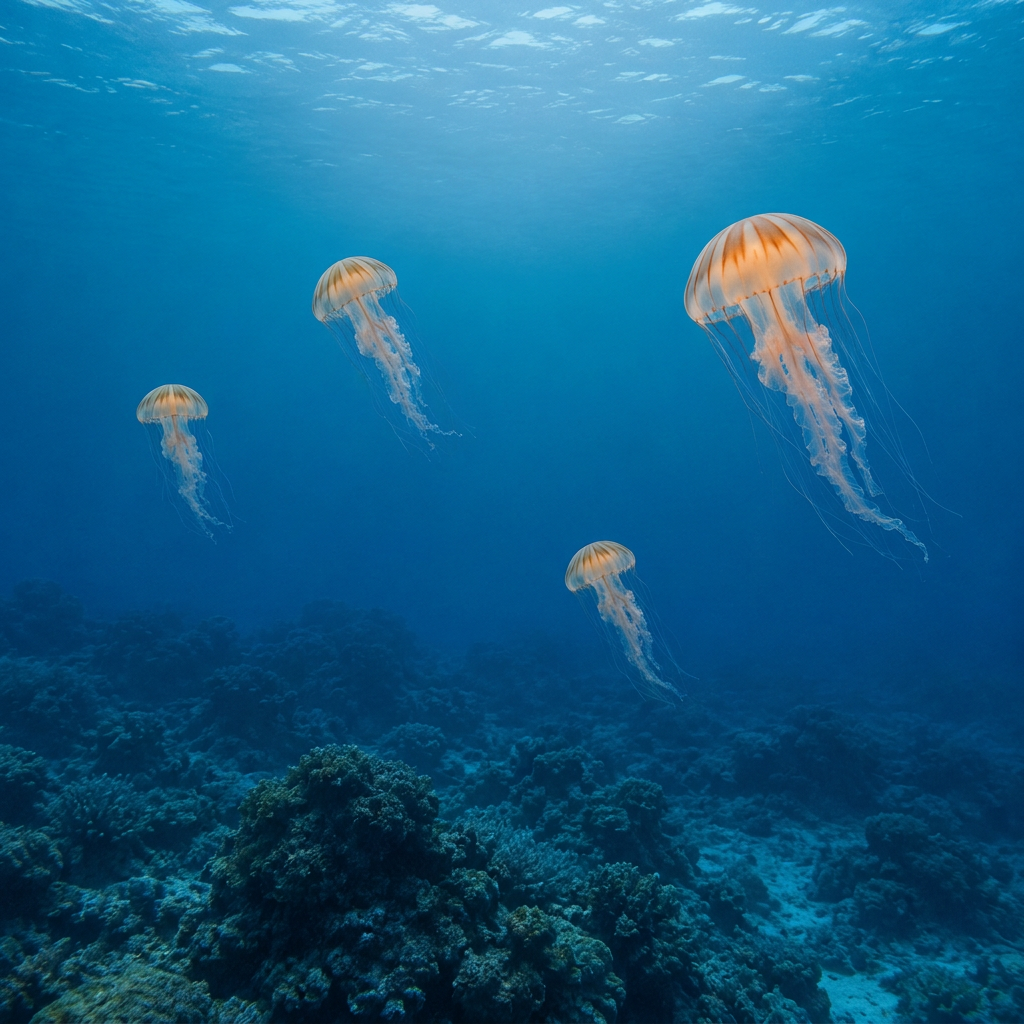
Conditions in May
So, you're eyeing Micronesia for a May dive adventure? Excellent choice! May in Micronesia generally marks the transition period from the drier, cooler trade wind season to the wetter, warmer monsoon season. However, this doesn't mean you're in for a washout. In areas like Yap, you'll still experience comfortable warmth, with warm tropical air temperatures. The sea state usually remains calm, especially in the mornings, though you might encounter a bit more chop in the afternoons as the wind patterns begin their shift.
The right wetsuit depends on the water temperature at your sites, how many dives you do and how easily you get cold, so ask your operator what guests usually wear. Visibility is generally excellent, often offering impressive clarity, offering crystal-clear views of the vibrant reefs and dramatic wrecks. Currents can be a factor, particularly around channels and outer reefs, often bringing in nutrient-rich water and with it, the larger pelagics. Drift diving is a common and exhilarating experience in many Micronesian dive sites, so be prepared for some exhilarating rides.
What you will see
May in Micronesia is a truly special time for marine life encounters, and you're in for some spectacular sights. Resident reef manta rays can still be seen in Yap at shallow cleaning stations, though encounters become less reliably present from May through November as current patterns shift. While not guaranteed, the transition period can sometimes lead to increased pelagic activity as well. Keep an eye out in the blue for reef sharks – grey reef and white-tip sharks are common residents.
Beyond the big stuff, Micronesia's reefs are teeming with a kaleidoscope of smaller life. You'll spot vibrant nudibranchs, colorful reef fish like butterflyfish, angelfish, and parrotfish, and perhaps even some elusive mandarin fish on night dives. For wreck enthusiasts, particularly in Chuuk Lagoon (Truk Lagoon), May offers fantastic visibility to explore the ghostly sunken fleet of WWII. The wrecks are now artificial reefs, encrusted with soft corals and home to countless fish, crabs, and anemones. You'll see cargo holds filled with artifacts, engine rooms, and even trucks and tanks on the decks, preserving a powerful slice of history.
Top dive sites this month
For unforgettable diving in May, Yap is undeniably a superstar. Head to sites like Manta Ridge and Stammtisch for chances of spotting resident reef manta rays at cleaning stations. These cleaning stations are bustling with activity, offering close-up views of these gentle giants. The incoming currents at these sites also often bring in reef sharks and schooling fish, adding to the spectacle.
If wreck diving is your passion, Chuuk Lagoon (Truk Lagoon) is a must-visit, and May's good visibility is perfect for exploring its sunken treasures. Dive the iconic San Francisco Maru or the massive Fujikawa Maru, where you can penetrate cargo holds and explore the eerie remains of a bygone era. For incredible reef diving and varied marine life, sites around the outer islands of Pohnpei, such as the glorious drift dives at Ant Atoll, offer pristine corals and abundant fish life, providing a perfect complement to the wreck and manta attractions.
Practical tips for your trip
If you tend to get chilly during repeated dives, a 5mm might offer extra comfort, but it's rarely essential. This time of year suits a wide range of divers. Beginners will appreciate the generally calm conditions and warm water, while advanced divers will thrive on the drift dives and the challenging (but rewarding) wreck penetrations in Chuuk.
Liveaboard availability for Micronesia in May can vary. While it's not peak season everywhere, popular liveaboards in Chuuk Lagoon or Yap can book up, so it's wise to book several months in advance. Remember to pack light, breathable clothing, sun protection (including reef-safe sunscreen, sunglasses, and a wide-brimmed hat), and insect repellent. A good dive computer and your standard diving equipment are a given. Be aware that travel to Micronesia often involves multiple flights, so factor in travel time and potential layovers. Embrace the relaxed pace of island life, and prepare for an incredible underwater journey!
Regional notes
Each note applies only to the named region, not to the whole country.
- Koror (Palau): Average sea temperature 29.6 °C (85 °F)