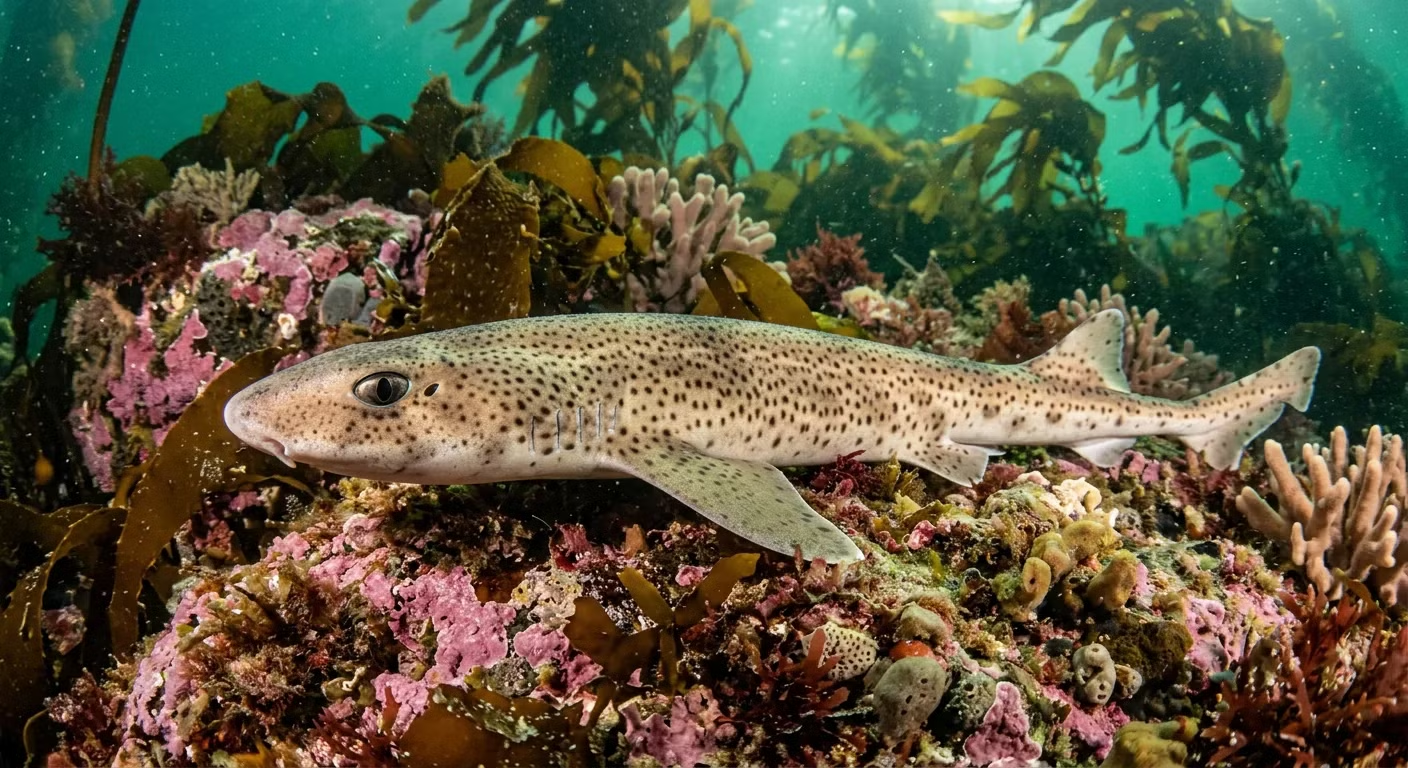
The term catshark refers to a vast and diverse family of ground sharks (Scyliorhinidae), recognised instantly by their elongated, slender bodies, distinctly cat-like oval eyes with nictitating membranes, and beautifully patterned skin. Among the most iconic and frequently encountered species are the small-spotted catshark (Scyliorhinus canicula), the nursehound (Scyliorhinus stellaris), and South Africa's striking pyjama shark (Poroderma africanum). These benthic elasmobranchs possess two small, spineless dorsal fins set far back on the body towards the tail, and five pairs of short gill slits. Their dermal denticles create a sandpaper-like texture across dorsal surfaces that range from pale cream and sandy grey to rich chestnut brown, intricately adorned with dark rosettes, dense speckling, or bold longitudinal stripes that provide magnificent camouflage against the seabed.
Behaviour & reproduction
- Size
- Unknown
- Weight
- Up to 15 kg
- Lifespan
- 10-20 years
- Status
- Not Evaluated
Catsharks, a diverse family of small benthic sharks, typically exhibit nocturnal activity, resting on the seabed during daylight hours and foraging for invertebrates and small fish under the cover of darkness. While generally solitary hunters, they may aggregate in specific areas, especially during breeding periods or when food is abundant. Their reproduction is exclusively oviparous, with females laying tough, leathery egg cases often referred to as "mermaid's purses." These cases, laid individually or in pairs, are typically secured to seaweed or rocky substrata via tendrils. The incubation period is protracted, lasting several months to over a year depending on the species and water temperature. Clutch sizes vary between species, commonly ranging from just a few to over a hundred eggs annually. Juveniles emerge as miniature versions of the adults, bypassing a larval stage, and reach sexual maturity after several years.


