About Wongat Island
Wongat Island, situated off the coast of Madang in Papua New Guinea, offers unique diving experiences focused on both historical wrecks and vibrant marine ecosystems. The island is known for housing the wreck of a B-25 bomber, an Allied aircraft from WWII that made an intentional ditching in a shallow strait between Wongat Island and the mainland. This wreck, a poignant relic, lies with its nose crumpled, machine guns still visible, having been transformed into an artifical reef. Its cockpit escape hatch is open, inviting divers to ponder its history as parrotfish graze on coral-encrusted barrels and angelfish swim through bomb bay doors. Another significant wreck dive near Wongat Island is the "Henry Leith," a small coastal freighter scuttled for divers in the 1980s, resting at 20 meters on the island's western side. This 33-meter vessel is an easy dive, completely overgrown with diverse corals including black coral trees, soft corals, gorgonians, and sea whips. Its holds contain remnants of a truck, winches, and other equipment, offering plenty to explore. The wreck teems with marine life such as trevally, batfish, snappers, lionfish, and sweetlips, alongside smaller creatures like nudibranchs, shrimps, and longnose hawkfish. Diving around Wongat Island provides a blend of historical intrigue and rich biodiversity, making it a compelling destination for those interested in both wreck exploration and marine life observation. Dive sites here are generally accessible, with the Henry Leith offering an easy dive suitable for many. The wrecks are found in calm waters, providing excellent conditions for exploration and underwater photography, with depths ranging from the shallow bomber to the 20-meter freighter.
Highlights
Soft CoralsBarracudaEasy Access
Season calendar
Best months to dive here
Jan
Feb
Mar
Apr
May
Jun
Jul
Aug
Sep
Oct
Nov
Dec
Excellent
Good
Dive site facts: Wongat Island
- Depth
- 15–22 m
- Typical dive
- 15–22 m, 45–60 min
- Current
- Mild to none
- Visibility
- 25–40 m
- Water temperature
- 27–30°C
- Entry
- Boat / easy descent
- Level
- All levels
- Dive type
- Wreck, reef, history
- Night dive
- Possible
- Region / port
- Madang, Papua New Guinea
- Coordinates
- -5.21, 145.85
Conditions & Currents
The dive site at Wongat Island, particularly around the B25 bomber, is well-sheltered within the Madang Lagoon, meaning currents are typically mild to non-existent. This calm environment ensures a relaxed and safe dive, making it suitable for divers of all levels, including those new to wreck diving. Visibility usually remains excellent due to the protected nature of the lagoon. Divers can enjoy an unhurried exploration of the wreck without concerns about drift or strong water movement. The entry and exit points are generally straightforward, allowing for comfortable surface intervals near the island's picturesque beaches.
Marine life & sighting chances

Tropical reef fish
common
Batfish
occasional
Fusiliers
occasional
Sweetlips
occasional
Bannerfish
occasional
Squirrelfish
occasional
Snappers
occasional
Surgeonfish
occasional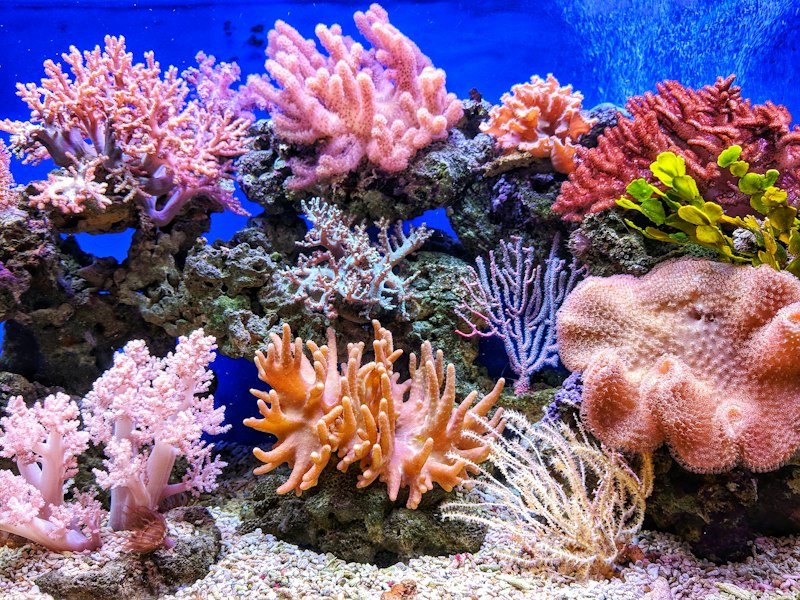
Soft corals
common
Barrel sponges
occasional
Gorgonians
occasional
Whip corals
occasionalDive profile & how the dive runs
Your dive at the Wongat Island B25 bomber begins with a short boat ride from the dive center, arriving at the sheltered site near the island. A giant stride entry from the boat leads you to a calm descent towards the sandy slope where the bomber rests. The plane lies at depths between 15 and 22 meters, allowing for extended bottom times. You'll typically begin exploring the rear section of the plane, moving forward along the fuselage to observe its intact structure, including the cockpit and machine guns. Pay attention to the vibrant reef fish that have colonized the wreck. The dive progresses around the plane, offering views from various angles, with plenty of time for photography. As your bottom time or air supply dictates, you'll slowly ascend the sandy slope, often concluding with a safety stop near the top of the reef or along the island's shallow fringing corals before surfacing.
Underwater photography
The B25 bomber at Wongat Island is a prime subject for wide-angle photography, capturing the full scope of the intact aircraft and its surrounding marine life. A fisheye or wide-angle lens will allow you to frame the entire plane, especially against the clear blue water. Given the relatively shallow depth, natural light is often sufficient, but strobes will enhance color and detail, particularly when shooting into the wreck's interior or highlighting fish. For macro enthusiasts, look for smaller critters that have made the bomber their home, or explore the nearby reef sections. Maintain excellent buoyancy control to avoid disturbing the sandy bottom or fragile corals, ensuring clear shots and preserving the site. Consider bringing a focus light for internal shots or if planning a night dive, where the wreck truly comes alive.
Combine with nearby dive sites
- Henry Leith
A spectacular night dive location with prolific soft corals, situated near The Bomber.
- Barracuda Point
Known for large schools of barracuda and other pelagics where reefs drop into deep water.
- Magic Passage
A channel through the outer barrier reef, home to schools of fish, gorgonians, and soft corals.
- Planet Rock
A volcanic seamount three kilometers offshore, known for pelagic action and large predatory fish.
- The Quarry
A shore-accessible reef that drops off vertically to over 600 meters.
- FS-172 Boston
A US Army freight and store ship wreck at 30 meters on a coral drop-off.
Getting there & logistics
Madang is the primary hub for diving Wongat Island. International flights typically arrive at Port Moresby (POM), from where you'll take a domestic flight to Madang (MAG). Niugini Dive Adventures, based at the Madang Resort, provides all necessary dive services, including boats and guides to reach Wongat Island and other local sites. Dive packages often combine accommodation with daily dives, with options for 3, 5, or 6 nights offering 6, 8, or 10 dives respectively. Environmental and safety fees are typically collected upon departure. While Wongat Island is a local dive, the region also offers opportunities to visit more remote offshore islands like Bagabag and Karkar for those seeking extended itineraries.
Safety & environment
Diving at Wongat Island is generally considered safe due to its sheltered location and mild conditions. However, standard dive safety practices are paramount. Ensure you have comprehensive dive insurance that covers medical evacuation and recompression chamber treatments, as the nearest recompression chamber may be several hours away. The closest chamber is in Port Moresby, necessitating air evacuation in serious cases. Always dive within your training limits and follow your dive guide's instructions. Report any equipment issues immediately. While currents are usually minimal, always be aware of your surroundings. Stay hydrated and be mindful of sun exposure during surface intervals. There are no known specific hazards unique to the Wongat Island B25 bomber site beyond general wreck diving considerations, such as avoiding penetration unless specifically trained and accompanied.
Who it suits — and who it doesn't
Suited for
- Wreck diving enthusiasts
- Underwater photographers (wide-angle)
- Divers seeking easy, sheltered dives
- History buffs interested in WWII relics
- Beginner and intermediate divers
Less suited for
- Divers seeking strong current drift dives
- Those primarily interested in large pelagic action
- Divers unwilling to travel domestically within PNG
- Individuals with unaddressed dive anxiety
FAQ
Wongat Island FAQ
What kind of wreck is the B25 bomber at Wongat Island?
The wreck at Wongat Island is a North American B25 Mitchell bomber from World War II. It was shot down near the island during allied bombings of Madang and crash-landed on a sandy slope. The bomber is largely intact, with one engine missing, and features visible elements like machine guns.
How deep is the B25 bomber wreck and is it accessible for all divers?
The B25 bomber rests on a sandy slope at depths ranging from 15 to 22 meters. This relatively shallow depth makes it highly accessible for divers of all experience levels, including beginners and those with Open Water certification. Its sheltered location also means mild to no currents, contributing to an easy and enjoyable dive.
What marine life can I expect to see on the B25 bomber wreck?
The B25 bomber has become an artificial reef, attracting a variety of tropical reef fish. You can expect to see schools of batfish, fusiliers, sweetlips, bannerfish, squirrelfish, snappers, and surgeonfish. The surrounding reef areas also host soft corals, barrel sponges, gorgonians, and whip corals.
Can I do a night dive on the B25 bomber wreck?
Yes, night dives are possible and even recommended at Wongat Island, particularly on the nearby Henry Leith site known for its soft corals. The sheltered position within the lagoon makes it a safe and calm location for night diving, offering a unique perspective on nocturnal marine life around the wreck.
What are the typical diving conditions at Wongat Island?
Wongat Island benefits from its sheltered location within the Madang Lagoon, resulting in typically mild to non-existent currents. Visibility is generally excellent, ranging from 25 to 40 meters, and water temperatures are warm, averaging 27 to 30°C. These calm conditions make for a very relaxed and enjoyable dive experience.
Why dive Wongat Island from a liveaboard?
Wongat Island is one of Papua New Guinea's signature dive sites. A liveaboard sleeps you on the water and puts you in the water for three to four guided dives per day, including dawn and night dives that day-boat operators rarely offer. You skip the daily commute back to port and reach quieter, less-crowded sites in the same region on a single trip.
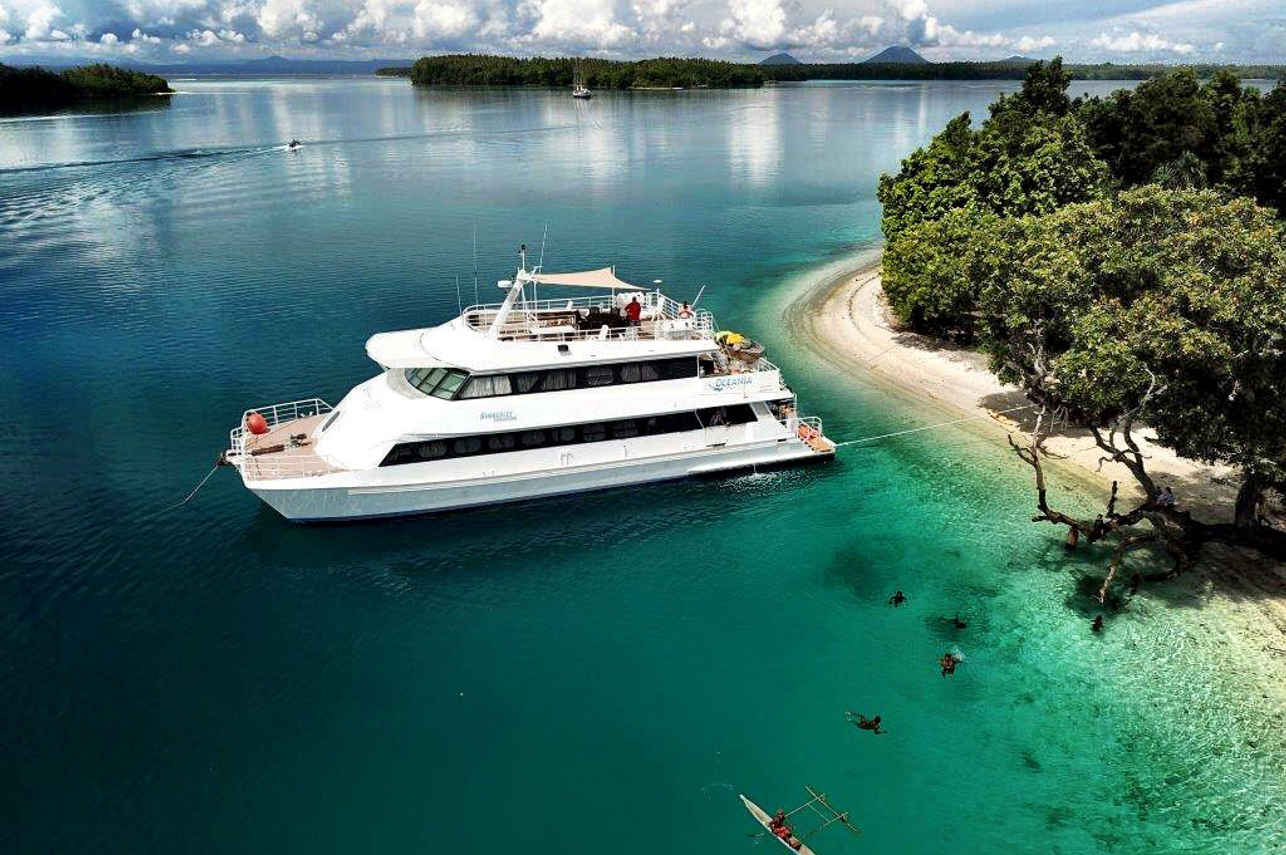
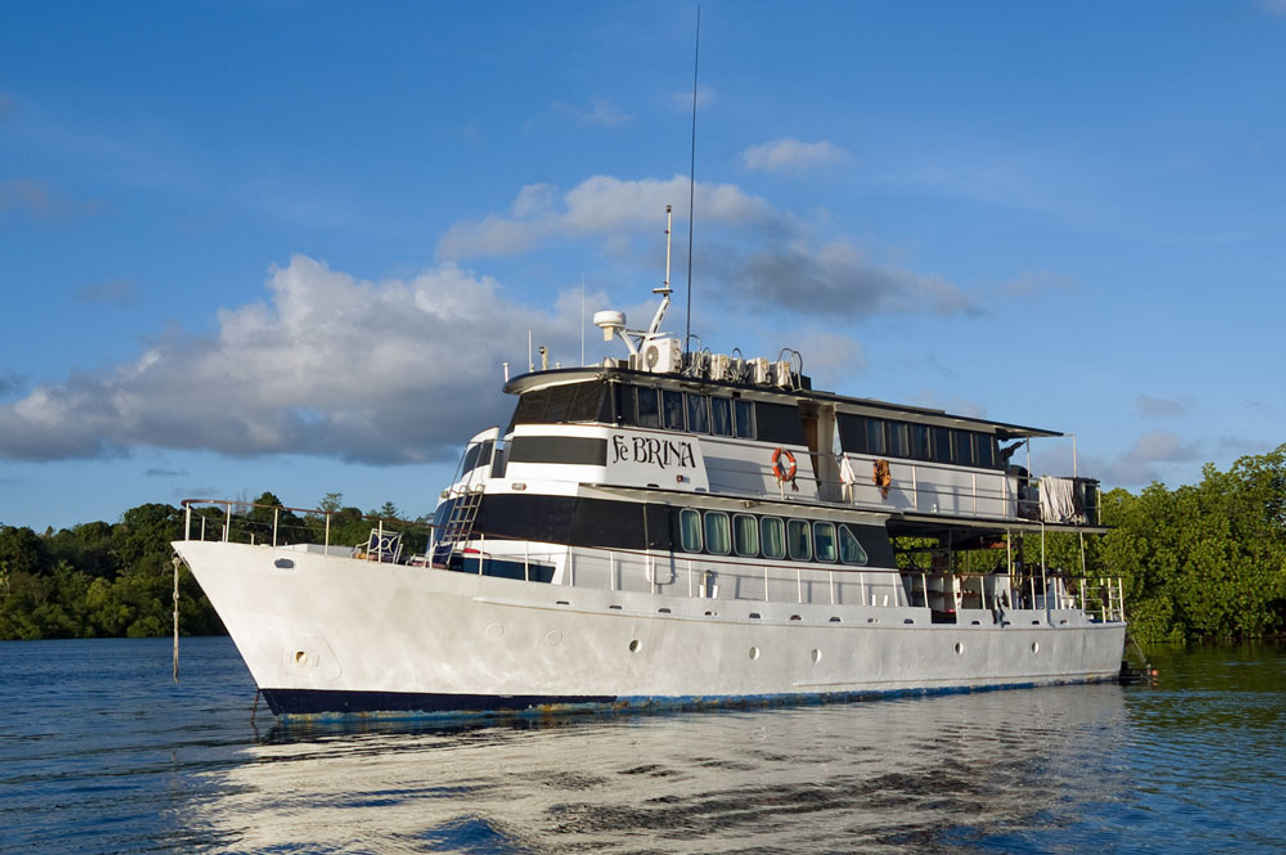
Below are the liveaboards that include Wongat Island on their Papua New Guinea itineraries.
Liveaboards diving Wongat Island
These liveaboards may visit Wongat Island on selected itineraries — the exact dive sites depend on departure, weather and conditions.
Dive sites similar to Wongat Island
Same character, same waters — six more sites divers love for the exact same reasons.Compare seasons, access and liveaboard routes — then pick the site that fits your trip best.
© Esri — Maxar, Earthstar, GIS
George's Wreck
Papua New Guinea
George's Wreck is a renowned dive site near Rabaul in Papua New Guinea, famous for its historical significance as a Japanese minelayer that reportedly ran aground after an Allied attack.
- Suitable for
- Advanced
- Current
- Moderate
- Access
- Liveaboard only
- Depth
- 12–60 m
- Theme
- Wreck / Reef
© Esri — Maxar, Earthstar, GIS
Tufi Fjords
Papua New Guinea
Tufi Fjords, nestled on Cape Nelson along Papua New Guinea's northeast coast, offers a unique diving experience in a stunning, tropical fjord-like landscape.
- Suitable for
- Intermediate
- Current
- Strong
- Access
- Liveaboard only
- Depth
- 5–200 m
- Theme
- Muck diving / Reef
© Esri — Maxar, Earthstar, GIS
Henry Leith
Papua New Guinea
The Henry Leith is a compelling wreck dive situated off Madang, Papua New Guinea, specifically on the western side of Wongat Island within the sheltered Madang Lagoon.
- Suitable for
- Intermediate
- Current
- Mild
- Access
- Dayboat
- Depth
- 10–20 m
- Theme
- Wreck / Reef
© Esri — Maxar, Earthstar, GIS
Echuca Patch
Papua New Guinea
Echuca Patch is a prominent patch reef located just outside Kavieng, Papua New Guinea, specifically positioned on the Pacific Ocean side of Kavieng's northern tip, near the mouth of the harbor.
- Suitable for
- Advanced
- Current
- Moderate
- Access
- Liveaboard only
- Depth
- 15–35 m
- Theme
- Reef / Wreck
© Esri — Maxar, Earthstar, GIS
Rapopo Wreck
Papua New Guinea
Rapopo Wreck is a compelling dive site located near Rabaul in Papua New Guinea's East New Britain province.
- Suitable for
- Intermediate
- Current
- Moderate
- Access
- Liveaboard only
- Depth
- 12–23 m
- Theme
- Wreck / Reef
© Esri — Maxar, Earthstar, GIS
Stubborn Hellion
Papua New Guinea
The Stubborn Hellion is a well-documented American B25 Bomber wreck from WWII, located in Papua New Guinea's New Ireland Province.
- Suitable for
- Intermediate
- Current
- Moderate
- Access
- Liveaboard or dayboat
- Depth
- ≤ 12 m
- Theme
- Wreck