About Tiger Beach
Tiger Beach, an internationally renowned dive site, is located on a shallow sand flat about an hour by boat from the West End of Grand Bahama Island. This unique topography, consisting of a vast sand flat, becomes the stage for unparalleled shark encounters. The site primarily features large pelagic species, with tiger sharks being the main draw, consistently present year-round. These sharks, many of which are recognizable individuals, are often female and display both curiosity and calculated movements. Diving at Tiger Beach typically involves a specific setup where divers position themselves in a 'V' shape on the sandy bottom, down current from a feeder. The sharks approach through a chum slick, offering close, clear views. Although a substantial number of tiger sharks can be present, two to seven at a time is common, with the possibility of many more. In addition to tiger sharks, divers regularly encounter lemon sharks, Caribbean reef sharks, nurse sharks, and occasionally great hammerheads and bull sharks, making it a vibrant destination for shark enthusiasts. While the presence of sharks might seem intimidating, the experience is generally safe and incredibly rewarding. Divers are advised to wear dark wetsuits, avoid sudden movements, and stay still on the sandy bottom due to potential currents. Overweighting is recommended to maintain stability. The dives are orchestrated to minimize risk while maximizing opportunities for observation and photography, with feeders managing the interaction. This site is a protected shark sanctuary, ensuring a healthy and balanced marine ecosystem where these apex predators thrive.
Highlights
Tiger sharksLemon sharksReef sharks
Season calendar
Best months to dive here
Jan
Feb
Mar
Apr
May
Jun
Jul
Aug
Sep
Oct
Nov
Dec
Excellent
Good
Dive site facts: Tiger Beach
- Depth
- 6–30 m
- Typical dive
- 6–12 m, 80–120 min
- Current
- Minimal to none
- Visibility
- 18–120 m
- Water temperature
- 24–31°C
- Entry
- Descending to seafloor
- Level
- Open Water with logged dives, AOWD recommended
- Dive type
- Shark diving, photography
- Region / port
- Grand Bahama
- Coordinates
- 26.97104, -79.1098
Conditions & Currents
Divers should be heavily overweighted to remain steady on the sandy bottom, as currents can be strong. Staying still and not stirring up sand is recommended. Feeder-led dives involve positioning divers down current from the chum. Dive profiles here run between roughly 6 and 20 metres, so plan your gas and no-decompression limits around the deeper part of the site. It is usually briefed as a dive for intermediate divers. It can be dived from a liveaboard or a day boat, depending on where you start the trip. Because the flow can pick up quickly, drift profiles, a surface marker buoy and a tight group are standard practice here, and the crew's briefing always overrides any general description.
Marine life & sighting chances

Tiger shark
Year-round, peak Oct–Jan · common
Lemon shark
Year-round · common
Caribbean reef shark
Year-round · common
Nurse shark
Year-round · occasional
Great hammerhead shark
Dec–Mar · occasional
Moray eel
Year-round · occasional
Grouper
Year-round · occasional
Dolphin
Year-round · rare
Bull shark
occasionalDive profile & how the dive runs
Dives at Tiger Beach usually begin with a quick descent to the shallow, sandy seafloor, typically around 6 to 12 meters deep. Divers position themselves in a 'V' formation, facing into the slight current. A professional shark feeder, often clad in chainmail, sits at the point of the 'V' and uses chum to attract the sharks. Tiger sharks, along with lemon and Caribbean reef sharks, approach from the clear water, often swimming through the V-formation. The shallow depth and excellent visibility allow for extended bottom times, sometimes exceeding an hour. Divers remain stationary, observing the sharks' behavior and interaction with the feeder. The dive concludes with a gradual ascent, often after 80 to 120 minutes underwater, with safety stops conducted directly above the site.
Underwater photography
Tiger Beach offers unparalleled opportunities for wide-angle photography due to its shallow depths, exceptional visibility, and abundance of large sharks. A fisheye lens is ideal for capturing the grandeur of tiger sharks and the surrounding sandy arena. Strobes are essential to properly light subjects and bring out vibrant colors, especially against the bright sandy bottom and clear blue water. Given the predictable nature of the shark encounters and the stationary dive profile, photographers have ample time to compose shots. Focus on capturing the interactions with the feeder and the unique stripes of individual tiger sharks. Maintain excellent buoyancy to avoid stirring up sand, and always respect the sharks' space, even though they are accustomed to human presence. Avoid excessive focusing on your viewfinder to remain aware of your surroundings, as sharks can approach from any direction.
Combine with nearby dive sites
- Shark Alley
Sharks Alley, located off the coast of Grand Bahama, is a premier destination for shark diving, providing exhilarating encounters with…
- Shark Junction
Shark Junction is Grand Bahama's premier shark diving destination, celebrated for its consistent, close-up interactions with Caribbean reef…
- The Vulcan Bomber
A wreck in New Providence known for its Hollywood history and marine life.
- Current Cut
A popular drift dive in Eleuthera with strong currents.
Getting there & logistics
Access to Tiger Beach is primarily via liveaboards departing from Old Bahama Bay in Grand Bahama, or Riviera Beach, Florida. The Grand Bahama International Airport (FPO) in Freeport handles international flights, while high-speed ferries also connect Fort Lauderdale, Florida, to Grand Bahama. Most liveaboard itineraries are week-long shark diving expeditions, often focusing exclusively on Tiger Beach or combining it with other shark encounters in the Bahamas. Day trips from West End on Grand Bahama are also available through land-based operators. Dive trips require an Open Water certification, with some operators recommending or requiring at least 30 logged dives due to the nature of shark encounters. No specific permits beyond standard dive operations are typically mentioned for the dive site itself, but always confirm with your chosen operator.
Safety & environment
Safety at Tiger Beach is paramount due to the close interaction with apex predators. Dives are managed by experienced guides who implement strict protocols, including feeding procedures and diver positioning in a 'V' formation. Divers must maintain awareness of their surroundings and follow all instructions from the dive master, especially regarding shark behavior and distance. While serious incidents are rare, these are wild animals, and a healthy respect for their power is essential. The shallow depth allows for easy surfacing if needed. The nearest recompression chamber is likely located in Freeport, Grand Bahama, requiring evacuation by boat. Comprehensive dive-specific travel insurance, covering medical emergencies and potential weather-related cancellations, is highly recommended for all divers.
Who it suits — and who it doesn't
Suited for
- Advanced Open Water Divers comfortable with large pelagics
- Underwater photographers seeking unique shark encounters
- Shark enthusiasts eager for close interactions
- Divers comfortable with stationary bottom time
- Individuals seeking adrenaline-pumping dive experiences
Less suited for
- Novice divers with limited logged dives
- Divers uncomfortable with active shark feeding scenarios
- Individuals with poor buoyancy control
- Those prone to anxiety around large marine animals
- Divers expecting traditional reef or macro-focused dives
FAQ
Tiger Beach FAQ
What is the best time of year to dive Tiger Beach?
The peak season for diving at Tiger Beach is generally from October to January, and again in late spring around May. During these months, shark activity is at its highest, increasing the likelihood of encountering multiple tiger sharks, and seasonal visitors like great hammerheads may also be present. Tiger sharks are present year-round, but their numbers can be lower in July and August.
How deep are the dives at Tiger Beach?
Dives at Tiger Beach are typically very shallow, ranging from 6 to 12 meters (20 to 40 feet). The maximum depth in the area can reach 30 meters (100 feet), but the primary shark encounters occur in the shallower sandy flats. This shallow depth contributes to excellent visibility and allows for extended bottom times, making it accessible for many divers.
Do you need special certification for Tiger Beach?
While an Open Water certification is a minimum requirement, most operators recommend or require additional experience, such as an Advanced Open Water certification or a certain number of logged dives. This is due to the nature of the shark encounters and the need for divers to be comfortable and controlled in the water. It's always best to check specific requirements with your chosen dive operator.
What marine life can be seen at Tiger Beach besides tiger sharks?
Beyond its famous tiger sharks, Tiger Beach hosts a variety of other shark species year-round, including lemon sharks, Caribbean reef sharks, and nurse sharks. During the winter months (November to February), you may also have the chance to see great hammerhead sharks. On lucky days, divers have also reported seeing moray eels, large groupers, and even dolphins in the area.
Is shark feeding conducted at Tiger Beach?
Yes, shark feeding, or chumming, is an integral part of the dive operations at Tiger Beach. Experienced dive guides use bait to attract and maintain the presence of sharks in a predictable location for extended periods. This managed encounter allows divers consistent, close-up observations of the sharks, though the ethics of such practices are sometimes debated within the diving community.
What is the visibility like at Tiger Beach?
Tiger Beach is renowned for its consistently excellent visibility, often ranging from 18 to 30 meters (60 to 100 feet), and sometimes up to an astonishing 120 meters (400 feet). The clear water, combined with the shallow sandy bottom, provides exceptional conditions for observing and photographing the sharks. This makes it an ideal location for capturing stunning underwater images.
Why dive Tiger Beach from a liveaboard?
Tiger Beach is one of Bahamas's signature dive sites. A liveaboard sleeps you on the water and puts you in the water for three to four guided dives per day, including dawn and night dives that day-boat operators rarely offer. You skip the daily commute back to port and reach quieter, less-crowded sites in the same region on a single trip.
Below are the liveaboards that include Tiger Beach on their Bahamas itineraries.
Liveaboards diving Tiger Beach
These liveaboards may visit Tiger Beach on selected itineraries — the exact dive sites depend on departure, weather and conditions.
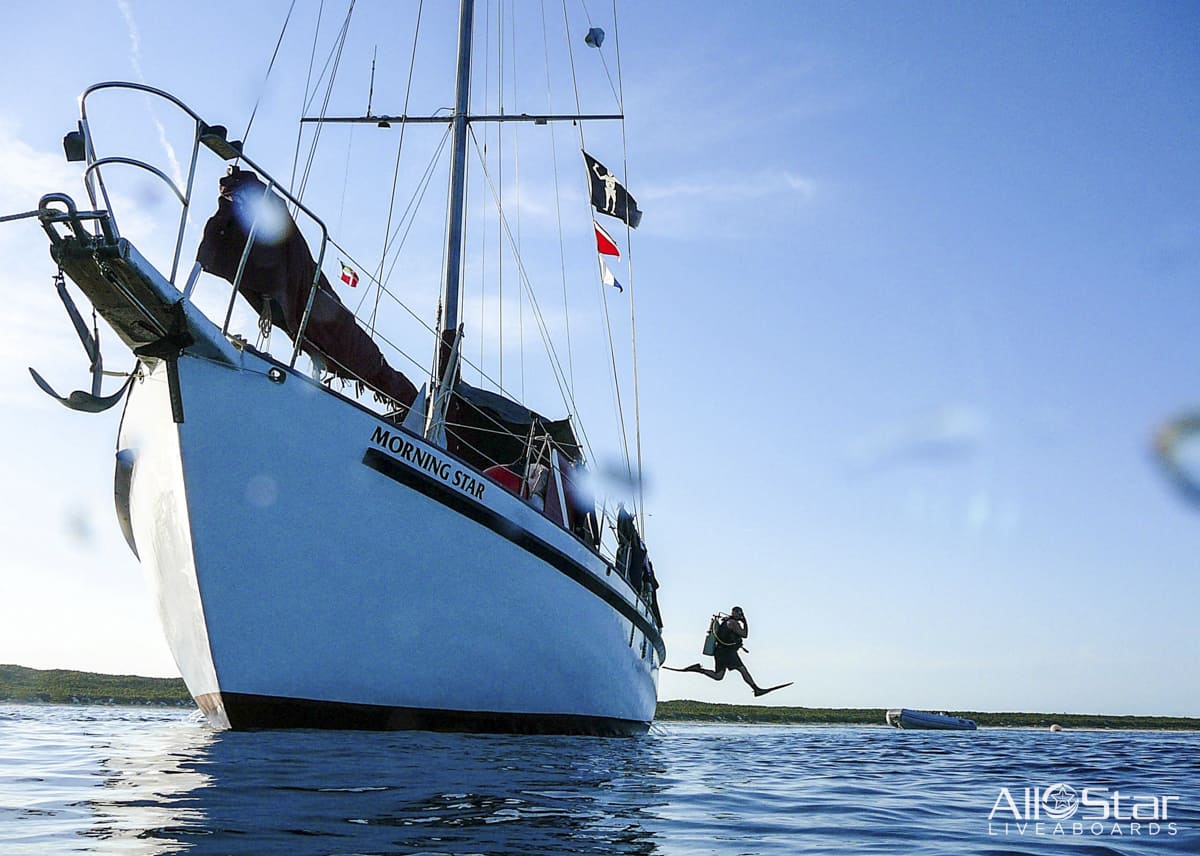
All Star Blackbeards Morning Star
Bahamas
24 guests19.81 m
$156/day
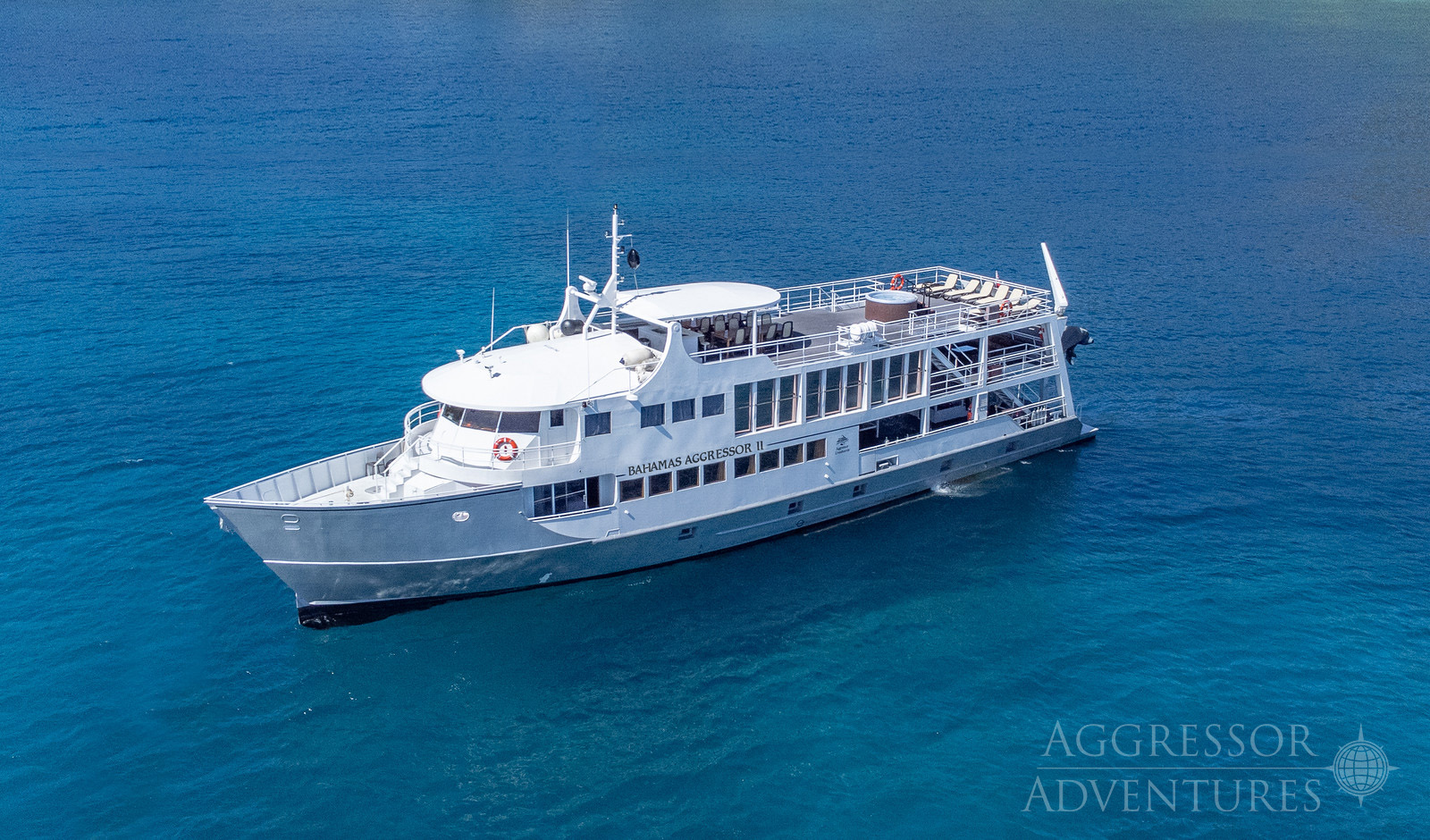
Bahamas Aggressor II
Bahamas
20 guests33.5 m
$328/day
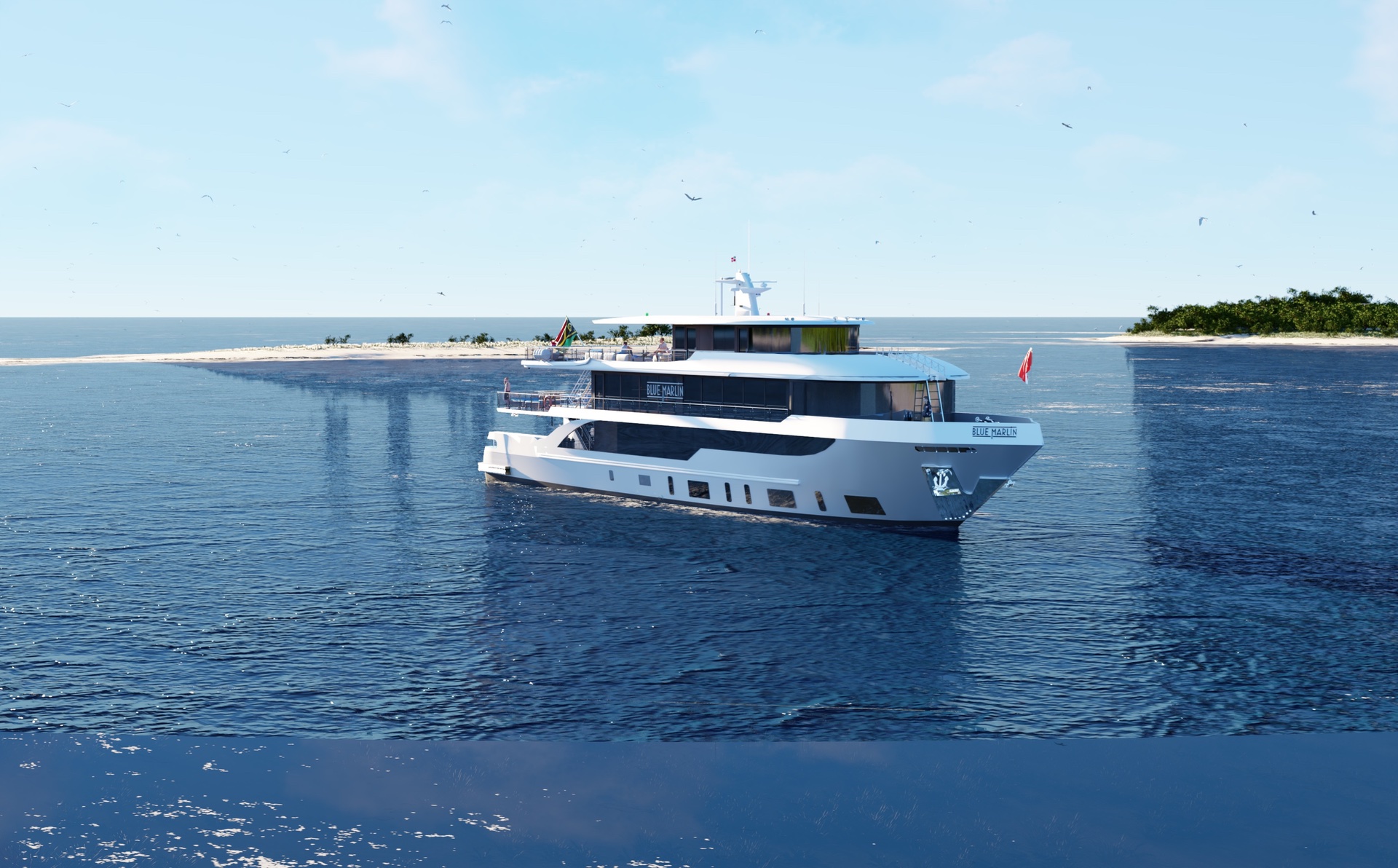
Blue Marlin
Bahamas
26 guests42 m
$318/day
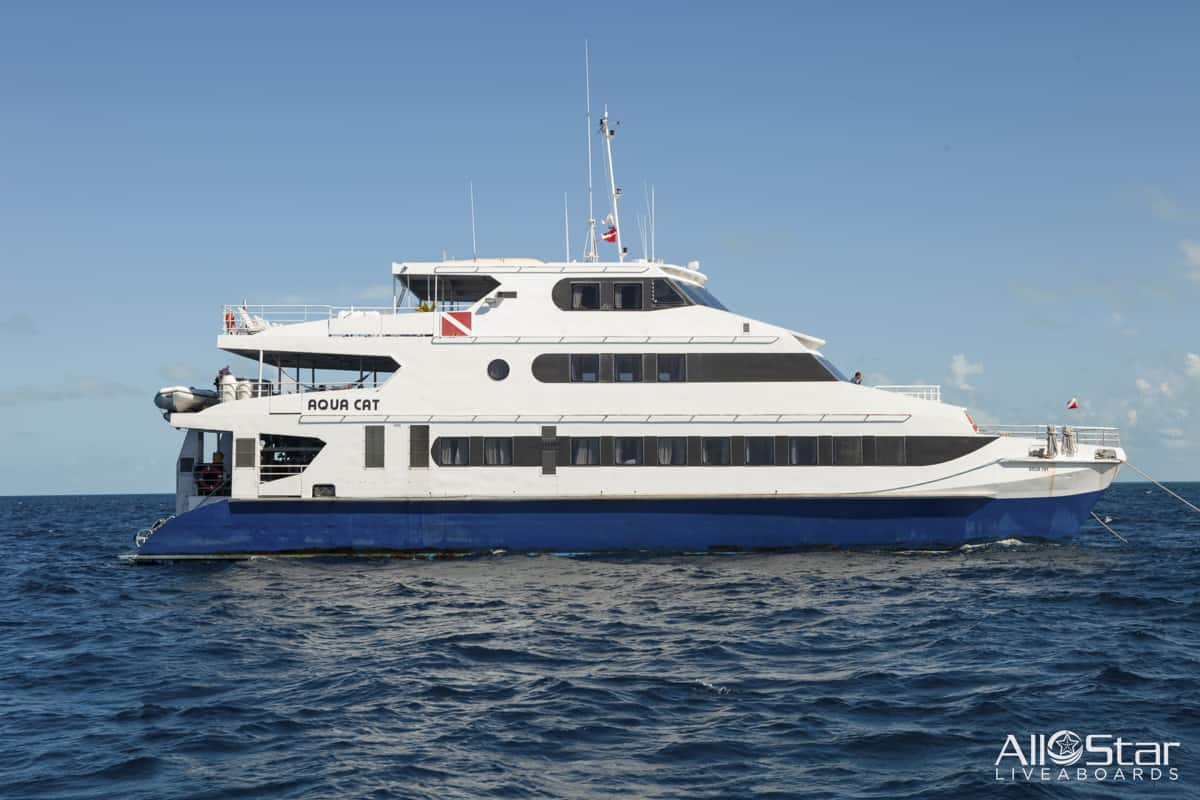
All Star Aqua Cat
Bahamas
30 guests31.09 m
$312/day
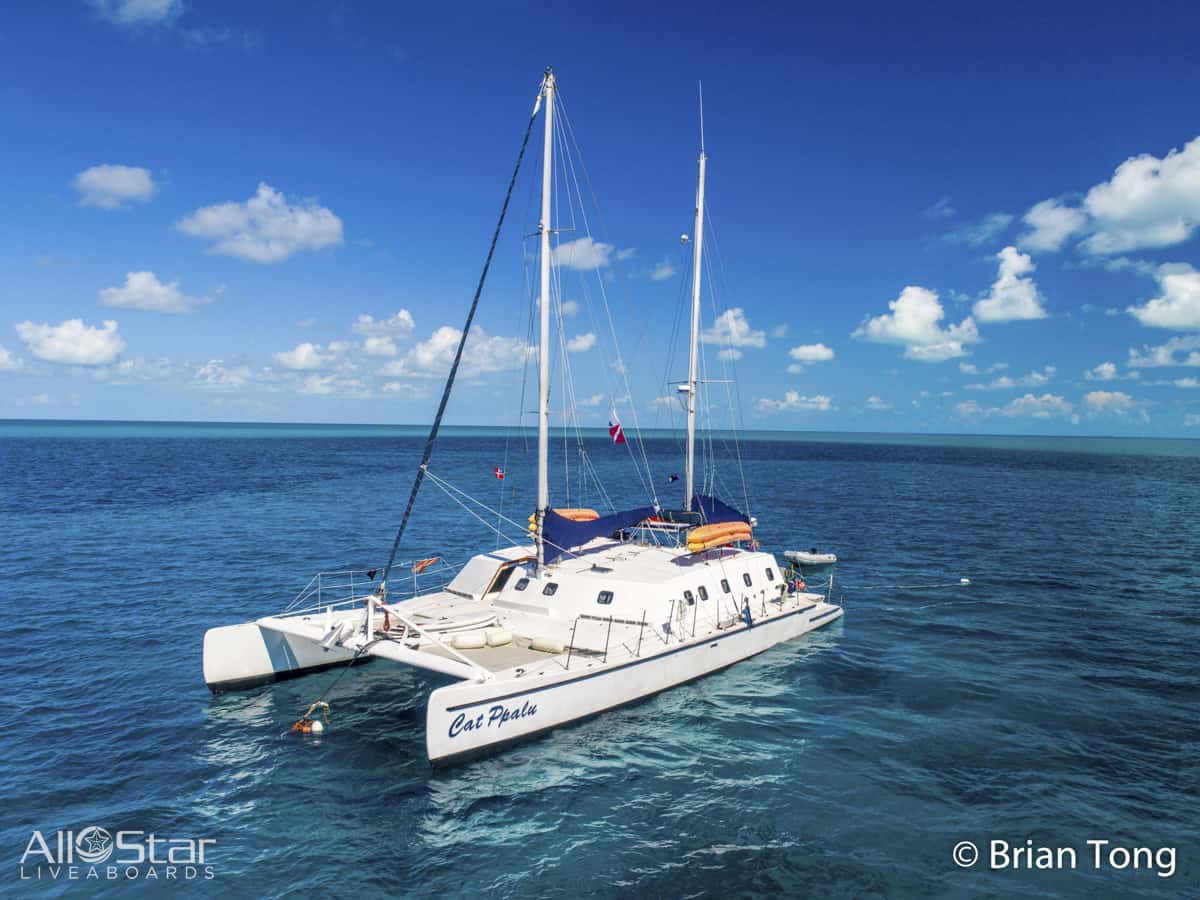
All Star Cat Ppalu
Bahamas
12 guests20 m
$237/day
Dive sites similar to Tiger Beach
Same character, same waters — six more sites divers love for the exact same reasons.Compare seasons, access and liveaboard routes — then pick the site that fits your trip best.
© Esri — Maxar, Earthstar, GIS
Cut Through City
Bahamas
Cut Through City is a standout dive site located off the coast of Eleuthera in the Bahamas, a region renowned for its diverse underwater topography.
- Suitable for
- Intermediate
- Current
- Mild
- Access
- Liveaboard only
- Depth
- 27–40 m
- Theme
- Wall / Reef
© Esri — Maxar, Earthstar, GIS
Metropolis
Bahamas
Metropolis is a standout dive site in the Bahamas, renowned for its consistent and diverse shark encounters, making it a thrilling destination for divers seeking pelagic action.
- Suitable for
- Intermediate
- Current
- Moderate
- Access
- Liveaboard only
- Depth
- ≤ 13 m
- Theme
- Reef
© Esri — Maxar, Earthstar, GIS
Mt. Olympus
Bahamas
Mt. Olympus is a dynamic dive site in the Bahamas, regularly visited by liveaboards, known for its healthy marine ecosystem and varied underwater terrain.
- Suitable for
- Advanced
- Current
- Moderate
- Access
- Liveaboard only
- Depth
- ≤ 122 m
- Theme
- Reef / Drift
© Esri — Maxar, Earthstar, GIS
Ras Mohammed
Bahamas
Ras Mohammed National Park, situated approximately 20 kilometers south of Sharm El Sheikh, marks the southernmost tip of the Sinai Peninsula in Egypt.
- Suitable for
- Advanced
- Current
- No current
- Access
- Shore / dayboat
- Depth
- ≤ 100 m
- Theme
- Reef
© Esri — Maxar, Earthstar, GIS
Split Coral Head
Bahamas
Split Coral Head is a notable dive site located in Eleuthera, Bahamas, celebrated for its impressive coral formations and the distinctive split in a massive coral head from which it derives its name.
- Suitable for
- Beginner
- Current
- No current
- Access
- Liveaboard only
- Depth
- 14–17 m
- Theme
- Reef
© Esri — Maxar, Earthstar, GIS
Danger Reef
Bahamas
Danger Reef is an integral part of the Exuma Cay Reef Dives, nestled within the expansive Exuma Cays.
- Suitable for
- Intermediate
- Current
- Mild
- Access
- Liveaboard only
- Depth
- ≤ 18 m
- Theme
- Reef