About Tagus Cove
Tagus Cove, nestled on the western coast of Isabela Island, is a captivating dive and snorkel destination known for its dramatic volcanic scenery and rich biodiversity. Named after a British warship, this natural harbor provides an impressive backdrop of sandy-colored cliffs that host colonies of marine iguanas, penguins, crabs, and sea lions. It is a favored spot for panga rides along the coast, offering stunning views before entering the water. The underwater landscape of Tagus Cove features steep rocky walls adorned with sponges, various algae, gorgonians, and incrusting corals, including distinctive orange cup corals. The shallows are particularly rich with starfish and urchins, providing shelter for numerous fish species in their crevices. Depths are generally shallow, making it ideal for snorkeling, but divers can explore further. The area is especially famous for its endemic bird species, with frequent sightings of the Galápagos penguin and the flightless cormorant, often seen swimming or fishing. Green sea turtles also graze on the algae-covered rocks. While marine life is abundant, underwater visibility can be variable, a characteristic of the western coast of Isabela, occasionally leading to dive schedule adjustments. Access to Tagus Cove is exclusively via multi-day naturalist cruises, as it lies approximately 125 miles from the nearest inhabited areas. Its remote location ensures a pristine environment, where divers and snorkelers can experience the unique ecosystem of the Galápagos up close, observing species that have evolved in isolation.
Highlights
Galápagos penguinsFlightless cormorantsMarine iguana coloniesPlayful sea lionsVolcanic cliff topographyOrange cup coral formationsPacific seahorse sightings
Season calendar
Best months to dive here
Jan
Feb
Mar
Apr
May
Jun
Jul
Aug
Sep
Oct
Nov
Dec
Good
Dive site facts: Tagus Cove
- Depth
- 4 m (snorkeling), deeper for diving
- Current
- Moderate, variable
- Visibility
- Variable, 8–10 m on average
- Water temperature
- 18–26°C
- Entry
- Boat / Panga
- Level
- Intermediate (snorkeling)
- Dive type
- Reef, wall, marine life observation
- Night dive
- Not permitted
- Region / port
- Isabela Island, Galápagos
- Coordinates
- -0.275, -91.405
Conditions & Currents
Currents at Tagus Cove are generally moderate but can be variable, particularly within the cove's sheltered areas. Entrances are typically from a panga, directly into the water, with the calm inside waters providing a comfortable start. Visibility, however, is notoriously inconsistent along Isabela's western coast, ranging from clear to sometimes quite poor due to nutrient-rich upwellings that bring abundant marine life but can reduce clarity. This variability can occasionally lead to changes in snorkeling or dive plans by cruise operators. While strong surges might be encountered at entry points, once inside the cove, conditions are typically calmer, making it suitable for varying experience levels.
Marine life & sighting chances

Galápagos penguin
common
Flightless cormorant
common
Galápagos sea lion
common
Marine iguana
common
Green sea turtle
occasional
Pacific seahorse
occasional
Stingray
occasional
Chocolate starfish
common
Long-spined sea urchin
commonSlate pencil urchin
common
Large-banded blenny
common
Coral hawkfish
common
Giant hawkfish
commonDive profile & how the dive runs
Divers and snorkelers typically access Tagus Cove via a panga. The entry point is usually within the sheltered bay, where conditions are calmer. The dive route generally follows the steep rocky walls of the cove, which are rich with marine growth and provide shelter for various fish species. Depths for snorkeling are very shallow, around 4 meters (12 feet), allowing for close observation of starfish, urchins, and smaller reef fish among the sponges and corals. For divers, the profile allows for exploration along the wall, potentially encountering green sea turtles and seahorses in sargassum patches, before ascending to shallower areas for a safety stop, often marked by playful sea lions and unique bird species near the surface.
Underwater photography
Tagus Cove offers exceptional wide-angle opportunities to capture the dramatic volcanic topography and interactions with marine iguanas, penguins, and sea lions, which are often curious and approach closely. For macro enthusiasts, the rocky walls are home to Pacific seahorses camouflaged in sargassum, along with various blennies, hawkfish, and colorful invertebrates like orange cup corals and different species of starfish and urchins. Due to variable visibility, a strong focus light for macro and wide-angle strobes are beneficial for cutting through potential particulate. Be mindful of buoyancy to avoid disturbing the fragile marine life and respect animal space, especially with the protected species endemic to the Galápagos.
Combine with nearby dive sites
- Punta Vicente Roca
Punta Vicente Roca, situated on the west coast of Isabela Island in the Galápagos, is a captivating dive site characterized by its vertical…
- Cabo Douglas - Fernandina
Cabo Douglas, located on Fernandina Island, offers a truly unique underwater experience as the sole location worldwide where divers can…
- Cabo Douglas - Marine Iguana Wall
Cabo Douglas, located on the northwest side of Fernandina Island in the central Galápagos, offers a truly unique diving experience.
- Punta Espinosa
Punta Espinosa, located on Fernandina Island, offers an extraordinary dive experience within the Galapagos Marine Reserve, an area…
- Punta Albemarle
Punta Albemarle is located on the northern coast of Isabela Island, the largest island in the Galápagos archipelago.
Getting there & logistics
Access to Tagus Cove is exclusively through multi-day naturalist or dive liveaboard cruises, as it is a remote site on Isabela Island, approximately 125 miles from any inhabited settlements. Flights to the Galápagos typically arrive at Baltra (GPS) or San Cristóbal (SCY) airports from Quito (UIO) or Guayaquil (GYE) in mainland Ecuador. Cruises vary in length, commonly 5, 7, or 10 nights, combining several visitor sites across different islands. National Park fees apply and are usually included in the cruise package. Itineraries are carefully planned by the Galápagos National Park to minimize human impact, so Tagus Cove is visited as part of a structured route, often paired with other western Isabela or Fernandina sites known for pelagic encounters and unique endemic species.
Safety & environment
Diving in the Galápagos, including Tagus Cove, requires adherence to strict safety protocols due to its remote nature. The nearest recompression chamber is located in Puerto Ayora on Santa Cruz Island. Emergency evacuation from Isabela would involve boat transfer to a larger island with medical facilities, followed by air transport to mainland Ecuador if necessary. Divers must have comprehensive dive insurance, including coverage for medical emergencies and evacuation. Site-specific hazards include variable currents and potentially choppy seas, especially during the cool season. Always follow the instructions of your certified dive guide, maintain good buoyancy control to protect the delicate marine environment, and avoid touching any marine life. Night diving is generally not permitted in Tagus Cove.
Who it suits — and who it doesn't
Suited for
- Experienced snorkelers seeking unique wildlife encounters
- Divers interested in endemic species and volcanic landscapes
- Underwater photographers focusing on macro and wide-angle shots
- Those who appreciate remote, pristine dive environments
- Travelers on liveaboard cruises
Less suited for
- Beginner divers without current experience
- Divers seeking consistent high visibility
- Those prone to seasickness in potentially choppy conditions
- Travelers with limited time seeking day trips
- Individuals who prefer shore-based diving
FAQ
Tagus Cove FAQ
What kind of marine life can I expect to see at Tagus Cove?
Tagus Cove is renowned for its unique endemic species. You can frequently encounter Galápagos penguins, flightless cormorants, and playful sea lions. Marine iguanas are common on the cliffs and in the water, and green sea turtles are often seen feeding. Keep an eye out for Pacific seahorses among the sargassum and a variety of colorful reef fish and invertebrates.
Is Tagus Cove suitable for snorkeling or just diving?
Tagus Cove is excellent for both snorkeling and diving. Its shallow, sheltered waters make it an ideal snorkeling spot for observing the abundant marine life close to the surface, including penguins, cormorants, and sea lions. Divers can explore the deeper parts of the rocky walls, encountering the same diverse species in their natural habitat.
What are the water temperatures like at Tagus Cove?
Water temperatures at Tagus Cove vary with the seasons. During the warm season (January to June), temperatures range from 25-26°C (77-79°F). In the cool season (July to December), temperatures drop to 18-23°C (64-73°F). A wetsuit is recommended, especially during the cooler months, to ensure comfort during extended time in the water.
How do I get to Tagus Cove?
Tagus Cove is a remote site on Isabela Island and is only accessible via multi-day liveaboard cruises. There are no land-based day trips to this location. You will typically fly into one of the Galápagos airports (Baltra or San Cristóbal) from mainland Ecuador, then board your cruise ship which will include Tagus Cove in its itinerary.
What is the visibility like at Tagus Cove?
Visibility at Tagus Cove can be quite variable, averaging around 8-10 meters (25-35 feet) but sometimes dropping lower due to nutrient-rich waters. While this may not be crystal clear, the abundance of marine life more than compensates for it. The occasional lower visibility is a natural result of the rich upwellings that attract large numbers of marine animals.
Why dive Tagus Cove from a liveaboard?
Tagus Cove is one of Galápagos's signature dive sites. A liveaboard sleeps you on the water and puts you in the water for three to four guided dives per day, including dawn and night dives that day-boat operators rarely offer. You skip the daily commute back to port and reach quieter, less-crowded sites in the same region on a single trip.
Below are the liveaboards that include Tagus Cove on their Galápagos itineraries.
Liveaboards diving Tagus Cove
These liveaboards may visit Tagus Cove on selected itineraries — the exact dive sites depend on departure, weather and conditions.
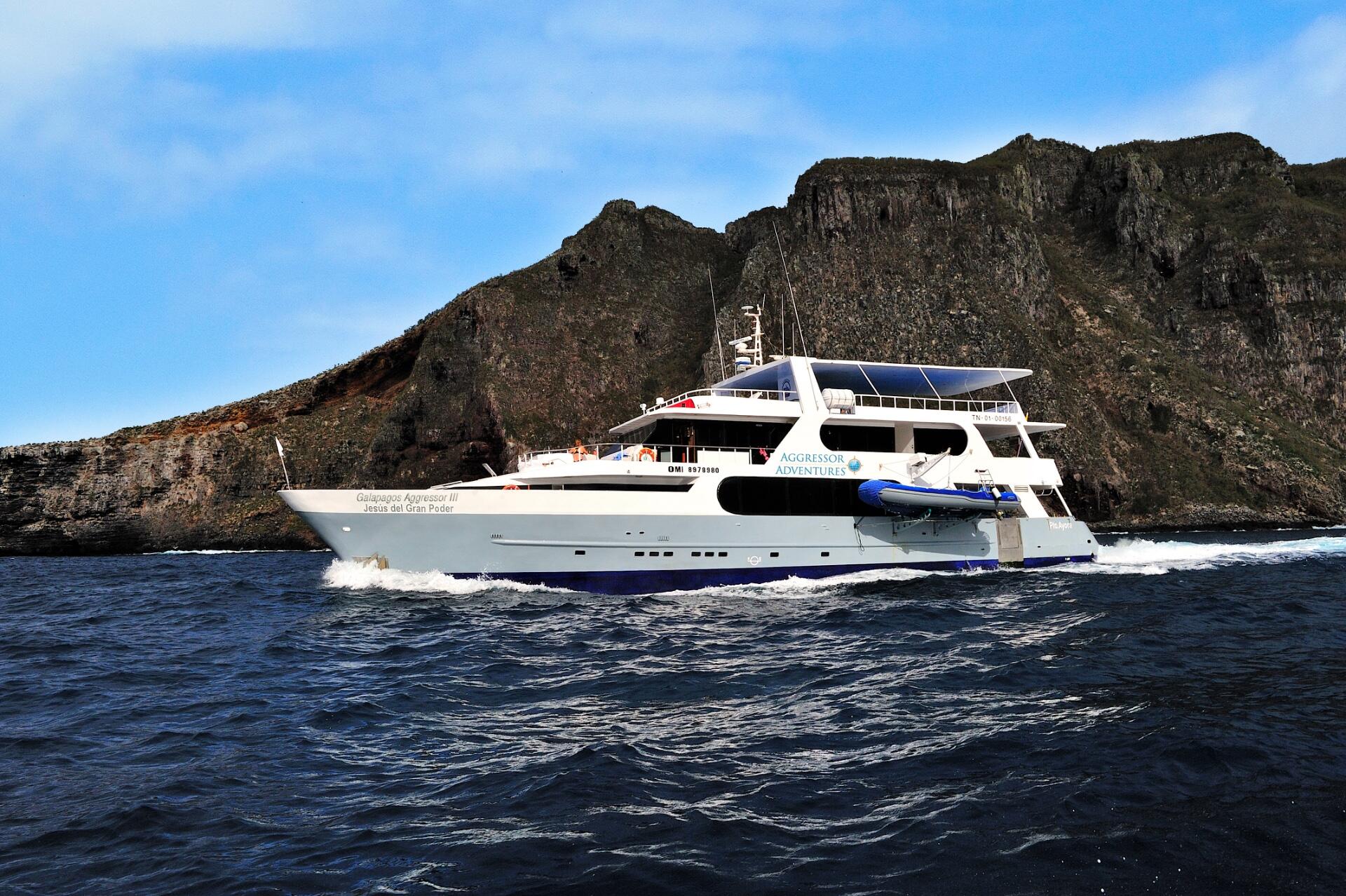
Galapagos Aggressor III
Galápagos
16 guests30.5 m
$913/day
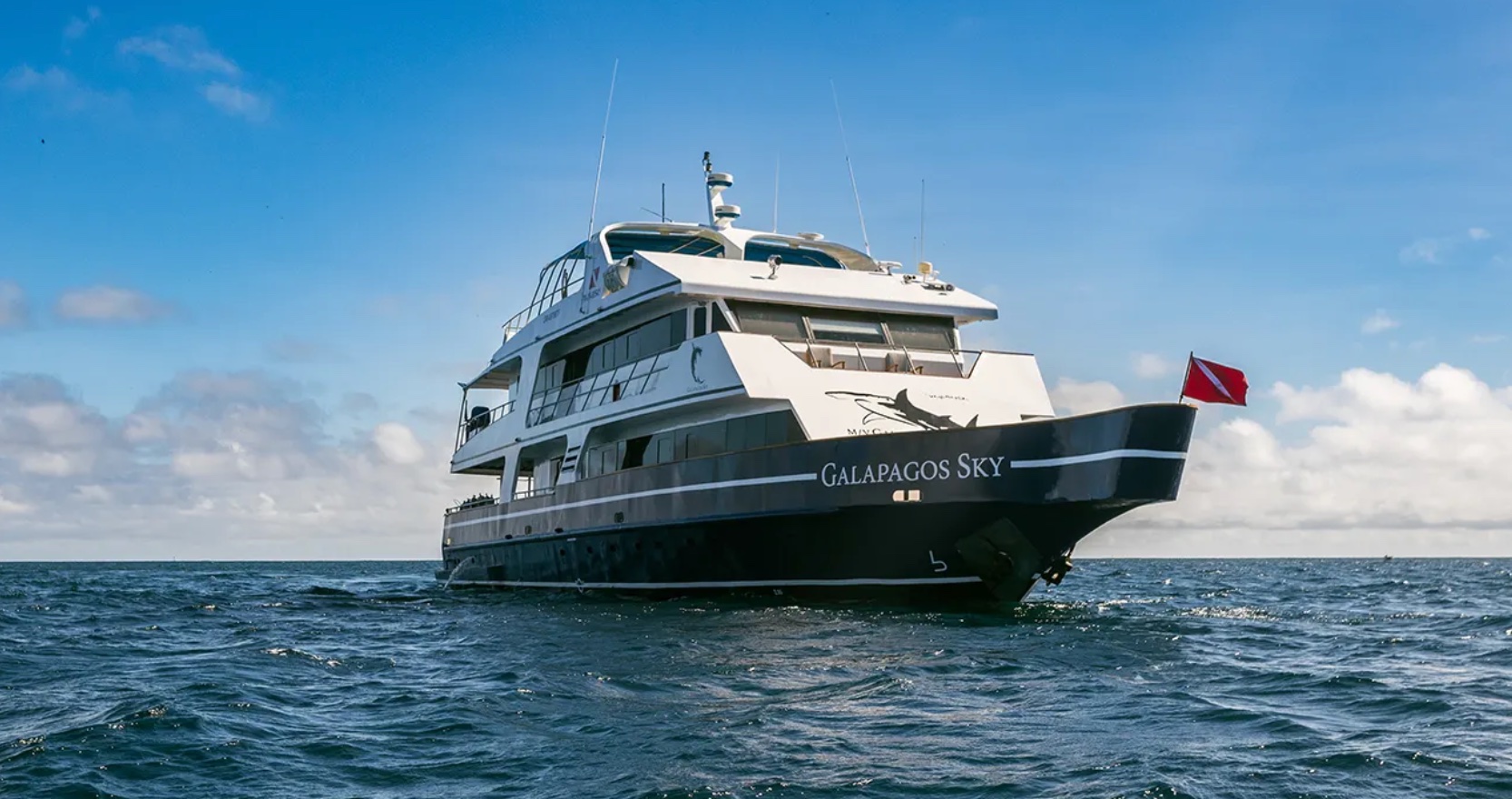
Galapagos Sky
Galápagos
16 guests
$937/day
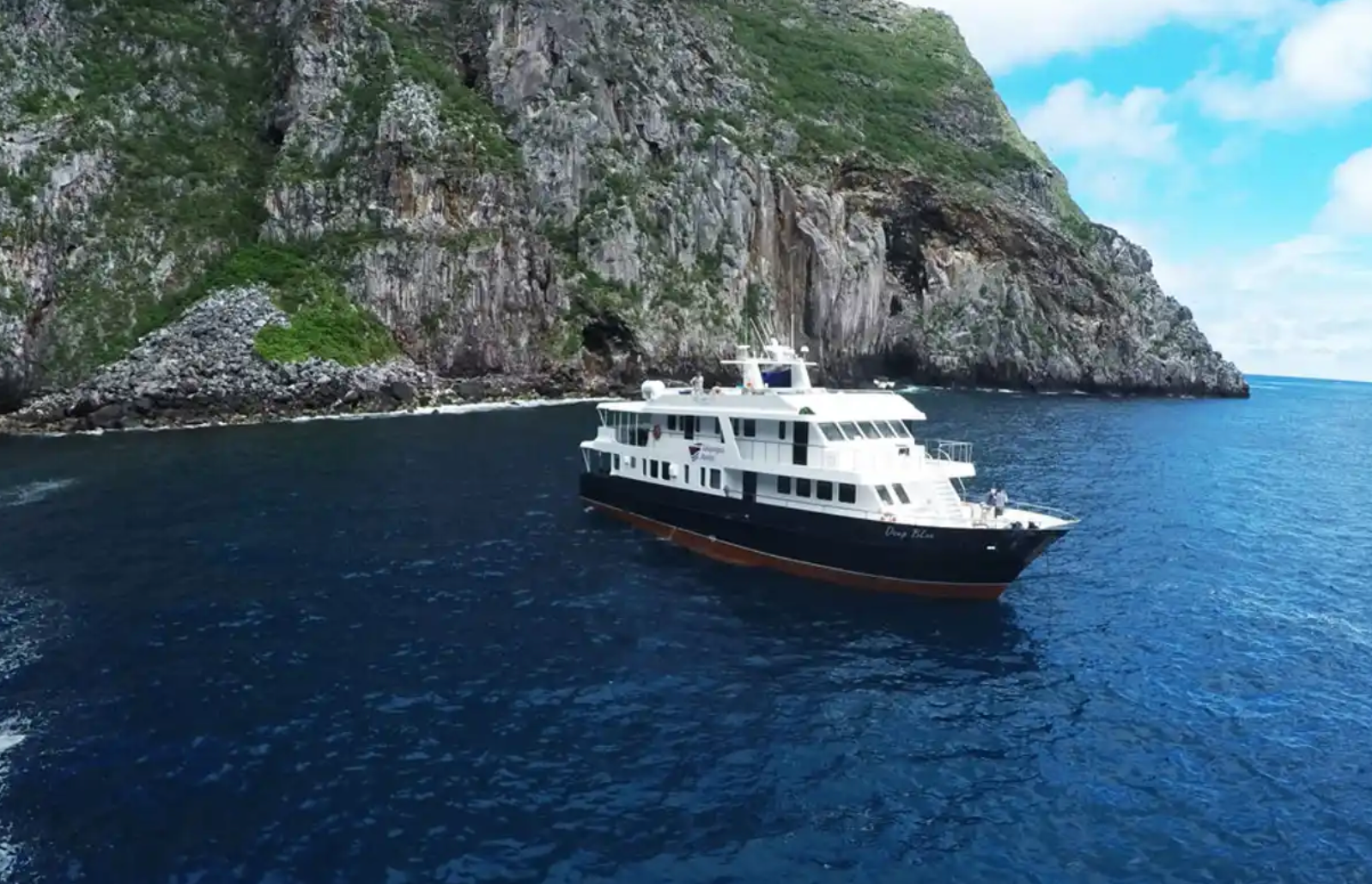
Galapagos Master
Galápagos
16 guests
$669/day
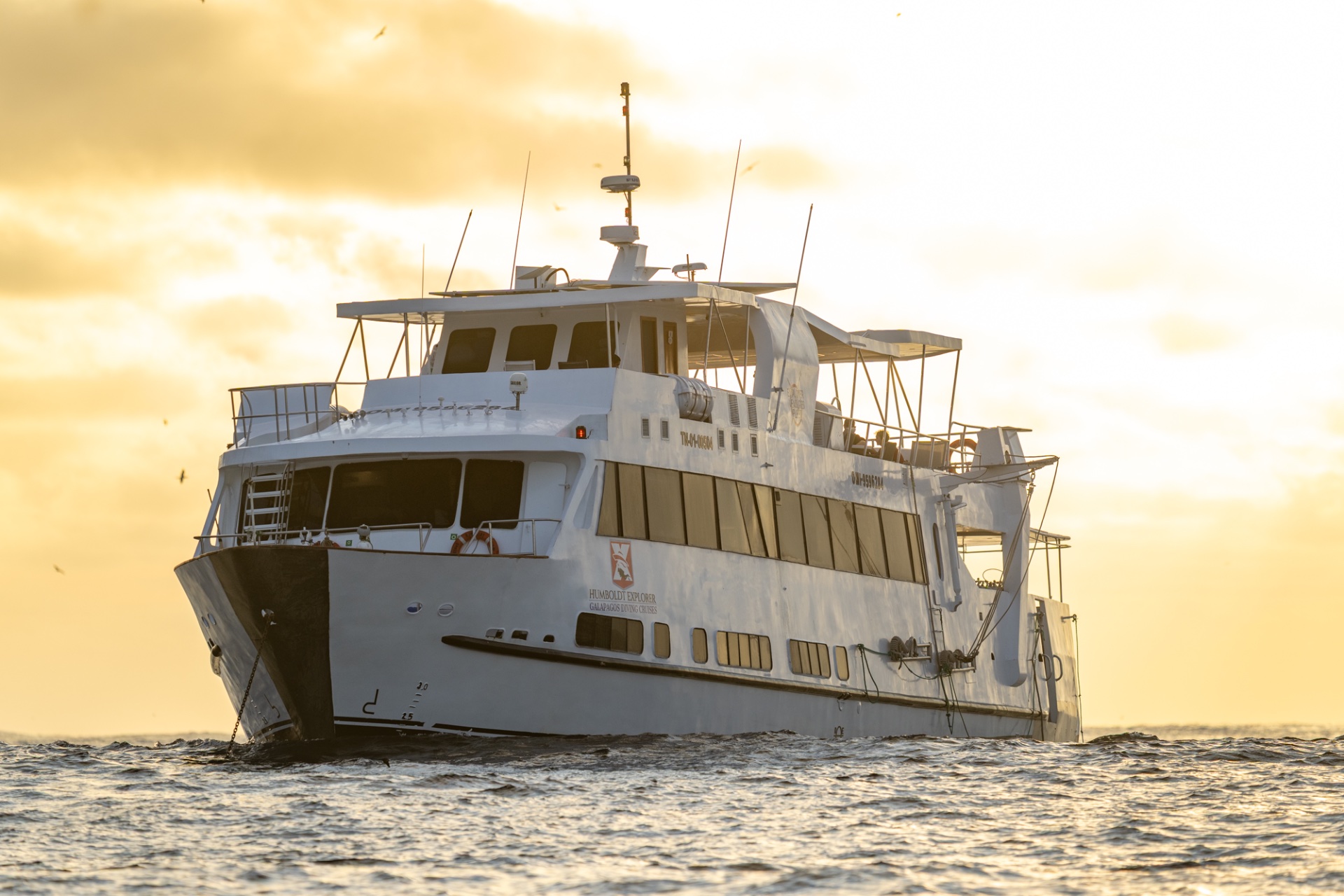
Humboldt Explorer
Galápagos
16 guests
$612/day
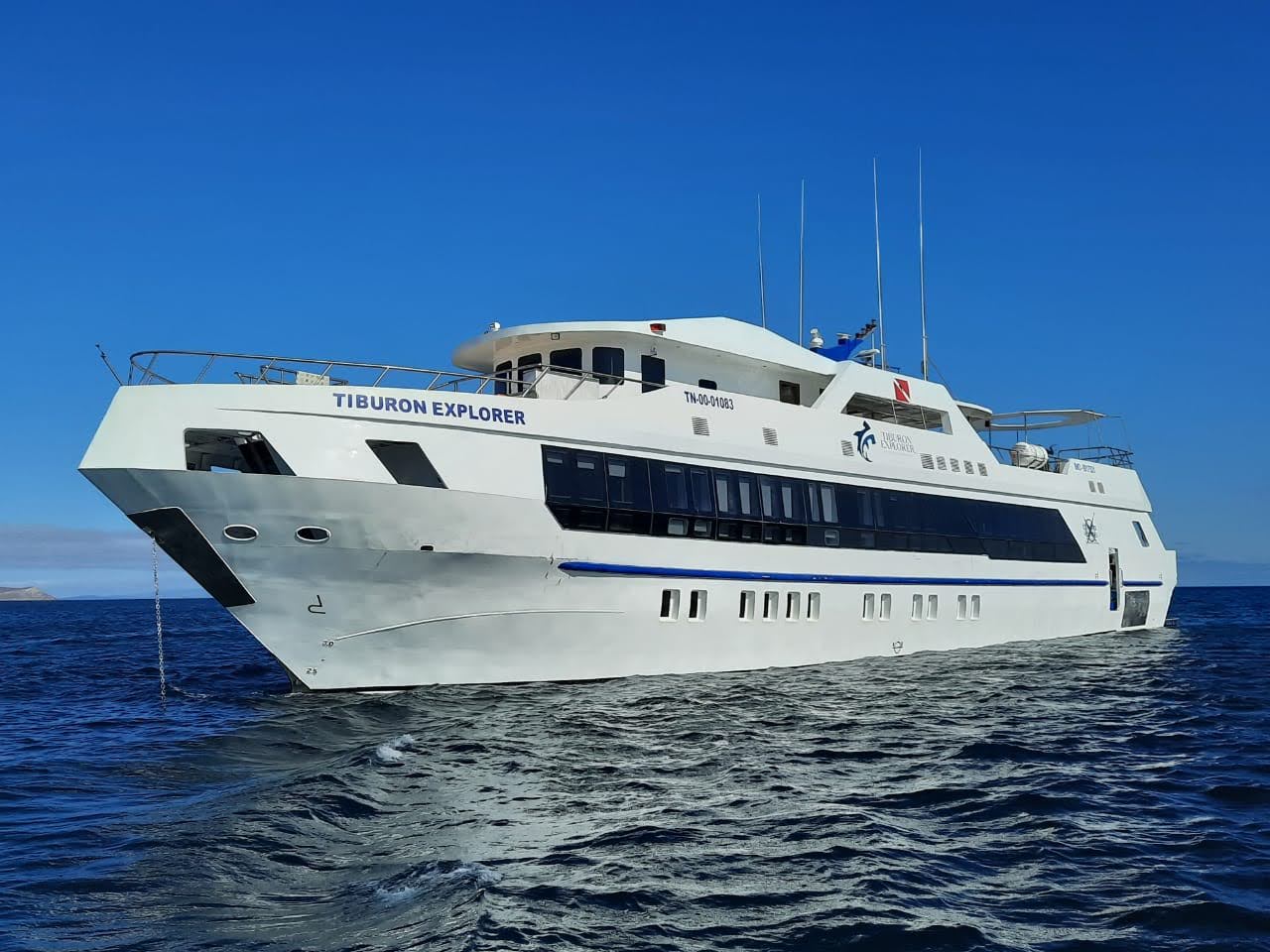
Tiburon Explorer
Galápagos
16 guests
$924/day
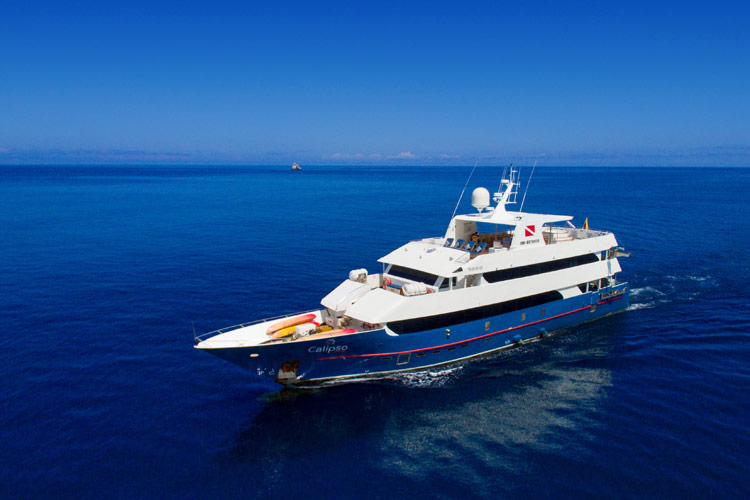
Calipso
Galápagos
16 guests
$819/day
Dive sites similar to Tagus Cove
Same character, same waters — six more sites divers love for the exact same reasons.Compare seasons, access and liveaboard routes — then pick the site that fits your trip best.
© Esri — Maxar, Earthstar, GIS
Guy Fawkes Islands
Galápagos
The Guy Fawkes Islands are a pair of small islands located close to Santa Cruz, offering a more accessible dive experience compared to the remote northern sites.
- Suitable for
- Intermediate
- Current
- Strong
- Access
- Liveaboard only
- Depth
- 5–25 m
- Theme
- Cave & cavern / Wall
© Esri — Maxar, Earthstar, GIS
Cabo Douglas - Marine Iguana Wall
Galápagos
Cabo Douglas, located on the northwest side of Fernandina Island in the central Galápagos, offers a truly unique diving experience.
- Suitable for
- Intermediate
- Current
- Strong
- Access
- Liveaboard only
- Depth
- 5–33 m
- Theme
- Wall
© Esri — Maxar, Earthstar, GIS
Daphne Minor
Galápagos
Daphne Minor, a small, barren island northwest of the Itabaca Channel, is a lesser-known but exceptionally vibrant dive site in the Galápagos.
- Suitable for
- Intermediate
- Current
- Strong
- Access
- Liveaboard only
- Depth
- 10–18 m
- Theme
- Pinnacle / Wall
© Esri — Maxar, Earthstar, GIS
Mosquera Island
Galápagos
Mosquera Island is a unique dive site in the Galápagos Marine Reserve, located between Seymour and Baltra islands.
- Suitable for
- Beginner
- Current
- Ripping
- Access
- Liveaboard only
- Depth
- 3–12 m
- Theme
- Reef / Wall
© Esri — Maxar, Earthstar, GIS
Punta Vicente Roca
Galápagos
Punta Vicente Roca, situated on the west coast of Isabela Island in the Galápagos, is a captivating dive site characterized by its vertical wall and dramatic above-surface rock formations.
- Suitable for
- Intermediate
- Current
- Ripping
- Access
- Liveaboard only
- Depth
- 5–25 m
- Theme
- Wall
© Esri — Maxar, Earthstar, GIS
Isla Tortuga - South Wall
Galápagos
Isla Tortuga's South Wall, a striking volcanic caldera, presents an exceptional dive experience in the Galápagos, offering a dramatic underwater landscape.
- Suitable for
- Advanced
- Current
- Strong
- Access
- Liveaboard only
- Depth
- 8–40 m
- Theme
- Drift / Wall