About Daphne Minor
Daphne Minor, a small, barren island northwest of the Itabaca Channel, is a lesser-known but exceptionally vibrant dive site in the Galápagos. This extinct tuff cone's underwater topography features rocky walls and channels, creating a dynamic environment that supports a diverse range of marine species. Unlike its larger counterpart, Daphne Major, there are no visitor sites on the island itself, preserving a pristine underwater experience. The site is characterized by surprisingly colorful rocky undersea walls, a result of an unusually large amount of smaller marine organisms thriving here. These organisms transform the typically black and grey volcanic rock into a multi-hued canvas, offering a visually stunning backdrop for divers and snorkelers. Depths here can vary, providing opportunities for both shallower exploration and deeper dives along the channels and slopes. Marine life at Daphne Minor is abundant throughout the year, though specific sightings can vary with the seasons. Expect to encounter a variety of reef fish, pelagic species, and macro life. Whitetip sharks, stingrays, green turtles, and mobula rays are frequently seen, while the rocky crevices host creatures like seahorses and Galápagos blennies. The cooler months often bring an influx of larger pelagic species drawn by nutrient-rich waters. Access to Daphne Minor is typically via high-speed boats from Santa Cruz, often as part of a two-dive day trip that includes lunch and snorkeling. The site's relative anonymity means groups frequently have it to themselves, providing a more intimate and undisturbed diving experience. Its proximity to the Itabaca Channel makes it a convenient option for day trips from Puerto Ayora, integrating well into land-based itineraries.
Highlights
Colorful rocky undersea wallsWhitetip shark encountersAbundant stingrays and mobulasPlayful green sea turtlesDiverse reef fish speciesUnique macro life like seahorsesUncrowded dive experience
Season calendar
Best months to dive here
Jan
Feb
Mar
Apr
May
Jun
Jul
Aug
Sep
Oct
Nov
Dec
Good
Dive site facts: Daphne Minor
- Depth
- Variable
- Current
- Moderate, sometimes strong
- Visibility
- Good to excellent
- Water temperature
- 16–27°C
- Entry
- Tender / negative entry
- Level
- AOWD recommended, current experience helpful
- Dive type
- Reef, pelagic, macro
- Region / port
- Central Galápagos / Santa Cruz
- Coordinates
- -0.3833, -90.3667
Conditions & Currents
Daphne Minor typically experiences moderate currents, which are common throughout the Galápagos and play a crucial role in delivering nutrients to the marine ecosystem. Divers should be prepared for varying current strengths, as conditions can shift, particularly during the cooler season from June to November when currents tend to be stronger. Entry is usually a negative entry from a tender directly onto the dive site to quickly descend below the strongest surface currents. Visibility can be excellent, though it may fluctuate with the plankton blooms that attract larger marine life, especially in the cooler months. Water temperatures range from 22-27°C in the warm season (December-May) and drop to 18-20°C in the cool season (June-November), sometimes reaching as low as 16°C. Thermoclines are more prevalent during the cooler season. Divers should be proficient in current diving technique
Marine life & sighting chances

Whitetip shark
common
Stingray
common
Mobula ray
common
Green turtle
common
Galápagos blenny
occasional
Seahorse
occasional
Bonito tuna
common
Trumpet fish
common
Parrot fish
common
Barracuda
common
Galápagos shark
occasionalDive profile & how the dive runs
A typical dive at Daphne Minor begins with a negative entry from the tender, allowing divers to quickly descend and mitigate surface currents. The dive often follows the contours of the island's rocky slopes and pinnacles, exploring the colorful undersea walls. You'll typically descend to around 18-25 meters, where schools of reef fish are abundant and larger pelagic species might pass by. The route usually involves navigating along the current, observing the diverse macro life hidden in crevices and searching for rays and sharks on the sandy patches or cruising in the blue. The turn point is determined by air consumption and current conditions, leading back towards a shallower reef section for a safety stop, often in areas frequented by green turtles. The shallow areas around Daphne Minor are also excellent for snorkeling, with clear waters and ample marine activity.
Underwater photography
Daphne Minor offers excellent opportunities for both wide-angle and macro photography, thanks to its diverse topography and marine life. For wide-angle shots, focus on capturing the vibrant, colorfully encrusted rocky walls and the schools of reef fish, or the dramatic encounters with passing pelagics like mobula rays and sharks. A fisheye or wide-angle rectilinear lens will serve well here. For macro enthusiasts, the site is rich with smaller subjects such as seahorses and Galápagos blennies hiding in crevices; a macro lens will be essential. Pay close attention to buoyancy to avoid damaging the delicate organisms on the rock faces. Due to varying visibility and potential thermoclines, using strobes is recommended to bring out the true colors and add definition, especially when shooting wide-angle in the deeper sections.
Combine with nearby dive sites
Getting there & logistics
Access to Daphne Minor typically originates from Puerto Ayora on Santa Cruz Island. Divers usually fly into Baltra Airport (GPS) and then transfer to Puerto Ayora. Day trips to Daphne Minor are common, often combined with another central island site, providing two dives, lunch, and sometimes snorkeling. These trips utilize fast boats, usually departing early morning and returning in the late afternoon. Booking through local dive operators in Puerto Ayora is standard practice. While the Galápagos National Park has fees, these are typically handled as part of your tour package or paid upon arrival at the airport, so confirm what is included with your chosen operator. Most itineraries allow for this site to be enjoyed within a few days of a land-based tour.
Safety & environment
Diving in the Galápagos, including Daphne Minor, requires careful attention to safety protocols due to potential strong currents and varying conditions. It is crucial to have appropriate insurance covering dive accidents and emergency evacuations. The nearest hyperbaric chamber is located in Puerto Ayora on Santa Cruz Island, approximately 40 minutes away by boat from Daphne Minor. Divers should be experienced in drift diving and capable of handling mild to moderate currents. Always dive with a reputable operator, follow your dive guide's instructions diligently, and perform buddy checks. Due to the remote nature of some Galápagos sites, evacuation can be complex and time-consuming, emphasizing the importance of preventative safety measures and thorough pre-dive planning.
Who it suits — and who it doesn't
Suited for
- Advanced Open Water divers with current experience
- Divers seeking pelagic encounters and diverse reef life
- Photographers interested in both wide-angle and macro subjects
- Those who appreciate uncrowded dive sites
- Divers comfortable with boat entries and exits
Less suited for
- Beginner divers or those without current training
- Divers uncomfortable with negative entries or potential surge
- Those expecting vibrant coral gardens
- Divers prone to seasickness on longer boat rides
FAQ
Daphne Minor FAQ
What kind of marine life can I expect at Daphne Minor?
Daphne Minor is home to a rich variety of marine species. You can frequently encounter whitetip sharks, stingrays, and green turtles. The site is also known for schools of bonito tuna, trumpet fish, and barracudas, alongside unique macro life such as seahorses and Galápagos blennies.
Is Daphne Minor suitable for new divers?
Daphne Minor is generally recommended for Advanced Open Water divers with experience in currents. While some areas are calmer, the site can experience moderate to strong currents and may require negative entries, which can be challenging for inexperienced divers.
What are the water temperatures like at Daphne Minor?
Water temperatures at Daphne Minor vary seasonally. During the warm season (December to May), temperatures range from 22-27°C. In the cooler season (June to November), temperatures drop to 18-20°C, and can occasionally be as low as 16°C, making a thicker wetsuit or drysuit advisable.
How do I get to Daphne Minor?
Daphne Minor is typically accessed via day trips from Puerto Ayora on Santa Cruz Island. You would fly into Baltra Airport, transfer to Puerto Ayora, and then take a fast boat from there to the dive site. Tours usually include two dives and often combine Daphne Minor with another nearby site.
Is snorkeling possible at Daphne Minor?
Yes, snorkeling is an excellent option at Daphne Minor. The shallow areas around the island feature colorful rocky undersea walls and are teeming with marine life, including reef fish and green turtles. Many dive tours offer snorkeling as an alternative or additional activity at the site.
Why dive Daphne Minor from a liveaboard?
Daphne Minor is one of Galápagos's signature dive sites. A liveaboard sleeps you on the water and puts you in the water for three to four guided dives per day, including dawn and night dives that day-boat operators rarely offer. You skip the daily commute back to port and reach quieter, less-crowded sites in the same region on a single trip.
Below are the liveaboards that include Daphne Minor on their Galápagos itineraries.
Liveaboards diving Daphne Minor
These liveaboards may visit Daphne Minor on selected itineraries — the exact dive sites depend on departure, weather and conditions.
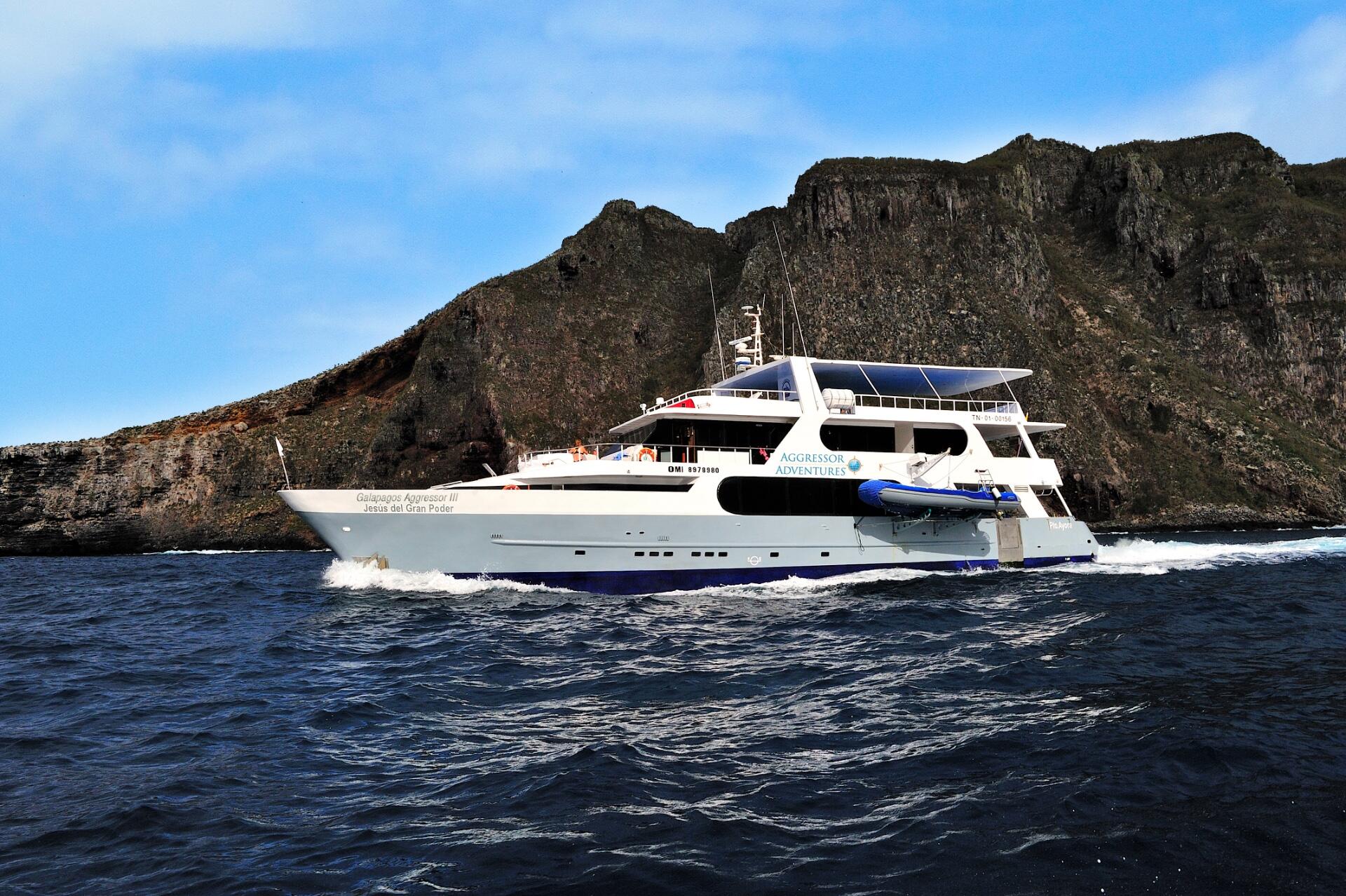
Galapagos Aggressor III
Galápagos
16 guests30.5 m
$913/day
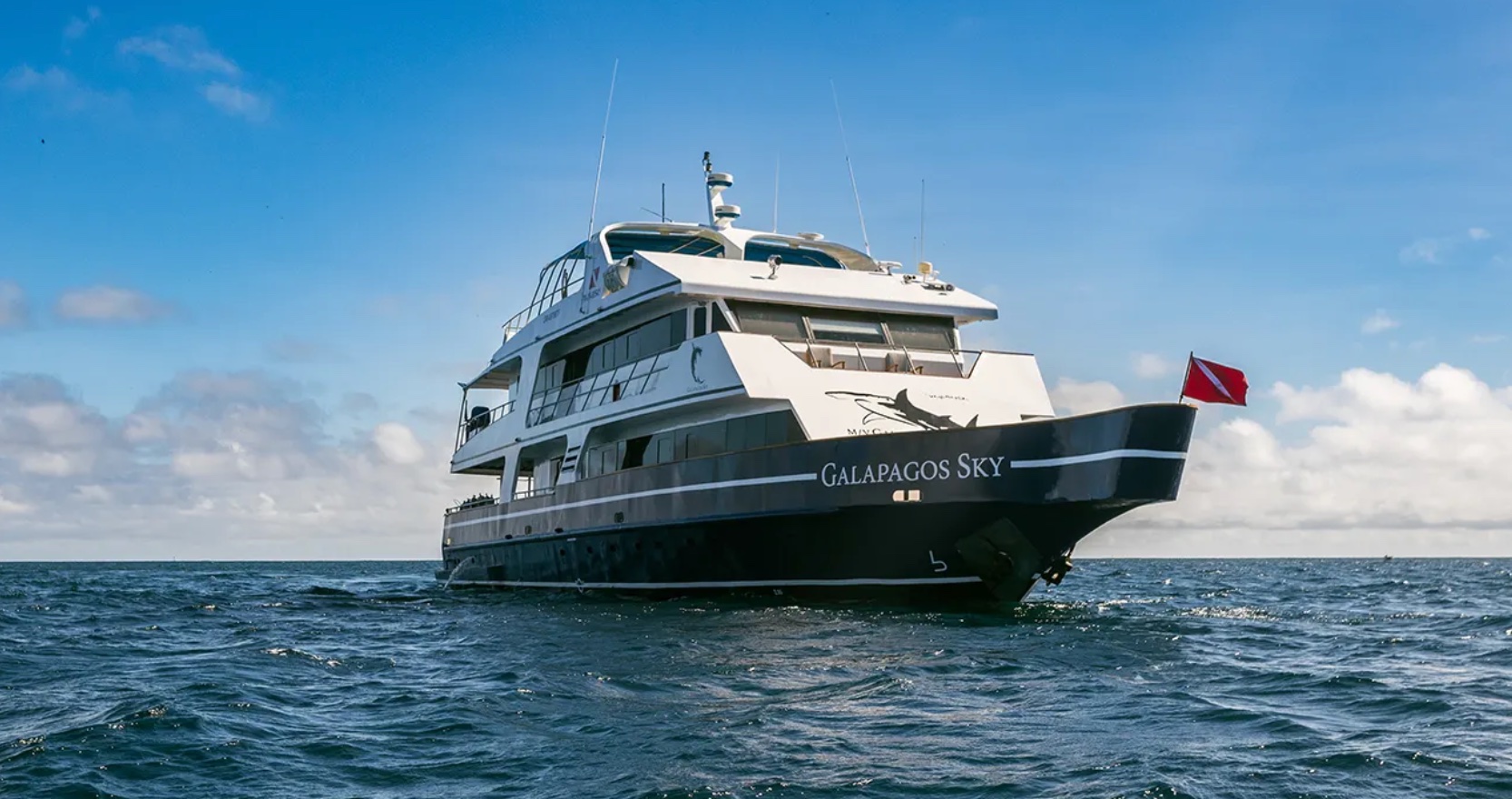
Galapagos Sky
Galápagos
16 guests
$937/day
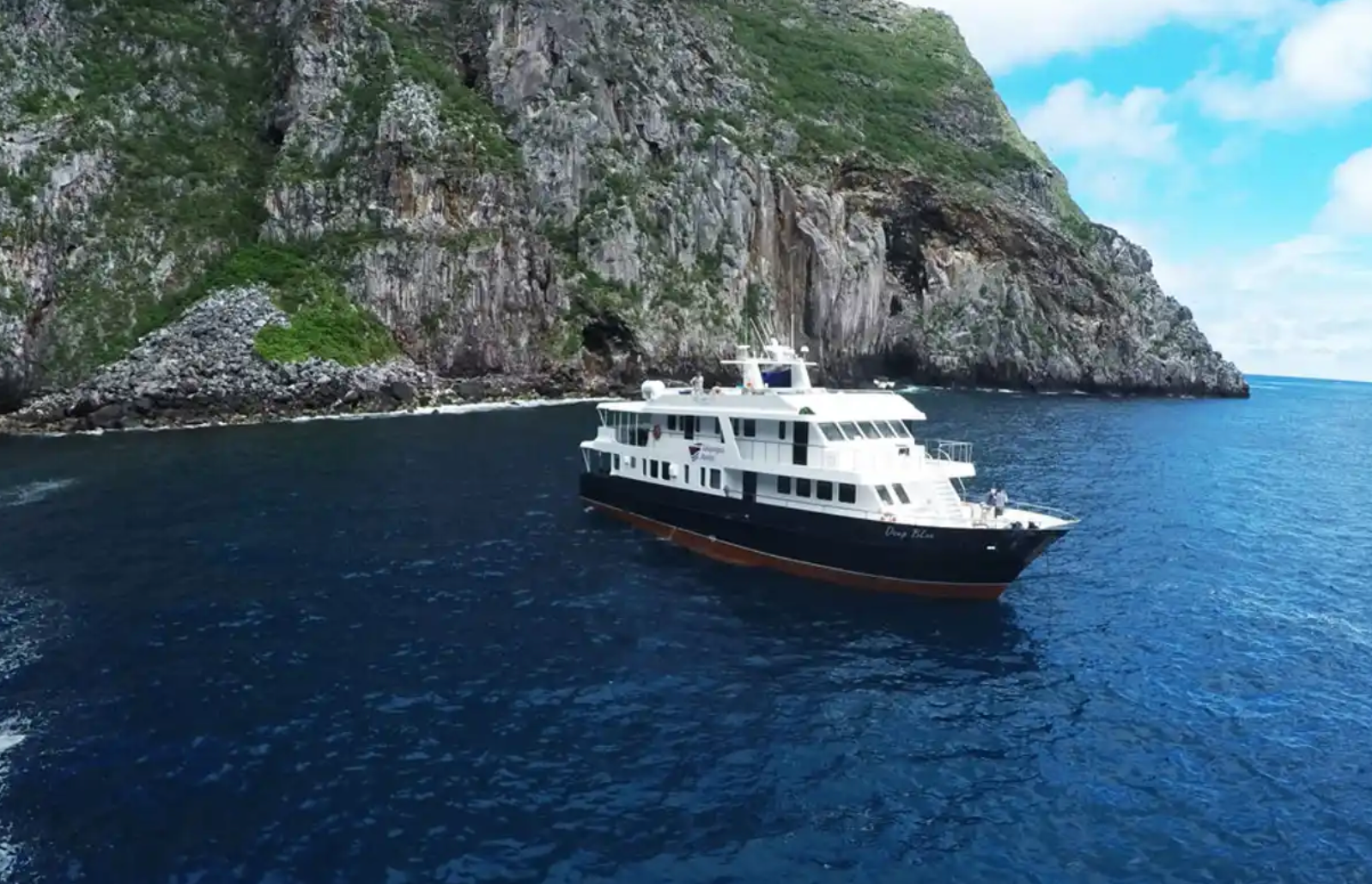
Galapagos Master
Galápagos
16 guests
$669/day
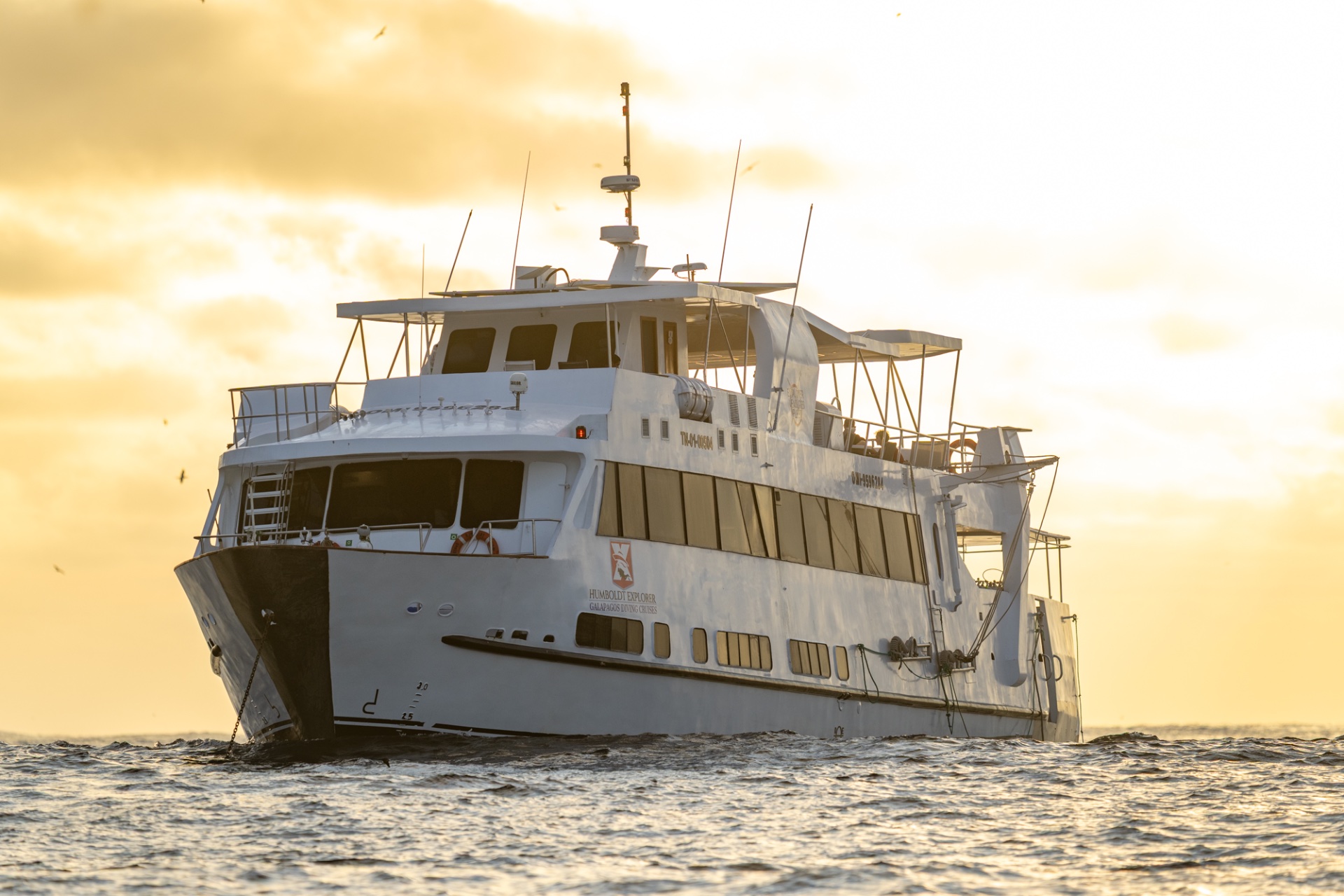
Humboldt Explorer
Galápagos
16 guests
$612/day
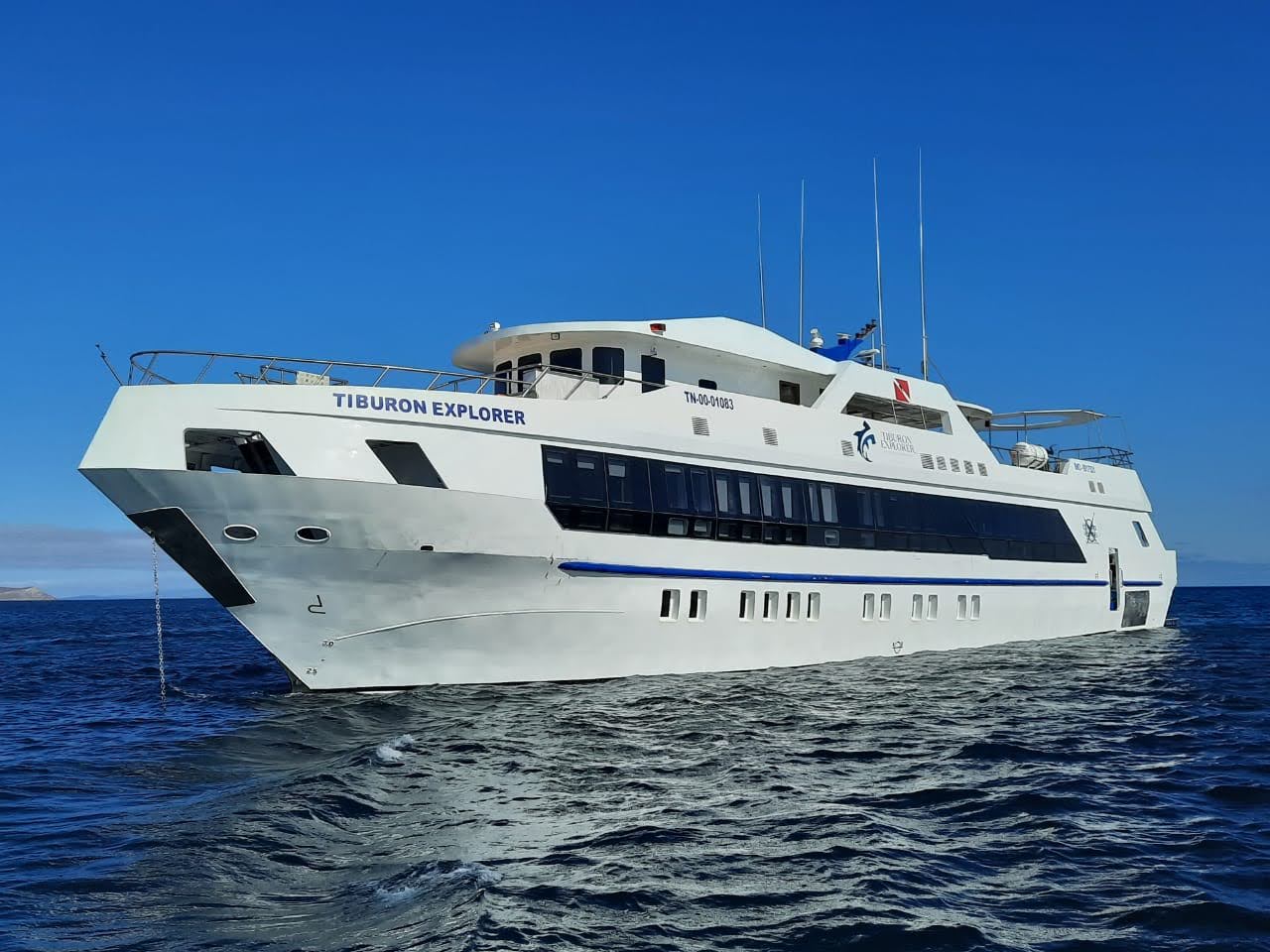
Tiburon Explorer
Galápagos
16 guests
$924/day
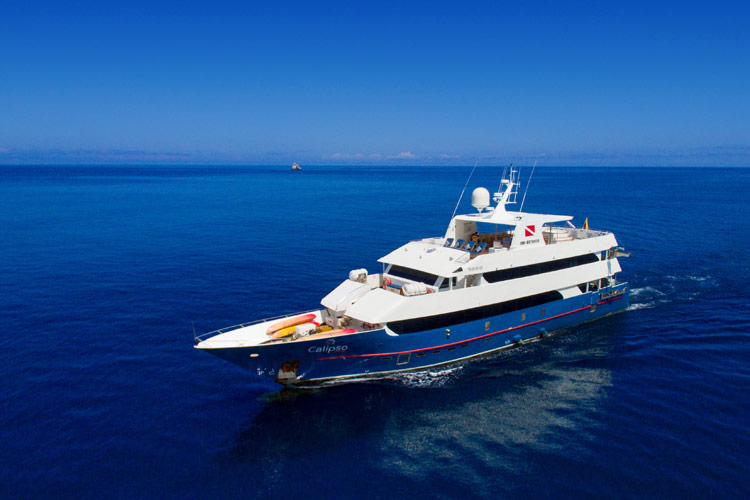
Calipso
Galápagos
16 guests
$819/day
Dive sites similar to Daphne Minor
Same character, same waters — six more sites divers love for the exact same reasons.Compare seasons, access and liveaboard routes — then pick the site that fits your trip best.
© Esri — Maxar, Earthstar, GIS
Guy Fawkes Islands
Galápagos
The Guy Fawkes Islands are a pair of small islands located close to Santa Cruz, offering a more accessible dive experience compared to the remote northern sites.
- Suitable for
- Intermediate
- Current
- Strong
- Access
- Liveaboard only
- Depth
- 5–25 m
- Theme
- Cave & cavern / Wall
© Esri — Maxar, Earthstar, GIS
Cabo Douglas - Marine Iguana Wall
Galápagos
Cabo Douglas, located on the northwest side of Fernandina Island in the central Galápagos, offers a truly unique diving experience.
- Suitable for
- Intermediate
- Current
- Strong
- Access
- Liveaboard only
- Depth
- 5–33 m
- Theme
- Wall
© Esri — Maxar, Earthstar, GIS
Mosquera Island
Galápagos
Mosquera Island is a unique dive site in the Galápagos Marine Reserve, located between Seymour and Baltra islands.
- Suitable for
- Beginner
- Current
- Ripping
- Access
- Liveaboard only
- Depth
- 3–12 m
- Theme
- Reef / Wall
© Esri — Maxar, Earthstar, GIS
Punta Vicente Roca
Galápagos
Punta Vicente Roca, situated on the west coast of Isabela Island in the Galápagos, is a captivating dive site characterized by its vertical wall and dramatic above-surface rock formations.
- Suitable for
- Intermediate
- Current
- Ripping
- Access
- Liveaboard only
- Depth
- 5–25 m
- Theme
- Wall
© Esri — Maxar, Earthstar, GIS
Isla Tortuga - South Wall
Galápagos
Isla Tortuga's South Wall, a striking volcanic caldera, presents an exceptional dive experience in the Galápagos, offering a dramatic underwater landscape.
- Suitable for
- Advanced
- Current
- Strong
- Access
- Liveaboard only
- Depth
- 8–40 m
- Theme
- Drift / Wall
© Esri — Maxar, Earthstar, GIS
Darwin's Arch
Galápagos
Darwin's Arch, now marked by two columns after the arch's natural collapse in 2021, remains a legendary dive site in the northern Galápagos archipelago, about 1000km offshore.
- Suitable for
- Advanced
- Current
- Strong
- Access
- Liveaboard only
- Depth
- 13–28 m
- Theme
- Pinnacle / Wall