About North Seymour
North Seymour is one of the most frequented dive sites in the Galápagos, conveniently located a short boat ride from the Itabaca Channel on Santa Cruz Island. The topography consists of gradual steps from the shoreline, reaching a beautiful rock reef at 8 meters, then descending to a sandy bottom between 16 and 18 meters. It's a prime location to encounter an abundant variety of marine life, including various sharks, rays, and schools of reef fish. While other sites might be more famous for hammerheads, small schools are still possible here. Divers can expect to see white-tip and black-tip reef sharks, green sea turtles, and large schools of barracuda and snapper. The rock reef offers excellent opportunities to spot well-camouflaged octopi. A remarkable highlight of North Seymour is the frequent presence of spotted eagle rays, occasionally joined by mobula and manta rays, gliding through the channel. Hundreds of garden eels also create a captivating scene, peeking out from the sandy bottom. North Seymour is known for its drift diving, and while currents can range from moderate to strong, the site is generally suitable for all experience levels, including beginners. Dive tours often depart from Puerto Ayora, with a combination of car and boat travel totaling approximately an hour. Two dives are typical for certified divers, with discovery options for those without a license, sometimes combined with a snorkeling session. The site is a popular choice for its consistent activity and accessibility.
Highlights
Garden EelsEagle RaysWhitetip Reef Sharks
Season calendar
Best months to dive here
Jan
Feb
Mar
Apr
May
Jun
Jul
Aug
Sep
Oct
Nov
Dec
Good
Dive site facts: North Seymour
- Depth
- 18–30 m
- Typical dive
- 18–30 m, 50–60 min
- Current
- Moderate to strong
- Visibility
- 10–15 m
- Water temperature
- 16–26 °C
- Entry
- Boat dive / drift
- Level
- Open Water with current experience
- Dive type
- Drift, pelagic, cleaning station
- Region / port
- Santa Cruz Island
- Coordinates
- -0.3833, -90.2833
Conditions & Currents
North Seymour is characterized by moderate to strong currents, particularly in certain areas like the nearby Mosquera Islet. These currents are a primary factor in attracting the rich pelagic life to the site, necessitating some experience with drift diving for comfort and safety. Divers should be prepared for potential thermoclines, which are common in the Galapagos, and may experience varying water temperatures depending on the season and depth. Visibility typically ranges from 10 to 15 meters, though it can fluctuate with current strength and nutrient upwellings. Entry is typically a boat dive, with guides often assessing diver proficiency in currents before descending. Divers should maintain good buoyancy control and be mindful of their air consumption due to the dynamic conditions. Gloves are recommended for stability if needing to hold onto volcanic rocks in strong currents.
Marine life & sighting chances

White-tip reef shark
common
Galapagos shark
common
Hammerhead shark
December to May for larger schools · common
Eagle ray
common
Manta ray
occasional
Golden cownose ray
occasional
Green sea turtle
common
Moray eel
common
Garden eel
common
Giant pufferfish
occasional
King angelfish
common
Blue and gold snapper
common
Razor surgeonfish
commonDive profile & how the dive runs
Dives at North Seymour typically commence with a boat entry, often as a drift dive due to the prevailing currents. The initial descent may lead to an 'eel garden' area on a sandy bottom, where divers can observe garden eels and resting reef sharks. The dive progresses along the reef, transitioning to areas with volcanic rock formations and potential cleaning stations where larger pelagics like hammerheads and Galapagos sharks may be seen. Depths will usually vary between 18 to 30 meters. Divers generally follow the current, with the dive turning point dictated by air consumption or the natural drift. The safety stop is conducted in shallower, calmer sections, often near the end of the drift, before ascending to the surface for boat pickup.
Underwater photography
North Seymour is excellent for wide-angle photography, especially to capture the schooling hammerheads and other large pelagics. A wide-angle lens is essential for documenting the expansive cleaning stations and the general abundance of sharks and rays. Be prepared for moderate to strong currents, which can make steady shot composition challenging; quick reflexes are beneficial. Given the potential for thermoclines and varying visibility (10-15 meters), external strobes are highly recommended to bring out color and detail. For behavioral shots, particularly of rays and green sea turtles, patience and good buoyancy control are key. While less renowned for macro, unique opportunities may arise in sheltered crevices. Remember to maintain a respectful distance from all marine life.
Combine with nearby dive sites
- Mosquera Island
Frequently paired with North Seymour for a two-dive excursion, offering a drift and wall dive experience with diverse marine life.
- Punta Carrión
A boulder-strewn reef providing encounters with white-tip reef sharks, sea lions, and occasional hammerheads and Galapagos sharks, with some macro opportunities.
- Daphne Minor
A calmer, often shallower site known for its variety of reef fish and opportunities for beginner divers.
Getting there & logistics
North Seymour is primarily accessed via day trips departing from Puerto Ayora on Santa Cruz Island. Divers typically fly into Seymour/Baltra (GPS) or San Cristóbal (SCY) airports, then connect to Santa Cruz. The boat journey from Itabaca Canal to North Seymour takes approximately 30 minutes. Most tours are full-day excursions, including two dives, snacks, and lunch, lasting around 8 hours total. It's recommended to book at least a couple of days in advance with a local dive center in Puerto Ayora. All visitors to the Galapagos National Park must pay an entrance fee.
Safety & environment
Diving at North Seymour requires adherence to standard safety protocols due to the presence of moderate to strong currents. Divers should possess a minimum of Open Water certification with some experience in currents. It is crucial to dive with a reputable, certified operator and follow the dive guide's instructions closely, especially regarding entry, drift, and exit procedures. The nearest recompression chamber is located in Puerto Ayora on Santa Cruz Island. In case of a diving emergency, evacuation to the chamber can take several hours depending on boat travel time, so comprehensive dive insurance is highly recommended. Always check your gear thoroughly and ensure you are comfortable with the conditions before descending. Respect marine life by maintaining a safe distance and never touching or harassing animals.
Who it suits — and who it doesn't
Suited for
- Divers with current experience
- Intermediate to advanced divers
- Shark enthusiasts
- Underwater photographers interested in pelagics
- Divers seeking active drift dives
Less suited for
- Beginner divers without current experience
- Divers uncomfortable with strong currents
- Those prone to seasickness on choppy waters
- Divers prioritizing macro-only photography
FAQ
North Seymour FAQ
What marine life can I expect to see at North Seymour?
North Seymour is renowned for its shark sightings, including white-tip, Galapagos, and hammerhead sharks. You can also expect to encounter various rays such as eagle rays and occasional manta rays, along with green sea turtles, moray eels, and garden eels. The site's active currents contribute to a rich and diverse ecosystem.
Are the currents at North Seymour challenging?
The currents at North Seymour are typically moderate to strong, which adds to the excitement and richness of the dive. While it's not a site for absolute beginners, divers with some experience in currents and good buoyancy control will find it manageable and highly rewarding. Dive guides always provide briefings and support for navigating these conditions.
What is the typical depth and visibility at North Seymour?
Dives at North Seymour generally range from 18 to 30 meters in depth, exploring various underwater landscapes including sandy flats and volcanic rock formations. Visibility usually falls between 10 to 15 meters. These conditions allow for good viewing of the abundant marine life, particularly the larger pelagic species.
Is North Seymour suitable for new divers?
While it is possible for Open Water certified divers to visit North Seymour, it is highly recommended to have some prior experience with diving in currents. The dynamic conditions and potential for stronger flows can be challenging for those new to such environments. If you are a new diver, ensure you communicate your experience level to your dive operator.
How do I get to North Seymour for diving?
North Seymour is accessible via day boat trips that depart from Puerto Ayora on Santa Cruz Island. The journey from the Itabaca Canal to the dive site typically takes about 30 minutes. Most tours include two dives, often combining North Seymour with nearby Mosquera Island, and provide all necessary gear, snacks, and lunch.
When is the best time of year to dive North Seymour?
The warm season, from December to May, brings warmer water temperatures (20-26°C) and generally calmer seas, which can be more comfortable. The cool season, from June to November, features cooler water (16-20°C) and potentially stronger currents, but can offer increased pelagic activity and larger schools of hammerheads. Both seasons offer excellent diving opportunities.
Why dive North Seymour from a liveaboard?
North Seymour is one of Galápagos's signature dive sites. A liveaboard sleeps you on the water and puts you in the water for three to four guided dives per day, including dawn and night dives that day-boat operators rarely offer. You skip the daily commute back to port and reach quieter, less-crowded sites in the same region on a single trip.
Below are the liveaboards that include North Seymour on their Galápagos itineraries.
Liveaboards diving North Seymour
These liveaboards may visit North Seymour on selected itineraries — the exact dive sites depend on departure, weather and conditions.
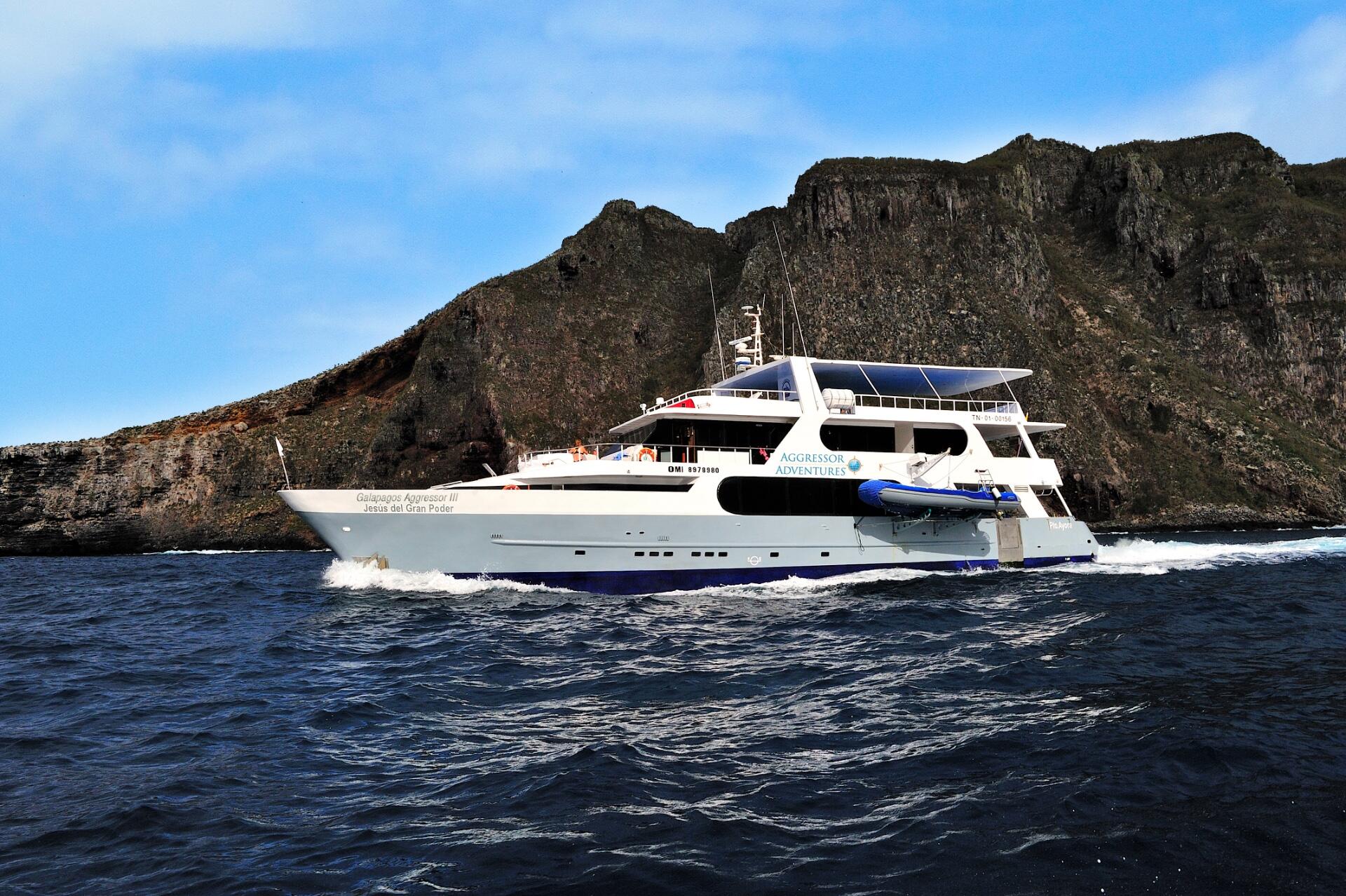
Galapagos Aggressor III
Galápagos
16 guests30.5 m
$913/day
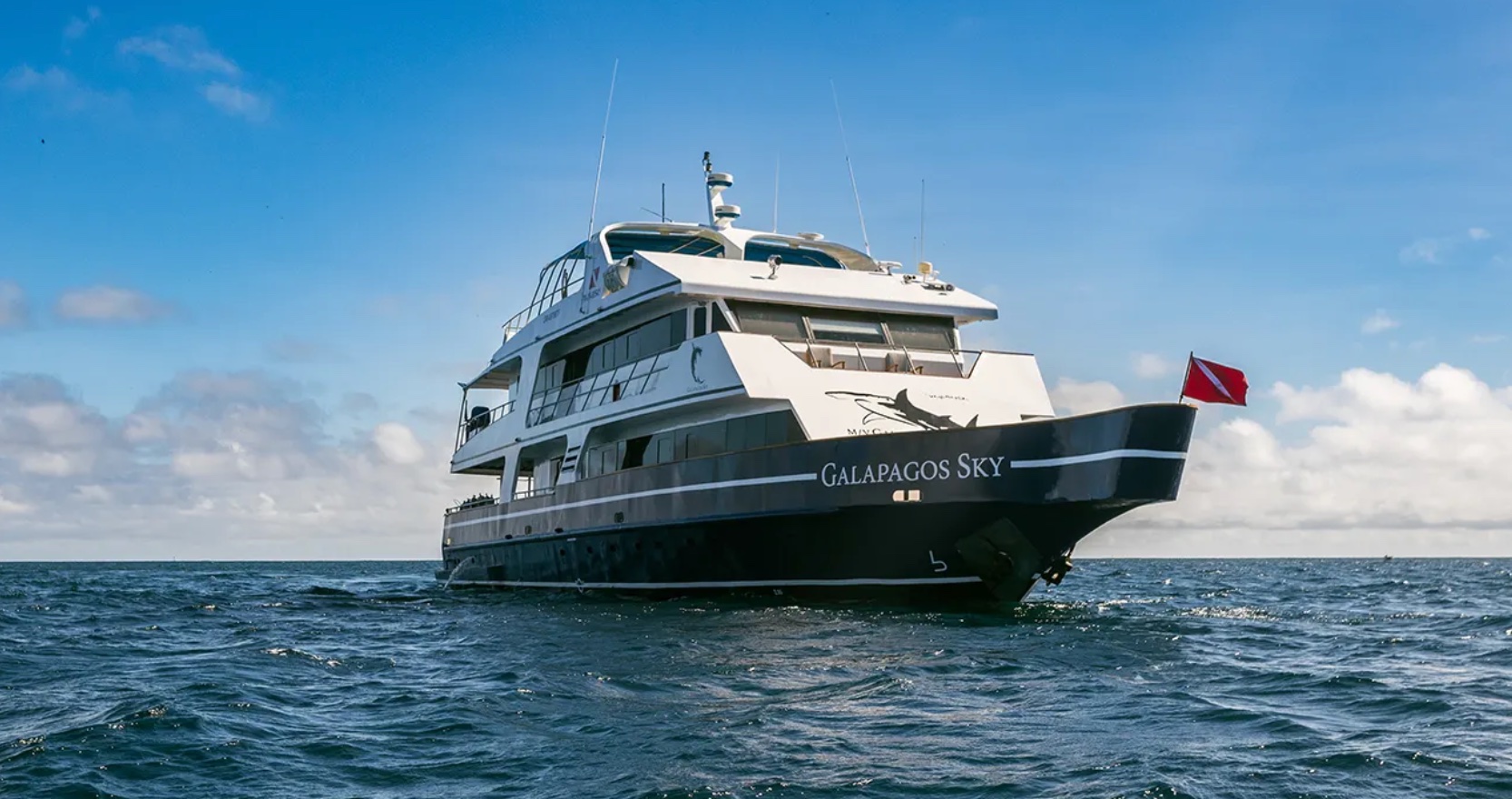
Galapagos Sky
Galápagos
16 guests
$937/day
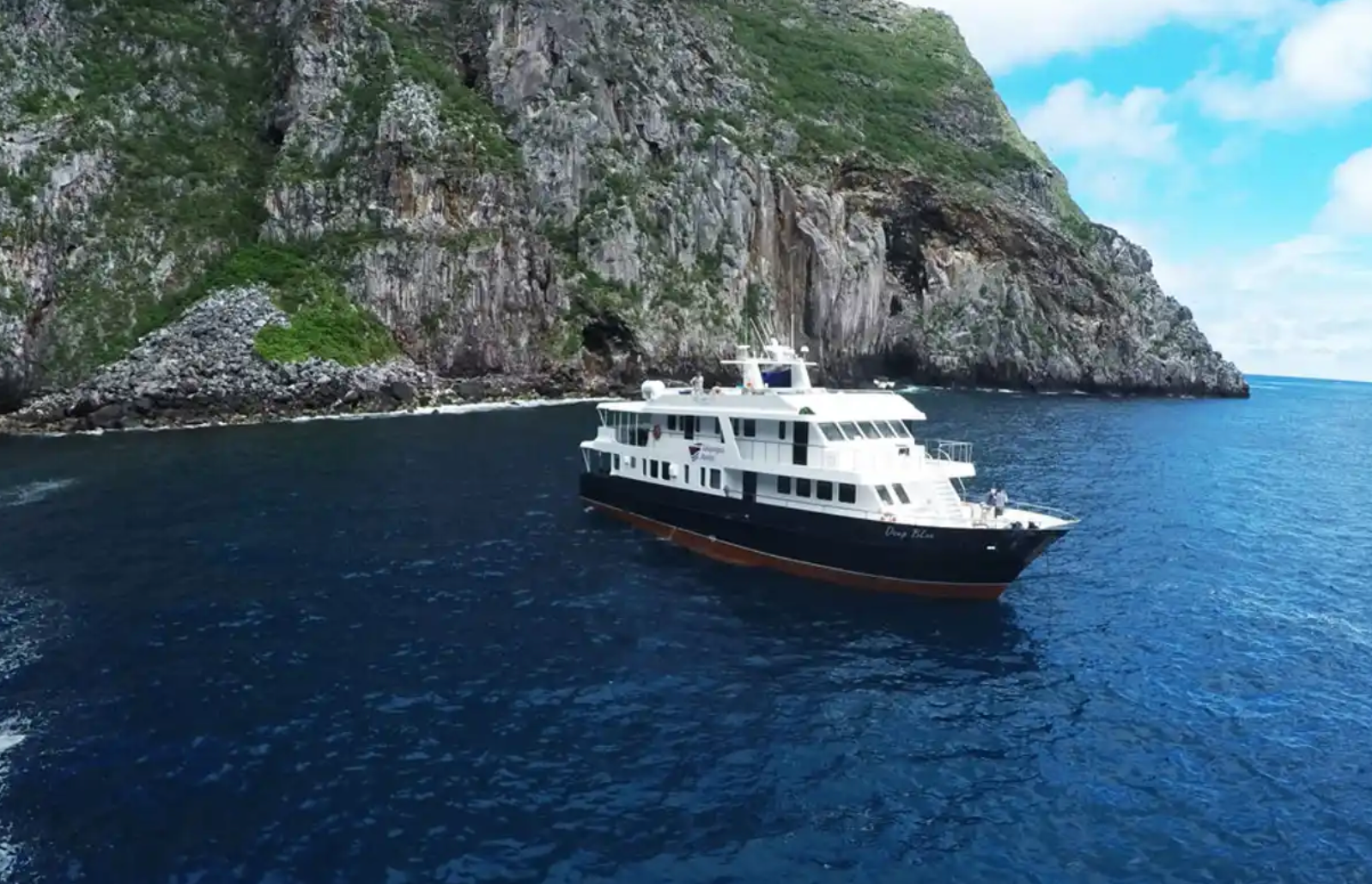
Galapagos Master
Galápagos
16 guests
$669/day
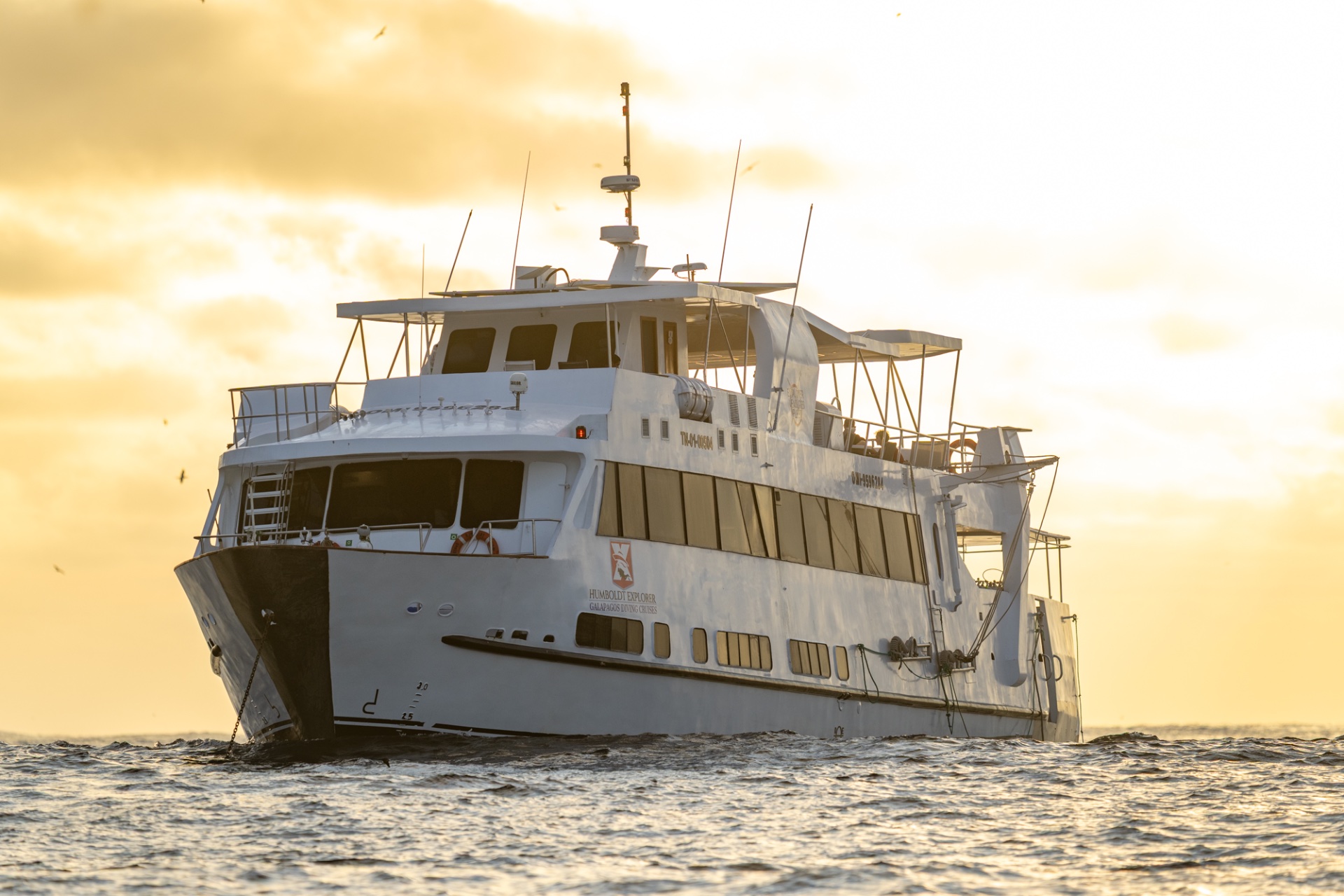
Humboldt Explorer
Galápagos
16 guests
$612/day
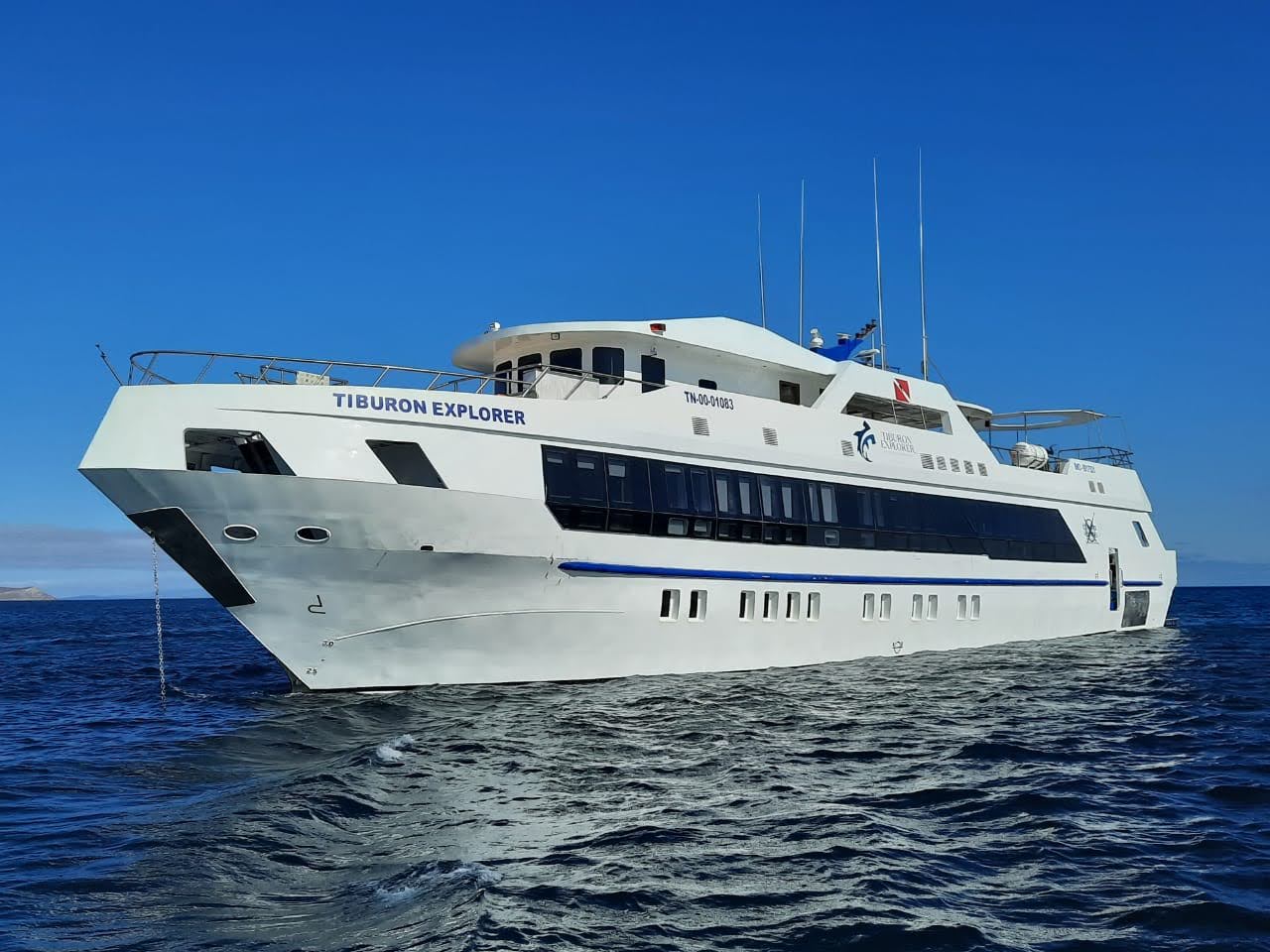
Tiburon Explorer
Galápagos
16 guests
$924/day
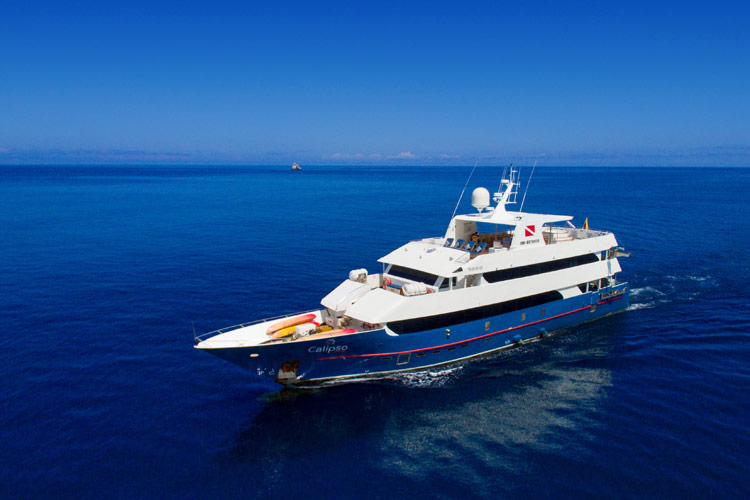
Calipso
Galápagos
16 guests
$819/day
Dive sites similar to North Seymour
Same character, same waters — six more sites divers love for the exact same reasons.Compare seasons, access and liveaboard routes — then pick the site that fits your trip best.
Landslide, known locally as El Derrumbe, is a renowned dive site situated off Wolf Island in the remote northern Galápagos archipelago.
- Suitable for
- Advanced
- Current
- Ripping
- Access
- Liveaboard only
- Depth
- 9–37 m
- Theme
- Drift
Shark Bay, known in Spanish as Bahia de Tiburones, is a celebrated dive site located off Wolf Island in the remote northern reaches of the Galapagos archipelago.
- Suitable for
- Advanced
- Current
- Ripping
- Access
- Liveaboard only
- Depth
- —
- Theme
- Drift
© Esri — Maxar, Earthstar, GIS
Cabo Douglas - Fernandina
Galápagos
Cabo Douglas, located on Fernandina Island, offers a truly unique underwater experience as the sole location worldwide where divers can observe marine iguanas grazing on algae beneath the surface.
- Suitable for
- Advanced
- Current
- Strong
- Access
- Liveaboard only
- Depth
- 6–6 m
- Theme
- Drift
Pinzon is situated among the central islands of the Galápagos archipelago, an area characterized by waters that are generally warmer and more protected compared to the northern or western regions.
- Suitable for
- Advanced
- Current
- Strong
- Access
- Liveaboard or dayboat
- Depth
- ≤ 18 m
- Theme
- Reef / Drift
The Caves, located at San Cristóbal, offers a unique underwater adventure, blending skill and direct contact with the Galápagos archipelago's rich biodiversity.
- Suitable for
- Advanced
- Current
- Ripping
- Access
- Liveaboard only
- Depth
- ≤ 35 m
- Theme
- Drift