About Punta Carrión
Nestled at the end of the Itabaca Channel between Santa Cruz and Baltra islands, Punta Carrión serves as a prime initial dive site for many liveaboard itineraries in the Galápagos. Its sheltered position offers calm seas and minimal currents over a sandy-rocky bottom, transitioning to a gorge with conditions favorable for larger pelagic sightings. This makes it an ideal spot to acclimate to the unique underwater environment of the archipelago. The dive site features a boulder-strewn reef that hosts a rich diversity of marine life, ranging from vibrant small critters like neon nudibranchs to impressive pelagic species. Depths typically range from 10 to 30 meters, with the most vibrant life concentrated between 10 and 20 meters. The barren, rocky coastline contrasts with the lively underwater world, where Sally Lightfoot crabs add splashes of color to the shores. Divers can anticipate encounters with white-tip and Galápagos sharks, along with the occasional hammerhead. Playful sea lions are a consistent highlight, often interacting with divers. Other common sightings include sea turtles, eagle rays, and diverse reef fish. While visibility can vary from 5 to 10 meters, the sheer abundance and boldness of the marine creatures ensure spectacular photographic opportunities even on less clear days. The convenience of its location, a mere 10-minute boat ride from the pier, combined with its relatively gentle conditions, makes Punta Carrión an accessible yet rewarding dive. It provides a comprehensive preview of the larger pelagic life and unique biodiversity that define the Galápagos diving experience, often before venturing to more remote and challenging sites.
Highlights
Playful sea lion encountersAbundant white-tip reef sharksPotential hammerhead shark sightingsProtected, calm watersDiverse reef and pelagic lifeExcellent for underwater photographyClose to Itabaca Channel
Season calendar
Best months to dive here
Jan
Feb
Mar
Apr
May
Jun
Jul
Aug
Sep
Oct
Nov
Dec
Good
Dive site facts: Punta Carrión
- Depth
- 5–30 m
- Typical dive
- 10–20 m, 50–60 min
- Current
- Mild to medium
- Visibility
- 5–10 m+
- Water temperature
- 18–30 °C
- Entry
- Tender / negative entry
- Level
- Open Water Diver, good buoyancy
- Dive type
- Reef, pelagic, photography
- Night dive
- Not permitted
- Region / port
- Santa Cruz Island
- Coordinates
- -0.45, -90.3167
Conditions & Currents
Punta Carrión benefits from its protected location within the Itabaca Channel, resulting in calmer conditions and generally mild currents compared to many other Galápagos dive sites. While currents are not as strong here, the site features a gorge area exposed to more movement, which is often where larger pelagic species are encountered. Entry is typically a synchronized backwards roll from tenders, followed by a negative descent to avoid discomfort from any surface swell. While often not requiring divers to cling to rocks, prudent buoyancy control is always essential. Visibility can fluctuate between 5 to 10 meters or more, influenced by weather and nutrient-rich waters. Thermoclines are common in the Galápagos, so appropriate thermal protection is advisable. The relatively gentle conditions make it an excellent site for divers to acclimate to Galápagos diving.
Marine life & sighting chances

White-tip reef shark
year-round · common
Galapagos shark
year-round · common
Hammerhead shark
year-round · occasional
Sea lion
year-round · common
Sea turtle
year-round · common
Eagle ray
December-April · common
Marbled ray
common
Stingray
common
Neon nudibranch
occasional
Reef fish
year-round · common
Scorpionfish
common
Dolphin
year-round · occasionalDive profile & how the dive runs
Dives at Punta Carrión typically begin with a synchronized backward roll from a panga, followed by a negative descent due to potential surface swell. Groups converge around 10 meters, or at the nearest sheltered spot on the rocky bottom. The dive primarily explores a boulder-strewn reef, maintaining depths between 10 and 20 meters, where marine life is most prolific. Divers keep an eye on the blue for larger pelagics while observing the smaller creatures on the reef. The absence of strong currents often means there's no need to hold onto rocks. After exploring the site, divers ascend for a three-minute safety stop, during which it's common to spot passing rays or hammerheads.
Underwater photography
Punta Carrión offers excellent opportunities for both wide-angle and macro photography. Wide-angle lenses are ideal for capturing the playful sea lions interacting with divers, schooling white-tip reef sharks, and occasional hammerheads in the blue. The clear, but sometimes nutrient-rich, waters benefit from strobes to bring out colors and add definition to subjects. For macro enthusiasts, the reef boasts neon nudibranchs and other small critters. Given the lively interactions with sea lions, photographers should be mindful of their gear, as these curious animals might playfully nibble at cameras or flashes. Good buoyancy control is essential to avoid disturbing the sandy-rocky bottom and to safely maneuver around the reef and marine life.
Combine with nearby dive sites
- Canal Itabaca
The channel where liveaboards typically dock, offering additional sheltered diving and wildlife viewing.
- North Seymour
Offers drift dives with white-tip reef sharks, sea turtles, and eagle rays.
- Cousin's Rock
A triangular rock formation known for schooling hammerheads, eagle rays, and sea lions.
- Bartolomé Island
Offers dives with groupers, barracudas, and occasional hammerheads, combined with a scenic land hike.
Getting there & logistics
Galápagos dive trips typically commence with flights to Guayaquil (GYE) or Quito (UIO) in Ecuador, followed by a connecting flight to Seymour/Baltra (GPS) or San Cristóbal (SCY) airports. Punta Carrión is conveniently located near the Itabaca Channel between Santa Cruz and Baltra, making it a common first or second dive site for liveaboards after initial check dives. The boat ride from the channel pier to the dive site is short, around 10 minutes. Liveaboard itineraries usually last a week, often incorporating Punta Carrión as part of a Central Islands circuit before heading to more remote northern sites like Darwin and Wolf. National Park fees apply for all visitors.
Safety & environment
While Punta Carrión is considered one of the milder Galápagos dive sites, general dive safety protocols are paramount. Divers should maintain excellent buoyancy control and stay aware of their surroundings, particularly due to playful sea lion interactions. It's highly recommended to have comprehensive dive insurance that covers emergency medical evacuation and recompression. The nearest hyperbaric chamber is located in Puerto Ayora on Santa Cruz Island. Given the remote nature of the Galápagos, emergency evacuation can be complex and time-consuming. Adherence to National Park regulations, including not touching marine life and following guide instructions, is crucial for both diver safety and marine conservation.
Who it suits — and who it doesn't
Suited for
- Newcomers to Galápagos diving
- Divers comfortable with mild currents
- Underwater photographers targeting varied subjects
- Those interested in playful marine life interactions
- Divers seeking an introduction to pelagic species
Less suited for
- Divers unwilling to negative descend
- Those seeking only extreme current dives
- Divers uncomfortable with variable visibility
- Individuals not wearing adequate thermal protection
FAQ
Punta Carrión FAQ
What kind of marine life can I expect to see at Punta Carrión?
At Punta Carrión, you can expect a vibrant array of marine life. Common sightings include playful sea lions, white-tip reef sharks, Galápagos sharks, and sea turtles. You might also encounter eagle rays, marbled rays, stingrays, and various colorful reef fish, with occasional sightings of hammerhead sharks and neon nudibranchs. The site offers a fantastic overview of Galápagos biodiversity.
Is Punta Carrión suitable for less experienced divers?
Yes, Punta Carrión is generally considered suitable for less experienced divers or as a good check-out dive. Its protected location in the Itabaca Channel typically provides calm seas and mild currents, making it a gentler introduction to Galápagos diving compared to more exposed sites. However, good buoyancy control and comfort with negative entries are still recommended.
What are the typical dive conditions like at Punta Carrión?
Dive conditions at Punta Carrión usually feature calm surface conditions due to its protected position. Currents are typically mild, though they can increase in the gorge area. Visibility usually ranges from 5 to 10 meters or more, depending on weather and nutrient levels in the water. Water temperatures vary seasonally, generally between 18°C and 30°C, and thermoclines can be present, so a 5-7mm wetsuit is advisable.
How long is the boat ride to Punta Carrión?
Punta Carrión is conveniently located very close to the pier in the Itabaca Channel. The boat ride from the pier typically takes only about 10 minutes. This short travel time allows for more dive time and makes it an accessible site for many liveaboard and day trip itineraries.
Are there any specific safety considerations for diving at Punta Carrión?
Safety at Punta Carrión involves standard dive protocols, including maintaining excellent buoyancy and being aware of your surroundings, especially with curious sea lions. While currents are usually mild, always listen to your guide's briefing. Comprehensive dive insurance, covering emergency evacuation and recompression, is strongly recommended due to the remote nature of the Galápagos and the location of the nearest hyperbaric chamber in Puerto Ayora.
Why dive Punta Carrión from a liveaboard?
Punta Carrión is one of Galápagos's signature dive sites. A liveaboard sleeps you on the water and puts you in the water for three to four guided dives per day, including dawn and night dives that day-boat operators rarely offer. You skip the daily commute back to port and reach quieter, less-crowded sites in the same region on a single trip.
Below are the liveaboards that include Punta Carrión on their Galápagos itineraries.
Liveaboards diving Punta Carrión
These liveaboards may visit Punta Carrión on selected itineraries — the exact dive sites depend on departure, weather and conditions.
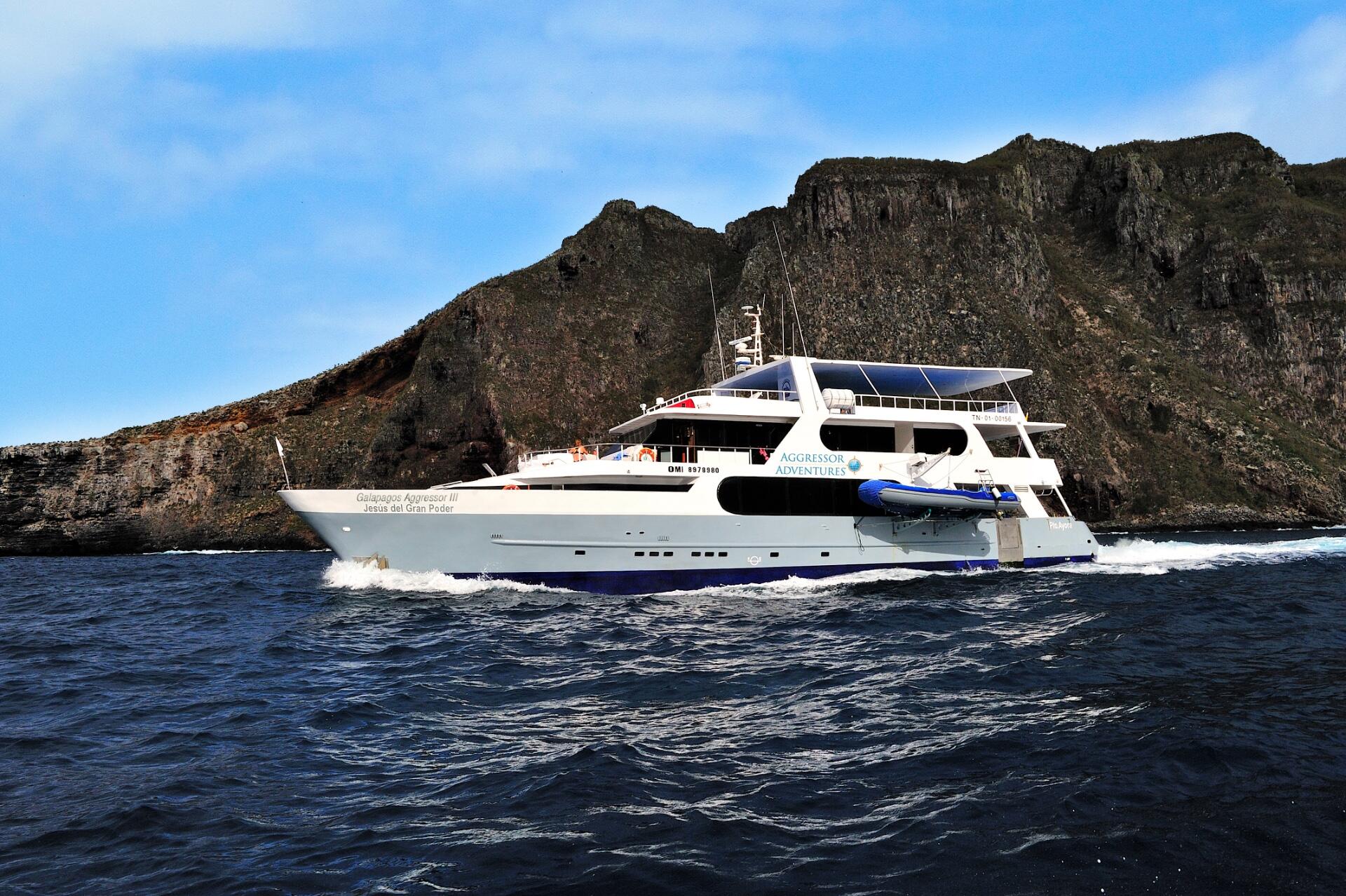
Galapagos Aggressor III
Galápagos
16 guests30.5 m
$913/day
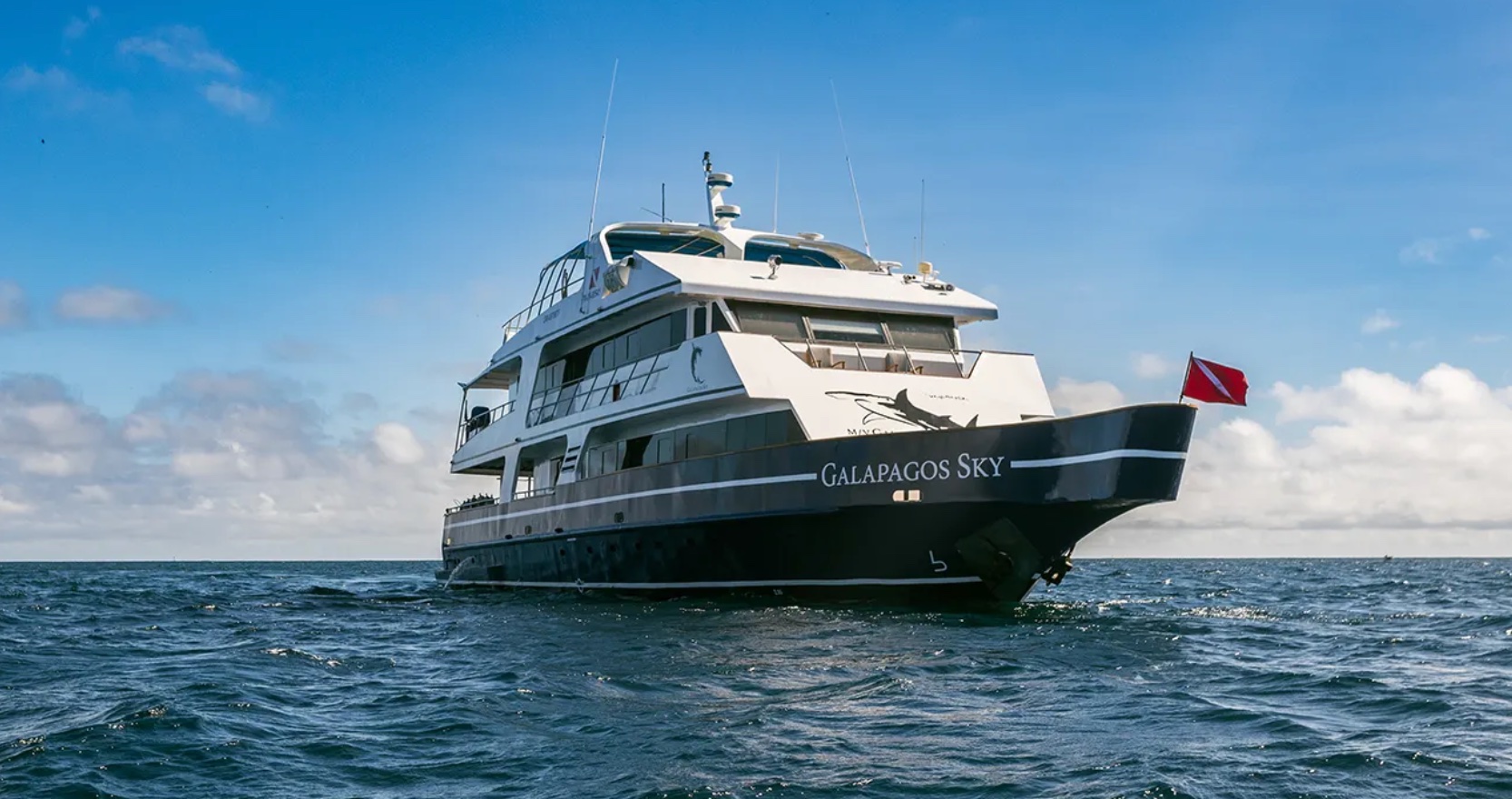
Galapagos Sky
Galápagos
16 guests
$937/day
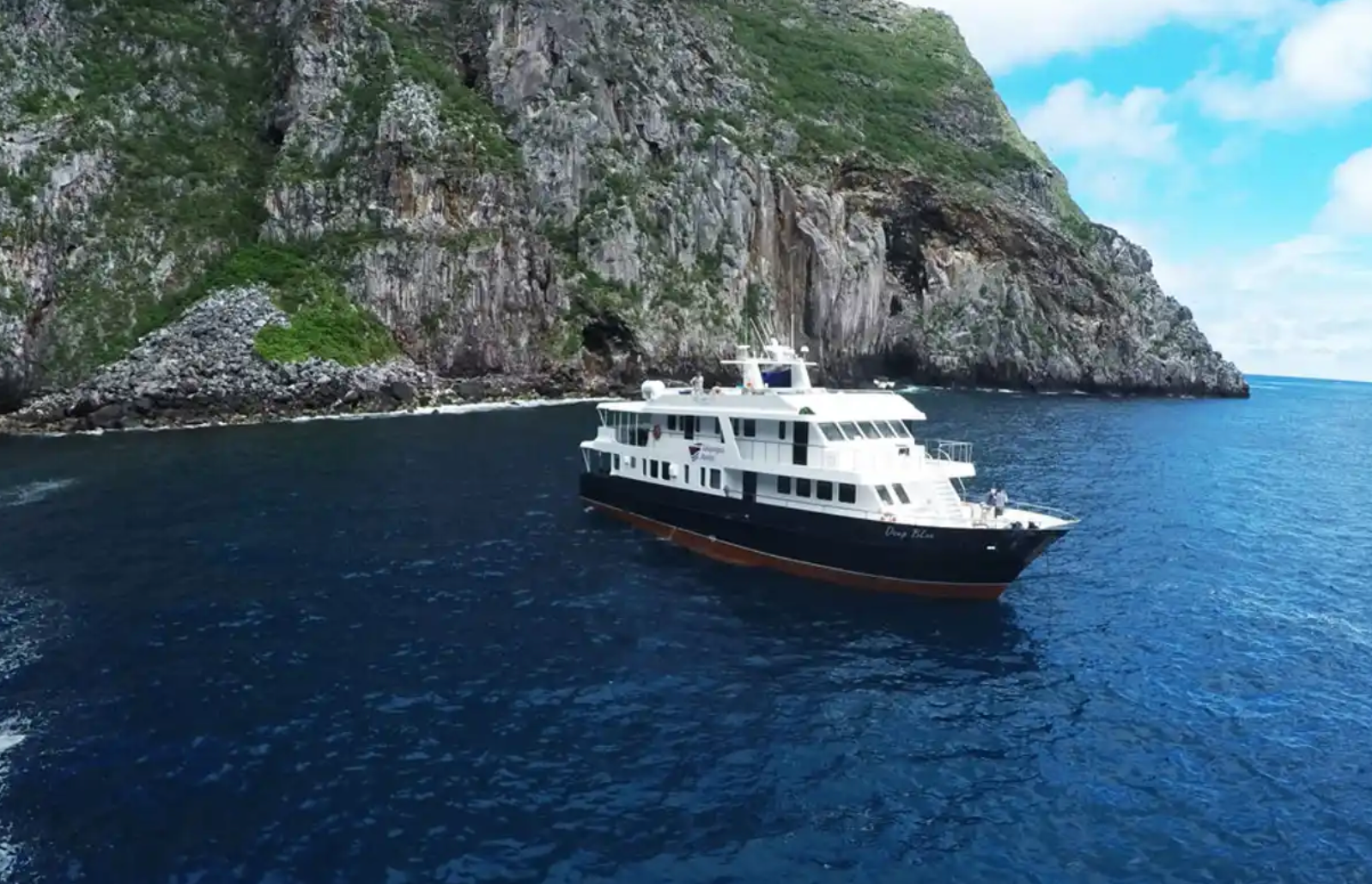
Galapagos Master
Galápagos
16 guests
$669/day
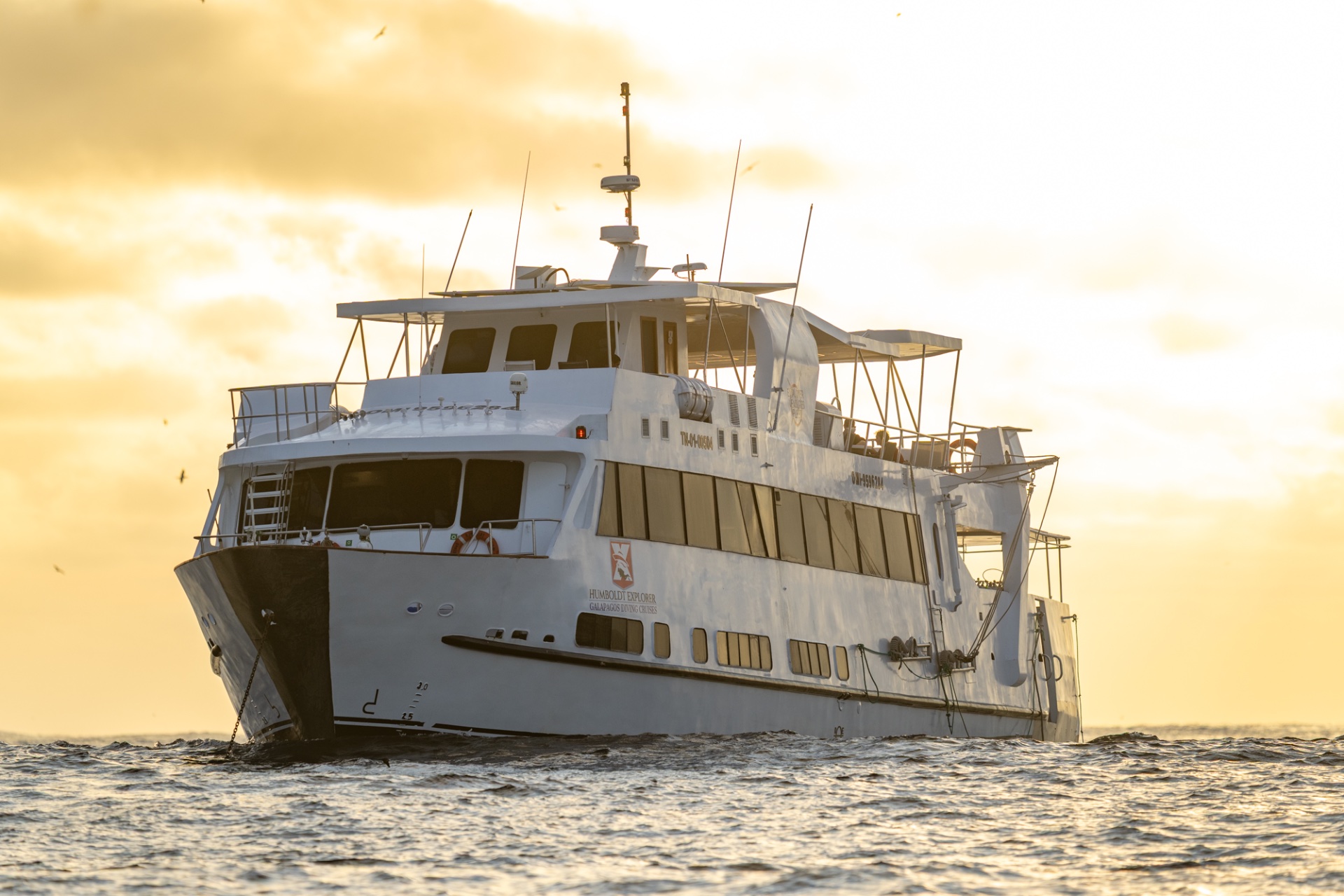
Humboldt Explorer
Galápagos
16 guests
$612/day
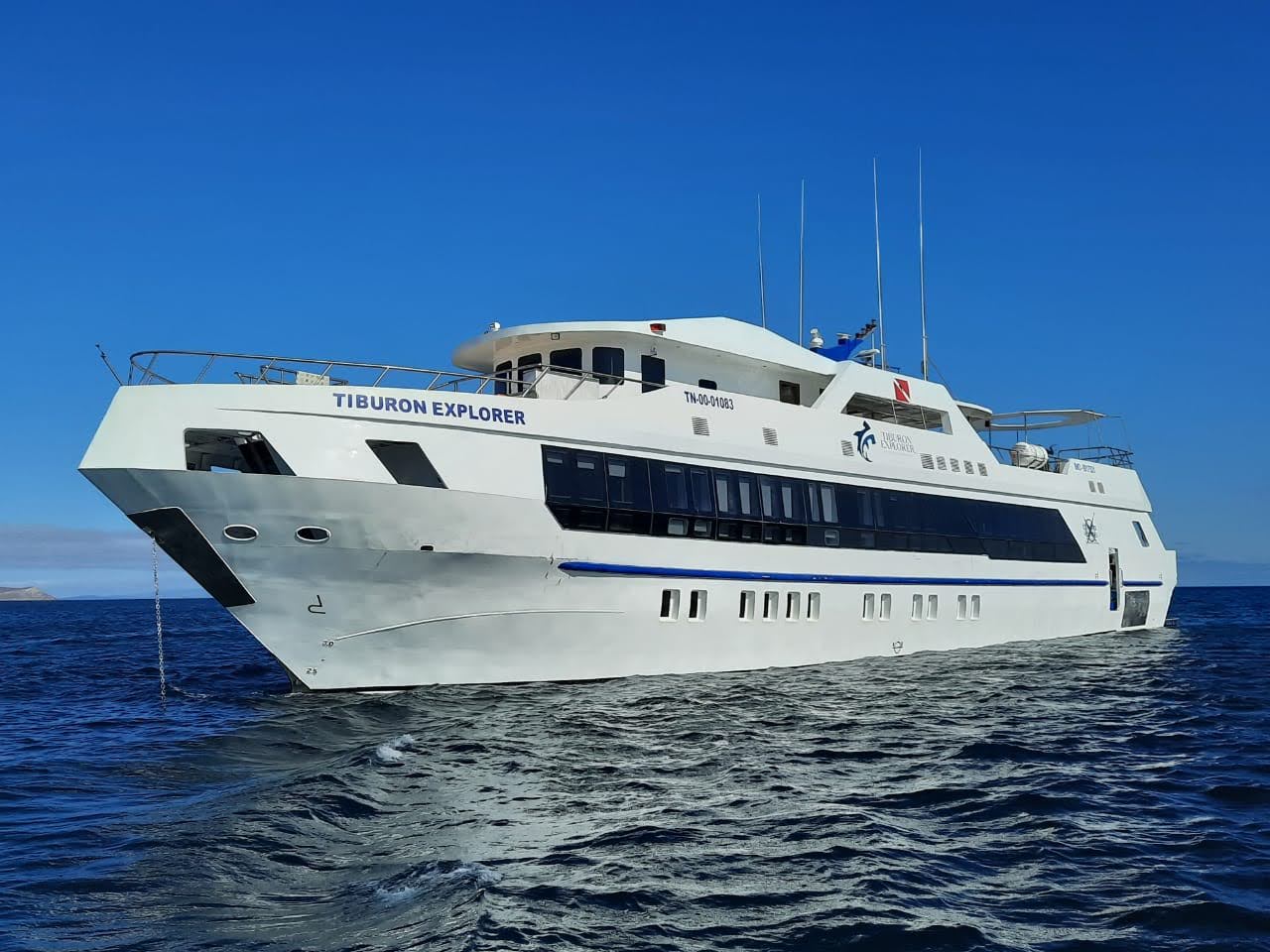
Tiburon Explorer
Galápagos
16 guests
$924/day
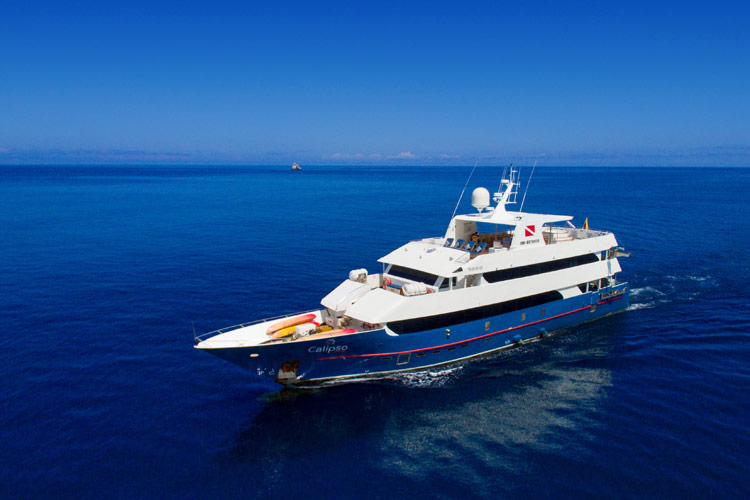
Calipso
Galápagos
16 guests
$819/day
Dive sites similar to Punta Carrión
Same character, same waters — six more sites divers love for the exact same reasons.Compare seasons, access and liveaboard routes — then pick the site that fits your trip best.
© Esri — Maxar, Earthstar, GIS
Floreana - Devil's Crown
Galápagos
Devil's Crown, located off Floreana Island in the Galápagos, is renowned as one of the archipelago's premier diving and snorkeling destinations.
- Suitable for
- Beginner
- Current
- Strong
- Access
- Liveaboard only
- Depth
- 3–15 m
- Theme
- Reef
© Esri — Maxar, Earthstar, GIS
Plaza Islands
Galápagos
Plaza Islands offers exceptional diving within Ecuador's Galápagos Marine Reserve, renowned for its abundant marine life and position in one of the world's most biodiverse ocean zones.
- Suitable for
- Beginner
- Current
- Mild
- Access
- Liveaboard or dayboat
- Depth
- —
- Theme
- Reef
Pinzon is situated among the central islands of the Galápagos archipelago, an area characterized by waters that are generally warmer and more protected compared to the northern or western regions.
- Suitable for
- Advanced
- Current
- Strong
- Access
- Liveaboard or dayboat
- Depth
- ≤ 18 m
- Theme
- Reef / Drift
Santa Fe Island, also known by its English name Barrington, is a unique dive location within the Galápagos archipelago, notable for its significant geological age and high degree of endemism.
- Suitable for
- Beginner
- Current
- Mild
- Access
- Liveaboard or dayboat
- Depth
- 5–30 m
- Theme
- Reef
© Esri — Maxar, Earthstar, GIS
Camano Islet
Galápagos
The Galápagos Islands offer an unparalleled diving experience year-round, renowned for their exceptional marine biodiversity and unique blend of oceanic currents.
- Suitable for
- Beginner
- Current
- Mild
- Access
- Liveaboard or dayboat
- Depth
- 21–35 m
- Theme
- Reef
© Esri — Maxar, Earthstar, GIS
El Arenal - Santiago
Galápagos
El Arenal, located near Darwin Island in the northern Galapagos Archipelago, is considered one of the world's premier dive sites.
- Suitable for
- Intermediate
- Current
- Strong
- Access
- Liveaboard only
- Depth
- 3–18 m
- Theme
- Reef