About Bartolomé Island
Bartolomé Island in the Galápagos archipelago is a distinctive dive site, known for its iconic Pinnacle Rock and accessible from Santa Cruz. It stands out for its relatively calm conditions compared to many other Galápagos locations, making it suitable for a wider range of divers. The underwater landscape primarily consists of sandy flats interspersed with rocky formations, providing a rich habitat for various marine species. The site is characterized by shallow depths, typically around 10 meters, offering extended bottom times and excellent light penetration for photography. Its location within the nutrient-rich waters of the Galápagos attracts a diverse array of marine life. While not a pelagic hotspot like Darwin or Wolf, Bartolomé consistently delivers encounters with species such as whitetip reef sharks, green turtles, and various rays. Diving here provides a unique blend of easy conditions and abundant animal sightings, making it a popular choice for day trips. You can expect to drift gently over its platforms, observing marine life in a more relaxed setting. The proximity to Santa Cruz means it is often included in shorter itineraries, offering a taste of the Galápagos underwater world without the intense currents found elsewhere.
Highlights
Iconic Pinnacle RockWhitetip reef sharksGreen sea turtlesStingrays and mobulasCalm, shallow diveSandy and rocky platforms
Season calendar
Best months to dive here
Jan
Feb
Mar
Apr
May
Jun
Jul
Aug
Sep
Oct
Nov
Dec
Good
Dive site facts: Bartolomé Island
- Depth
- 10 m
- Typical dive
- 10 m, 50-60 min
- Current
- Mild
- Visibility
- 10-20 m
- Water temperature
- 17–25ºC
- Entry
- Tender / back roll
- Level
- Novice to intermediate
- Dive type
- Reef, drift, big animals
- Region / port
- Central Galápagos / Santa Cruz
- Coordinates
- -0.275, -90.575
Conditions & Currents
Bartolomé Island is noted for being a relatively easy dive site with mild currents, which is a stark contrast to the often powerful and challenging conditions found at many other Galápagos locations. Divers can generally expect gentle drifts over its shallow sandy and rocky platforms. This makes entries and exits from the tender boats more straightforward and less strenuous. Visibility tends to be better during the warm season, though cold-water upwellings can occasionally introduce thermoclines and reduced visibility, characteristic of the Galápagos. The absence of strong surges and downcurrents allows for a more relaxed exploration of the site, accommodating divers who prefer less demanding conditions.
Marine life & sighting chances

Whitetip reef shark
common
Green sea turtle
common
Stingray
common
Marbled ray
common
Mobula ray
common
Starfish
common
Galapagos sea lion
occasional
Galapagos penguin
occasional
Marine iguana
occasional
Eagle ray
occasionalDive profile & how the dive runs
Diving at Bartolomé typically begins with a back roll entry from a tender boat, followed by a gentle descent onto a large sandy and rocky platform. The dive generally stays around 10 meters, allowing for extended bottom times to observe the resident marine life. You will drift along the contours of the underwater terrain, keeping an eye out for whitetip reef sharks resting on the sand, green turtles grazing, and various rays gliding past. The route often circumnavigates interesting rocky outcrops where smaller creatures hide. Due to the shallow depth, the safety stop can be integrated into the final minutes of the dive as you slowly ascend towards the surface, with minimal decompression concerns.
Underwater photography
Bartolomé Island, with its shallow depths and often good visibility, presents excellent opportunities for wide-angle and macro photography. The iconic Pinnacle Rock, visible both above and below water, makes for striking wide-angle compositions, especially with clear water and sunlight filtering through. Look for green turtles, whitetip sharks, and rays over the sandy flats for dynamic wide shots. For macro enthusiasts, the rocky areas and scattered coral heads may reveal smaller critters like starfish and various invertebrates, though the site is more renowned for its larger inhabitants. Given the mild currents, you'll have ample time to compose shots without fighting against the flow, making it a comfortable site for photographers of all levels. Ensure proper buoyancy to avoid disturbing the sandy bottom and its residents.
Combine with nearby dive sites
- Punta Vicente Roca
Known for cold water species like mola mola, seahorses, and Galapagos penguins.
- Gordon Rocks
Famous for schooling hammerhead sharks and strong currents, an advanced site.
- North Seymour
Offers sightings of reef sharks and abundant schooling fish in varied visibility.
- Cousin's Rock
A popular site for sea lions, eagle rays, and diverse reef fish.
- Punta Carrión
A sheltered spot often used for check dives with good chances for sharks and rays.
Getting there & logistics
Diving Bartolomé Island is typically done via day trips from Puerto Ayora on Santa Cruz, with boats departing from the Itabaca Channel, approximately 1.5 hours away. The nearest major airport is Seymour Airport (GPS) on Baltra Island, which connects to Santa Cruz via a short ferry and bus ride. Most liveaboards, especially those focusing on the central islands, will include Bartolomé in their itineraries, often as part of a 7-night journey combining it with other central and western sites. Visitors must pay a Galápagos National Park entrance fee upon arrival. Given the protected status of the islands, all diving activities are conducted with certified guides to ensure compliance with conservation regulations.
Safety & environment
Diving in the Galápagos, including Bartolomé, requires adherence to strict safety protocols due to its remote location. The nearest recompression chamber is in Puerto Ayora on Santa Cruz. Evacuation in a medical emergency would involve initial stabilization on site, transport to Santa Cruz, and potentially to mainland Ecuador depending on the severity. Comprehensive dive accident insurance, such as DAN, is strongly recommended and often mandatory for liveaboard trips. While Bartolomé generally features mild currents, divers should always be prepared for changing conditions, including potential thermoclines and variations in visibility. Always dive with an experienced local guide, maintain good buoyancy control to protect the fragile marine environment, and avoid touching any marine life. Follow all park regulations to ensure your safety and preserve the ecosystem.
Who it suits — and who it doesn't
Suited for
- Novice divers seeking easier Galápagos conditions
- Divers interested in diverse shallow reef life
- Underwater photographers due to good light and mild currents
- Divers preferring day trips over liveaboards
- Those looking for green turtles, sharks, and rays in a relaxed setting
Less suited for
- Divers seeking extreme pelagic action and strong currents
- Those who prefer deep wreck diving
- Divers with limited buoyancy control
- Individuals sensitive to occasional cold thermoclines
- Divers uninterested in iconic land-based scenery
FAQ
Bartolomé Island FAQ
What kind of marine life can I expect to see at Bartolomé Island?
At Bartolomé Island, you can frequently encounter whitetip reef sharks, green sea turtles, stingrays, marbled rays, and mobulas. Starfish are common on the sandy bottom, and you might also spot Galapagos sea lions, penguins, and marine iguanas, especially closer to the surface or on the adjacent land. The site offers a good mix of smaller reef inhabitants and larger, charismatic species.
Is Bartolomé Island suitable for beginner divers?
Yes, Bartolomé Island is considered one of the more accessible dive sites in the Galápagos, making it suitable for novice to intermediate divers. The depths are relatively shallow, typically around 10 meters, and currents are generally mild. This provides a less challenging environment compared to the strong currents found at other Galápagos hotspots, allowing for a more relaxed dive experience.
How do I get to Bartolomé Island for diving?
Most divers access Bartolomé Island via day trips departing from the Itabaca Channel on Santa Cruz Island. The boat journey typically takes about 1.5 hours. Alternatively, many liveaboard itineraries that focus on the central Galápagos islands will include Bartolomé as part of their schedule, offering a multi-day diving adventure across several sites.
What are the typical dive conditions like at Bartolomé?
Dive conditions at Bartolomé are generally mild, with light currents that allow for gentle drift dives. Water temperatures range from 20-25ºC during the warm season (December-May) and 17-20ºC during the cool season (June-November). Visibility is usually good, ranging from 10 to 20 meters, though it can occasionally be affected by cold upwellings.
Can I combine diving at Bartolomé with other activities?
Absolutely. Bartolomé Island is famous for its iconic Pinnacle Rock, which can be hiked for breathtaking panoramic views, often included in day tours. Many dive trips to Bartolomé will also offer opportunities for snorkeling in the calm bay or visiting other nearby land sites, providing a well-rounded Galápagos experience that combines both underwater and terrestrial exploration.
Why dive Bartolomé Island from a liveaboard?
Bartolomé Island is one of Galápagos's signature dive sites. A liveaboard sleeps you on the water and puts you in the water for three to four guided dives per day, including dawn and night dives that day-boat operators rarely offer. You skip the daily commute back to port and reach quieter, less-crowded sites in the same region on a single trip.
Below are the liveaboards that include Bartolomé Island on their Galápagos itineraries.
Liveaboards diving Bartolomé Island
These liveaboards may visit Bartolomé Island on selected itineraries — the exact dive sites depend on departure, weather and conditions.
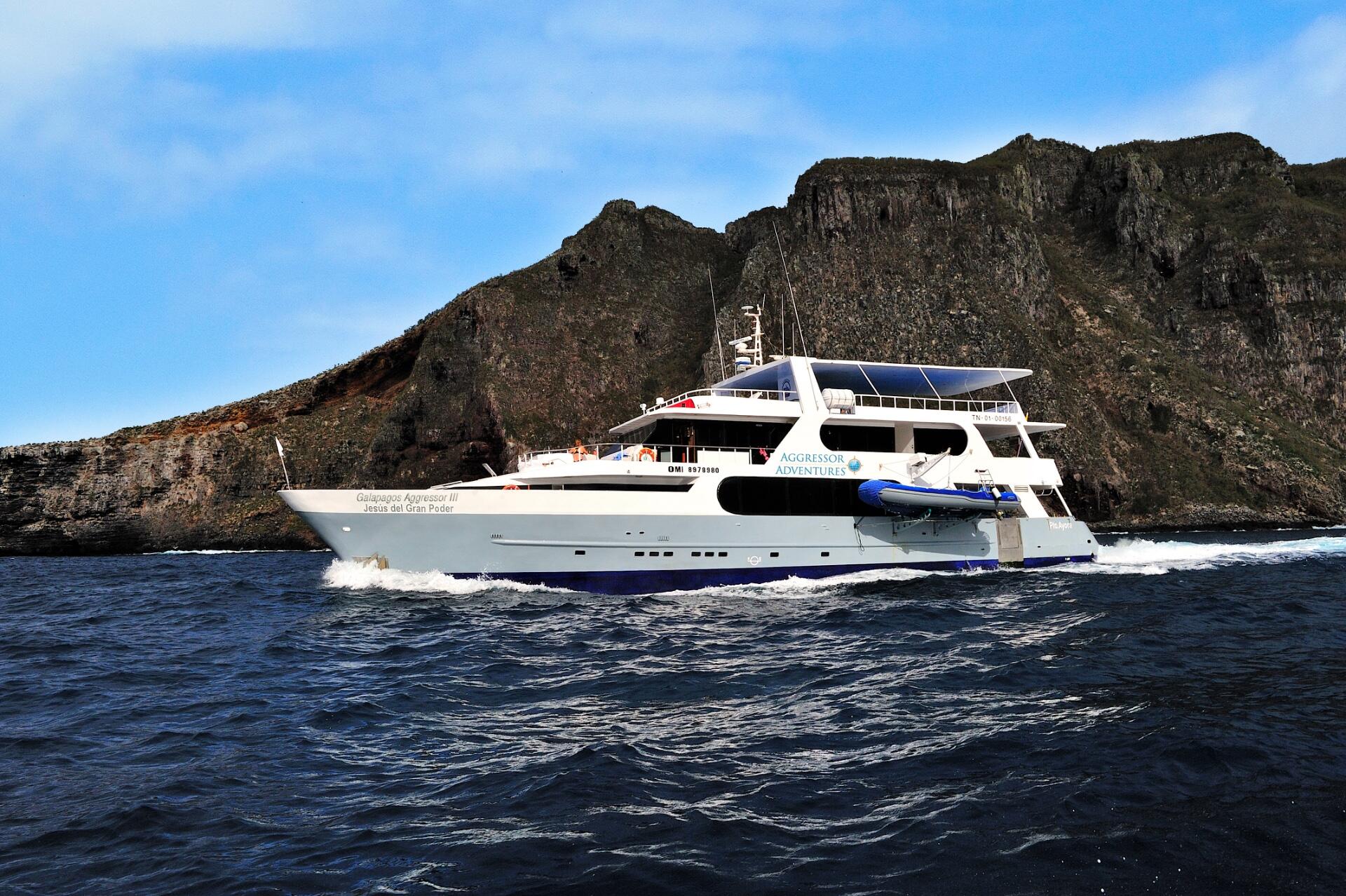
Galapagos Aggressor III
Galápagos
16 guests30.5 m
$913/day
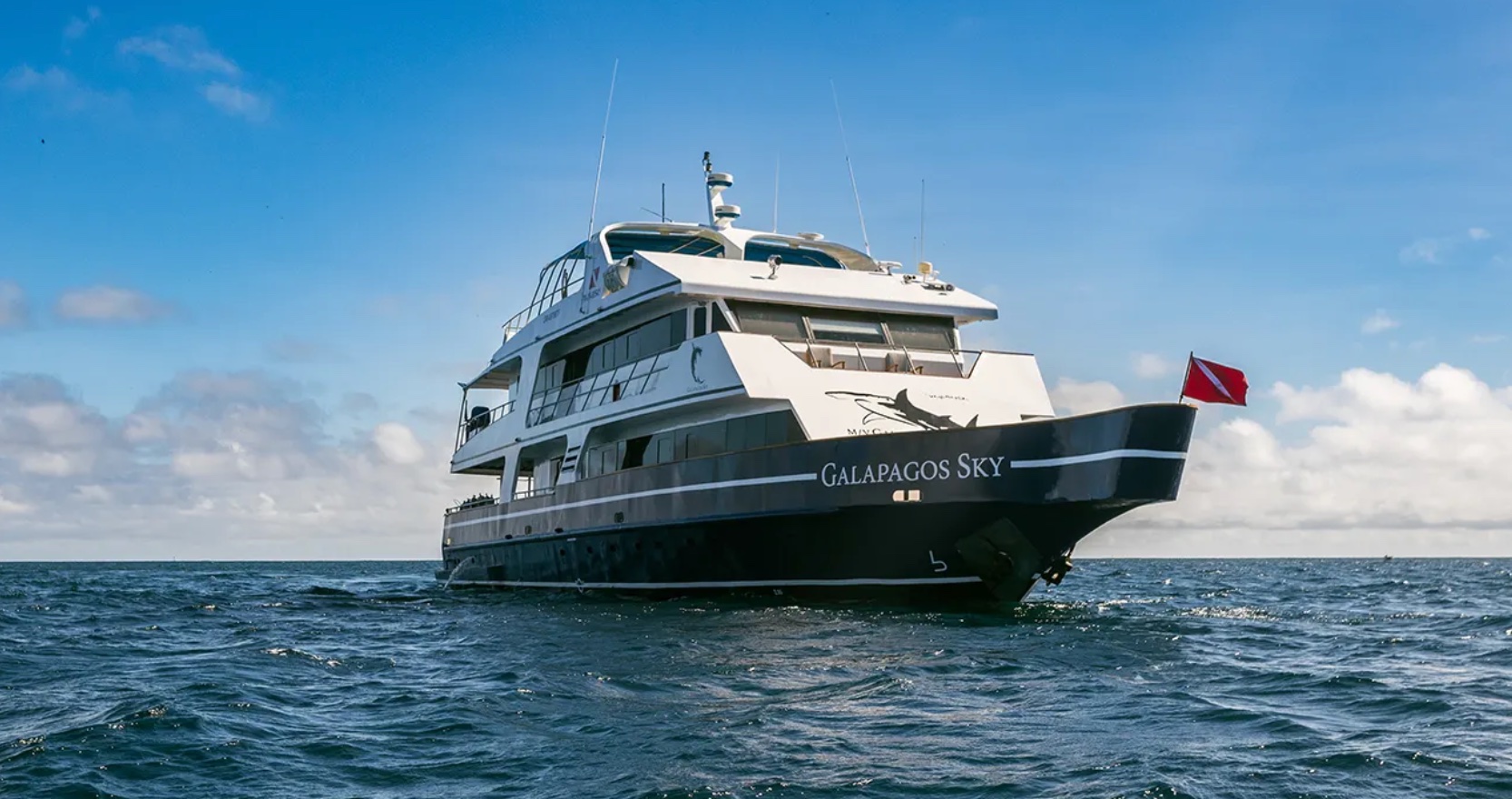
Galapagos Sky
Galápagos
16 guests
$937/day
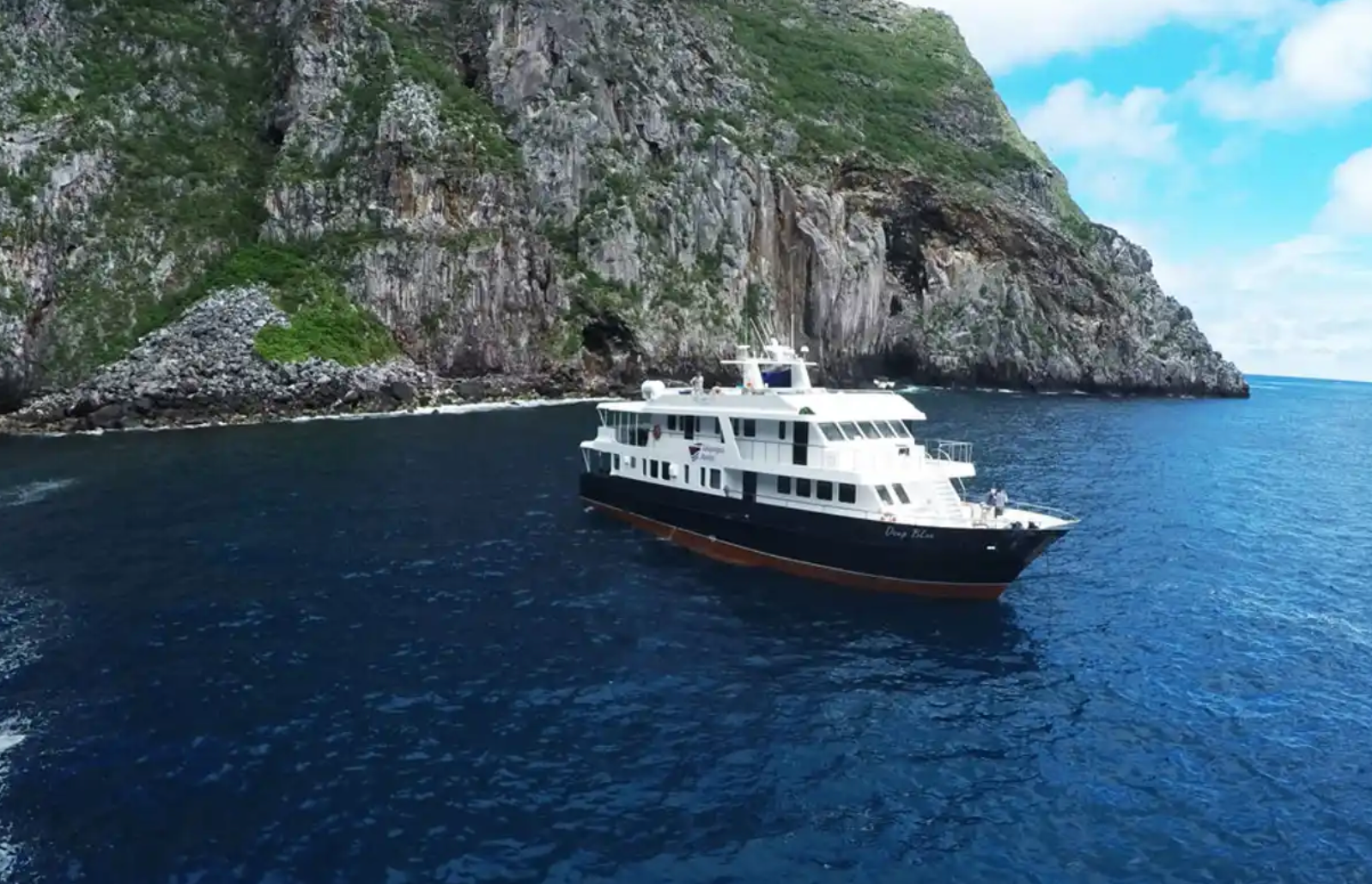
Galapagos Master
Galápagos
16 guests
$669/day
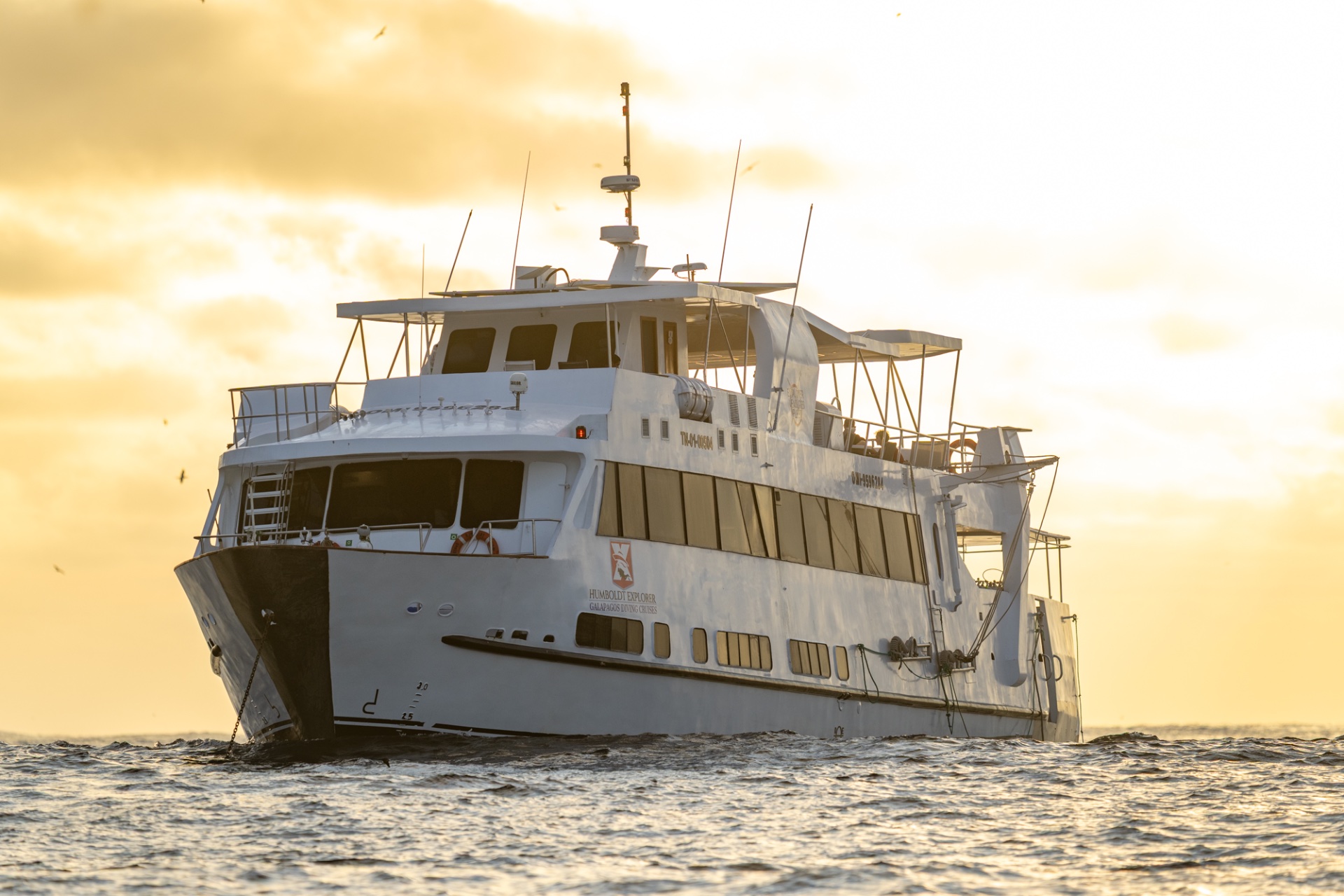
Humboldt Explorer
Galápagos
16 guests
$612/day
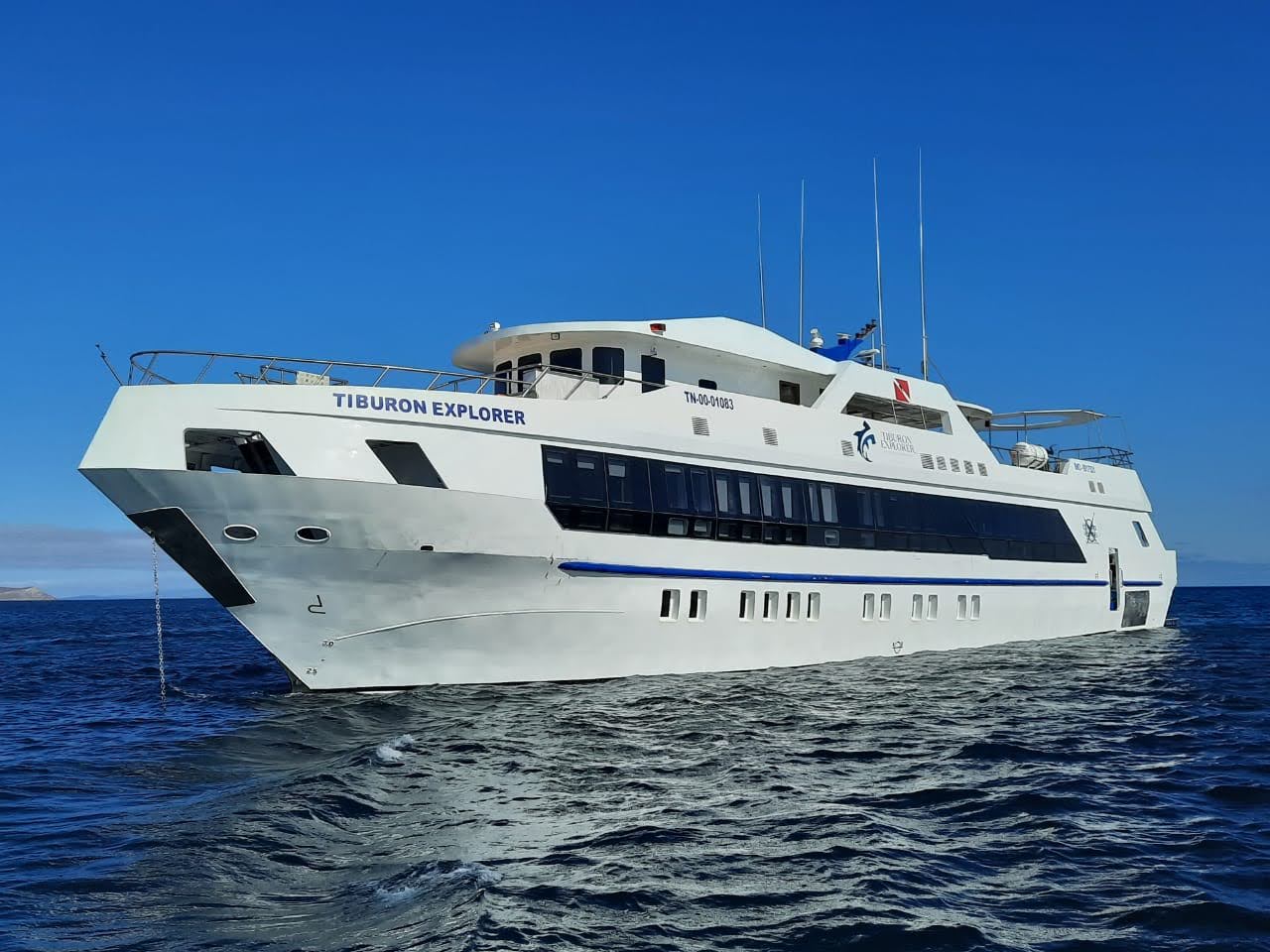
Tiburon Explorer
Galápagos
16 guests
$924/day
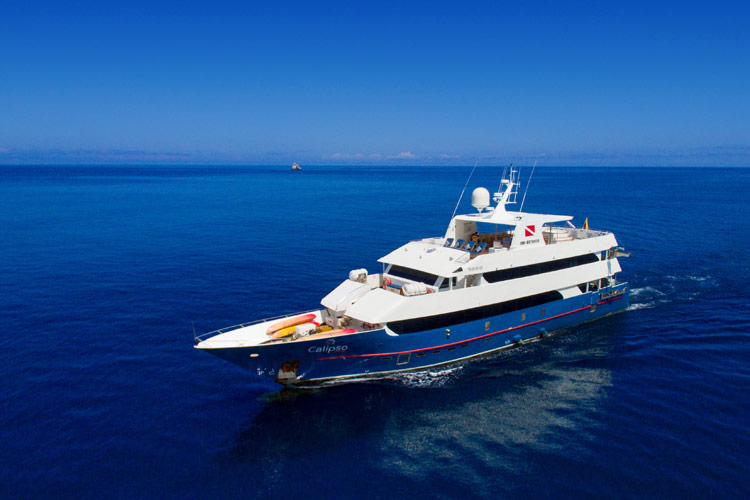
Calipso
Galápagos
16 guests
$819/day
Dive sites similar to Bartolomé Island
Same character, same waters — six more sites divers love for the exact same reasons.Compare seasons, access and liveaboard routes — then pick the site that fits your trip best.
© Esri — Maxar, Earthstar, GIS
Elizabeth Bay
Galápagos
Elizabeth Bay, located on the eastern coast of Isabela Island, presents a wide and sheltered marine environment rich in biodiversity.
- Suitable for
- Beginner
- Current
- No current
- Access
- Liveaboard only
- Depth
- 3–20 m
- Theme
- —
© Esri — Maxar, Earthstar, GIS
Floreana - Devil's Crown
Galápagos
Devil's Crown, located off Floreana Island in the Galápagos, is renowned as one of the archipelago's premier diving and snorkeling destinations.
- Suitable for
- Beginner
- Current
- Strong
- Access
- Liveaboard only
- Depth
- 3–15 m
- Theme
- Reef
© Esri — Maxar, Earthstar, GIS
Bajo Negro
Costa Rica
Bajo Negro, or Black Rock, is a captivating dive site located within the Bat Islands in Santa Rosa National Park, off Costa Rica's Pacific coast.
- Suitable for
- Advanced
- Current
- Strong
- Access
- Shore / dayboat
- Depth
- 20–30 m
- Theme
- Pinnacle / Seamount
© Esri — Maxar, Earthstar, GIS
Dos Sombreros
Costa Rica
Dos Sombreros is a renowned dive site located offshore from Playa Flamingo, forming part of the Catalina Islands chain in Costa Rica's North Pacific region.
- Suitable for
- Intermediate
- Current
- Moderate
- Access
- Dayboat
- Depth
- 12–25 m
- Theme
- Pinnacle
© Esri — Maxar, Earthstar, GIS
Pelican Rock
Mexico
Pelican Rock is a renowned dive site located within the Cabo San Lucas Marine Park in Baja California Sur, Mexico, just a few minutes by boat from the marina.
- Suitable for
- Beginner
- Current
- Mild
- Access
- Liveaboard or dayboat
- Depth
- 5–40 m
- Theme
- Wall
© Esri — Maxar, Earthstar, GIS
Isla Montserrat
Mexico
Isla Montserrat is one of the five major islands within the Bahía de Loreto National Park, offering a diverse range of diving opportunities.
- Suitable for
- Intermediate
- Current
- Mild
- Access
- Liveaboard only
- Depth
- —
- Theme
- Reef / Wall