About Punta Vicente Roca
Punta Vicente Roca, situated on the west coast of Isabela Island in the Galápagos, is a captivating dive site characterized by its vertical wall and dramatic above-surface rock formations. This area is renowned for its cold-water upwellings and the influence of the Humboldt Current, which introduce nutrient-rich waters supporting a distinct array of marine species. Unlike many other Galápagos sites, Punta Vicente Roca is exclusively a dive destination, with no permitted land visits, ensuring a pristine underwater environment. The topography features a long, sloping underwater wall that descends to approximately 28 meters (90 feet). Shallower sections teem with vibrant aquatic life, often visited by playful Galápagos penguins and inquisitive sea lions. Deeper along the wall, the primary attraction is the Mola mola, or giant sunfish, which frequent these cold currents. While the site is known for its endemic species and pelagic encounters, currents can range from strong to ripping, demanding experienced diving skills. Divers here often encounter unique interactions, such as sea lions and Galápagos penguins actively hunting black-striped salema baitballs. Green turtles are commonly spotted, either resting on the reef or swimming along the wall. The blend of temperate and tropical marine life makes every dive an exciting exploration, offering diverse photographic opportunities from wide-angle pelagic shots to macro subjects in the calmer areas. Access to Punta Vicente Roca is typically via liveaboard, with divers often making multiple descents in the area over a day. Due to the strong currents and colder water temperatures, negative entries and appropriate thermal protection are essential for a comfortable and safe dive experience.
Highlights
Mola mola encountersPlayful Galápagos sea lionsGalápagos penguins underwaterVertical wall divingCold water upwellingsBlack-striped salema baitballsSea caves and swim-throughsUnique endemic species
Season calendar
Best months to dive here
Jan
Feb
Mar
Apr
May
Jun
Jul
Aug
Sep
Oct
Nov
Dec
Good
Dive site facts: Punta Vicente Roca
- Depth
- 5–28 m
- Typical dive
- 12–25 m, 45–50 min
- Current
- Strong to ripping
- Visibility
- 10–25 m
- Water temperature
- 12–26°C (seasonal)
- Entry
- Tender / negative entry
- Level
- Advanced, current experience essential
- Dive type
- Wall, pelagic, cold water
- Night dive
- Not permitted
- Region / port
- Isabela Island, Galápagos
- Coordinates
- -0.05, -91.55
Conditions & Currents
Punta Vicente Roca is known for potentially strong to ripping currents, which are a direct result of the cold-water upwellings and the Humboldt Current. Divers should be prepared for challenging conditions, as negative entries are often required to quickly descend below surface currents. Holding onto rocks might be necessary, and wearing gloves can provide additional support during observation points. Thermoclines are common, leading to significant temperature drops, which necessitates excellent thermal protection. Visibility can be affected by the rich nutrient content, varying between 10 to 25 meters (33–82 feet), but this same turbidity supports the abundant marine life. An SMB is essential for safety, given the strong currents and potential boat traffic from tenders and snorkelers in the area.
Marine life & sighting chances

Mola mola
June–November · common
Galápagos sea lion
Year-round · common
Galápagos penguin
Cool season · common
Black-striped salema
Cool season · common
Green sea turtle
Year-round · common
Orca
Occasional · rare
Barracuda
Year-round · occasional
Whale shark
June–November · rare
Hammerhead shark
Warm season · occasional
White-tip reef shark
Year-round · occasionalDive profile & how the dive runs
Dives at Punta Vicente Roca typically begin with a negative entry from a panga tender, quickly descending along the vertical wall to depths of 24–30 meters (80–100 feet). The initial focus is often on deeper waters to search for Mola mola rising from the depths. Given the strong currents, divers frequently hug the wall for protection or hold onto rocks. After spending time at depth, the dive progresses along the wall, moving shallower towards the cave area. This allows encounters with sea lions, Galápagos penguins, and schools of black-striped salema. The dive concludes with a safety stop near the shallower parts of the wall or in a more sheltered area, followed by pickup by the panga. Dive times are often limited to 50 minutes or less, especially in strong current conditions.
Underwater photography
Punta Vicente Roca offers a diverse range of subjects, making it suitable for both wide-angle and macro photography, though wide-angle is often prioritized due to the pelagic encounters. For capturing Mola mola and schooling fish at depths below 27 meters (90 feet), powerful strobes are essential to illuminate subjects in the low light. A wide-angle lens, such as a 10–17mm fisheye, is ideal for the playful sea lions, baitballs, and dramatic wall topography. Given the cold water and thermoclines, be mindful of lens fogging. Buoyancy control is paramount due to strong currents, and holding onto rocks can provide stability for framing shots. Consider using a GoPro for video, especially when sea lions are actively hunting baitballs, to capture dynamic slow-motion footage.
Combine with nearby dive sites
- Cabo Douglas - Fernandina
Known for marine iguanas feeding underwater and varied pelagic life.
- Cabo Marshall
Offers encounters with various shark species and manta rays.
- North Seymour
A popular drift dive with white-tip reef sharks, turtles, and eagle rays.
- Wolf Island
Renowned for schooling hammerheads, Galápagos sharks, and whale sharks.
- Darwin's Arch
World-famous for large schools of hammerheads and whale shark sightings.
Getting there & logistics
Access to Punta Vicente Roca, like most remote Galápagos sites, is primarily via liveaboard. Flights to the Galápagos typically originate from Guayaquil or Quito in Ecuador, landing at Baltra Airport (GPS). Travelers should account for potential flight delays from Quito due to volcanic activity. Liveaboard itineraries usually span 7 to 10 days, with Punta Vicente Roca often included as part of a western islands circuit. This site is commonly combined with other Isabela Island dives and sometimes with sites further north like Wolf and Darwin. All visitors must pay a Galápagos National Park entrance fee of $200 USD and dive with certified operators. While day trips exist, the remoteness of Punta Vicente Roca from populated areas makes liveaboard travel more practical and common.
Safety & environment
Diving at Punta Vicente Roca demands a high level of experience due to strong, often unpredictable currents and cold water with significant thermoclines. Divers should be proficient in negative entries, drift diving, and maintaining buoyancy in challenging conditions. A reef hook can be useful for stabilization, and gloves are recommended for holding onto rocks. Adequate thermal protection, such as a 5-7mm wetsuit with a hood and gloves, is crucial. An SMB (surface marker buoy) is mandatory for every diver for safety and surface pickup, especially given the strong currents and panga activity. The nearest recompression chamber is in Puerto Ayora on Santa Cruz Island. In case of a dive emergency, evacuation can be complex and time-consuming, underscoring the importance of comprehensive dive insurance that covers medical emergencies and air evacuation. Divers must strictly adhere to the dive guide's instructions.
Who it suits — and who it doesn't
Suited for
- Advanced divers with current experience
- Cold water divers
- Underwater photographers seeking pelagics
- Wildlife enthusiasts looking for unique marine encounters
- Liveaboard guests seeking remote dive experiences
Less suited for
- Beginner divers or those without strong current experience
- Divers uncomfortable in cold water or with thick wetsuits
- Individuals prone to seasickness in choppy conditions
- Divers seeking easy, relaxed reef dives
- Anyone prioritizing warm, clear water for macro subjects
FAQ
Punta Vicente Roca FAQ
What marine life can I expect to see at Punta Vicente Roca?
Punta Vicente Roca is famous for its unique marine life, particularly the Mola mola (ocean sunfish), which are often seen rising from the deep. You can also expect playful Galápagos sea lions, Galápagos penguins diving for food, schools of black-striped salema, and green turtles. Occasionally, lucky divers might even spot orcas or various shark species.
What are the diving conditions like at Punta Vicente Roca?
Diving conditions can be challenging, with currents ranging from strong to ripping due to cold-water upwellings. Water temperatures are cooler, typically between 12–26°C, and thermoclines are common. Visibility usually ranges from 10 to 25 meters. Divers should be experienced in drift diving and capable of negative entries.
Is Punta Vicente Roca suitable for all diver levels?
No, Punta Vicente Roca is best suited for advanced divers with significant experience in strong currents and cold water. Beginners or those without recent experience in challenging conditions may find the site too demanding. Proficiency in drift diving and quick descents is essential for safety and enjoyment.
What kind of thermal protection do I need for diving here?
Due to the cold-water upwellings and thermoclines, robust thermal protection is highly recommended. Most divers wear a 5-7mm wetsuit, often supplemented with a hood, gloves, and possibly a vest. Ensuring adequate insulation will make your dive much more comfortable and enjoyable in these cooler waters.
How do I get to Punta Vicente Roca, and can I do a day trip?
Punta Vicente Roca is primarily accessed via liveaboard tours, as it is located on the remote western coast of Isabela Island. While day trips from other islands are theoretically possible, the long travel time makes them less practical. Liveaboards offer the best and most comfortable way to experience multiple dives at this unique site.
Why dive Punta Vicente Roca from a liveaboard?
Punta Vicente Roca is one of Galápagos's signature dive sites. A liveaboard sleeps you on the water and puts you in the water for three to four guided dives per day, including dawn and night dives that day-boat operators rarely offer. You skip the daily commute back to port and reach quieter, less-crowded sites in the same region on a single trip.
Below are the liveaboards that include Punta Vicente Roca on their Galápagos itineraries.
Liveaboards diving Punta Vicente Roca
These liveaboards may visit Punta Vicente Roca on selected itineraries — the exact dive sites depend on departure, weather and conditions.
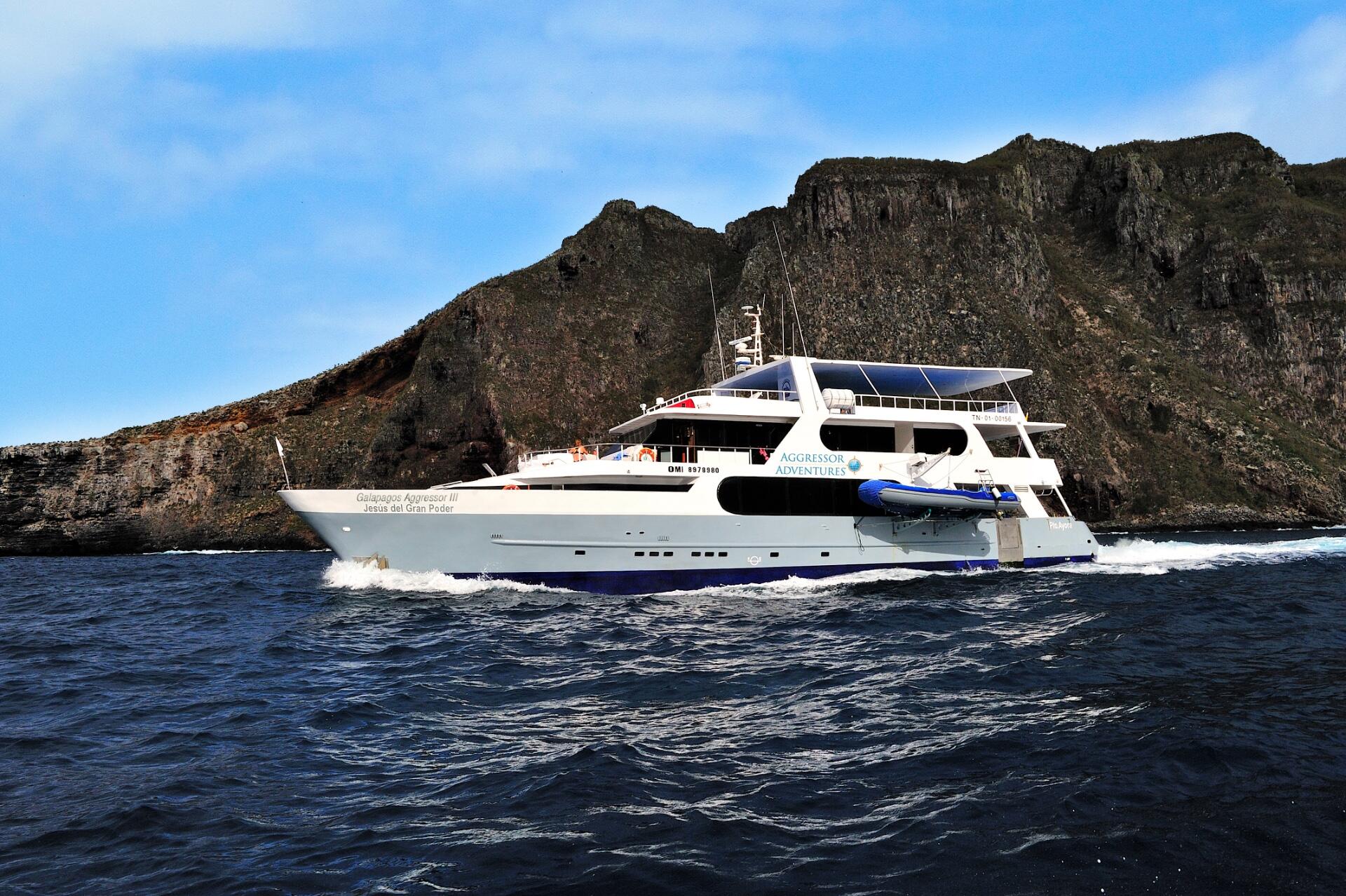
Galapagos Aggressor III
Galápagos
16 guests30.5 m
$913/day
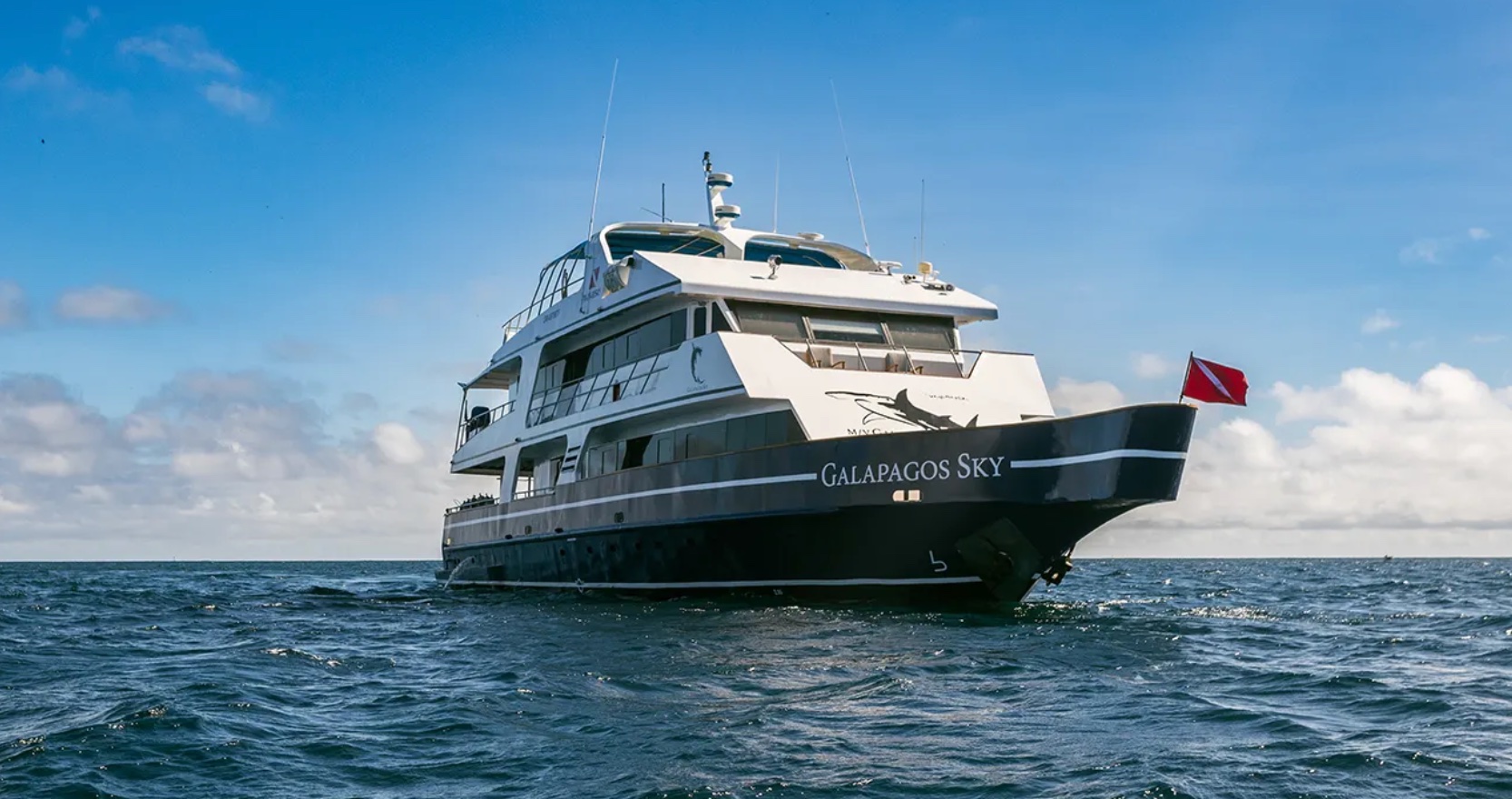
Galapagos Sky
Galápagos
16 guests
$937/day
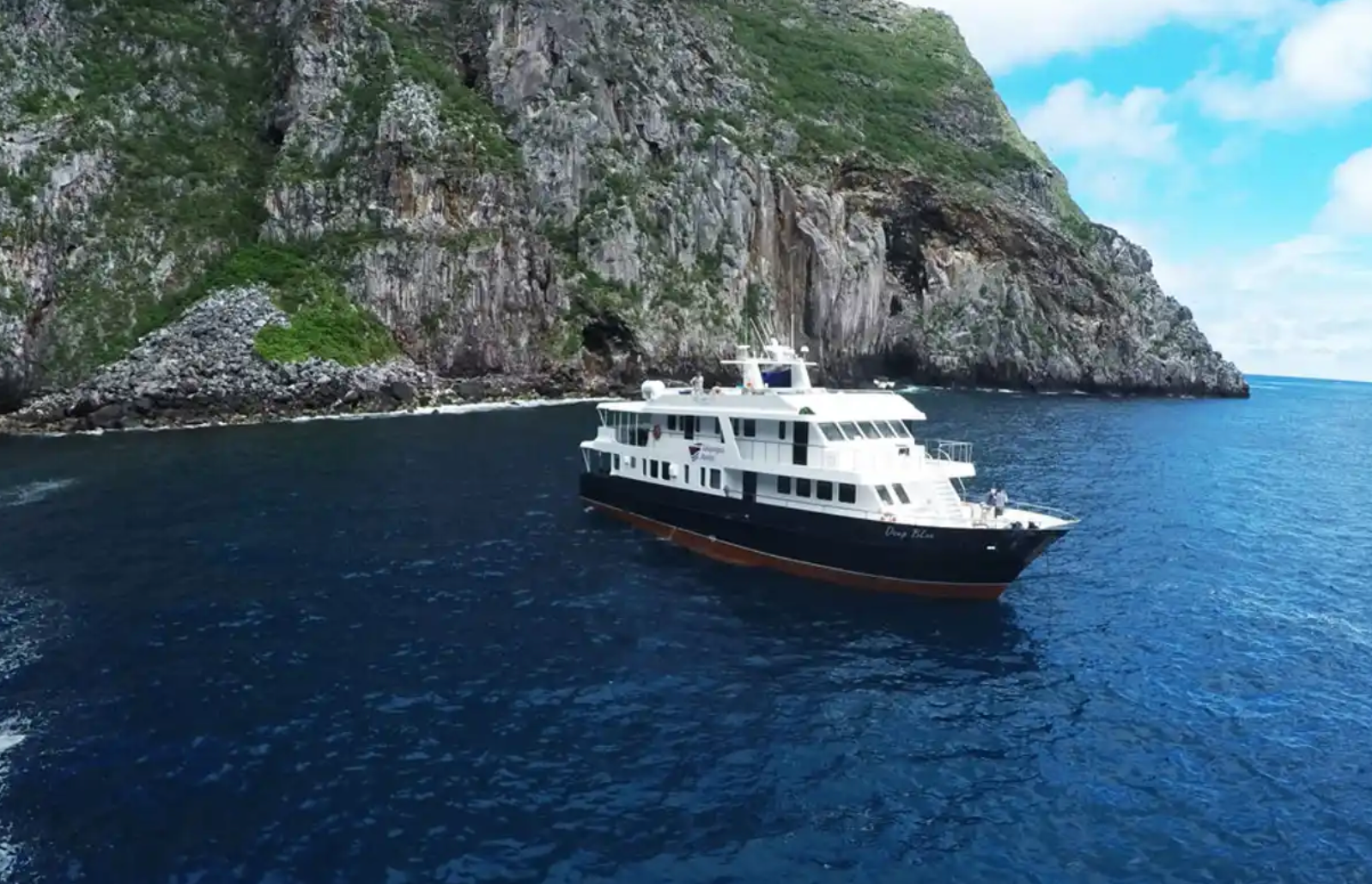
Galapagos Master
Galápagos
16 guests
$669/day
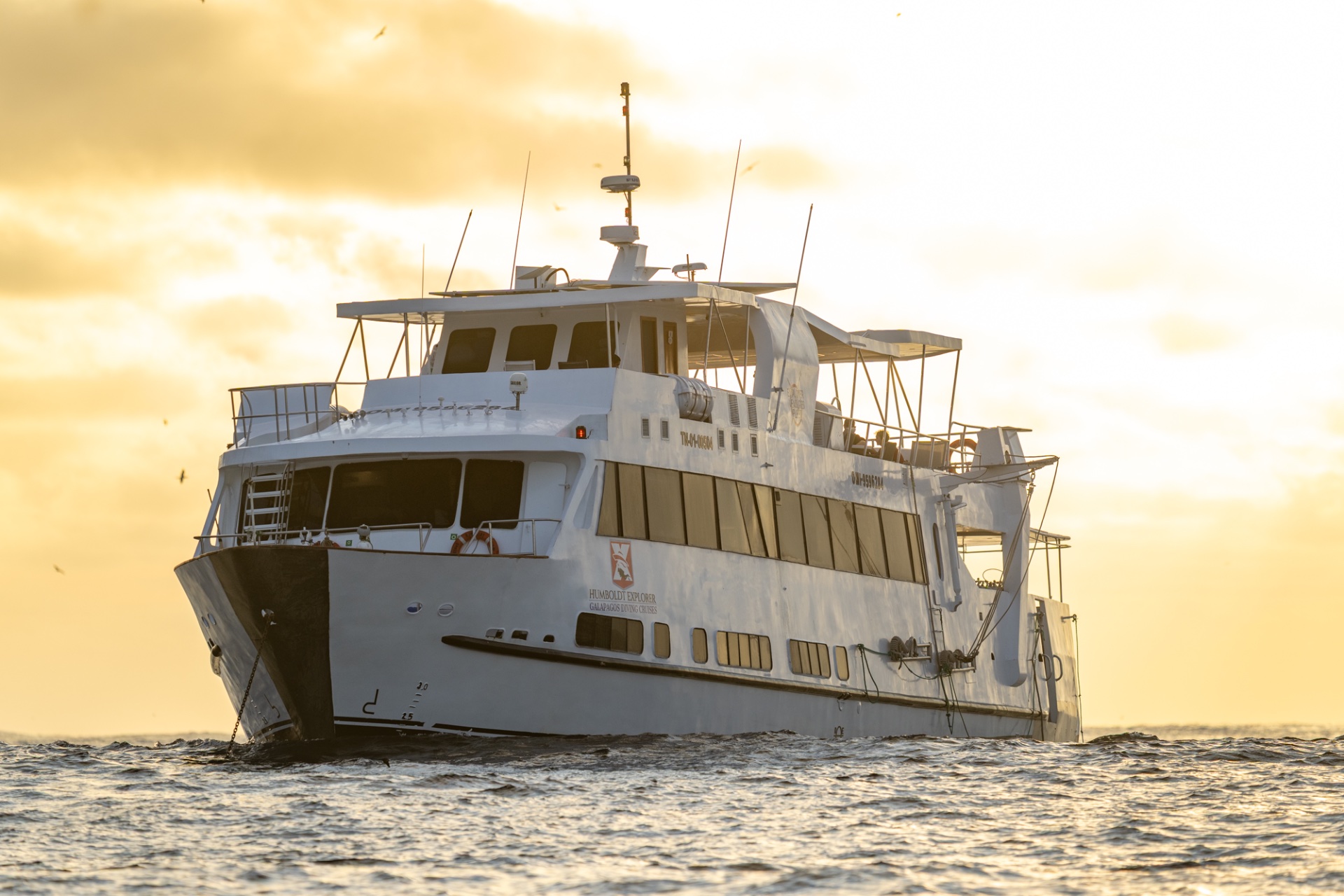
Humboldt Explorer
Galápagos
16 guests
$612/day
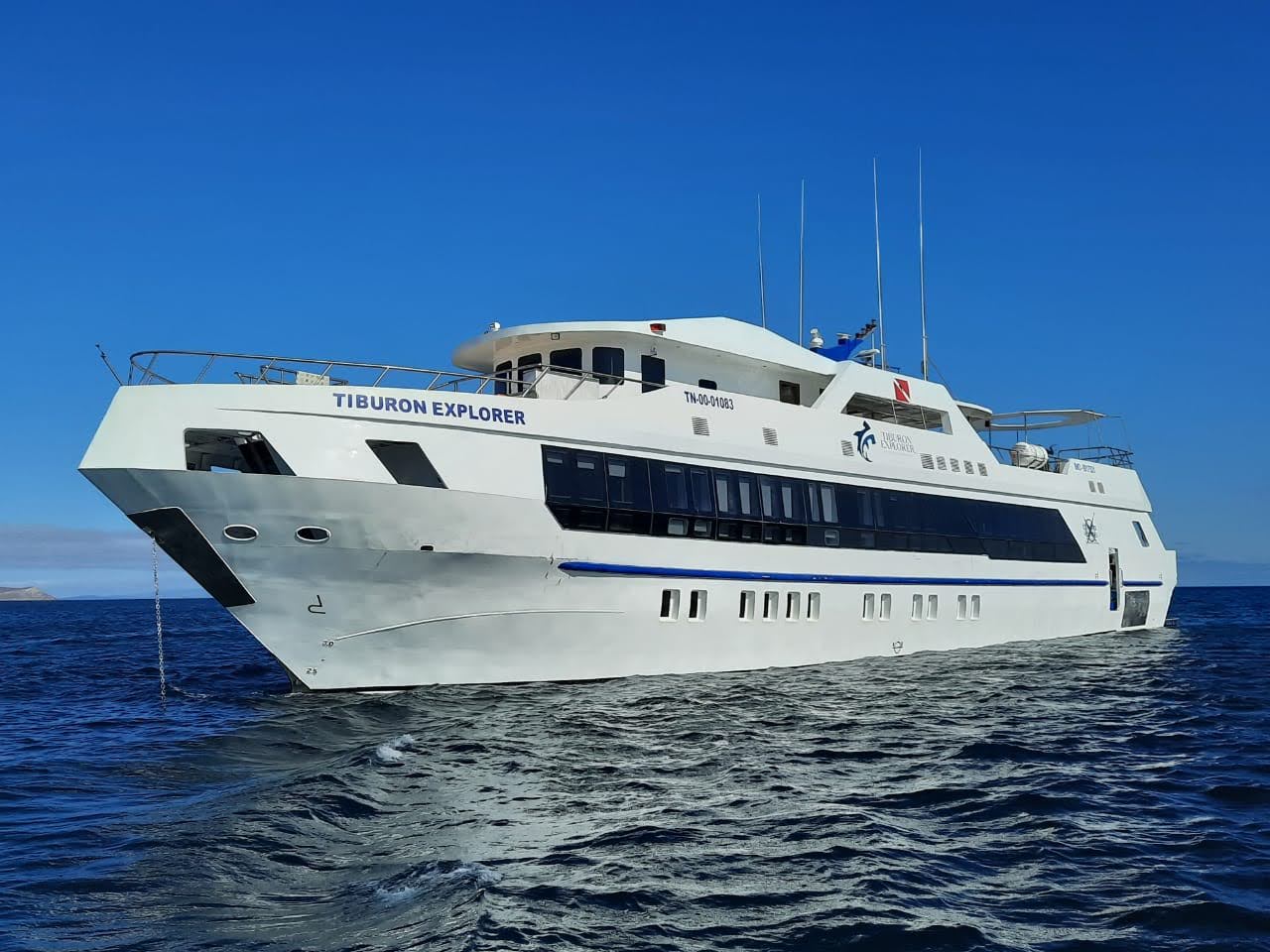
Tiburon Explorer
Galápagos
16 guests
$924/day
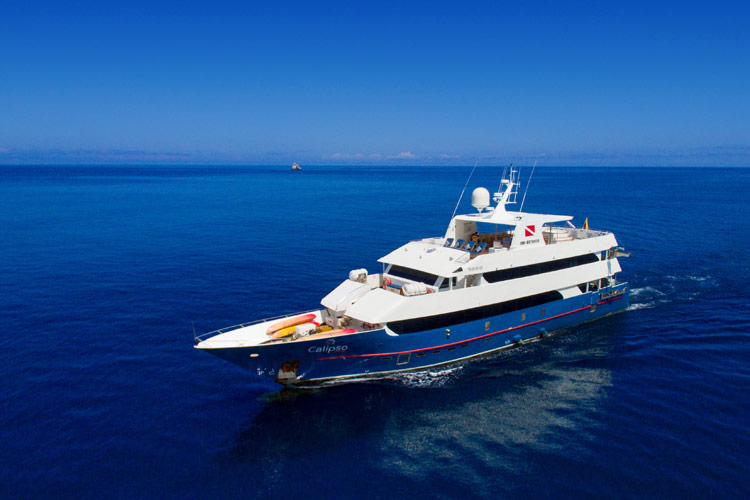
Calipso
Galápagos
16 guests
$819/day
Dive sites similar to Punta Vicente Roca
Same character, same waters — six more sites divers love for the exact same reasons.Compare seasons, access and liveaboard routes — then pick the site that fits your trip best.
© Esri — Maxar, Earthstar, GIS
Guy Fawkes Islands
Galápagos
The Guy Fawkes Islands are a pair of small islands located close to Santa Cruz, offering a more accessible dive experience compared to the remote northern sites.
- Suitable for
- Intermediate
- Current
- Strong
- Access
- Liveaboard only
- Depth
- 5–25 m
- Theme
- Cave & cavern / Wall
© Esri — Maxar, Earthstar, GIS
Cabo Douglas - Marine Iguana Wall
Galápagos
Cabo Douglas, located on the northwest side of Fernandina Island in the central Galápagos, offers a truly unique diving experience.
- Suitable for
- Intermediate
- Current
- Strong
- Access
- Liveaboard only
- Depth
- 5–33 m
- Theme
- Wall
© Esri — Maxar, Earthstar, GIS
Daphne Minor
Galápagos
Daphne Minor, a small, barren island northwest of the Itabaca Channel, is a lesser-known but exceptionally vibrant dive site in the Galápagos.
- Suitable for
- Intermediate
- Current
- Strong
- Access
- Liveaboard only
- Depth
- 10–18 m
- Theme
- Pinnacle / Wall
© Esri — Maxar, Earthstar, GIS
Mosquera Island
Galápagos
Mosquera Island is a unique dive site in the Galápagos Marine Reserve, located between Seymour and Baltra islands.
- Suitable for
- Beginner
- Current
- Ripping
- Access
- Liveaboard only
- Depth
- 3–12 m
- Theme
- Reef / Wall
© Esri — Maxar, Earthstar, GIS
Isla Tortuga - South Wall
Galápagos
Isla Tortuga's South Wall, a striking volcanic caldera, presents an exceptional dive experience in the Galápagos, offering a dramatic underwater landscape.
- Suitable for
- Advanced
- Current
- Strong
- Access
- Liveaboard only
- Depth
- 8–40 m
- Theme
- Drift / Wall
© Esri — Maxar, Earthstar, GIS
Darwin's Arch
Galápagos
Darwin's Arch, now marked by two columns after the arch's natural collapse in 2021, remains a legendary dive site in the northern Galápagos archipelago, about 1000km offshore.
- Suitable for
- Advanced
- Current
- Strong
- Access
- Liveaboard only
- Depth
- 13–28 m
- Theme
- Pinnacle / Wall