About Darwin's Arch
Darwin's Arch, now marked by two columns after the arch's natural collapse in 2021, remains a legendary dive site in the northern Galápagos archipelago, about 1000km offshore. This remote outpost is only accessible via liveaboard, offering an unparalleled pelagic experience. The underwater topography consists of a rock reef and plateau, shaped by the same deep, nutrient-rich upwellings that sustain the incredible marine biodiversity here. The site acts as a pelagic highway, attracting an astonishing abundance of marine life. Diving at Darwin's Arch means encounters with schools of scalloped hammerheads, Galapagos sharks, and turtles in numbers rarely seen elsewhere. During the right season, divers have excellent chances to spot whale sharks and even tiger sharks. Juvenile hammerheads are curious and allow for close observation, while larger ones guard their pups on the sandy bottom. Passing dolphins, sea lions, and occasional orcas complete this dynamic underwater spectacle. Red-footed boobies, vampire finches, and fur seals inhabit the sparse land above water. Dives here are typically conducted around the pillars from a panga tender, with drop-offs and routes adjusted based on surface conditions and strong, unpredictable currents. Negative entries are common due to these currents, necessitating a high level of preparedness and experience. Dives usually last 50-60 minutes, often culminating in safety stops in the blue amidst abundant pelagics. This expedition-level diving environment demands excellent buoyancy control, air consumption management, and comfort in challenging conditions, but the rewards are truly world-class.
Highlights
Whale sharksHammerhead schoolsDolphinsGalápagos sharks
Season calendar
Best months to dive here
Jan
Feb
Mar
Apr
May
Jun
Jul
Aug
Sep
Oct
Nov
Dec
Good
Dive site facts: Darwin's Arch
- Depth
- 15–30 m
- Typical dive
- 15–30 m, 50–60 min
- Current
- Strong and unpredictable
- Visibility
- 15–30 m
- Water temperature
- 16–28 °C
- Entry
- Negative entry from tender
- Level
- Advanced, current experience essential
- Dive type
- Pelagic, drift, current dive
- Night dive
- Not permitted
- Region / port
- Galápagos Islands, Ecuador
- Coordinates
- 1.6783, -91.99
Conditions & Currents
Diving at Darwin's Arch involves strong and unpredictable currents, often requiring negative entries. Divers should be comfortable with dynamic ocean conditions and proficient in current management. Dive boats manage drop-off and pickup points based on current and surface conditions.
Marine life & sighting chances

Hammerhead shark
December–May (mating season, larger schools), June–November · common
Whale shark
June–December · common
Mobula ray
common
Galápagos shark
occasional
Silky shark
occasional
Marine iguana
common
Sea lion
common
Green sea turtle
common
Eagle ray
occasional
Mola mola
rare
Large schools of fish
commonDive profile & how the dive runs
Diving at Darwin's Arch typically begins with a negative entry from a dinghy, positioning divers just south of the remaining arch structure in protected shallows. Due to strong and unpredictable currents, a quick descent is crucial. The route follows a slope of large boulders down to a protruding ledge. Guides will lead divers to specific points where schooling hammerheads or whale sharks are likely to be observed. Divers often use reef hooks to stabilize themselves behind boulders, allowing hands-free observation and photography. After maximizing bottom time at these observation points, the dive concludes by releasing from the reef and drifting into the blue, often encountering other pelagic species. Safety stops are conducted in the open water during the drift, with the liveaboard tender awaiting pickup.
Underwater photography
Darwin's Arch is a premier location for wide-angle photography, especially for large pelagic subjects like hammerhead schools and whale sharks. A fisheye zoom lens is excellent for capturing close encounters, while a rectilinear wide-angle lens is more effective for skittish sharks to fill the frame. For full-frame DSLR users, a rectilinear zoom lens offers versatility for both close and distant subjects. Compact camera users benefit from adding a wide-angle wet lens. Two powerful strobes are essential for illuminating subjects in potentially darker conditions, and diffusers are recommended to soften light and minimize backscatter from particulate matter. Given the strong currents, carrying a reef hook is advisable to stabilize yourself and free both hands for camera operation.
Combine with nearby dive sites
- Wolf Island
Frequently combined with Darwin's Arch on liveaboard itineraries for similar pelagic encounters.
- Gordon Rocks
Another world-renowned site known for hammerheads and strong currents, often part of liveaboard routes.
- North Seymour
Offers sightings of white tip reef sharks, turtles, and eagle rays, often included in itineraries.
- Punta Carrión
Known for white tip reef sharks and occasional hammerheads, a potential site for check-out dives.
- Kicker Rock (León Dormido)
A popular site for sharks, rays, and sea lions, accessible by liveaboard or day trips.
Getting there & logistics
Access to Darwin's Arch is exclusively via liveaboard, typically departing from San Cristóbal Island or Baltra Island (near Santa Cruz). Guests usually fly into San Cristóbal (SCY) or Baltra (GPS) airports. Liveaboard trips to this remote site generally range from 7 to 10 days, dedicating multiple days to Darwin's Arch and its neighbor, Wolf Island. A National Park fee is required upon arrival in the Galápagos, usually paid in cash. Itineraries are designed to maximize pelagic encounters, often combining Darwin and Wolf Islands with other significant sites like Gordon Rocks. These trips require advanced planning due to limited availability and the specialized nature of the diving.
Safety & environment
Diving at Darwin's Arch is demanding, primarily due to very strong and unpredictable currents. All divers must be PADI or SSI certified, with significant experience in current diving and advanced certifications highly recommended. A minimum of 30 logged dives is often preferred. The nearest hyperbaric chamber is located in Puerto Ayora on Santa Cruz Island. Evacuation from Darwin's Arch is a complex process due to its remote location, emphasizing the critical need for comprehensive dive insurance that covers emergency medical treatment and air evacuation. Divers should carry a surface marker buoy (SMB) and a personal locator device (EPIRB or PLB) for added safety. Always stay close to your guide, maintain excellent buoyancy, and be proficient with your gear.
Who it suits — and who it doesn't
Suited for
- Advanced divers comfortable with strong currents
- Experienced divers seeking large pelagic encounters
- Underwater photographers focused on wide-angle subjects
- Divers with excellent buoyancy control and situational awareness
- Liveaboard enthusiasts seeking remote, world-class diving
Less suited for
- Beginner divers or those with limited experience
- Divers uncomfortable with strong currents and drift diving
- Individuals prone to seasickness on rough open ocean
- Divers without advanced certifications or high dive count
- Those seeking calm, shallow reef dives
FAQ
Darwin's Arch FAQ
What kind of marine life can I expect to see at Darwin's Arch?
Darwin's Arch is world-renowned for its pelagic encounters. You can expect to see massive schools of hammerhead sharks, Galápagos sharks, and mobula rays. During the cool season from June to December, it's one of the best places globally for whale shark sightings. Other common sightings include sea lions, marine iguanas, and various schooling fish.
Is Darwin's Arch suitable for all levels of divers?
No, Darwin's Arch is considered an advanced dive site due to its very strong and often unpredictable currents. Divers should have significant experience in current diving, excellent buoyancy control, and ideally an advanced certification. Many operators recommend a minimum of 30 logged dives before attempting this site.
When is the best time to dive Darwin's Arch for whale sharks?
The prime season for whale shark sightings at Darwin's Arch is during the cool, dry season, which runs from June to November. While this period features colder water and stronger currents, the increased plankton blooms attract these majestic filter feeders. You may also catch early-arriving whale sharks in May.
How do currents affect diving at Darwin's Arch?
The currents at Darwin's Arch are a defining feature, making it a challenging but rewarding dive. They are strong and can shift direction, requiring divers to perform negative entries and use reef hooks to hold position. These currents, however, are what bring the rich nutrients and attract the abundant pelagic life that makes the site famous.
How do I get to Darwin's Arch?
Darwin's Arch is very remote and only accessible by liveaboard. These multi-day trips typically depart from San Cristóbal or Baltra Island in the Galápagos. Liveaboards provide expert guides and ensure you have ample time to experience this iconic dive site, often combining it with dives at nearby Wolf Island.
Why dive Darwin's Arch from a liveaboard?
Darwin's Arch is one of Galápagos's signature dive sites. A liveaboard sleeps you on the water and puts you in the water for three to four guided dives per day, including dawn and night dives that day-boat operators rarely offer. You skip the daily commute back to port and reach quieter, less-crowded sites in the same region on a single trip.
Below are the liveaboards that include Darwin's Arch on their Galápagos itineraries.
Liveaboards diving Darwin's Arch
These liveaboards may visit Darwin's Arch on selected itineraries — the exact dive sites depend on departure, weather and conditions.
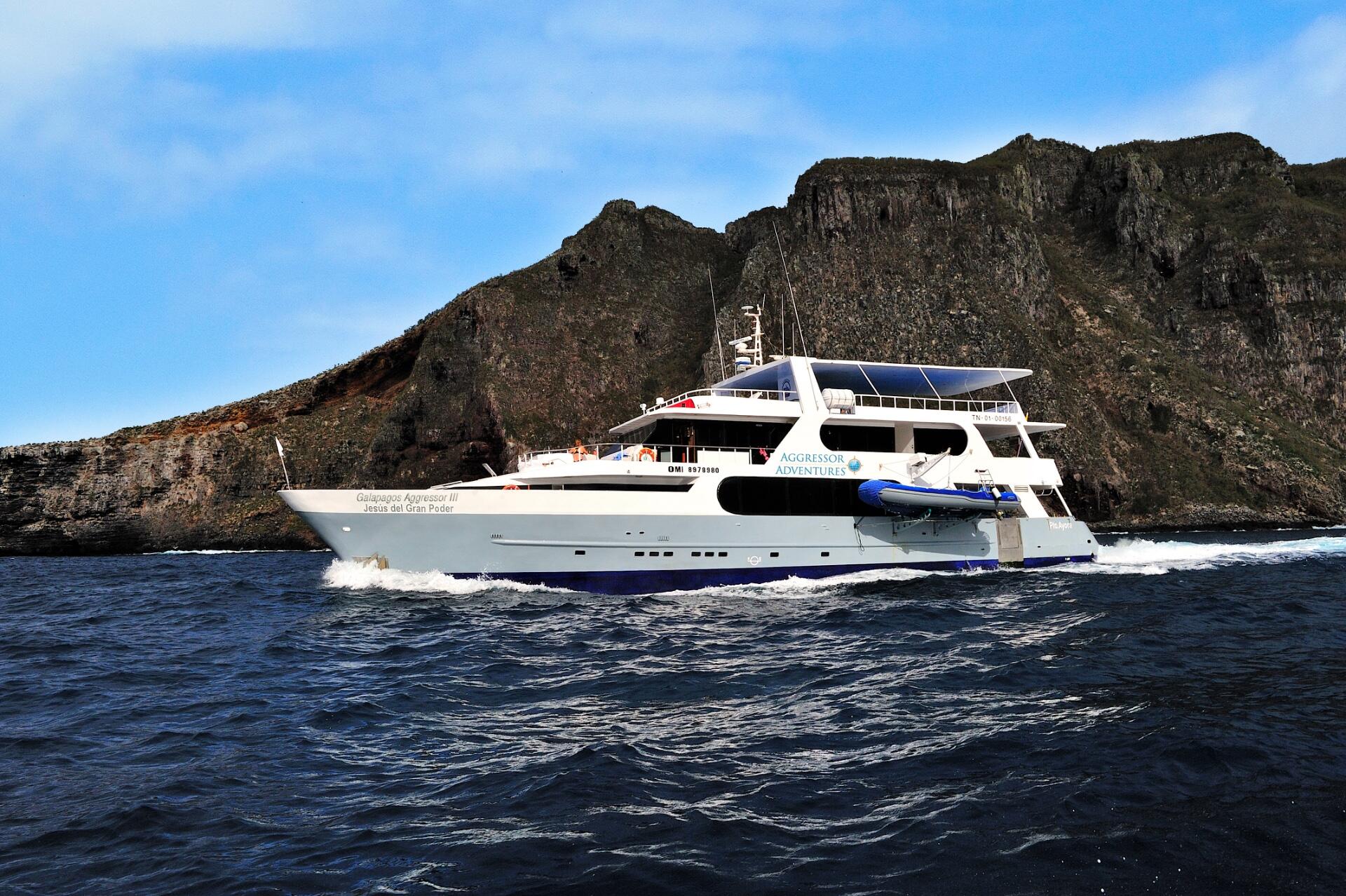
Galapagos Aggressor III
Galápagos
16 guests30.5 m
$913/day
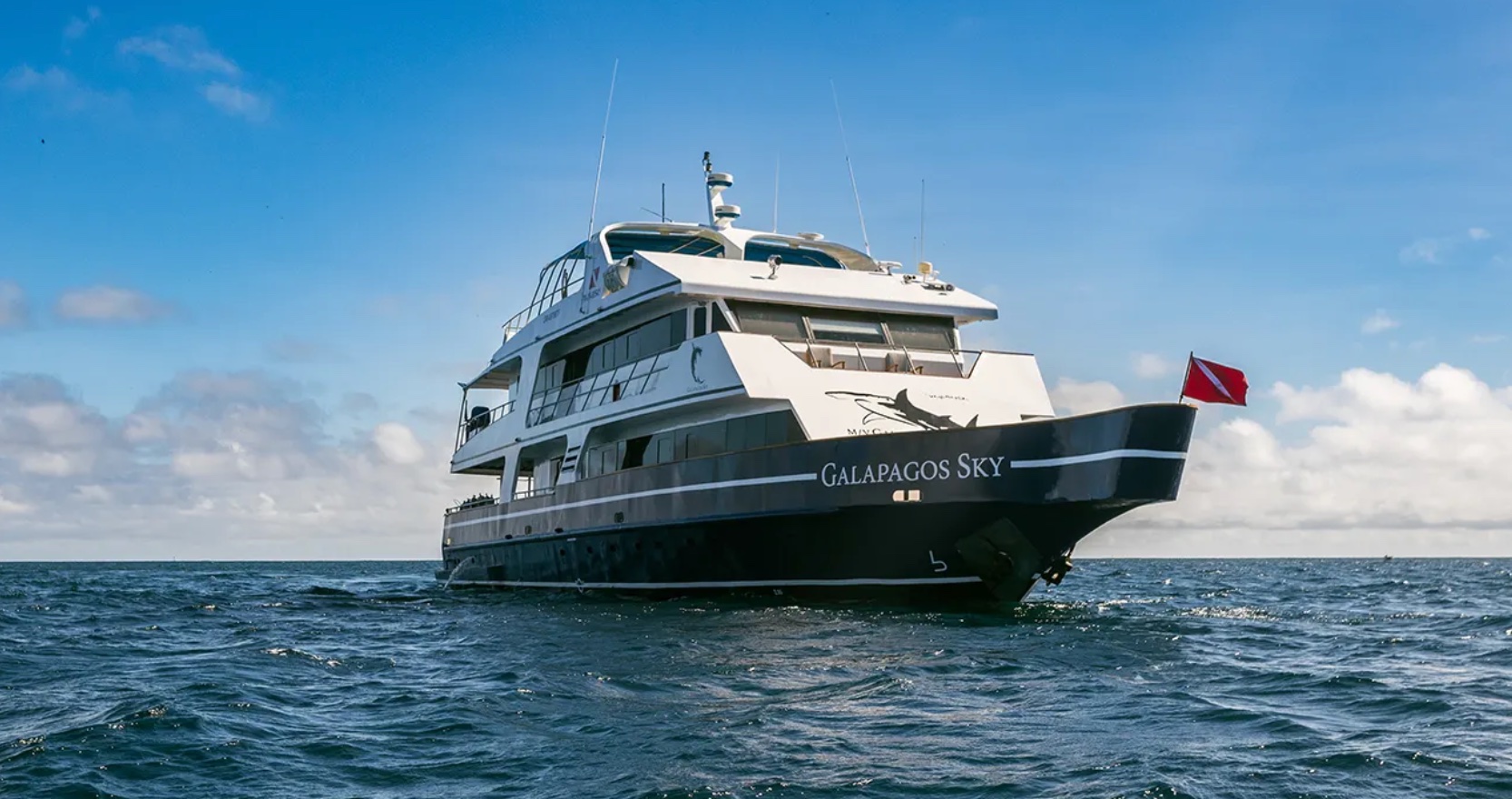
Galapagos Sky
Galápagos
16 guests
$937/day
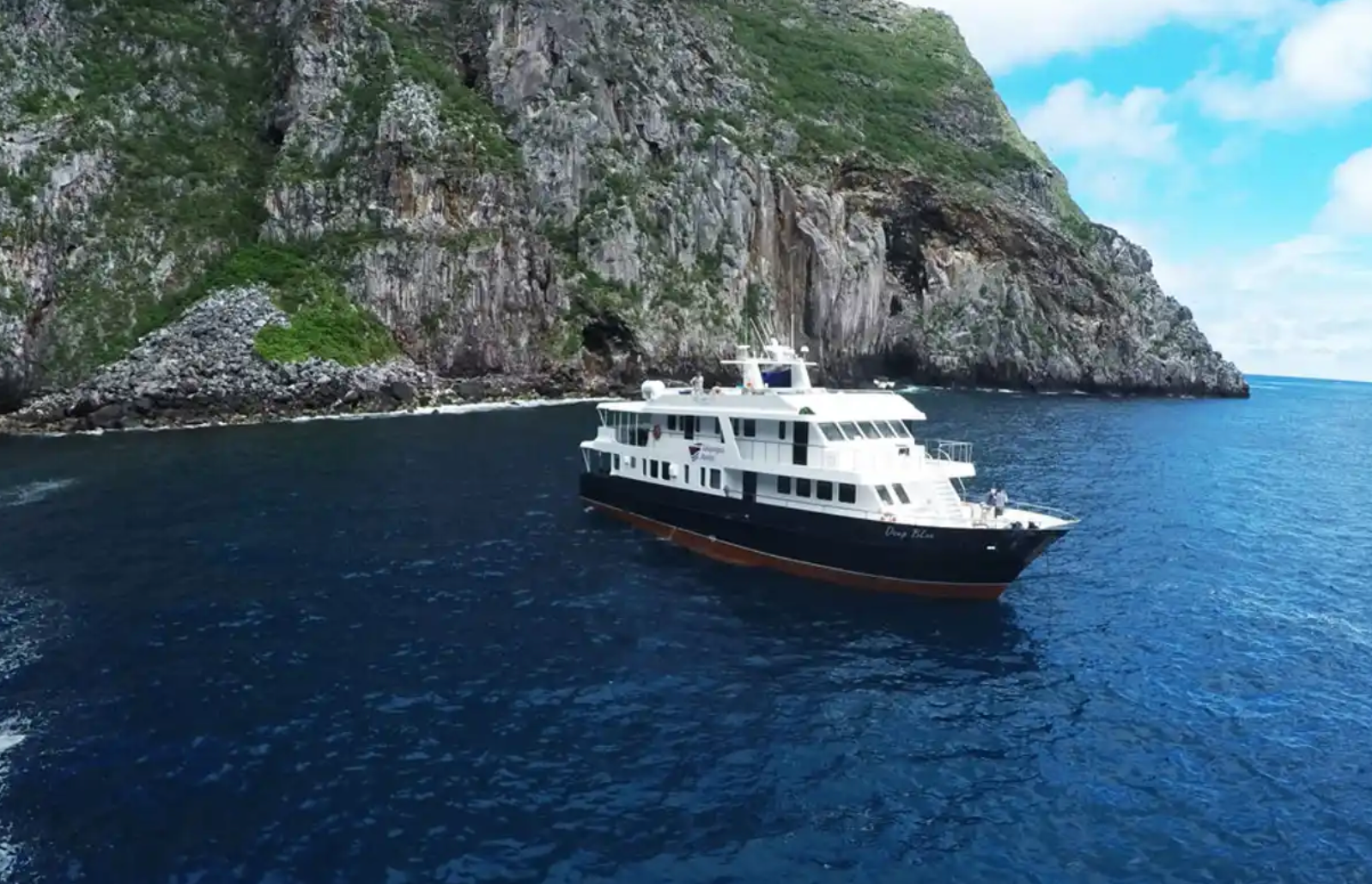
Galapagos Master
Galápagos
16 guests
$669/day
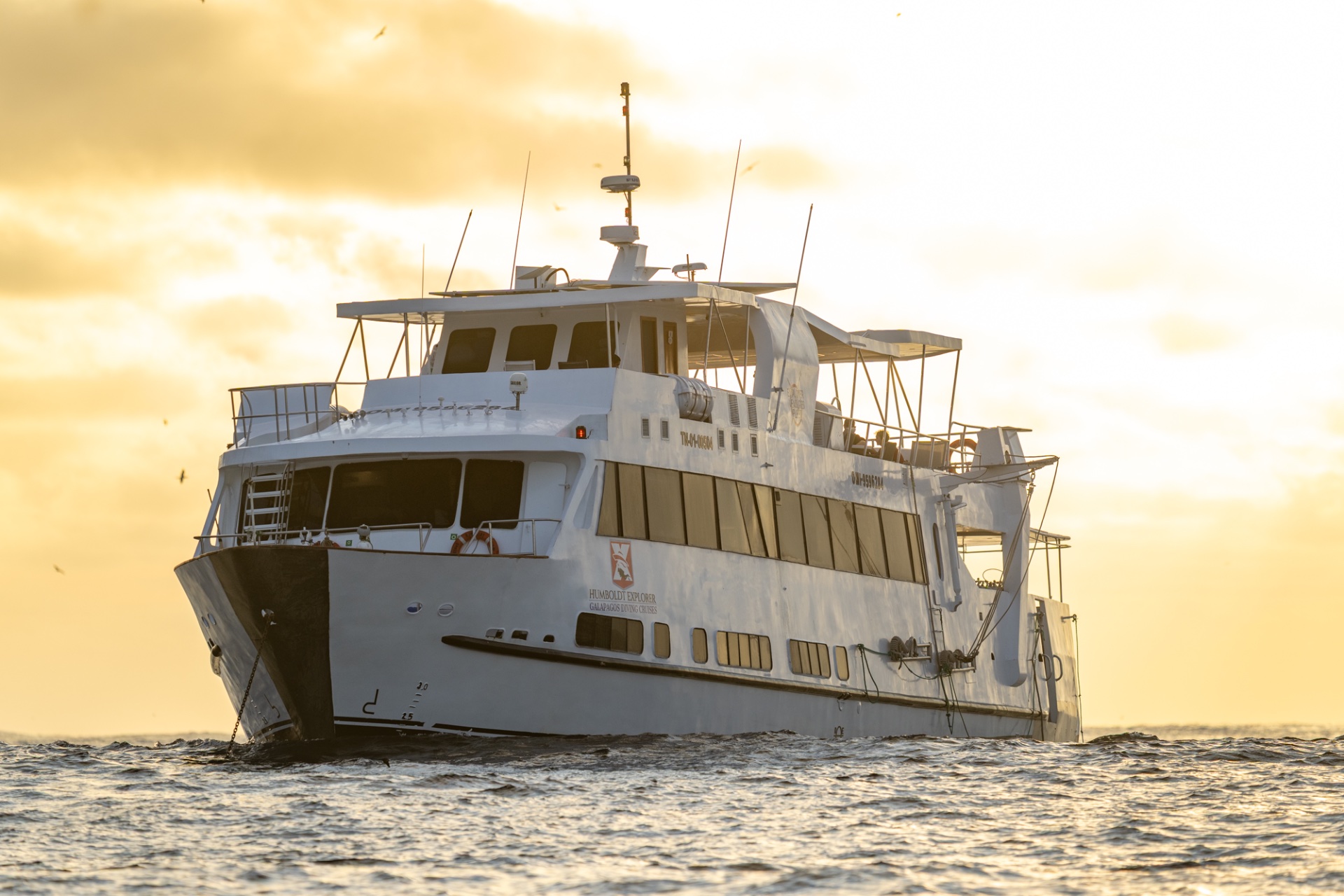
Humboldt Explorer
Galápagos
16 guests
$612/day
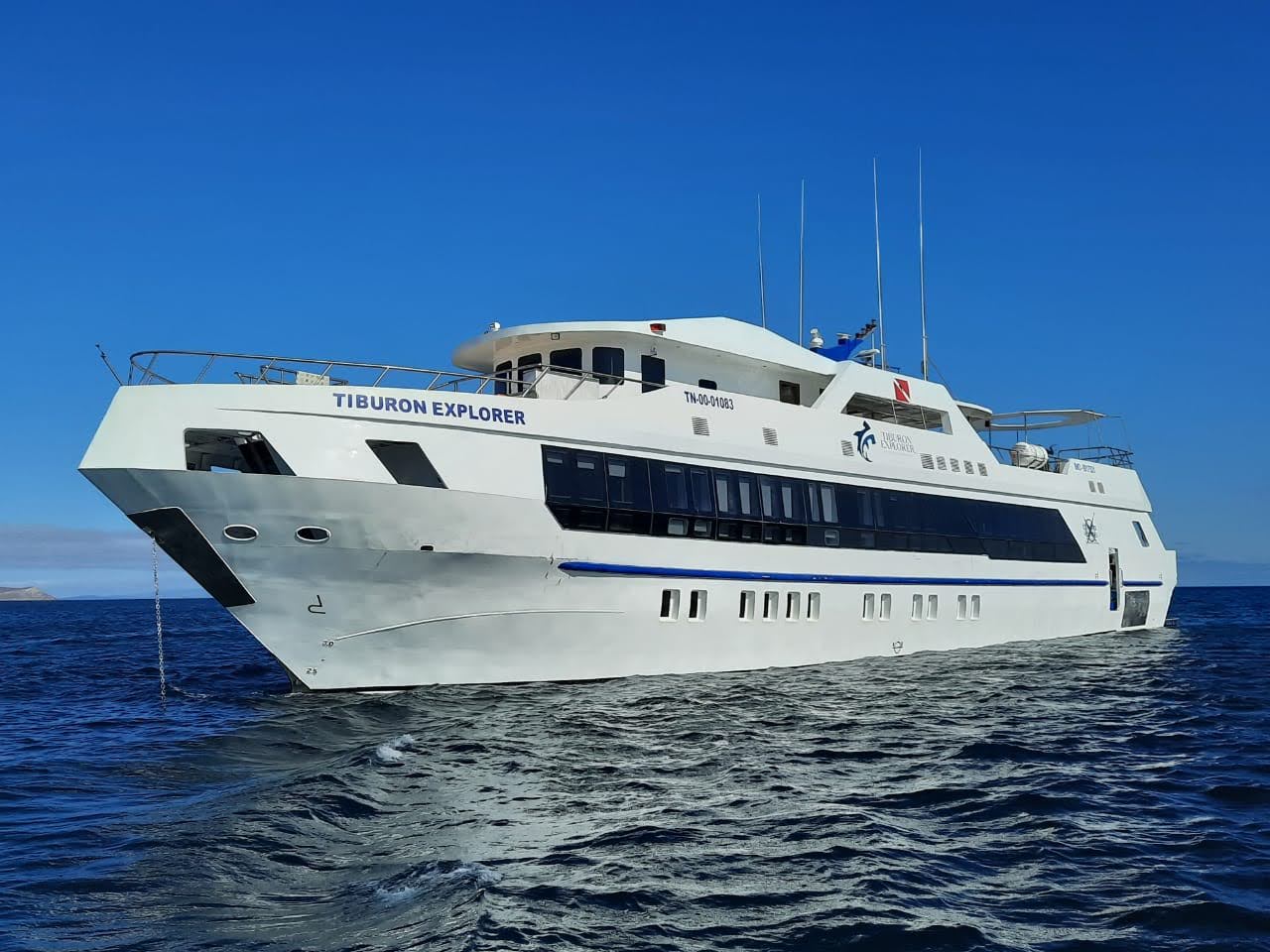
Tiburon Explorer
Galápagos
16 guests
$924/day
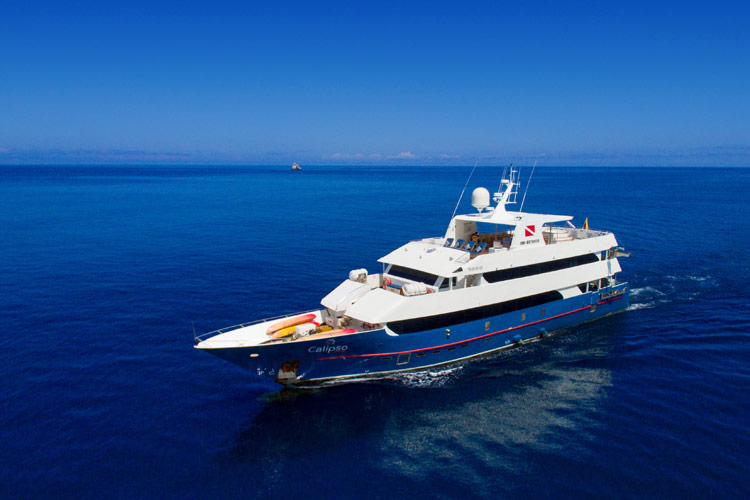
Calipso
Galápagos
16 guests
$819/day
Dive sites similar to Darwin's Arch
Same character, same waters — six more sites divers love for the exact same reasons.Compare seasons, access and liveaboard routes — then pick the site that fits your trip best.
© Esri — Maxar, Earthstar, GIS
Guy Fawkes Islands
Galápagos
The Guy Fawkes Islands are a pair of small islands located close to Santa Cruz, offering a more accessible dive experience compared to the remote northern sites.
- Suitable for
- Intermediate
- Current
- Strong
- Access
- Liveaboard only
- Depth
- 5–25 m
- Theme
- Cave & cavern / Wall
© Esri — Maxar, Earthstar, GIS
Cabo Douglas - Marine Iguana Wall
Galápagos
Cabo Douglas, located on the northwest side of Fernandina Island in the central Galápagos, offers a truly unique diving experience.
- Suitable for
- Intermediate
- Current
- Strong
- Access
- Liveaboard only
- Depth
- 5–33 m
- Theme
- Wall
© Esri — Maxar, Earthstar, GIS
Daphne Minor
Galápagos
Daphne Minor, a small, barren island northwest of the Itabaca Channel, is a lesser-known but exceptionally vibrant dive site in the Galápagos.
- Suitable for
- Intermediate
- Current
- Strong
- Access
- Liveaboard only
- Depth
- 10–18 m
- Theme
- Pinnacle / Wall
© Esri — Maxar, Earthstar, GIS
Mosquera Island
Galápagos
Mosquera Island is a unique dive site in the Galápagos Marine Reserve, located between Seymour and Baltra islands.
- Suitable for
- Beginner
- Current
- Ripping
- Access
- Liveaboard only
- Depth
- 3–12 m
- Theme
- Reef / Wall
© Esri — Maxar, Earthstar, GIS
Punta Vicente Roca
Galápagos
Punta Vicente Roca, situated on the west coast of Isabela Island in the Galápagos, is a captivating dive site characterized by its vertical wall and dramatic above-surface rock formations.
- Suitable for
- Intermediate
- Current
- Ripping
- Access
- Liveaboard only
- Depth
- 5–25 m
- Theme
- Wall
© Esri — Maxar, Earthstar, GIS
Isla Tortuga - South Wall
Galápagos
Isla Tortuga's South Wall, a striking volcanic caldera, presents an exceptional dive experience in the Galápagos, offering a dramatic underwater landscape.
- Suitable for
- Advanced
- Current
- Strong
- Access
- Liveaboard only
- Depth
- 8–40 m
- Theme
- Drift / Wall