About Cabo Douglas - Fernandina
Cabo Douglas, located on Fernandina Island, offers a truly unique underwater experience as the sole location worldwide where divers can observe marine iguanas grazing on algae beneath the surface. This remote site is a highlight of Galapagos diving, showcasing evolution in action with its distinct endemic species. The dive occurs along volcanic coastlines, characterized by cold, nutrient-rich waters that support an incredible array of life. The topography features rocky seabeds and outcrops, which provide a habitat for marine iguanas and other creatures. While the dive is often shallow, focusing on the iguanas, the surrounding waters are rich, contributing to a vibrant ecosystem. Water temperatures here can be quite cold, often in the 60s Fahrenheit (around 16°C), and visibility can be variable due to the productive upwellings. Beyond the marine iguanas, divers frequently encounter Galapagos penguins zipping past and flightless cormorants hunting fish. Galapagos fur seals also make an appearance, adding to the dynamic wildlife interactions. The experience provides a captivating glimpse into the adaptations of these species in their natural, protected environment, accessible primarily by liveaboard. Due to the specific environmental conditions, including cold water, strong surge, and the need to position oneself in currents to observe the iguanas, this dive is best suited for experienced divers. Dives are typically brief, around 40 minutes, to maximize time with the iguanas in their shallow feeding grounds.
Highlights
Underwater marine iguanas grazingGalapagos penguinsFlightless cormorantsGalapagos fur sealsVolcanic seabed explorationUnique evolutionary encounters
Best Season
The cool season from June to November often brings stronger currents and abundant marine life, including seasonal whale sharks in the broader region. However, marine iguanas are present year-round, making Cabo Douglas a consistent highlight.
Dive site facts: Cabo Douglas - Fernandina
- Depth
- 19 ft / 6 m (max observed for iguanas)
- Typical dive
- 40–50 min, shallow
- Current
- Moderate–Strong, with surge
- Visibility
- Variable
- Water temperature
- 60–68°F / 16–20°C
- Entry
- Back roll from dinghy / negative entry
- Level
- Advanced, current experience essential
- Dive type
- Big animals, unique species, drift
- Region / port
- Fernandina Island, Western Galapagos
- Coordinates
- 0.3920° S, 90.9059° W
Conditions & Currents
Currents at Cabo Douglas can be moderate to strong, often accompanied by significant surge, particularly at the entry points and near the rocky terrain where marine iguanas feed. Divers should expect to tuck into rocks and hold on to maintain position, especially when observing the iguanas. Negative entries are common due to surface conditions. Visibility is variable; nutrient-rich upwellings, while fostering abundant marine life, can sometimes reduce clarity, and particulate matter can be noticeable. Water temperatures are consistently cold, typically around 60°F (16°C), necessitating appropriate thermal protection like 7mm hooded wetsuits or drysuits. The combination of cold water, current, and surge means this site is best suited for experienced divers comfortable with challenging conditions and confident in their buoyancy and current management.
Marine life & sighting chances

Marine iguana
common
Galapagos penguin
common
Flightless cormorant
common
Galapagos fur seal
common
Sea turtle
common
Sea lion
common
Blue sea star
occasional
Harlequin wrasse
occasionalDive profile & how the dive runs
Dives at Cabo Douglas typically begin with a back roll from a dinghy, often requiring a negative entry to quickly descend past surface currents. The focus of the dive is the shallow volcanic seabed, particularly in areas where marine iguanas gather to feed on algae. Divers navigate rocky outcrops and position themselves to observe these unique reptiles. While the maximum depth for iguana observation can be as shallow as 19 feet (6 meters), divers may explore slightly deeper along the coastline. Due to the cold water and potential surge, dives are often limited to 40-50 minutes. The safety stop is typically conducted in the shallower areas, where divers may continue to encounter marine iguanas, penguins, or fur seals near the surface.
Underwater photography
Cabo Douglas offers unparalleled wide-angle photography opportunities, primarily for capturing marine iguanas underwater. A wide-angle lens is essential to frame these unique reptiles as they graze or swim, and to include other subjects like penguins and fur seals. Given the cold, potentially surge-filled, and sometimes particulate-rich water, robust strobes are beneficial for color and clarity. Buoyancy control is paramount to avoid disturbing the iguanas and navigating the rocky terrain. Patience and ethical distance are key; allow the animals to approach you naturally. Consider a dome port for over-under shots if conditions allow, as iguanas often surface near the dive site.
Combine with nearby dive sites
- Punta Vicente Roca
Another cold-water site known for mola molas and penguins.
- Wolf Island
A high-energy site renowned for dense marine life and pelagics.
- Darwin Island
Legendary for schools of hammerhead sharks and whale sharks.
- Urbina Bay
Urbina Bay, located on the west coast of Isabela Island at the base of Alcedo Volcano, is one of the youngest geological features in the…
- Punta Moreno
Punta Moreno, located on the west coast of Isabela Island, offers a distinctive Galápagos diving experience characterized by its unique…
Getting there & logistics
Access to Cabo Douglas is exclusively via multi-day liveaboard cruises, as Fernandina Island is remote and approximately 26 hours of navigation from Santa Cruz. Divers typically fly into Seymour Airport (GPS) on Baltra Island, then transfer to a liveaboard docked in Baltra or Puerto Ayora. Trips usually span 7 to 11 nights to cover the extensive distances and dive various sites, including the remote western and northern islands. National Park fees are required for entry into the Galapagos National Park. The itinerary is designed to maximize encounters with endemic wildlife, with Cabo Douglas being a key stop for its unique marine iguana interactions.
Safety & environment
Diving in the Galapagos, including Cabo Douglas, demands advanced diving skills due to often strong currents, surge, and cold water. It is imperative to dive with comprehensive dive accident insurance, such as DAN. The nearest recompression chamber is located in Puerto Ayora, Santa Cruz Island, which can be several hours away by boat depending on the liveaboard's position. Emergency evacuation can be complex and time-consuming from remote sites like Fernandina. Divers must be comfortable with negative entries, proficient in current diving techniques, and adequately insulated with a 7mm hooded wetsuit or drysuit. Always carry a surface marker buoy, and understand the vessel's emergency protocols and communication devices like a Nautilus Lifeline.
Who it suits — and who it doesn't
Suited for
- Experienced divers comfortable with cold water and strong currents
- Wildlife enthusiasts seeking unique endemic species
- Underwater photographers targeting specific animal behaviors
- Liveaboard guests prioritizing remote, big-animal encounters
- Divers with recent boat and current experience
Less suited for
- Brand-new or rusty divers
- Divers uncomfortable in 5-7mm wetsuits with hoods/gloves
- Those who prefer warm, easy reef dives
- Divers prone to seasickness
- Beginners or those without advanced certifications
FAQ
Cabo Douglas - Fernandina FAQ
What makes Cabo Douglas unique for diving?
Cabo Douglas is the only dive site in the world where you can consistently observe marine iguanas feeding underwater. These unique reptiles dive into the cold ocean to graze on algae, offering an unparalleled glimpse into their evolutionary adaptations. The site also features other endemic species like Galapagos penguins and flightless cormorants.
What marine life can I expect to see at Cabo Douglas?
The primary draw is the marine iguanas, but you'll also frequently encounter Galapagos penguins zipping through the water and flightless cormorants hunting. Galapagos fur seals and sea turtles are also common sightings. The site's cold, nutrient-rich waters support a vibrant ecosystem, making every dive dynamic.
What are the dive conditions like at Cabo Douglas?
Conditions can be challenging, with moderate to strong currents and significant surge. Water temperatures are cold, typically around 60°F (16°C), requiring thick wetsuits or drysuits. Visibility is variable due to nutrient upwellings. These conditions necessitate advanced diving skills, including proficiency in current diving and negative entries.
How do I access Cabo Douglas?
Cabo Douglas is located off remote Fernandina Island and is exclusively accessible via multi-day liveaboard cruises. These liveaboards depart from Baltra Island and typically offer itineraries ranging from 7 to 11 nights, covering a wide range of Galapagos dive sites including the western islands.
Is Cabo Douglas suitable for all diver levels?
No, Cabo Douglas is best suited for advanced divers with experience in cold water and strong currents. The challenging conditions, including surge and the need for negative entries, make it unsuitable for beginner or inexperienced divers. Proper thermal protection and excellent buoyancy control are also essential.
Why dive Cabo Douglas - Fernandina from a liveaboard?
Cabo Douglas - Fernandina is one of Galápagos's signature dive sites. A liveaboard sleeps you on the water and puts you in the water for three to four guided dives per day, including dawn and night dives that day-boat operators rarely offer. You skip the daily commute back to port and reach quieter, less-crowded sites in the same region on a single trip.
Below are the liveaboards that include Cabo Douglas - Fernandina on their Galápagos itineraries.
Liveaboards diving Cabo Douglas - Fernandina
These liveaboards may visit Cabo Douglas - Fernandina on selected itineraries — the exact dive sites depend on departure, weather and conditions.
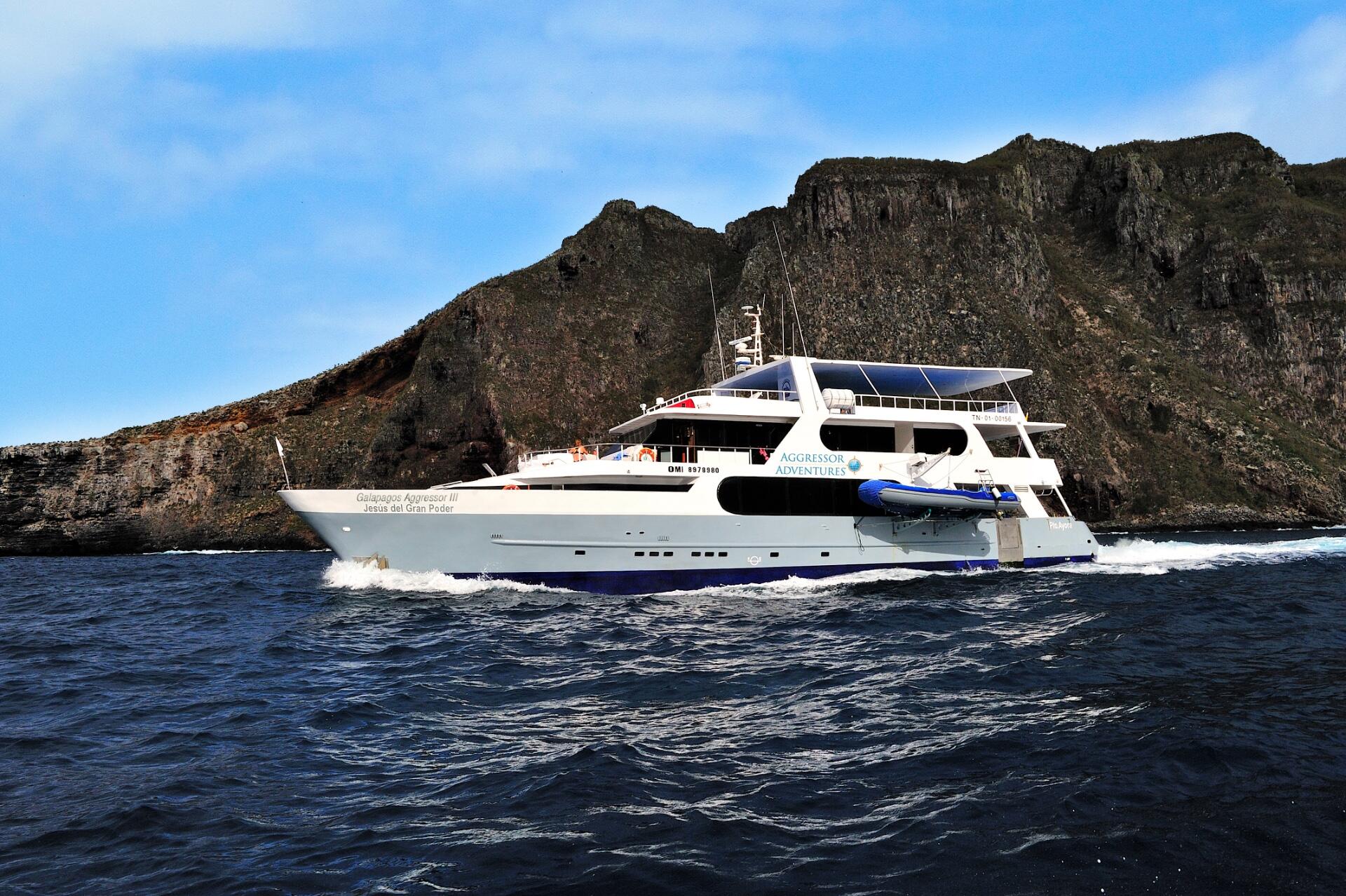
Galapagos Aggressor III
Galápagos
16 guests30.5 m
$913/day
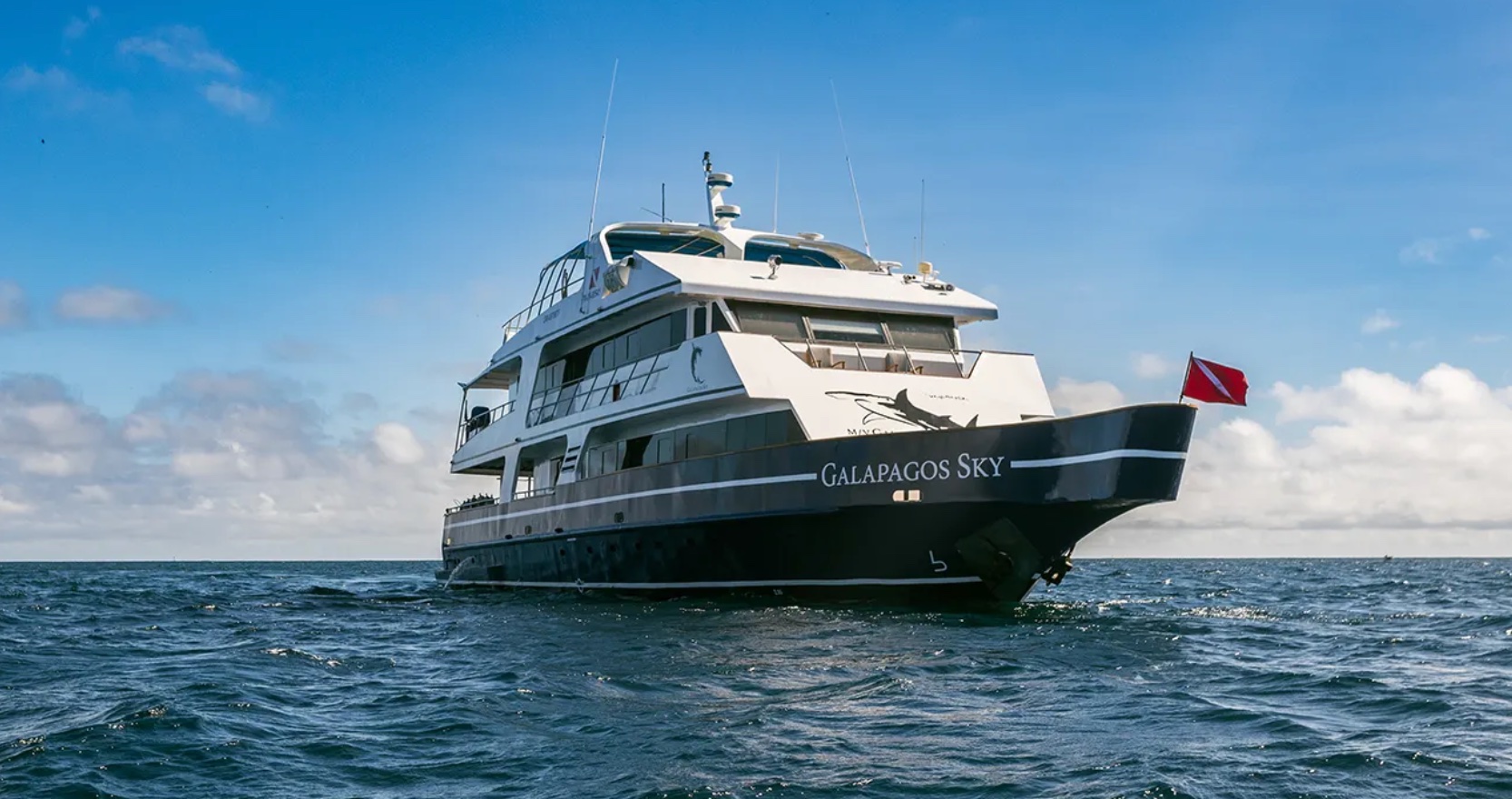
Galapagos Sky
Galápagos
16 guests
$937/day
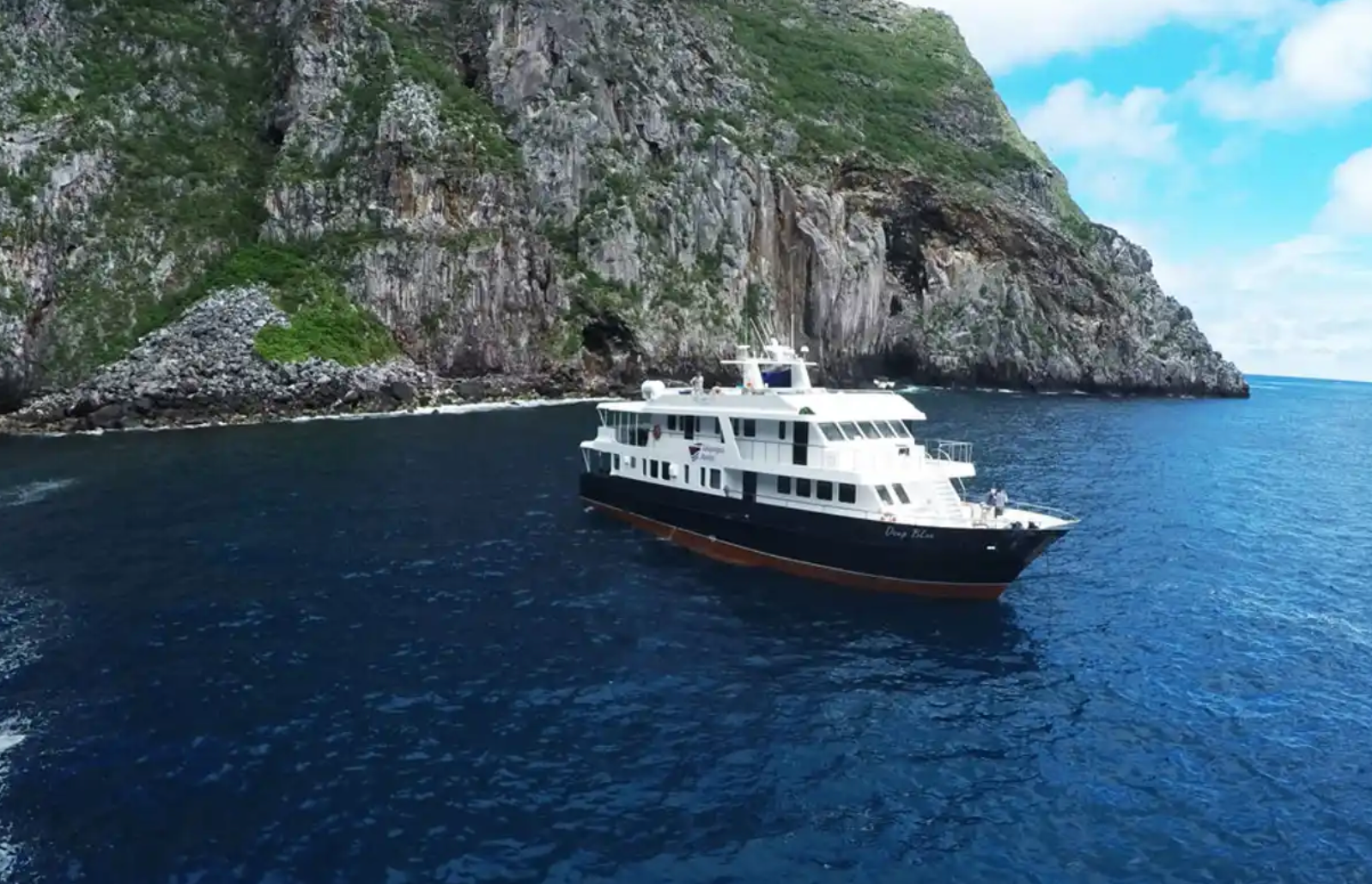
Galapagos Master
Galápagos
16 guests
$669/day
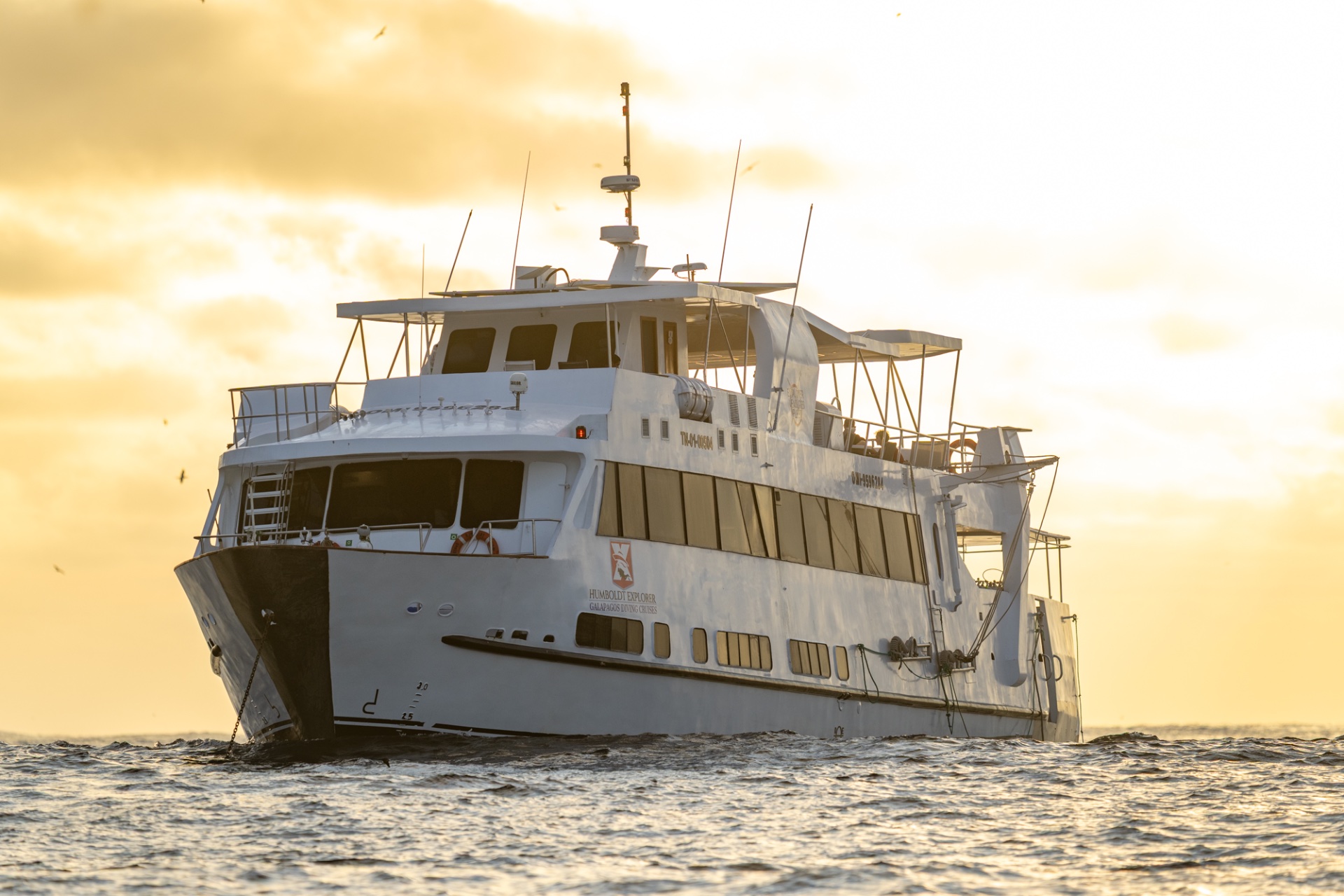
Humboldt Explorer
Galápagos
16 guests
$612/day
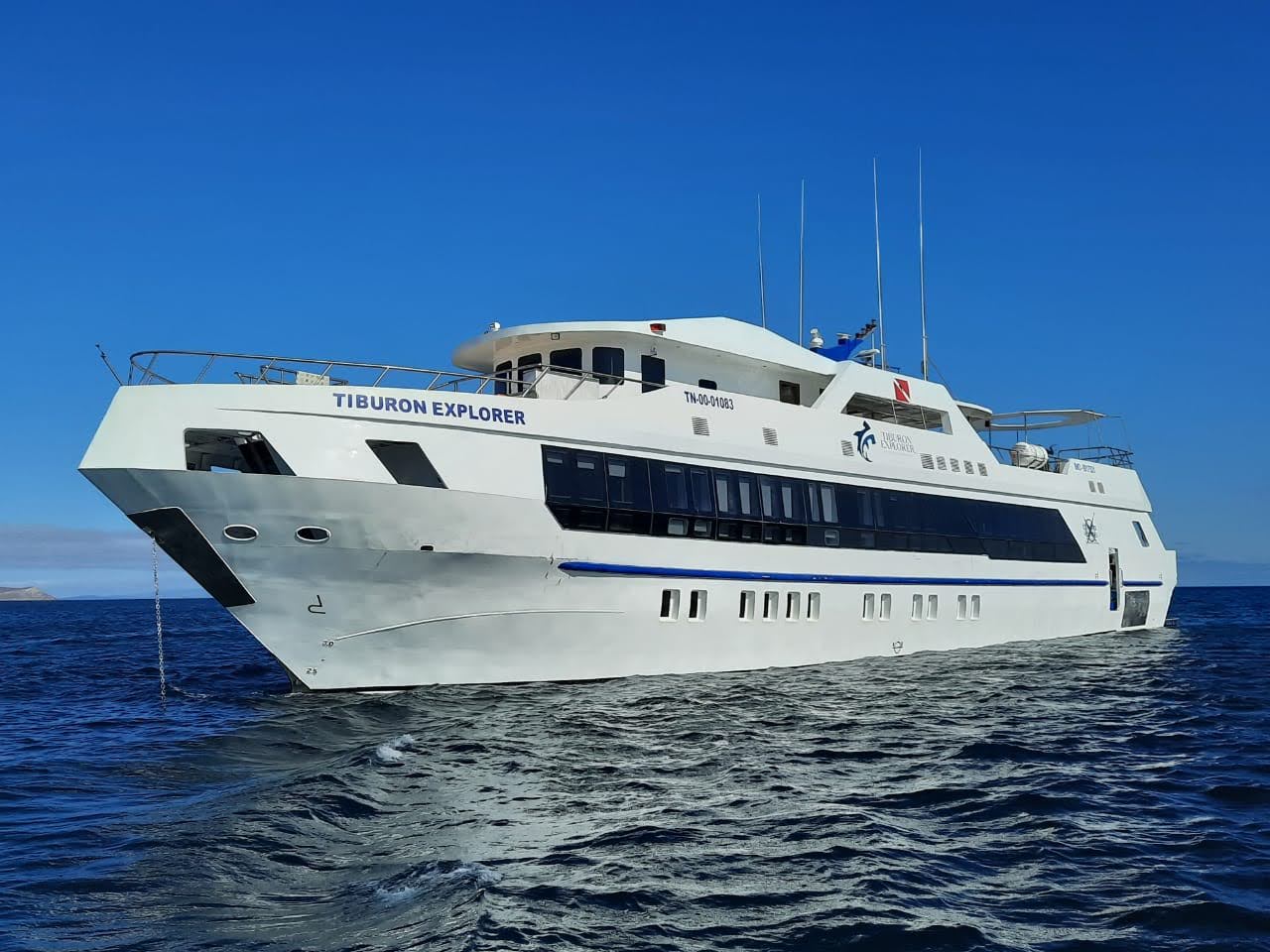
Tiburon Explorer
Galápagos
16 guests
$924/day
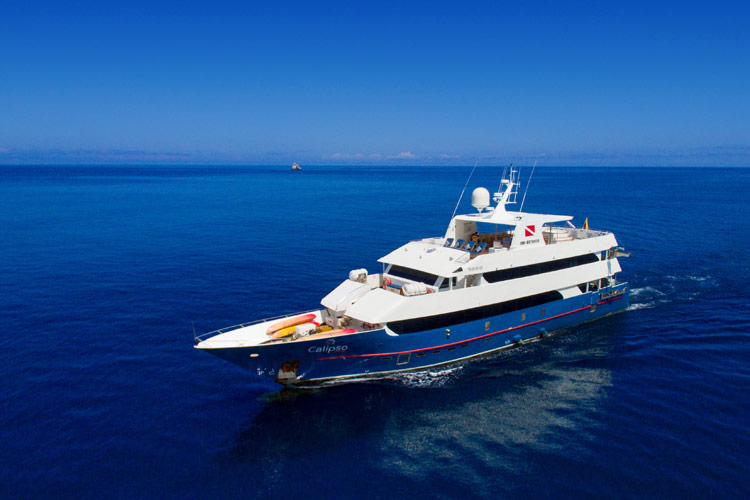
Calipso
Galápagos
16 guests
$819/day
Dive sites similar to Cabo Douglas - Fernandina
Same character, same waters — six more sites divers love for the exact same reasons.Compare seasons, access and liveaboard routes — then pick the site that fits your trip best.
Landslide, known locally as El Derrumbe, is a renowned dive site situated off Wolf Island in the remote northern Galápagos archipelago.
- Suitable for
- Advanced
- Current
- Ripping
- Access
- Liveaboard only
- Depth
- 9–37 m
- Theme
- Drift
Shark Bay, known in Spanish as Bahia de Tiburones, is a celebrated dive site located off Wolf Island in the remote northern reaches of the Galapagos archipelago.
- Suitable for
- Advanced
- Current
- Ripping
- Access
- Liveaboard only
- Depth
- —
- Theme
- Drift
Pinzon is situated among the central islands of the Galápagos archipelago, an area characterized by waters that are generally warmer and more protected compared to the northern or western regions.
- Suitable for
- Advanced
- Current
- Strong
- Access
- Liveaboard or dayboat
- Depth
- ≤ 18 m
- Theme
- Reef / Drift
The Caves, located at San Cristóbal, offers a unique underwater adventure, blending skill and direct contact with the Galápagos archipelago's rich biodiversity.
- Suitable for
- Advanced
- Current
- Ripping
- Access
- Liveaboard only
- Depth
- ≤ 35 m
- Theme
- Drift
El Arco, famously known as Darwin's Arch, represents the pinnacle of liveaboard diving in the Galápagos, situated miles from the main archipelago in the open Pacific.
- Suitable for
- Advanced
- Current
- Ripping
- Access
- Liveaboard only
- Depth
- —
- Theme
- Drift
© Esri — Maxar, Earthstar, GIS
Cape Douglas
Galápagos
Cape Douglas offers a truly distinctive dive experience on the northwestern side of Fernandina Island in the Galápagos archipelago.
- Suitable for
- Advanced
- Current
- Strong
- Access
- Liveaboard or dayboat
- Depth
- 5–33 m
- Theme
- Drift