About Isla Tortuga - South Wall
Isla Tortuga's South Wall, a striking volcanic caldera, presents an exceptional dive experience in the Galápagos, offering a dramatic underwater landscape. The site is characterized by its unique topography, featuring steep drop-offs and a sloping reef that create diverse habitats for marine species. Depths here range significantly, appealing to divers comfortable with deeper excursions. The South Wall is a magnet for pelagic action, with regular sightings of large schools of hammerhead sharks, particularly during the warmer months, and the graceful movements of manta rays. The interplay of currents around this caldera brings nutrient-rich waters, fostering a thriving reef environment that supports a colorful array of fish, sea turtles, and playful sea lions. Water temperatures vary seasonally, impacting both marine life distribution and diver comfort. The warmer season (December to May) offers calmer seas and better visibility, while the cooler, drier season (June to November) can bring choppier conditions and stronger currents but also increases the likelihood of encountering whale sharks and larger hammerhead schools. Divers should be prepared for varying conditions, as the currents can be a significant factor. Access to Isla Tortuga is primarily through liveaboard cruises, allowing for multiple dives at this and other remote sites. The dive experience is dynamic, often involving drift dives along the wall, requiring good buoyancy control and a comfortable level of experience with currents to fully appreciate the rich biodiversity and dramatic underwater scenery.
Highlights
Volcanic caldera formationsHammerhead shark schoolsManta ray encountersPlayful sea lionsRich pelagic actionDramatic underwater topographyDiverse reef fish
Season calendar
Best months to dive here
Jan
Feb
Mar
Apr
May
Jun
Jul
Aug
Sep
Oct
Nov
Dec
Excellent
Good
Dive site facts: Isla Tortuga - South Wall
- Depth
- 5–30 m
- Current
- Strong and variable
- Visibility
- 9–30 m
- Water temperature
- 19–28 °C
- Entry
- Tender / negative entry common
- Level
- Advanced, current experience essential
- Dive type
- Wall, drift, pelagic
- Night dive
- Not permitted
- Region / port
- Galápagos
- Coordinates
- -1.025, -91.155
Conditions & Currents
Diving at Isla Tortuga's South Wall often involves strong and unpredictable currents due to its exposed location and unique volcanic structure, requiring divers to be proficient in drift diving techniques. These currents can shift rapidly, making careful dive planning and good communication with the dive guide essential for safety and enjoyment. Visibility can fluctuate significantly, ranging from 9 to 30 meters, influenced by seasonal upwellings and plankton blooms that attract abundant marine life. Divers should be prepared for potential thermoclines, especially during the cooler months, necessitating appropriate thermal protection. Entry is typically via tender, and negative entries may be required to quickly descend into the protected areas or to manage the currents effectively. Exiting the water also requires coordination with the dive boat, as divers may surface some distance from
Marine life & sighting chances
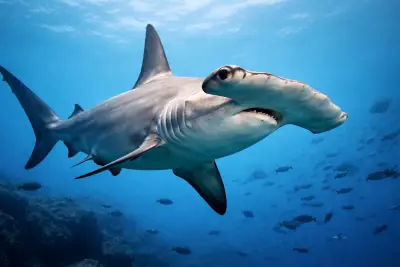
Scalloped hammerhead shark
December–May (larger schools), June–November (smaller school · common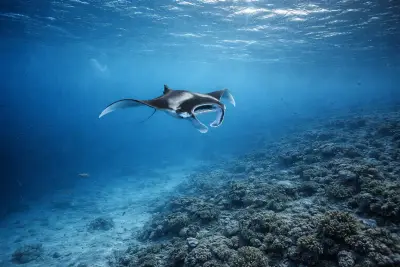
Manta ray
December–May · occasional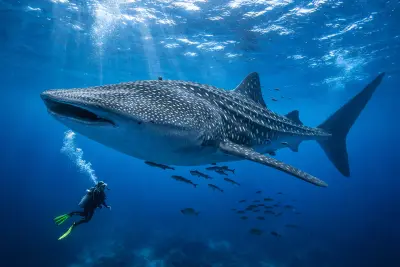
Whale shark
June–December · occasional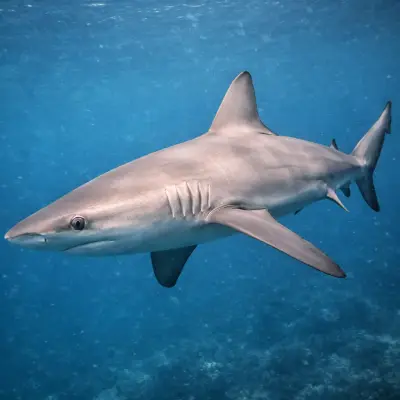
Galapagos shark
All year · common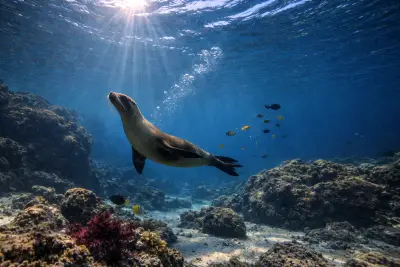
Sea lion
All year · common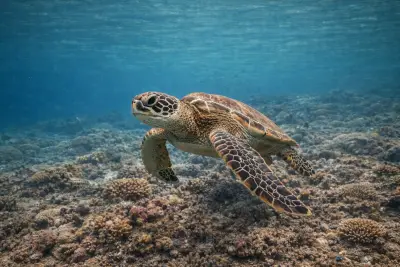
Green sea turtle
All year · common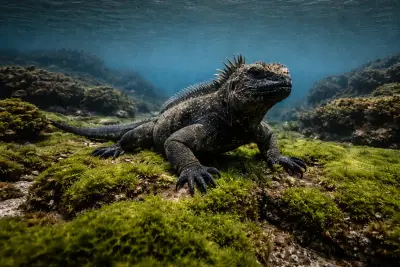
Marine iguana
All year · occasional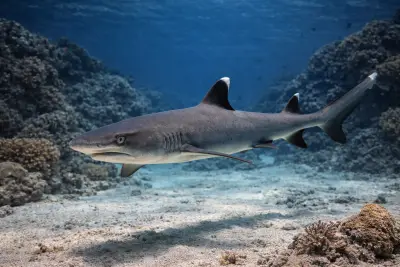
White-tip reef shark
All year · common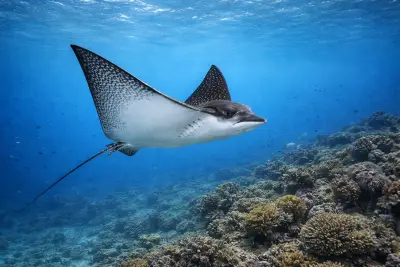
Eagle ray
All year · occasional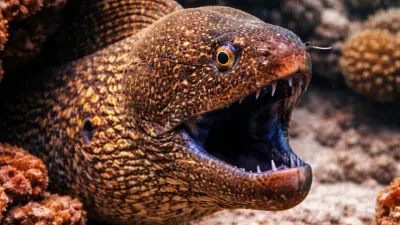
Moray eel
All year · commonDive profile & how the dive runs
Your dive at Isla Tortuga's South Wall typically begins with a tender drop, often requiring a negative entry to quickly descend into the lee of the wall or to navigate strong surface currents. The usual plan involves a drift dive along the south-facing volcanic wall, allowing the current to carry you past the dramatic topography. You'll generally start deeper, around 25-30 meters, searching for schooling hammerheads in the blue or patrolling the deeper ledges. As you drift, you gradually ascend to explore the shallower reef sections between 5-15 meters, where reef fish and sea lions are more prevalent. The dive concludes with a safety stop in the calmer, shallower water if conditions allow, or as part of a controlled ascent in more exposed areas, with the dive boat tracking your progress for a pick-up.
Underwater photography
Capturing the dynamic environment of Isla Tortuga's South Wall demands versatility. A wide-angle lens is essential for documenting the impressive volcanic formations and vast schools of hammerheads and other pelagic species in the blue water. Due to often strong currents, excellent buoyancy control is paramount to avoid disturbing the marine life and to maintain stable shots. Dual strobes are highly recommended to properly light subjects and mitigate backscatter in varying visibility conditions. Be mindful of sudden current shifts, which can impact camera stability and framing. When photographing sensitive marine life like sea turtles or rays, maintain a respectful distance and avoid aggressive pursuit, ensuring you do not alter their natural behavior.
Combine with nearby dive sites
- Isabela - Tortuga Island
Tortuga Island, also known as Isla Tortuga, is a distinctive crescent-shaped islet formed from the rim of an extinct volcano, located…
- Cabo Marshall
Cabo Marshall, also known as Cape Marshall, is a renowned dive site located off the northeastern coast of Isabela Island in the Galápagos…
- Punta Vicente Roca
Punta Vicente Roca, situated on the west coast of Isabela Island in the Galápagos, is a captivating dive site characterized by its vertical…
- Cape Douglas - Fernandina
Cape Douglas, located off the secluded Fernandina Island in the Galápagos, offers a truly unique dive experience centered around its…
- Gordon Rocks
Gordon Rocks, located off the northeast coast of Santa Cruz Island in the Galápagos, stands as a premier dive site globally, primarily…
Getting there & logistics
Access to the Galápagos Islands typically begins with international flights to Ecuador (Guayaquil or Quito), followed by a domestic flight to Baltra (Seymour Airport) or San Cristobal. For Isla Tortuga, liveaboard cruises are the primary means of access, usually departing from Baltra. These trips often span 7 to 10 days, combining various remote dive sites across the archipelago. It's crucial to factor in the Galápagos National Park entrance fee and transit control card, which are additional costs. Liveaboards provide a comprehensive experience, covering accommodation, meals, and multiple daily dives, and are designed to maximize your time in the more remote diving areas, minimizing daily travel.
Safety & environment
Diving in the Galápagos, particularly at sites like Isla Tortuga, necessitates a strong emphasis on safety due to challenging conditions. Recompression chambers are located on Santa Cruz and San Cristóbal islands, but evacuation from remote sites can take several hours. It is imperative that all divers have comprehensive dive accident insurance, such as DAN, to cover potential medical emergencies and transportation. Site-specific hazards include strong, unpredictable currents and potential thermoclines. Divers should carry personal safety equipment like an SMB, whistle, and a personal locator device. Always dive within your training and experience limits, and strictly adhere to your dive guide's instructions, especially regarding buddy separation and emergency procedures.
Who it suits — and who it doesn't
Suited for
- Experienced divers comfortable with strong currents
- Advanced Open Water certified divers
- Divers seeking large pelagic encounters
- Underwater photographers with wide-angle setups
- Those on liveaboard itineraries
Less suited for
- Beginner divers or those with limited current experience
- Divers prone to seasickness
- Divers seeking easy, relaxed reef dives
- Individuals with fewer than 10-15 logged dives
- Those who prefer land-based diving only
FAQ
Isla Tortuga - South Wall FAQ
What is the best time of year to see hammerhead sharks at Isla Tortuga?
The warm season, from December to May, generally offers the best chances for encountering large schools of hammerhead sharks at Isla Tortuga's South Wall. During this period, the warmer waters and calmer seas create favorable conditions for these pelagic species. While hammerheads can be seen year-round, their schooling behavior is more pronounced in the warmer months.
Are the currents always strong at Isla Tortuga's South Wall?
Currents at Isla Tortuga's South Wall are frequently strong and can be unpredictable, making it a dive site best suited for experienced divers. Their intensity can vary with tides and seasonal conditions. Divers should be prepared for drift diving and possess excellent buoyancy control to safely navigate these dynamic underwater conditions.
What kind of marine life can I expect to see at Isla Tortuga?
Isla Tortuga offers a rich array of marine life, including large pelagic species such as schooling hammerhead sharks, manta rays, and occasional whale sharks. You can also expect to encounter playful sea lions, various species of sea turtles, white-tip reef sharks, eagle rays, and a diverse collection of reef fish that inhabit the volcanic reef structures.
Is Isla Tortuga suitable for beginner divers?
Isla Tortuga's South Wall is generally not recommended for beginner divers due to the strong and potentially unpredictable currents, and the typical depths explored. It is best suited for advanced divers with considerable experience in challenging conditions and drift diving techniques. Divers with limited current experience may find the conditions overwhelming.
What water temperature should I expect when diving Isla Tortuga?
Water temperatures at Isla Tortuga vary by season. During the warm season (December–May), temperatures typically range from 24–28°C (75–82°F). In the cool season (June–November), waters are colder, ranging from 19–22°C (66–72°F), often accompanied by thermoclines. A 5mm or 7mm wetsuit is generally recommended for comfort, especially in cooler months.
Why dive Isla Tortuga - South Wall from a liveaboard?
Isla Tortuga - South Wall is one of Galápagos's signature dive sites. A liveaboard sleeps you on the water and puts you in the water for three to four guided dives per day, including dawn and night dives that day-boat operators rarely offer. You skip the daily commute back to port and reach quieter, less-crowded sites in the same region on a single trip.
Below are the liveaboards that include Isla Tortuga - South Wall on their Galápagos itineraries.
Liveaboards diving Isla Tortuga - South Wall
These liveaboards may visit Isla Tortuga - South Wall on selected itineraries — the exact dive sites depend on departure, weather and conditions.
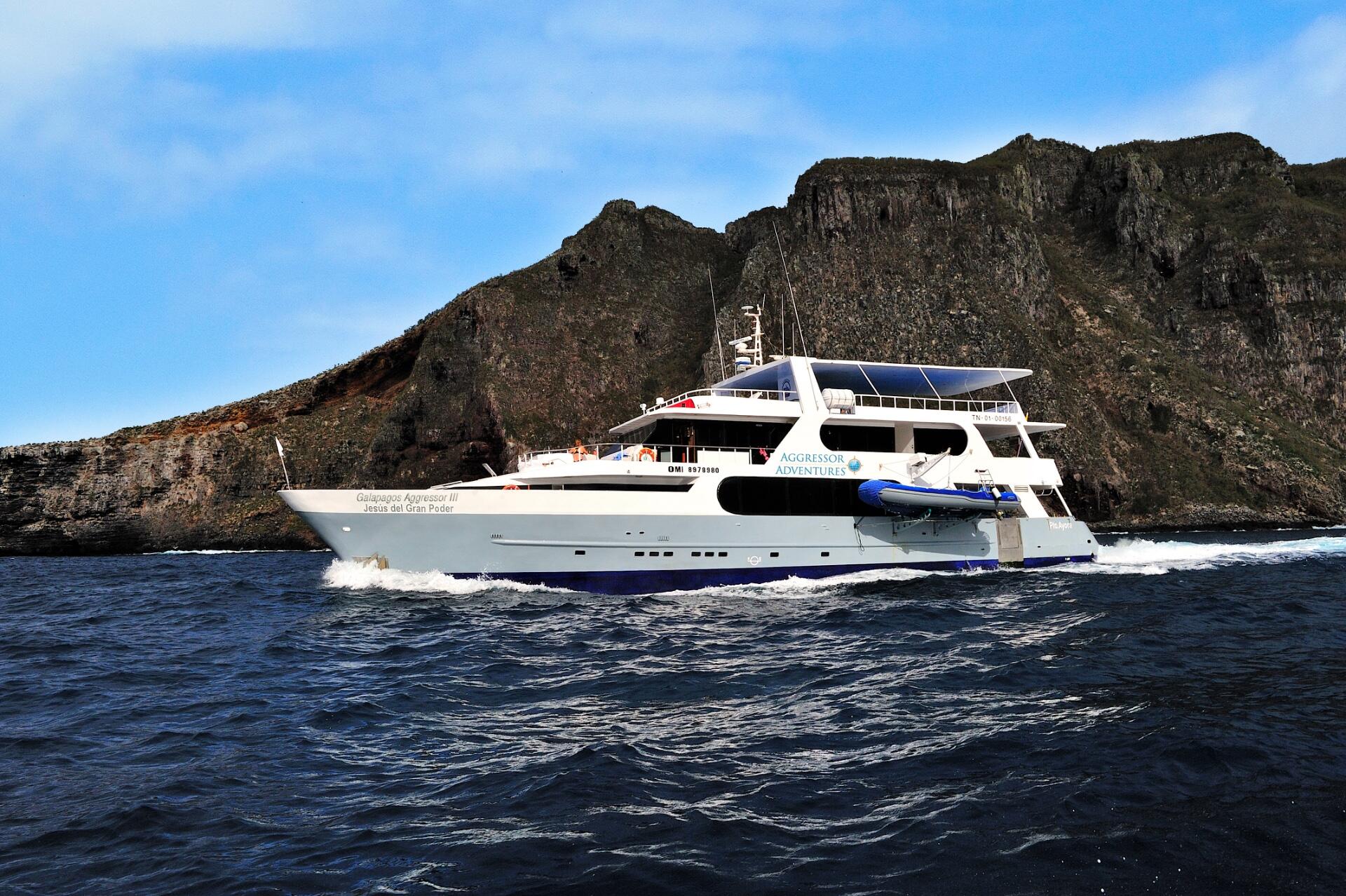
Galapagos Aggressor III
Galápagos
16 guests30.5 m
$913/day
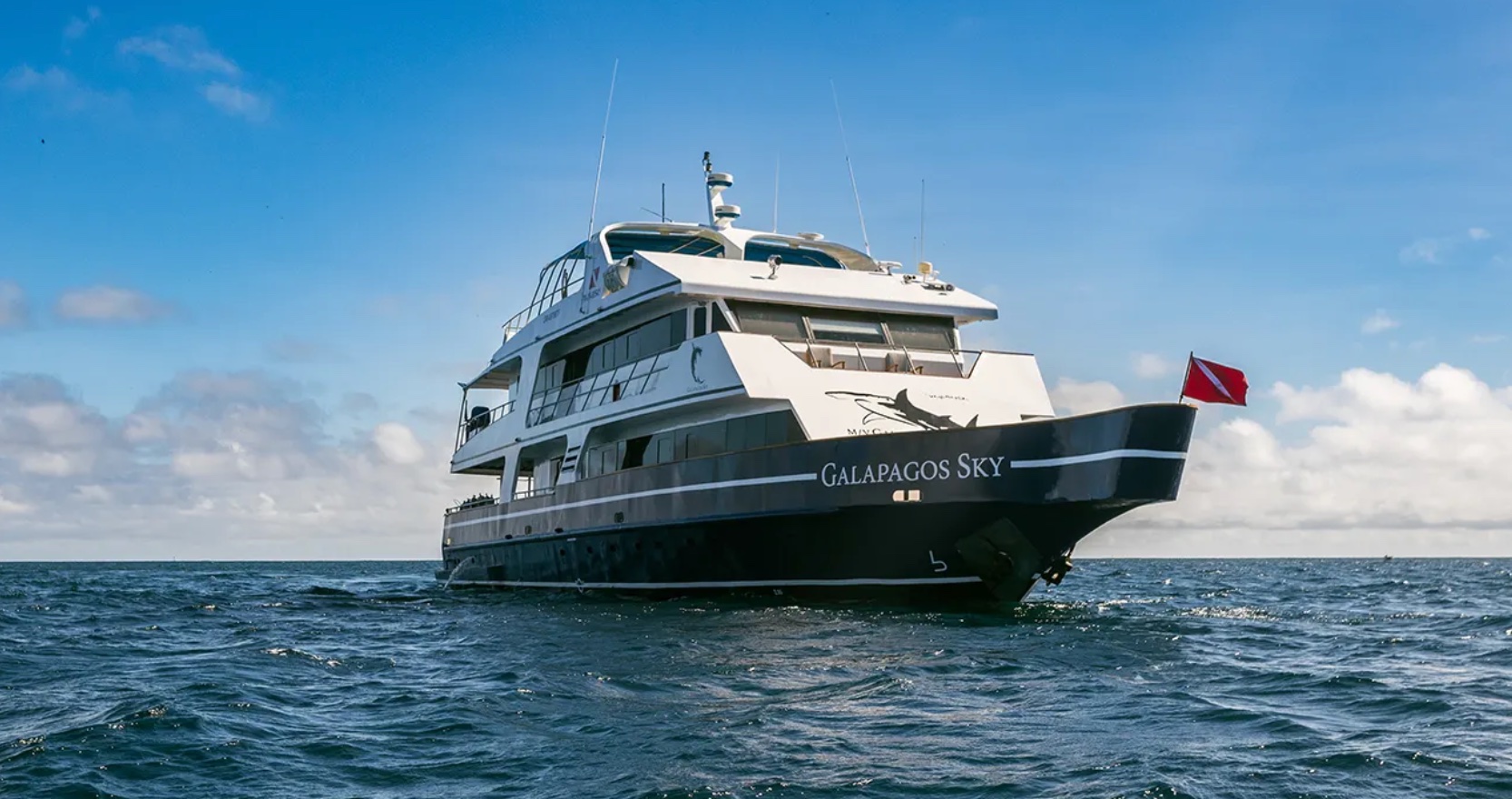
Galapagos Sky
Galápagos
16 guests
$937/day
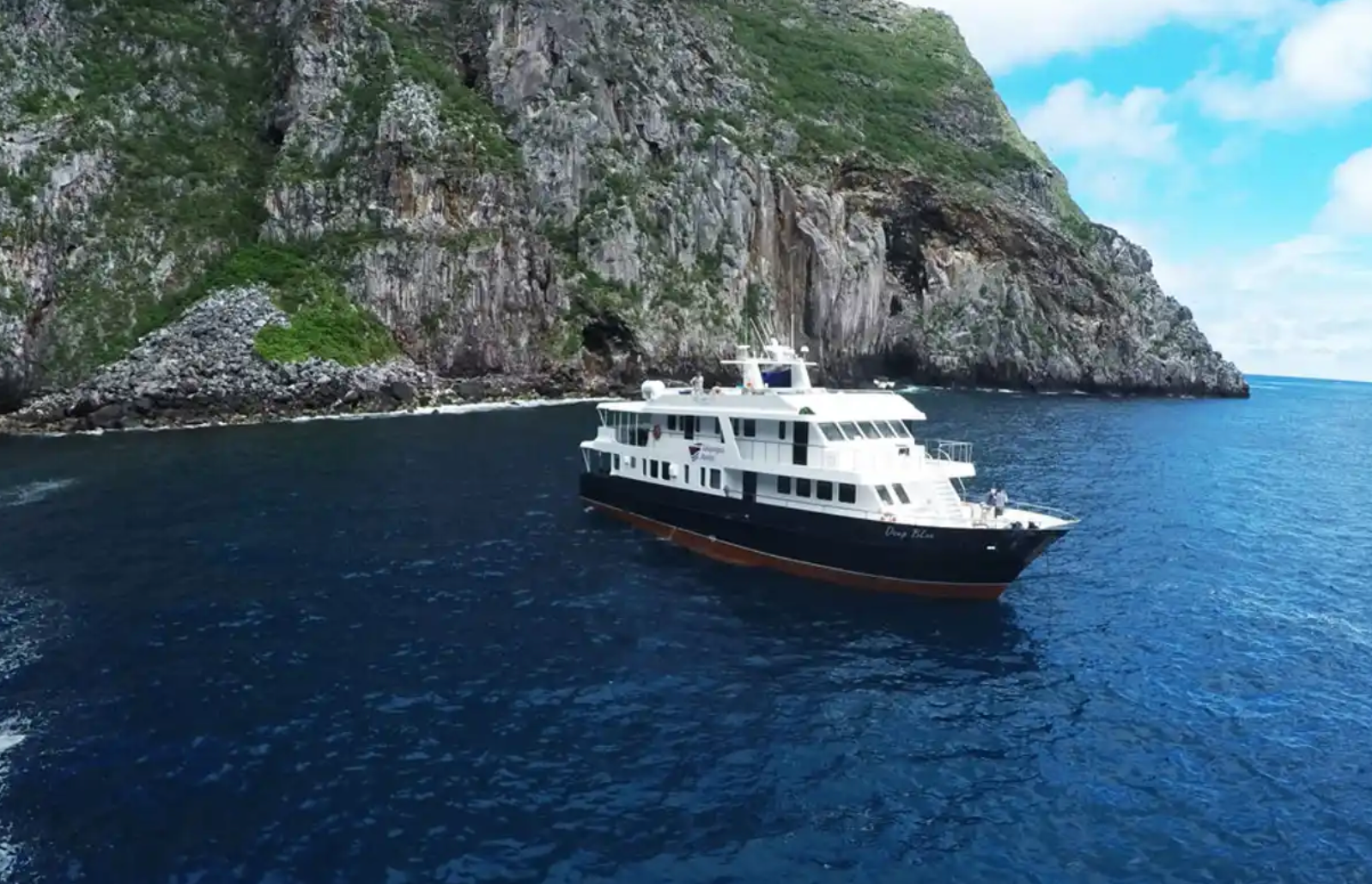
Galapagos Master
Galápagos
16 guests
$669/day
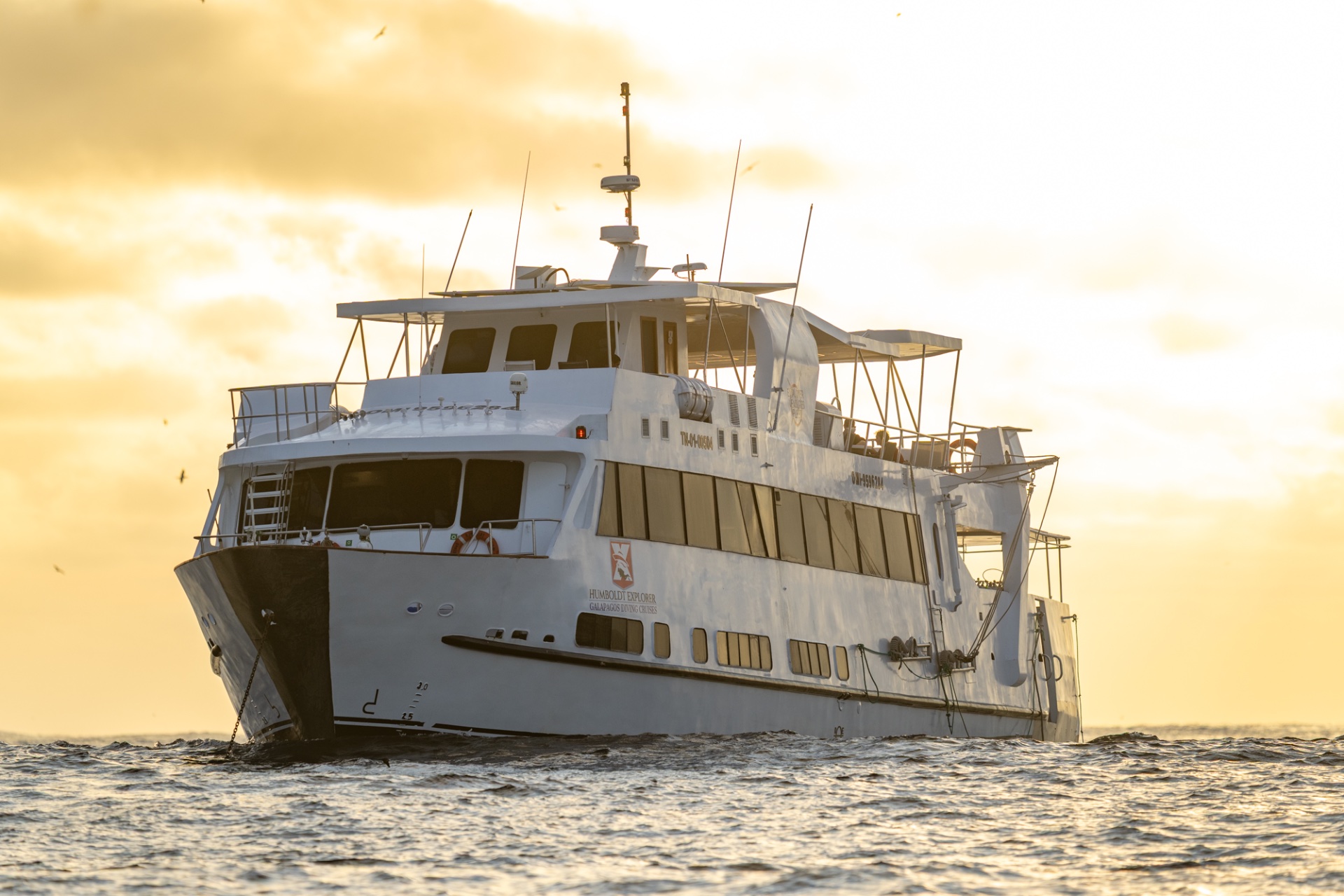
Humboldt Explorer
Galápagos
16 guests
$612/day
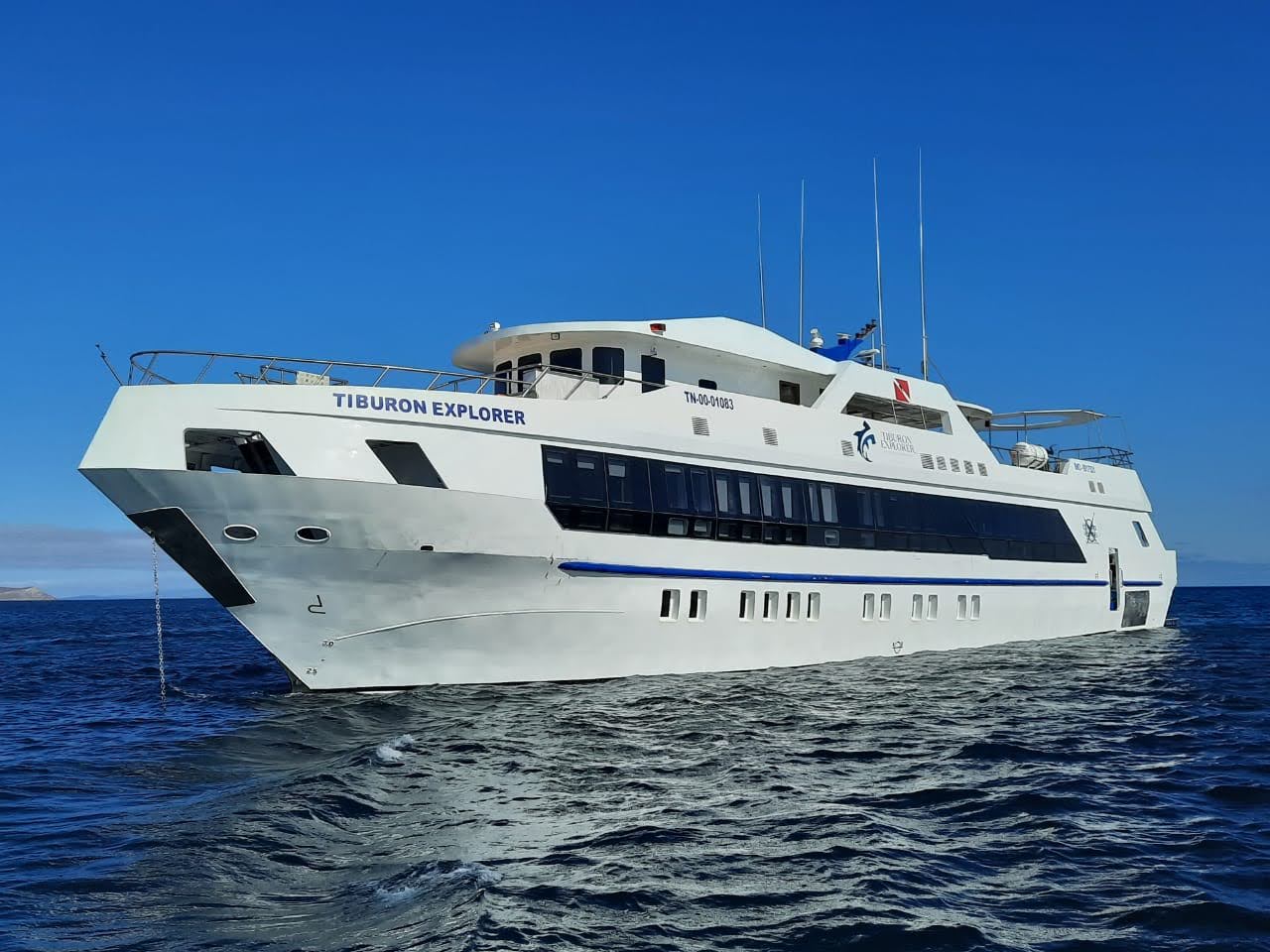
Tiburon Explorer
Galápagos
16 guests
$924/day
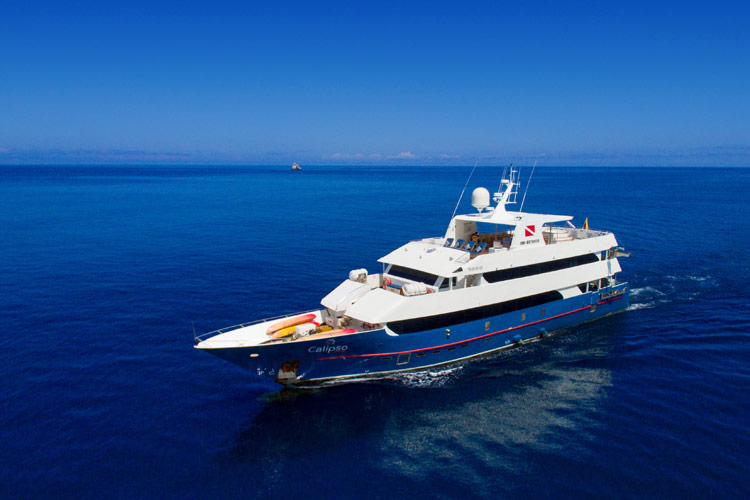
Calipso
Galápagos
16 guests
$819/day
Dive sites similar to Isla Tortuga - South Wall
Same character, same waters — six more sites divers love for the exact same reasons.Compare seasons, access and liveaboard routes — then pick the site that fits your trip best.
© Esri — Maxar, Earthstar, GIS
Guy Fawkes Islands
Galápagos
The Guy Fawkes Islands are a pair of small islands located close to Santa Cruz, offering a more accessible dive experience compared to the remote northern sites.
- Suitable for
- Intermediate
- Current
- Strong
- Access
- Liveaboard only
- Depth
- 5–25 m
- Theme
- Cave & cavern / Wall
Landslide, known locally as El Derrumbe, is a renowned dive site situated off Wolf Island in the remote northern Galápagos archipelago.
- Suitable for
- Advanced
- Current
- Ripping
- Access
- Liveaboard only
- Depth
- 9–37 m
- Theme
- Drift
© Esri — Maxar, Earthstar, GIS
Cabo Douglas - Fernandina
Galápagos
Cabo Douglas, located on Fernandina Island, offers a truly unique underwater experience as the sole location worldwide where divers can observe marine iguanas grazing on algae beneath the surface.
- Suitable for
- Advanced
- Current
- Strong
- Access
- Liveaboard only
- Depth
- 6–6 m
- Theme
- Drift
Pinzon is situated among the central islands of the Galápagos archipelago, an area characterized by waters that are generally warmer and more protected compared to the northern or western regions.
- Suitable for
- Advanced
- Current
- Strong
- Access
- Liveaboard or dayboat
- Depth
- ≤ 18 m
- Theme
- Reef / Drift
The Caves, located at San Cristóbal, offers a unique underwater adventure, blending skill and direct contact with the Galápagos archipelago's rich biodiversity.
- Suitable for
- Advanced
- Current
- Ripping
- Access
- Liveaboard only
- Depth
- ≤ 35 m
- Theme
- Drift