About Cape Douglas - Fernandina
Cape Douglas, located off the secluded Fernandina Island in the Galápagos, offers a truly unique dive experience centered around its endemic marine life. Fernandina, one of the most unspoiled environments globally, hosts an active shield volcano and remains free from invasive species, supporting remarkable adaptations among its inhabitants. The dive site features a volcanic seabed with rocky outcrops, primarily in shallow waters down to about 33 meters, though marine iguanas are most commonly found at depths of 5-10 meters. The area, while not known for large pelagics, is exceptional for encountering species found nowhere else on Earth. Divers at Cape Douglas will observe the iconic marine iguanas, the only diving lizards in the world, as they graze on green algae in the shallows. These cold-blooded reptiles enter the water for brief periods to feed before returning to the sun-warmed rocks. Other unique residents include flightless cormorants, which have evolved to hunt underwater instead of flying, and Galapagos penguins. Additionally, sea lions, fur seals, and sea turtles are frequently encountered. In the deeper sections, red-lipped batfish and seahorses can be found, providing excellent photographic opportunities, especially where visibility is slightly improved away from the shore. Diving at Cape Douglas can be challenging due to strong currents, surge, and cold water, typical of many Galápagos sites. Entry is often a back-roll off skiffs, followed by a swim into shallow waters to locate marine iguanas. Guides typically time dives carefully to coincide with iguana feeding times. The site's unique biodiversity, showcasing remarkable evolutionary adaptations, makes it a thrilling and highly anticipated dive, despite the demanding conditions.
Highlights
Marine IguanasFlightless CormorantsPenguinsSea Turtles
Season calendar
Best months to dive here
Jan
Feb
Mar
Apr
May
Jun
Jul
Aug
Sep
Oct
Nov
Dec
Good
Dive site facts: Cape Douglas - Fernandina
- Depth
- 5–33 m
- Typical dive
- 10–25 m, 50–60 min
- Current
- Moderate
- Visibility
- 12–20 m
- Water temperature
- 18–26 °C (65–78 °F)
- Entry
- Tender / negative entry
- Level
- Advanced Open Water and 40+ logged dives
- Dive type
- Macro, endemic species, drift
- Night dive
- Not typically offered
- Region / port
- Fernandina Island, Galápagos
- Coordinates
- -0.3, -91.65
Conditions & Currents
Currents at Cape Douglas are generally moderate, though conditions can vary. Divers should be prepared for potential surge, particularly in the shallower areas closer to shore where marine iguanas are commonly found. While not as strong as some of the outer islands, an awareness of current flow and good buoyancy control are essential for navigating the varied topography and observing the unique fauna without disturbance. Water temperatures here are notably cooler than some other Galápagos sites, often requiring extra thermal protection, especially if arriving from warmer locations. Visibility typically ranges from 12 to 20 meters, but can fluctuate based on the influx of nutrient-rich waters.
Marine life & sighting chances

Galapagos marine iguana
common
Flightless cormorant
common
Galapagos penguin
common
Red-lipped batfish
occasional
Seahorse
occasional
Galapagos sea lion
common
Galapagos fur seal
common
Sea turtle
December–May · occasionalPelican
commonDive profile & how the dive runs
Dives at Cape Douglas typically begin with a tender drop-off, allowing for immediate access to specific areas of interest. The first dive often explores deeper sections, up to 33 meters, where you might find red-lipped batfish and seahorses. After a proper surface interval, the second dive usually focuses on shallower waters, ranging from 5 to 10 meters, closer to shore. Here, the primary objective is to observe marine iguanas feeding, flightless cormorants hunting, and Galapagos penguins. Divers often navigate along the rocky reef, making sure to stay oriented as the guide points out the unique fauna. Safety stops are conducted in the blue water, away from the rocks, before signaling for tender pickup, so an SMB is essential.
Underwater photography
Cape Douglas presents distinct photographic opportunities, demanding versatility in lens choice. For the endemic marine iguanas, flightless cormorants, and Galapagos penguins found in shallower, surge-prone areas, a wide-angle lens is effective for capturing their behavior in their natural volcanic habitat. For the red-lipped batfish and seahorses in deeper sections, a macro lens will be essential. Due to variable light and depth changes, external strobes are highly recommended to bring out natural colors and fill shadows. Divers should prioritize excellent buoyancy control to avoid disturbing sensitive marine life and to navigate the occasional surge. Patience is key, especially for capturing the dynamic feeding behaviors of the iguanas and cormorants.
Combine with nearby dive sites
Getting there & logistics
Access to Cape Douglas is exclusively via liveaboard, as it is located off Fernandina Island, one of the more remote western islands of the Galápagos. Travelers typically fly into Seymour Airport (GPS) on Baltra Island, then transfer to a liveaboard in the Canal Itabaca or Puerto Ayora. Most liveaboard itineraries are 7 to 10 days, combining western sites like Cape Douglas with other prime diving locations. A Galápagos National Park entrance fee is required, and dive permits are usually handled by the liveaboard operator. It is often combined into itineraries that visit other western and central islands.
Safety & environment
Diving at Cape Douglas, like many Galápagos sites, requires advanced dive skills due to moderate currents, cooler waters, and potential surge, particularly in shallower areas. Divers should have recent experience with current and negative entries. A 5-7mm wetsuit with hood and gloves is highly recommended for thermal protection. The nearest recompression chamber is in Puerto Ayora on Santa Cruz Island. Evacuation from Fernandina Island to the chamber can take several hours, emphasizing the critical importance of dive insurance that covers emergency medical treatment and evacuation. Always follow your dive guide's instructions closely and carry a surface marker buoy (SMB) for safety during ascents and surface intervals.
Who it suits — and who it doesn't
Suited for
- Advanced divers with 40+ logged dives
- Divers comfortable with moderate currents and cooler water
- Underwater photographers interested in endemic species
- Nature enthusiasts seeking unique wildlife encounters
- Liveaboard travelers
Less suited for
- Beginner divers or those with limited experience
- Divers uncomfortable with cold water or strong currents
- Those prone to seasickness on liveaboards
- Divers seeking only large pelagic schools
FAQ
Cape Douglas - Fernandina FAQ
What unique marine life can I expect at Cape Douglas?
Cape Douglas is renowned for its endemic species. You can expect to see marine iguanas feeding underwater, which is a unique spectacle, along with flightless cormorants and Galapagos penguins actively hunting. Occasionally, you might also spot red-lipped batfish and seahorses in the deeper sections of the dive site.
Is Cape Douglas suitable for all diving levels?
No, Cape Douglas is recommended for advanced divers with a minimum of 40 logged dives. This is due to the presence of moderate currents, cooler water temperatures, and potential surge, especially in the shallower areas. Divers should be comfortable with these conditions and proficient in buoyancy control.
What are the typical water conditions at Cape Douglas?
Water temperatures at Cape Douglas range from 18-26°C (65-78°F), often being cooler than other Galápagos sites. Visibility typically falls between 12-20 meters (39-66 feet). Currents are generally moderate, but surge can be present closer to shore, particularly in the areas where marine iguanas are found.
Why is Fernandina Island considered so special?
Fernandina Island, home to Cape Douglas, is one of the most pristine and untouched environments in the world. It has never suffered from invasive species, allowing its unique endemic wildlife to thrive without external threats. The island's active volcano also contributes to its distinct geological and marine features.
What kind of thermal protection is needed for diving Cape Douglas?
Given the cooler water temperatures, particularly during the cool season, a 5mm or 7mm wetsuit is strongly advised. Many divers also opt for a hood and gloves to ensure maximum thermal comfort throughout their dives at Cape Douglas.
Why dive Cape Douglas - Fernandina from a liveaboard?
Cape Douglas - Fernandina is one of Galápagos's signature dive sites. A liveaboard sleeps you on the water and puts you in the water for three to four guided dives per day, including dawn and night dives that day-boat operators rarely offer. You skip the daily commute back to port and reach quieter, less-crowded sites in the same region on a single trip.
Below are the liveaboards that include Cape Douglas - Fernandina on their Galápagos itineraries.
Liveaboards diving Cape Douglas - Fernandina
These liveaboards may visit Cape Douglas - Fernandina on selected itineraries — the exact dive sites depend on departure, weather and conditions.
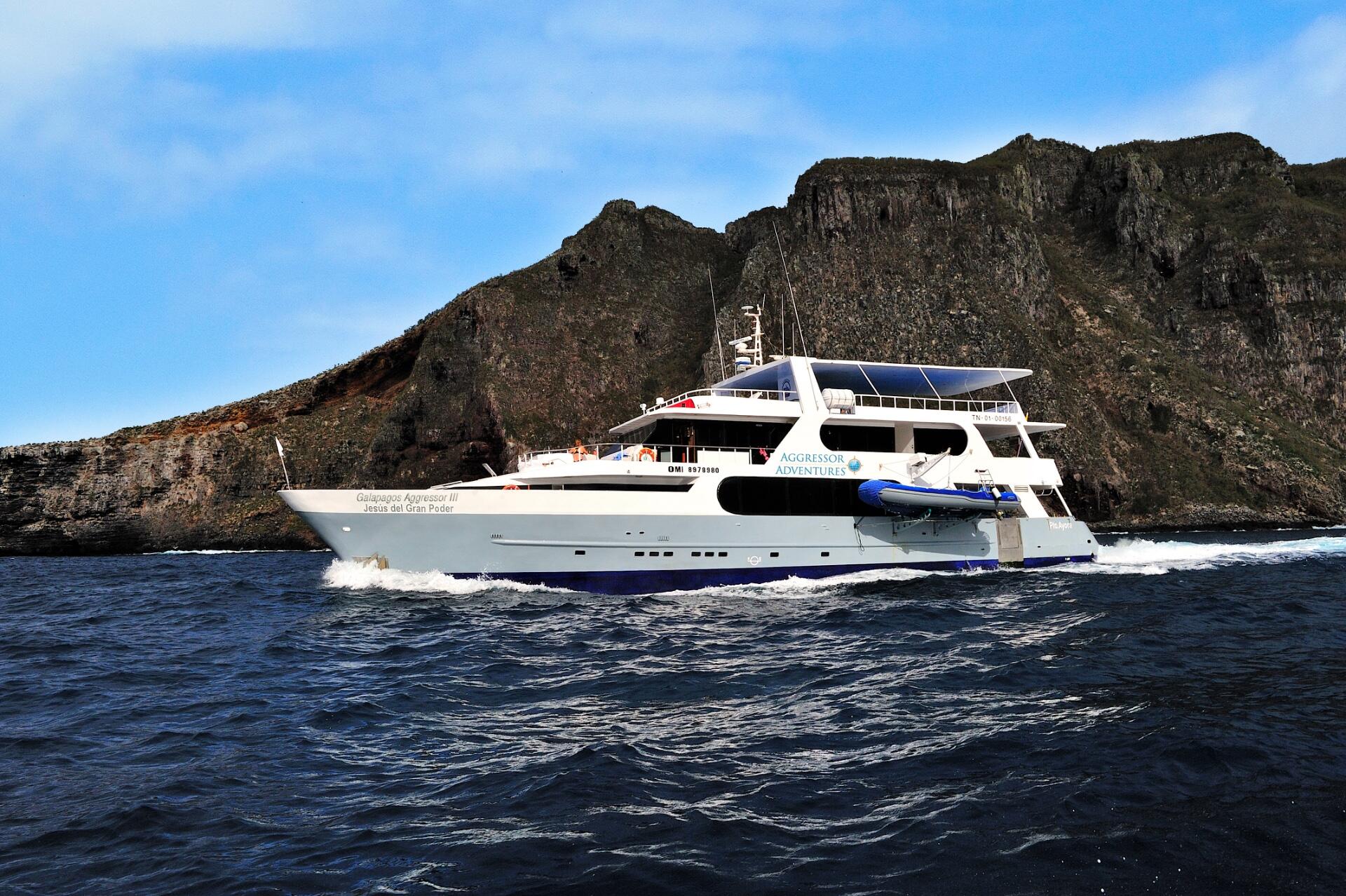
Galapagos Aggressor III
Galápagos
16 guests30.5 m
$913/day
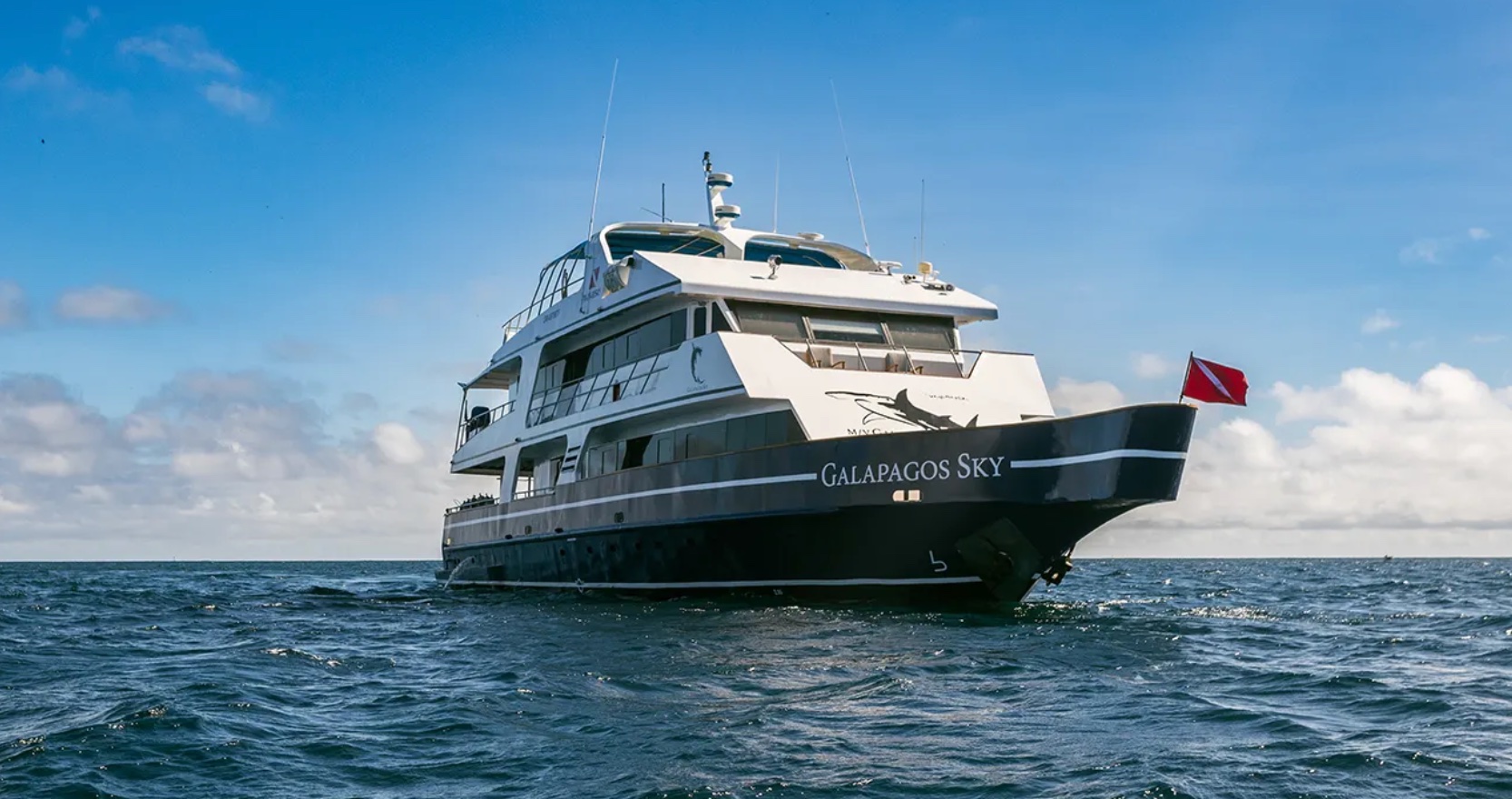
Galapagos Sky
Galápagos
16 guests
$937/day
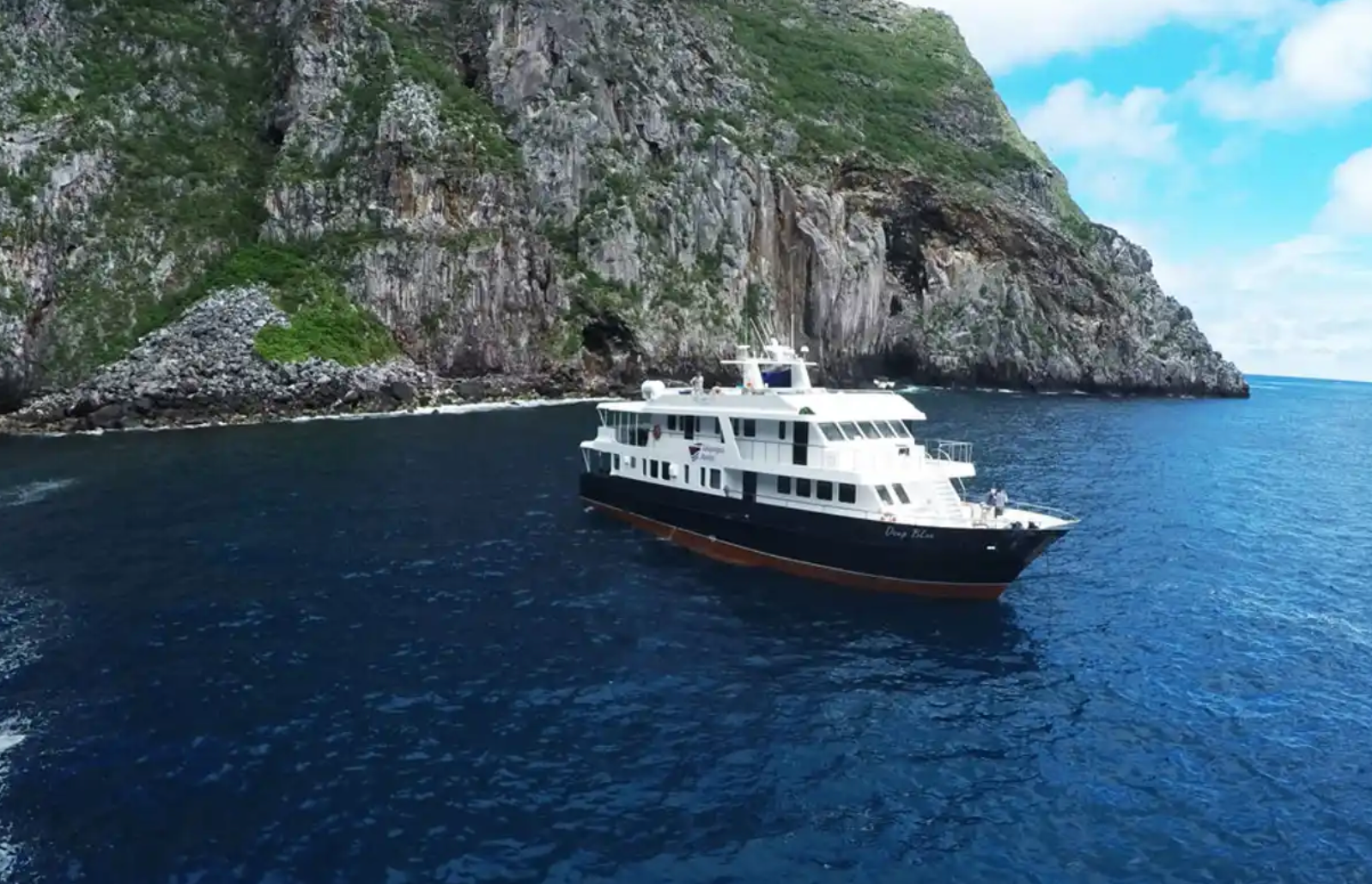
Galapagos Master
Galápagos
16 guests
$669/day
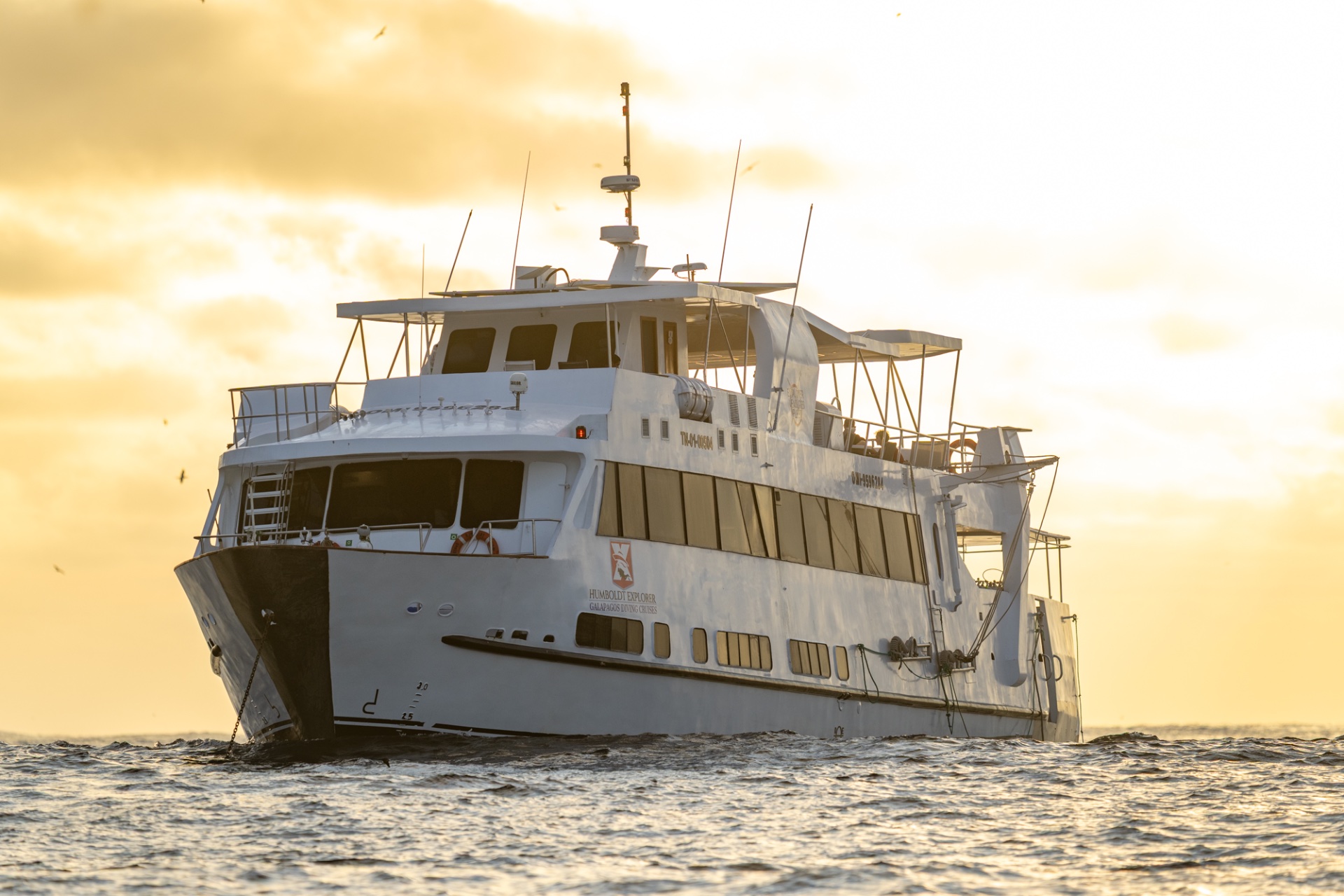
Humboldt Explorer
Galápagos
16 guests
$612/day
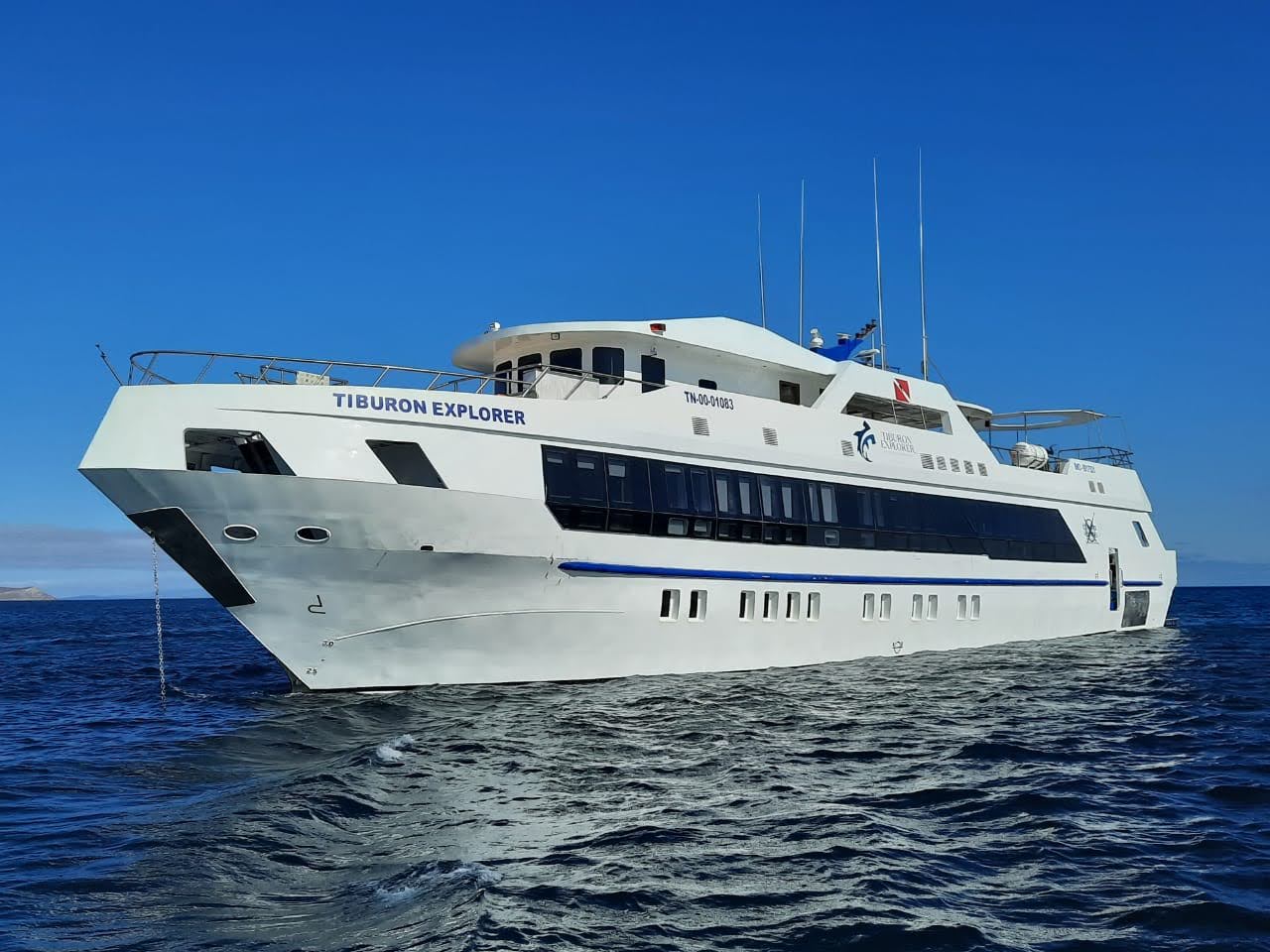
Tiburon Explorer
Galápagos
16 guests
$924/day
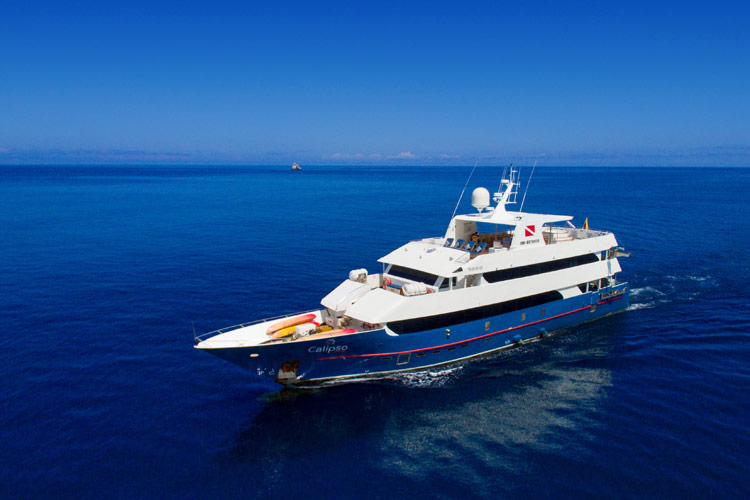
Calipso
Galápagos
16 guests
$819/day
Dive sites similar to Cape Douglas - Fernandina
Same character, same waters — six more sites divers love for the exact same reasons.Compare seasons, access and liveaboard routes — then pick the site that fits your trip best.
© Esri — Maxar, Earthstar, GIS
Floreana - Devil's Crown
Galápagos
Devil's Crown, located off Floreana Island in the Galápagos, is renowned as one of the archipelago's premier diving and snorkeling destinations.
- Suitable for
- Beginner
- Current
- Strong
- Access
- Liveaboard only
- Depth
- 3–15 m
- Theme
- Reef
© Esri — Maxar, Earthstar, GIS
Plaza Islands
Galápagos
Plaza Islands offers exceptional diving within Ecuador's Galápagos Marine Reserve, renowned for its abundant marine life and position in one of the world's most biodiverse ocean zones.
- Suitable for
- Beginner
- Current
- Mild
- Access
- Liveaboard or dayboat
- Depth
- —
- Theme
- Reef
Pinzon is situated among the central islands of the Galápagos archipelago, an area characterized by waters that are generally warmer and more protected compared to the northern or western regions.
- Suitable for
- Advanced
- Current
- Strong
- Access
- Liveaboard or dayboat
- Depth
- ≤ 18 m
- Theme
- Reef / Drift
Santa Fe Island, also known by its English name Barrington, is a unique dive location within the Galápagos archipelago, notable for its significant geological age and high degree of endemism.
- Suitable for
- Beginner
- Current
- Mild
- Access
- Liveaboard or dayboat
- Depth
- 5–30 m
- Theme
- Reef
© Esri — Maxar, Earthstar, GIS
Camano Islet
Galápagos
The Galápagos Islands offer an unparalleled diving experience year-round, renowned for their exceptional marine biodiversity and unique blend of oceanic currents.
- Suitable for
- Beginner
- Current
- Mild
- Access
- Liveaboard or dayboat
- Depth
- 21–35 m
- Theme
- Reef
© Esri — Maxar, Earthstar, GIS
El Arenal - Santiago
Galápagos
El Arenal, located near Darwin Island in the northern Galapagos Archipelago, is considered one of the world's premier dive sites.
- Suitable for
- Intermediate
- Current
- Strong
- Access
- Liveaboard only
- Depth
- 3–18 m
- Theme
- Reef