About Santa Fe
Santa Fe Island, also known by its English name Barrington, is a unique dive location within the Galápagos archipelago, notable for its significant geological age and high degree of endemism. Geologists estimate this island to be between 4 to 4.5 million years old, making it potentially the oldest island in the chain. Unlike most other Galápagos islands, Santa Fe's formation is attributed to the uplift of a folded geological layer rather than volcanic activity. The island presents a picturesque landscape featuring a turquoise bay alongside extensive forests of giant prickly pear cacti. Underwater, the dive site offers a reef environment, though specific depths are not detailed. The main attraction lies in the vibrant marine life found around the island, which includes various reef fish, different shark species, and rays. The cliffs of Santa Fe are also home to a large number of nesting seabirds, indicating a rich ecosystem both above and below the water. Santa Fe is one of the premier locations in the Galápagos to interact with playful Galápagos sea lions, which congregate in large numbers on the beaches of the bay and frequently engage with divers and snorkelers. While detailed seasonality for marine encounters isn't provided, the Galápagos are a year-round diving destination for diverse marine life. This site is generally suitable for various experience levels. Dive trips to Santa Fe often originate from land-based operations on Santa Cruz Island, making it accessible for day excursions. The dive typically involves exploring the underwater terrain and interacting with the resident marine species, particularly the sea lions. Visibility can vary, and divers should be prepared for cool water temperatures common in the Galápagos.
Highlights
Playful sea lionsProtected covesSloping rock wallsMarine turtlesDiverse reef fishGalapagos sharksEagle rays
Season calendar
Best months to dive here
Jan
Feb
Mar
Apr
May
Jun
Jul
Aug
Sep
Oct
Nov
Dec
Excellent
Good
Off-Season
Jun – Nov
Cool season with whale sharks at Darwin and Wolf. Strongest currents bring abundant marine life.
Apr – May & Dec
Transition periods with good diversity. Hammerhead sharks present year-round.
Jan – Mar
Warm season with calmer seas. Less pelagic activity but better for snorkelling and land excursions.
Dive site facts: Santa Fe
- Depth
- Up to 30 m
- Current
- Mild
- Visibility
- 8–18 m
- Water temperature
- 18–27°C
- Entry
- Tender
- Level
- All levels
- Dive type
- Reef, big_animals
- Region / port
- Central Galápagos
- Coordinates
- -0.642, -90.045
Conditions & Currents
While specific current information for Santa Fe is not detailed in the sources, diving in the Galápagos generally involves cool-water drifts in nutrient-rich waters. Currents can range from moderate to strong, depending on the site and conditions, impacting visibility which can sometimes be low and greenish. Divers should be prepared for varying conditions, as the currents contribute to the abundant marine life by bringing in nutrients. Entry and exit procedures typically involve methods suitable for drift dives or live boat operations, with safety briefings covering site-specific protocols. Given the general nature of Galápagos diving, appropriate certification and experience for dealing with currents and cooler water are advisable.
Marine life & sighting chances

Sea lions
Year-round · common
Marine turtles
Year-round · common
Galapagos shark
Year-round · common
Whitetip reef sharks
Year-round · common
Blacktip reef sharks
Year-round · common
Eagle rays
December-April · common
Hammerhead sharks
Year-round · occasional
Manta rays
January-May · occasional
Reef fish
Year-round · commonDive profile & how the dive runs
Diving at Santa Fe typically begins with a tender drop-off into a protected cove, often with minimal current. The dive route commonly follows a sloping rock wall adorned with sea fans and yellow black coral, descending to explore boulders and underwater pinnacles. Divers gradually progress through crevices and channels, keeping an eye out for resident marine turtles and playful sea lions, which are frequently encountered in these waters. The dive often concludes by shallowing up towards a sandy plateau, where unique species like red-lipped batfish might be spotted. The safety stop is conducted at around 5 meters, often with sea lions present, before ascending to the surface for pick-up.
Underwater photography
Santa Fe offers excellent opportunities for both wide-angle and macro photography, especially given the likelihood of close encounters with playful sea lions. A wide-angle lens is ideal for capturing the expansive underwater topography, schools of fish, and the often-approaching sea lions. For macro enthusiasts, the rocky crevices and coral patches house a variety of smaller, interesting subjects. Utilize natural light as much as possible in shallower areas, but strobes are beneficial for adding color and definition at depth or when shooting into the blue. Maintain excellent buoyancy control to protect the delicate marine environment and ensure clear shots.
Combine with nearby dive sites
Getting there & logistics
Access to Santa Fe is typically via day boat trips originating from Puerto Ayora on Santa Cruz Island. Divers usually fly into Seymour/Baltra (GPS) or San Cristóbal (SCY) international airports and then travel to Santa Cruz. Day trips often include two dives, lunch, and snorkeling opportunities, allowing divers to return to town in the early evening. Liveaboards exploring the central and southern islands may also include Santa Fe in their itineraries. All visitors to the Galápagos National Park must pay a park fee upon arrival. Permits are arranged by tour operators.
Safety & environment
The nearest hyperbaric chamber is located in Puerto Ayora on Santa Cruz Island, which is a key consideration for emergency medical care in the Galápagos. Divers should ensure they have comprehensive dive insurance that covers emergency evacuation and medical treatment, as remote locations mean evacuation can be complex and costly. While Santa Fe generally offers milder conditions, divers must always adhere to their dive guide's instructions, maintain good buoyancy, and respect marine life. It is crucial to monitor air consumption and no-decompression limits carefully, as rapid ascent can lead to decompression sickness.
Who it suits, and who it doesn't
Suited for
- Beginner divers seeking calm waters
- Intermediate divers comfortable with varied conditions
- Photographers looking for marine life encounters
- Divers interested in sea lion interactions
- Those seeking a combination of land and sea activities
Less suited for
- Divers expecting only extreme currents and pelagic action
- Those uninterested in rocky reef topography
- Divers who prefer solely warm water diving (during cooler months)
- Individuals sensitive to boat travel for day trips
FAQ
Santa Fe FAQ
What marine life can I expect to see at Santa Fe?
Santa Fe is well-known for its abundant marine life, particularly playful sea lions that frequently interact with divers. You can also expect to encounter green marine turtles, Galápagos sharks, whitetip reef sharks, and blacktip reef sharks. Schools of reef fish, eagle rays, and occasional hammerhead sharks or manta rays are also sighted, especially during certain seasons.
Is Santa Fe suitable for beginner divers?
Yes, Santa Fe is generally considered suitable for all levels of divers, including beginners. The dive sites are often protected with little current, making them ideal for gaining confidence and enjoying the rich marine environment. However, all divers should have a PADI Open Water certification or equivalent, which is a requirement for diving in the Galápagos Islands.
When is the best time of year to dive Santa Fe?
Santa Fe offers excellent diving opportunities year-round, with each season presenting unique advantages. The warm season (December to May) provides warmer water temperatures (22-27°C) and typically clearer visibility. The cooler season (June to November) brings richer nutrients, potentially increasing large animal sightings, though water temperatures are colder (18-23°C) and visibility can be reduced.
What are the typical water conditions at Santa Fe?
Water temperatures at Santa Fe range from 21-26°C in the warm season and 18-23°C in the cooler season. Visibility typically ranges from 8 to 18 meters, depending on conditions and time of year. Currents are generally mild, especially in the protected coves, making it a more relaxed dive compared to some other Galápagos sites.
How do I get to Santa Fe Island for diving?
Santa Fe Island is primarily accessed via day boat tours departing from Puerto Ayora on Santa Cruz Island. Divers typically fly into one of Galápagos' international airports, Seymour/Baltra (GPS) or San Cristóbal (SCY), and then transfer to Santa Cruz. Some liveaboard itineraries also include Santa Fe as part of their central island routes.
Why dive Santa Fe from a liveaboard?
Santa Fe is one of Galápagos's signature dive sites. A liveaboard sleeps you on the water and puts you in the water for three to four guided dives per day, including dawn and night dives that day-boat operators rarely offer. You skip the daily commute back to port and reach quieter, less-crowded sites in the same region on a single trip.
Below are the liveaboards that include Santa Fe on their Galápagos itineraries.
Liveaboards diving Santa Fe
These liveaboards may visit Santa Fe on selected itineraries, the exact dive sites depend on departure, weather and conditions.
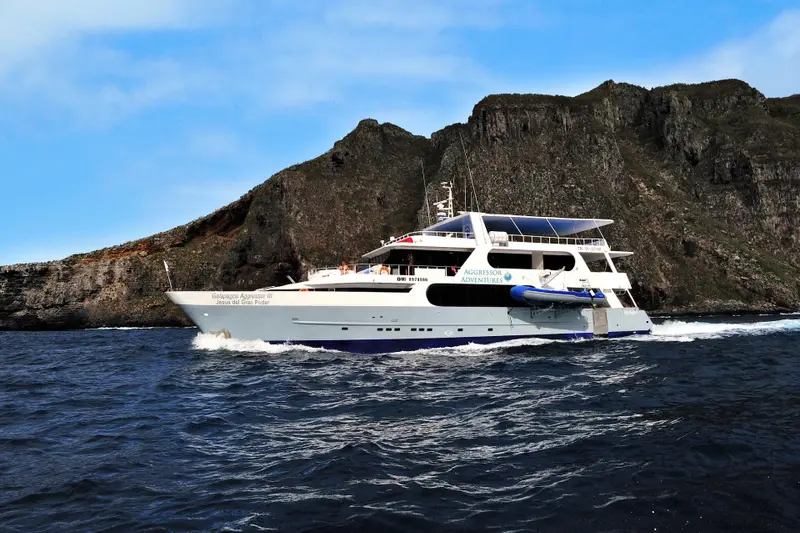
Galapagos Aggressor III
Galápagos
16 guests31 m
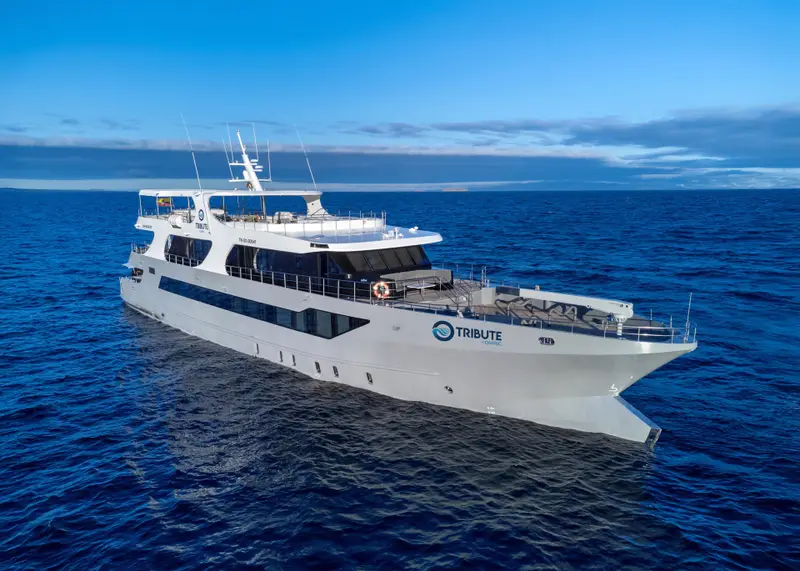
Tribute
Galápagos
16 guests42 m
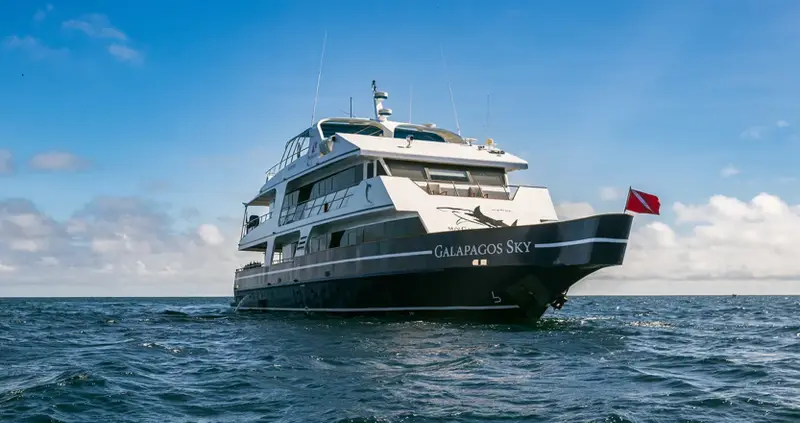
Galapagos Sky
Galápagos
16 guests
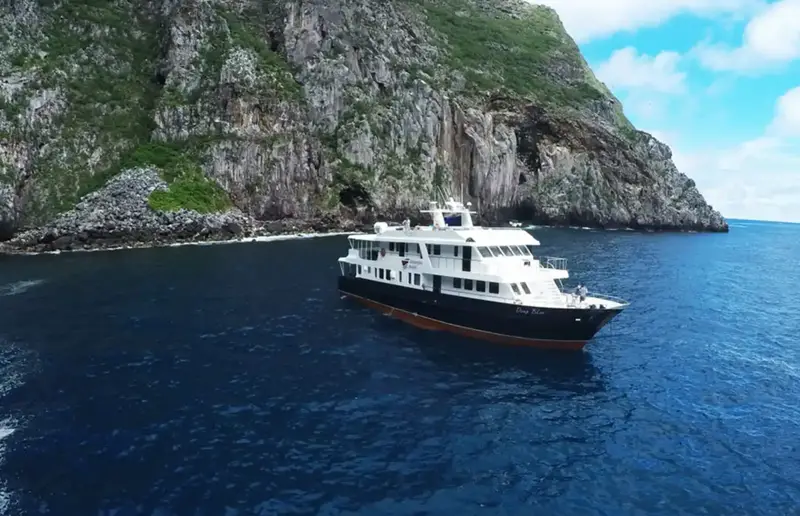
Galapagos Master
Galápagos
16 guests
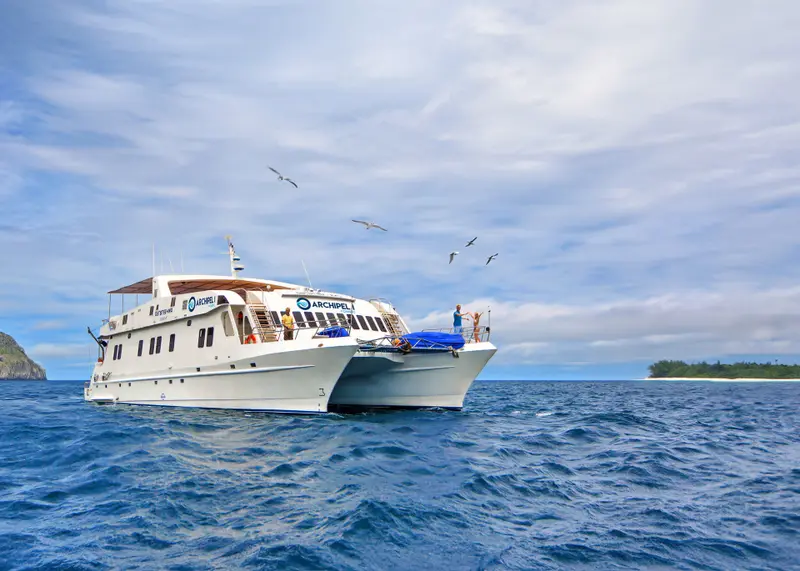
Archipel I
Galápagos
16 guests27 m

Humboldt Explorer
Galápagos
16 guests
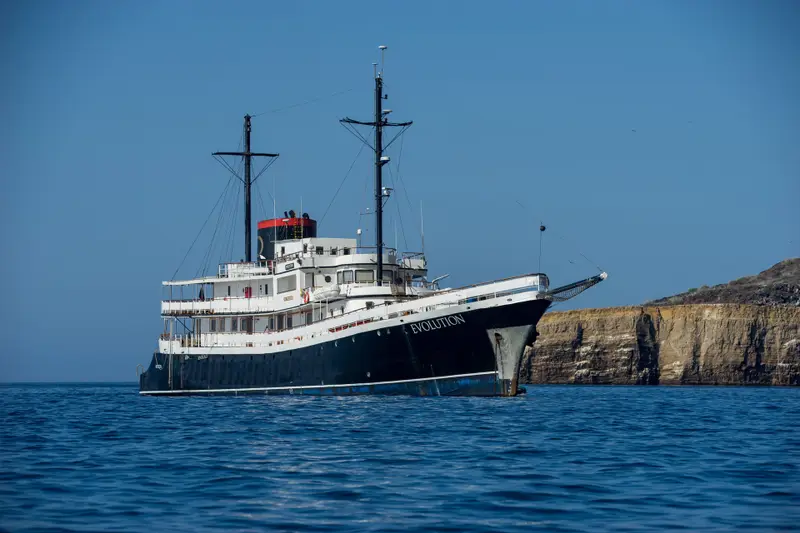
Evolution
Galápagos
32 guests60 m
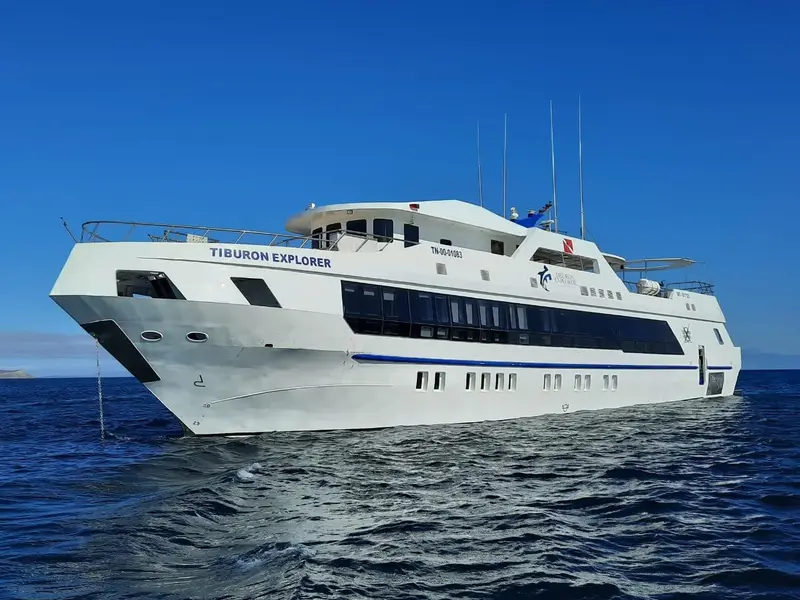
Tiburon Explorer
Galápagos
16 guests
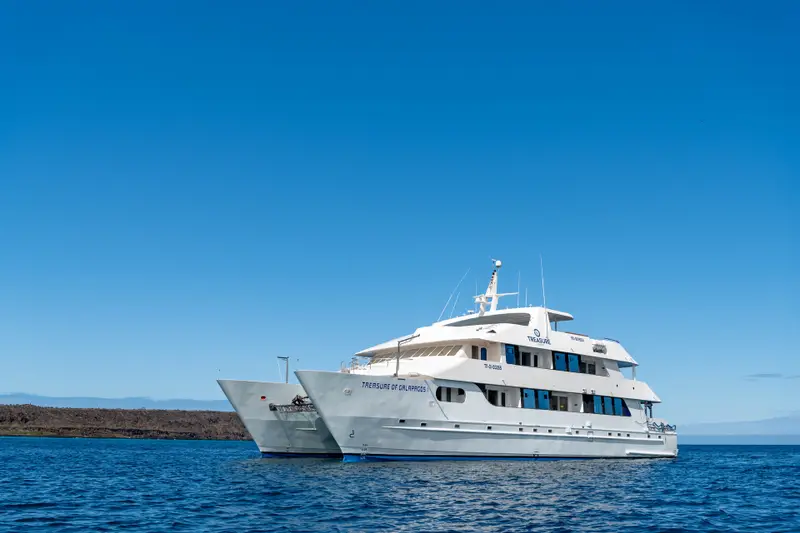
Treasure of Galapagos
Galápagos
16 guests32 m
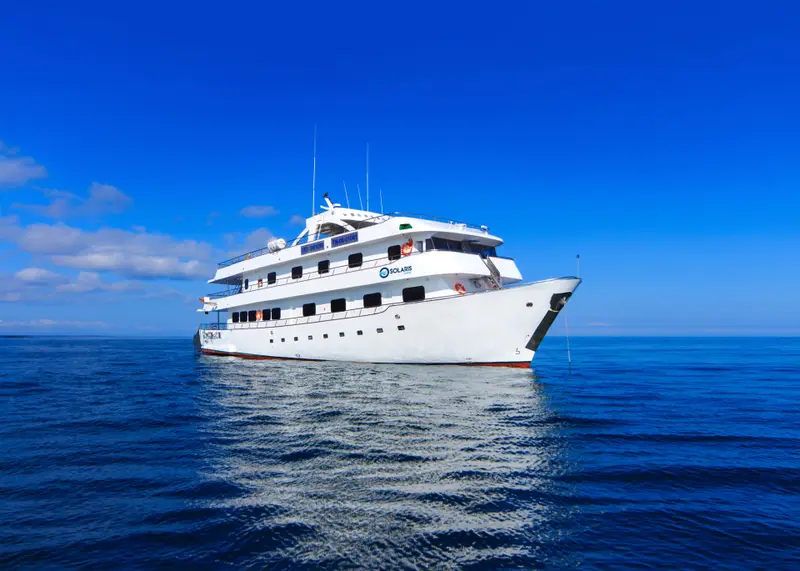
Solaris
Galápagos
16 guests36 m
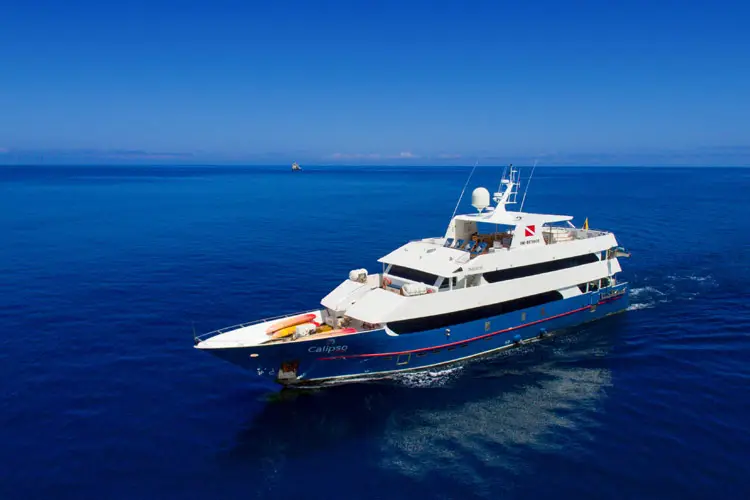
Calipso
Galápagos
16 guests
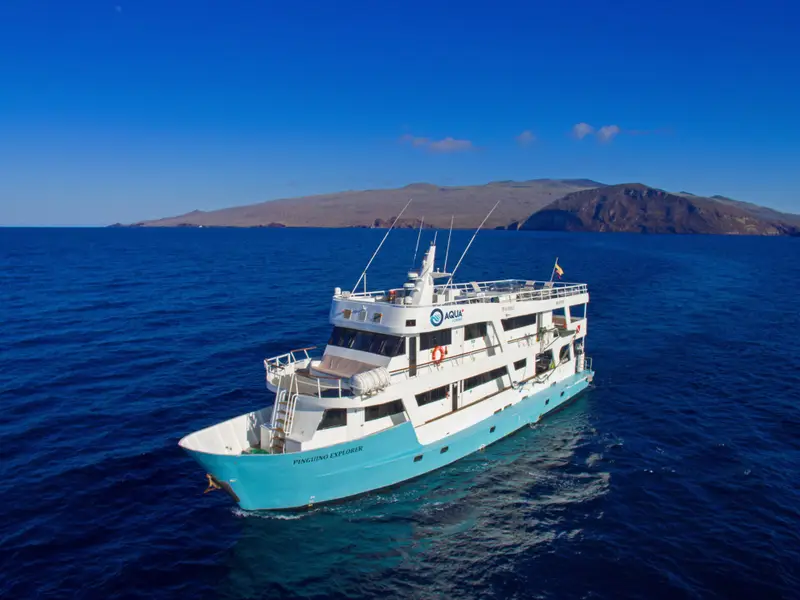
Aqua
Galápagos
16 guests26 m
Dive sites similar to Santa Fe
Same character, same waters, six more sites divers love for the exact same reasons.Compare seasons, access and liveaboard routes, then pick the site that fits your trip best.
© EsriMaxar, Earthstar, GIS
Agustín Melgar shipwreck
Mexico
The Agustín Melgar, also known as the C-54, is a 56-meter (185-foot) former minesweeper that rests on a sandy bottom at 24 meters (80 feet) south of Puerto Escondido within the Loreto Bay National Park.
- Suitable for
- Intermediate
- Current
- Mild
- Access
- Liveaboard only
- Depth
- 12–24 m
- Theme
- Wreck
Arco Iris, or "Rainbow" in Spanish, is a prominent dive site located near Brumel Island (Penahuaste), approximately 8km north of Playa Potrero in Costa Rica.
- Suitable for
- Beginner
- Current
- Moderate
- Access
- Dayboat
- Depth
- 9–30 m
- Theme
- Reef
© EsriMaxar, Earthstar, GIS
Bahía de La Paz
Mexico
Bahía de La Paz serves as the capital of Baja California Sur and the primary gateway to the Sea of Cortez, a region famously dubbed the "world's aquarium" by Jacques Cousteau due to its exceptional biodiversity.
- Suitable for
- Advanced
- Current
- Mild
- Access
- Dayboat
- Depth
- 17–27 m
- Theme
- Big animals / Reef
© EsriMaxar, Earthstar, GIS
Bahía de los Ángeles
Mexico
Bahía de los Ángeles, nestled in the northern Sea of Cortez, is a remarkable dive destination primarily known for its seasonal aggregations of whale sharks.
- Suitable for
- Intermediate
- Current
- Moderate
- Access
- Liveaboard only
- Depth
- 3–15 m
- Theme
- Reef
© EsriMaxar, Earthstar, GIS
Bajo Alcyone
Costa Rica
Bajo Alcyone, a submerged seamount near Cocos Island, stands as a world-renowned dive site.
- Suitable for
- Advanced
- Current
- Strong
- Access
- Liveaboard only
- Depth
- 25–40 m
- Theme
- Drift / Seamount
© EsriMaxar, Earthstar, GIS
Bajo de la Ballena
Mexico
El Bajo, often referred to as Bajo de la Ballena, is a prominent seamount situated approximately eight miles northeast of La Paz, Mexico.
- Suitable for
- Advanced
- Current
- Strong
- Access
- Liveaboard or dayboat
- Depth
- 18–35 m
- Theme
- Pinnacle