About Santa Cruz - Academy Bay
Academy Bay, located in Puerto Ayora on Santa Cruz Island, serves as a primary hub for Galápagos diving adventures. Within a short 20-minute boat ride from the shore, divers can access five distinct dive sites, catering to a range of experience levels. This accessibility makes it an ideal location for both daily excursions and starting points for liveaboard trips across the archipelago. The bay's diverse conditions, from serene, current-free areas to more challenging currents, offer varied experiences for all. Three of Academy Bay's dive sites feature generally calm waters with minimal current, making them perfect for novice divers and those undertaking training. These gentler conditions allow for relaxed exploration and marine life observation. The remaining two sites are better suited for intermediate to expert divers, as they can experience strong currents, demanding more advanced diving skills and experience. The marine environment within Academy Bay is vibrant and varied. Divers frequently encounter playful sea lions, unique marine iguanas, and a variety of rays. Shark sightings are also common, adding to the thrill of diving here. The presence of damselfish, diligently tending to their algal farms, illustrates the rich ecological interactions observable in the bay. Academy Bay's strategic location and diverse dive offerings make it a compelling destination for anyone seeking to explore the underwater wonders of the Galápagos, accommodating all from first-time divers to seasoned underwater explorers.
Highlights
Diverse dive sites for all levelsPlayful sea lion encountersObservation of marine iguanasVariety of ray speciesAccessible from Puerto AyoraBeginner-friendly calm watersChallenging sites with currents
Season calendar
Best months to dive here
Jan
Feb
Mar
Apr
May
Jun
Jul
Aug
Sep
Oct
Nov
Dec
Good
Dive site facts: Santa Cruz - Academy Bay
- Depth
- 3–15 m
- Current
- Variable, from mild to strong
- Entry
- Boat
- Level
- All levels (sites for beginners to experts)
- Dive type
- Reef, pelagic, marine life observation
- Region / port
- Santa Cruz Island, Galápagos
- Coordinates
- -0.755, -90.335
Conditions & Currents
Currents within Academy Bay vary significantly between dive sites. Three of the five sites typically experience little to no current, making them ideal for beginners and training dives. These calmer conditions facilitate easy entry and exit, allowing divers to comfortably observe the local marine life without significant physical exertion. However, the other two sites can encounter strong currents, particularly during the cool season from June to November, which is also when major pelagic species are more abundant. These stronger currents demand greater experience and are suitable for intermediate to expert divers who are comfortable with drift diving techniques and managing dynamic underwater conditions. Visibility tends to be better during the warm season, from December to May, due to less nutrient upwelling, while the cooler, nutrient-rich waters can sometimes reduce visibility but at
Marine life & sighting chances

Sea Lion
common
Marine Iguana
occasional
Stingray
occasional
Eagle Ray
occasional
White-tip Reef Shark
Warm season (December-May) · occasional
Hammerhead Shark
Warm season (December-May) · occasional
Damselfish
common
Sea Turtle
Warm season (December-May) · occasionalDive profile & how the dive runs
Dives in Academy Bay typically begin with a boat entry from Puerto Ayora, often involving a short ride of up to 20 minutes to reach one of the five designated sites. For calmer sites, divers descend gradually, exploring reef formations and searching for marine iguanas and damselfish. The route often follows a gentle slope or reef edge, maintaining shallower depths ideal for extended bottom times. At sites with stronger currents, a negative entry may be necessary, and the dive often becomes a drift dive, allowing the current to carry divers along an underwater topography. Depth progression depends on the site, with some offering shallow coral gardens and others descending to greater depths along walls. Turn points are usually determined by gas consumption or half of the planned dive time, after which divers ascend gradually. Safety stops are conducted in the shallowest possible area, often near the boat, before surfacing.
Underwater photography
Academy Bay offers diverse photographic opportunities, from wide-angle scenes with playful sea lions to macro subjects like damselfish. For wide-angle, a dome port and natural light or a single strobe are effective for capturing the expansive underwater landscapes and larger animals. When photographing marine iguanas, approach slowly and maintain a respectful distance to avoid disturbing them. For macro shots of damselfish or smaller invertebrates, a dedicated macro lens with snooted strobes can highlight intricate details and vibrant colors. Good buoyancy control is crucial, especially in areas with currents, to maintain position and avoid damaging delicate ecosystems. Always prioritize the well-being of marine life, avoiding chasing or touching subjects, and adhere to local dive regulations.
Combine with nearby dive sites
- Floreana - Devil's Crown
About 90 minutes south of Santa Cruz, known for coral colonies and pelagic encounters.
- Santa Fé
About an hour away, features excellent visibility and mild currents, with an arch and various rays.
- Pinzon
1.5 hours west of Santa Cruz, with tower-shaped rocks, black coral walls, and red-lipped batfish.
- North Seymour
To the north of Baltra Island, offering diverse species and occasional strong currents.
- Daphne Minor
An isolated tuff cone with vertical walls, located about an hour from the dive base.
Getting there & logistics
Access to Santa Cruz and Academy Bay typically begins with flights to Baltra Island (GPS), the main airport for the central Galápagos. From Baltra, a short bus and ferry ride connects to Santa Cruz, and then a taxi brings you to Puerto Ayora. Most dive trips from Academy Bay are daily excursions, lasting half or full days, returning to Puerto Ayora each evening. Liveaboard options are also available, often incorporating Academy Bay into longer itineraries that explore more distant sites like Wolf and Darwin Islands. Park entrance fees for the Galápagos National Park are mandatory for all visitors, payable upon arrival. While some local tours might not include lunch when diving in Academy Bay, full dive gear is usually provided by dive operators.
Safety & environment
Galápagos diving, even in Academy Bay, requires a strong emphasis on safety due to the remote nature of the islands and varying conditions. The nearest recompression chamber is located in Puerto Ayora, Santa Cruz, making it accessible for dive operations based there. However, evacuation in the event of a serious incident can still be complex and time-consuming, highlighting the critical importance of adequate dive insurance with emergency medical evacuation coverage. Divers should always dive within their certification limits and comfort levels, especially when encountering strong currents. Adhering to dive master instructions and maintaining proper buoyancy control are essential to prevent accidents and protect the fragile marine ecosystem. Regular equipment checks and conservative dive planning contribute significantly to a safe diving experience.
Who it suits — and who it doesn't
Suited for
- Beginner divers seeking calm conditions
- Experienced divers comfortable with currents
- Divers interested in diverse marine life
- Underwater photographers
- Those seeking day trips from Puerto Ayora
Less suited for
- Divers unwilling to wear thicker wetsuits in cool season
- Individuals prone to seasickness in choppy waters
- Divers without proper insurance for remote locations
- Those expecting guaranteed whale shark sightings at all sites
- Divers who do not respect marine life etiquette
FAQ
Santa Cruz - Academy Bay FAQ
What kind of marine life can I expect to see in Academy Bay?
Academy Bay offers a vibrant array of marine life. You can frequently encounter playful sea lions and unique marine iguanas, often seen foraging underwater. Various ray species, including stingrays and eagle rays, are also common. Depending on the season, you might also spot white-tip reef sharks and hammerhead sharks, alongside numerous damselfish tending to their algal gardens.
Are there dive sites for beginners in Academy Bay?
Yes, Academy Bay is well-suited for divers of all levels, including beginners. Three of its five dive sites are known for their calm waters and minimal currents, providing a safe and relaxed environment for novice divers or those undergoing training. These sites are perfect for gaining confidence and enjoying the underwater world without challenging conditions.
When is the best time to dive in Academy Bay for optimal conditions?
The best time largely depends on your preferences. The warm season (December to May) offers warmer water temperatures and generally better visibility, which many divers find more comfortable. If you're seeking encounters with larger pelagic species like whale sharks, the cool season (June to November) is often preferred, though it brings colder water and stronger currents.
What is the typical water temperature in Academy Bay?
Water temperatures in Academy Bay vary significantly with the seasons. During the warm season (December to May), temperatures range from 22°C to 27°C. In contrast, the cool season (June to November) sees temperatures drop to between 16°C and 20°C, with some days as low as 16°C. Divers are advised to bring appropriate thermal protection.
How far is Academy Bay from Puerto Ayora, and how do I get there?
Academy Bay is located directly in Puerto Ayora on Santa Cruz Island. Most dive sites within the bay are accessible via a short boat ride, typically within 20 minutes from the dive shops or main pier in Puerto Ayora. This convenient proximity makes it ideal for daily dive excursions without extensive travel time.
Why dive Santa Cruz - Academy Bay from a liveaboard?
Santa Cruz - Academy Bay is one of Galápagos's signature dive sites. A liveaboard sleeps you on the water and puts you in the water for three to four guided dives per day, including dawn and night dives that day-boat operators rarely offer. You skip the daily commute back to port and reach quieter, less-crowded sites in the same region on a single trip.
Below are the liveaboards that include Santa Cruz - Academy Bay on their Galápagos itineraries.
Liveaboards diving Santa Cruz - Academy Bay
These liveaboards may visit Santa Cruz - Academy Bay on selected itineraries — the exact dive sites depend on departure, weather and conditions.
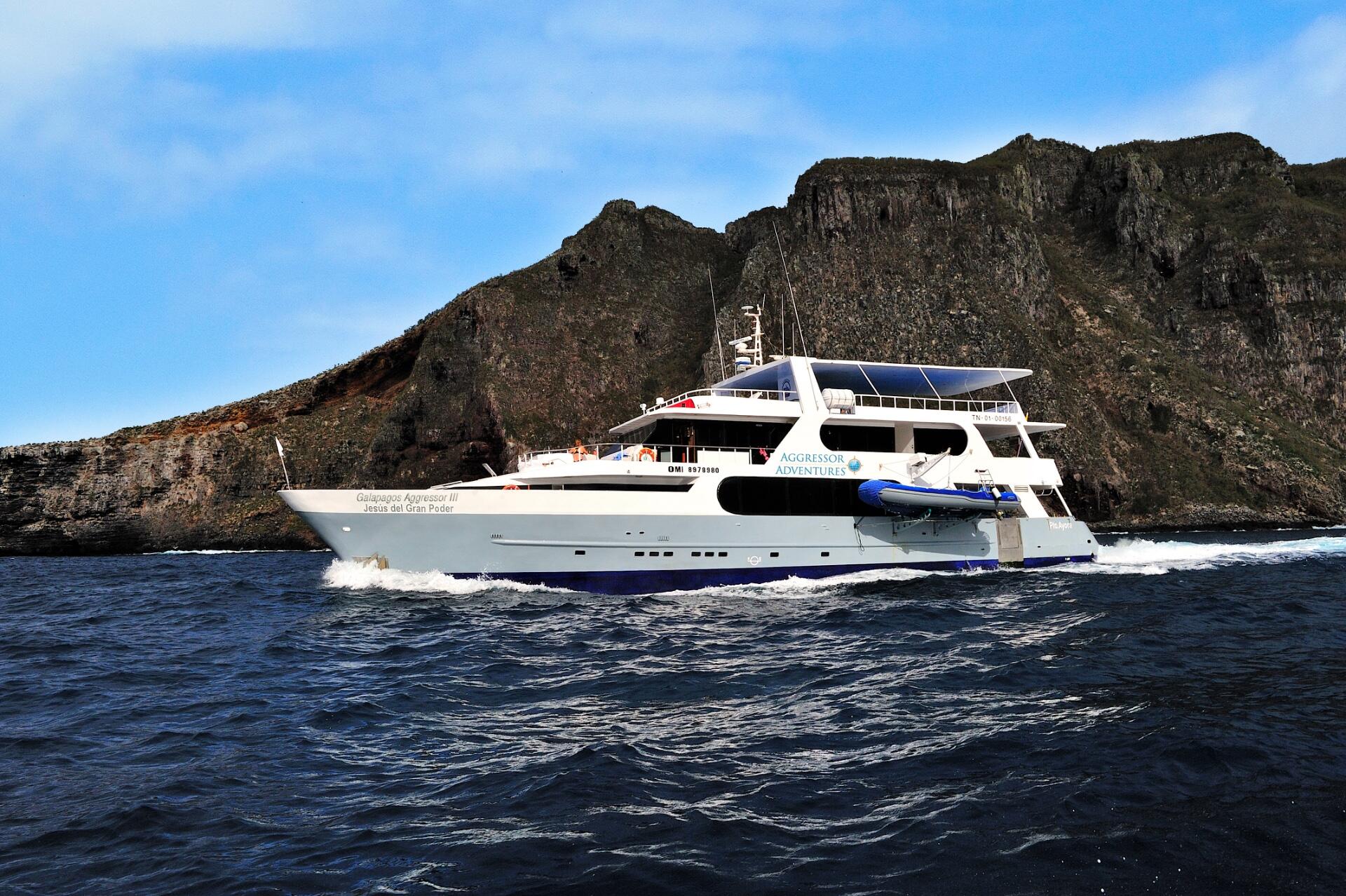
Galapagos Aggressor III
Galápagos
16 guests30.5 m
$913/day
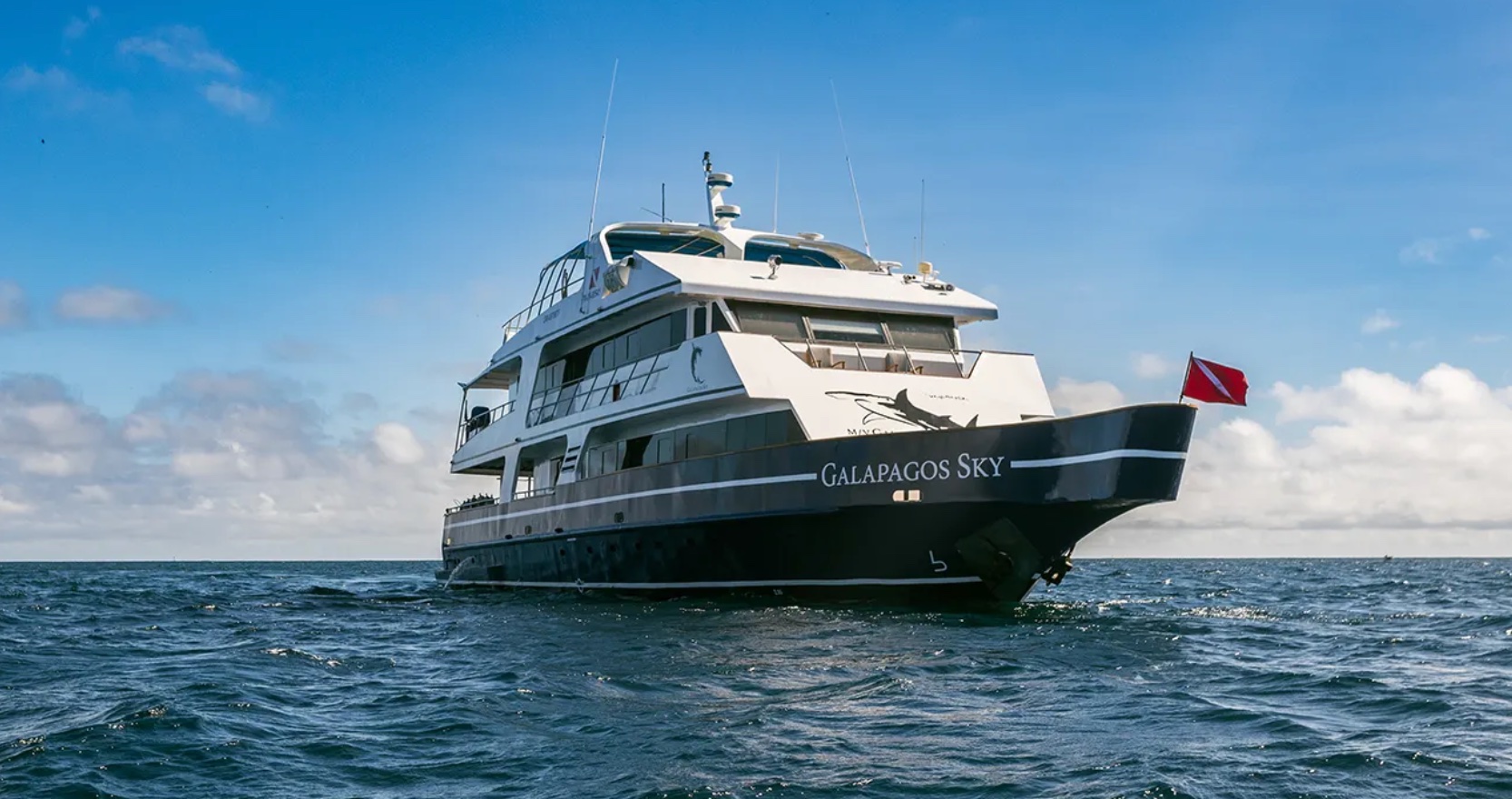
Galapagos Sky
Galápagos
16 guests
$937/day
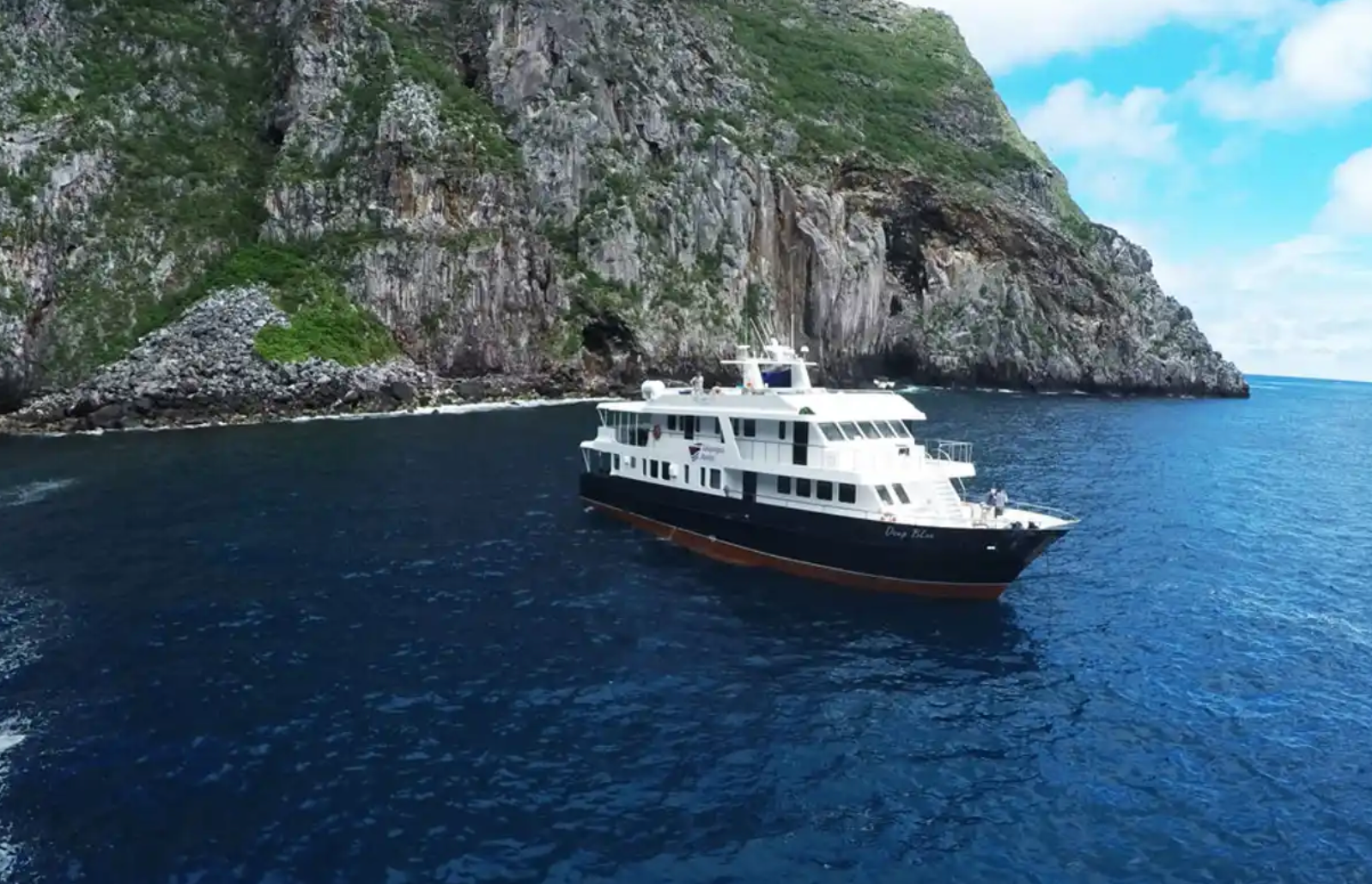
Galapagos Master
Galápagos
16 guests
$669/day
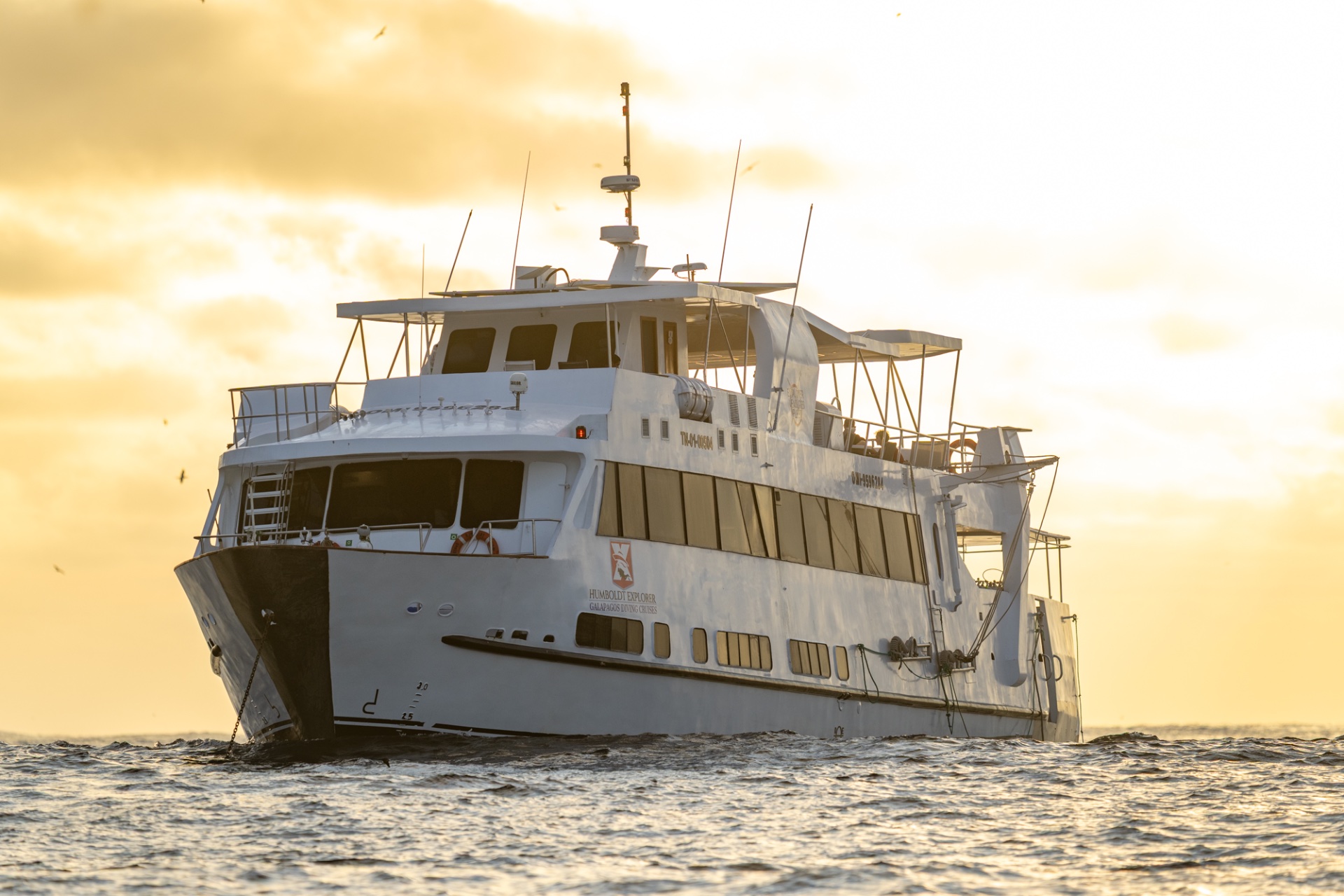
Humboldt Explorer
Galápagos
16 guests
$612/day
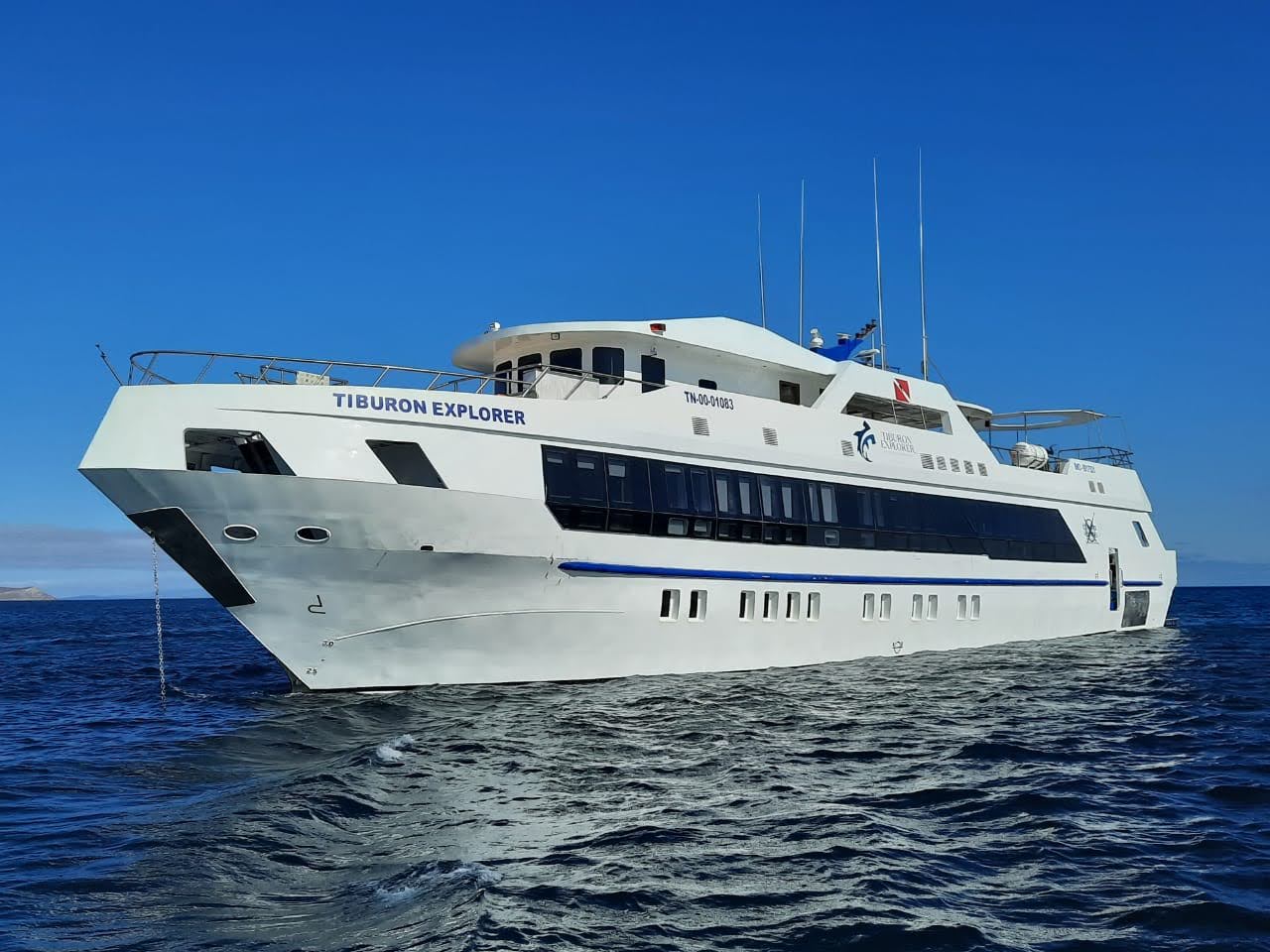
Tiburon Explorer
Galápagos
16 guests
$924/day
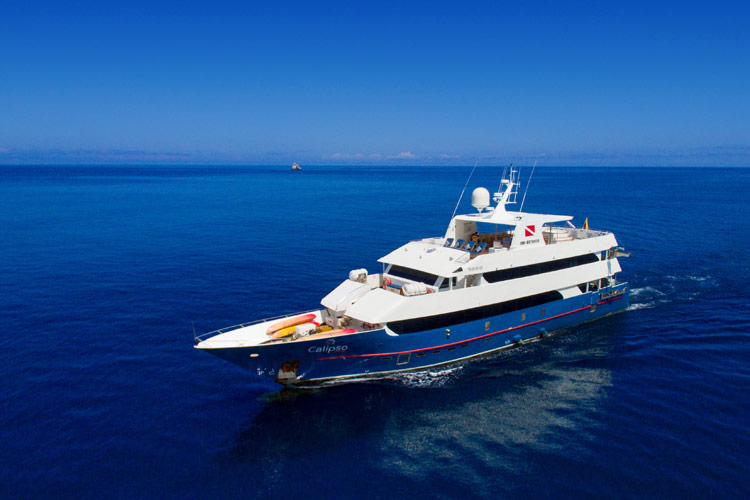
Calipso
Galápagos
16 guests
$819/day
Dive sites similar to Santa Cruz - Academy Bay
Same character, same waters — six more sites divers love for the exact same reasons.Compare seasons, access and liveaboard routes — then pick the site that fits your trip best.
© Esri — Maxar, Earthstar, GIS
Floreana - Devil's Crown
Galápagos
Devil's Crown, located off Floreana Island in the Galápagos, is renowned as one of the archipelago's premier diving and snorkeling destinations.
- Suitable for
- Beginner
- Current
- Strong
- Access
- Liveaboard only
- Depth
- 3–15 m
- Theme
- Reef
© Esri — Maxar, Earthstar, GIS
Plaza Islands
Galápagos
Plaza Islands offers exceptional diving within Ecuador's Galápagos Marine Reserve, renowned for its abundant marine life and position in one of the world's most biodiverse ocean zones.
- Suitable for
- Beginner
- Current
- Mild
- Access
- Liveaboard or dayboat
- Depth
- —
- Theme
- Reef
Pinzon is situated among the central islands of the Galápagos archipelago, an area characterized by waters that are generally warmer and more protected compared to the northern or western regions.
- Suitable for
- Advanced
- Current
- Strong
- Access
- Liveaboard or dayboat
- Depth
- ≤ 18 m
- Theme
- Reef / Drift
Santa Fe Island, also known by its English name Barrington, is a unique dive location within the Galápagos archipelago, notable for its significant geological age and high degree of endemism.
- Suitable for
- Beginner
- Current
- Mild
- Access
- Liveaboard or dayboat
- Depth
- 5–30 m
- Theme
- Reef
© Esri — Maxar, Earthstar, GIS
Camano Islet
Galápagos
The Galápagos Islands offer an unparalleled diving experience year-round, renowned for their exceptional marine biodiversity and unique blend of oceanic currents.
- Suitable for
- Beginner
- Current
- Mild
- Access
- Liveaboard or dayboat
- Depth
- 21–35 m
- Theme
- Reef
© Esri — Maxar, Earthstar, GIS
El Arenal - Santiago
Galápagos
El Arenal, located near Darwin Island in the northern Galapagos Archipelago, is considered one of the world's premier dive sites.
- Suitable for
- Intermediate
- Current
- Strong
- Access
- Liveaboard only
- Depth
- 3–18 m
- Theme
- Reef