About Lama Shoal
Lama Shoal, also known by the evocative name Crack-A-Fat Reef, stands out as a premier dive site within the Witu Islands of Papua New Guinea. This seamount rises from significant depths, serving as a dynamic cleaning station and a magnet for marine activity, distinguishing it in the Kimbe Bay area. Its cover photo once graced the Cousteau Society's 50th-anniversary calendar, a testament to its rich ecosystem and abundant marine life. The shoal's topography is characterized by its exposure to consistent currents. These nutrient-rich flows sweep across the reef, fostering a profusion of life, from vibrant soft corals and gorgonian fans to black corals and hydroids that thrive in the current. The site's status as a cleaning station further amplifies the diversity of fish congregating here, making it a bustling underwater hub. While the reef itself doesn't reach extremely shallow depths, the constant flow of water ensures an active environment throughout the diveable range. Divers at Lama Shoal can expect an exhilarating experience, often surrounded by large schools of barracuda, bigeye trevally, and rainbow runners. Dogtooth tuna and Spanish mackerel are frequently observed cruising the reef face, occasionally scattering the smaller fish in dramatic feeding frenzies. Beyond the pelagics, the attached reef matrix teems with smaller invertebrates and unique coral formations adapted to the strong currents. The site offers a prime opportunity for encountering high-energy marine interactions. Liveaboards from Walindi Plantation Resort in Kimbe Bay typically include Lama Shoal in their itineraries, often as part of trips exploring the Witu Islands. The site demands attentive diving due to the currents but rewards with exceptional visibility and a vibrant display of both schooling fish and reef-resident species.
Highlights
Pelagic actionCleaning station activityConsistent strong currentsBarracuda and trevally schoolsDogtooth tuna sightingsVibrant soft coralsGorgonian fansDiverse reef ecosystem
Season calendar
Best months to dive here
Jan
Feb
Mar
Apr
May
Jun
Jul
Aug
Sep
Oct
Nov
Dec
Excellent
Good
Dive site facts: Lama Shoal
- Depth
- Not specified
- Current
- Strong and consistent
- Visibility
- 80–130 feet (25–40 meters)
- Water temperature
- 82–88°F (28–31°C)
- Entry
- Tender / negative entry recommended
- Level
- Advanced recommended, experience with currents essential
- Dive type
- Pelagic, schooling fish, reef exploration
- Region / port
- Witu Islands, Bismarck Sea
- Coordinates
- -5.54, 150.32
Conditions & Currents
Lama Shoal is renowned for consistent, often strong currents that flow over the seamount, making it an action-packed dive. These currents are a primary reason for the abundance of marine life, bringing nutrients and attracting large schools of pelagic fish. Divers should be prepared for potential drift dives or to actively fin against the current, and entry is typically made by tender with a negative descent to avoid being swept away from the reef.
Marine life & sighting chances

Barracuda
common
Bigeye Trevally
common
Rainbow Runner
common
Dogtooth Tuna
occasional
Spanish Mackerel
occasional
Gorgonian Fans
common
Black Corals
common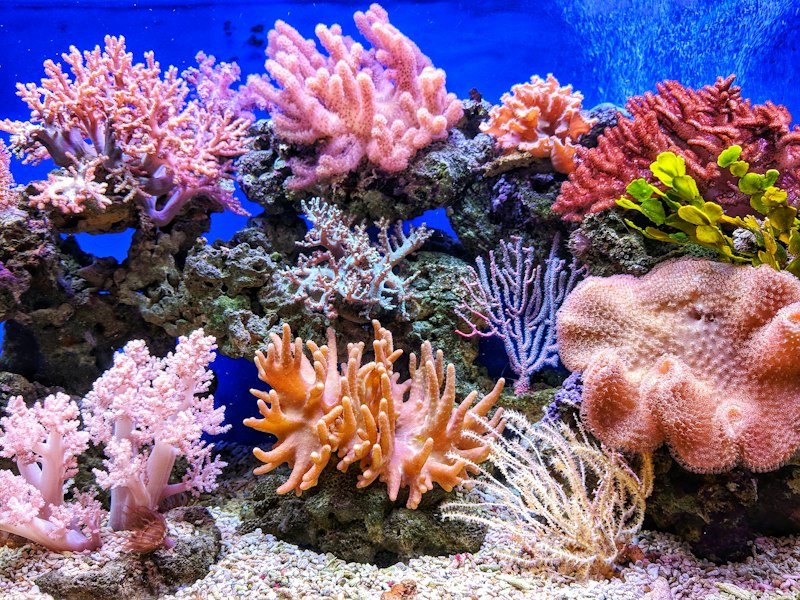
Soft Corals
common
Hydroids
common
Grey Reef Shark
occasional
Whitetip Reef Shark
occasional
Killer Whale
rareDive profile & how the dive runs
Diving Lama Shoal typically begins with a negative entry from a tender, directly descending to the reef to quickly get below the strong surface currents. Divers usually explore the seamount, staying close to the reef structure to shelter from the main current flow while observing the schooling pelagics that frequent the open water around the shoal. The dive often follows the contours of the reef, utilizing its natural protection and allowing observation of the rich attached soft corals and hydroids. The consistent current means that the dive might be a drift along a specific section or an out-and-back profile if conditions allow. Turnaround time is usually dictated by air consumption and bottom time, with the safety stop conducted in mid-water, potentially using a drift line or holding onto a safety stop bar deployed from the tender, ensuring divers are not swept away from the pickup point.
Underwater photography
Lama Shoal is a prime location for wide-angle photography, focusing on the impressive schools of barracuda, trevally, and rainbow runners, as well as the cruising dogtooth tuna and Spanish mackerel. A wide-angle lens is essential to capture the sheer volume of fish and the vibrant soft corals and gorgonian fans that adorn the seamount. Due to the strong currents, maintaining stable buoyancy is critical for sharp images; consider using a high shutter speed to freeze the fast-moving subjects. Strobes will help bring out the true colors of the corals and fish. Photographers should be mindful of their position relative to the current to avoid disturbing marine life and to keep themselves safe while composing shots of the dynamic pelagic action.
Combine with nearby dive sites
- Fathers Reef
Iconic bommies and barracuda tornados, often combined with Witu Islands itineraries.
- Bradford Shoals
Seamount known for pelagic action and shark encounters, requiring advanced diving skills.
- Susan's Reef
Excellent for macro and wide-angle, with pygmy seahorses and vibrant soft corals.
- Witu Islands - Circle of Stars
Part of the wider Witu Islands group known for schooling fish and soft corals.
- Observation Point
Observation Point, situated on Normanby Island in Milne Bay, Papua New Guinea, stands out as a premier destination for macro diving.
- Restorf Island
Offers picturesque scenery both above and below the surface.
Getting there & logistics
Access to Lama Shoal is typically via liveaboard vessels departing from Walindi Plantation Resort in Kimbe Bay, New Britain. To reach Walindi, divers generally fly into Jacksons International Airport (POM) in Port Moresby, then take a connecting domestic flight with Air Niugini to Hoskins Airport (HKN), followed by a transfer to Walindi. Liveaboard trips to the Witu Islands, which include Lama Shoal, often range from 7 to 10 days. There are no specific permits mentioned for Lama Shoal itself, but dive operators will handle any necessary fees for the overall itinerary. These trips combine dives within Kimbe Bay with offshore sites like Lama Shoal, offering a comprehensive experience of the region's diverse marine environments.
Safety & environment
The nearest recompression chamber to Lama Shoal is in Port Moresby, making medical evacuation a significant concern due to the remote location. It is imperative that divers maintain adequate insurance coverage, including emergency medical and evacuation services. Lama Shoal's strong and consistent currents pose the primary hazard; divers must be proficient in drift diving and current management. Always dive with an experienced guide familiar with the site's conditions. Maintain excellent buoyancy control to avoid damaging the delicate corals. Be aware of fast-moving pelagics during feeding frenzies, and adhere strictly to dive computer limits and safety stop protocols, especially when dealing with variable current conditions during ascent.
Who it suits — and who it doesn't
Suited for
- Experienced divers comfortable with strong currents
- Photographers seeking pelagic and wide-angle opportunities
- Divers interested in high-energy reef ecosystems
- Those who appreciate abundant schooling fish
- Liveaboard enthusiasts exploring remote areas
Less suited for
- Novice divers
- Divers uncomfortable with strong currents
- Those prone to seasickness in open water
- Divers expecting calm, easy dives
- Individuals seeking primarily macro subjects
FAQ
Lama Shoal FAQ
What kind of marine life can I expect at Lama Shoal?
Lama Shoal is famous for its abundant pelagic life, including large schools of barracuda, bigeye trevally, and rainbow runners. You can also frequently spot larger predators like dogtooth tuna and Spanish mackerel. The reef itself hosts a variety of soft corals, gorgonian fans, black corals, and hydroids.
How strong are the currents at Lama Shoal?
Lama Shoal is known for consistent, often strong currents. These currents are a key feature of the dive site, attracting the rich marine life. Divers should be prepared for potential drift dives and be proficient in managing their buoyancy and position in active water.
Is Lama Shoal suitable for beginner divers?
Lama Shoal is not recommended for beginner divers due to the strong and consistent currents. It is best suited for experienced divers who are comfortable with current diving and possess excellent buoyancy control. Advanced Open Water certification and prior experience with currents are highly beneficial.
What are the typical water temperatures and visibility at Lama Shoal?
Water temperatures at Lama Shoal, being in the Bismarck Sea, generally range from 82–88°F (28–31°C), providing very comfortable diving conditions. Visibility is typically excellent, often ranging from 80 to 130 feet (25–40 meters), allowing clear views of the vibrant marine action.
How do I get to Lama Shoal?
Lama Shoal is typically accessed via liveaboard trips that depart from Walindi Plantation Resort in Kimbe Bay. You would fly into Port Moresby, then take a connecting flight to Hoskins, followed by a transfer to Walindi. These liveaboard itineraries usually include Lama Shoal as part of a wider exploration of the Witu Islands.
Why is Lama Shoal also called 'Crack-A-Fat Reef'?
Lama Shoal earned the nickname 'Crack-A-Fat Reef' due to its incredibly rich ecosystem and the expectation of an 'action' dive. The site's abundance of large, schooling fish and cruising pelagics often results in spectacular feeding frenzies, creating a dynamic and exhilarating underwater experience.
Why dive Lama Shoal from a liveaboard?
Lama Shoal is one of Papua New Guinea's signature dive sites. A liveaboard sleeps you on the water and puts you in the water for three to four guided dives per day, including dawn and night dives that day-boat operators rarely offer. You skip the daily commute back to port and reach quieter, less-crowded sites in the same region on a single trip.
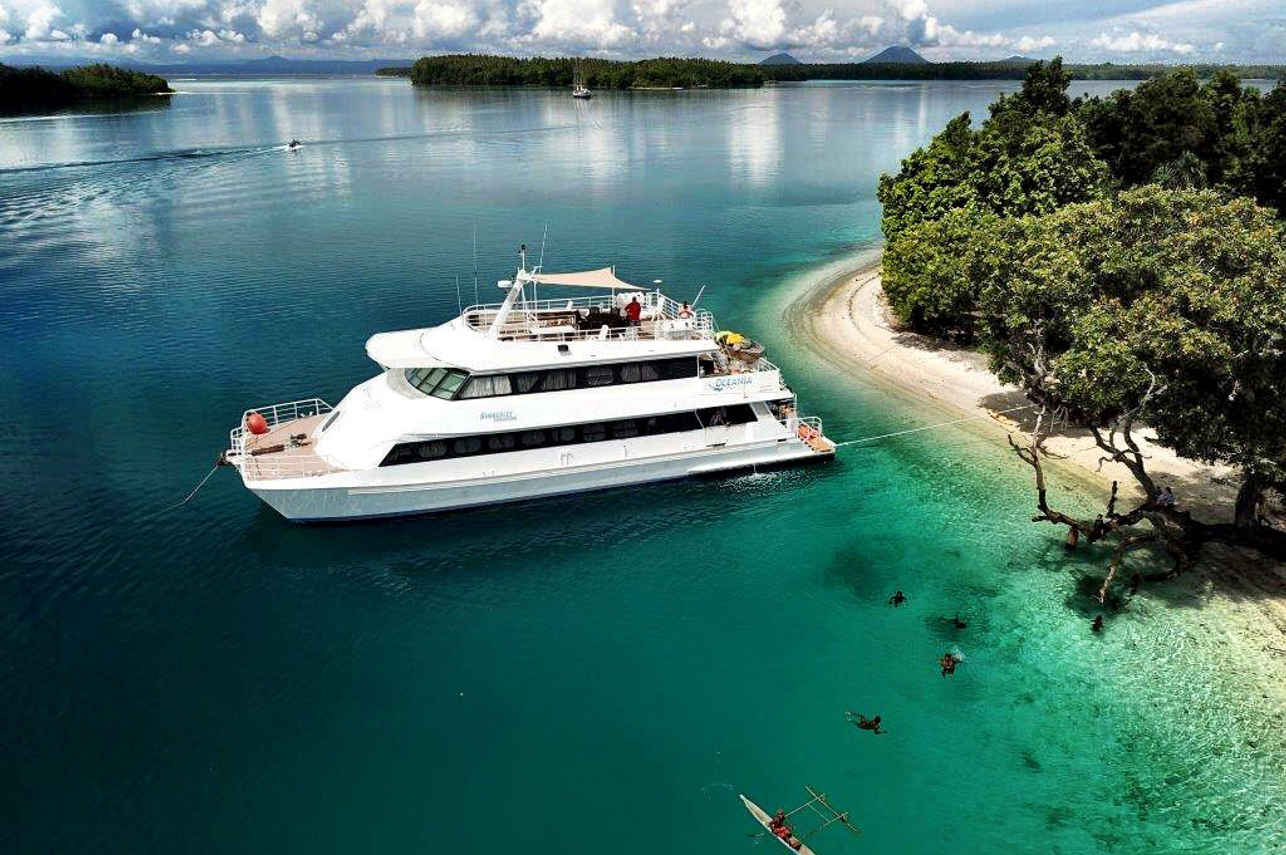
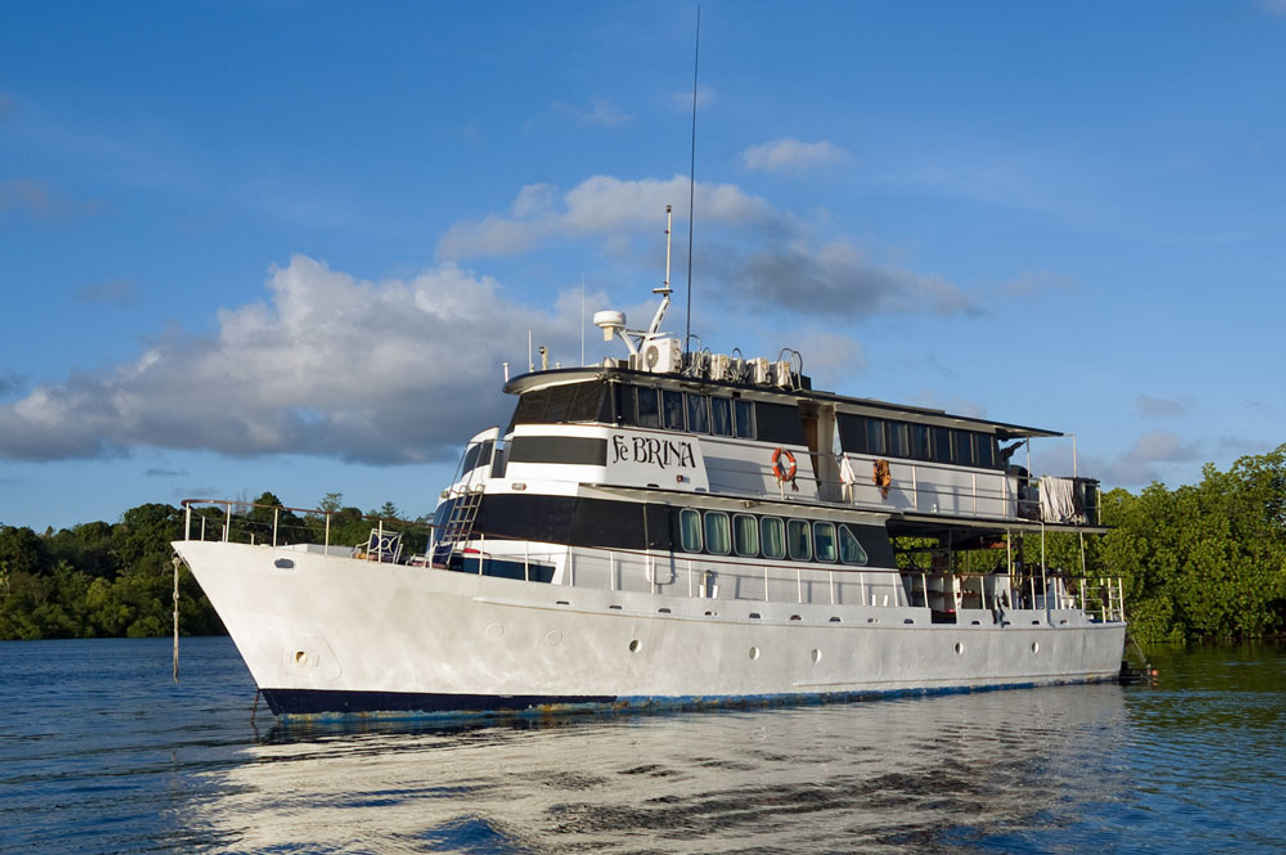
Below are the liveaboards that include Lama Shoal on their Papua New Guinea itineraries.
Liveaboards diving Lama Shoal
These liveaboards may visit Lama Shoal on selected itineraries — the exact dive sites depend on departure, weather and conditions.
Dive sites similar to Lama Shoal
Same character, same waters — six more sites divers love for the exact same reasons.Compare seasons, access and liveaboard routes — then pick the site that fits your trip best.
© Esri — Maxar, Earthstar, GIS
Big La Laguna
Philippines
Big La Laguna is a beach community situated on the western edge of the Sabang Peninsula, a popular dive region on Mindoro Island, Philippines.
- Suitable for
- Intermediate
- Current
- Moderate
- Access
- Dayboat
- Depth
- 5–35 m
- Theme
- Reef / Wall
© Esri — Maxar, Earthstar, GIS
Rusa Pinnacle
Alor
Rusa Pinnacle is a challenging yet highly rewarding dive site situated in the Alor archipelago, part of Indonesia's East Nusa Tenggara.
- Suitable for
- Advanced
- Current
- Strong
- Access
- Liveaboard only
- Depth
- 6–30 m
- Theme
- Reef
Lipah Bay is situated on Bali's northeast coast within the Amed area, nestled against the dramatic backdrop of Gunung Agung.
- Suitable for
- Beginner
- Current
- Mild
- Access
- Liveaboard or dayboat
- Depth
- 5–30 m
- Theme
- Reef / Drift
© Esri — Maxar, Earthstar, GIS
Tangked Cave
Bali
Tangked Cave, sometimes referred to as Tangked Taked Shark Cave, is an advanced dive site situated in the open ocean off Bali's southeastern coast.
- Suitable for
- Advanced
- Current
- Moderate
- Access
- Liveaboard or dayboat
- Depth
- 15–40 m
- Theme
- Cave & cavern / Reef
© Esri — Maxar, Earthstar, GIS
Schools Out
Alor
Schools Out in Alor offers divers an exceptional encounter with healthy coral reefs and a rich variety of marine species.
- Suitable for
- Intermediate
- Current
- Mild
- Access
- Liveaboard only
- Depth
- 20–30 m
- Theme
- Reef
© Esri — Maxar, Earthstar, GIS
Batununggul
Bali
Batununggul, also known as Suana or Batumulapan by some operators, is a dynamic wall and sloping reef dive site situated on the eastern side of Nusa Penida, Bali.
- Suitable for
- Advanced
- Current
- Strong
- Access
- Liveaboard or dayboat
- Depth
- 10–40 m
- Theme
- Wall