About Fathers Reef
Fathers Reefs, located northeast of Kimbe Bay off New Britain Island in Papua New Guinea, are a series of offshore reefs formed from the submerged remnants of a massive, extinct volcanic caldera. This volcanic origin creates a dramatic underwater topography, featuring striking reefscapes, arches, swim-throughs, and lava tubes, all adorned with vibrant soft corals, gorgonians, and sea fans. The reefs rise from extremely deep water, leading to rich, nutrient-filled currents that support an abundance of marine life. Divers here encounter a lively ecosystem with large schools of pelagic fish, including barracuda, big-eye trevally, fusiliers, and anthias. The offshore location frequently attracts larger species such as gray reef sharks, whitetip reef sharks, silvertip sharks, and dogtooth tuna, alongside rays, dolphins, and turtles. Healthy hard corals and sponges blanket the reefs, while closer inspection reveals fascinating macro life like frogfish, crocodile fish, and diverse nudibranchs, with pygmy seahorses occasionally spotted within sea fans. While diving at Fathers Reefs is possible year-round, the prevailing ocean currents, which are crucial for attracting the abundant pelagic life, are best handled by intermediate to advanced divers. Entry is typically from liveaboards, offering easy access via water-level dive platforms. The warm water, ranging from 28 to 31 degrees Celsius, allows for extended bottom times.
Highlights
Barracuda TornadosSea FansSoft CoralsReef Sharks
Season calendar
Best months to dive here
Jan
Feb
Mar
Apr
May
Jun
Jul
Aug
Sep
Oct
Nov
Dec
Excellent
Good
Dive site facts: Fathers Reef
- Depth
- 5–30+ m
- Typical dive
- 12–30 m, 50–60 min
- Current
- Gentle to strong
- Visibility
- 25–40 m
- Water temperature
- 29–31°C
- Entry
- Liveaboard tender / backroll
- Level
- Intermediate to Advanced, current experience beneficial
- Dive type
- Reef, pelagic, seamount, drift, wide-angle
- Night dive
- Possible, conditions permitting
- Region / port
- Bismarck Sea, off New Britain Island
- Coordinates
- -5.452, 150.27
Conditions & Currents
The ocean currents around Fathers Reefs, while enriching the marine ecosystem, are best suited for intermediate to advanced divers. Liveaboards provide convenient entry with water-level platforms. Dive profiles here run between roughly 5 and 30 metres, so plan your gas and no-decompression limits around the deeper part of the site. It is usually briefed as a dive for advanced divers. The site is reached by liveaboard, so entries are run from the tender or straight off the back deck. Because the flow can pick up quickly, drift profiles, a surface marker buoy and a tight group are standard practice here, and the crew's briefing always overrides any general description.
Marine life & sighting chances

Grey reef shark
common
Whitetip reef shark
common
Silvertip shark
occasional
Dogtooth tuna
common
Barracuda
common
Horse-eye jack
common
Pyramid butterflyfish
common
Anthias
common
Fusilier
common
Green sea turtle
occasional
Hawksbill turtle
occasional
Eagle ray
rareDive profile & how the dive runs
Dives at Fathers Reefs typically begin from a liveaboard tender, often with a backroll entry onto the reef top or along a seamount. You will navigate around the volcanic pinnacles and seamounts, which host a vibrant mix of soft and hard corals. Look for schools of jacks and barracuda in the blue, and keep an eye out for patrolling reef sharks. The dive will progress along walls and slopes, exploring swim-throughs and arches adorned with soft corals. Depths can range from the reef top at 5 meters down to 30 meters or deeper when observing pelagics. Currents can vary, providing drift opportunities. Ascent usually involves a gradual climb back towards shallower sections of the reef for a safety stop, often in the midst of schooling reef fish.
Underwater photography
Fathers Reefs offers exceptional opportunities for both wide-angle and macro photography. For wide-angle, a fisheye or wide rectilinear lens is ideal to capture the expansive schools of jacks, barracuda, and pyramid butterflyfish, as well as the dramatic volcanic topography and abundant soft corals. Use strobes to bring out the vibrant colors of the reef and schooling fish, especially in deeper sections or during overcast conditions. When shooting large schools, consider using a larger aperture to keep more of the scene in focus. For macro, keep an eye out for small critters hiding within the coral formations, although the site is more renowned for its wide-angle subjects. Be mindful of your buoyancy around delicate corals and when approaching marine life. Ethical photography practices, such as avoiding touching the reef or disturbing animals, are essential to preserve this pristine environment.
Combine with nearby dive sites
- Witu Islands - Circle of Stars
Known for schooling fish and diverse coral environments, including black sand slopes and scenic seamounts.
- Kimbe Island
A prime location within Kimbe Bay, celebrated for its rich marine biodiversity and healthy reefs.
- Bradford Shoals
A seamount within Kimbe Bay, attracting pelagic species and featuring diverse coral growth.
- Rabaul Submarine Wrecks
Offers historical WWII wreck diving alongside vibrant coral reefs and critter havens.
Getting there & logistics
Access to Fathers Reefs is primarily via liveaboard, typically departing from Walindi Plantation Resort in Kimbe Bay, New Britain. The closest major airport is Hoskins Airport (HKN), which requires a domestic flight from Port Moresby (POM). International flights generally arrive in Port Moresby. Liveaboard itineraries vary, but common trips range from 7 to 10 nights, combining Fathers Reefs with other areas like Kimbe Bay and the Witu Islands. These expeditions offer a comprehensive dive experience across the Bismarck Sea. It's advisable to check specific liveaboard schedules for combinations that include Fathers Reefs. No specific park fees are mentioned, as diving is usually integrated into liveaboard packages.
Safety & environment
The remote nature of Fathers Reefs means access to immediate medical facilities is limited. The nearest recompression chamber is located in Port Moresby. Evacuation in a dive emergency would require coordination with your liveaboard crew and likely involve air transport, which can be time-consuming and expensive. Comprehensive dive insurance, including coverage for emergency medical treatment and evacuation, is mandatory for all divers. Site-specific hazards include potentially strong currents, especially around seamounts; listen carefully to your dive guide's briefings. Divers should maintain excellent buoyancy control to avoid damaging the pristine corals. Always dive within your training limits and follow all dive operator safety protocols.
Who it suits — and who it doesn't
Suited for
- Experienced divers comfortable with varying currents
- Underwater photographers seeking pelagic action and wide-angle opportunities
- Divers interested in pristine, biodiverse reef ecosystems
- Liveaboard enthusiasts seeking remote dive locations
- Shark enthusiasts
Less suited for
- Beginner divers without current experience
- Divers prone to seasickness on liveaboards
- Those expecting extensive muck diving or macro photography opportunities primarily
- Divers with limited travel insurance coverage for remote locations
FAQ
Fathers Reef FAQ
What kind of marine life can I expect at Fathers Reefs?
Fathers Reefs is renowned for its abundant pelagic life, including various species of sharks such as grey reef, whitetip, and occasional silvertip sharks. You can also expect to see large schools of barracuda, dogtooth tuna, and horse-eye jacks. The reefs themselves are teeming with smaller reef fish like fusiliers, anthias, and pyramid butterflyfish, alongside healthy hard and soft corals.
What are the typical diving conditions at Fathers Reefs?
Diving conditions at Fathers Reefs generally offer excellent visibility, often ranging from 25 to 40 meters. Water temperatures are consistently warm, averaging between 29-31°C (85-88°F). Currents can vary from gentle to strong, especially around the seamounts, providing exciting drift dive opportunities. Dives are typically conducted from liveaboards.
When is the best time to dive Fathers Reefs?
The prime diving season for Fathers Reefs is generally from April to June and again from September to mid-November. During these months, weather conditions are typically stable, offering excellent visibility and calmer seas. While diving is possible year-round, January to March sees higher rainfall on the north coast of New Britain.
What is the topography of Fathers Reefs like?
Fathers Reefs consists of a series of offshore reefs formed from the remains of a large extinct volcanic caldera. The underwater topography features dramatic seamounts and pinnacles rising from deep waters, adorned with vibrant coral gardens. You'll encounter interesting formations like swim-throughs and arches, all covered in colorful soft corals and other marine growth.
Is Fathers Reefs suitable for beginner divers?
Fathers Reefs is generally recommended for intermediate to advanced divers due to potential strong currents and the remote nature of the site. While some dives may be gentle, experience with drift diving and comfortable navigation in varying conditions is beneficial. Beginner divers may find the conditions challenging without prior experience.
Why dive Fathers Reef from a liveaboard?
Fathers Reef is one of Papua New Guinea's signature dive sites. A liveaboard sleeps you on the water and puts you in the water for three to four guided dives per day, including dawn and night dives that day-boat operators rarely offer. You skip the daily commute back to port and reach quieter, less-crowded sites in the same region on a single trip.
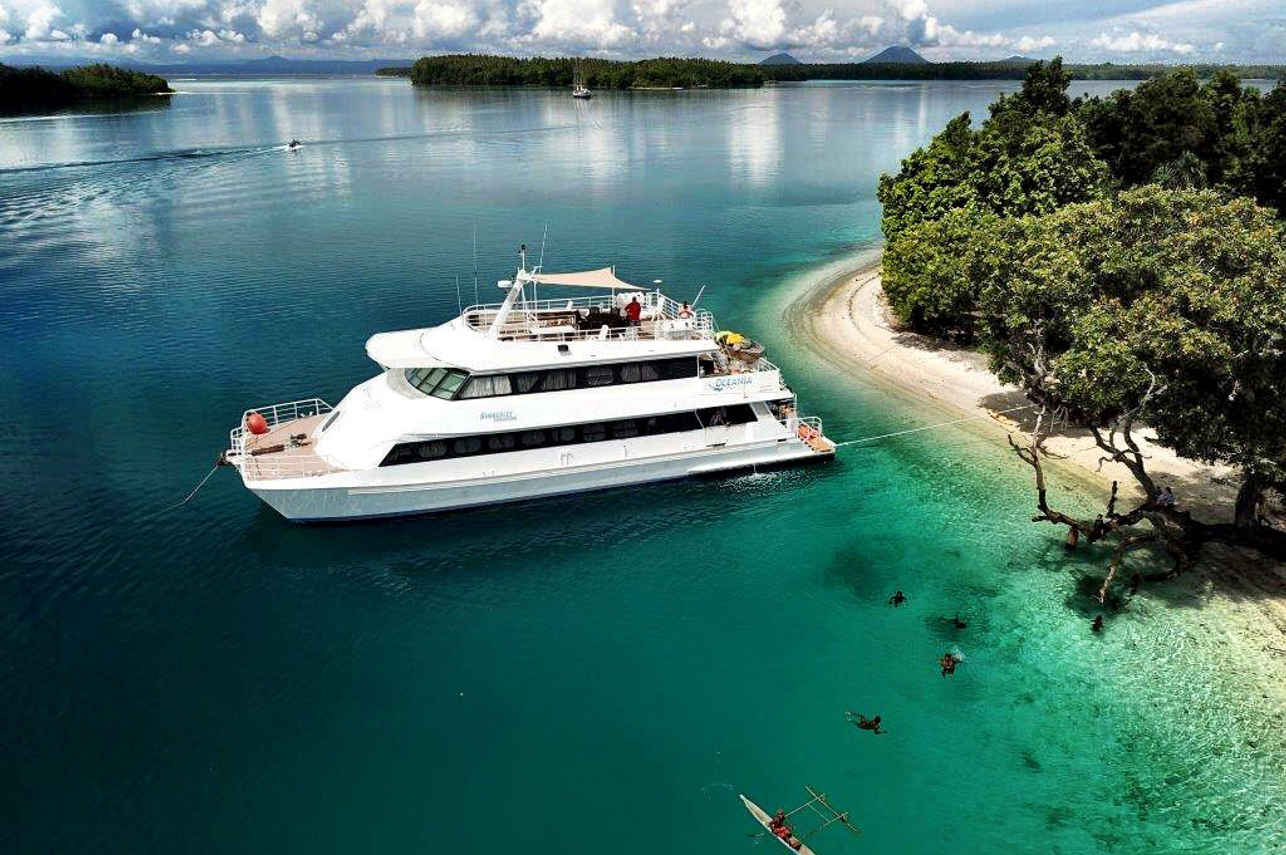
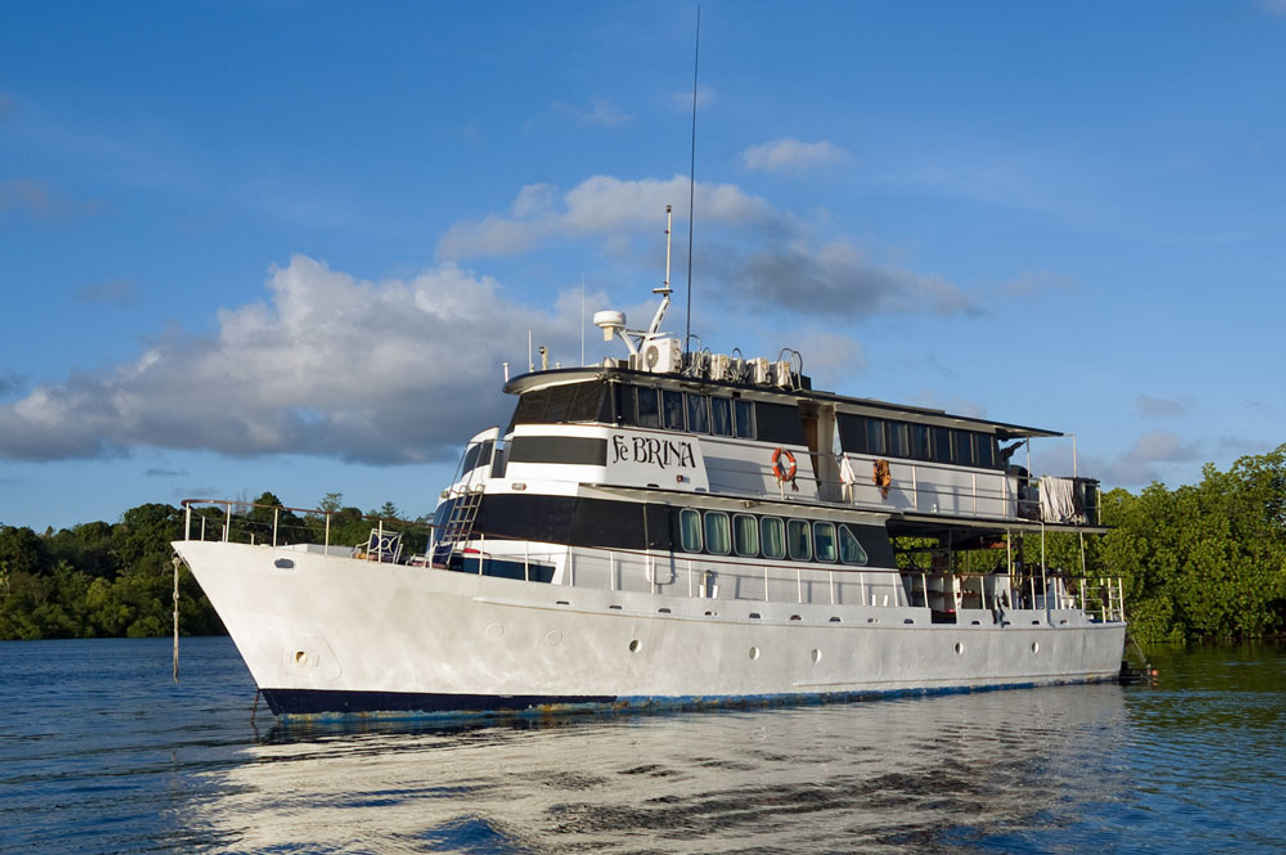
Below are the liveaboards that include Fathers Reef on their Papua New Guinea itineraries.
Liveaboards diving Fathers Reef
These liveaboards may visit Fathers Reef on selected itineraries — the exact dive sites depend on departure, weather and conditions.
Dive sites similar to Fathers Reef
Same character, same waters — six more sites divers love for the exact same reasons.Compare seasons, access and liveaboard routes — then pick the site that fits your trip best.
Atun is an advanced dive site located near Rabaul in Papua New Guinea's East New Britain province, celebrated for its unique blend of volcanic geology, abundant pelagic encounters, and rich Coral Triangle biodiversity.
- Suitable for
- Intermediate
- Current
- Moderate
- Access
- Liveaboard only
- Depth
- 20–25 m
- Theme
- Wreck / Reef
© Esri — Maxar, Earthstar, GIS
Banana Bommie
Papua New Guinea
Banana Bommie is a prominent and highly regarded dive site situated at the northern mouth of Milne Bay in Papua New Guinea.
- Suitable for
- Advanced
- Current
- Moderate
- Access
- Liveaboard only
- Depth
- ≤ 40 m
- Theme
- Reef / Pinnacle
© Esri — Maxar, Earthstar, GIS
Barracuda Point
Papua New Guinea
Barracuda Point in Papua New Guinea earns its name from the impressive schools of barracuda that aggregate at this specific reef headland, where converging currents create an exceptionally nutrient-rich environment.
- Suitable for
- Intermediate
- Current
- Moderate
- Access
- Liveaboard only
- Depth
- 5–30 m
- Theme
- Wall / Reef
© Esri — Maxar, Earthstar, GIS
Bev's Reef
Papua New Guinea
Bev's Reef is a vibrant reef system located near Tufi on the northern coast of mainland Papua New Guinea, situated amidst a region characterized by stunning fjords.
- Suitable for
- Beginner
- Current
- Mild
- Access
- Liveaboard only
- Depth
- 5–30 m
- Theme
- Reef / Wall
© Esri — Maxar, Earthstar, GIS
Cape Heusner
Papua New Guinea
Cape Heusner is a notable dive site located within Kimbe Bay, off New Britain Island in Papua New Guinea.
- Suitable for
- Intermediate
- Current
- Moderate
- Access
- Liveaboard only
- Depth
- —
- Theme
- Reef
© Esri — Maxar, Earthstar, GIS
Witu Islands - Circle of Stars
Papua New Guinea
Lama Shoal, evocatively named 'Circle of Stars' or 'Crack-A-Fat Reef,' is a premier dive site within the remote Witu Islands of Papua New Guinea.
- Suitable for
- Intermediate
- Current
- Strong
- Access
- Liveaboard only
- Depth
- 5–30 m
- Theme
- Reef / Seamount