About Big La Laguna
Big La Laguna is a beach community situated on the western edge of the Sabang Peninsula, a popular dive region on Mindoro Island, Philippines. While the area is widely known as Puerto Galera, Big La Laguna provides a quieter, more spacious alternative to the bustling Sabang Beach, yet remains within a 15-minute walk of its amenities. It serves as a comfortable base for exploring the rich underwater landscape of the Coral Triangle, a global epicenter of marine biodiversity. Dive sites around Big La Laguna feature a variety of topographies, including shallow coral gardens, exciting current dives, sheer walls, and muck dive areas. The Verde Island Passage, a deep channel separating Mindoro from Luzon, flushes these waters with strong currents, contributing to excellent visibility and a dynamic marine environment. Depths range from shallow coral formations suitable for beginners to deeper sites for advanced and technical divers. This region boasts an extraordinary array of marine life, benefiting from its location within the Coral Triangle, which hosts 76% of known coral species and over 3,000 reef fish species. Divers can frequently encounter an abundance of colorful tropical fish, healthy hard and soft corals, feather stars, and various macro critters. Sea turtles are also common sightings. The best diving conditions, with calm seas and optimal visibility, typically occur from April to September, though diving is possible year-round. Diving from Big La Laguna is generally done via local 'banca' outrigger boats, with many of the 30 spectacular dive sites accessible within 20 minutes. Dive centers in the area cater to all skill levels, from open water to technical divers, emphasizing safety and local expertise due to potentially strong currents. The focus is on experiencing the rich marine environment that has been protected as a marine sanctuary for decades.
Highlights
Tranquil beach community accessHeart of Coral TriangleDiverse dive site topographyRich macro and reef lifeWarm, clear water conditionsVariety of dive experiencesMarine protected areaConvenient boat access
Season calendar
Best months to dive here
Jan
Feb
Mar
Apr
May
Jun
Jul
Aug
Sep
Oct
Nov
Dec
Excellent
Good
Off-Season
Dec – Apr (Dec–Apr)
Best diving conditions across most regions. Calm seas, excellent visibility. Tubbataha Reef accessible Mar–Jun only. Thresher sharks year-round at Malapascua.
May & Nov (May, Nov)
Weather shifts between seasons. Still excellent diving in many areas. Fewer crowds and lower prices. Some regions still offer perfect conditions.
Jun – Oct (Jun–Oct)
Typhoon season — mainly affects northern regions. Southern Visayas and Mindanao still offer good diving. Reduced visibility. Best prices and fewest crowds.
Dive site facts: Big La Laguna
- Depth
- 5–35 m
- Current
- Mild to very strong
- Visibility
- 10–30+ m
- Water temperature
- 22–30°C
- Entry
- Day boat / Tender
- Level
- Open Water to Advanced, current experience recommended
- Dive type
- Reef, wall, drift, macro, coral garden
- Night dive
- Possible
- Region / port
- Puerto Galera, Mindoro, Philippines
- Coordinates
- 11.2160° N, 122.0331° E
Conditions & Currents
Diving in the Puerto Galera area, including Big La Laguna, is significantly influenced by currents from the South China Sea flowing through the Verde Island Passage. These currents can reach speeds of up to 6 knots, particularly on certain sites, creating spectacular drift dives rich with marine life. While strong currents are common and contribute to clear water conditions, there are also sheltered areas available, depending on wind and sea conditions, ensuring diving is possible year-round. Divers should always consult with local divemasters who possess in-depth knowledge of current patterns and site-specific conditions, as professional guidance is crucial for safe navigation and gas planning. Visibility can fluctuate with current strength and wind direction, but generally remains very good. Entry and exit procedures will be adapted to current conditions, often involving boat drops and
Marine life & sighting chances

Coral species
common
Reef fishes
common
Feather stars
common
Sea turtles
occasional
Macro critters
commonHard corals
common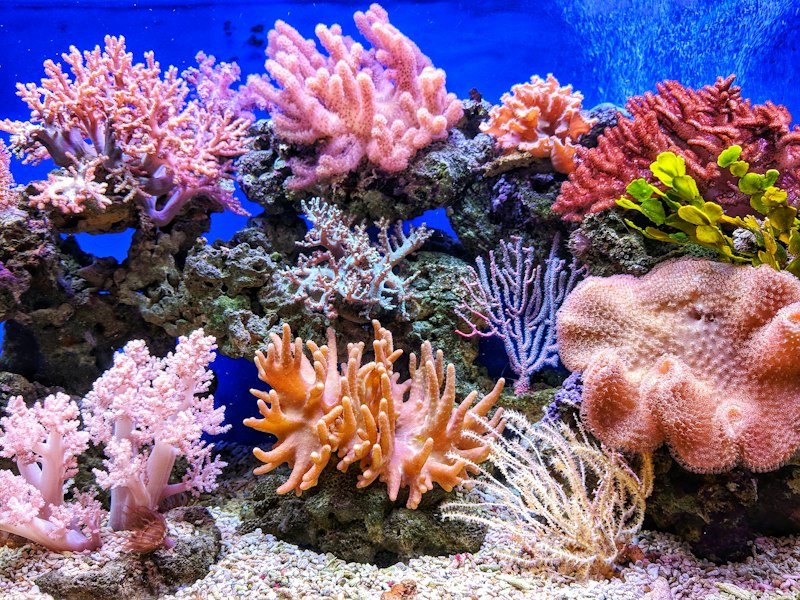
Soft corals
common
Pygmy seahorses
occasional
Napoleon wrasse
occasional
Sharks
rareDive profile & how the dive runs
Diving at Big La Laguna typically begins with a short ‘banca’ boat ride to one of the numerous nearby sites, many of which are less than 20 minutes away. Entry is usually a backward roll or giant stride directly from the boat. Depending on the chosen site, dives may involve descending onto shallow coral gardens at 5-12 meters, exploring colorful walls that drop to 25-35 meters, or experiencing drift dives along current-swept reefs. For sites like 'The Canyons' (25-35m) or 'Dungon Wall' (8-30m), divers typically follow the reef or wall contour, often allowing the current to dictate a gentle drift. Specific routes are guided by the divemaster to maximize marine life encounters, such as exploring nooks for macro critters or observing schooling fish in open water. Turn points are determined by air consumption and no-decompression limits, with ascents often along the reef slope. Safety stops are commonly performed at 5 meters for 3 minutes, often along a shallow part of the reef or in blue water, followed by a surface interval before returning to shore or moving to the next site.
Underwater photography
Big La Laguna offers diverse photographic opportunities, from wide-angle reefscapes to intricate macro subjects. For capturing the expansive coral gardens and vibrant walls, a wide-angle lens with external strobes is highly recommended to bring out the true colors and reduce backscatter in potentially clear water. For macro enthusiasts, the abundance of critters like nudibranchs, pipefish, and small crustaceans calls for a macro lens, ideally paired with a snoot or focused strobes to isolate subjects and create dramatic lighting. Due to the presence of currents, maintaining excellent buoyancy control is crucial for stable shots and to avoid damaging delicate corals. When photographing marine life, always prioritize minimal disturbance, observing from a respectful distance and avoiding prolonged harassment, especially for shy or camouflaged species.
Combine with nearby dive sites
- The Canyons
Advanced dive with strong currents and deep sections.
- Alma Jane
Wreck dive suitable for advanced divers at 25-30m.
- Verde Island Drop-off
A full-day trip known for spectacular reefs and walls.
- Sabang Point
Accessible from 8-25m, offering varied marine life.
- Coral Garden
Shallow site at 5-12m, ideal for open water divers.
- Small La Laguna
Neighboring beach area with its own local dive sites.
Getting there & logistics
Access to Big La Laguna and the Puerto Galera dive region typically begins with arrival at Ninoy Aquino International Airport (MNL) in Manila. From there, travelers usually take a taxi south to the Port of Batangas. The final leg involves a 30-minute speed boat transfer to Sabang, often with resort-arranged transportation, with some boats directly dropping off at Big La Laguna Beach. Most dive trips from Big La Laguna are day trips, utilizing 'banca' outrigger boats to reach the numerous dive sites within minutes. Typical dive packages include multiple dives per day, with full-day excursions sometimes arranged for more distant sites like Verde Island. There are no specific park fees mentioned for local Puerto Galera diving, but general marine sanctuary regulations are observed. Trips commonly range from a few days to a week, often combining diving with local relaxation, though longer stays are common for those pursuing extended training or exploration.
Safety & environment
Diving in the Puerto Galera region, including Big La Laguna, requires adherence to standard dive safety protocols, and divers are strongly encouraged to have comprehensive dive insurance that covers emergency evacuation and recompression. The nearest recompression chamber would typically be located in Batangas or Manila, necessitating boat and land transport in an emergency, which could involve significant time. Site-specific hazards include potentially strong and unpredictable currents, especially in areas like the Verde Island Passage; divers should always follow the lead of experienced local dive guides. Thermoclines can lead to rapid temperature drops in deeper water, so appropriate thermal protection is advised. While Puerto Galera's waters are part of a marine sanctuary, responsible diving practices, such as maintaining proper buoyancy, avoiding contact with marine life, and refraining from feeding fish, are crucial for preserving the delicate ecosystem.
Who it suits, and who it doesn't
Suited for
- Divers seeking quiet, less crowded accommodations
- Divers interested in diverse reef, wall, and macro photography
- Divers comfortable with moderate to strong currents
- Beginners through technical divers seeking varied sites
- Divers valuing easy access to multiple dive locations
Less suited for
- Divers looking for significant pelagic encounters (though possible)
- Those averse to boat travel for every dive
- Divers uncomfortable with potential thermoclines
- Those who prefer large, resort-style facilities away from local villages
FAQ
Big La Laguna FAQ
What kind of marine life can I expect to see at Big La Laguna?
Big La Laguna, situated in the Coral Triangle, is renowned for its incredible biodiversity. Divers frequently encounter a vast array of colorful tropical fish, healthy hard and soft corals, and numerous macro critters like nudibranchs and pygmy seahorses. Sea turtles are also commonly spotted. The vibrant reefs are home to a thriving ecosystem.
How do I get to Big La Laguna for diving?
To reach Big La Laguna, you typically fly into Manila's Ninoy Aquino International Airport. From Manila, you'll take a taxi to the Port of Batangas, which is about a two to three-hour drive. A 30-minute speed boat ride from Batangas will then take you directly to Big La Laguna Beach, often arranged by your chosen resort.
What are the typical diving conditions around Big La Laguna?
Diving conditions vary but are generally excellent. Visibility often ranges from 10 to over 30 meters. Water temperatures are warm, typically between 25°C and 30°C, though deeper dives can experience thermoclines with cooler water. Currents can range from mild to very strong, especially in the Verde Island Passage, contributing to lively drift dives.
Is Big La Laguna suitable for beginner divers?
Yes, Big La Laguna caters to all skill levels. While some advanced sites feature strong currents or deeper profiles, there are also numerous shallow coral gardens, like Coral Garden, ideal for open water divers and those seeking easier conditions. Local dive centers offer courses and guided dives appropriate for beginners.
When is the best time of year to dive at Big La Laguna?
The peak diving season for Big La Laguna and Puerto Galera generally runs from April to September, offering the calmest seas and best visibility. However, diving is possible year-round, as sheltered sites are usually available even during the wet season (June-October). Water temperatures remain consistently warm throughout the year.
Why dive Big La Laguna from a liveaboard?
Big La Laguna is one of Philippines's signature dive sites. A liveaboard sleeps you on the water and puts you in the water for three to four guided dives per day, including dawn and night dives that day-boat operators rarely offer. You skip the daily commute back to port and reach quieter, less-crowded sites in the same region on a single trip.
Below are the liveaboards that include Big La Laguna on their Philippines itineraries.
Liveaboards diving Big La Laguna
These liveaboards may visit Big La Laguna on selected itineraries, the exact dive sites depend on departure, weather and conditions.

Infiniti
Philippines
25 guests39 m

Seadoors
Philippines
16 guests25 m

Resolute
Philippines
16 guests35 m

Dolphin
Philippines
18 guests31 m

Navis 1
Philippines
22 guests23 m

Philippine Siren
Philippines
16 guests

Palau Sport
Philippines
24 guests38 m

Philippines Aggressor
Philippines
26 guests43 m

Stella Maris Explorer
Philippines
20 guests33 m

Solitude One
Philippines
24 guests52 m

Atlantis Adventurer
Philippines
16 guests33 m

Philippines Aggressor II
Philippines
26 guests43 m
Dive sites similar to Big La Laguna
Same character, same waters, six more sites divers love for the exact same reasons.Compare seasons, access and liveaboard routes, then pick the site that fits your trip best.
Abila is a notable dive site located within the Alor Islands Marine Park, an area celebrated for its rich marine biodiversity due to its position in the Coral Triangle.
- Suitable for
- Beginner
- Current
- Mild
- Access
- Liveaboard only
- Depth
- —
- Theme
- Reef
© EsriMaxar, Earthstar, GIS
Adonara Channel
Alor
Adonara Channel stands as one of Alor's most iconic dive sites, celebrated for its dynamic currents and exceptionally rich biodiversity.
- Suitable for
- Advanced
- Current
- Strong
- Access
- Liveaboard or dayboat
- Depth
- 10–40 m
- Theme
- Drift / Wall
© EsriMaxar, Earthstar, GIS
Adonara Wall
Indonesia
Adonara is an Indonesian island dive site, renowned for its vibrant underwater topography characterized by submerged seamounts.
- Suitable for
- Intermediate
- Current
- Strong
- Access
- Liveaboard or dayboat
- Depth
- 5–35 m
- Theme
- Seamount / Wall
© EsriMaxar, Earthstar, GIS
Agnay Fish Sanctuary
Philippines
Agnay Fish Sanctuary is nestled in a sheltered bay near the village of Agnay in Romblon, a province celebrated for its rich marine biodiversity.
- Suitable for
- Beginner
- Current
- Mild
- Access
- Dayboat
- Depth
- 9–18 m
- Theme
- Reef
© EsriMaxar, Earthstar, GIS
Ai Island Reef
Banda Sea
Ai Island Reef, nestled within the Banda Sea, offers a remarkable diving experience characterized by its rich marine biodiversity and varied underwater topography.
- Suitable for
- Beginner
- Current
- Strong
- Access
- Liveaboard only
- Depth
- 3–30 m
- Theme
- Reef / Seamount
© EsriMaxar, Earthstar, GIS
Akitsushima
Philippines
The Akitsushima is a distinguished World War II Japanese seaplane tender, sunk in September 1944 during an American air raid in Coron Bay, Palawan.
- Suitable for
- Advanced
- Current
- Strong
- Access
- Dayboat
- Depth
- 22–38 m
- Theme
- Wreck