About Restorf Island
Restorf Island, nestled within Kimbe Bay on the north coast of New Britain, Papua New Guinea, stands as one of over 200 recognized dive sites in this globally significant marine ecosystem. Kimbe Bay, part of the Coral Triangle, is celebrated for its exceptional biodiversity, harboring 76% of the world's coral species and more than 900 fish species. This site embodies the region's commitment to conservation with its "look but don't touch" policy, ensuring pristine conditions that attract both recreational divers and marine science researchers. The dive at Restorf Island typically explores vibrant coral reefs and seamounts, offering a dynamic underwater landscape. Divers navigate colorful coral gardens thriving with diverse fish life, crustaceans, and invertebrates. The topography includes spectacular hard and soft corals, with visibility often influenced by the time of year. While the specific marine life at Restorf Island isn't detailed in the provided sources beyond general Kimbe Bay observations, the region is known for large schools of barracuda, jacks, and tuna. Encounters with hammerhead and silvertip sharks are regular in the broader bay, along with occasional sightings of killer whales, dolphins, and dugongs. Macro enthusiasts can expect to find rare nudibranchs, tiny decorator crabs, and intricate shrimps. Diving at Restorf Island is accessible year-round, with calm conditions generally prevailing. The diverse offerings, from wide-angle pelagic action to intricate macro life, cater to a range of diving preferences. While specific current information for Restorf Island is not available, other Kimbe Bay sites can experience dynamic currents, suggesting a similar possibility here.
Highlights
Pristine coral reefsRich marine biodiversityLarge schools of fishOccasional shark sightingsColorful coral gardensMacro life opportunities
Season calendar
Best months to dive here
Jan
Feb
Mar
Apr
May
Jun
Jul
Aug
Sep
Oct
Nov
Dec
Excellent
Good
Dive site facts: Restorf Island
- Depth
- 5–30 m
- Current
- Mild
- Visibility
- 20–50 m
- Water temperature
- 27–30°C
- Entry
- Tender / Liveaboard
- Level
- All levels
- Dive type
- Reef, Critter, Macro
- Region / port
- Kimbe Bay, New Britain
- Coordinates
- -5.475, 150.19
Conditions & Currents
Restorf Island, situated within the sheltered Kimbe Bay, benefits from a generally calm environment, protected from open-ocean conditions by a chain of dormant volcanoes. Currents around the island are typically mild, making it suitable for divers of various experience levels. However, as with many sites in the Bismarck Sea, localized currents can occur and may influence fish behavior, often bringing schooling fish to life. Visibility remains consistently good to excellent, often ranging from 20 to 50 meters, due to the deep open waters of the Bismarck Sea that feed into the bay. Water temperatures are warm, averaging between 27-30°C, allowing for comfortable long dives. Entry and exit are usually straightforward, often from a tender boat, and divers can focus on buoyancy control to protect the abundant macro life and soft corals.
Marine life & sighting chances

Blue Ribbon Eel
common
Devil Scorpionfish
occasional
Twin Spot Goby
occasional
Pipefish
common
Crocodilefish
occasional
Garden Eel
occasional
Seahorse
occasional
Anemonefish
common
Sponges
common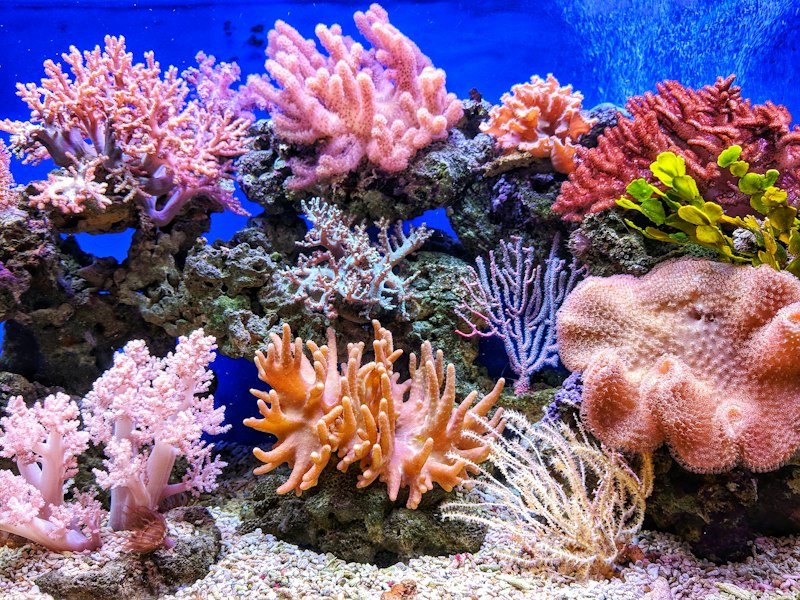
Soft Corals
common
Hard Corals
commonDive profile & how the dive runs
A typical dive at Restorf Island often begins with a descent near the reef slope, where divers can immediately appreciate the vibrant hard and soft corals. The dive master will guide the group along the varied topography, which transitions from coral-covered walls to areas with silty bottoms, ideal for macro life spotting. Divers can explore depths ranging from 5 to 30 meters, focusing on the abundant critter population in shallower areas and the larger sponges at moderate depths. A common route might involve a gentle drift along the reef, allowing ample time to examine crevices and overhangs for hidden creatures. The dive concludes with a gradual ascent, allowing for a safety stop over the shallower reef top, where schools of small reef fish often congregate, before returning to the surface for pickup.
Underwater photography
Restorf Island is a haven for both macro and wide-angle underwater photography. For macro enthusiasts, a 60mm or 100mm lens is highly recommended to capture the intricate details of blue ribbon eels, harlequin ghost pipefish, and various nudibranchs found in the critter-rich areas. Patience and a keen eye are essential when searching for the well-camouflaged devil scorpionfish or twin spot gobies. Wide-angle photographers will find excellent opportunities to frame the massive sponges and healthy soft coral formations, particularly with ambient light in the clear waters. Strong strobes are beneficial for bringing out the vibrant colors of the corals and for illuminating subjects in shaded areas. Maintaining excellent buoyancy is crucial to avoid disturbing the delicate silty bottom and its resident critters, ensuring clear shots and preserving the pristine environment.
Combine with nearby dive sites
- Fathers Reef
A string of volcanic seamounts known for pelagic encounters.
- Witu Islands - Circle of Stars
Famous for schooling fish, soft corals, and unusual critters.
- Bradford Shoals
An isolated seamount known for large schools of barracuda and pelagic action.
- Susan's Reef
Features colorful soft corals and excellent wide-angle photographic opportunities.
Getting there & logistics
Access to Restorf Island primarily involves liveaboard trips departing from Walindi Plantation Resort in Kimbe Bay, New Britain. The nearest international airport is Port Moresby (POM) on mainland New Guinea, requiring a domestic transfer to Hoskins Airport (HKN) near Kimbe. Liveaboards typically offer itineraries ranging from 7 to 10 nights, combining dives within Kimbe Bay with excursions to more remote sites like the Witu Islands or Fathers Reef. Day trips to Restorf Island are also offered by local resorts. Currently, Papua New Guinea does not have specific national park fees for divers, but liveaboard and resort packages usually include all necessary permits and local fees. Travel to this remote region is an adventure, so allow ample time for connections.
Safety & environment
Diving in Papua New Guinea, including Restorf Island, requires adherence to standard safety protocols and comprehensive dive insurance. While Kimbe Bay is generally sheltered, remote locations mean that emergency medical facilities, including recompression chambers, are not immediately available. The nearest recompression chamber is likely in Port Moresby, necessitating complex and potentially lengthy evacuation procedures in case of a serious dive accident. It is imperative to have robust dive accident insurance that covers emergency medical treatment and evacuation. Divers should always dive within their certification limits, maintain excellent buoyancy control to protect fragile corals, and follow the guidance of experienced local dive guides who are familiar with the specific conditions and marine life of Restorf Island.
Who it suits — and who it doesn't
Suited for
- Macro photographers seeking unique critters
- Divers who appreciate pristine coral reefs
- Beginner and intermediate divers due to mild currents
- Nature enthusiasts valuing remote, unspoiled environments
- Those looking for a mix of relaxed diving and topside scenery
Less suited for
- Divers primarily seeking strong current pelagic action
- Those who prefer large, accessible dive resorts with extensive nightlife
- Divers uncomfortable with remote travel and limited infrastructure
- Anyone expecting frequent large marine mammal sightings
FAQ
Restorf Island FAQ
What kind of marine life can I expect to see at Restorf Island?
Restorf Island is celebrated for its incredible diversity, particularly its macro life. You can anticipate spotting unique critters like blue ribbon eels, devil scorpionfish, various pipefishes, and the elusive harlequin ghost pipefish. The site also boasts healthy hard and soft corals, along with typical reef fish, making it a vibrant ecosystem to explore.
Are the currents strong around Restorf Island?
The waters around Restorf Island, being within the sheltered Kimbe Bay, generally experience mild currents. This makes the site enjoyable for divers of all levels, from beginners to advanced. While localized, gentle currents can occasionally occur, they typically enhance the diving experience by bringing more life to the reef rather than posing a challenge.
What are the water temperatures and visibility like?
Water temperatures in Kimbe Bay are consistently warm, ranging from 27-30°C (80-86°F) year-round. Visibility is often exceptional, typically between 20 to 50 meters (65-165 feet), providing clear views of the vibrant reefs and marine inhabitants. These ideal conditions contribute to comfortable and rewarding dives.
Is Restorf Island suitable for underwater photography?
Absolutely, Restorf Island is an excellent site for underwater photography, appealing to both macro and wide-angle shooters. Macro photographers will find an abundance of rare critters, while wide-angle enthusiasts can capture the expansive, colorful coral formations and giant sponges. The excellent visibility further enhances photographic opportunities.
How do I get to Restorf Island for diving?
Most divers access Restorf Island via liveaboards operating out of Kimbe Bay, which is reached by flying into Hoskins Airport (HKN) after a domestic connection from Port Moresby (POM). Walindi Plantation Resort also offers day trips to the island. It’s a remote destination, so planning travel logistics in advance is highly recommended.
What is the best time of year to dive Restorf Island?
The prime diving season for Restorf Island in Kimbe Bay runs from May to June and again from September through December. During these months, the region typically experiences the calmest seas and best visibility, offering optimal conditions for exploring its underwater wonders. Diving is possible year-round, but these periods are generally preferred.
Why dive Restorf Island from a liveaboard?
Restorf Island is one of Papua New Guinea's signature dive sites. A liveaboard sleeps you on the water and puts you in the water for three to four guided dives per day, including dawn and night dives that day-boat operators rarely offer. You skip the daily commute back to port and reach quieter, less-crowded sites in the same region on a single trip.
Below are the liveaboards that include Restorf Island on their Papua New Guinea itineraries.
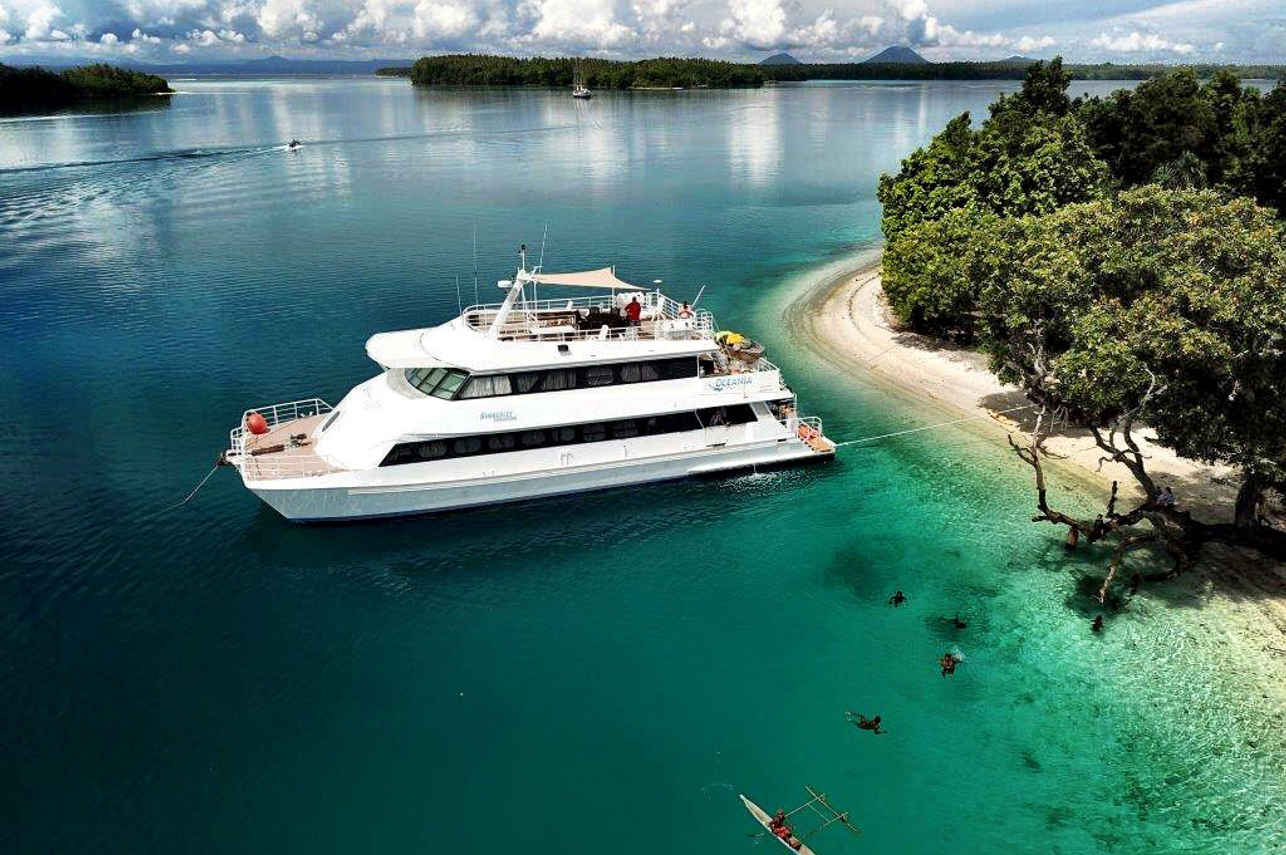
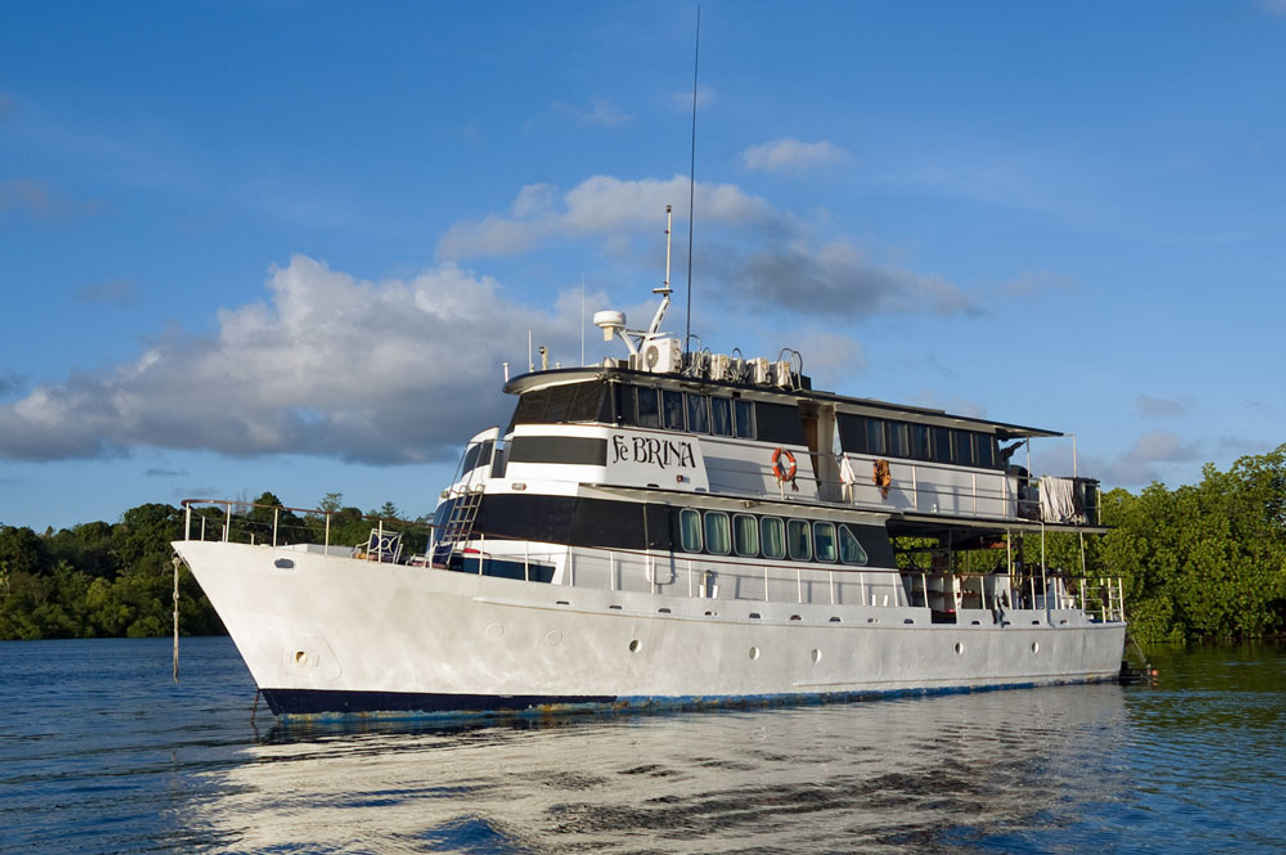
Liveaboards diving Restorf Island
These liveaboards may visit Restorf Island on selected itineraries — the exact dive sites depend on departure, weather and conditions.
Dive sites similar to Restorf Island
Same character, same waters — six more sites divers love for the exact same reasons.Compare seasons, access and liveaboard routes — then pick the site that fits your trip best.
Lauadi is a celebrated dive site within Milne Bay, Papua New Guinea, specifically recognized as the origin point of muck diving.
- Suitable for
- Beginner
- Current
- Moderate
- Access
- Shore / dayboat
- Depth
- 8–25 m
- Theme
- Reef
© Esri — Maxar, Earthstar, GIS
Tufi Fjords
Papua New Guinea
Tufi Fjords, nestled on Cape Nelson along Papua New Guinea's northeast coast, offers a unique diving experience in a stunning, tropical fjord-like landscape.
- Suitable for
- Intermediate
- Current
- Strong
- Access
- Liveaboard only
- Depth
- 5–200 m
- Theme
- Muck diving / Reef
© Esri — Maxar, Earthstar, GIS
Henry Leith
Papua New Guinea
The Henry Leith is a compelling wreck dive situated off Madang, Papua New Guinea, specifically on the western side of Wongat Island within the sheltered Madang Lagoon.
- Suitable for
- Intermediate
- Current
- Mild
- Access
- Dayboat
- Depth
- 10–20 m
- Theme
- Wreck / Reef
© Esri — Maxar, Earthstar, GIS
Peter’s Patch
Papua New Guinea
Peter’s Patch is a renowned dive site located in the Kavieng region of Papua New Guinea, off Lissenung Island.
- Suitable for
- Intermediate
- Current
- Moderate
- Access
- Liveaboard only
- Depth
- 12–30 m
- Theme
- Reef
© Esri — Maxar, Earthstar, GIS
Lissenung Island Reef
Papua New Guinea
Lissenung Island Reef is the house reef surrounding approximately two-thirds of Lissenung Island, located near Kavieng in Papua New Guinea.
- Suitable for
- Beginner
- Current
- Moderate
- Access
- Shore / dayboat
- Depth
- 2–10 m
- Theme
- Reef
© Esri — Maxar, Earthstar, GIS
Giants at Home
Papua New Guinea
Giants at Home is a unique dive site nestled in a protected, shallow bay within Milne Bay, Papua New Guinea, specifically known as a thriving manta ray cleaning station.
- Suitable for
- Beginner
- Current
- Mild
- Access
- Liveaboard only
- Depth
- 1–8 m
- Theme
- Reef