About Five Seas
Five Seas (Cinco Mares) is a notable dive site located within the Jardines de la Reina Marine Park, off Cuba's central coast. This protected archipelago, sometimes referred to as the 'Gardens of the Queen,' is renowned for its remarkably pristine marine ecosystems, largely untouched due to strict conservation measures and limited human access over many decades. The site features a gently sloping wall, characteristic of many dives in Jardines, descending to around 22 meters. Large, intact coral formations, including extensive elkhorn and brain corals, define the topography, creating a thriving habitat. Remnants of a shipwreck also contribute to the site's unique structure and provide additional interest for exploration. Five Seas is particularly celebrated for its thriving fish populations and large marine predators. Divers frequently encounter a high density of Caribbean reef sharks patrolling the reef, while schools of grunts and snappers populate the shallows. Goliath groupers are a highlight, often displaying curious behavior with divers. Silky sharks are commonly seen near the surface, especially during safety stops. Diving here typically involves a back-roll entry from a dive skiff, followed by an exploration along the wall, heading either up or down current. The dive concludes with a return to the mooring area, often with opportunities to observe pelagic life during the safety stop.
Highlights
Pristine coral wallsAbundant Caribbean reef sharksFriendly goliath groupersSchools of silky sharksDiverse reef fish populationsSloping wall topographyShipwreck remnants
Season calendar
Best months to dive here
Jan
Feb
Mar
Apr
May
Jun
Jul
Aug
Sep
Oct
Nov
Dec
Excellent
Good
Dive site facts: Five Seas
- Depth
- 6–22 m
- Typical dive
- 10–22 m, 50 min
- Current
- Mild, tidal-dependent
- Visibility
- 30+ m (high tide)
- Water temperature
- 25–30°C
- Entry
- Tender / back-roll
- Level
- Open Water Diver
- Dive type
- Reef, shark encounters, wall
- Region / port
- Jardines de la Reina, Cuba
- Coordinates
- 20.8800° N, 78.9600° W
Conditions & Currents
Currents at Five Seas are generally mild, allowing for comfortable exploration along the sloping wall. However, dive briefings emphasize awareness of potential slight currents, and dives are often planned to start up-current for a relaxed return. Visibility is highly dependent on tidal movements, with high tides frequently bringing in clearer water, often exceeding 30 meters. Water temperatures remain consistently warm, typically ranging from 25-27°C in winter to 28-30°C in summer, minimizing the risk of thermoclines. Divers enter via a back-roll from a tender, and the absence of significant surge makes entries and exits smooth. The dive profile typically follows the wall and concludes near the mooring, providing a straightforward experience suitable for divers of various experience levels.
Marine life & sighting chances
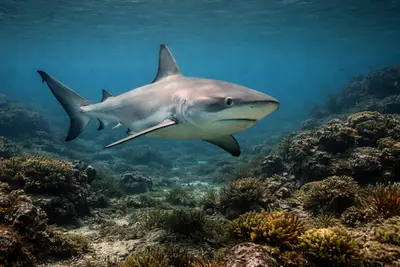
Caribbean reef shark
Year-round · common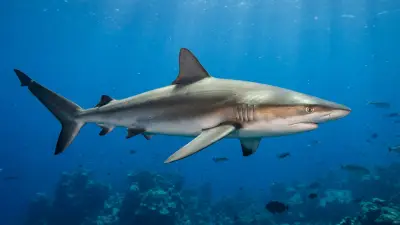
Silky shark
Year-round · common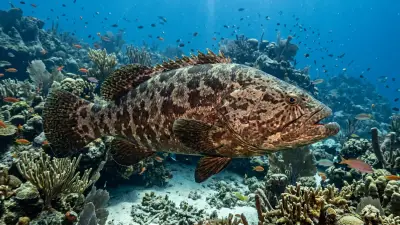
Goliath grouper
Year-round · common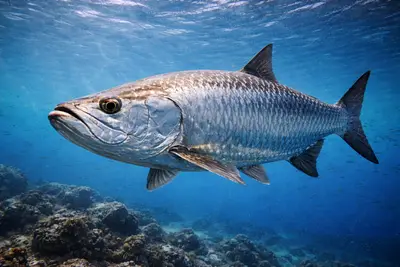
Tarpon
Year-round · common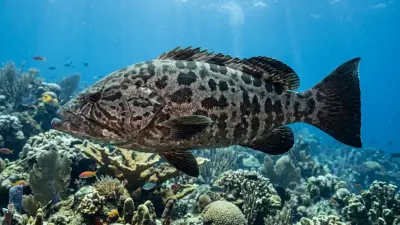
Black grouper
Year-round · common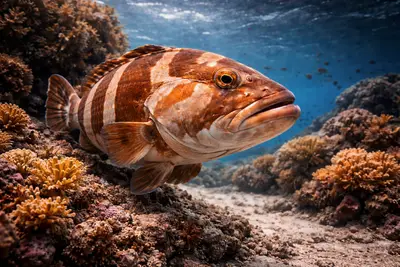
Nassau grouper
Year-round · common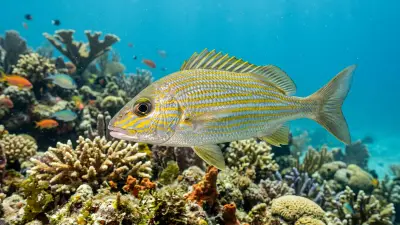
Blue-striped grunt
Year-round · common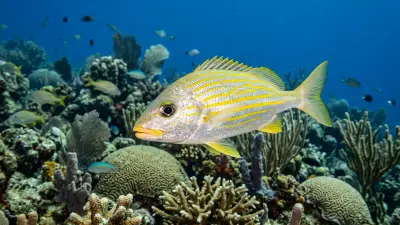
French grunt
Year-round · common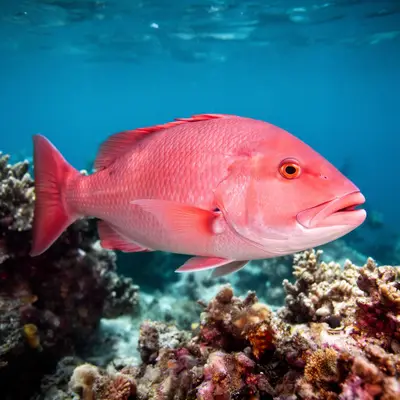
Schoolmaster snapper
Year-round · common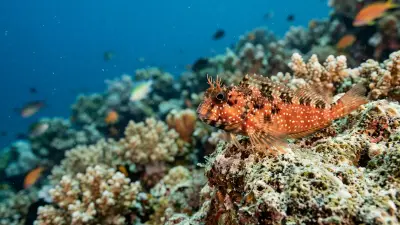
Secretary blenny
Year-round · occasionalRough-head blenny
Year-round · occasional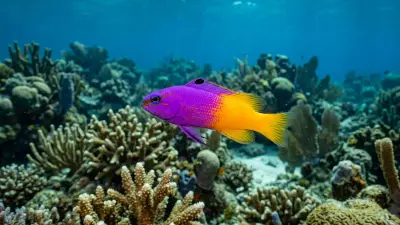
Golden fairy basslet
Year-round · occasional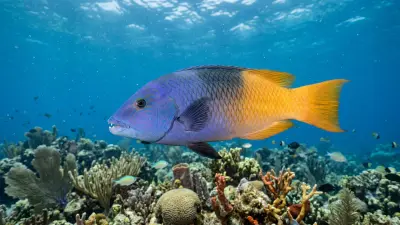
Creole wrasse
Year-round · common
Elkhorn coral
Year-round · commonDive profile & how the dive runs
Diving at Five Seas typically commences with a back-roll entry from a dive skiff directly over the site. Upon descent, divers usually follow a gently sloping wall, which drops to depths of approximately 22 meters. The route often involves moving along the wall, exploring its various crevices and overhangs where blennies and other small critters reside. Large coral formations, including impressive elkhorn and brain corals, are prominent features of the dive. Throughout the dive, encounters with Caribbean reef sharks patrolling the reef are common. Schools of grunts and snappers inhabit the shallower sections, while curious goliath groupers often approach divers. The dive concludes by returning across the top of the wall towards the mooring. Safety stops are generally conducted in the top 5-6 meters, where silky sharks are frequently observed near the surface.
Underwater photography
Five Seas presents exceptional opportunities for wide-angle photography, especially with its resident shark populations and large goliath groupers. A wide-angle lens is essential to capture the sheer number of Caribbean reef sharks and the imposing presence of the groupers. For shots near the surface, where silky sharks often congregate, a wide-angle setup will also excel. When focusing on the vibrant coral structures and schools of fish along the wall, strobes are recommended to bring out natural colors. For macro enthusiasts, a macro lens can be rewarding for documenting the smaller inhabitants like blennies and crustaceans found in the reef's crevices. Good buoyancy control is paramount to avoid disturbing the healthy coral and marine life, ensuring clear shots and respectful interaction.
Combine with nearby dive sites
- Carlos' Corner
Known for silky shark encounters
- Ancla Del Pirata
Ancla del Pirata, or "Pirate's Anchor," is a popular and accessible dive site located in the waters off María la Gorda, on Cuba's…
- Canarreos Reef
Canarreos Reef is an integral part of Cuba's exceptional marine environment, situated along a coastline renowned for its highly protected…
- Cayo Sigua
Cayo Sigua is a remarkable dive site found near Key Sigua, nestled within Cuba's rich marine ecosystems.
- Neptuno Wreck
The Neptuno Wreck is an advanced dive site located off the eastern coast of Varadero, Cuba.
Getting there & logistics
Access to Five Seas, like all sites in Jardines de la Reina, is exclusively via liveaboard operations. Most trips begin with an arrival at Havana's José Martí International Airport (HAV). From Havana, guests embark on a bus transfer, typically a 5-6 hour journey, to the fishing village of Jucaro. In Jucaro, liveaboards such as the Jardines Aggressor I or Avalon vessels await, transporting divers on a 4-5 hour cruise to the marine park. Trips are generally 8 days/7 nights, offering 5 days of diving. Park access is strictly limited to 1,000 divers per year, making advance booking essential. U.S. citizens can legally participate through OFAC-authorized 'People-to-People' or 'Humanitarian Project' programs, which include educational activities about the marine park's ecology and conservation efforts.
Safety & environment
Diving in Jardines de la Reina is generally well-managed, with liveaboards operating two divemasters for small groups. However, the remote location means emergency medical care and recompression facilities are distant. The nearest recompression chamber is located in Havana, requiring a significant land and air transfer, emphasizing the importance of diligent dive planning and conservative profiles. Divers should carry comprehensive dive insurance that covers emergency evacuation and recompression. Site-specific hazards are minimal, primarily involving encounters with large marine life like sharks; however, these animals are typically well-behaved due to limited human interaction. Adhering to the dive brief, maintaining excellent buoyancy, and avoiding contact with marine life are crucial for diver safety and marine preservation.
Who it suits — and who it doesn't
Suited for
- Experienced Open Water Divers
- Shark enthusiasts
- Underwater photographers (wide-angle)
- Divers seeking pristine marine ecosystems
- Liveaboard adventurers
Less suited for
- Brand new divers (preference for more sheltered sites)
- Those prone to seasickness (due to liveaboard travel)
- Divers seeking extensive macro subjects only
- Budget-conscious travelers
FAQ
Five Seas FAQ
What kind of sharks can I expect to see at Five Seas?
Five Seas is known for frequent shark encounters. You can commonly expect to see Caribbean reef sharks patrolling the reef itself, often in significant numbers. Additionally, silky sharks are frequently spotted near the surface, especially during safety stops.
What is the typical visibility like at Five Seas?
Visibility at Five Seas is generally very good, though it can be tidal-dependent. During high tides, you can expect excellent visibility, often exceeding 30 meters. This clear water provides great conditions for observing the extensive coral formations and marine life.
Are there any strong currents at Five Seas?
Currents at Five Seas are typically mild, making for a comfortable dive experience. While slight currents can occasionally be present, dive guides usually plan the dive profile to account for them, often starting up-current for a relaxed drift back to the mooring.
Is Five Seas suitable for less experienced divers?
Five Seas is suitable for Open Water certified divers who have some comfort with boat entries and mild currents. While the site is not overly challenging, the remote liveaboard environment and potential for pelagic encounters make it more appropriate for divers with a bit of experience rather than absolute beginners.
How is Five Seas accessed and what is the travel like?
Five Seas is accessed exclusively via liveaboard from the Jardines de la Reina Marine Park. This involves flying into Havana, then a 5-6 hour bus transfer to Jucaro, followed by a 4-5 hour liveaboard cruise to the park. Divers then use tenders from the liveaboard to reach the dive site.
Why dive Five Seas from a liveaboard?
Five Seas is one of Cuba's signature dive sites. A liveaboard sleeps you on the water and puts you in the water for three to four guided dives per day, including dawn and night dives that day-boat operators rarely offer. You skip the daily commute back to port and reach quieter, less-crowded sites in the same region on a single trip.
Below are the liveaboards that include Five Seas on their Cuba itineraries.
Liveaboards diving Five Seas
These liveaboards may visit Five Seas on selected itineraries — the exact dive sites depend on departure, weather and conditions.
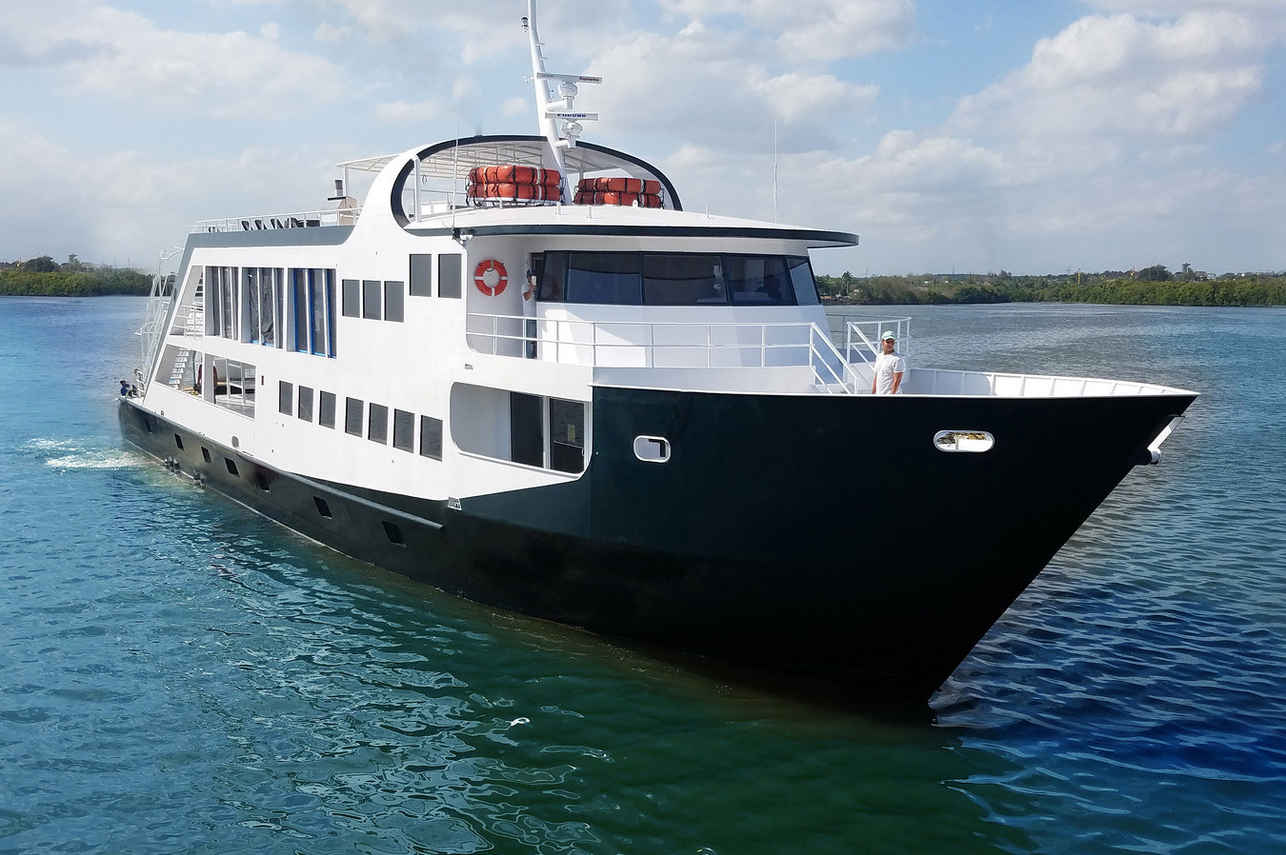
Jardines Avalon Fleet
Cuba
20 guests35.05 m
$494/day
Dive sites similar to Five Seas
Same character, same waters — six more sites divers love for the exact same reasons.Compare seasons, access and liveaboard routes — then pick the site that fits your trip best.
El Almirante
Cuba
El Almirante is an advanced dive site located off the shores of Maria la Gorda, on Cuba's Guanahacabibes Peninsula.
- Suitable for
- Advanced
- Current
- Moderate
- Access
- Dayboat
- Depth
- 27–30 m
- Theme
- Wall / Reef
La Patana
Cuba
La Patana is a prominent dive site within the protected marine park of Jardines de la Reina, a vast archipelago stretching 150 kilometers off Cuba's southern coast.
- Suitable for
- Intermediate
- Current
- Mild
- Access
- Liveaboard only
- Depth
- 15–30 m
- Theme
- Reef / Wall
Arrecife Somero
Cuba
Arrecife Somero, located near Key Sigua within the UNESCO-recognized Zapata Swamp biosphere reserve, presents a unique reef crest forming a horseshoe shape.
- Suitable for
- Beginner
- Current
- Mild
- Access
- Liveaboard only
- Depth
- 2–5 m
- Theme
- Reef
Puente Escondido
Cuba
Puente Escondido is a notable dive site nestled within the Jardines de la Reina marine park, an expansive and highly protected area off Cuba's southern coast.
- Suitable for
- Beginner
- Current
- Mild
- Access
- Liveaboard only
- Depth
- ≤ 18 m
- Theme
- Reef
La Corona
Cuba
La Corona is a captivating dive site situated within the expansive 35-kilometer barrier reef off Playa Santa Lucía in Cuba's Camagüey province.
- Suitable for
- Beginner
- Current
- Mild
- Access
- Dayboat
- Depth
- 5–40 m
- Theme
- Reef / Wall
Cueva del Negro
Cuba
Cueva del Negro is a notable dive site located near Cayo Largo, an island off Cuba's southern coast, known for its extensive underwater features.
- Suitable for
- Intermediate
- Current
- No current
- Access
- Liveaboard or dayboat
- Depth
- 8–8 m
- Theme
- Reef