About Cueva del Negro
Cueva del Negro is a notable dive site located near Cayo Largo, an island off Cuba's southern coast, known for its extensive underwater features. This site is specifically a beautiful coral cave, attracting divers to its distinctive topography and marine life. It is part of a region celebrated for its well-preserved reef systems and abundant biodiversity, a result of Cuba's proactive environmental policies. The dive takes place in relatively shallow waters, around 25 feet (approximately 7.6 meters), making it accessible for a range of divers. The coral formations here are vibrant, contributing to a rich habitat that supports various species. The site offers a unique cave diving experience, though its depth suggests it's more of a swim-through or cavern rather than a deep, technical cave. Divers visiting Cueva del Negro can anticipate sightings of several prominent fish species. Groupers, barracudas, and tuna are frequently observed within and around the cave's structure, adding to the excitement of the dive. The area around Cayo Largo boasts more than 30 dive sites in total, indicating a rich and varied underwater landscape for exploration. The general conditions for diving in Cuba, including around Cayo Largo, are typically favorable year-round, with warm waters and excellent visibility, often exceeding 100 feet. The protected status of many Cuban marine areas contributes to healthy ecosystems, offering a glimpse into what Caribbean reefs looked like before widespread human impact.
Highlights
Corralled cave explorationGroupers, barracudas, tunaPart of Cayo Largo's 30+ sitesShallow depthUnique coral formations
Season calendar
Best months to dive here
Jan
Feb
Mar
Apr
May
Jun
Jul
Aug
Sep
Oct
Nov
Dec
Excellent
Good
Dive site facts: Cueva del Negro
- Depth
- 7.5 m (25 ft)
- Current
- Mild
- Visibility
- Excellent
- Water temperature
- 25–30°C (77–86°F)
- Entry
- Boat
- Level
- Beginner to Intermediate
- Dive type
- Coral cave, reef
- Region / port
- Cayo Largo
- Coordinates
- 21.5815° N, 81.4287° W
Conditions & Currents
The specific current conditions for Cueva del Negro are not detailed, but Cayo Largo, where the site is located, is generally known for its accessible dive conditions. Many locations around Cayo Largo are suitable for beginner and intermediate divers, suggesting that strong or challenging currents are not typically a dominant feature here. Visibility in Cuba is often excellent, frequently exceeding 30 meters (98 feet), and water temperatures are consistently warm, ranging from high-70s to low-80s Fahrenheit (25-29°C) in winter and reaching 80s Fahrenheit (around 30°C) in the wet season. Divers should always consult local dive operators for real-time information on conditions, including potential surge or thermoclines that might affect a dive plan for a specific day.
Marine life & sighting chances

Grouper
common
Barracuda
common
Tuna
common
Reef shark
occasional
Moray Eel
occasional
Angel fish
occasional
Ray
occasional
Tropical fish
common
Coral
common
Sponge
commonDive profile & how the dive runs
Your dive at Cueva del Negro typically begins with a boat entry, as the site is offshore from Cayo Largo. After descending, you will find the entrance to the corralled cave at approximately 7.5 meters (25 feet). The dive primarily involves exploring the interior of this unique coral formation, observing the resident groupers, barracudas, and tuna that frequent the cave. The route generally follows the natural contours of the cave, allowing you to appreciate the intricate coral structures. Given the shallow depth, bottom time can be generous, allowing for thorough exploration. The turn point is usually dictated by air consumption or simply by reaching a satisfactory exploration of the cave. The safety stop is conducted in the clear, shallow waters outside the cave, often in direct sunlight, providing a pleasant end to the dive.
Underwater photography
Cueva del Negro presents an excellent opportunity for underwater photography, particularly for wide-angle shots due to its distinct coral cave structure. The natural light filtering into the relatively shallow cave creates dramatic lighting conditions, but external strobes are still highly recommended to bring out the vibrant colors of the corals and marine life. For capturing the full scale of the cave and its schooling fish like barracudas and tuna, a wide-angle or fisheye lens on a compact camera or DSLR is ideal. Macro photography might be less of a focus here, but keen eyes might spot smaller critters in the coral formations. Maintain excellent buoyancy control, especially inside the cave, to avoid disturbing the delicate coral and stirring up sediment. Be mindful of your fin kicks and always respect the natural environment.
Combine with nearby dive sites
- Cayo Sigua
Cayo Sigua is a remarkable dive site found near Key Sigua, nestled within Cuba's rich marine ecosystems.
- Cayo Rosario
Cayo Rosario is situated within Cuba's Canarreos Archipelago, a protected marine environment known for its unspoiled coral reefs and…
- Las Mandarinas
Las Mandarinas is a beautiful coral reef situated off the northern coast of Cuba, specifically near Varadero.
- Neptuno Wreck
The Neptuno Wreck is an advanced dive site located off the eastern coast of Varadero, Cuba.
- Jaula I
Jaula I is a prominent dive site within the Jardines del Rey archipelago, situated between the well-known Cayo Coco and Cayo Guillermo.
- Jaula II
Jaula II is a notable dive site located within the Jardines del Rey archipelago, positioned between Cayo Coco and Cayo Guillermo on Cuba's…
Getting there & logistics
Access to Cueva del Negro is facilitated through Cayo Largo, Cuba's largest outlying island. Divers typically fly into Cayo Largo del Sur Airport (CYO), which provides direct access to the island's resorts and dive centers. Trips to Cayo Largo can also be combined with itineraries to other Cuban destinations, although it's often a dedicated dive trip due to its island location. Dive excursions to Cueva del Negro depart from local dive operators on Cayo Largo, involving short boat rides to the site. The area is known for numerous dive sites, allowing for multi-day dive packages. There are no specific park fees mentioned for Cueva del Negro itself, but Cayo Largo is part of a protected marine area.
Safety & environment
While diving at Cueva del Negro, divers should always adhere to standard safety protocols and any specific instructions from their dive guide. The nearest recompression chamber or advanced medical facility capable of treating diving emergencies would likely be on the main island of Cuba, which could entail a significant evacuation time from Cayo Largo. Therefore, comprehensive dive insurance that covers emergency medical treatment and evacuation is highly recommended for all divers. Site-specific hazards in a coral cave environment include potential entanglement with fishing lines or sharp coral, so careful buoyancy control and awareness of your surroundings are crucial. Always dive within your certification limits and with a reliable buddy. Although Cueva del Negro is relatively shallow, conservative dive planning is always advisable.
Who it suits — and who it doesn't
Suited for
- Beginner divers seeking easy cave experiences
- Intermediate divers honing buoyancy skills
- Photographers interested in unique coral formations
- Divers seeking abundant reef fish encounters
- Travelers based on Cayo Largo
Less suited for
- Divers seeking extreme depth or current challenges
- Those uninterested in coral reef or cave environments
- Divers who prefer shore-based diving
- Travelers on a very tight schedule (due to Cayo Largo's location)
FAQ
Cueva del Negro FAQ
What kind of marine life can I expect to see at Cueva del Negro?
At Cueva del Negro, you can frequently encounter groupers, barracudas, and tuna. The site is a lively coral cave within a rich ecosystem, so you might also spot various tropical fish, reef sharks, moray eels, and angel fish around the coral formations.
Is Cueva del Negro suitable for beginner divers?
Yes, Cueva del Negro is well-suited for beginner divers. The cave is located in approximately 7.5 meters (25 feet) of water, making it a relatively shallow and accessible dive. Its calm conditions and fascinating coral structures offer a comfortable and rewarding experience for those new to diving.
How deep is Cueva del Negro and what are the typical dive conditions?
The main feature, the coral cave, is found at a shallow depth of about 7.5 meters (25 feet). The surrounding waters of Cayo Largo, where the site is located, are known for excellent visibility, often exceeding 30 meters (98 feet), and warm water temperatures ranging from 25-30°C (77-86°F). Currents are typically mild.
How do I get to Cueva del Negro?
Cueva del Negro is accessed via boat from Cayo Largo, Cuba's largest outlying island. Most divers fly into Cayo Largo del Sur Airport (CYO) and arrange dive excursions through local operators on the island. The boat ride to the site is usually short, as it is one of over 30 dive sites in the Cayo Largo area.
What kind of photography is best at Cueva del Negro?
Wide-angle photography is excellent at Cueva del Negro to capture the coral cave's unique structure and schooling fish. The shallow depth and natural light allow for vibrant images, but strobes are recommended to enhance color. Maintaining good buoyancy is crucial to protect the delicate coral.
Why dive Cueva del Negro from a liveaboard?
Cueva del Negro is one of Cuba's signature dive sites. A liveaboard sleeps you on the water and puts you in the water for three to four guided dives per day, including dawn and night dives that day-boat operators rarely offer. You skip the daily commute back to port and reach quieter, less-crowded sites in the same region on a single trip.
Below are the liveaboards that include Cueva del Negro on their Cuba itineraries.
Liveaboards diving Cueva del Negro
These liveaboards may visit Cueva del Negro on selected itineraries — the exact dive sites depend on departure, weather and conditions.
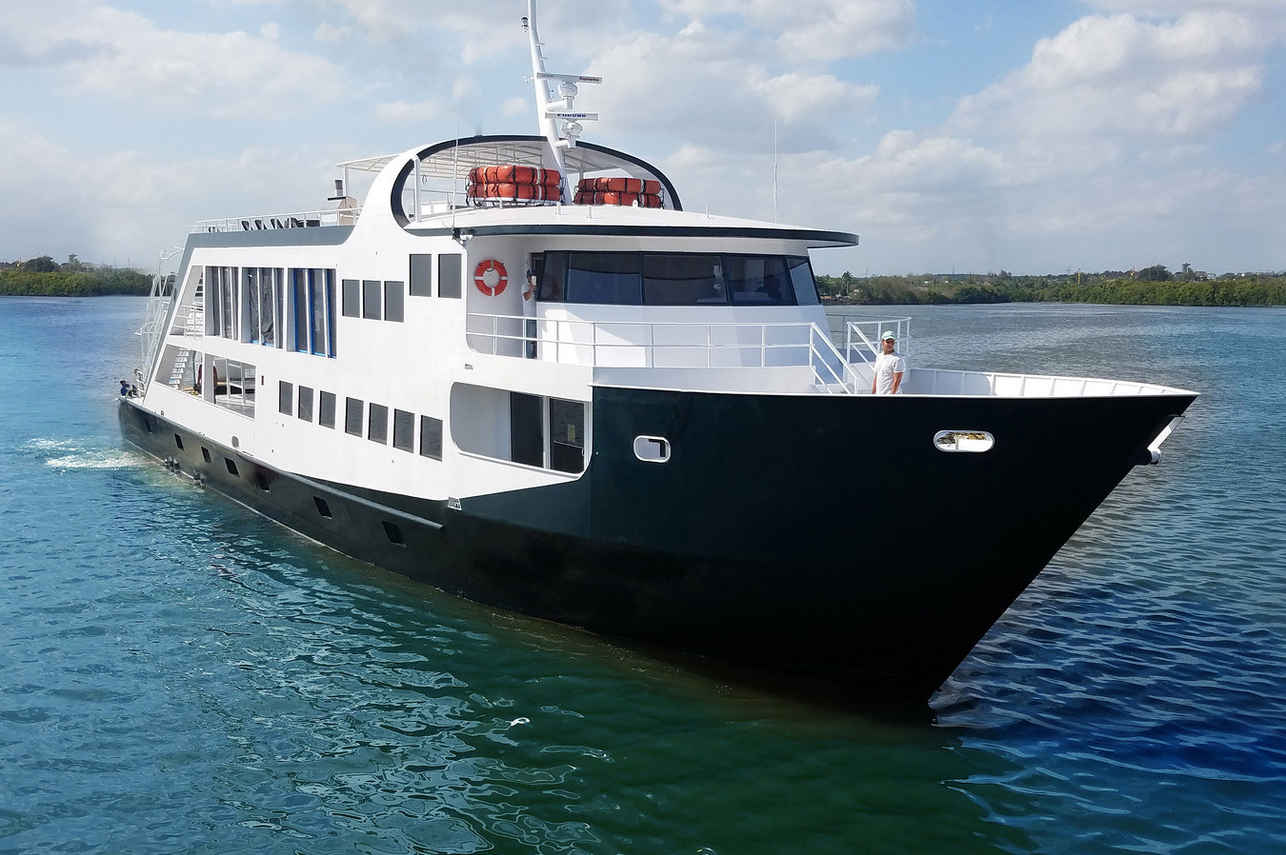
Jardines Avalon Fleet
Cuba
20 guests35.05 m
$494/day
Dive sites similar to Cueva del Negro
Same character, same waters — six more sites divers love for the exact same reasons.Compare seasons, access and liveaboard routes — then pick the site that fits your trip best.
© Esri — Maxar, Earthstar, GIS
El Almirante
Cuba
El Almirante is an advanced dive site located off the shores of Maria la Gorda, on Cuba's Guanahacabibes Peninsula.
- Suitable for
- Advanced
- Current
- Moderate
- Access
- Dayboat
- Depth
- 27–30 m
- Theme
- Wall / Reef
La Patana is a prominent dive site within the protected marine park of Jardines de la Reina, a vast archipelago stretching 150 kilometers off Cuba's southern coast.
- Suitable for
- Intermediate
- Current
- Mild
- Access
- Liveaboard only
- Depth
- 15–30 m
- Theme
- Reef / Wall
© Esri — Maxar, Earthstar, GIS
Arrecife Somero
Cuba
Arrecife Somero, located near Key Sigua within the UNESCO-recognized Zapata Swamp biosphere reserve, presents a unique reef crest forming a horseshoe shape.
- Suitable for
- Beginner
- Current
- Mild
- Access
- Liveaboard only
- Depth
- 2–5 m
- Theme
- Reef
© Esri — Maxar, Earthstar, GIS
Puente Escondido
Cuba
Puente Escondido is a notable dive site nestled within the Jardines de la Reina marine park, an expansive and highly protected area off Cuba's southern coast.
- Suitable for
- Beginner
- Current
- Mild
- Access
- Liveaboard only
- Depth
- ≤ 18 m
- Theme
- Reef
La Corona is a captivating dive site situated within the expansive 35-kilometer barrier reef off Playa Santa Lucía in Cuba's Camagüey province.
- Suitable for
- Beginner
- Current
- Mild
- Access
- Dayboat
- Depth
- 5–40 m
- Theme
- Reef / Wall
© Esri — Maxar, Earthstar, GIS
Sueño de Pescador, meaning 'Fisherman's Dream', is an advanced dive site situated within Coiba National Park in Panama.
- Suitable for
- Advanced
- Current
- Strong
- Access
- Liveaboard only
- Depth
- ≤ 42 m
- Theme
- Reef / Wall