Nautilus Belle Amie
Explore Mexico's Pacific marvels aboard a luxurious, custom-built dive vessel.
- En-Suite bathrooms
- Aircon Cabins
- Warm Water Showers
4.8(2048 reviews)
32 guestsfrom $323/day

 Free dive insuranceincluded with every booking
Explore Mexico's Pacific marvels aboard a luxurious, custom-built dive vessel.
4.8(2048 reviews)
Brand-new custom-built liveaboard for Socorro, Sea of Cortez & Baja California expeditions
4.8(27 reviews)
Choice of 3 itineraries year-round with BBQ on board
4.6(2026 reviews)
Explore Mexico's "aquarium of the world" in luxury and comfort.
4.5(31 reviews)
Discover Mexico's pelagic giants aboard a vessel with a legendary past.
4.5(186 reviews)
The Sea of Cortez separates the Baja California peninsula from mainland Mexico. Jacques Cousteau's ‘aquarium of the world’ remains a route of contrasts: rocky reefs, pinnacles, sea-lion colonies and nutrient-rich channels rather than tropical coral walls.
Liveaboards extend beyond La Paz day-boat range toward remote islands and seasonal whale corridors. Summer and autumn bring the warmest water; winter and spring favour whales and mobulas but demand thicker exposure protection.
The gulf stretches for more than 1,000 km, so ‘Sea of Cortez’ can describe very different trips. Southern loops focus on Espíritu Santo and Los Islotes near La Paz, while longer expeditions move north toward Loreto, Bahía de los Ángeles and the Midriff Islands where transfers, temperatures and visibility change markedly.
This is a temperate-to-subtropical ecosystem shaped by upwelling rather than a continuous coral reef. Rocky slopes, sand channels and seamounts support sardines, jacks and rays; those food webs in turn attract sea lions, whale sharks and migrating whales. Timing the route matters more than expecting every animal in one week.
Choose the route that fits your experience and dream encounters — each region has its own season, character and story.
Baja's island-studded gulf mixes playful sea lions, schooling mobulas, reefs and seasonal giants.
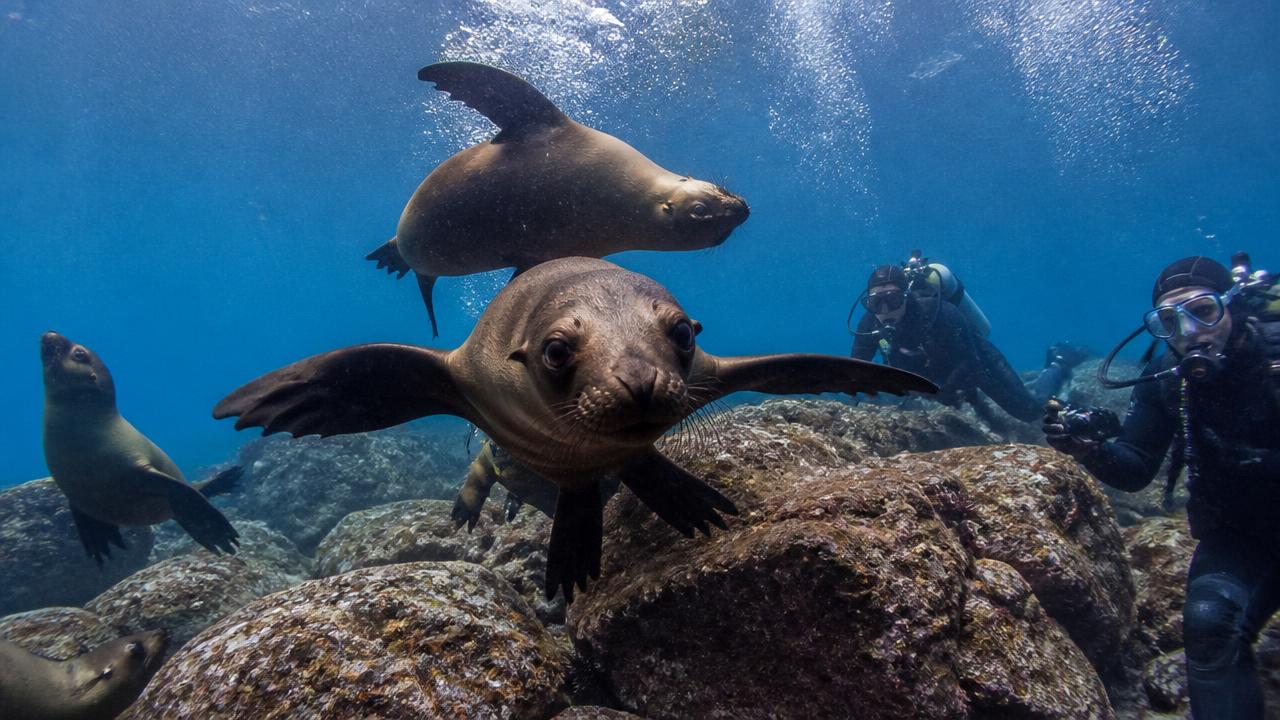
Los Islotes is famous for energetic encounters, especially when juveniles become curious after the breeding season. The colony is most playful after the summer breeding closure, when juveniles investigate fins, cameras and bubbles. Divers should keep hands tucked and avoid chasing the animals; the juveniles' curiosity does the work.
Los Islotes is the Sea of Cortez's classic playful sea-lion encounter.
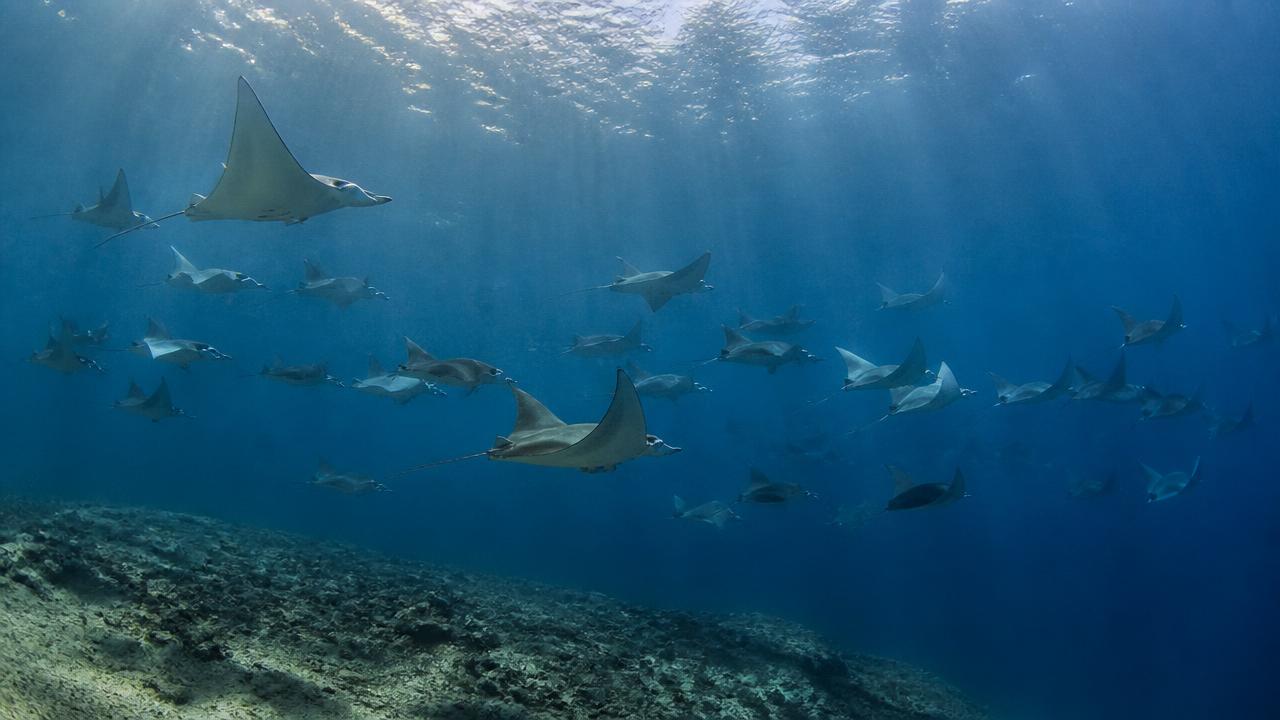
Seasonal gatherings of mobula rays can turn crossings and selected dive areas into remarkable pelagic spectacles. Mobulas may travel in tight schools or leap at the surface, but wind and plankton determine where a boat finds them. Early morning and dusk are often the best times to witness their acrobatic leaps and synchronized schooling.
Mobulas gather seasonally in the productive waters around Baja.

Whale sharks feed in La Paz Bay under regulated snorkelling rules, while several whale species migrate through the gulf. Whale-shark activity near La Paz is managed separately and is normally a snorkelling encounter under local rules. Grey whales, humpbacks and blue whales may also appear on northern routes, turning crossings into wildlife-watching sessions.
La Paz whale-shark encounters are regulated snorkelling experiences rather than scuba dives.
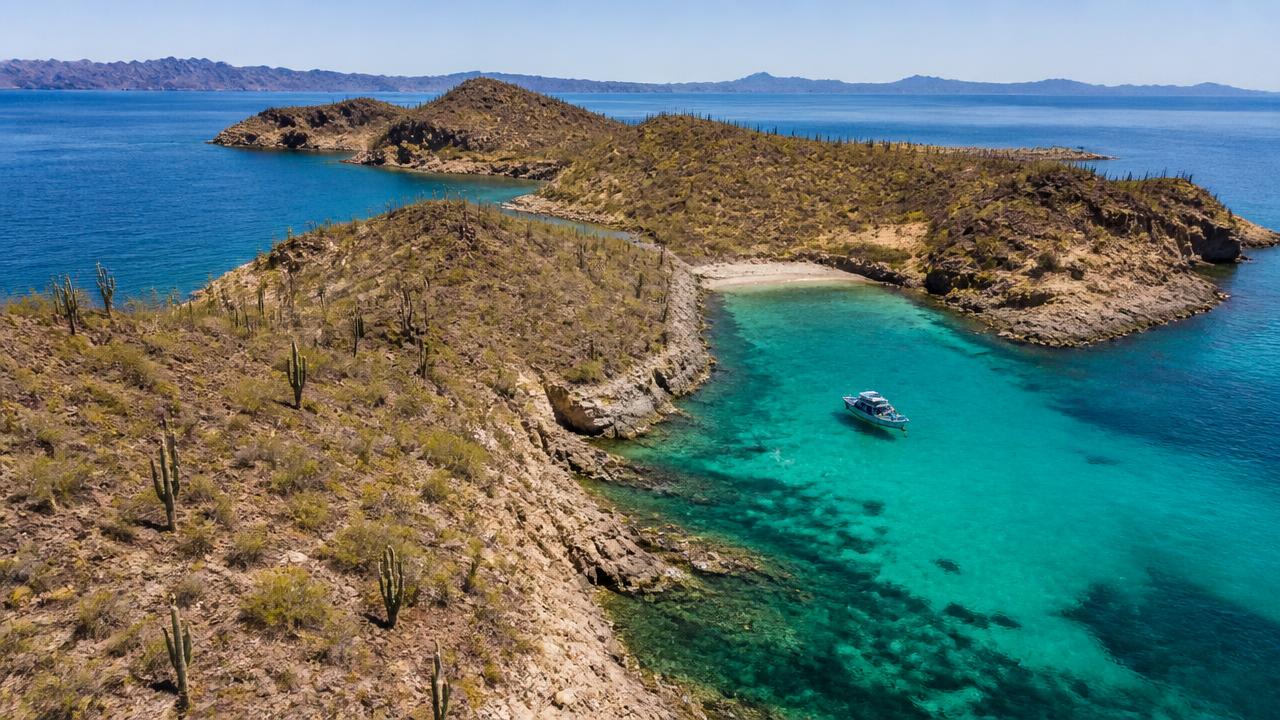
Volcanic islands, cactus-covered ridges and undeveloped coves give every liveaboard crossing a distinctive desert-meets-sea backdrop. The contrast between ochre desert, cactus-covered islands and deep blue water is part of every crossing and surface interval. The arid coastline also means clear night skies and memorable sunsets during the surface interval.
Arid islands and turquoise coves define the region above water.
Choose the Sea of Cortez itinerary that matches your experience, season and wildlife priorities. Route names can look similar while covering different ports, sites and sea conditions, so compare the actual daily programme rather than the headline alone.
Los Islotes sea-lion colony, Espíritu Santo's rocky reefs and sheltered island coves
generally accessible reefs with current on exposed points
July–November; warmest water and active juvenile sea lions in autumn
Bahía de los Ángeles, Midriff channels and remote desert islands in the productive northern gulf
long passages, cooler upwelling, variable visibility and limited shelter
August–November; exact programme depends on wind and water temperature
Loreto Bay marine-park islands, rocky walls, sea-lion sites and seasonal whale corridors
rocky profiles with temperature shifts and occasional current
July–November for diving; whale periods vary by species
Los Islotes juveniles, Espíritu Santo reefs and the offshore El Bajo seamount chain
sheltered options, but current and blue water at El Bajo
July–November; whale-shark snorkelling is separately regulated
Operator rules vary, but the practical guidance below helps you choose a route you can enjoy safely.
| Route | Certification | Logged dives | Conditions | Gear |
|---|---|---|---|---|
| La Paz & southern islands | Advanced Open Water recommended | 30+ recommended | Rocky reefs at 8–25 m, 8–20 m visibility, mild current with stronger flow on exposed points | DSMB; nitrox recommended where available |
| Midriff Islands expedition | Advanced Open Water recommended | 30+ recommended | Cool upwelling water, 5–15 m visibility, nutrient-rich green water and variable current in the channels | DSMB; nitrox recommended where available |
| Loreto & central gulf | Advanced Open Water recommended | 30+ recommended | Rocky walls and slopes at 10–28 m, 10–20 m visibility, thermoclines and occasional tidal current | DSMB; nitrox recommended where available |
| Espíritu Santo & El Bajo | Advanced Open Water recommended | 30+ recommended | Sheltered coves plus an offshore seamount at 18–30 m, 10–25 m visibility, blue water and current at El Bajo | DSMB; nitrox recommended where available |
Marine-life windows overlap only partly. Verify the exact embarkation port and route map before booking, because a boat sold as Sea of Cortez may operate hundreds of kilometres from another boat using the same regional name. The operator's published minimum, check-dive assessment and safety rules always take precedence.
These are the sites that define a Sea of Cortez liveaboard itinerary. Compare their topography, conditions and location against the daily programme rather than assuming every regional cruise visits the same places.
The Gulf of California changes more dramatically through the year than most tropical destinations. Summer and autumn bring warm water and classic sea-lion routes; winter and spring are cooler, plankton-rich and better suited to whale-focused expeditions.
Jan–Mar
18–22 °CCool northern water and seasonal winds require a 7 mm suit or semi-dry. Humpbacks, grey whales and blue whales occur in different parts of Baja, but not every liveaboard route reaches them.
Apr–Jun
20–26 °CThe gulf begins warming and mobula activity can build around southern Baja. Spring winds may still affect exposed crossings, while upwelling supports productive but sometimes greener water.
Jul–Sep
26–30 °CThe warmest diving period opens the main liveaboard programme. Juvenile sea lions become increasingly playful, although late-summer tropical weather can alter southern itineraries.
Oct–Dec
23–29 °COctober and November are prime all-round months for warm water, sea lions and broad route choice. Cooling begins from the north in December as winter winds strengthen.
La Paz, Loreto and the Midriff Islands can differ by several degrees on the same dates because the gulf spans more than 1,000 km. Check the exact route before choosing exposure protection, and remember that whale-shark visits in La Paz Bay are regulated snorkelling excursions rather than guaranteed scuba encounters.
Plan a Sea of Cortez liveaboard around the encounters that matter most to you. The bars show stronger historical windows, not promises, and the location line explains where each animal is normally sought.
Peak bars show historically stronger encounter windows; shoulder months can still produce excellent dives, while wild-animal encounters are never guaranteed.
The Sea of Cortez stretches for more than 1,000 km, so La Paz, Loreto and the southern Baja gateways serve very different itineraries. Book flights only after checking both the embarkation and disembarkation port.
La Paz
The principal port for Espíritu Santo, Los Islotes and southern-gulf circuits. Marinas lie around La Paz Bay, generally 20–35 minutes from Manuel Márquez de León airport.
Los Cabos Airport (SJD)
The best-served international gateway for many La Paz trips. The road transfer to La Paz is roughly 190 km and normally takes about 2.5–3 hours.
Loreto
Gateway to Loreto Bay and central-gulf expeditions. Loreto International Airport is close to town, but flight frequency is lower than at Los Cabos.
Cabo San Lucas
Used by selected southern Baja or positioning itineraries rather than standard La Paz loops. Confirm whether a quoted Cabo departure means the downtown marina or an included transfer.
Southern loops, central-gulf voyages and Midriff Islands expeditions are not interchangeable: distances, water temperatures and transfer plans differ substantially. Some journeys are one-way, and seasonal winds can alter passages, so allow a pre-cruise night and verify the final port before arranging domestic flights or road transfers.
Wake between Baja's desert islands and dive into a sea alive with playful sea lions, rays and seasonal giants. Explore today's departures and choose the route that turns this legendary gulf into your next adventure.
Sea of Cortez liveaboards
Shorter southern loops are usually better value than remote northern expeditions.
A cabin, meals, tanks, weights, guides and the scheduled dives are normally included; exact inclusions vary by boat.
Budget separately for flights, transfers, marine-park or port fees, nitrox, rental gear, gratuities and any required hotel nights.
Prices move with season, cabin type, trip length and remaining availability. Open a departure for the final operator breakdown.
The calendar below shows how liveaboard prices shift month by month, so you can see exactly when your money goes furthest. We want every diver to get the best possible value, which is why we highlight the seasons that balance great conditions with the fairest rates.
$261–$430
per day liveaboard
Prices reflect typical costs for mid-range to premium options. Budget alternatives may be available.
Compare Sea of Cortez with its country overview and other strong liveaboard regions.
Explore our expedition vessels and find your perfect trip to Sea of Cortez