About Three Islands (Antalya)
Three Islands, also known as Üç Adalar, is an exceptional dive site located near Kemer Marina, approximately 45 minutes by boat from Antalya. Despite its name, this protected marine area comprises four small islands, collectively offering nine distinct reef systems and two underwater caves. The remote location and conservation efforts contribute to pristine conditions and remarkable marine biodiversity, making it a standout destination on Turkey's Mediterranean coast. The underwater topography is characterized by dramatic rocky reefs that descend steeply to sandy bottoms, creating ideal habitats for both large pelagic species and smaller reef inhabitants. Divers can explore extensive gorgonian sea fan gardens on deeper walls, vibrant sponge and tunicate populations, and a wide array of fish. The channels between the islands are known for funnelling currents, creating exciting drift diving opportunities and concentrating marine life. Depths at Three Islands range from 3 meters to a considerable 61 meters, accommodating divers from beginner to advanced levels. However, the site is particularly renowned for its deeper sections, often reaching 40 meters, where more spectacular features and pelagic encounters occur. Excellent visibility, often exceeding 20 meters, is a consistent feature, enhancing the overall dive experience and facilitating underwater photography. Comfortable diving conditions prevail from May through November, with peak summer months offering the warmest water temperatures and most stable weather. The site's dynamic environment, with its varied topography and potential for current, requires thoughtful planning, especially for deeper or drift dives, but promises an unforgettable exploration of the Mediterranean's rich underwater landscapes.
Highlights
Nine diverse reef systemsTwo explorable underwater cavesDramatic walls and pinnaclesPotential Mediterranean monk seal encountersAbundant stingrays and tunaImpressive barracuda formationsRich gorgonian sea fan gardensChallenging drift dive opportunities
Season calendar
Best months to dive here
Jan
Feb
Mar
Apr
May
Jun
Jul
Aug
Sep
Oct
Nov
Dec
Good
Dive site facts: Three Islands (Antalya)
- Depth
- 3–61 m
- Typical dive
- 12–40 m, 45–60 min
- Current
- Mild to strong, variable
- Visibility
- 15–30 m
- Water temperature
- 16–29°C
- Entry
- Boat
- Level
- Beginner to Advanced
- Dive type
- Reef, wall, cave, drift, deep
- Region / port
- Antalya
- Coordinates
- 36.82, 30.58
Conditions & Currents
Currents at Three Islands can be complex and variable, particularly in the channels between the islands where flow is often accelerated. Divers can expect dynamic conditions including eddies and upwellings, which necessitate careful planning and expert guidance. While these currents create exhilarating drift diving experiences and attract abundant marine life, they also demand advanced skills and conservative gas management, especially when exploring deeper sections. Entry and exit strategies are typically boat-based, with guides timing descents to optimize current conditions for safety and enjoyment. Visibility is consistently excellent due to the offshore location and current-driven water clarity, though thermoclines may be present at deeper levels during certain times of the year.
Marine life & sighting chances

Stingrays
occasional
Tuna
occasional
Moray eels
common
Barracuda
common

Groupers
common
Octopus
common
Gorgonian sea fans
common
Damselfish
common
Conger eels
occasional
Cuttlefish
occasional
Nudibranchs
occasional
Lobsters
occasional
Scorpionfish
commonDive profile & how the dive runs
Dives at Three Islands typically begin with a boat entry, often leveraging the complex current patterns for exhilarating drift dives through channels or along the outer walls. A common profile involves descending along a rocky reef or wall, gradually exploring depths between 10 to 40 meters, where gorgonian gardens and larger marine life are frequently encountered. Depending on the dive plan and current, you might navigate between islands, exploring crevices and smaller caves along the way. The turn point is often dictated by air consumption and no-decompression limits, with a slow ascent back along the reef. Safety stops are performed in shallower, sheltered areas, often around 5 meters, allowing time to observe smaller reef fish before a boat pick-up.
Underwater photography
Three Islands offers exceptional opportunities for both wide-angle and macro photography due to its diverse topography and rich marine life. For capturing the dramatic walls, reef systems, and schooling barracuda, a wide-angle lens is ideal. Be prepared for varying light conditions as you descend, and consider an external strobe to bring out the vibrant colors of sponges and gorgonians at depth. For macro subjects like nudibranchs, small eels, and reef fish, a dedicated macro lens will yield stunning detail. Buoyancy control is paramount, especially when navigating currents or exploring delicate cave systems, to avoid disturbing marine life or kicking up sediment. Maintain respectful distances from all creatures, particularly if you are lucky enough to encounter an endangered Mediterranean monk seal.
Combine with nearby dive sites
- Airplane C-47 Dakota
The Airplane C-47 Dakota is a significant wreck dive located off Turkey's coast, presenting a deliberately sunk Douglas C-47 military…
- Pyramide Reef
- Air cave
Air Cave is a distinctive natural formation located along Turkey's Mediterranean Riviera, near Kemer.
- Deep cave
Air Cave is a distinctive natural formation located off the Kemer coastline in Turkey, renowned for its submerged passage that opens into a…
- Saint Didier
Turkey’s largest diveable wreck, a French cargo ship.
Getting there & logistics
Access to Three Islands is primarily from Antalya, with boat trips departing from Kemer Marina, approximately 45 minutes away. Antalya International Airport (AYT) serves as the main gateway, offering connections to numerous European hubs. Dive trips to Three Islands are typically organized as half-day or full-day excursions by local dive centers, often including two dives. It's common for dive operators in Antalya to combine this site with other local attractions like the Saint Didier wreck or various caves. No specific permits beyond standard dive certifications are usually required, but it's advisable to book in advance, especially during peak season, to secure your spot.
Safety & environment
Diving at Three Islands, especially its deeper and more current-swept sections, requires diligent attention to safety protocols. Given the potential for strong and variable currents, excellent buoyancy control and conservative gas planning are crucial. Divers should maintain situational awareness and stay close to their guides. The nearest recompression chamber is located in Antalya, approximately an hour's drive from Kemer, so emergency evacuation plans should always be considered. Comprehensive dive insurance, covering medical emergencies and evacuation, is highly recommended. Always adhere to your dive plan and communicate any discomfort or concerns promptly to your dive guide.
Who it suits — and who it doesn't
Suited for
- Advanced and experienced divers
- Drift diving enthusiasts
- Underwater photographers
- Divers seeking varied topography
- Those interested in pelagic encounters
Less suited for
- Absolute beginners
- Divers uncomfortable with currents
- Those with limited deep diving experience
- Divers prone to seasickness on longer boat rides
FAQ
Three Islands (Antalya) FAQ
What is the best time of year to dive Three Islands?
The optimal diving season runs from May through November. During these months, water temperatures are comfortable, and sea conditions are generally stable. For the warmest water and a vibrant atmosphere, plan your visit between July and September, though experienced divers often appreciate the calmer conditions and still-warm waters of September and October.
What kind of marine life can I expect to see?
Three Islands boasts a rich diversity of marine life due to its protected status and varied topography. You can frequently spot large groupers, moray eels, barracuda in impressive schools, and octopus. Lucky divers might even encounter stingrays, tuna, or the endangered Mediterranean monk seal, alongside extensive gorgonian sea fan gardens on deeper walls.
Are the currents strong at Three Islands?
Currents at Three Islands can be complex and variable, particularly in the channels between the islands. While some areas offer calm conditions, others can have strong flows, creating exciting drift diving opportunities. Divers should be comfortable with currents and follow their guide's instructions for a safe and enjoyable experience.
What is the typical depth range for dives here?
Three Islands offers a wide depth range, suitable for various certification levels, from shallow reefs around 3 meters to dramatic walls descending beyond 60 meters. Many popular dive profiles explore depths between 10 to 40 meters, where the most spectacular reef formations and marine encounters occur.
Is Three Islands suitable for beginner divers?
While some shallower sections of Three Islands are accessible to beginners, the site is generally recommended for intermediate to advanced divers due to its potential for strong currents and deeper profiles. Beginners may find more sheltered spots, but should always dive with an experienced instructor or guide familiar with the site's conditions.
Why dive Three Islands (Antalya) from a liveaboard?
Three Islands (Antalya) is one of Turkey's signature dive sites. A liveaboard sleeps you on the water and puts you in the water for three to four guided dives per day, including dawn and night dives that day-boat operators rarely offer. You skip the daily commute back to port and reach quieter, less-crowded sites in the same region on a single trip.
Below are the liveaboards that include Three Islands (Antalya) on their Turkey itineraries.
Liveaboards diving Three Islands (Antalya)
These liveaboards may visit Three Islands (Antalya) on selected itineraries — the exact dive sites depend on departure, weather and conditions.
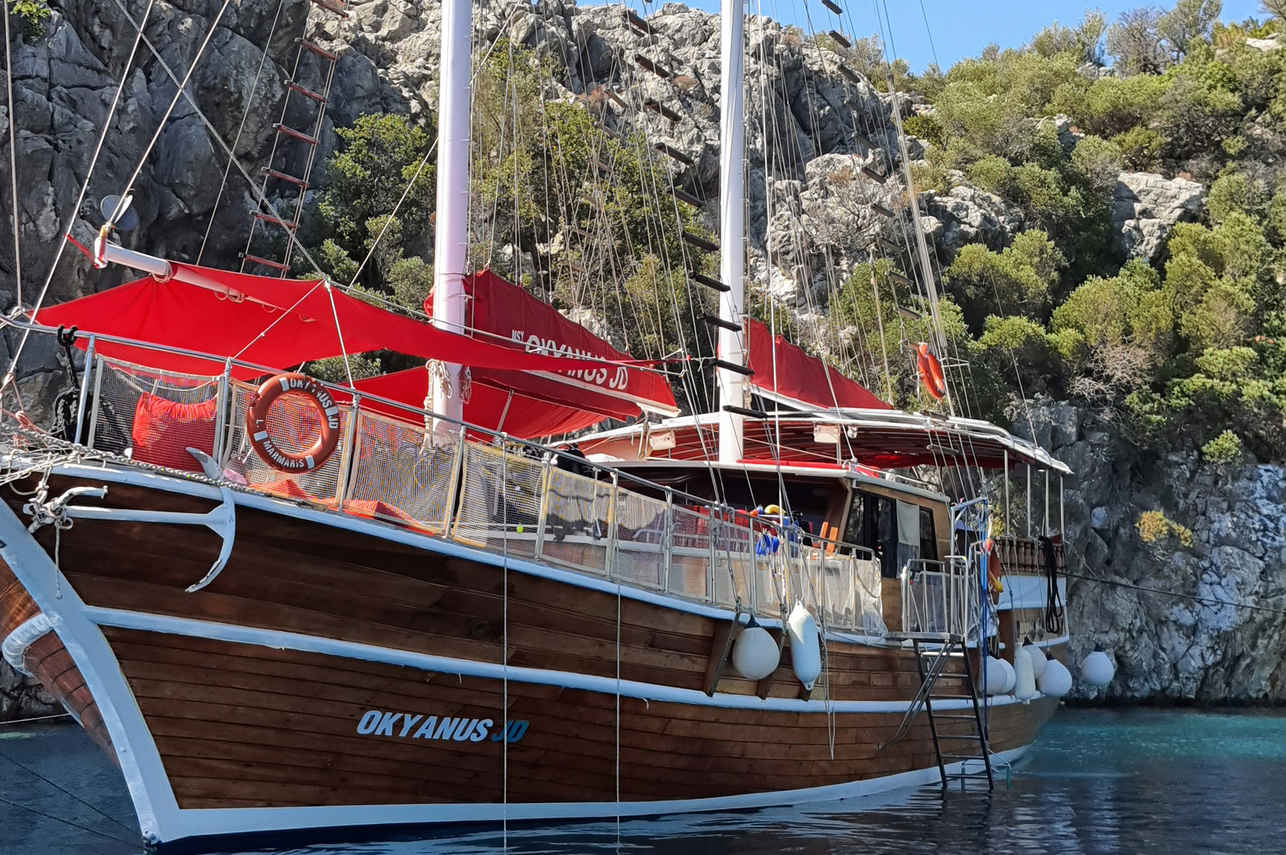
Okyanus JD
Turkey
12 guests24 m
$156/day
Dive sites similar to Three Islands (Antalya)
Same character, same waters — six more sites divers love for the exact same reasons.Compare seasons, access and liveaboard routes — then pick the site that fits your trip best.
Göbektaşı is a dive site located in Turkey, offering a distinct underwater experience that combines archaeological interest with natural marine beauty.
- Suitable for
- Intermediate
- Current
- Mild
- Access
- Dayboat
- Depth
- ≤ 25 m
- Theme
- Reef / Wall
© Esri — Maxar, Earthstar, GIS
Domuz Island
Turkey
Domuz Island, also known as Pig Island, is a celebrated dive destination nestled within the Göcek archipelago, part of Fethiye Bay.
- Suitable for
- Beginner
- Current
- Mild
- Access
- Dayboat
- Depth
- 5–15 m
- Theme
- Reef
Madonna Rock in Vietnam is a unique dive site characterized by its dramatic topography, featuring two prominent pinnacles that are riddled with intricate swim-throughs and spacious caverns.
- Suitable for
- Beginner
- Current
- Mild
- Access
- Dayboat
- Depth
- 10–25 m
- Theme
- Reef / Cavern
© Esri — Maxar, Earthstar, GIS
The Tuna Farm (Orkinos Çiftliği) offers a distinctive diving experience in Turkey, situated around active aquaculture facilities.
- Suitable for
- Intermediate
- Current
- Moderate
- Access
- Dayboat
- Depth
- ≤ 32 m
- Theme
- Reef
© Esri — Maxar, Earthstar, GIS
Mustafa Reef
Turkey
Mustafa Reef is a prominent Aegean dive site located off the coast of Kuşadası, Turkey, offering an engaging exploration of a reef with a significant depth profile.
- Suitable for
- Beginner
- Current
- Moderate
- Access
- Liveaboard or dayboat
- Depth
- 15–35 m
- Theme
- Reef
© Esri — Maxar, Earthstar, GIS
Smugglers Bay
Turkey
Smugglers Bay, located near Bodrum in Turkey's Aegean Sea, is a beginner-friendly dive site renowned for its calm conditions and healthy marine environment.
- Suitable for
- Beginner
- Current
- Mild
- Access
- Dayboat
- Depth
- 3–35 m
- Theme
- Reef