About Saint Didier
The Saint Didier is Turkey's largest accessible shipwreck, a significant historical site located a short boat ride from Antalya's yacht harbor. This Vichy French supply ship, torpedoed by the British in 1941 during World War II, rests at a slant on the sandy bottom, with its bow at approximately 30 meters. The wreck, measuring 96 meters long, features an intact structure that provides ample opportunities for both exterior exploration and interior penetration for advanced divers. Two salvage operations in the past removed some of its cargo, yet rifles, bombs, and even cars can still be found within its holds, offering a tangible connection to its wartime history. While the Mediterranean off Antalya is affected by overfishing, the wreck acts as an artificial reef, attracting marine life such as groupers, schools of barracuda, and octopuses making homes in its crevices. Occasionally, loggerhead sea turtles may also be sighted. Diving the Saint Didier typically involves a boat entry to the marked buoy, with descents leading directly to the wreck. The site offers a dynamic dive experience, though one dive is often insufficient to fully explore its vastness, making it a compelling destination for repeat visits.
Highlights
Turkey's largest diveable wreckWWII French supply shipIntact 96-meter structureHistoric cargo inside hullExcellent penetration opportunitiesArtificial reef for marine life
Best Season
The best time to dive the Saint Didier is generally from May to November, when water temperatures are more comfortable and sea conditions are stable. Peak summer months from June to September offer the warmest water, reaching up to 27°C, and excellent visibility, often exceeding 15 meters.
Dive site facts: Saint Didier
- Depth
- 15.5–31.1 m
- Typical dive
- 31 min, 15.5m avg
- Current
- Light to moderate at surface, mild below
- Visibility
- 4.6–6.1 m
- Water temperature
- 20°C (lowest recorded)
- Entry
- Boat from zodiac
- Level
- Advanced Open Water
- Dive type
- Wreck, historic
- Region / port
- Antalya
- Coordinates
- 36.8826° N, 30.6988° E
Conditions & Currents
The Saint Didier dive site can experience surface currents, which is noted as the only tricky part of the descent. While conditions underwater are generally calm, the presence of surface currents necessitates a careful entry, typically via zodiac, with divers gearing up at the buoy and performing a controlled descent. The dive guide will time descents to optimize current conditions for safety and enjoyment. Visibility at the wreck typically ranges from 4.6 to 6.1 meters, though it can drop quickly inside the wreck's penetration sections with careless fin kicks due to silt. A noticeable thermocline may be encountered on descent towards the deeper sections of the wreck, with water temperatures reaching as low as 20°C.
Marine life & sighting chances
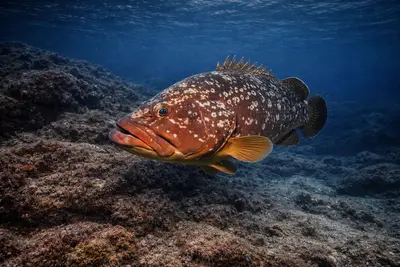
Grouper
occasional
Barracuda
occasional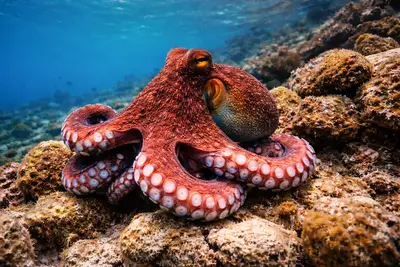
Octopus
occasional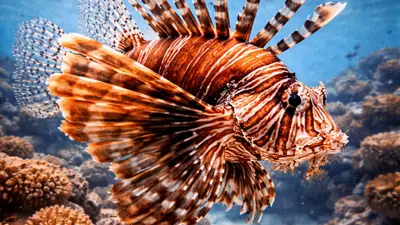
Lionfish
occasional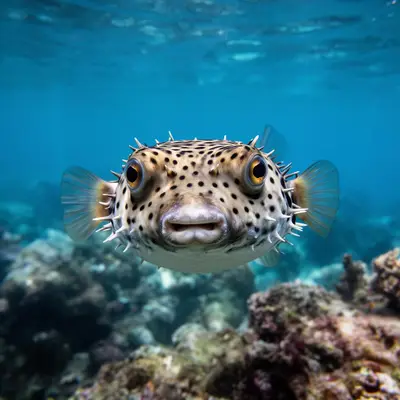
Pufferfish
occasional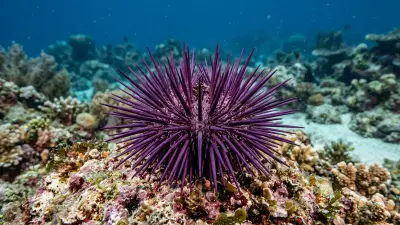
Sea urchins
occasional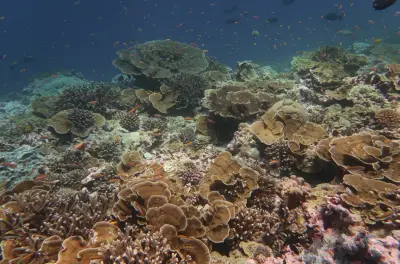
Reef fish
occasional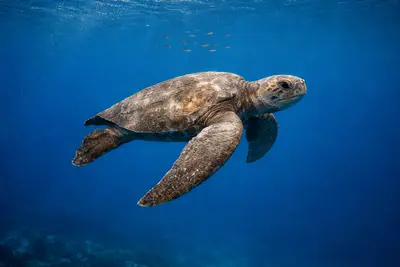
Dive profile & how the dive runs
Diving the Saint Didier begins with a boat entry from a zodiac at a yellow buoy marking the wreck site, approximately 500 meters off the Antalya yacht harbor. Divers gear up on the zodiac and perform a controlled descent, often managing surface currents. The wreck itself, 96 meters long, rests at a slant, with the bow situated around 30 meters deep. The typical dive involves exploring the exterior superstructure and the front half of the vessel. For experienced divers, opportunities exist for careful penetration to observe internal cargo like rifles, bombs, and cars, though awareness of potential silting is crucial. The route generally follows the impressive length of the wreck, with depth progression dictated by the ship's angle and diver's certification. Turn-around points are based on air consumption and no-decompression limits, given the maximum depth reaching 31.1 meters. Safety stops are conducted during a slow ascent, often around 5 meters, before surfacing for zodiac pick-up.
Underwater photography
The Saint Didier offers unique opportunities for wreck photography, both wide-angle to capture its impressive 96-meter length and the overall structure, and macro for details of marine life residing on the wreck. Due to the limited visibility, typically 4.6 to 6.1 meters, external strobes are essential to bring out colors and combat backscatter, especially when photographing the dark interior or cargo. Careful buoyancy control is paramount, particularly during penetration, to avoid silting, which can quickly reduce visibility to near zero and ruin shots. Focus on capturing the historical artifacts within the hull, the large torn sections, or the resident groupers and barracuda. While the wreck provides excellent backdrops, be mindful of ambient light variations and thermoclines which can affect color balance.
Combine with nearby dive sites
Getting there & logistics
Access to the Saint Didier is exclusively by boat, typically departing from Antalya. Dive operations like Kaleiçi Divers run small zodiac trips to the site. The closest major international airport for reaching Antalya is Antalya Airport (AYT). Divers often combine a trip to Antalya with other diving hotspots in Turkey, such as Kaş, which is a few hours further west by road. While a single dive is often not enough to fully explore the extensive wreck, it is commonly part of a two-tank day trip. No specific permits beyond standard diving tour bookings are mentioned, but dive centers usually handle all local arrangements.
Safety & environment
Diving the Saint Didier, a deep wreck dive, requires an Advanced Open Water certification due to depths exceeding 30 meters and the potential for penetration. Divers must be proficient in buoyancy control, particularly when entering the wreck, as careless fin kicks can rapidly reduce visibility due to silt. Given the depth and overhead environment, conservative gas planning is essential. The nearest recompression chamber is likely in Antalya, though specific locations are not detailed in sources. In case of a diving emergency, evacuation would depend on local services and transport infrastructure. Comprehensive dive insurance covering hyperbaric treatment and emergency evacuation is strongly recommended for all divers. Site-specific hazards include the potential for surface currents and entanglement risks within the wreck. Dive guides will provide thorough briefings, and adherence to their instructions is crucial for safety.
Who it suits — and who it doesn't
Suited for
- Advanced Open Water certified divers
- Wreck diving enthusiasts
- Divers interested in WWII history
- Underwater photographers seeking unique subjects
- Divers comfortable with depths up to 30m+
Less suited for
- Beginner divers (Open Water certified)
- Divers uncomfortable with overhead environments
- Divers prone to rapid air consumption
- Those expecting vibrant coral reefs
- Divers without proper wreck penetration training
FAQ
Saint Didier FAQ
What is the history of the Saint Didier wreck?
The Saint Didier was a Vichy French supply ship carrying troops, arms, munitions, and vehicles when it was hit by British torpedoes in 1941. After attempting to hide in Antalya Harbor, it was struck again and sank, resulting in 14 crew fatalities. Its wartime story adds significant historical context to the dive experience.
How deep is the Saint Didier wreck?
The Saint Didier wreck rests at a slant, with its bow at approximately 30 meters (100 feet). The maximum depth recorded on a dive was 31.1 meters (102 feet), with an average dive depth often around 15.5 meters (51 feet), allowing for exploration of different sections.
What can I expect to see inside the Saint Didier wreck?
For divers with appropriate training, the Saint Didier's hull still contains historical artifacts. You can find rifles, bombs, and even cars within its cavernous holds. However, visibility inside can quickly deteriorate with disturbed silt, so careful buoyancy is essential.
Is the Saint Didier suitable for beginner divers?
The Saint Didier is generally recommended for Advanced Open Water certified divers due to its depth, which reaches over 30 meters. While the exterior offers plenty to see for intermediate divers, the penetration opportunities require more specialized training and experience, making it less suitable for beginners.
What is the typical visibility at the Saint Didier?
Visibility at the Saint Didier typically ranges from 4.6 to 6.1 meters (15 to 20 feet). This can vary based on conditions, but the site's dive guides have rated such visibility as excellent for the location. Inside the wreck, visibility can rapidly decrease if silt is disturbed.
Which dive operators visit the Saint Didier?
Kaleiçi Divers is mentioned as a dive operator that conducts trips to the Saint Didier wreck from Antalya. They typically run small zodiac trips to the site, offering a focused and personalized diving experience. Other local dive centers in Antalya may also offer excursions to this prominent wreck.
Why dive Saint Didier from a liveaboard?
Saint Didier is one of Turkey's signature dive sites. A liveaboard sleeps you on the water and puts you in the water for three to four guided dives per day, including dawn and night dives that day-boat operators rarely offer. You skip the daily commute back to port and reach quieter, less-crowded sites in the same region on a single trip.
Below are the liveaboards that include Saint Didier on their Turkey itineraries.
Liveaboards diving Saint Didier
These liveaboards may visit Saint Didier on selected itineraries — the exact dive sites depend on departure, weather and conditions.
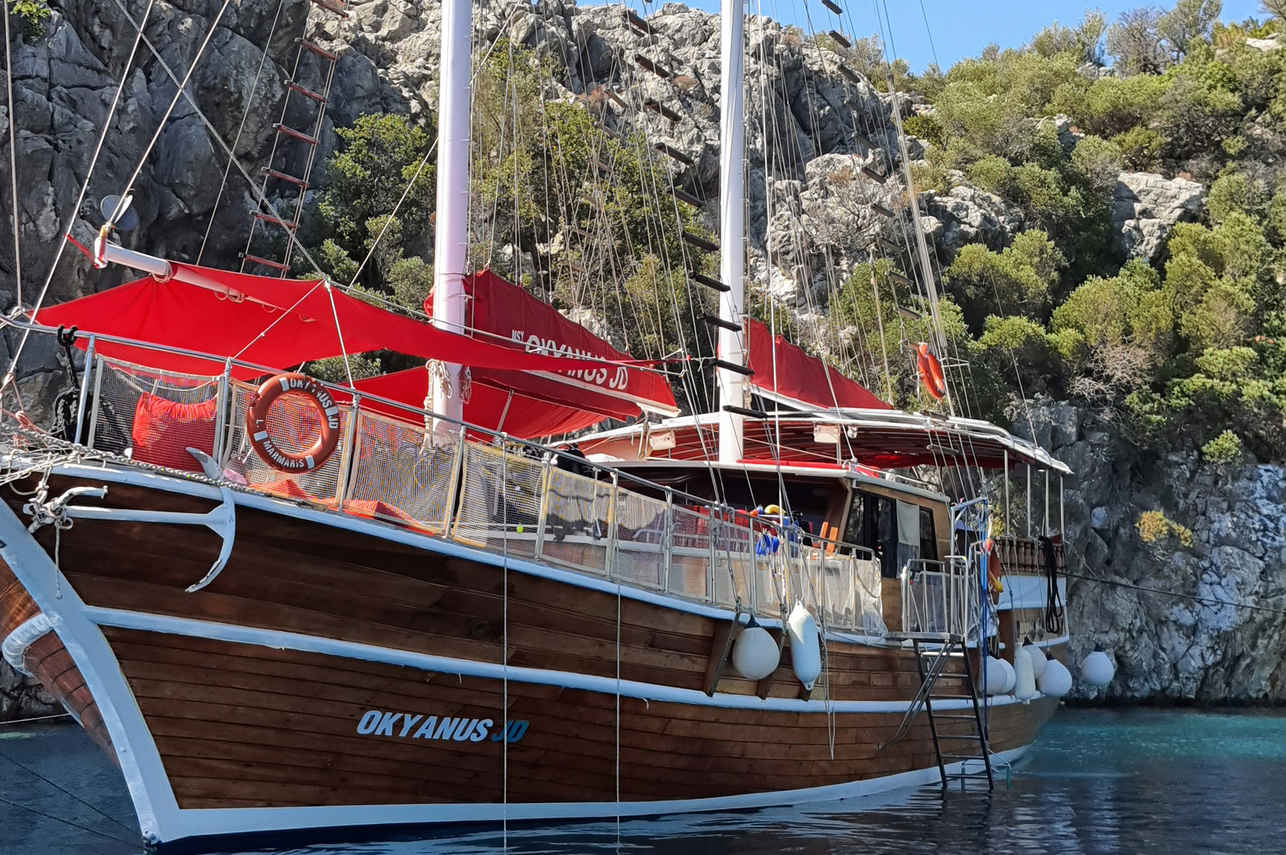
Okyanus JD
Turkey
12 guests24 m
$179/day
Dive sites similar to Saint Didier
Same character, same waters — six more sites divers love for the exact same reasons.Compare seasons, access and liveaboard routes — then pick the site that fits your trip best.
© Esri — Maxar, Earthstar, GIS
The SG-115 Turkish Navy Shipwreck is an advanced dive site located in the Aegean Sea, just a short boat ride from Bodrum's Black Island.
- Suitable for
- Intermediate
- Current
- Moderate
- Access
- Liveaboard or dayboat
- Depth
- 17–29 m
- Theme
- Wreck
© Esri — Maxar, Earthstar, GIS
Coast Guard Ship Wreck
Turkey
The Coast Guard Ship Wreck is an advanced dive site situated near Bodrum in the Aegean Sea.
- Suitable for
- Intermediate
- Current
- Moderate
- Access
- Liveaboard or dayboat
- Depth
- 3–29 m
- Theme
- Wreck
© Esri — Maxar, Earthstar, GIS
Airplane C-47 Dakota
Turkey
The Airplane C-47 Dakota is a significant wreck dive located off Turkey's coast, presenting a deliberately sunk Douglas C-47 military transport aircraft.
- Suitable for
- Advanced
- Current
- Mild
- Access
- Dayboat
- Depth
- 14–35 m
- Theme
- Wreck
© Esri — Maxar, Earthstar, GIS
Tank Wreck
Turkey
The Güvercin Ada / Tank Wreck dive site, located near Kaş, Turkey, combines a calm reef with a unique blend of sunken elements, including a sculpture and various wreck components.
- Suitable for
- Intermediate
- Current
- Moderate
- Access
- Liveaboard or dayboat
- Depth
- 21–21 m
- Theme
- Wreck
© Esri — Maxar, Earthstar, GIS
Coastguard Wreck
Turkey
The Coastguard Wreck is a Fethiye boat dive, featuring a retired coast guard ship scuttled to form an artificial reef alongside a natural reef structure.
- Suitable for
- Intermediate
- Current
- Moderate
- Access
- Liveaboard or dayboat
- Depth
- 27–30 m
- Theme
- Wreck
© Esri — Maxar, Earthstar, GIS
The Pınar-1 Turkish Navy Shipwreck is an artificial reef located near Bodrum, Turkey, specifically off the southeast side of Black Island.
- Suitable for
- Advanced
- Current
- Moderate
- Access
- Dayboat
- Depth
- 18–40 m
- Theme
- Wreck