About Airplane C-47 Dakota
The Airplane C-47 Dakota is a significant wreck dive located off Turkey's coast, presenting a deliberately sunk Douglas C-47 military transport aircraft. This iconic wreck creates an artificial reef, serving both ecological and recreational purposes, making it a highly photogenic and historically rich site in Turkish waters. The aircraft was carefully prepared before sinking, with hazardous materials removed and access points designed for marine colonization and safe diver exploration. Although sources conflict on exact location, one places it near Kemer and another in the Kaş harbor area, both describe a purpose-sunk aircraft. This artificial reef features a distinctive twin-engine configuration, broad wings, and a rounded fuselage, instantly recognizable beneath the marine growth. The engines now act as artificial caves, sheltering various fish, while the cockpit retains its instrument panel, offering a glimpse into the aircraft's past. The cargo door, once used for paratroopers and supplies, now provides entry for schools of fish residing within the fuselage. Marine colonization on the Dakota is well-advanced, showcasing the effectiveness of artificial reefs in the Mediterranean. Vibrant orange and purple sponges coat the wings and fuselage, with gorgonian fans established on the tail section. Resident species include grouper, moray eels, and octopus, and the fish populations are notably denser than on the surrounding natural seabed. Visibility here is typically excellent, often exceeding 25 meters, which is ideal for wide-angle photography. Depending on its specific location, the wreck can be found on a sandy bottom, with depths varying from 14 to 35 meters. This depth demands careful planning for bottom time, especially for no-decompression limits, adding an intense focus to the dive experience. The reduced ambient light at depth gives the wreck a haunting appearance, as it seems to hover in the perpetual twilight of the deep Mediterranean.
Highlights
Historic C-47 aircraft wreckPurpose-sunk artificial reefIconic twin-engine planeDeep wreck explorationPhotogenic silhouetteDense marine life habitatCockpit instrument panelGorgonian fans on tail
Season calendar
Best months to dive here
Jan
Feb
Mar
Apr
May
Jun
Jul
Aug
Sep
Oct
Nov
Dec
Excellent
Good
Dive site facts: Airplane C-47 Dakota
- Depth
- 14–35 m
- Typical dive
- 14–35 m, 45 min
- Current
- Mild to moderate, up to 2 knots
- Visibility
- 18–30 m
- Water temperature
- 18–30°C
- Entry
- Boat
- Level
- Advanced
- Dive type
- Wreck, artificial reef, deep
- Region / port
- Kaş / Kemer
- Coordinates
- 36.5260° N, 29.1039° E
Conditions & Currents
Currents at the C-47 Dakota wreck are generally described as mild to moderate, though one source notes 1-2 knots in July. Conditions can vary, especially with depth. Divers should be prepared for potential current fluctuations and plan their dive accordingly, particularly given the advanced nature of this deep wreck dive. Good buoyancy control is essential to avoid disturbing the sandy bottom, which can reduce visibility for subsequent divers. Entry is typically boat-based, and careful management of bottom time is crucial due to the depth, which limits no-decompression limits. Visibility is consistently very good, often exceeding 25-30 meters, contributing to excellent photographic opportunities and safe navigation around the wreck.
Marine life & sighting chances

Grouper
common
Moray eels
common
Octopus
common
Sponges
common
Gorgonian sea fans
common
Lionfish
occasional
Sea urchins
occasional
Stingrays
occasional
Blind shrimp
occasional
Turtles
rareDive profile & how the dive runs
Dives to the C-47 Dakota typically involve a boat entry and a descent directly to the wreck, which rests on a sandy bottom. Depending on the exact location, the wreck can be found between 14 to 35 meters. Divers usually explore the fuselage, wings, and cockpit area, paying attention to details like the instrument panel and the engines, which now serve as fish habitats. The route often involves circumnavigating the aircraft to observe the extensive marine growth and resident species. Due to the depth, careful monitoring of no-decompression limits and gas consumption is essential. The turn point is determined by air supply and NDLs, followed by a slow ascent along the wreck or an ascent line. Safety stops are conducted in shallower water, typically around 5 meters, before resurfacing for boat pick-up. Maintaining good buoyancy is critical to avoid stirring up the sandy bottom and reducing visibility.
Underwater photography
The C-47 Dakota offers exceptional opportunities for wide-angle photography due to its recognizable form, significant size, and the clarity of the water. A wide-angle lens is ideal for capturing the entire aircraft, the deep blue backdrop, and its haunting silhouette. Macro photography is also rewarding for capturing the vibrant sponges, gorgonian fans, and smaller marine life that colonize the wreck. Pay attention to lighting at depth; external strobes are beneficial for bringing out the true colors of the marine growth. Divers should maintain excellent buoyancy to avoid disturbing the sandy bottom, which can quickly degrade visibility for shots. The contrast between the aircraft's structure and the organic marine life provides compelling compositions.
Combine with nearby dive sites
- Three Islands
A complex of rocky islands known for walls, channels, and pelagic action, requiring advanced skills due to depth and currents.
- Pyramide Reef
Features a distinctive pyramid-shaped rock formation, excellent topography, and rich marine life down to 35 meters.
- Deep cave
A cave dive reaching depths of 30 meters, with groupers and moray eels reported.
- Air cave
A shallower cave dive at 12 meters, also hosting groupers and moray eels.
Getting there & logistics
Diving the C-47 Dakota typically departs from dive centers in Kemer or Kaş, depending on the wreck's specific location, often accessed via day boats. Trips usually last half a day, combining one or two dives. Kemer Marina is a common departure point. Divers can fly into Antalya Airport (AYT) or Dalaman Airport (DLM) and travel to their chosen coastal town. No specific permits or park fees beyond standard dive operator costs are usually mentioned for this site. Operators pride themselves on small group approaches and well-equipped dive boats. Liveaboard itineraries might also include this wreck as part of a broader tour of Turkey's Mediterranean coast.
Safety & environment
For the C-47 Dakota, especially at its deeper points (35m), thorough dive planning is critical, including conservative gas management and careful monitoring of no-decompression limits. Divers should have advanced training and experience with deep and wreck diving. The nearest recompression chambers would typically be in larger cities like Antalya. Evacuation procedures rely on local emergency services and dive centers, so adequate dive insurance covering hyperbaric treatment and evacuation is highly recommended. Site-specific hazards include potential currents, reduced ambient light at depth, and potential entanglement in parts of the wreck, though the aircraft was prepared for safe exploration. Always dive with a reputable center and follow your guide's instructions, especially regarding buoyancy to avoid silt-out.
Who it suits — and who it doesn't
Suited for
- Advanced certified divers
- Wreck diving enthusiasts
- Underwater photographers
- Divers interested in history
- Divers comfortable with depths up to 35m
Less suited for
- Beginner divers
- Divers without deep dive training
- Divers uncomfortable with limited bottom time
- Divers with poor buoyancy control (due to sandy bottom)
FAQ
Airplane C-47 Dakota FAQ
What is the history behind the C-47 Dakota wreck?
The C-47 Dakota is a military transport aircraft, originally a Douglas C-47 Skytrain, which played a crucial role in World War II for troop and cargo transport. The aircraft was intentionally sunk in 2009 to create an artificial reef, serving as a habitat for marine life and an interesting dive site for enthusiasts. Its robust design and historical significance make it a unique underwater attraction.
How deep is the Airplane C-47 Dakota wreck and what are the dive requirements?
The C-47 Dakota wreck rests on a sandy bottom at depths ranging from 14 to 35 meters, depending on the specific location reported. Due to its depth, this is considered an advanced dive site, requiring divers to have appropriate certification and experience. Thorough dive planning is essential, particularly for managing no-decompression limits and air consumption during the dive.
What kind of marine life can be seen at the C-47 Dakota?
The C-47 Dakota serves as a thriving artificial reef, attracting a variety of marine species. Divers commonly encounter grouper, moray eels, and octopus residing within and around the wreck. The aircraft is also colonized by vibrant sponges and gorgonian sea fans, and occasionally you might spot lionfish, sea urchins, stingrays, and even turtles.
Is the C-47 Dakota suitable for underwater photography?
Yes, the C-47 Dakota is an excellent site for underwater photography. Its distinct shape and size lend themselves well to wide-angle shots, capturing the entire wreck and its deep blue surroundings. The rich marine growth also offers opportunities for macro photography. Excellent visibility, often exceeding 25 meters, makes for clear and impactful images, but maintaining good buoyancy is crucial to avoid stirring up sand.
Where is the C-47 Dakota located, and how do I get there?
Sources indicate two possible locations for a C-47 Dakota wreck in Turkey: one near Kemer on the Antalya coast and another in the harbor area of Kaş. Both are accessed by boat from local dive centers. Kemer is typically reached via Antalya Airport (AYT), while Kaş can be accessed from Dalaman Airport (DLM). It's best to confirm the specific wreck location with your chosen dive operator.
Why dive Airplane C-47 Dakota from a liveaboard?
Airplane C-47 Dakota is one of Turkey's signature dive sites. A liveaboard sleeps you on the water and puts you in the water for three to four guided dives per day, including dawn and night dives that day-boat operators rarely offer. You skip the daily commute back to port and reach quieter, less-crowded sites in the same region on a single trip.
Below are the liveaboards that include Airplane C-47 Dakota on their Turkey itineraries.
Liveaboards diving Airplane C-47 Dakota
These liveaboards may visit Airplane C-47 Dakota on selected itineraries — the exact dive sites depend on departure, weather and conditions.
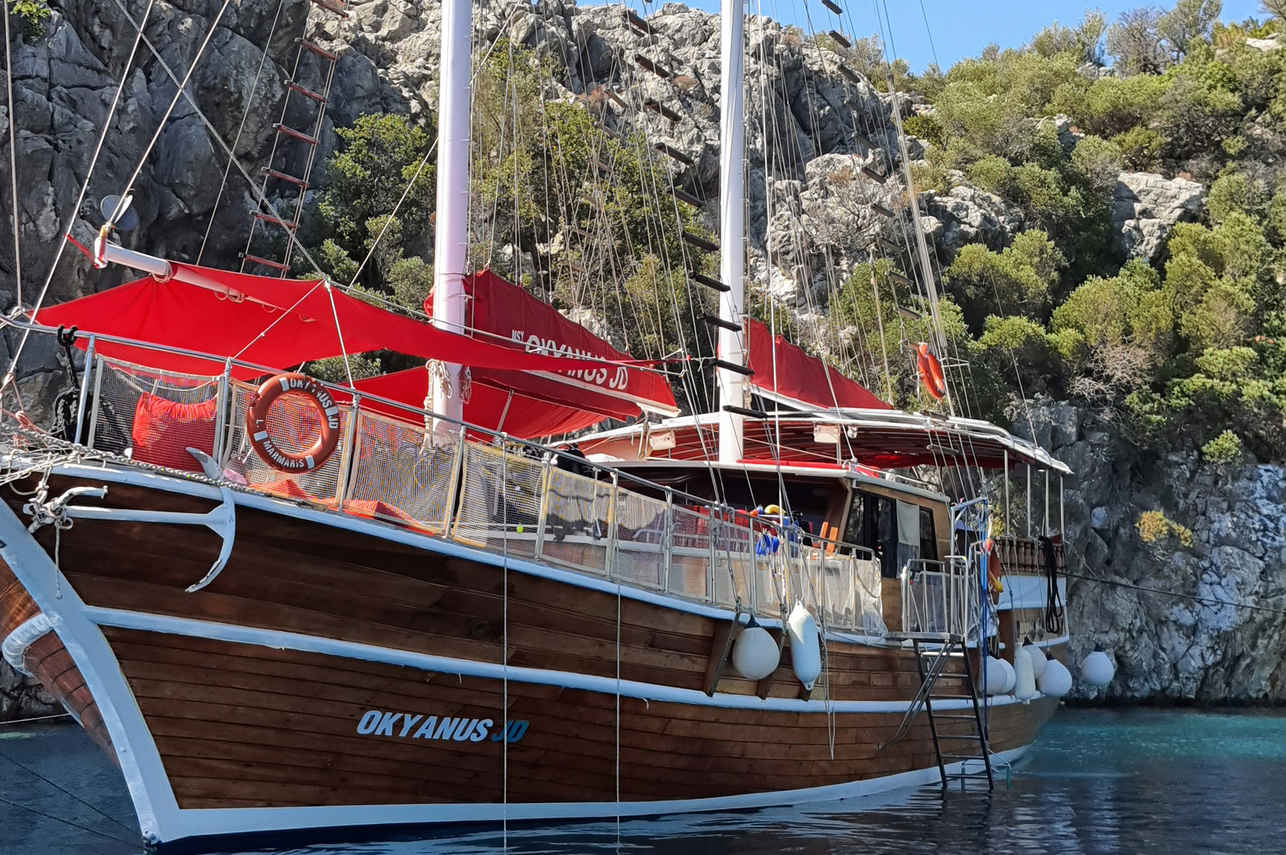
Okyanus JD
Turkey
12 guests24 m
$155/day
Dive sites similar to Airplane C-47 Dakota
Same character, same waters — six more sites divers love for the exact same reasons.Compare seasons, access and liveaboard routes — then pick the site that fits your trip best.
Rodelha is a popular coastal dive site situated close to Vila do Conde in northern Portugal.
- Suitable for
- Intermediate
- Current
- Mild
- Access
- Dayboat
- Depth
- 6–25 m
- Theme
- Reef
Silveira is a welcoming beginner-friendly dive site located off Terceira Island in the Azores archipelago, Portugal.
- Suitable for
- Beginner
- Current
- Mild
- Access
- Dayboat
- Depth
- 2–15 m
- Theme
- Reef / Pinnacle
© Esri — Maxar, Earthstar, GIS
Cinco Ribeiras
Portugal
Cinco Ribeiras is situated on the western coast of Terceira Island in the Azores, named after a nearby village.
- Suitable for
- Beginner
- Current
- Mild
- Access
- Shore / dayboat
- Depth
- 5–16 m
- Theme
- Reef / Cavern
© Esri — Maxar, Earthstar, GIS
Ilhéu da Vila
Portugal
Ilhéu da Vila is a significant dive site located approximately half a mile from the marina of Santa Maria Island in the Azores.
- Suitable for
- Intermediate
- Current
- Moderate
- Access
- Dayboat
- Depth
- 13–18 m
- Theme
- Reef / Wall
Göbektaşı is a dive site located in Turkey, offering a distinct underwater experience that combines archaeological interest with natural marine beauty.
- Suitable for
- Intermediate
- Current
- Mild
- Access
- Dayboat
- Depth
- ≤ 25 m
- Theme
- Reef / Wall
© Esri — Maxar, Earthstar, GIS
Catermaran Wreck
Turkey
The Turkish coast, particularly the Riviera, offers diverse diving experiences, including a variety of wrecks.
- Suitable for
- Intermediate
- Current
- Moderate
- Access
- Liveaboard or dayboat
- Depth
- —
- Theme
- Wreck