About Abdi Reis
Abdi Reis is a highly regarded dive site situated near the Datça Peninsula in Turkey's Aegean Sea, specifically located within Abdi Reis Cove, near Yildiz Island. This sheltered area offers easy access to a rich marine ecosystem where the Aegean and Mediterranean seas converge, making it a favorite for its natural beauty and exceptional clarity. The underwater landscape is characterized by rocky reef formations, typical of the Datça coast, featuring complex limestone and volcanic geology. These structures create interesting topography at accessible depths, ranging from the surface down to 33 meters. Marine growth, including sponges and various encrusting organisms, adorns the rock surfaces, while Posidonia seagrass meadows may also be found bordering the reef areas. Fish populations are diverse, encompassing Mediterranean species such as sea bream, wrasse, and damselfish, which add constant color. Groupers are often seen in larger overhangs, while octopus and moray eels inhabit rocky crevices. The invertebrate community is varied, contributing to a healthy reef environment. The clear, warm waters in the Datça area provide excellent diving conditions, particularly from spring through autumn, ensuring good visibility for observing the abundant aquatic life. Diving at Abdi Reis is primarily conducted via boat. Its gentle conditions and genuine marine diversity make it an ideal introductory experience to the underwater world of the Datça Peninsula, showcasing the quality of Turkey's southwestern coast and offering satisfying dives for a wide range of experience levels.
Highlights
Sheltered cove locationCrystal-clear Aegean watersRocky reef topographyDiverse Mediterranean marine lifeBeginner-friendly depthsExcellent for marine observation
Season calendar
Best months to dive here
Jan
Feb
Mar
Apr
May
Jun
Jul
Aug
Sep
Oct
Nov
Dec
Excellent
Good
Dive site facts: Abdi Reis
- Depth
- 0–33 m
- Current
- Mild to none
- Visibility
- 18–30 m
- Water temperature
- 28–29°C
- Entry
- Boat dive
- Level
- Beginner friendly
- Dive type
- Reef, Macro
- Region / port
- Datça Peninsula, Mugla, Turkey
- Coordinates
- 36.1930° N, 29.6234° E
Conditions & Currents
Abdi Reis is known for its generally gentle conditions, making it suitable for beginner divers. While the site is usually calm, localized mild currents have been reported, particularly in March, and moderate currents in November, though typically there are no strong currents. Visibility at Abdi Reis is consistently good to exceptional, with reports ranging from 18 to 30 meters, contributing to its nickname "Aquarium." Water temperatures are warm, reaching 28°C in March and 29°C in July. Divers should always be mindful of boat traffic due to its popularity, especially near Yildiz Island. The lack of strong currents simplifies entry and exit, typically conducted via boat, and requires standard gas planning for a beginner-friendly reef dive.
Marine life & sighting chances

Groupers
common
Moray eels
common
Octopus
common
Sea bream
common
Wrasse
common
Damselfish
common
Conger eels
occasional
Cuttlefish
occasional
Nudibranchs
occasional
Lobsters
occasional
Scorpionfish
occasional
Cardinalfish
occasionalDive profile & how the dive runs
Dives at Abdi Reis typically begin from a boat, offering easy entry into the clear waters of the cove. As a beginner-friendly site, the dive often follows the natural contours of the rocky reef, exploring formations at accessible depths. The route usually involves a gradual descent along the reef wall or slope, observing marine life within the cracks and overhangs, and traversing areas of limestone and volcanic rock adorned with sponges and algae. Maximum depths typically range down to 33 meters, but many interesting features and species can be found in shallower zones, often around 0 to 14 meters, making it suitable for varying experience levels. Divers turn back when half their air supply is consumed or according to planned bottom time. The safety stop is conducted in the shallow, sheltered parts of the cove, allowing for observation of smaller fish before a comfortable ascent and exit to the dive boat.
Underwater photography
Abdi Reis, with its nickname "Aquarium" and consistently clear waters (up to 30 meters visibility), presents excellent opportunities for wide-angle photography, especially to capture the expansive reef topography and schooling fish. For macro subjects like nudibranchs, small shrimp, or intricate coral details, a macro lens and external strobes are recommended to bring out vibrant colors in the rich invertebrate life and illuminate the crevices where moray eels and octopus hide. Buoyancy control is essential to avoid disturbing delicate reef organisms, particularly around Posidonia seagrass meadows. Given the site's popularity, especially near Yildiz Island, divers should be mindful of other photographers and divers, ensuring respectful distances and avoiding stirring up sediment.
Combine with nearby dive sites
- Lighthouse
Lighthouse is a common name for two distinct dive sites in Turkey, both offering compelling underwater experiences.
- Red Rock
Red Rock is a challenging dive site situated in Turkey's Aegean Sea, close to the Datça Peninsula.
- Sari Mehmet
Sari Mehmet is a challenging and rewarding dive site located near the Datça Peninsula in Turkey's Aegean Sea.
- Catermaran Wreck
The Turkish coast, particularly the Riviera, offers diverse diving experiences, including a variety of wrecks.
- Coastguard Wreck
The Coastguard Wreck is a Fethiye boat dive, featuring a retired coast guard ship scuttled to form an artificial reef alongside a natural…
- Ottoman Anchor
Ottoman Anchor is a boat-accessible reef dive centered around a significant historical anchor.
Getting there & logistics
Access to Abdi Reis, located near the Datça Peninsula in the Mugla Province, typically involves departing from Marmaris, which is approximately 24 kilometers away. Marmaris itself is a major port city on Turkey's southwestern coast, easily reached via Dalaman Airport (DLM), the nearest international airport. Dive trips to Abdi Reis are commonly offered as part of daily boat excursions or included in liveaboard itineraries exploring the Datça and Marmaris regions. These trips often combine diving with opportunities to visit other scenic coves and nearby dive sites like Lighthouse or Red Rock. Permit requirements are generally handled by local dive centers, and fees are usually included in the dive package.
Safety & environment
For diving at Abdi Reis, standard dive safety practices are crucial, including maintaining proper buoyancy and closely monitoring dive computers. The nearest recompression chamber is likely located in a major medical facility in Mugla or a larger city, making evacuation potentially time-consuming. Therefore, comprehensive dive insurance covering medical emergencies and evacuation is strongly recommended. While Abdi Reis is beginner-friendly with mild to no currents, divers should always stay aware of their surroundings, particularly due to the site's popularity and potential for other dive boats. It is advisable to dive with experienced local guides who are familiar with any specific hazards or conditions of the cove. Always carry an audible signaling device and ensure your dive buddy remains close.
Who it suits — and who it doesn't
Suited for
- Beginner divers looking for easy conditions
- Underwater photographers seeking clear water and macro subjects
- Divers interested in diverse Mediterranean reef life
- Those new to Turkish Aegean diving
- Families or groups with varying dive experience levels
Less suited for
- Experienced divers seeking strong currents or deep wreck exploration
- Divers expecting large pelagic encounters
- Individuals prioritizing remote, untouched dive sites
- Those uninterested in reef and macro observation
FAQ
Abdi Reis FAQ
What kind of marine life can I expect to see at Abdi Reis?
Abdi Reis is home to a rich variety of Mediterranean marine species. You can frequently encounter groupers hiding in overhangs, moray eels and octopus within crevices, and colorful schools of sea bream, wrasse, and damselfish across the reef. Occasionally, you might spot conger eels, cuttlefish, nudibranchs, lobsters, and scorpionfish, all contributing to a vibrant underwater ecosystem.
Is Abdi Reis suitable for beginner divers?
Yes, Abdi Reis is highly recommended for beginner divers. It is known for its gentle conditions, sheltered location within a cove, and accessible depths that reach down to 33 meters but offer plenty to see in shallower areas. This makes it an ideal site for new divers to gain confidence and experience the beauty of Turkey's underwater world.
What is the visibility and water temperature like at Abdi Reis?
Abdi Reis is famous for its exceptional water clarity, earning it the nickname "Aquarium." Visibility commonly ranges from 18 to 30 meters, providing excellent viewing conditions. Water temperatures are comfortably warm, typically around 28-29°C during the diving season, especially from spring through autumn.
How do I get to Abdi Reis for diving?
Most dive trips to Abdi Reis depart from Marmaris, a major tourist hub located approximately 24 kilometers away. Divers typically reach Marmaris via Dalaman Airport (DLM), then join boat excursions organized by local dive centers. These trips often combine Abdi Reis with visits to other nearby dive sites in the Datça Peninsula region.
Are there any specific safety considerations for diving at Abdi Reis?
While Abdi Reis is generally safe for beginners, standard dive safety applies. Always dive within your training limits and with a reputable dive center. It's advisable to have dive insurance covering emergencies, given the potential travel time to a recompression chamber. Though currents are usually mild, always be aware of your surroundings and any boat traffic, as it is a popular site.
Why dive Abdi Reis from a liveaboard?
Abdi Reis is one of Turkey's signature dive sites. A liveaboard sleeps you on the water and puts you in the water for three to four guided dives per day, including dawn and night dives that day-boat operators rarely offer. You skip the daily commute back to port and reach quieter, less-crowded sites in the same region on a single trip.
Below are the liveaboards that include Abdi Reis on their Turkey itineraries.
Liveaboards diving Abdi Reis
These liveaboards may visit Abdi Reis on selected itineraries — the exact dive sites depend on departure, weather and conditions.
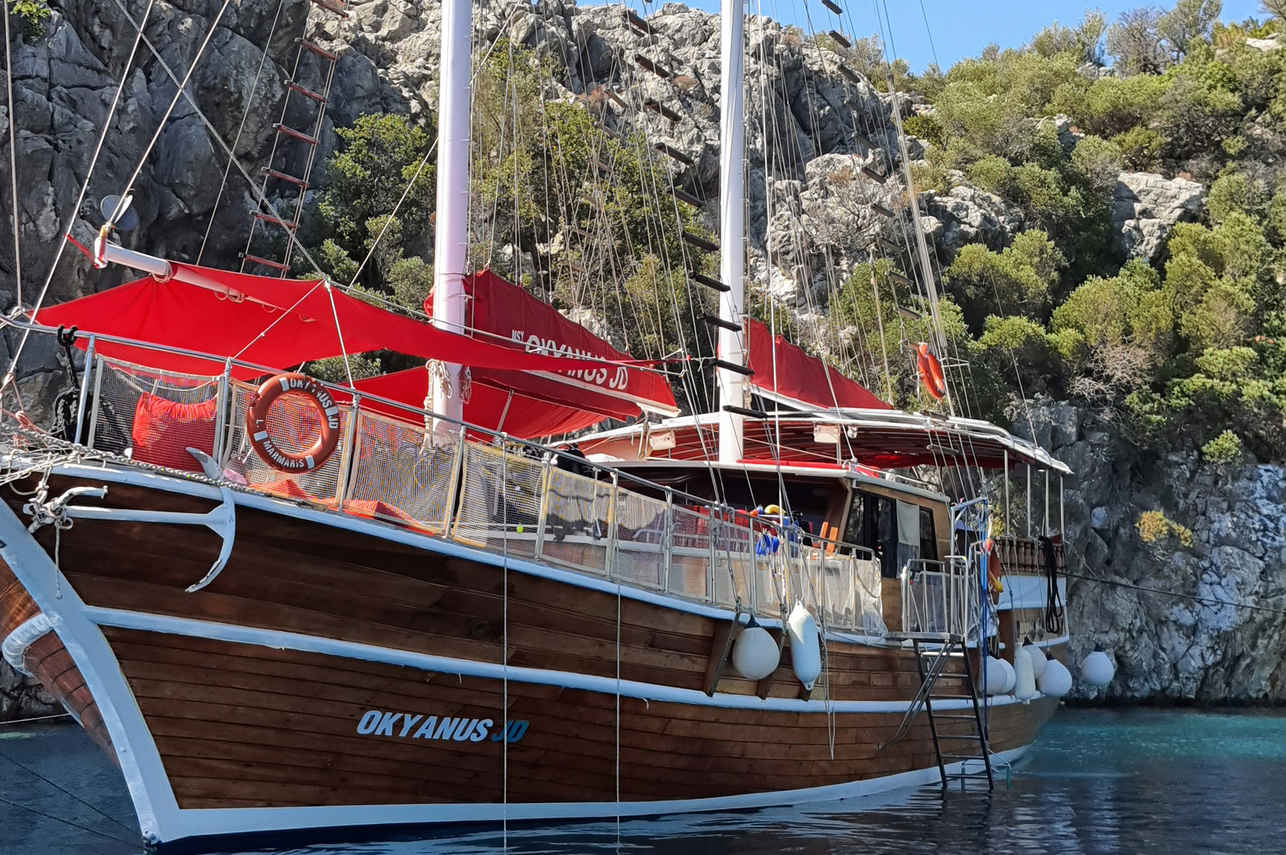
Okyanus JD
Turkey
12 guests24 m
$157/day
Dive sites similar to Abdi Reis
Same character, same waters — six more sites divers love for the exact same reasons.Compare seasons, access and liveaboard routes — then pick the site that fits your trip best.
© Esri — Maxar, Earthstar, GIS
Hidayet Koyu
Turkey
Hidayet Koyu is a well-known, sheltered bay located on the Kaş peninsula in Turkey, celebrated for its accessibility and vibrant marine ecosystem.
- Suitable for
- Beginner
- Current
- No current
- Access
- Liveaboard or dayboat
- Depth
- ≤ 32 m
- Theme
- Reef
© Esri — Maxar, Earthstar, GIS
Besmi Island
Turkey
Besmi Island, also known as Besmi Adası, is a challenging yet rewarding dive site located off Turkey's southwestern coast near Fethiye and southwest of Kaş.
- Suitable for
- Advanced
- Current
- Strong
- Access
- Dayboat
- Depth
- 4–60 m
- Theme
- Reef / Wall
© Esri — Maxar, Earthstar, GIS
Domuz Island
Turkey
Domuz Island, also known as Pig Island, is a celebrated dive destination nestled within the Göcek archipelago, part of Fethiye Bay.
- Suitable for
- Beginner
- Current
- Mild
- Access
- Dayboat
- Depth
- 5–15 m
- Theme
- Reef
© Esri — Maxar, Earthstar, GIS
Gökova Bay Canyon
Turkey
Gökova Bay Canyon is a renowned dive site in Turkey, celebrated for its unique underwater topography, which contrasts sharply with typical Mediterranean dive experiences.
- Suitable for
- Advanced
- Current
- Strong
- Access
- Liveaboard or dayboat
- Depth
- 15–35 m
- Theme
- Wall
© Esri — Maxar, Earthstar, GIS
Kızıl Island
Turkey
Kızıl Island, known locally as Kızılada, is a prominent dive site situated near Fethiye on Turkey's southwestern coast.
- Suitable for
- Intermediate
- Current
- Mild
- Access
- Dayboat
- Depth
- 8–40 m
- Theme
- Reef / Wall
© Esri — Maxar, Earthstar, GIS
Smugglers Bay
Turkey
Smugglers Bay, located near Bodrum in Turkey's Aegean Sea, is a beginner-friendly dive site renowned for its calm conditions and healthy marine environment.
- Suitable for
- Beginner
- Current
- Mild
- Access
- Dayboat
- Depth
- 3–35 m
- Theme
- Reef