About Catermaran Wreck
The Turkish coast, particularly the Riviera, offers diverse diving experiences, including a variety of wrecks. These submerged sites contribute to Turkey's growing reputation as a desirable destination for divers, alongside its clear waters and numerous marine parks. The region's history of both ancient and modern maritime activity has left behind a significant number of wrecks, with many protected by law or intentionally sunk to create unique diving attractions, such as an underwater airplane. The underwater topography along the Turkish coast frequently features a mix of walls, reefs, drop-offs, and caverns, providing varied environments for marine life to flourish. Divers can also encounter historical artifacts like amphorae and other pottery remains at many sites, adding an archaeological dimension to the exploration. While the Mediterranean waters off Turkey may not boast the same density of marine life as tropical oceans, they are home to groupers, rays, moray eels, and turtles. Octopuses are commonly observed, and keen-eyed divers might spot seahorses in certain areas, along with a rich variety of nudibranchs. The main diving season runs from May through November, during which water temperatures range from 18ºC to 26ºC. Diving conditions are generally excellent throughout the season, with visibility often reaching up to 30 meters. Dive operations are strictly regulated by the government, ensuring high standards for registered centers and their boats. Many boats, including traditional gulets, are spacious and well-equipped, offering ample room for gearing up and comfortable surface intervals.
Highlights
Modern catamaran wreckageClear Mediterranean visibilityUnique contemporary structureDiverse marine life habitatAccessible dive experience
Season calendar
Best months to dive here
Jan
Feb
Mar
Apr
May
Jun
Jul
Aug
Sep
Oct
Nov
Dec
Excellent
Good
Off-Season
Jun – Sep (Peak)
Warmest Mediterranean waters up to 27°C, visibility up to 40m, calmest seas. Perfect for all dive types.
May & Oct (Shoulder)
Pleasant conditions, fewer crowds. Water 20-22°C. Good visibility. Best value for money.
Nov – Apr (Winter)
Cold water (15-17°C), reduced visibility, rougher seas. Most dive centers close seasonally.
Dive site facts: Catermaran Wreck
- Current
- Mild to none
- Visibility
- 30-40 m
- Water temperature
- 15-30°C (seasonal)
- Entry
- Boat
- Level
- All levels
- Dive type
- Wreck, reef
- Region / port
- Kaş, Antalya, Turkey
- Coordinates
- 36.1915, 29.63
Conditions & Currents
Dive sites along the Turkish coast, particularly around areas like Kaş, are often characterized by calm and clear waters due to protected bays, making conditions generally predictable and pleasant for diving. While specific current information for the Catermaran Wreck is not detailed, the region is known for its tranquil conditions, minimizing strong surge or unpredictable currents that might complicate entry and exit. Visibility is consistently exceptional, frequently exceeding 30 meters and sometimes reaching 40 meters, allowing for expansive views of the wreck. Divers should always be mindful of boat traffic when surfacing, although dive operators typically manage this with surface markers. The stable conditions generally mean that the site is suitable for a wide range of diver levels, with less concern for challenging environmental factors, making gas planning straightforward and all
Marine life & sighting chances

Loggerhead turtle
Warm months · occasional
Grouper
common
Barracuda
occasional
Eagle ray
rare
Moray eel
occasional
Colorful fish
commonDive profile & how the dive runs
Divers typically access the Catermaran Wreck by boat, often as part of a two-dive excursion from a nearby port like Kaş. Upon arrival, a stern or bow line may be used for a controlled descent to the wreck. The dive usually begins with an initial exploration of the main structure of the catamaran, observing how marine life has colonized its surfaces. Divers can navigate around the perimeter, inspecting the hull and any intact sections. The clear waters and typically mild currents allow for a relaxed exploration, focusing on macro life and smaller schooling fish that congregate around the artificial reef. The dive typically progresses at a leisurely pace, with depth maintained within recreational limits. The turnaround point is determined by gas consumption and no-decompression limits, after which divers ascend gradually, often performing their safety stop in the clear blue water column or near a fixed line from the dive boat. The dive concludes with a surface pickup by the boat.
Underwater photography
The Catermaran Wreck, with its clear visibility and unique modern structure, offers interesting photographic opportunities for both wide-angle and macro setups. For capturing the full scope of the wreck, a wide-angle lens is recommended, ideally with external strobes to bring out color and detail against the blue backdrop. Pay attention to the light penetration to highlight structural integrity and any larger marine inhabitants. For macro photography, focus on the smaller fish, invertebrates, and coral growth that have begun to colonize the wreck. Buoyancy control is paramount to avoid disturbing sediment or damaging delicate growth on the structure. Approach marine life calmly to capture natural behavior. Given the generally calm conditions, photographers can take their time to compose shots.
Combine with nearby dive sites
- The Canyon & The Tunnel
Iconic Kaş dive site with towering walls and a safe swim-through.
- Flying Fish Wreck
A WWII Italian bomber, a deeper dive for advanced divers.
- Dimitri (Cotton) Wreck
A coastal freighter resting on a slope, easily accessible and thriving with artificial reef life.
- Kargı Island
A diverse site often visited from Kaş.
- Tank Wreck
An artificial wreck offering an interesting structure for divers.
Getting there & logistics
Diving the Catermaran Wreck typically originates from coastal towns in Turkey, with Kaş being a prominent hub for scuba diving tours. Divers usually fly into international airports like Antalya (AYT) or Dalaman (DLM), followed by a transfer to Kaş. Dive trips are predominantly day boat excursions, often consisting of two dives, with a typical duration of 3-5 days for a dedicated diving holiday in the region. Most dive centers in Kaş are PADI and CMAS certified, offering professional services. The wreck would likely be combined with other local sites such as reef dives, walls, or other accessible wrecks to form a varied daily itinerary. No specific permits or fees beyond the standard dive trip cost are usually required for recreational diving.
Safety & environment
Diving in Turkey, including at sites like the Catermaran Wreck, is supported by a modern and professional diving infrastructure, with PADI and CMAS certified instructors common. The nearest recompression chamber would be located in a major city or medical center, which may require significant travel time depending on the specific location of the dive site along the extensive Turkish coastline. Divers should ensure they have comprehensive dive insurance that covers emergency medical treatment and evacuation, as this is crucial for any remote diving destination. Site-specific hazards for a wreck include potential entanglement in lines or structures, so proper wreck diving protocols and maintaining awareness of surroundings are important. Divers should always follow the dive brief provided by their guide and adhere to safe diving practices, especially regarding depth and no-decompression limits.
Who it suits, and who it doesn't
Suited for
- Divers interested in modern wreck exploration
- Beginner to intermediate divers
- Photographers looking for unique underwater subjects
- Divers seeking clear, calm Mediterranean waters
- Those looking for short, accessible boat dives
Less suited for
- Divers seeking deep, challenging wreck penetration
- Those exclusively interested in ancient historical wrecks
- Divers preferring strong current, drift diving experiences
- Individuals who dislike artificial reef environments
FAQ
Catermaran Wreck FAQ
What kind of wreck is the Catermaran Wreck?
The Catermaran Wreck is a modern vessel, offering a contemporary dive experience. Unlike the ancient Roman amphorae fields or historic war wrecks found elsewhere in Turkey, this site features the submerged remains of a catamaran. It provides an interesting contrast and a different perspective on maritime history underwater.
What is the visibility like at the Catermaran Wreck?
Visibility at dive sites along the Turkish coast, including the Catermaran Wreck, is generally excellent. It frequently exceeds 30 meters and can sometimes reach an impressive 40 meters. These clear conditions allow for expansive views of the wreck and the surrounding marine environment, enhancing the dive experience.
What marine life can I expect to see at the Catermaran Wreck?
The Catermaran Wreck, acting as an artificial reef, attracts diverse marine life. Divers may encounter groupers, barracudas, and various colorful fish sheltering within and around the wreck. Occasional sightings of loggerhead turtles and moray eels are also possible, especially during the warmer months when marine activity is high.
Is the Catermaran Wreck suitable for beginner divers?
Yes, the Catermaran Wreck is generally suitable for beginner to intermediate divers. The Turkish dive sites often feature calm and clear waters, making them accessible. While specific depth details for this wreck are not provided, many recreational wrecks in the region are kept within manageable depths, making it a good site for gaining wreck diving experience.
From which port can I dive the Catermaran Wreck?
The Catermaran Wreck is likely accessed from a prominent dive hub in Turkey, such as Kaş. Kaş is a well-known center for scuba diving with numerous dive centers operating day trips to various sites along the coast. Divers typically fly into major regional airports and then transfer to Kaş for their diving excursions.
Why dive Catermaran Wreck from a liveaboard?
Catermaran Wreck is one of Turkey's signature dive sites. A liveaboard sleeps you on the water and puts you in the water for three to four guided dives per day, including dawn and night dives that day-boat operators rarely offer. You skip the daily commute back to port and reach quieter, less-crowded sites in the same region on a single trip.
Below are the liveaboards that include Catermaran Wreck on their Turkey itineraries.
Liveaboards diving Catermaran Wreck
These liveaboards may visit Catermaran Wreck on selected itineraries, the exact dive sites depend on departure, weather and conditions.
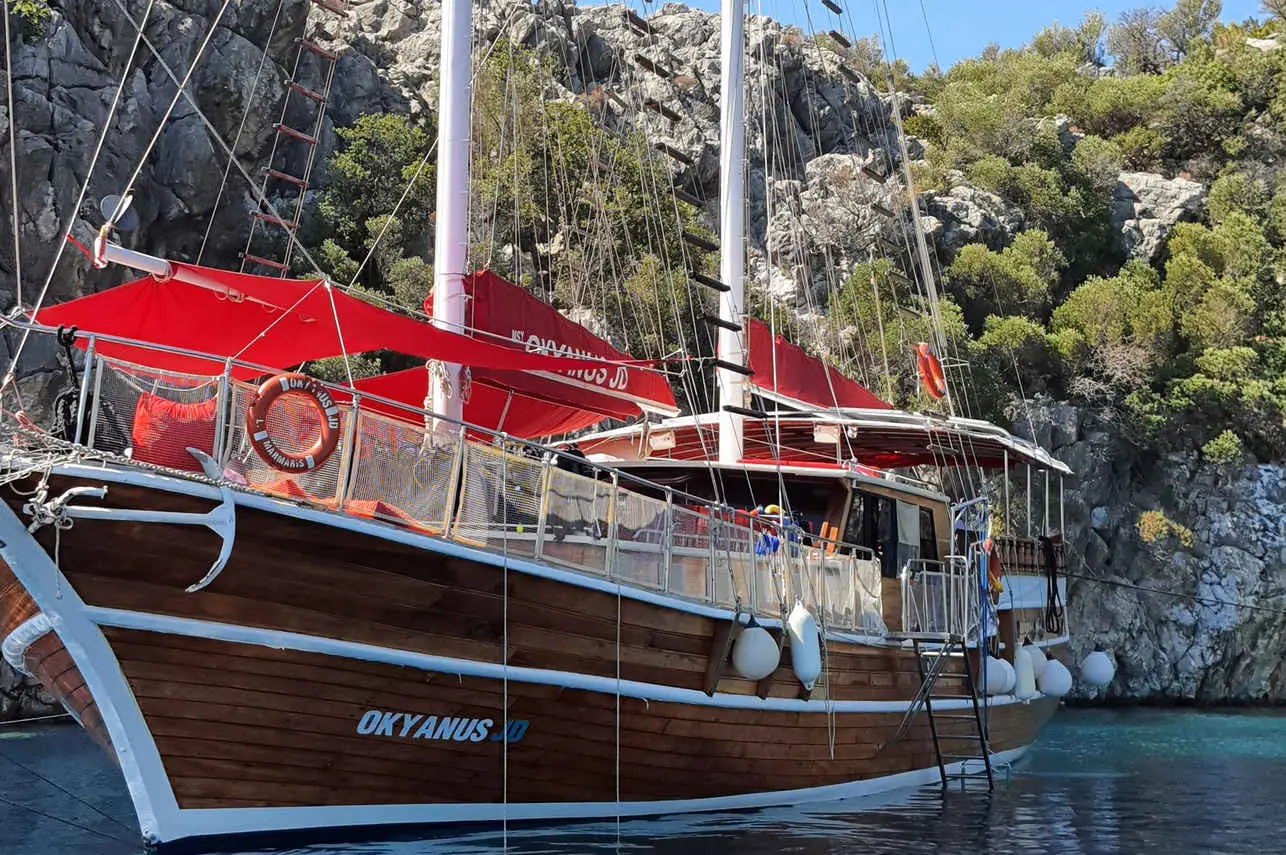
Okyanus JD
Turkey
12 guests24 m
Dive sites similar to Catermaran Wreck
Same character, same waters, six more sites divers love for the exact same reasons.Compare seasons, access and liveaboard routes, then pick the site that fits your trip best.
Abdi Reis is a highly regarded dive site situated near the Datça Peninsula in Turkey's Aegean Sea, specifically located within Abdi Reis Cove, near Yildiz Island.
- Suitable for
- Intermediate
- Current
- Moderate
- Access
- Liveaboard or dayboat
- Depth
- ≤ 33 m
- Theme
- Reef / Wall
© EsriMaxar, Earthstar, GIS
Adabanko Reef
Turkey
Adabanko Reef is an inviting dive site situated approximately two kilometers off the coast of Kuşadası in Turkey's Aegean Sea.
- Suitable for
- Beginner
- Current
- Moderate
- Access
- Liveaboard or dayboat
- Depth
- 5–40 m
- Theme
- Reef
© EsriMaxar, Earthstar, GIS
Adakule Cave
Turkey
Adakule Cave is a notable boat-access dive site located near Kuşadası, Turkey, offering an engaging experience centered around two distinct underwater caverns.
- Suitable for
- Beginner
- Current
- Mild
- Access
- Dayboat
- Depth
- 9–30 m
- Theme
- Cave & cavern
© EsriMaxar, Earthstar, GIS
Afkule Cave
Turkey
Afkule Cave, also referred to by some as Aladdin's Cave, is consistently ranked among the top dive sites in Turkey, particularly renowned for its cave diving opportunities.
- Suitable for
- Intermediate
- Current
- Moderate
- Access
- Liveaboard or dayboat
- Depth
- ≤ 50 m
- Theme
- Cave & cavern / Wall
© EsriMaxar, Earthstar, GIS
Afkule Monastery Reef
Turkey
Afkule Monastery Reef, prominently known as Afkule Wall, stands as a distinguished dive destination along Turkey's southwestern coast, close to Fethiye.
- Suitable for
- Intermediate
- Current
- Strong
- Access
- Liveaboard or dayboat
- Depth
- 6–40 m
- Theme
- Wall