About Coastguard Wreck
The Coastguard Wreck is a Fethiye boat dive, featuring a retired coast guard ship scuttled to form an artificial reef alongside a natural reef structure. This site is primarily accessed via a guided shot-line descent, allowing divers to circuit the hull. For appropriately trained wreck divers, optional penetration into the rear or engine bay is available, transforming parts of the interior into an overhead environment. Positioned in depths ranging from 27 to 30 meters, the wreck provides a predictable experience for experienced divers. The main dive route maintains depths on or just above the hull, with deeper excursions reserved for interior exploration. The site is known for typically mild currents and good visibility, though surface conditions can become choppier with wind. Marine life has begun to colonize the wreck, with sightings of groupers, basslets, and moray eels reported. As an artificial reef, it continues to evolve into a diverse underwater habitat. The dive requires a local Fethiye or Ölüdeniz dive boat for practical access and operation. Overall, the Coastguard Wreck offers a structured and engaging wreck dive experience. Its accessible depth profile and clear conditions make it an appealing site for experienced divers looking for a guided exploration with the possibility of advanced penetration dives.
Highlights
Artificial reef wreckFethiye boat diveShot-line descentHull circuit diveOptional engine-bay penetrationGrouper and moray eelsAdvanced wreck experience
Best Season
Late spring through autumn offers the best conditions for diving the Coastguard Wreck. During these months, divers can expect mild currents and good visibility, enhancing the overall experience at the site.
Dive site facts: Coastguard Wreck
- Depth
- 27–30 m
- Current
- Light to mild
- Visibility
- 18–30 m
- Entry
- Shot-line descent
- Level
- Advanced
- Dive type
- Wreck, artificial reef
- Region / port
- Fethiye / Ölüdeniz, Turkey
- Coordinates
- 36.9815° N, 27.5020° E
Conditions & Currents
The Coastguard Wreck typically experiences light to mild currents, creating generally favorable diving conditions. While the underwater environment is often calm, surface conditions can become choppy if the wind increases, potentially affecting entry and exit procedures. Divers should always stay on the descent line during the initial entry and ascent to manage any localized currents or surface chop. Visibility averages around 18 meters but can sometimes extend to 30 meters or more under optimal conditions, providing clear views of the wreck and surrounding marine life. As this is a boat-only dive from Fethiye or Ölüdeniz, briefings will cover current assessment and safe boat operations, emphasizing conservative gas planning due to the wreck's depth and potential overhead environments during penetration.
Marine life & sighting chances

Grouper / Basslets
common
Moray Eel
common
Octopus
occasional
Damselfish
occasional
Conger Eels
occasional
Cuttlefish
occasional
Nudibranchs
occasional
Lobsters
occasional
Scorpionfish
occasionalDive profile & how the dive runs
Divers typically initiate their descent via a shot-line, leading directly to the Coastguard Wreck. The primary dive plan involves an exterior circuit along the vessel's hull, maintaining depths in the 27 to 30-meter range. For divers with appropriate wreck training and equipment, optional penetration into the rear section or engine bay is possible, offering an overhead environment experience. The dive progresses around the wreck, allowing exploration of its features and the marine life that has colonized it. Given the depth and potential for penetration, gas planning must be conservative. The ascent follows the shot-line, with a mandatory decompression stop often performed on a chain at 5 meters, ensuring a controlled and safe return to the surface.
Underwater photography
The Coastguard Wreck, as an artificial reef and wreck site, presents excellent opportunities for both wide-angle and macro photography. For capturing the full structure of the ship or the wider reef scenery, a wide-angle lens is recommended, especially given the good visibility often encountered. For detailed shots of marine life like moray eels, groupers, or nudibranchs residing on the wreck, a macro lens will be more effective. External strobes are beneficial for color rendition and illuminating darker areas, particularly during hull circuits or if venturing into the more open interior sections. When considering penetration, be mindful of buoyancy to prevent silting and always prioritize safety in overhead environments. Patience is key to capturing marine inhabitants as they become accustomed to divers.
Combine with nearby dive sites
- Catermaran Wreck
The Turkish coast, particularly the Riviera, offers diverse diving experiences, including a variety of wrecks.
- Ottoman Anchor
Ottoman Anchor is a boat-accessible reef dive centered around a significant historical anchor.
- Lighthouse
Lighthouse is a common name for two distinct dive sites in Turkey, both offering compelling underwater experiences.
- Abdi Reis
Abdi Reis is a highly regarded dive site situated near the Datça Peninsula in Turkey's Aegean Sea, specifically located within Abdi Reis…
- Red Rock
Red Rock is a challenging dive site situated in Turkey's Aegean Sea, close to the Datça Peninsula.
- Sari Mehmet
Sari Mehmet is a challenging and rewarding dive site located near the Datça Peninsula in Turkey's Aegean Sea.
Getting there & logistics
Access to the Coastguard Wreck is exclusively by boat, typically departing from Fethiye or Ölüdeniz. These towns serve as primary departure points for dive operators running trips to the site. Divers usually join day trips from local dive centers, which manage the boat logistics and provide guided dives. The Coastguard Wreck is often integrated into dive itineraries that may include other nearby sites, offering a comprehensive experience of the region's underwater attractions. There are no direct shore entries available for this site, making a local dive boat and guide essential for a visit. Divers should confirm any specific permits or fees with their chosen operator, though usually these are covered in the dive package.
Safety & environment
Safety at the Coastguard Wreck requires adherence to established protocols due to its nature as a wreck and potential overhead environment. Entanglement risks exist within the wreck, and interior spaces must be treated as overhead environments, demanding appropriate training and gear for penetration. Divers must plan gas conservatively, especially when considering deeper or interior exploration, and always stay on the descent/ascent line. The nearest recompression chamber is important to know for any dive in Turkey; however, specific chamber locations are not provided in the sources for Fethiye or Ölüdeniz. Divers should ensure they have comprehensive dive insurance covering potential evacuation and recompression treatments. Following the local boat briefing is crucial for understanding site-specific restrictions and emergency procedures. Do not remove or disturb any wreck material.
Who it suits — and who it doesn't
Suited for
- Experienced wreck divers
- Advanced certified divers
- Divers seeking structured wreck exploration
- Photographers interested in wreck and macro subjects
- Divers comfortable with moderate depths
Less suited for
- Beginner divers
- Untrained divers seeking wreck penetration
- Divers uncomfortable with potential overhead environments
- Divers sensitive to surface chop
FAQ
Coastguard Wreck FAQ
Can you penetrate the Coastguard Wreck?
Yes, penetration of the Coastguard Wreck is possible, but it is strictly reserved for divers who have received appropriate wreck training and possess the necessary equipment. The interior sections, such as the rear or engine bay, are considered overhead environments and require advanced skills for safe exploration. Always dive with a trained guide when considering penetration.
How do you reach the Coastguard Wreck?
The Coastguard Wreck is exclusively accessible by boat, with dive trips typically departing from Fethiye or Ölüdeniz. There is no shore entry available for this site. Divers should arrange their visit through a local dive operator who will provide boat transport and guide services.
What is the typical depth of the Coastguard Wreck?
The Coastguard Wreck rests at depths between 27 and 30 meters. Most of the main dive route along the hull remains within this range. Deeper moments only occur during trained penetration into specific interior sections of the vessel.
What marine life can be seen at the Coastguard Wreck?
As an artificial reef, the Coastguard Wreck is home to various marine species. Commonly sighted inhabitants include groupers and moray eels. Other marine life such as octopus, damselfish, and nudibranchs may also be encountered among the wreck's structures.
Is the Coastguard Wreck suitable for beginner divers?
No, the Coastguard Wreck is not considered suitable for beginner divers. It is classified as an advanced dive site due to its depth, the nature of wreck diving, and the potential for overhead environments. Experienced divers with an advanced certification are recommended for this site.
Why dive Coastguard Wreck from a liveaboard?
Coastguard Wreck is one of Turkey's signature dive sites. A liveaboard sleeps you on the water and puts you in the water for three to four guided dives per day, including dawn and night dives that day-boat operators rarely offer. You skip the daily commute back to port and reach quieter, less-crowded sites in the same region on a single trip.
Below are the liveaboards that include Coastguard Wreck on their Turkey itineraries.
Liveaboards diving Coastguard Wreck
These liveaboards may visit Coastguard Wreck on selected itineraries — the exact dive sites depend on departure, weather and conditions.
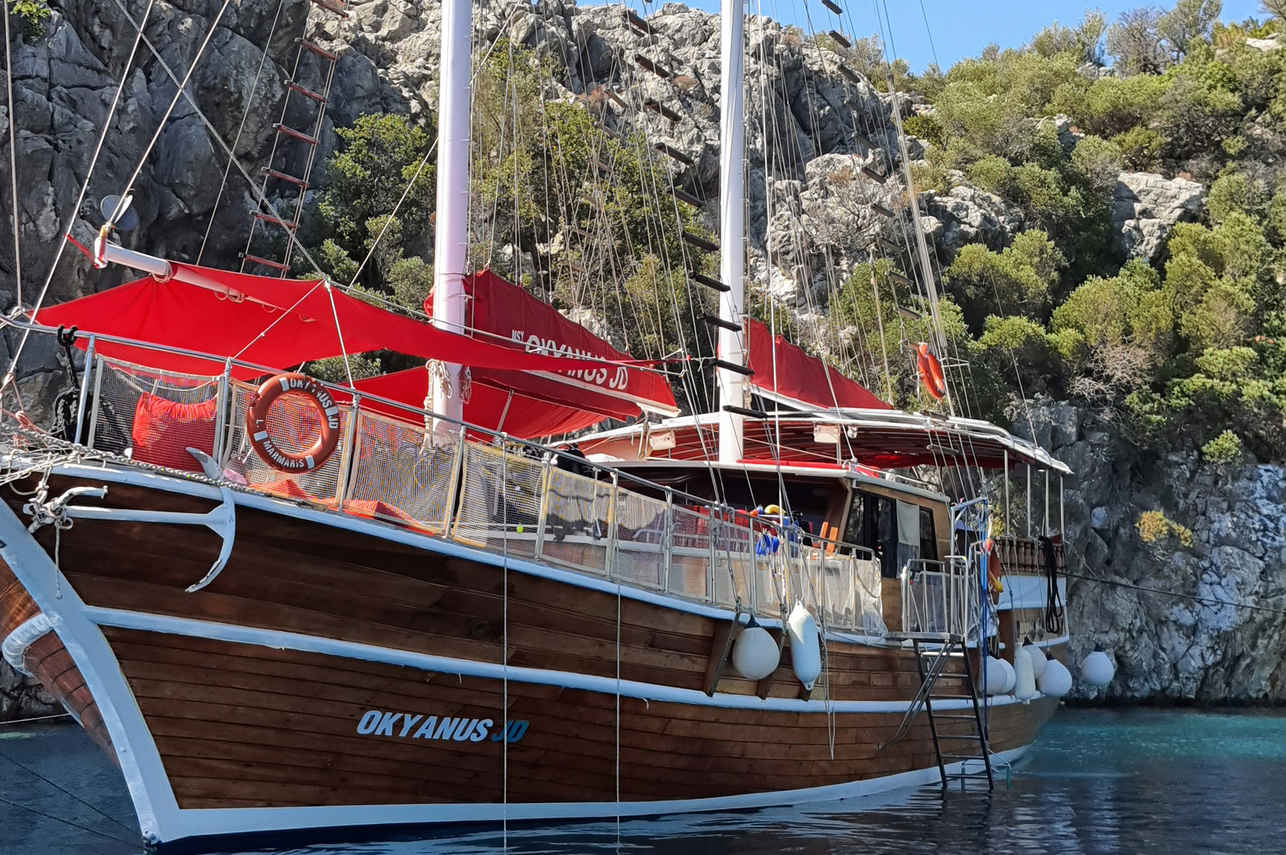
Okyanus JD
Turkey
12 guests24 m
$158/day
Dive sites similar to Coastguard Wreck
Same character, same waters — six more sites divers love for the exact same reasons.Compare seasons, access and liveaboard routes — then pick the site that fits your trip best.
© Esri — Maxar, Earthstar, GIS
Catermaran Wreck
Turkey
The Turkish coast, particularly the Riviera, offers diverse diving experiences, including a variety of wrecks.
- Suitable for
- Intermediate
- Current
- Moderate
- Access
- Liveaboard or dayboat
- Depth
- —
- Theme
- Wreck
© Esri — Maxar, Earthstar, GIS
Tank Wreck
Turkey
The Güvercin Ada / Tank Wreck dive site, located near Kaş, Turkey, combines a calm reef with a unique blend of sunken elements, including a sculpture and various wreck components.
- Suitable for
- Intermediate
- Current
- Moderate
- Access
- Liveaboard or dayboat
- Depth
- 21–21 m
- Theme
- Wreck
© Esri — Maxar, Earthstar, GIS
Coast Guard Ship Wreck
Turkey
The Coast Guard Ship Wreck is an advanced dive site situated near Bodrum in the Aegean Sea.
- Suitable for
- Intermediate
- Current
- Moderate
- Access
- Liveaboard or dayboat
- Depth
- 3–29 m
- Theme
- Wreck
© Esri — Maxar, Earthstar, GIS
Saint Didier
Turkey
The Saint Didier is Turkey's largest accessible shipwreck, a significant historical site located a short boat ride from Antalya's yacht harbor.
- Suitable for
- Advanced
- Current
- Mild
- Access
- Dayboat
- Depth
- 16–31 m
- Theme
- Wreck
© Esri — Maxar, Earthstar, GIS
Monem Wreck
Turkey
The Monem Wreck lies in the clear Aegean waters near the Karaburun peninsula, west of İzmir, off the coast of Çeşme, Turkey.
- Suitable for
- Advanced
- Current
- Mild
- Access
- Dayboat
- Depth
- 18–18 m
- Theme
- Wreck / Reef
© Esri — Maxar, Earthstar, GIS
The Italian WWII Plane Wreck, known locally as "Flying Fish," offers a compelling dive into history off the coast of Kaş.
- Suitable for
- Advanced
- Current
- Mild
- Access
- Liveaboard or dayboat
- Depth
- 55–65 m
- Theme
- Wreck