About Small Reef
Small Reef, situated near Bodrum on Turkey's Aegean coast, is a long-established and frequently visited dive site, known for its contained yet diverse underwater landscape. It provides an accessible and navigable experience, particularly appealing to new divers due to its manageable size and clear conditions. The site's topography is characterized by rocky formations, a dramatic wall system, and natural tunnels. The main reef top sits around 15 meters, gradually descending. Noteworthy features include three distinct tunnels, with the deepest beginning at approximately 30 meters and another at 20 meters, both offering easy exits. A narrower top tunnel requires more careful navigation, and a cement wreck rests between 18-21 meters, adding further interest. Despite its compact nature, Small Reef supports a healthy marine community. Common encounters include sea bream, wrasse, and groupers. Moray eels and octopus are often found within crevices and rocky shelters, along with damselfish, conger eels, cuttlefish, nudibranchs, lobsters, and scorpionfish. Sea fans also decorate the reef surfaces. Typically accessed by boat, divers can explore down to a maximum recreational depth of 30 meters. The site's structural complexity and concentrated marine life make it an engaging dive location that often encourages multiple visits to fully appreciate its nuances.
Highlights
Beginner-friendly reef formationNatural underwater tunnelsRocky wall systemConcentrated marine lifeCement wreckDiverse Mediterranean speciesExcellent visibilityAccessible boat dive
Season calendar
Best months to dive here
Jan
Feb
Mar
Apr
May
Jun
Jul
Aug
Sep
Oct
Nov
Dec
Excellent
Good
Dive site facts: Small Reef
- Depth
- 5–30 m
- Current
- Mild to moderate
- Visibility
- 18–30 m
- Water temperature
- 17–28°C
- Entry
- Boat / RIB
- Level
- Beginner
- Dive type
- Reef, wall, macro
- Region / port
- Bodrum
- Coordinates
- 36.4620° N, 29.1040° E
Conditions & Currents
Small Reef typically experiences mild to moderate currents, making it suitable for beginners, though conditions can vary. Surface conditions are generally calm, with average wave heights usually remaining below 0.7 meters, facilitating easy boat entry and exit. While no specific current direction is noted, the varied underwater topography with walls and outcrops can create localized eddies. Visibility is excellent, averaging around 25 meters during peak seasons, though it can reach up to 30 meters. Divers should always consult local dive operators for real-time conditions and plan their dive to account for any prevailing water movement, ensuring comfortable exploration of the reef's features.
Marine life & sighting chances
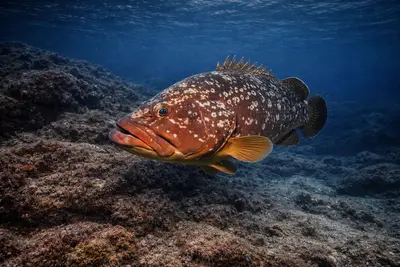
Grouper
common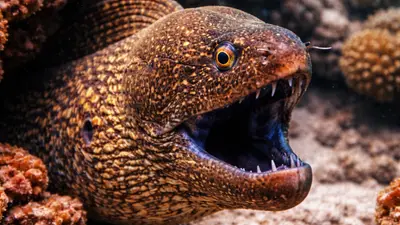
Moray eel
common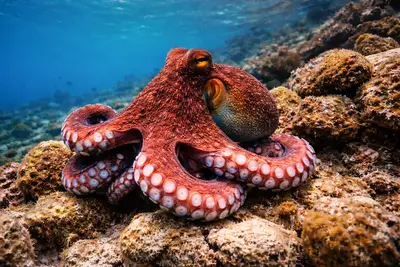
Octopus
common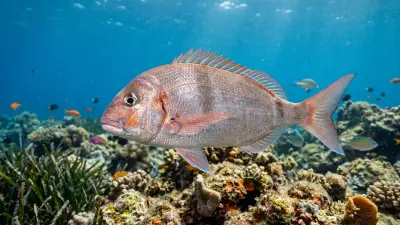
Sea bream
common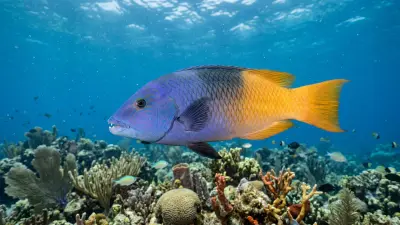
Wrasse
common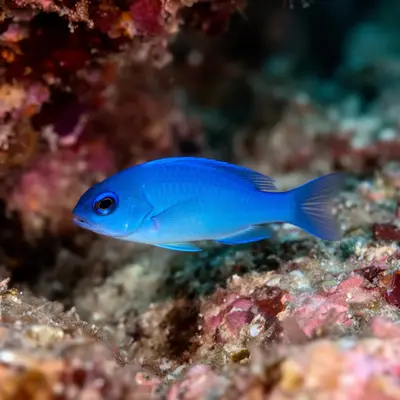
Damselfish
common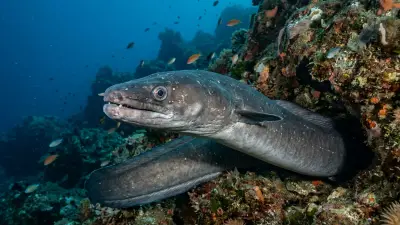
Conger eel
occasional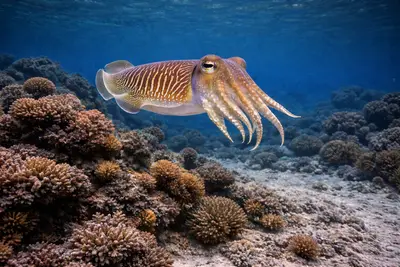
Cuttlefish
occasional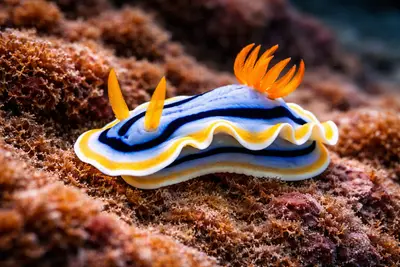
Nudibranch
occasional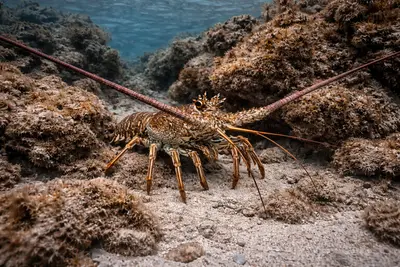
Lobster
occasional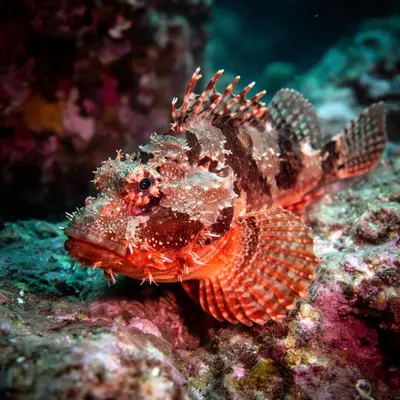
Scorpionfish
occasional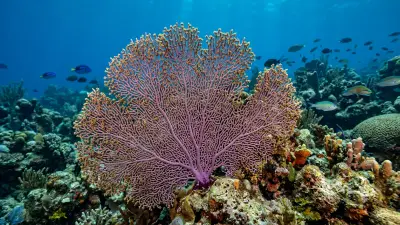
Sea fan
commonDive profile & how the dive runs
Dives at Small Reef typically begin with a boat drop, often from a RIB. Divers usually descend to the reef's top, located around 15 meters. From this initial point, exploration often proceeds northwest, following the contours of large rocky outcrops and gradually descending along the main wall. Divers will encounter intriguing geological features such as three distinct tunnels, with one near 20 meters and a deeper one at approximately 30 meters, both allowing for easy navigation through. A smaller, narrower top tunnel requires more precise buoyancy. The dive may also include visiting a cement wreck found between 18 and 21 meters. The maximum recreational depth typically reached is 30 meters. Divers then ascend, making a safety stop at 5 meters before surfacing, where the boat will be waiting for pickup.
Underwater photography
Small Reef offers excellent opportunities for macro photography, especially along its reef surfaces and within the cavernous sections of the tunnels. A macro lens is highly recommended to capture the detail of nudibranchs, small crustaceans like lobsters, and juvenile fish hiding in crevices. For wider shots of the wall system and tunnels, a wide-angle lens can be effective. Good buoyancy control is essential to avoid disturbing delicate marine life and to navigate the tighter sections of the tunnels. Artificial lighting, such as strobes or video lights, will help bring out the vibrant colors of sponges, algae, and fish, especially in deeper areas and inside the tunnels.
Combine with nearby dive sites
- Big Reef
A larger, more advanced site often combined with Small Reef in Bodrum itineraries.
- PINAR-1 TURKISH NAVY SHIPWRECK
An artificial reef created from a former Navy Coastguard water-carrying ship, located nearby.
- Airplane C-47 Dakota
A military transport plane wreck, purposely sunk to create an artificial reef.
Getting there & logistics
Small Reef is located near Bodrum, a major resort town on Turkey's southwest coast. Divers typically fly into Bodrum-Milas Airport (BJV), which has good connections. From the airport, it's a short transfer to Bodrum city where numerous dive centers operate. Most dives to Small Reef are day trips by boat, departing from local ports in Bodrum. Trip durations are typically a single dive or a two-dive day trip, often combining Small Reef with nearby sites like Big Reef. There are no specific permits or park fees mentioned for diving this site, but daily dive boat fees will apply. The site is frequently included in introductory dive packages and open water courses due to its beginner-friendly nature.
Safety & environment
For diving at Small Reef, it is crucial to have proper dive insurance that covers recompression chamber treatment and medical evacuation. The nearest recompression chamber facilities would be in larger medical centers in Bodrum or nearby cities. In case of a diving emergency, evacuation would typically involve a boat transfer back to shore, followed by land transport to a medical facility. Divers should always adhere to standard safety protocols, including buddy system, proper depth and time management, and ascending slowly. Given the presence of tunnels, advanced training or close guide supervision is recommended for tunnel penetration. Always dive within your certification limits and follow the instructions of your dive guide. Visibility is generally good, but local conditions can change, so always be aware of your surroundings.
Who it suits — and who it doesn't
Suited for
- Beginner divers and those new to open water
- Divers seeking manageable and contained reef environments
- Underwater photographers interested in macro subjects
- Divers looking for diverse marine life in a compact area
- Those who appreciate natural rock formations and tunnels
Less suited for
- Divers exclusively seeking large pelagic encounters
- Those looking for challenging currents or drift dives
- Experienced divers who prefer extensive, sprawling sites
- Divers interested solely in deep wreck penetration
FAQ
Small Reef FAQ
Is Small Reef suitable for beginner divers?
Yes, Small Reef is considered very beginner-friendly. Its modest size and contained topography make it easy to navigate without risk of disorientation. The depths are comfortable for new divers, typically ranging from 5 to 30 meters, allowing for a relaxed exploration of the vibrant marine life and reef structures.
What kind of marine life can I expect to see at Small Reef?
Small Reef, despite its name, hosts a healthy and diverse marine community. You can frequently encounter groupers, moray eels, and octopus, often found hiding in crevices. Other common sightings include sea bream, wrasse, damselfish, conger eels, cuttlefish, nudibranchs, lobsters, and scorpionfish, all thriving among the rocky formations.
Are there any wrecks at Small Reef?
Yes, Small Reef features a cement wreck as an additional point of interest. It rests between 18 and 21 meters, approximately halfway back to the bay from the main reef. This wreck adds another layer to the site's topography and provides further habitat for marine life.
What are the water temperatures like at Small Reef throughout the year?
Water temperatures at Small Reef vary seasonally. During the peak diving season from May to October, temperatures range from 20°C in May to a warm 27°C in August. In cooler months like January and February, temperatures drop to around 18-20°C, requiring thicker wetsuits.
How deep is Small Reef and what are its main features?
Small Reef offers dives typically between 5 and 30 meters. Its main features include a dramatic wall system, numerous rocky formations, and three distinct natural tunnels. The reef top starts around 15 meters, and the deepest tunnel reaches approximately 30 meters, alongside a cement wreck at 18-21 meters.
Why dive Small Reef from a liveaboard?
Small Reef is one of Turkey's signature dive sites. A liveaboard sleeps you on the water and puts you in the water for three to four guided dives per day, including dawn and night dives that day-boat operators rarely offer. You skip the daily commute back to port and reach quieter, less-crowded sites in the same region on a single trip.
Below are the liveaboards that include Small Reef on their Turkey itineraries.
Liveaboards diving Small Reef
These liveaboards may visit Small Reef on selected itineraries — the exact dive sites depend on departure, weather and conditions.
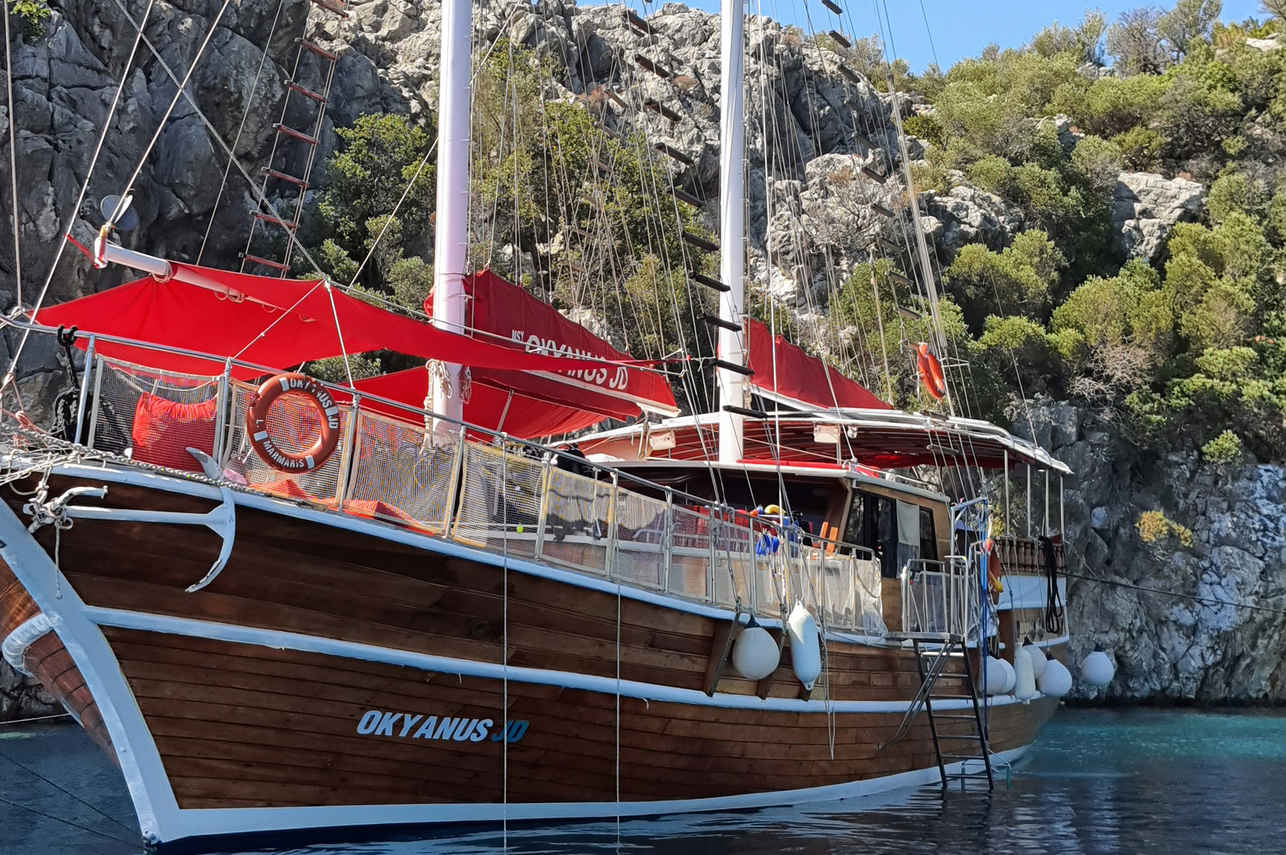
Okyanus JD
Turkey
12 guests24 m
$157/day
Dive sites similar to Small Reef
Same character, same waters — six more sites divers love for the exact same reasons.Compare seasons, access and liveaboard routes — then pick the site that fits your trip best.
Hidayet Koyu
Turkey
Hidayet Koyu is a well-known, sheltered bay located on the Kaş peninsula in Turkey, celebrated for its accessibility and vibrant marine ecosystem.
- Suitable for
- Beginner
- Current
- No current
- Access
- Liveaboard or dayboat
- Depth
- ≤ 32 m
- Theme
- Reef
Besmi Island
Turkey
Besmi Island, also known as Besmi Adası, is a challenging yet rewarding dive site located off Turkey's southwestern coast near Fethiye and southwest of Kaş.
- Suitable for
- Advanced
- Current
- Strong
- Access
- Dayboat
- Depth
- 4–60 m
- Theme
- Reef / Wall
Domuz Island
Turkey
Domuz Island, also known as Pig Island, is a celebrated dive destination nestled within the Göcek archipelago, part of Fethiye Bay.
- Suitable for
- Beginner
- Current
- Mild
- Access
- Dayboat
- Depth
- 5–15 m
- Theme
- Reef
Gökova Bay Canyon
Turkey
Gökova Bay Canyon is a renowned dive site in Turkey, celebrated for its unique underwater topography, which contrasts sharply with typical Mediterranean dive experiences.
- Suitable for
- Advanced
- Current
- Strong
- Access
- Liveaboard or dayboat
- Depth
- 15–35 m
- Theme
- Wall
Kızıl Island
Turkey
Kızıl Island, known locally as Kızılada, is a prominent dive site situated near Fethiye on Turkey's southwestern coast.
- Suitable for
- Intermediate
- Current
- Mild
- Access
- Dayboat
- Depth
- 8–40 m
- Theme
- Reef / Wall
Smugglers Bay
Turkey
Smugglers Bay, located near Bodrum in Turkey's Aegean Sea, is a beginner-friendly dive site renowned for its calm conditions and healthy marine environment.
- Suitable for
- Beginner
- Current
- Mild
- Access
- Dayboat
- Depth
- 3–35 m
- Theme
- Reef