About Pescador Island
Pescador Island, situated approximately 4km off Panagsama Beach in Moalboal, Cebu, Philippines, offers an unparalleled diving experience that encapsulates the best of the region's underwater world. This uninhabited island, whose name translates to 'fisherman' in Spanish, has upheld its reputation for abundant marine life for decades. Dive boats typically reach the island in just over ten minutes from Panagsama Beach. The island's geography features a dramatic deep wall on its north and west sides, while the south presents a steep slope. A fringing reef composed of soft corals thrives between 5-10 meters, before giving way to a hard coral wall that plunges to around 40 meters. In the shallower areas, vibrant coral gardens form small mountains on the white sand, attracting clouds of anthias. The marine biodiversity around Pescador Island is truly exceptional, boasting over 450 species of hard corals and more than 2500 species of fish. Divers frequently encounter pyramid butterflyfish, tuna, barracuda, frogfish, nudibranchs, and snake eels. The famous sardine run, a massive school of sardines creating a mesmerizing tornado-like formation, is a star attraction, which in turn draws larger predatory marine life back to the area. White-tipped reef sharks are common sightings, and lucky divers might even spot thresher sharks or whale sharks. The island is also a haven for turtles, seen on nearly every dive. Dive conditions at Pescador Island are generally excellent, with visibility often ranging from 10 to 30 meters, and extending up to 40 meters on good days. Currents can vary from calm to 3 knots, and dive sites are often chosen based on current strength. The distinct geological feature known as 'The Cathedral,' a large underwater cave off the west coast, adds another layer of intrigue with its fascinating rock formations. While suitable for Open Water certified divers, the site's deeper sections and potential currents offer rewarding experiences for advanced divers as well. Entry to the dive sites is exclusively by boat.
Highlights
Sardine Run phenomenonAbundant hard and soft coralsDiverse fish speciesThe Cathedral underwater caveFrequent turtle sightingsWhite-tipped reef sharks
Season calendar
Best months to dive here
Jan
Feb
Mar
Apr
May
Jun
Jul
Aug
Sep
Oct
Nov
Dec
Excellent
Good
Off-Season
Dec – Apr (Dec–Apr)
Best diving conditions across most regions. Calm seas, excellent visibility. Tubbataha Reef accessible Mar–Jun only. Thresher sharks year-round at Malapascua.
May & Nov (May, Nov)
Weather shifts between seasons. Still excellent diving in many areas. Fewer crowds and lower prices. Some regions still offer perfect conditions.
Jun – Oct (Jun–Oct)
Typhoon season — mainly affects northern regions. Southern Visayas and Mindanao still offer good diving. Reduced visibility. Best prices and fewest crowds.
Dive site facts: Pescador Island
- Depth
- 5–65 m
- Typical dive
- 12–18 m, 50–60 min
- Current
- Mild to occasionally strong
- Visibility
- 10–50 m
- Water temperature
- 26–30°C
- Entry
- Boat
- Level
- Open Water, Advanced Open Water for Cathedral
- Dive type
- Reef, wall, cave, macro, pelagic
- Region / port
- Moalboal, Cebu
- Coordinates
- 9.93, 123.364
Conditions & Currents
Currents at Pescador Island are generally mild, but can occasionally be strong, particularly from June to November. Divers should always heed local guide and captain briefings regarding daily conditions, as currents can enhance pelagic activity and provide effortless drift dives along the walls. While the site is suitable for divers with limited drift experience, maintaining good buoyancy control is crucial, especially within the confines of The Cathedral, to avoid silting. Surface conditions are generally calmer during early morning dives, improving light penetration and overall comfort. Water temperature remains consistently warm, ranging from 26°C to 30°C throughout the year.
Marine life & sighting chances

Whitetip reef shark
common
Thresher shark
occasional
Jackfish
common
Barracuda
common
Green turtle
common
Hawksbill turtle
common
Frogfish
occasional
Nudibranch
occasional
Scorpionfish
occasional
Anthias
common
Moray eel
common
Cuttlefish
occasionalDive profile & how the dive runs
Dives at Pescador Island typically start from a boat, positioned either near the main wall or closer to The Cathedral on the western side. A common route involves descending along the vibrant wall, which begins at 5-8 meters and drops vertically. For The Cathedral, divers enter at approximately 18 meters, passing through a wide shaft that ascends towards shallower depths, often illuminated by natural light from above. After exploring the chamber and its diverse marine life, the dive continues along the coral-rich walls, maintaining a recreational depth. The turn point is often dictated by air consumption or bottom time, with a gradual ascent along the reef top. Safety stops are typically performed in the shallower reef areas, between 5-8 meters, which are also excellent for observing anthias, moray eels, and cuttlefish.
Underwater photography
Pescador Island offers exceptional opportunities for both wide-angle and macro photography. For wide-angle shots, a fisheye lens is ideal to capture the dramatic scale of the walls, the mesmerizing light shafts within The Cathedral, and schooling fish like jacks and barracuda. Consider an external strobe or video light to enhance the colors of the soft corals and sponges. For macro subjects, a macro lens will be invaluable for capturing frogfish, nudibranchs, and scorpionfish hidden along the walls. Patience is key, as these critters are masters of camouflage. Maintain excellent buoyancy control to avoid disturbing the delicate corals and silting up The Cathedral, ensuring clear shots for yourself and others. Early morning dives provide optimal light conditions for photography.
Combine with nearby dive sites
- Moalboal Sardine Run
Often combined with Pescador Island for a two-tank dive.
- Panagsama Beach
Shore diving activities and a significant resident sardine run.
- Tongo Sanctuary
Another common second dive site option with Pescador Island.
- Apo Island
A highly-regarded marine sanctuary known for abundant turtles and healthy reefs.
- Sumilon Island
Features a shifting sandbar and vibrant marine sanctuary.
Getting there & logistics
Access to Pescador Island is typically through dive operators based in Moalboal, Cebu. The nearest major international airport is Mactan-Cebu International Airport (CEB). From Cebu City, Moalboal is approximately a 2-3 hour drive. Dive trips to Pescador Island are almost always boat dives, lasting a full or half-day and commonly including two tanks. A standard two-tank boat dive, including equipment, usually costs between 2,500 to 3,500 PHP. Most operators depart early, between 7 and 8 AM, for the 10-15 minute boat ride to the island. Pescador Island is frequently combined with other local sites like the Moalboal Sardine Run or Tongo Sanctuary to offer a varied itinerary.
Safety & environment
While Pescador Island is generally considered safe, standard dive safety precautions apply. Divers should carry personal dive insurance and ensure their certification covers the planned depths. The nearest recompression chamber is located in Cebu City, which entails a significant travel time in case of an emergency. Always dive with a reputable operator and follow your dive guide's instructions, especially regarding currents and entry/exit procedures. For diving The Cathedral, Advanced Open Water certification is recommended due to the depth and the importance of precise buoyancy control to prevent silting. Ensure your equipment is well-maintained, and plan your dive within your limits and no-decompression limits.
Who it suits, and who it doesn't
Suited for
- Open Water divers (for shallower reef sections)
- Advanced Open Water divers (for The Cathedral and deeper walls)
- Underwater photographers (both wide-angle and macro)
- Divers seeking dramatic reef topography
- Divers interested in pelagic encounters (sharks, barracuda)
- Critter hunters (nudibranchs, frogfish)
Less suited for
- Divers uncomfortable with boat entries
- Divers with poor buoyancy control (especially for The Cathedral)
- Those strictly seeking easy, no-current dives
- Divers unfamiliar with drift diving techniques
- Individuals prone to seasickness on short boat rides
FAQ
Pescador Island FAQ
What is 'The Cathedral' at Pescador Island?
The Cathedral is a unique underwater chimney formation on the western side of Pescador Island. It starts at about 18 meters depth and opens upwards towards the surface. When the sun is overhead, light filters through the openings, creating a stunning visual effect reminiscent of stained glass in a church.
What kind of marine life can I expect to see at Pescador Island?
Pescador Island boasts a rich diversity of marine life. You can frequently spot whitetip reef sharks, schools of jackfish and barracuda, green and hawksbill turtles. Macro enthusiasts will enjoy looking for frogfish, nudibranchs, and scorpionfish, while lucky divers might even encounter thresher sharks.
What certification level is required to dive Pescador Island?
Open Water divers can explore the shallower reef tops and upper wall sections, typically around 18 meters. However, to fully experience highlights like The Cathedral, which starts at 18 meters and involves a vertical swim-through, an Advanced Open Water certification is recommended due to the depth and buoyancy control requirements.
Are there strong currents at Pescador Island?
Currents at Pescador Island are generally mild, but they can occasionally be stronger, particularly between June and November. Dive guides will assess daily conditions, and sometimes mild currents can enhance the dive by allowing for effortless drifts along the walls and attracting pelagic species.
How do I get to Pescador Island for diving?
Pescador Island is typically accessed via dive boats from Moalboal, Cebu. Most dive centers in Moalboal offer daily trips, usually two-tank dives, which often combine Pescador Island with another nearby site like the Moalboal Sardine Run. The boat ride from Panagsama Beach is about 10-15 minutes.
Why dive Pescador Island from a liveaboard?
Pescador Island is one of Philippines's signature dive sites. A liveaboard sleeps you on the water and puts you in the water for three to four guided dives per day, including dawn and night dives that day-boat operators rarely offer. You skip the daily commute back to port and reach quieter, less-crowded sites in the same region on a single trip.
Below are the liveaboards that include Pescador Island on their Philippines itineraries.
Liveaboards diving Pescador Island
These liveaboards may visit Pescador Island on selected itineraries, the exact dive sites depend on departure, weather and conditions.
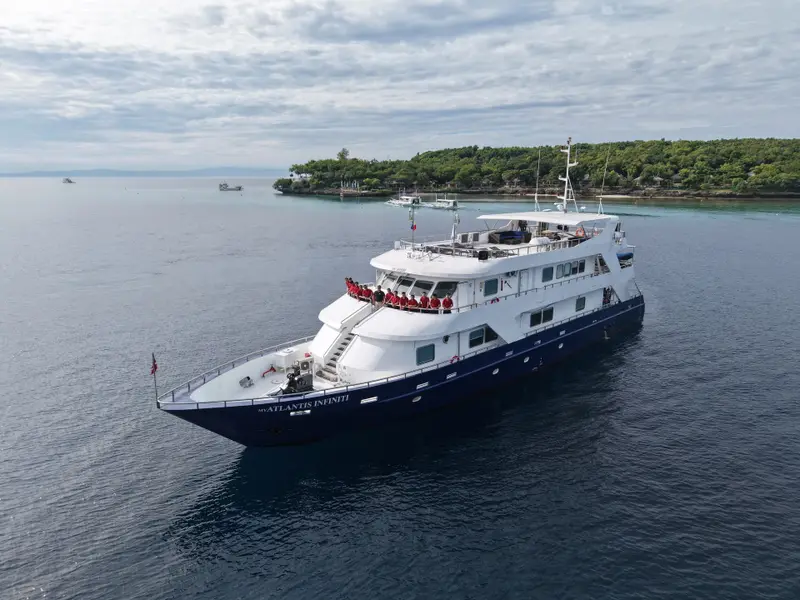
Infiniti
Philippines
25 guests39 m
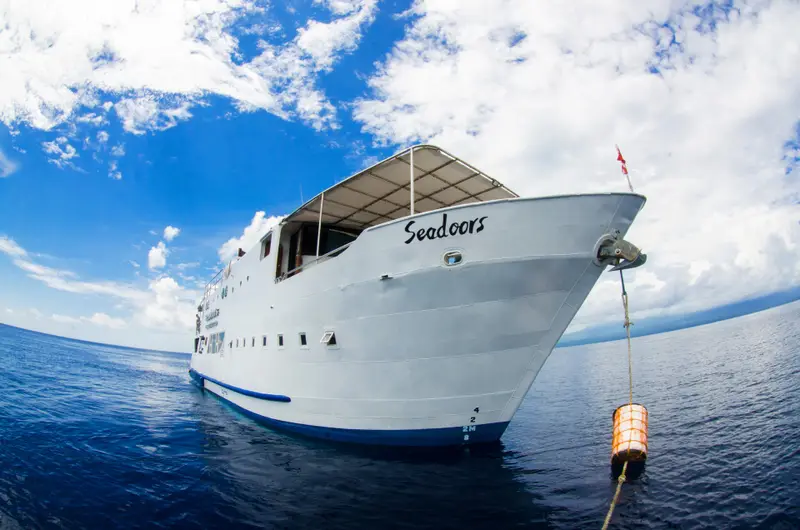
Seadoors
Philippines
16 guests25 m
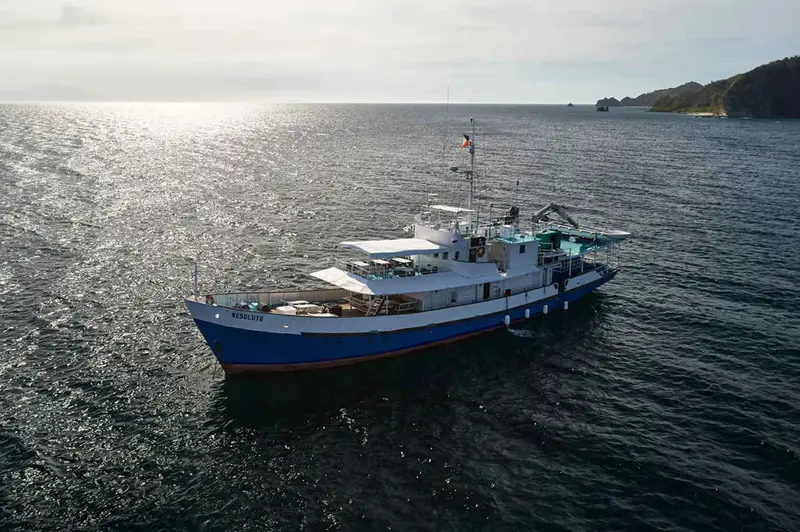
Resolute
Philippines
16 guests35 m
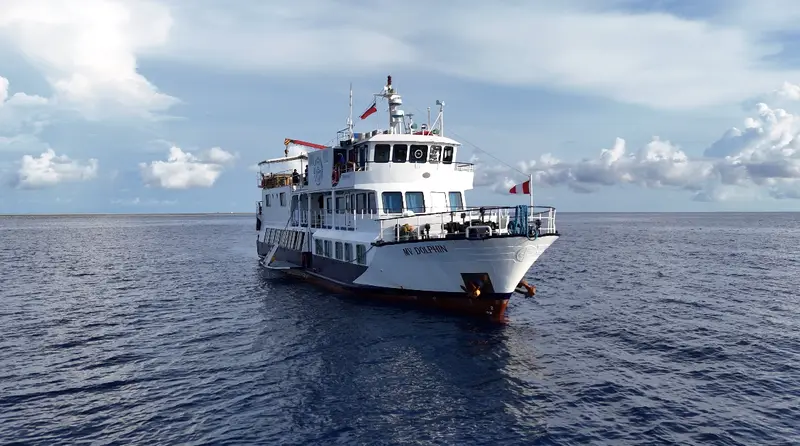
Dolphin
Philippines
18 guests31 m
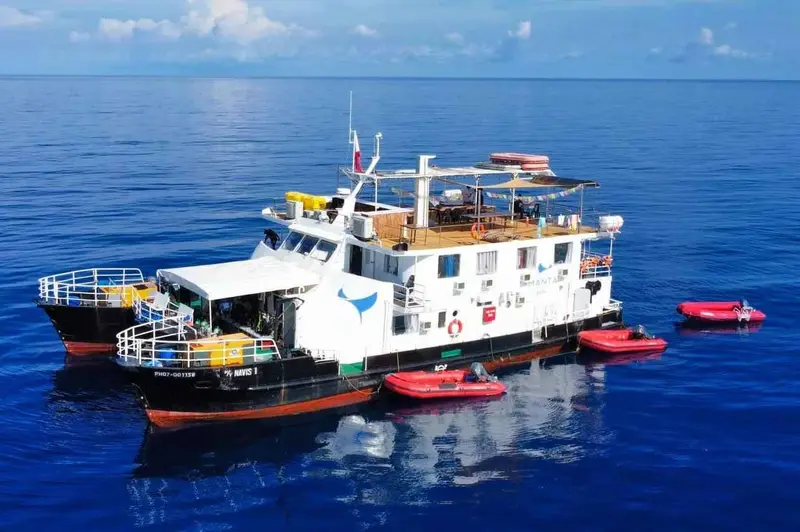
Navis 1
Philippines
22 guests23 m
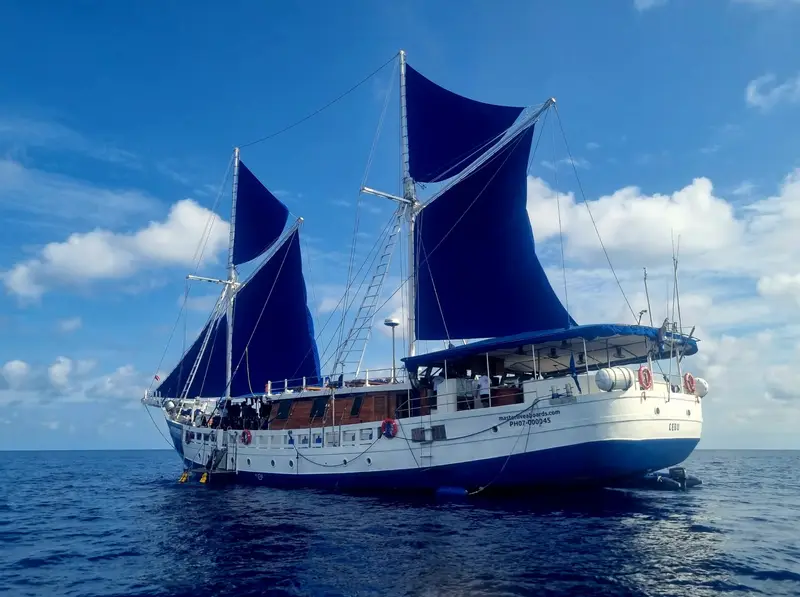
Philippine Siren
Philippines
16 guests
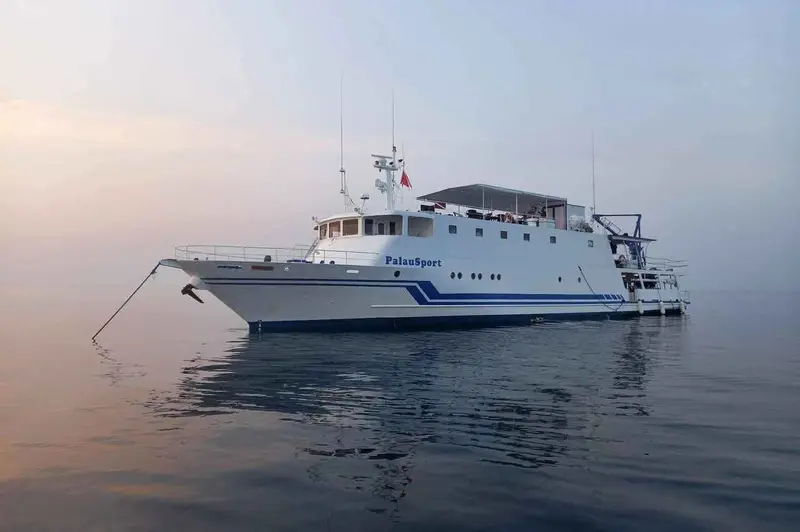
Palau Sport
Philippines
24 guests38 m

Philippines Aggressor
Philippines
26 guests43 m
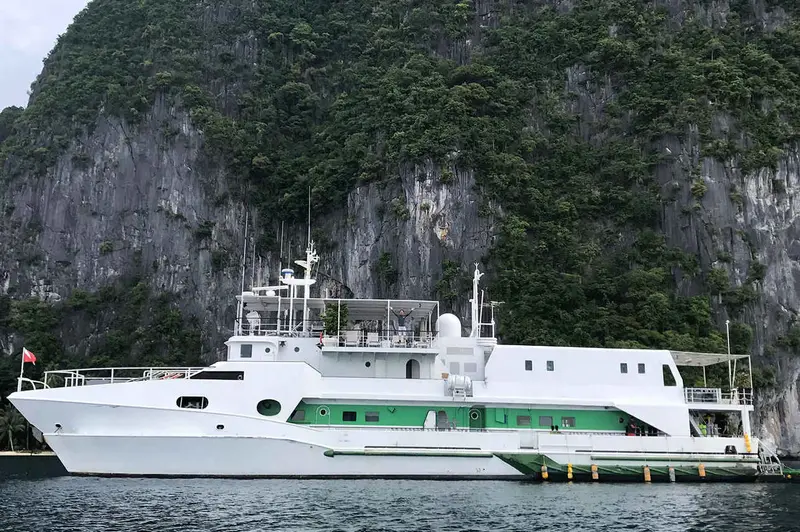
Stella Maris Explorer
Philippines
20 guests33 m
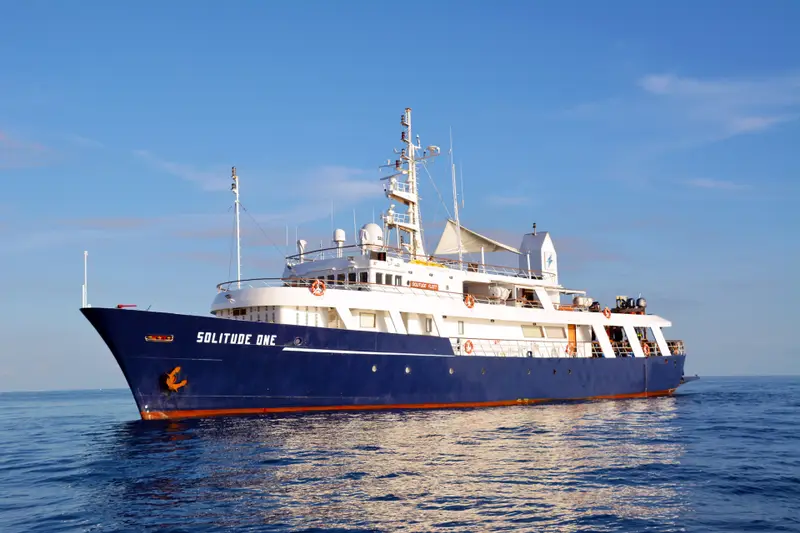
Solitude One
Philippines
24 guests52 m
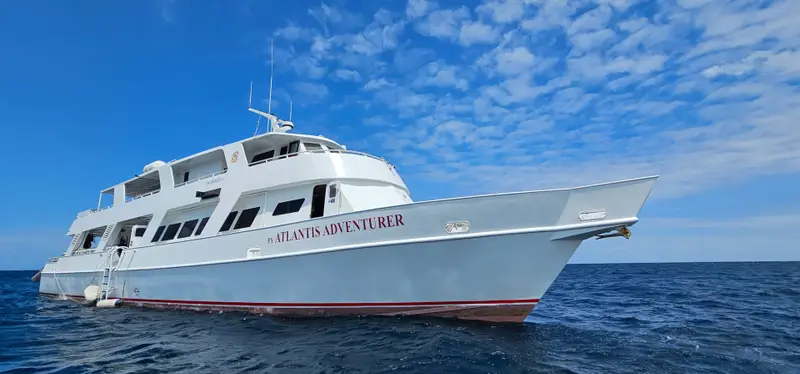
Atlantis Adventurer
Philippines
16 guests33 m
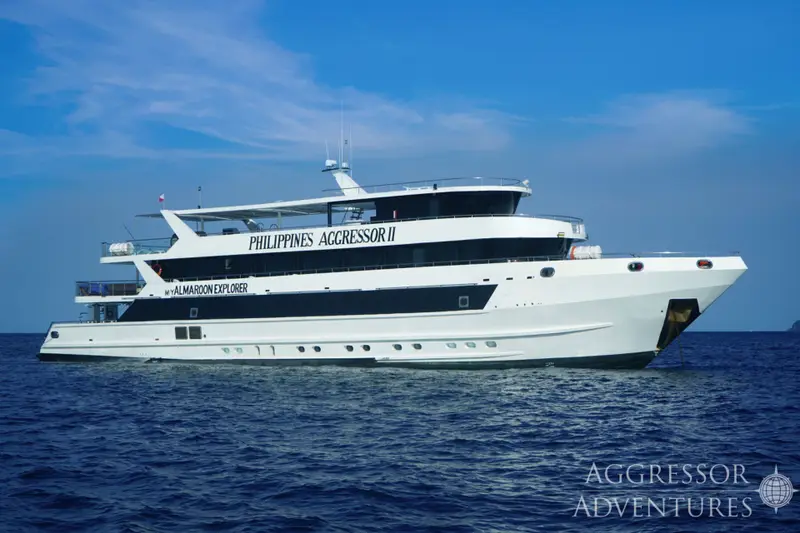
Philippines Aggressor II
Philippines
26 guests43 m
Dive sites similar to Pescador Island
Same character, same waters, six more sites divers love for the exact same reasons.Compare seasons, access and liveaboard routes, then pick the site that fits your trip best.
Abila is a notable dive site located within the Alor Islands Marine Park, an area celebrated for its rich marine biodiversity due to its position in the Coral Triangle.
- Suitable for
- Beginner
- Current
- Mild
- Access
- Liveaboard only
- Depth
- —
- Theme
- Reef
© EsriMaxar, Earthstar, GIS
Adonara Channel
Alor
Adonara Channel stands as one of Alor's most iconic dive sites, celebrated for its dynamic currents and exceptionally rich biodiversity.
- Suitable for
- Advanced
- Current
- Strong
- Access
- Liveaboard or dayboat
- Depth
- 10–40 m
- Theme
- Drift / Wall
© EsriMaxar, Earthstar, GIS
Adonara Wall
Indonesia
Adonara is an Indonesian island dive site, renowned for its vibrant underwater topography characterized by submerged seamounts.
- Suitable for
- Intermediate
- Current
- Strong
- Access
- Liveaboard or dayboat
- Depth
- 5–35 m
- Theme
- Seamount / Wall
© EsriMaxar, Earthstar, GIS
Agnay Fish Sanctuary
Philippines
Agnay Fish Sanctuary is nestled in a sheltered bay near the village of Agnay in Romblon, a province celebrated for its rich marine biodiversity.
- Suitable for
- Beginner
- Current
- Mild
- Access
- Dayboat
- Depth
- 9–18 m
- Theme
- Reef
© EsriMaxar, Earthstar, GIS
Ai Island Reef
Banda Sea
Ai Island Reef, nestled within the Banda Sea, offers a remarkable diving experience characterized by its rich marine biodiversity and varied underwater topography.
- Suitable for
- Beginner
- Current
- Strong
- Access
- Liveaboard only
- Depth
- 3–30 m
- Theme
- Reef / Seamount
© EsriMaxar, Earthstar, GIS
Akitsushima
Philippines
The Akitsushima is a distinguished World War II Japanese seaplane tender, sunk in September 1944 during an American air raid in Coron Bay, Palawan.
- Suitable for
- Advanced
- Current
- Strong
- Access
- Dayboat
- Depth
- 22–38 m
- Theme
- Wreck