About Lone Stone
Lone Stone is a small, solitary rock pinnacle emerging from the deep waters surrounding Cocos Island, approximately 550 kilometers off Costa Rica's Pacific coast. This remote site is a magnet for large marine life, thanks to the powerful currents and nutrient upwellings that characterize the Cocos marine protected area. The topography features a rocky formation that acts as a cleaning station and gathering point for diverse pelagic species, offering divers an unparalleled opportunity to witness dense schools of rays and other oceanic predators. The dive experience at Lone Stone is typically a drift dive, following the abundant marine life that congregates around the pinnacle. Depths can vary, but the main action often occurs in the shallower to mid-range zones around the rock, where cleaning stations attract various species. The site is part of the larger Cocos Island ecosystem, a UNESCO World Heritage site known for its exceptional biodiversity and healthy, undisturbed fish populations. Lone Stone provides a clear example of the raw, pelagic action that makes Cocos a world-class diving destination. Encounters with schooling marble rays and mobula rays are frequent, often seen circling the rock in impressive formations. While large pelagics like hammerheads and various sharks are common throughout Cocos, Lone Stone specifically stands out for its ray aggregations. The best months for experiencing peak pelagic action are generally from June to November, although rays are present year-round. This site is exclusively accessed via liveaboard, as are all Cocos Island dive locations, emphasizing its remote and pristine nature.
Highlights
Schooling marble raysAbundant mobula raysRemote Cocos Island pinnaclePelagic marine life encountersStrong current drift divingNutrient-rich upwellingCleaning station activity
Season calendar
Best months to dive here
Jan
Feb
Mar
Apr
May
Jun
Jul
Aug
Sep
Oct
Nov
Dec
Excellent
Good
Dive site facts: Lone Stone
- Depth
- 16–33 m
- Current
- Strong, unpredictable
- Visibility
- 15–30 m
- Water temperature
- 22–28°C
- Entry
- Tender / negative entry
- Level
- Advanced, current experience essential
- Dive type
- Pelagic, drift
- Night dive
- Possible, conditions permitting
- Region / port
- Cocos Island, Costa Rica
- Coordinates
- 5.5, -87.08
Conditions & Currents
Lone Stone is characterized by strong and often unpredictable currents, typical of many Cocos Island dive sites, which are driven by nutrient-rich Pacific upwellings. Divers should anticipate drift diving conditions, where the boat follows the divers' trajectory rather than anchoring. Entry is usually a negative entry, requiring quick descent to avoid being swept away from the site. Exit procedures involve deploying a surface marker buoy (SMB) to signal the boat for pickup, often at a distance from the initial entry point. Thermoclines are common, indicating varying water temperatures at different depths, and visibility can range from 15 to 30 meters, occasionally dropping with increased plankton during peak pelagic seasons. Excellent buoyancy control and experience with currents are essential for a safe and enjoyable dive at this dynamic location.
Marine life & sighting chances

Marble Ray
Year-round, peak June-Nov · common
Mobula Ray
Year-round, peak June-Nov · common
Scalloped Hammerhead Shark
Year-round, peak June-Nov · occasional
White-tip Reef Shark
Year-round · common
Galapagos Shark
Year-round · occasional
Silky Shark
Year-round · occasional
Green Turtle
Year-round · occasional
Moray Eel
Year-round · common
Octopus
Year-round · occasional
Bigeye Jack
Year-round · common
Creole Fish
Year-round · commonDive profile & how the dive runs
Diving at Lone Stone typically begins with a negative entry from a tender, requiring a swift descent to a suitable depth to avoid being swept away by currents. The dive then becomes a drift along the rock formation, allowing divers to observe the schooling marble and mobula rays that frequent the area. Your dive guide will lead the group, utilizing the currents to navigate around the pinnacle, showcasing the dense pelagic action. Depths will generally stay within recreational limits, often between 12-25 meters, focusing on the zones where marine life is most active, such as cleaning stations. Air consumption is closely monitored, and turnaround is based on gas limits or dive time. The safety stop is conducted as a drift, and divers are expected to deploy a surface marker buoy (SMB) upon ascent to signal the tender for pickup.
Underwater photography
For capturing the abundant schooling rays and pelagic action at Lone Stone, a wide-angle lens is essential. You'll want to be ready for fast-moving subjects in potentially strong currents, so a fast shutter speed is often necessary. While visibility can be good, plankton blooms during peak pelagic seasons might necessitate powerful strobes or video lights to bring out colors and add contrast to the blue water. Maintain excellent buoyancy to avoid stirring up sediment and to position yourself for optimal shots in the current. Always respect the marine life, giving schools of rays ample space and avoiding disruptive behavior that could scatter them. Be prepared for varied lighting conditions, including thermoclines that can affect white balance.
Combine with nearby dive sites
- Dirty Rock
Known for large schools of marble rays, hammerheads, and tiger sharks.
- Manuelita
Features a sheer wall, abundant white-tip sharks, and marble rays, with cleaning stations.
- Bajo Alcyone
A submerged mountain peak famous for large schools of hammerheads and other pelagics.
- Dos Amigos
An islet with an impressive arch and pinnacle, attracting hammerheads and large schools of fish.
- Viking Rock
Offers encounters with hammerheads and reef sharks, especially during the dry season.
Getting there & logistics
Access to Lone Stone is exclusively via liveaboard, departing from Puntarenas, Costa Rica. These expeditions typically last 10–12 days, dedicating around seven days to diving around Cocos Island. Due to its popularity and remote location, booking 9–12 months in advance is strongly recommended, particularly for peak seasons. Flights should be booked to Juan Santamaría International Airport (SJO) near San José, followed by a transfer to Puntarenas. Park fees for Cocos Island National Park are additional and usually paid onboard. The itineraries for liveaboards are comprehensive, often including multiple dives at sites like Alcyone, Dirty Rock, Manuelita, and other exploratory dives, depending on conditions.
Safety & environment
Diving at Lone Stone, like all Cocos Island sites, demands a high level of diving proficiency. Divers must be comfortable with strong currents, as drift diving is the norm, and experience with negative entries is crucial. A minimum of 50-100 logged dives and Advanced Open Water certification are usually required by operators. The nearest recompression chamber is located in San José, Costa Rica, necessitating a potentially lengthy and complex evacuation process from Cocos Island. Therefore, comprehensive dive insurance covering medical emergencies and evacuation is mandatory. Divers must always follow the dive guide's instructions, maintain close buddy contact, and carry a reliable surface marker buoy (SMB) for safety in the open ocean. Regular safety stops and conservative dive planning are paramount in this remote environment.
Who it suits — and who it doesn't
Suited for
- Experienced divers comfortable with strong currents
- Advanced Open Water certified divers
- Photographers seeking wide-angle pelagic shots
- Divers desiring remote, big-animal encounters
- Liveaboard enthusiasts
Less suited for
- Beginner divers or those with fewer than 50 logged dives
- Divers uncomfortable with drift diving or negative entries
- Individuals prone to seasickness on rough crossings
- Budget-conscious travelers
- Those preferring shore diving or calm, shallow reefs
FAQ
Lone Stone FAQ
What kind of marine life can I expect at Lone Stone?
Lone Stone is particularly famous for its aggregations of marble rays and mobula rays, which are frequently seen schooling around the pinnacle. You can also expect encounters with various shark species like white-tip reef sharks, Galapagos sharks, and occasional hammerheads, as well as green turtles, moray eels, and large schools of fish like bigeye jacks and creole fish.
What is the best time of year to dive Lone Stone?
The best time for peak pelagic action at Lone Stone and other Cocos Island sites is generally from June to November, during the wet season. While this period can mean lower visibility due to plankton, it brings stronger currents and nutrient upwellings that attract a higher density of large marine life, including rays and sharks.
Is Lone Stone suitable for all diver levels?
Lone Stone is best suited for experienced divers due to its strong and unpredictable currents. Operators typically require divers to have an Advanced Open Water certification and a minimum of 50-100 logged dives, with proven experience in current handling. It is not recommended for beginner divers or those uncomfortable with drift diving.
How do I get to Lone Stone?
Lone Stone, like all dive sites around Cocos Island, is only accessible via liveaboard. These expeditions typically depart from Puntarenas, Costa Rica, after flying into Juan Santamaría International Airport (SJO) near San José. Liveaboard trips are usually 10–12 days long, with several days dedicated to diving around Cocos Island.
What are the typical dive conditions like at Lone Stone?
Dive conditions at Lone Stone involve strong, often unpredictable currents, requiring negative entries and drift diving techniques. Water temperatures range from 22-28°C, and thermoclines are common. Visibility can vary from 15 to 30 meters, occasionally reducing during periods of high plankton concentration. Divers should be prepared for dynamic conditions and follow dive guide instructions closely.
Why dive Lone Stone from a liveaboard?
Lone Stone is one of Costa Rica's signature dive sites. A liveaboard sleeps you on the water and puts you in the water for three to four guided dives per day, including dawn and night dives that day-boat operators rarely offer. You skip the daily commute back to port and reach quieter, less-crowded sites in the same region on a single trip.
Below are the liveaboards that include Lone Stone on their Costa Rica itineraries.
Liveaboards diving Lone Stone
These liveaboards may visit Lone Stone on selected itineraries — the exact dive sites depend on departure, weather and conditions.
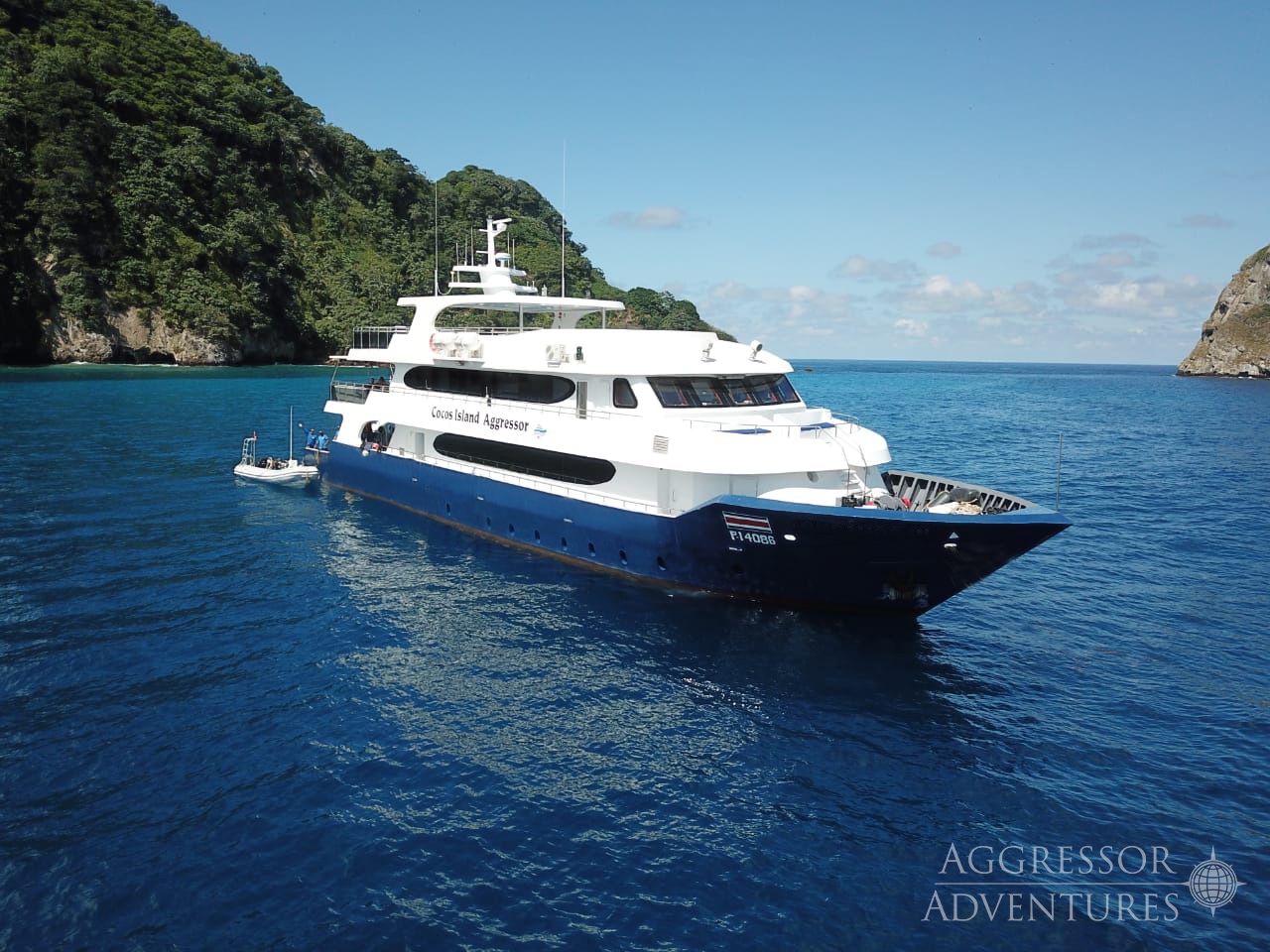
Cocos Aggressor
Costa Rica
22 guests37.8 m
$636/day
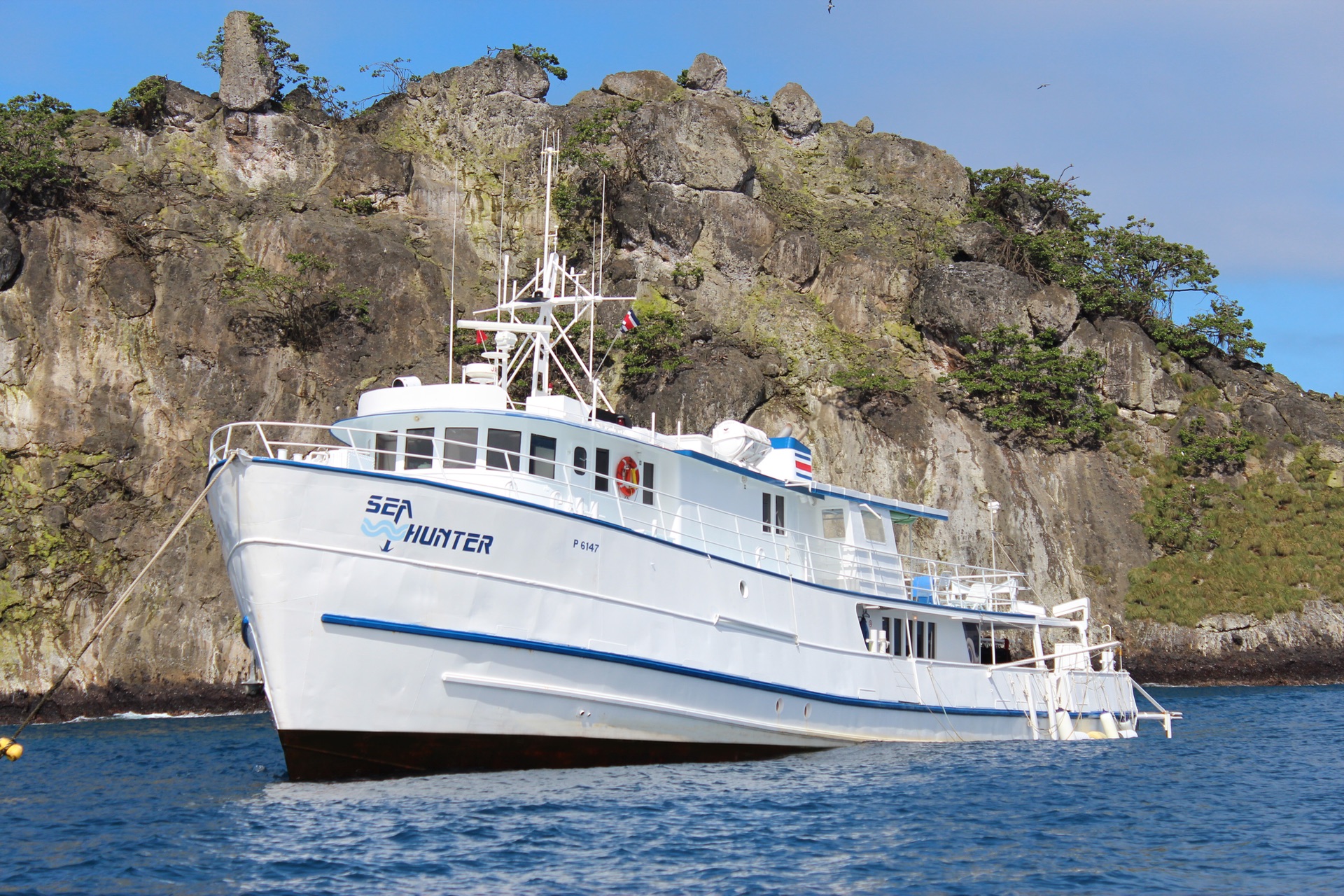
Sea Hunter
Costa Rica
20 guests
$690/day
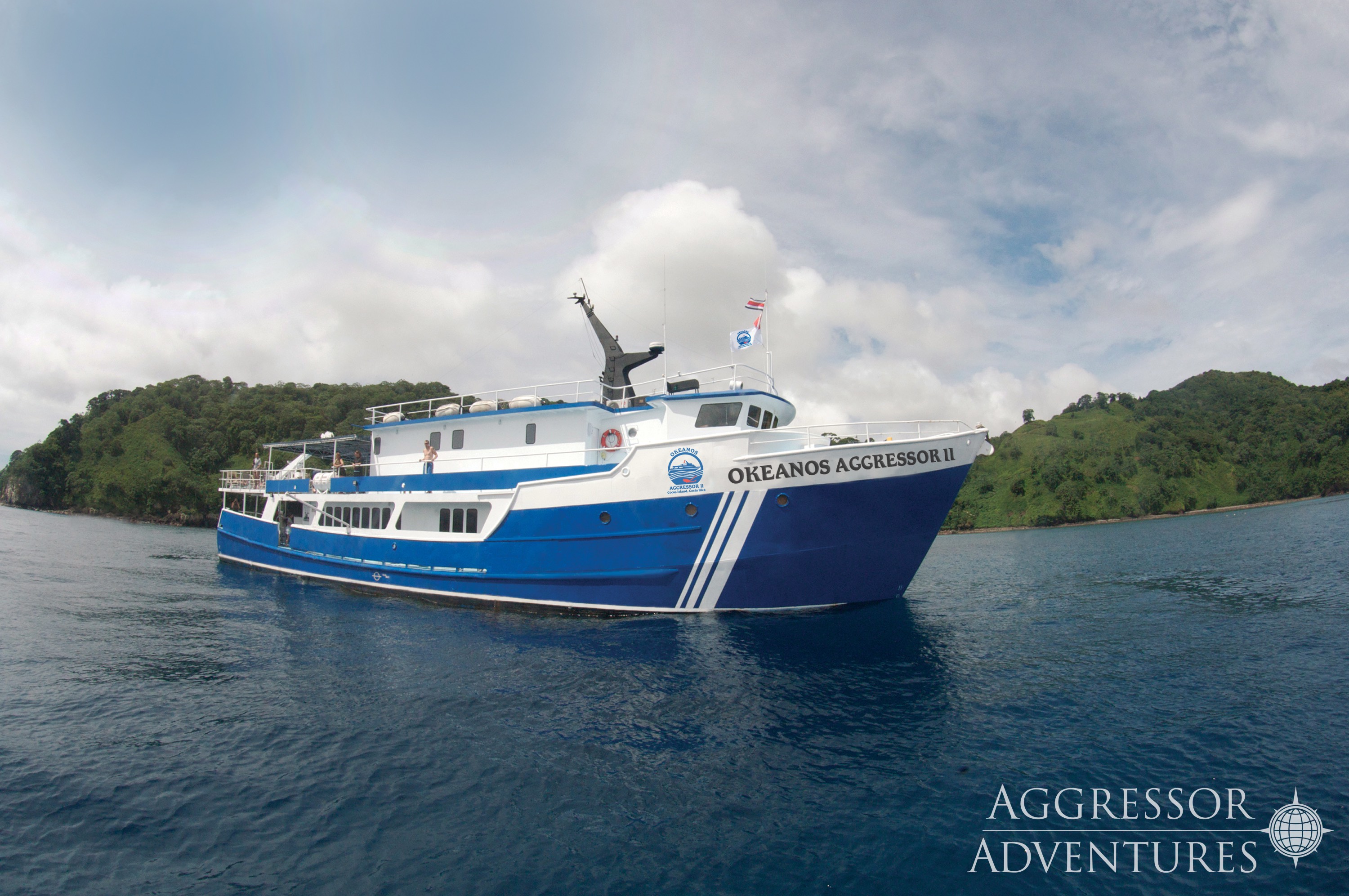
Okeanos Aggressor II
Costa Rica
24 guests36.6 m
$504/day
Dive sites similar to Lone Stone
Same character, same waters — six more sites divers love for the exact same reasons.Compare seasons, access and liveaboard routes — then pick the site that fits your trip best.
© Esri — Maxar, Earthstar, GIS
Bajo Negro
Costa Rica
Bajo Negro, or Black Rock, is a captivating dive site located within the Bat Islands in Santa Rosa National Park, off Costa Rica's Pacific coast.
- Suitable for
- Advanced
- Current
- Strong
- Access
- Shore / dayboat
- Depth
- 20–30 m
- Theme
- Pinnacle / Seamount
© Esri — Maxar, Earthstar, GIS
Dos Sombreros
Costa Rica
Dos Sombreros is a renowned dive site located offshore from Playa Flamingo, forming part of the Catalina Islands chain in Costa Rica's North Pacific region.
- Suitable for
- Intermediate
- Current
- Moderate
- Access
- Dayboat
- Depth
- 12–25 m
- Theme
- Pinnacle
© Esri — Maxar, Earthstar, GIS
Los Sombreros
Costa Rica
Los Sombreros, named for its two small islets resembling Mexican hats, offers a boat dive experience in the Catalina Islands suitable for mixed-experience groups.
- Suitable for
- Intermediate
- Current
- Moderate
- Access
- Dayboat
- Depth
- 8–25 m
- Theme
- Reef / Drift
© Esri — Maxar, Earthstar, GIS
Submerged Rock
Costa Rica
Submerged Rock is a distinctive dive site located off Cocos Island, approximately 500 km (340 miles) west of mainland Costa Rica.
- Suitable for
- Advanced
- Current
- Strong
- Access
- Liveaboard only
- Depth
- 15–20 m
- Theme
- Pinnacle
© Esri — Maxar, Earthstar, GIS
Devil's Rock
Costa Rica
Devil's Rock is a prominent dive site located in Costa Rica's Caño Island Biological Reserve, positioned to the northwest as an extension of the larger Bajo del Diablo platform.
- Suitable for
- Advanced
- Current
- Strong
- Access
- Liveaboard or dayboat
- Depth
- 18–35 m
- Theme
- Reef / Pinnacle
© Esri — Maxar, Earthstar, GIS
Black Rock
Costa Rica
Black Rock, also known as Bajo Negro, is a remote and challenging pinnacle dive site situated within the Bat Islands, part of Costa Rica's Santa Rosa National Park.
- Suitable for
- Advanced
- Current
- Strong
- Access
- Dayboat
- Depth
- 20–30 m
- Theme
- Reef / Pinnacle