About Christmas Island Drop-off
Christmas Island Drop-off refers to the dramatic wall diving characteristic of Christmas Island, an Australian territory situated in the Indian Ocean, approximately 2600 km off Western Australia. The island is essentially the tip of an ancient volcano, rising from a depth of 4200 meters to approximately 300 meters above sea level. This unique topography creates an unparalleled diving experience with steep drop-offs located just meters from the shore, plunging into significant oceanic depths. The dive site itself is part of a narrow coral reef system that rings the island, giving way to these steep walls just 20 to 200 meters from the coastline. The diverse topography includes vibrant coral gardens on shallower slopes, captivating caves, and grottos, making it a rich environment for various marine species. Visibility in these crystal-clear waters often ranges from 30 to 50 meters, offering expansive views of the underwater landscape. While diving here, you can expect to encounter an impressive array of marine life. Pelagic species like whale sharks and manta rays are seasonal visitors, alongside resident populations of reef sharks, dolphins, and turtles. The coral walls host numerous reef fish such as surgeonfish, wrasse, angelfish, and parrotfish, while macro enthusiasts can spot nudibranchs, harlequin shrimp, and ghost pipefish. The island's remote location ensures a relatively untouched marine ecosystem. This site provides a thrilling dive profile, typically involving descent along the vertical walls. Divers can explore various depth bands, observing the shift from shallow coral gardens to the deeper, fan-encrusted walls. The consistent warm water temperatures and clear conditions contribute to a comfortable and immersive experience, making it a prime destination for those seeking dramatic underwater landscapes and rich biodiversity.
Highlights
Dramatic vertical wall divesPristine coral gardensAbundant pelagic encountersExcellent visibility 30-50mClose to shore accessUnique island topography
Season calendar
Best months to dive here
Jan
Feb
Mar
Apr
May
Jun
Jul
Aug
Sep
Oct
Nov
Dec
Excellent
Dive site facts: Christmas Island Drop-off
- Depth
- 5m to 36m (and beyond)
- Current
- Mild to moderate
- Visibility
- 30–50 m
- Water temperature
- 27–28.5 °C
- Entry
- Boat
- Level
- Intermediate to Advanced
- Dive type
- Wall, drift, big_animals, reef, coral_garden
- Region / port
- Christmas Island, Australia
- Coordinates
- -10.4865, 105.647
Conditions & Currents
Currents at Christmas Island dive sites, including the drop-offs, are generally described as minimal or absent, with sources noting "no current" in protected areas like Flying Fish Cove. However, the island's location at the edge of the Indian Ocean's deepest trench and exposure to trade winds suggests that specific drop-off sites, especially those more exposed, may experience variable or stronger currents, particularly during the wet season. Entry to many sites is typically by boat, often within 5 to 15 minutes of the shore. Visibility is consistently excellent, often reaching 30 to 50 meters, though localized conditions, particularly after heavy rainfall during the wet season, might briefly impact it. Water temperatures remain warm throughout the year, ranging from 27°C to 28.5°C, eliminating the concern of thermoclines. Divers should be prepared for potential currents at exposed sites
Marine life & sighting chances

Whale shark
November to April · occasional
Manta ray
common
Dolphin
common
Turtle
common
Reef shark
common
Batfish
common
Surgeonfish
common
Wrasse
common
Angelfish
common
Parrotfish
common
Nudibranch
occasional
Harlequin shrimp
occasional
Ghost pipefish
occasional
Dragon moray eel
occasionalDive profile & how the dive runs
A typical dive at a Christmas Island drop-off begins with a short boat ride from shore to the site, often just 5 to 15 minutes. Divers conduct a negative or controlled descent directly onto the wall, which often starts in shallow areas around 5 meters and quickly plunges to depths beyond 30 meters. For example, at Perpendicular Wall, the dive starts in a shallow cave before transitioning to the main wall. The route then follows the vertical or steeply sloping wall, allowing divers to explore various depth bands. Attention is often split between the colorful reef life on the wall itself, including vibrant corals and schooling reef fish down to around 30-35 meters, and looking into the blue for passing pelagics like sharks, rays, and dolphins. A turn point is typically dictated by no-decompression limits or air consumption, after which a gradual ascent is made along the wall. The safety stop is usually performed in the shallower sections of the reef, allowing for observation of macro life and hard corals before surfacing.
Underwater photography
Christmas Island's drop-offs offer exceptional opportunities for both wide-angle and macro photography. For wide-angle shots, a fisheye or wide-angle rectilinear lens is ideal to capture the expansive vertical walls, dramatic topography, and large pelagics like manta rays or whale sharks. The excellent visibility, often 30-50 meters, ensures clear backgrounds for schooling fish and reefscapes. Strobes are essential for bringing out the vibrant colors of the corals and reef fish, especially on deeper parts of the wall. For macro photography, a dedicated macro lens is recommended to capture the intricate details of nudibranchs, harlequin shrimp, and ghost pipefish found in the corals. Good buoyancy control is critical here, not only for safety on the deep walls but also to avoid damaging delicate corals and to maintain stable shots in potentially varying currents. Be mindful of marine life; approach subjects slowly and avoid excessive light use on sensitive creatures.
Combine with nearby dive sites
Getting there & logistics
Access to Christmas Island for diving is primarily via flights from Perth, Western Australia, which typically also stop at the Cocos (Keeling) Islands. The main settlement is Flying Fish Cove, which serves as the hub for dive operations. Dive sites, including the prominent drop-offs, are conveniently located close to shore, with boat rides often lasting only 5 to 15 minutes. While no specific national park fees are mentioned for diving, it's advisable to check with local operators. Dive trips are commonly offered as daily excursions from the island's single dive operator, allowing divers to stay on land. There are no liveaboards specifically operating out of Christmas Island; dives are usually day trips. The remote nature of the island means trip lengths vary, but a week-long stay allows for comprehensive exploration of multiple sites.
Safety & environment
For diving at Christmas Island Drop-off, divers should be aware that the nearest recompression chamber is located in Perth, Australia, which is a considerable distance away, highlighting the importance of cautious diving practices. Dive insurance covering emergency evacuation and hyperbaric treatment is therefore essential for all divers. The remote location means evacuation in a medical emergency would be complex and potentially time-consuming. Site-specific hazards include potential strong currents at more exposed drop-off locations, particularly during the wet season, requiring good buoyancy control and dive planning. Divers should also be mindful of deep dive profiles, managing nitrogen loading and bottom times carefully. Always dive with experienced local guides who are familiar with the area's conditions and adhere strictly to no-decompression limits.
Who it suits — and who it doesn't
Suited for
- Intermediate to Advanced Divers comfortable with deep walls
- Underwater Photographers seeking diverse subjects
- Adventure Seekers who appreciate remote, untouched dive sites
- Divers interested in pelagic encounters and large marine life
- Enthusiasts of dramatic underwater topography
Less suited for
- Beginner divers without wall diving experience
- Divers uncomfortable with potential currents
- Those prone to seasickness in choppy conditions
- Divers seeking exclusively shallow, easy dives
FAQ
Christmas Island Drop-off FAQ
What is the visibility like at Christmas Island Drop-off?
The visibility at Christmas Island Drop-off is consistently excellent, often ranging from 30 to 50 meters. The crystal-clear waters allow for expansive views of the dramatic underwater walls, coral formations, and abundant marine life. This superb clarity is one of the standout features of diving in this remote Indian Ocean location.
What kind of marine life can I expect to see on the drop-offs?
On the drop-offs, you can expect to see a rich diversity of marine life. Pelagic species such as reef sharks, dolphins, and turtles are common, and seasonal sightings of manta rays and whale sharks occur between November and April. The walls themselves are teeming with reef fish like surgeonfish, angelfish, and parrotfish, alongside occasional macro critters such as nudibranchs and ghost pipefish.
Are there strong currents at Christmas Island Drop-off?
Currents at Christmas Island Drop-off are generally described as minimal in protected areas. However, as the island is exposed in the Indian Ocean, more open sites may experience moderate currents, especially during the wet season or when trade winds are strong. Divers should be prepared for variable conditions and consult with local dive operators regarding site-specific current information.
Is Christmas Island Drop-off suitable for beginner divers?
Christmas Island Drop-off is generally more suitable for intermediate to advanced divers. Many sites involve deep wall dives and the potential for currents, which require a higher level of experience and comfort in challenging conditions. Beginners may find specific sheltered sites, like parts of Flying Fish Cove, more appropriate, but the main drop-offs are best for those with more experience.
When is the best time to see whale sharks at Christmas Island?
Whale sharks are frequently sighted around Christmas Island from November to April. This period coincides with the wet season, which can bring more challenging surface conditions. However, the opportunity to encounter these massive creatures often outweighs the potential for choppier seas for many divers.
How close are the dive sites to the shore?
Many of Christmas Island's spectacular dive sites, including the dramatic drop-offs, are remarkably close to the shore. You can often reach them with a short boat ride of just 5 to 15 minutes. This convenient access means more time underwater exploring the pristine reefs and walls.
Why dive Christmas Island Drop-off from a liveaboard?
Christmas Island Drop-off is one of Australia's signature dive sites. A liveaboard sleeps you on the water and puts you in the water for three to four guided dives per day, including dawn and night dives that day-boat operators rarely offer. You skip the daily commute back to port and reach quieter, less-crowded sites in the same region on a single trip.
Below are the liveaboards that include Christmas Island Drop-off on their Australia itineraries.
Liveaboards diving Christmas Island Drop-off
These liveaboards may visit Christmas Island Drop-off on selected itineraries — the exact dive sites depend on departure, weather and conditions.
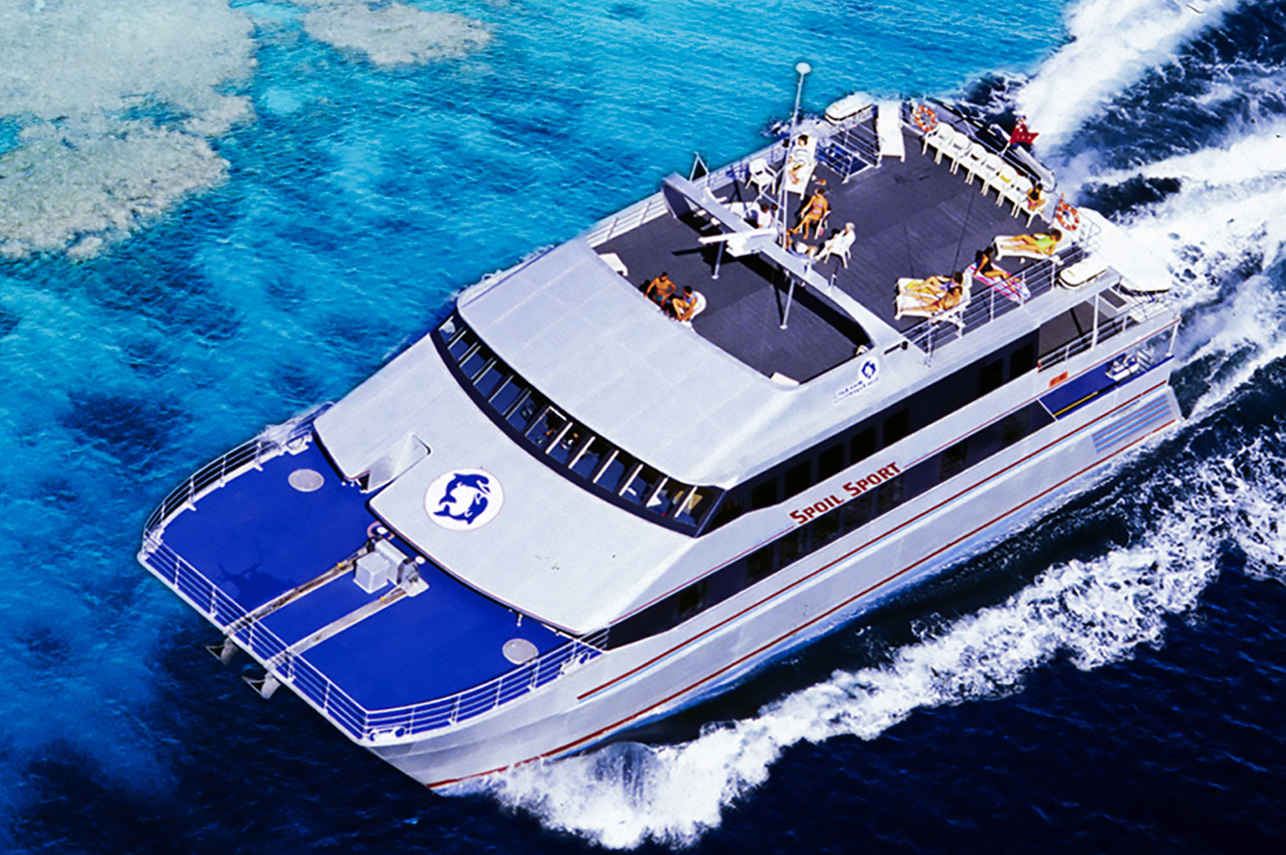
Spoilsport
Australia
28 guests30 m
$405/day
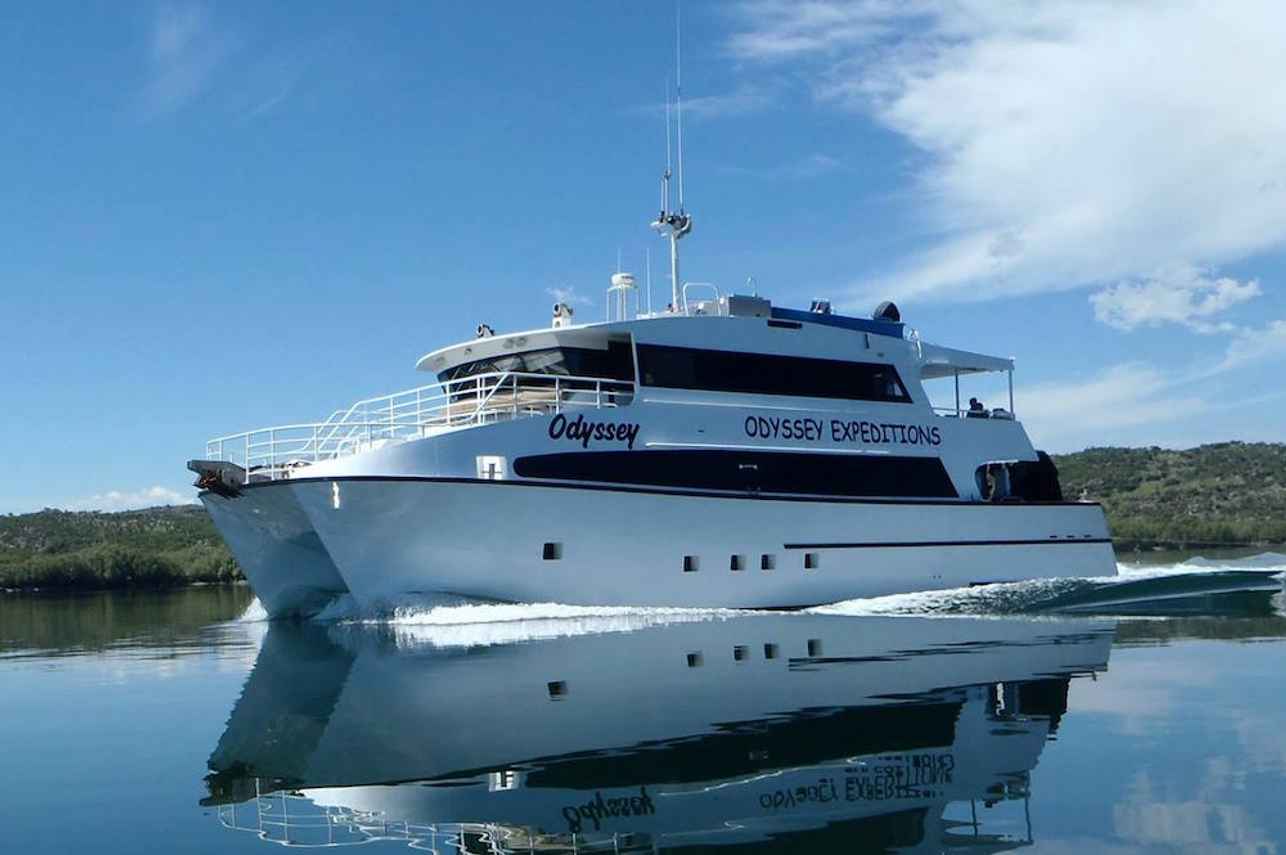
Odyssey Liveaboard
Australia
20 guests24 m
$392/day
Dive sites similar to Christmas Island Drop-off
Same character, same waters — six more sites divers love for the exact same reasons.Compare seasons, access and liveaboard routes — then pick the site that fits your trip best.
© Esri — Maxar, Earthstar, GIS
Agincourt Reef
Australia
Agincourt Reef sits on the outer edge of the Great Barrier Reef, roughly 60–72 km off Port Douglas in Far North Queensland, at the southern end of the true ribbon reefs that run…
- Suitable for
- Beginner
- Current
- Moderate
- Access
- Dayboat
- Depth
- 2–20 m
- Theme
- Reef / Wall
© Esri — Maxar, Earthstar, GIS
Raine Island
Australia
Raine Island is a pivotal dive site located in the Far Northern Great Barrier Reef, approximately 85 kilometers east-north-east of Cape Grenville and just over 4 nautical miles south of the island itself.
- Suitable for
- Advanced
- Current
- Strong
- Access
- Liveaboard only
- Depth
- 5–40 m
- Theme
- Reef / Wall
© Esri — Maxar, Earthstar, GIS
Neptune Islands
Australia
The Neptune Islands, nestled at the mouth of South Australia's Spencer Gulf, offer an unparalleled opportunity to encounter great white sharks.
- Suitable for
- Advanced
- Current
- Strong
- Access
- Liveaboard or dayboat
- Depth
- 5–15 m
- Theme
- Drift
© Esri — Maxar, Earthstar, GIS
Boarfish Reef
Australia
Boarfish Reef is a renowned boat-access reef located in Victoria, Australia, specifically near Queenscliff on the Bellarine Peninsula.
- Suitable for
- Intermediate
- Current
- Strong
- Access
- Dayboat
- Depth
- 1–25 m
- Theme
- Reef / Drift
© Esri — Maxar, Earthstar, GIS
Jeff’s Edge
Australia
Jeff's Edge is a renowned dive site situated on the outer reef of Lady Musgrave Island, an exquisite part of the Southern Great Barrier Reef in Queensland, Australia.
- Suitable for
- Advanced
- Current
- Strong
- Access
- Dayboat
- Depth
- 6–22 m
- Theme
- Wall / Drift
© Esri — Maxar, Earthstar, GIS
Sutherland Point
Australia
Sutherland Point offers an accessible shore diving experience along the dramatic coastline of Kurnell in Botany Bay, Sydney, New South Wales.
- Suitable for
- Beginner
- Current
- Mild
- Access
- Shore / dayboat
- Depth
- ≤ 12 m
- Theme
- Reef / Wall