About Caneiro dos Meros
Caneiro dos Meros, often called "Grouper Alley," is a renowned dive site located off the coast of Corvo, the smallest island in the Azores archipelago. Approximately 150 meters from the quay of Vila do Corvo, this site is celebrated as the Azores' only voluntary marine reserve, established through an agreement between local fishermen and divers over a decade ago. The underwater topography is characterized by dramatic ravines, or 'caneiros,' which are ancient lava flows, interspersed with patches of sandy bottom. Depths in these ravines typically range from 18 to 25 meters. As divers venture seaward, the wall of the final ravine dramatically descends to a sandy seafloor, reaching depths of 40 to 45 meters. This geological structure creates a diverse habitat, supporting an extraordinary concentration of marine life. The site is particularly famous for its abundance of large, often curious dusky groupers (*Epinephelus marginatus*), with divers frequently encountering more than a dozen of these impressive fish at once. In addition to the groupers, the absence of fishing allows other marine species to flourish, providing opportunities to spot barred hogfish (*Pseudolepidaplois scrofa*) and a wide variety of both demersal and pelagic fish that are rare elsewhere in the Azorean seas. Despite its proximity to the coast and the harbor, which typically suggests calmer conditions, Caneiro dos Meros is recommended for experienced divers due to the significant depths involved. Currents are generally weak, but the unique topography and the potential for deeper exploration necessitate advanced diving skills. Boat access from Vila do Corvo Quay is quick, taking only about three minutes, making it an accessible yet challenging destination for those seeking a vibrant and protected underwater environment.
Highlights
Dusky GroupersBlue SharksDeep PinnacleAzores
Season calendar
Best months to dive here
Jan
Feb
Mar
Apr
May
Jun
Jul
Aug
Sep
Oct
Nov
Dec
Excellent
Good
Dive site facts: Caneiro dos Meros
- Depth
- 18–45 m
- Typical dive
- 25 m average
- Current
- Weak
- Visibility
- 30–40 m+
- Water temperature
- 16–23°C
- Entry
- Boat dive
- Level
- Advanced
- Dive type
- Reef, channel, pelagic, photography
- Region / port
- Flores-Corvo, Azores, Portugal
- Coordinates
- 38.52, -28.63
Conditions & Currents
Caneiro dos Meros experiences generally weak currents, despite its channel topography, due to its proximity to the coast and shelter from strong offshore flows. However, the advanced rating reflects potential localized current concentrations within the channel and the need for experience when navigating its depths. Divers should be mindful of conditions, especially when exploring deeper sections, and plan their gas accordingly. Visibility at Caneiro dos Meros is frequently exceptional, ranging from 30 to 40 meters or more, contributing to its allure as a premier dive site. Water temperatures typically range from 16 to 22°C, necessitating appropriate thermal protection like a 7mm wetsuit or drysuit, even in warmer months.
Marine life & sighting chances

Dusky Grouper
common
Amberjack
common
Atlantic Horse Mackerel
common
Almaco Jack
occasional
Manta Ray
Summer and autumn · occasional
Blue Shark
Summer and autumn · occasional
Mako Shark
Summer and autumn · occasional
Hammerhead Shark
Summer and autumn · occasional
Whale Shark
July to September · rare
Barred Hogfish
occasional
Green Turtle
rare
Eagle Ray
occasional
Moray Eel
common
Octopus
occasionalDive profile & how the dive runs
The dive at Caneiro dos Meros typically begins by boat, departing from the Vila do Corvo Quay, with a short three-minute ride. Upon arrival, divers descend into the primary channel, which is characterized by several large ravines formed by ancient lava flows. The initial exploration focuses on the channel walls, carpeted with impressive gorgonian sea fans and soft corals, at depths generally between 18 and 25 meters. Divers then progress towards the open sea, where the wall of the last ravine dramatically drops to a sandy seafloor. This deeper section, reaching 40-45 meters, is where the largest dusky groupers and barred hogfish are frequently encountered. The dive plan usually involves exploring these deeper areas for approximately 15-20 minutes, followed by a gradual ascent back through the shallower parts of the channel. Safety stops are conducted in the mid-water section of the channel, allowing for continued observation of schooling fish and reef life before surfacing.
Underwater photography
Caneiro dos Meros offers exceptional opportunities for underwater photography, particularly for wide-angle and portrait shots of large marine life. The clarity of the water, often exceeding 30 meters, and the dramatic volcanic formations make wide-angle lenses ideal for capturing the expansive scenery and schooling pelagics like amberjacks and horse mackerel. For the resident dusky groupers, which are notably curious and often approach divers closely, a fisheye or wide-angle lens is also recommended to capture their impressive size and interaction. When photographing the groupers, maintain a respectful distance and avoid direct flash to their eyes. Strobes are essential for bringing out the vibrant colors of the gorgonian sea fans and soft corals on the channel walls. Due to the variable depths, a robust lighting setup and excellent buoyancy control are crucial to avoid disturbing the delicate reef structures and to manage exposure in changing light conditions.
Combine with nearby dive sites
- Formigas Islets (Azores)
Further east, known for pristine conditions and pelagic encounters, but for experienced divers.
- Dollabarat
A seamount near Santa Maria, favored for pelagic encounters including mobulas and whale sharks.
- Baixa do Ambrósio
Also near Santa Maria, a good alternative for less experienced divers seeking large pelagics.
- Princess Alice Bank (Azores)
A remote seamount known for large schools of mobulas, sharks, and tuna.
- Banco D. João de Castro
An active underwater volcano offering unique topography and diverse pelagic species.
Getting there & logistics
Access to Caneiro dos Meros typically begins by flying into Lajes International Airport (TER) on Terceira Island, which offers direct flights from Lisbon, Porto, and other European cities. For those coming from other Azorean islands, inter-island flights or ferries provide connections. From Terceira, onward travel to the remote Flores-Corvo island group is necessary, usually via inter-island flights to Flores (FLW) or Corvo (CVU). Dive operations for Caneiro dos Meros are based in Vila do Corvo, just a 3-minute boat ride from the quay. Due to the remote nature of Flores and Corvo, trips often involve multi-day stays on the island to maximize diving opportunities. There are no specific park fees mentioned, but local dive operators will manage permits and logistics.
Safety & environment
Diving at Caneiro dos Meros requires advanced experience due to its depths, cooler water temperatures, and potential for moderate currents. Divers should carry appropriate thermal protection, such as a 7mm wetsuit or drysuit, and be proficient in deep diving techniques. The nearest recompression chamber in the Azores is located on Faial Island, which can be a significant distance from Corvo. In case of a diving emergency, evacuation procedures would involve inter-island transport, highlighting the importance of comprehensive dive insurance with emergency evacuation coverage. Divers must adhere to responsible diving practices, maintain excellent buoyancy control to protect the delicate coral formations, and avoid approaching marine life too closely, especially the curious groupers, to maintain their natural behavior in this protected area.
Who it suits — and who it doesn't
Suited for
- Advanced divers with deep diving experience
- Underwater photographers seeking large marine life
- Divers interested in pelagic encounters and sharks
- Those looking for pristine, remote dive environments
- Divers comfortable with cooler water temperatures
Less suited for
- Beginner or Open Water certified divers
- Divers without experience in currents
- Those unprepared for remote travel and logistics
- Divers without suitable cold-water thermal protection
- Individuals seeking shallow, relaxed reef dives
FAQ
Caneiro dos Meros FAQ
What kind of marine life can I expect at Caneiro dos Meros?
Caneiro dos Meros is famous for its exceptionally large and curious dusky groupers, which are present in significant numbers. You can also expect to see large schools of pelagic fish like amberjacks and Atlantic horse mackerel. Seasonally, the site attracts larger visitors such as manta rays, blue sharks, mako sharks, and occasionally hammerhead sharks.
Is Caneiro dos Meros suitable for beginner divers?
No, Caneiro dos Meros is rated as an advanced dive site and is not suitable for beginners. The dive involves depths up to 45 meters, requires experience with potentially moderate currents, and features cooler water temperatures. Divers should hold an Advanced Open Water certification or equivalent and have experience with deep diving.
What are the typical water temperatures at Caneiro dos Meros?
Water temperatures at Caneiro dos Meros typically range from 16°C in cooler months to 22-23°C during the peak summer and autumn season. Due to these cooler temperatures, even in summer, a 7mm wetsuit or a drysuit is recommended for comfortable diving, especially during longer dives or multiple dives per day.
Why is Caneiro dos Meros called the 'Channel of the Groupers'?
The site is named 'Caneiro dos Meros' because it is renowned for its unusually high concentration of large dusky groupers (Epinephelus marginatus). These groupers are famously curious and relatively unafraid of divers, largely due to a long-standing voluntary fishing ban in the area, allowing them to thrive and become a defining feature of the dive site.
How clear is the water at Caneiro dos Meros?
Visibility at Caneiro dos Meros is frequently exceptional, often reaching 30 to 40 meters or more. The deep blue water has striking clarity, contributing significantly to the immersive experience of diving this remote Atlantic site. This excellent visibility makes it ideal for observing both the dramatic topography and the abundant marine life.
How do I get to Caneiro dos Meros?
To reach Caneiro dos Meros, you typically fly into one of the main Azorean airports, such as Lajes (TER) on Terceira, and then take an inter-island flight to Flores (FLW) or Corvo (CVU). From Vila do Corvo, the dive site is just a short three-minute boat ride from the quay. Due to its remote location, planning for multi-day trips to the Flores-Corvo group is advisable.
Why dive Caneiro dos Meros from a liveaboard?
Caneiro dos Meros is one of Portugal's signature dive sites. A liveaboard sleeps you on the water and puts you in the water for three to four guided dives per day, including dawn and night dives that day-boat operators rarely offer. You skip the daily commute back to port and reach quieter, less-crowded sites in the same region on a single trip.
Below are the liveaboards that include Caneiro dos Meros on their Portugal itineraries.
Liveaboards diving Caneiro dos Meros
These liveaboards may visit Caneiro dos Meros on selected itineraries — the exact dive sites depend on departure, weather and conditions.
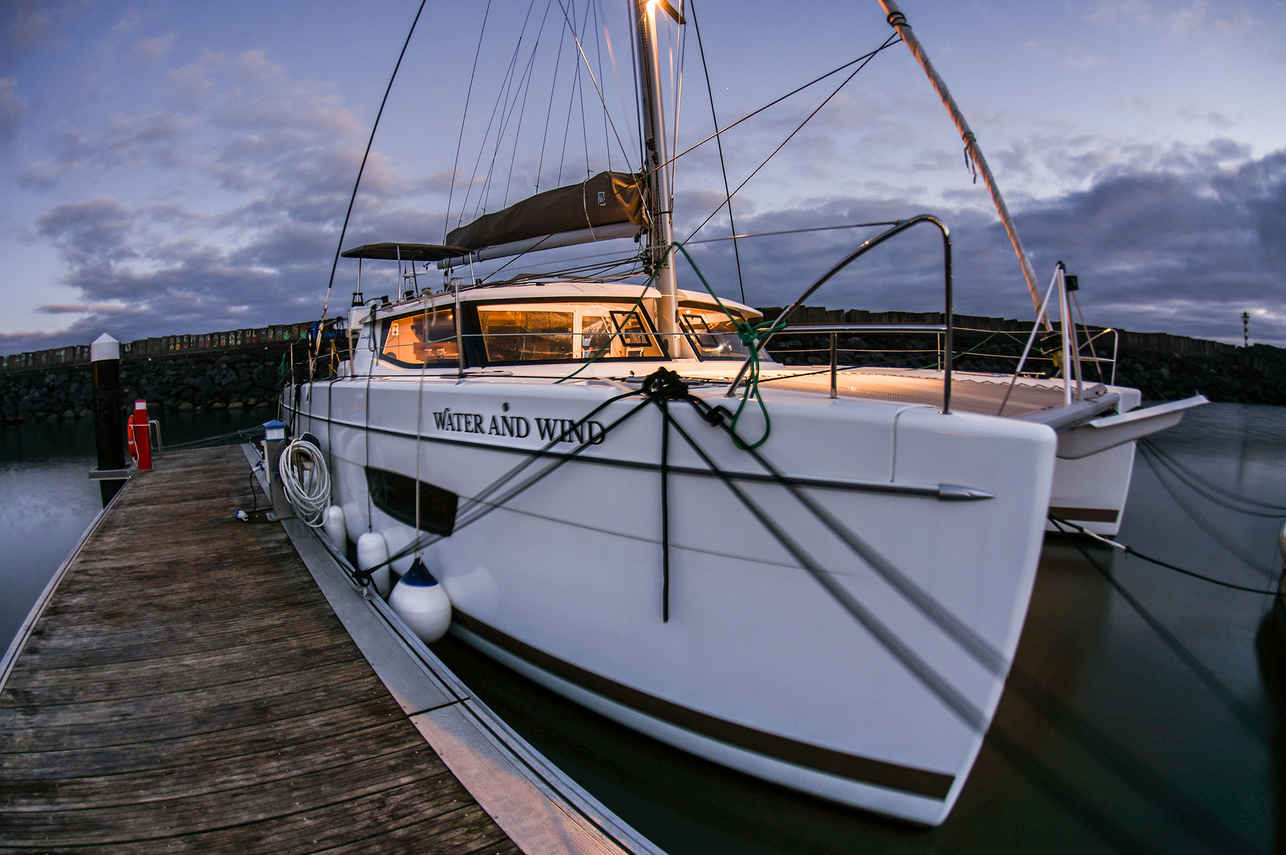
Water And Wind
Portugal
8 guests13.41 m
$429/day
Dive sites similar to Caneiro dos Meros
Same character, same waters — six more sites divers love for the exact same reasons.Compare seasons, access and liveaboard routes — then pick the site that fits your trip best.
Rodelha is a popular coastal dive site situated close to Vila do Conde in northern Portugal.
- Suitable for
- Intermediate
- Current
- Mild
- Access
- Dayboat
- Depth
- 6–25 m
- Theme
- Reef
Silveira is a welcoming beginner-friendly dive site located off Terceira Island in the Azores archipelago, Portugal.
- Suitable for
- Beginner
- Current
- Mild
- Access
- Dayboat
- Depth
- 2–15 m
- Theme
- Reef / Pinnacle
© Esri — Maxar, Earthstar, GIS
Cinco Ribeiras
Portugal
Cinco Ribeiras is situated on the western coast of Terceira Island in the Azores, named after a nearby village.
- Suitable for
- Beginner
- Current
- Mild
- Access
- Shore / dayboat
- Depth
- 5–16 m
- Theme
- Reef / Cavern
© Esri — Maxar, Earthstar, GIS
Ilhéu da Vila
Portugal
Ilhéu da Vila is a significant dive site located approximately half a mile from the marina of Santa Maria Island in the Azores.
- Suitable for
- Intermediate
- Current
- Moderate
- Access
- Dayboat
- Depth
- 13–18 m
- Theme
- Reef / Wall
Göbektaşı is a dive site located in Turkey, offering a distinct underwater experience that combines archaeological interest with natural marine beauty.
- Suitable for
- Intermediate
- Current
- Mild
- Access
- Dayboat
- Depth
- ≤ 25 m
- Theme
- Reef / Wall
© Esri — Maxar, Earthstar, GIS
Catermaran Wreck
Turkey
The Turkish coast, particularly the Riviera, offers diverse diving experiences, including a variety of wrecks.
- Suitable for
- Intermediate
- Current
- Moderate
- Access
- Liveaboard or dayboat
- Depth
- —
- Theme
- Wreck