About Bloody Bay Wall
Bloody Bay Wall, located within the protected Bloody Bay Marine Park on Little Cayman, is celebrated globally as a premier dive destination. This site features dramatic sheer walls that plunge into some of the deepest parts of the Caribbean Sea, reaching depths of approximately 2,000 meters. The underwater topography includes impressive drop-offs, enchanting swim-throughs, and expansive sandy areas, providing a diverse environment for both macro and pelagic species. The healthy reefs begin at relatively shallow depths, making the site accessible for various experience levels while still offering breathtaking verticality for more advanced divers. The wall itself is adorned with vibrant corals, sponges, and anemones, creating a vivid landscape. Critters like seahorses, feather stars, and cleaner shrimp inhabit the reef, while larger marine life such as turtles, sharks, and rays frequent the deeper sections and sandy flats. Little Cayman ensures a high-quality diving experience with typically calm conditions and exceptional visibility year-round. Divers can expect to encounter an array of colorful tropical fish, groupers, and moray eels within the reef structures and canyons. The area is also known for its strong marine conservation efforts, contributing to the thriving ecosystem observed during dives. Access to Bloody Bay Wall is primarily by boat, with numerous sites along the wall offering unique features like chimneys, arches, and canyons. Dive operators frequently visit different sections of the wall, ensuring varied experiences even with repeat visits. The combination of stunning topography and rich biodiversity makes Bloody Bay Wall an unforgettable diving adventure.
Highlights
Dramatic sheer coral wallsDeep Caribbean drop-offsVibrant sponge and coral formationsAbundant marine life encountersUnique swim-throughs and canyonsExceptional water clarityWorld-class dive destination
Season calendar
Best months to dive here
Jan
Feb
Mar
Apr
May
Jun
Jul
Aug
Sep
Oct
Nov
Dec
Excellent
Good
Off-Season
Dec – Jun (Peak)
Best visibility up to 40m, calm seas, comfortable temperatures, ideal conditions for wall diving.
Jul – Aug & Nov (Shoulder)
Warmer water, occasional rain, still excellent diving. Good time for tarpon and turtle sightings.
Sep – Oct (Hurricane)
Hurricane season with unpredictable weather. Some operators may limit trips. Best prices of the year.
Dive site facts: Bloody Bay Wall
- Depth
- 7–2,000 m
- Typical dive
- 10–80 m, 50–60 min
- Current
- Minimal to none
- Visibility
- 18–60 m
- Water temperature
- 26–28°C
- Entry
- Boat
- Level
- All levels, AOWD for deeper sections
- Dive type
- Wall, reef, drift
- Night dive
- Possible
- Region / port
- Little Cayman
- Coordinates
- 19.7078, -80.0917
Conditions & Currents
Currents at Bloody Bay Wall are generally minimal to non-existent, contributing to calm diving conditions. However, due to the dramatic wall drop-offs and island breezes, currents can vary at certain sites. Divers should be prepared for potential slight variations, particularly at deeper sections or specific entry points, but strong currents are not typical.
Marine life & sighting chances

Green sea turtle
common
Caribbean reef shark
occasional
Nurse shark
occasional
Spotted eagle ray
occasional
Southern stingray
occasional
Grouper
common
French angelfish
common
Moray eel
common
Barracuda
occasional
Yellowhead jawfish
occasional
Trumpetfish
common
Squirrelfish
common
Blue tang
common
Barrel sponge
commonDive profile & how the dive runs
Diving at Bloody Bay Wall typically begins with a boat entry directly onto the wall, often with a rapid descent to a planned depth along the sheer face. Many sites feature a shallow reef plateau at 7-10 meters before the dramatic drop-off begins. Divers will explore the wall, navigating through colorful coral formations, swim-throughs, and canyons, with depths varying depending on the specific site and dive plan, usually ranging from 15 to 30 meters for recreational dives, though the wall plunges much deeper. Notable sections include Randy's Gazebo with its chimney and archway around 12 meters, and Lea Lea's Lookout featuring large swim-throughs and canyons. The dive generally follows the wall contour, allowing divers to observe both macro life nestled in the corals and pelagics in the blue. The turn point is determined by air consumption and bottom time. Safety stops are commonly conducted in the vibrant shallows of the reef top, which often holds abundant marine life.
Underwater photography
Bloody Bay Wall offers exceptional opportunities for both wide-angle and macro photography due to its diverse topography and abundant marine life. For capturing the dramatic wall scenes, expansive corals, and schooling fish, a wide-angle lens is ideal. You will want to highlight the sheer drop-offs and the vastness of the reef. For macro subjects, such as seahorses, cleaner shrimp, and colorful nudibranchs often found in sponges and crevices, a macro lens will be invaluable. Proper buoyancy control is crucial to avoid damaging the delicate coral formations, especially when getting close to subjects. Natural light is often sufficient in the clear, shallow waters, but strobes will enhance color and detail at greater depths and in swim-throughs. Exercise patience and maintain a respectful distance from marine life to capture natural behaviors without disturbance.
Combine with nearby dive sites
- Mixing Bowl
Combines wall diving with sloping reefs and sandy flats, great for pelagics and macro.
- Marilyn's Cut
Another Bloody Bay Wall site known for its verticality and healthy corals.
- Marilyn's Cut
A Bloody Bay Wall site with healthy corals.
- Bonnie's Arch
Part of the Bloody Bay Wall system, known for its distinctive arch formation.
- Great Wall East
A spectacular, shallower section of the wall with abundant fish life.
Getting there & logistics
Access to Bloody Bay Wall is exclusively via boat from Little Cayman. The nearest major airport is Owen Roberts International Airport (GCM) on Grand Cayman, requiring a connecting flight to Edward Bodden Airfield (LYB) on Little Cayman. Dive trips typically range from a few days to a week, often as part of liveaboard itineraries or resort dive packages. Most dive operators on Little Cayman offer daily trips to Bloody Bay Marine Park. There are no specific permits required for individual divers beyond standard dive operator fees. Little Cayman itself is sparsely developed, with most accommodations offering dive packages that include transfers and daily boat dives. Meal packages are recommended due to limited and potentially expensive dining options on the island. Due to the remote nature, it's advisable to plan and book all aspects of your trip well in advance.
Safety & environment
While diving at Bloody Bay Wall is generally safe due to calm conditions, divers should always prioritize safety. The nearest recompression chamber is located on Grand Cayman, necessitating air evacuation in case of a serious decompression illness. Comprehensive dive insurance is highly recommended. Site-specific hazards are minimal but include the potential for strong surge if conditions change, particularly near shallow reef tops. Always adhere to dive guide instructions, maintain appropriate depth limits, and monitor air consumption carefully, especially on deep wall dives. The primary conduct rule is strict adherence to marine park regulations, including no touching or collecting of marine life, ensuring the preservation of this pristine environment. Always perform a thorough buddy check and confirm your dive plan.
Who it suits — and who it doesn't
Suited for
- Experienced wall divers seeking dramatic topography
- Underwater photographers of all levels
- Divers interested in diverse marine biodiversity
- Relaxed divers preferring minimal currents
- Divers seeking pristine, protected marine environments
Less suited for
- Divers who prefer shore diving exclusively
- Those looking for strong currents and drift dives
- Divers seeking extensive wreck diving (limited at this specific site)
- Travelers requiring abundant nightlife or extensive land-based activities
- Individuals prone to seasickness on boat rides
FAQ
Bloody Bay Wall FAQ
Can I snorkel at Bloody Bay Wall?
Yes, snorkeling is possible at certain sections of Bloody Bay Wall, particularly where the reef crest meets the drop-off in shallower water. Sites like Mixing Bowl start at depths as shallow as 5-6 meters, offering vibrant reef life and the chance to observe the wall from above for snorkelers. It is often recommended to go with a dive operator who knows the best, safest spots for snorkelers.
What is the visibility like at Bloody Bay Wall?
Bloody Bay Wall is renowned for its exceptional visibility, often ranging from 18 to 30 meters, and sometimes extending up to 60 meters in summer months. This crystal-clear water allows for breathtaking views of the extensive wall structures and abundant marine life. Good visibility is a consistent feature, making it a favorite among photographers.
Are there any strong currents at Bloody Bay Wall?
Generally, currents at Bloody Bay Wall are minimal to non-existent, contributing to very calm and easy diving conditions. This makes it an ideal location for divers of all experience levels to explore the intricate wall formations without fighting strong water movement. However, slight variations in current can occur due to local conditions or island breezes, particularly near the wall's edge.
What kind of marine life can I expect to see?
Divers at Bloody Bay Wall can anticipate a rich variety of marine life, from colorful reef fish like angelfish and parrotfish to larger pelagics such as green sea turtles, spotted eagle rays, and occasionally Caribbean reef sharks. The wall and its numerous crevices are also home to diverse macro life, including seahorses, cleaner shrimp, and various moray eels. Healthy coral and sponge formations provide habitat for countless smaller creatures.
Is Bloody Bay Wall suitable for beginner divers?
Yes, Bloody Bay Wall is suitable for beginner divers, especially those comfortable with boat entries. Many dive sites along the wall begin in shallower areas, allowing new divers to experience the vibrant reef life and the awe-inspiring drop-off from a manageable depth. However, advanced certifications are recommended for exploring deeper sections and maximizing the experience of the extensive wall system.
Why dive Bloody Bay Wall from a liveaboard?
Bloody Bay Wall is one of Cayman Islands's signature dive sites. A liveaboard sleeps you on the water and puts you in the water for three to four guided dives per day, including dawn and night dives that day-boat operators rarely offer. You skip the daily commute back to port and reach quieter, less-crowded sites in the same region on a single trip.
Below are the liveaboards that include Bloody Bay Wall on their Cayman Islands itineraries.
Liveaboards diving Bloody Bay Wall
These liveaboards may visit Bloody Bay Wall on selected itineraries — the exact dive sites depend on departure, weather and conditions.
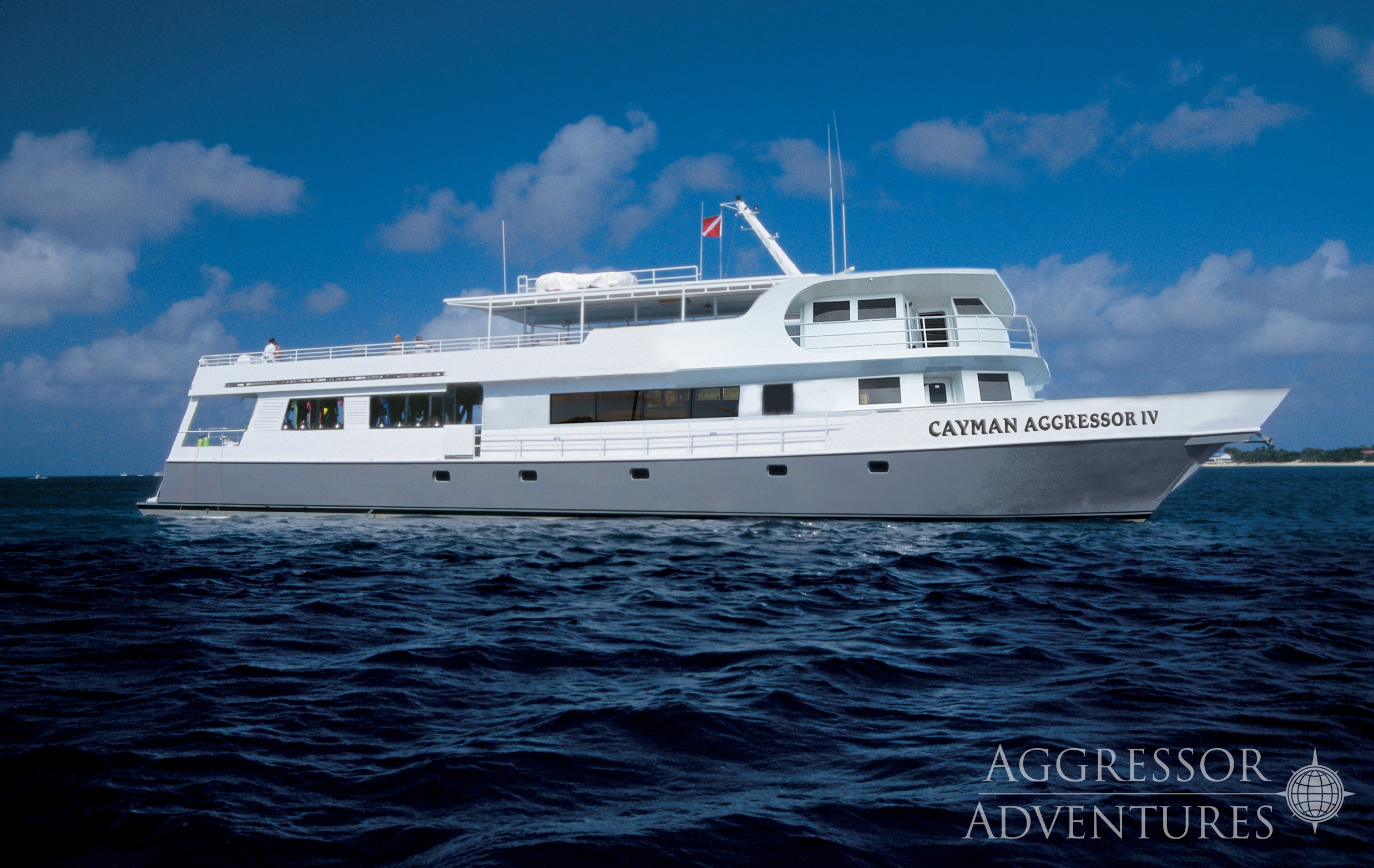
Cayman Aggressor IV
Cayman Islands
18 guests33 m
Dive sites similar to Bloody Bay Wall
Same character, same waters — six more sites divers love for the exact same reasons.Compare seasons, access and liveaboard routes — then pick the site that fits your trip best.
© Esri — Maxar, Earthstar, GIS
3 Fathom Wall
Cayman Islands
3 Fathom Wall is an exciting and fish-filled dive site located in the Cayman Islands, specifically at the intersection of the renowned Bloody Bay Wall.
- Suitable for
- Intermediate
- Current
- Mild
- Access
- Liveaboard only
- Depth
- ≤ 3000 m
- Theme
- Reef
While specific details for a dive site named "3 Riff" are not present in the provided sources, general diving conditions and characteristics for the Dominican Republic…
- Suitable for
- Advanced
- Current
- Mild
- Access
- Dayboat
- Depth
- 30–55 m
- Theme
- Reef
The dive site known as 3 Rocks is located off the coast of Sosúa in Puerto Plata, Dominican Republic, offering an accessible and lively underwater experience.
- Suitable for
- Beginner
- Current
- Mild
- Access
- Dayboat
- Depth
- 2–8 m
- Theme
- Reef
4 Amigos is a notable dive site located in the Bay Islands of Honduras, an area renowned for its extensive Mesoamerican Barrier Reef System, which is the world's second-longest.
- Suitable for
- Intermediate
- Current
- Moderate
- Access
- Liveaboard or dayboat
- Depth
- 9–40 m
- Theme
- Reef
© Esri — Maxar, Earthstar, GIS
6 Toed Cat
Mexico
The dive site known as "6 Toed Cat" is not a recognized dive location in Mexico; rather, it refers to the polydactyl felines, many with six toes, that inhabit the Ernest Hemingway Home and Museum in Key West, Florida.
- Suitable for
- Beginner
- Current
- Mild
- Access
- Liveaboard or dayboat
- Depth
- —
- Theme
- Reef
© Esri — Maxar, Earthstar, GIS
Aaron's Backyard
Honduras
Aaron's Backyard is a noted dive site within the Roatan Marine Park in Honduras, part of the extensive Mesoamerican Barrier Reef System.
- Suitable for
- Intermediate
- Current
- Moderate
- Access
- Liveaboard or dayboat
- Depth
- 9–40 m
- Theme
- Reef