About Bermuda Drop
Bermuda Drop is a notable wall drift dive located near Kavieng, Papua New Guinea, offering an experienced diver a journey along an impressive underwater cliff. The site features a striking wall ascending from a sandy seabed, characterized by numerous overhangs that provide shelter and intrigue. While large coral formations may be less dominant directly on the wall, vibrant coral gardens flourish, attracting a variety of smaller, interesting marine creatures. This site is primarily known for its topographical features and the potential for a dynamic drift experience, although the sun's angle can sometimes render the wall darker. Visibility is generally good, ensuring clear views of the underwater landscape. The dive offers encounters with smaller critters such as crabs, shrimp, and nudibranchs, making it appealing for macro enthusiasts. It is also home to a pair of notable giant clams, adding a unique highlight to the exploration. Access is typically via boat, with the site being farther out from the shore compared to some other local dives. The drift dive nature, combined with depths reaching 26 meters, makes it suitable for experienced divers who are comfortable with current. The site’s location near Kavieng places it in a region famed for its diverse dive offerings, from pelagic action to macro havens.
Highlights
Wall drift diveOverhangsGiant clamsCrabs, shrimp, nudibranchsCoral gardensKavieng dive region
Season calendar
Best months to dive here
Jan
Feb
Mar
Apr
May
Jun
Jul
Aug
Sep
Oct
Nov
Dec
Excellent
Good
Dive site facts: Bermuda Drop
- Depth
- 26 m
- Current
- Drift
- Visibility
- 9–26 m
- Water temperature
- 26–31°C
- Entry
- Boat
- Level
- Experienced
- Dive type
- Wall, drift
- Region / port
- Kavieng, New Ireland Province
- Coordinates
- 6.4543° S, 149.5445° E
Conditions & Currents
Bermuda Drop is specifically identified as a wall drift dive, indicating the presence of currents that guide divers along the underwater wall. While current strength can vary, the nature of a drift dive implies moderate to potentially strong water movement, which necessitates appropriate experience and comfort with such conditions. Entry is typically from a boat, and divers will drift with the current along the wall, exploring its features. Visibility at the site generally ranges from 9 to 26 meters, which can provide clear views, though the sun's position may affect light penetration on the wall itself. Due to the drift profile, careful dive planning, including ascent and safety stop procedures with the current, is crucial for an enjoyable and safe dive.
Marine life & sighting chances

Crabs
occasional
Shrimp
occasional
Nudibranchs
occasional
Giant Clams
occasional
Barracuda
common
Snapper
common
Bumphead Parrotfish
occasional
Anemonefish
occasional
Dive profile & how the dive runs
Diving at Bermuda Drop begins with a boat entry, positioning divers to initiate a drift along the wall. The dive profile involves descending along the wall, which features overhangs and slopes down to a sandy seabed at 26 meters. Divers typically follow the current, allowing for a relaxed progression along the wall, observing the coral gardens and looking for macro life such as crabs, shrimp, and nudibranchs. A notable highlight is the presence of giant clams. The dive concludes with a safety stop typically conducted in the shallower sections, drifting as appropriate, before surfacing for boat pick-up. Careful attention to bottom time and no-decompression limits is advised due to the depth.
Underwater photography
Bermuda Drop offers opportunities for both wide-angle and macro photography, though the site's darker sections and the focus on smaller critters may favor macro setups. For the dramatic wall topography and overhangs, a wide-angle lens can capture the scale of the site. However, to highlight the crabs, shrimp, nudibranchs, and giant clams, a macro lens is highly recommended. External strobes or video lights are essential to enhance colors and combat the potentially dim lighting on the wall. Due to the drift nature, maintaining stable buoyancy is critical for sharp macro shots and to avoid disturbing the delicate marine life. Patience is key for photographing shy subjects on this dynamic wall.
Combine with nearby dive sites
- Albatross Passage
Known for strong currents and pelagic encounters, located 30 minutes from resort.
- Echuca Patch
A large ridge with a Korean fishing boat wreck, attracting barracudas and jacks.
- Nusa Blowholes
Features swim-throughs and a cave with crayfish, whitetip sharks, and nudibranchs.
- The Bottleshop
A prime muck dive site in Kavieng harbor, excellent for macro photography.
- Peter's Patch
A vibrant site with abundant coral and schools of rainbow runners and batfish.
- Nautilus Reef
Features excellent hard coral sections, with currents sometimes requiring more effort.
Getting there & logistics
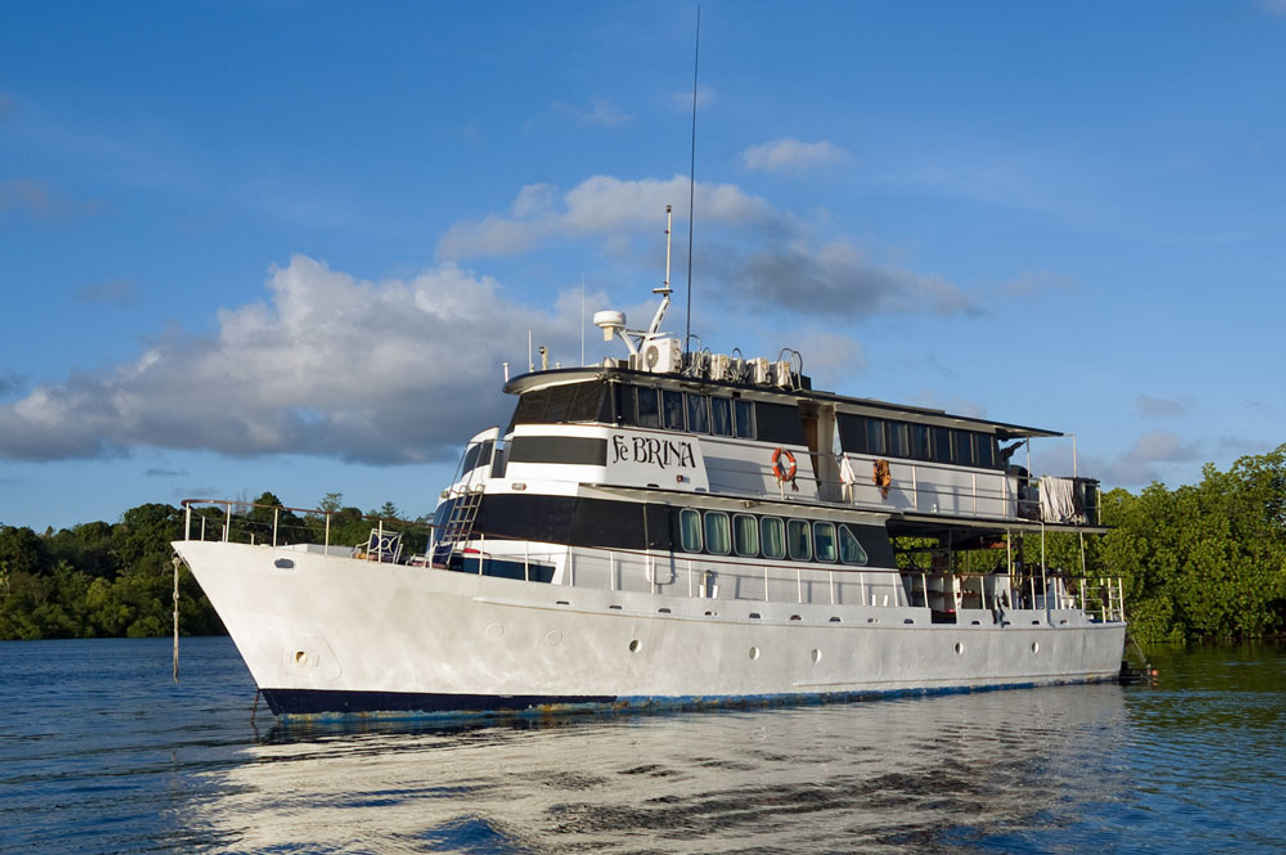
Bermuda Drop is accessed from Kavieng, located on the northwest tip of New Ireland in Papua New Guinea. Divers typically reach Kavieng by flying into Kavieng Airport (KVG), with connections often through Port Moresby (POM). Liveaboards, such as the MV FeBrina, or land-based resorts like Lissenung Island Resort, operate out of this region and offer dives to sites including Bermuda Drop. Day trips from resorts are common, with Bermuda Drop being a boat dive farther out from the coast. Trip lengths vary, but a typical liveaboard itinerary can last 7-10 days, allowing for exploration of multiple sites in the Kavieng area and beyond. There are no specific park fees mentioned for this site, but general dive operator costs and potentially marine park fees for the wider region apply.
Safety & environment
For diving Bermuda Drop, it is crucial to have dive insurance that covers emergency medical evacuation and recompression chamber treatment. The nearest recompression chambers for Papua New Guinea are typically located in larger regional centers like Port Moresby or even in Australia, implying potentially long and complex evacuation procedures. Divers must be experienced and comfortable with drift diving, as currents are a defining feature of this wall dive. It is essential to carry a surface marker buoy (SMB) for all dives, especially drift dives, to signal the boat upon ascent. Always dive with a reputable operator who provides clear briefings, maintains well-serviced equipment, and adheres to strict safety protocols. Always check your air supply frequently and plan your gas for the entire dive, including potential safety stop in current.
Who it suits — and who it doesn't
Suited for
- Experienced divers comfortable with drift diving
- Underwater photographers focusing on macro life
- Divers interested in wall topography and overhangs
- Those seeking diverse Kavieng dive experiences
Less suited for
- Beginner divers or those uncomfortable with currents
- Divers seeking exclusively pristine, soft coral reefs
- Individuals prone to motion sickness from drift diving
- Divers expecting only large pelagic encounters
FAQ
Bermuda Drop FAQ
What kind of dive is Bermuda Drop?
Bermuda Drop is primarily a wall drift dive, meaning divers follow the current along an impressive underwater wall. This allows for a dynamic experience exploring overhangs and coral gardens, showcasing the site's unique topography and macro inhabitants. It requires comfort with currents and typically involves a boat entry and exit.
What marine life can I expect to see at Bermuda Drop?
While not specifically a 'fish soup' dive, Bermuda Drop is known for its interesting smaller critters. Divers frequently spot crabs, various shrimp, and nudibranchs. The site is also home to a unique pair of giant clams, adding to its specific attractions. Schools of fish like barracuda and snapper may also pass by.
What is the typical depth and visibility at Bermuda Drop?
The maximum depth recorded for Bermuda Drop is 26 meters, as it features a wall descending to a sandy seabed. Visibility typically ranges from 9 to 26 meters, offering clear conditions for most dives. However, the angle of the sun can affect light penetration on the wall, making certain sections appear darker.
Is Bermuda Drop suitable for beginner divers?
Bermuda Drop is categorized as suitable for 'Experienced' divers due to its nature as a wall drift dive, implying the presence of currents. Beginners or those uncomfortable with navigating currents might find the conditions challenging. It is recommended for divers with prior drift diving experience.
Where is Bermuda Drop located and how do I get there?
Bermuda Drop is situated near Kavieng, on the northwest tip of New Ireland in Papua New Guinea. Access is typically via boat from Kavieng, often as part of a liveaboard itinerary or day trips from local resorts. Kavieng is reached by domestic flights from Port Moresby.
Why dive Bermuda Drop from a liveaboard?
Bermuda Drop is one of Papua New Guinea's signature dive sites. A liveaboard sleeps you on the water and puts you in the water for three to four guided dives per day, including dawn and night dives that day-boat operators rarely offer. You skip the daily commute back to port and reach quieter, less-crowded sites in the same region on a single trip.
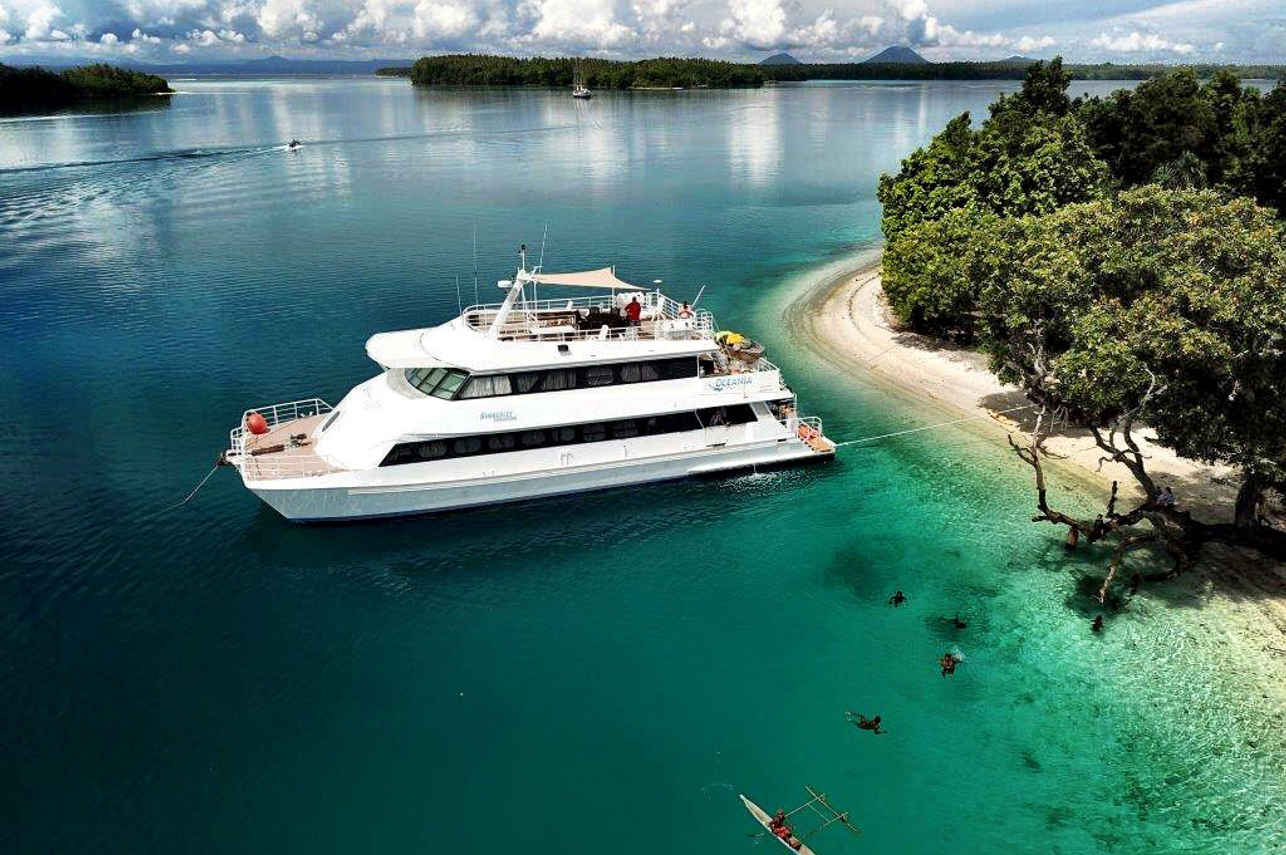
Below are the liveaboards that include Bermuda Drop on their Papua New Guinea itineraries.
Liveaboards diving Bermuda Drop
These liveaboards may visit Bermuda Drop on selected itineraries — the exact dive sites depend on departure, weather and conditions.
Dive sites similar to Bermuda Drop
Same character, same waters — six more sites divers love for the exact same reasons.Compare seasons, access and liveaboard routes — then pick the site that fits your trip best.
© Esri — Maxar, Earthstar, GIS
End Bommie
Papua New Guinea
End Bommie is a renowned dive site located in Bootless Bay, near Port Moresby, Papua New Guinea.
- Suitable for
- Advanced
- Current
- Strong
- Access
- Liveaboard or dayboat
- Depth
- 6–30 m
- Theme
- Reef / Wall
© Esri — Maxar, Earthstar, GIS
Tufi Fjords
Papua New Guinea
Tufi Fjords, nestled on Cape Nelson along Papua New Guinea's northeast coast, offers a unique diving experience in a stunning, tropical fjord-like landscape.
- Suitable for
- Intermediate
- Current
- Strong
- Access
- Liveaboard only
- Depth
- 5–200 m
- Theme
- Muck diving / Reef
© Esri — Maxar, Earthstar, GIS
Deacon's Reef
Papua New Guinea
Deacon's Reef is a renowned dive site located on the Solomon Sea side of the peninsula forming Milne Bay's north coast in Papua New Guinea.
- Suitable for
- Intermediate
- Current
- Moderate
- Access
- Liveaboard only
- Depth
- 12–25 m
- Theme
- Reef / Wall
© Esri — Maxar, Earthstar, GIS
Barracuda Point
Papua New Guinea
Barracuda Point in Papua New Guinea earns its name from the impressive schools of barracuda that aggregate at this specific reef headland, where converging currents create an exceptionally nutrient-rich environment.
- Suitable for
- Intermediate
- Current
- Moderate
- Access
- Liveaboard only
- Depth
- 5–30 m
- Theme
- Wall / Reef
© Esri — Maxar, Earthstar, GIS
Sponge Heaven
Papua New Guinea
Sponge Heaven is a renowned wall dive located in Milne Bay Province, Papua New Guinea, distinguished by its impressive vertical topography and rich marine biodiversity.
- Suitable for
- Intermediate
- Current
- Moderate
- Access
- Liveaboard only
- Depth
- 1–107 m
- Theme
- Wall
© Esri — Maxar, Earthstar, GIS
Nusa Blowholes
Papua New Guinea
Nusa Blowholes is an intriguing dive site situated on the northern tip of Nusa Lavu Island, near Kavieng in Papua New Guinea.
- Suitable for
- Intermediate
- Current
- Moderate
- Access
- Liveaboard or dayboat
- Depth
- —
- Theme
- Reef / Drift