About Tufi Fjords
Tufi Fjords, nestled on Cape Nelson along Papua New Guinea's northeast coast, offers a unique diving experience in a stunning, tropical fjord-like landscape. These "fjords" are actually ancient volcanic inlets, carved out by lava flows, creating deep channels lined with lush rainforest that plunges to the water's edge. This dramatic topography extends underwater, with sheer walls and sheltered bays. Diving here features a combination of rarely visited offshore reefs, thriving macro life in the fjords, and historical artifacts. The offshore reefs, some rising from depths of 200m or more, boast pristine hard corals, vibrant sponge gardens, and an abundance of pelagic activity, including schooling snapper and various shark species. Inside the fjords, divers discover unique assemblages of fresh and saltwater marine life, with sites like Hubert's Point displaying colorful sponge gardens at 20m. The Tufi jetty area itself is a renowned muck diving spot, attracting critter enthusiasts with its rich assortment of flotsam and jetsam. While offshore sites can encounter strong currents, many dives within the fjords offer calmer conditions. Visibility can vary, particularly in areas influenced by sediment, but the remote nature ensures largely untouched sites. The area also holds historical significance, with WWII relics like submerged PT boats and bomber wrecks found in deeper waters, adding another layer to the diverse underwater exploration. Tufi offers an array of diving for various interests.
Highlights
Black CoralTropical FjordsWhip Corals
Season calendar
Best months to dive here
Jan
Feb
Mar
Apr
May
Jun
Jul
Aug
Sep
Oct
Nov
Dec
Good
Dive site facts: Tufi Fjords
- Depth
- 7–45 m
- Current
- Mild to strong
- Visibility
- 25–40 m
- Water temperature
- 26–31ºC
- Entry
- Boat / Shore
- Level
- Open Water Diver to Advanced Open Water Diver
- Dive type
- Reef, Macro, Wreck, Wall
- Night dive
- Possible
- Region / port
- Oro Province, Papua New Guinea
- Coordinates
- -9.075, 149.33
Conditions & Currents
The offshore reefs around Tufi are influenced by strong equatorial currents, which can bring abundant plankton and attract large schools of pelagic fish, including hammerheads and reef sharks. Divers may need to utilize techniques such as 'hanging on' to protruding rocks or mooring lines to observe the action on these sites. Inside the fjords, conditions are notably calmer with minimal current movement, which fosters spectacular coral growth and provides excellent conditions for macro photography and critter spotting. Visibility generally exceeds 30 meters on the outer reefs, while inside the fjords, calm, protected waters also offer clear conditions, though river runoff can affect clarity from December to March.
Marine life & sighting chances

Grey reef shark
occasional
Scalloped hammerhead shark
October-November · occasional
White-tip reef shark
occasional
Black-tip reef shark
occasional
Mandarin fish
common
Ornate ghost pipefish
common
Goby
common
Nudibranch
common
Pygmy seahorse
occasional
Shrimp
common
Reef manta ray
occasional
Eagle ray
occasional
Tuna
common
Turtle
commonDive profile & how the dive runs
A typical dive at Mulloway, one of Tufi's premier sites, begins with a boat entry near the far point of the reef. Divers descend to approximately 7 meters where the vertical wall begins, plunging beyond 40 meters. The dive team typically swims towards the strong currents that bring plankton, attracting abundant pelagic life. Divers can position themselves by holding onto a protruding rock or a submerged mooring rope to observe schools of hammerheads, reef sharks, and other pelagics in action. The dive progresses along the wall, exploring the colorful lichens, hard, and soft corals, with numerous nudibranchs spotted. For decompression dives, such as the PT Boat wrecks at Tufi Wharf, a maximum depth of 45 meters is reached. Decompression stops are mandatory, and a surface interval of four hours is required before subsequent dives. Safety stops are conducted at 5 meters for at least 3 minutes, typically near the end of the dive, before a boat pick-up.
Underwater photography
Tufi offers diverse photographic opportunities, requiring both macro and wide-angle lenses. For the offshore reefs and pelagic encounters, a wide-angle setup is ideal to capture schooling fish, sharks, and vast coral formations, often with visibility exceeding 30 meters. In contrast, the sheltered fjords and the Tufi Jetty are a macro photographer's dream. Here, a macro lens with appropriate strobes will reveal pygmy seahorses, ornate ghost pipefish, nudibranchs, and various gobies and shrimps. Buoyancy control is paramount, especially when navigating delicate coral environments or hovering over the silty bottom near the jetty to avoid disturbing subjects or stirring up sediment. When photographing critter life in the fjords, patience and a keen eye are essential to discover the numerous hidden gems.
Combine with nearby dive sites
- Lama Shoal
Lama Shoal, also known by the evocative name Crack-A-Fat Reef, stands out as a premier dive site within the Witu Islands of Papua New…
- Observation Point
Observation Point, situated on Normanby Island in Milne Bay, Papua New Guinea, stands out as a premier destination for macro diving.
- Bev's Reef
Bev's Reef is a vibrant reef system located near Tufi on the northern coast of mainland Papua New Guinea, situated amidst a region…
- Susan's Reef
Susan's Reef is a highlight of Kimbe Bay, located on New Britain Island in Papua New Guinea, celebrated for its pristine condition and rich…
- Dinah's Beach
Dinah's Beach, or Lauadi, in Milne Bay, Papua New Guinea, holds global recognition as the original muck diving site.
Getting there & logistics
Access to Tufi is primarily by air, involving a flight from Port Moresby's Jackson Field over the Owen Stanley Range. The journey is made by small plane, landing on a gravel airstrip conveniently located near Tufi Resort. Flights from Port Moresby to Tufi are not daily, typically operating on specific days such as Fridays, necessitating an overnight stay in Port Moresby upon international arrival. Tufi Dive Resort is the main accommodation, offering packages that often include full board and diving. Trips to Tufi can be combined with other PNG destinations like Walindi or Kimbe Bay, sometimes extending to 20-day itineraries. Park fees and local permits are usually managed by the dive resort as part of your package.
Safety & environment
The nearest recompression chamber is located in Port Moresby, emphasizing the critical importance of dive insurance that covers medical evacuation. Given Tufi's remote location and the absence of roads, evacuation in an emergency would involve air transport, which can be complex and costly without proper coverage. Divers should maintain conservative dive profiles, especially when exploring deeper wreck sites like the PT boats, where decompression diving is involved. A mandatory surface interval of four hours is required between such dives. It is crucial to dive within your training limits and adhere to your dive guide's instructions, particularly regarding currents on offshore reefs. Always ensure your gear is well-maintained and that you are physically fit for diving in tropical conditions.
Who it suits — and who it doesn't
Suited for
- Experienced divers comfortable with currents
- Macro photography enthusiasts
- Wreck diving aficionados
- Divers seeking pristine, uncrowded reefs
- Those who appreciate remote, natural beauty
- Divers interested in unique topographical features
Less suited for
- Beginner divers without current experience
- Divers expecting luxury five-star resorts
- Individuals sensitive to remote travel conditions
- Those uninterested in macro life or wrecks
- Divers who prefer busy, easily accessible sites
FAQ
Tufi Fjords FAQ
What makes Tufi Fjords unique for diving?
Tufi is unique due to its tropical fjord environment, which offers a distinct blend of diving experiences. You can explore calm, sheltered fjords perfect for macro life and critter spotting, as well as venture out to offshore reefs with strong currents that attract abundant pelagic species. This combination provides a rare diversity not commonly found in other dive destinations.
Are there any wreck dives in Tufi?
Yes, Tufi offers several wreck diving opportunities, primarily related to World War II history. Near the Tufi Jetty, you can dive the remains of two PT boats sunk during a 1943 incident. Additionally, the region is home to the intact B-17F Black Jack bomber wreck and a B25 Mitchell bomber, though these are located further afield and require specific trips.
What is the visibility like in Tufi?
Visibility in Tufi is generally excellent. On the offshore reefs, it often exceeds 30 meters. Inside the fjords, the calm, protected waters also offer clear conditions, making it ideal for underwater photography. However, during the warm wet season from December to March, river runoff can occasionally affect visibility, particularly closer to shore.
When is the best time to see hammerhead sharks?
Hammerhead sharks are occasionally sighted on the offshore reefs, particularly during the months of October and November. These months are generally considered prime for diving in Tufi, offering calm, clear waters and cooler temperatures that can attract a wider array of marine life, including large pelagics.
What kind of marine life can I expect to see in the fjords versus the outer reefs?
The fjords are a macro paradise, teeming with gobies, nudibranchs, pygmy seahorses, and various shrimps, thriving among the abundant sponges and shelf corals. The outer reefs, influenced by stronger currents, attract larger pelagic species such as reef sharks, hammerheads, manta rays, and barracudas, alongside schooling fish and vibrant hard coral gardens.
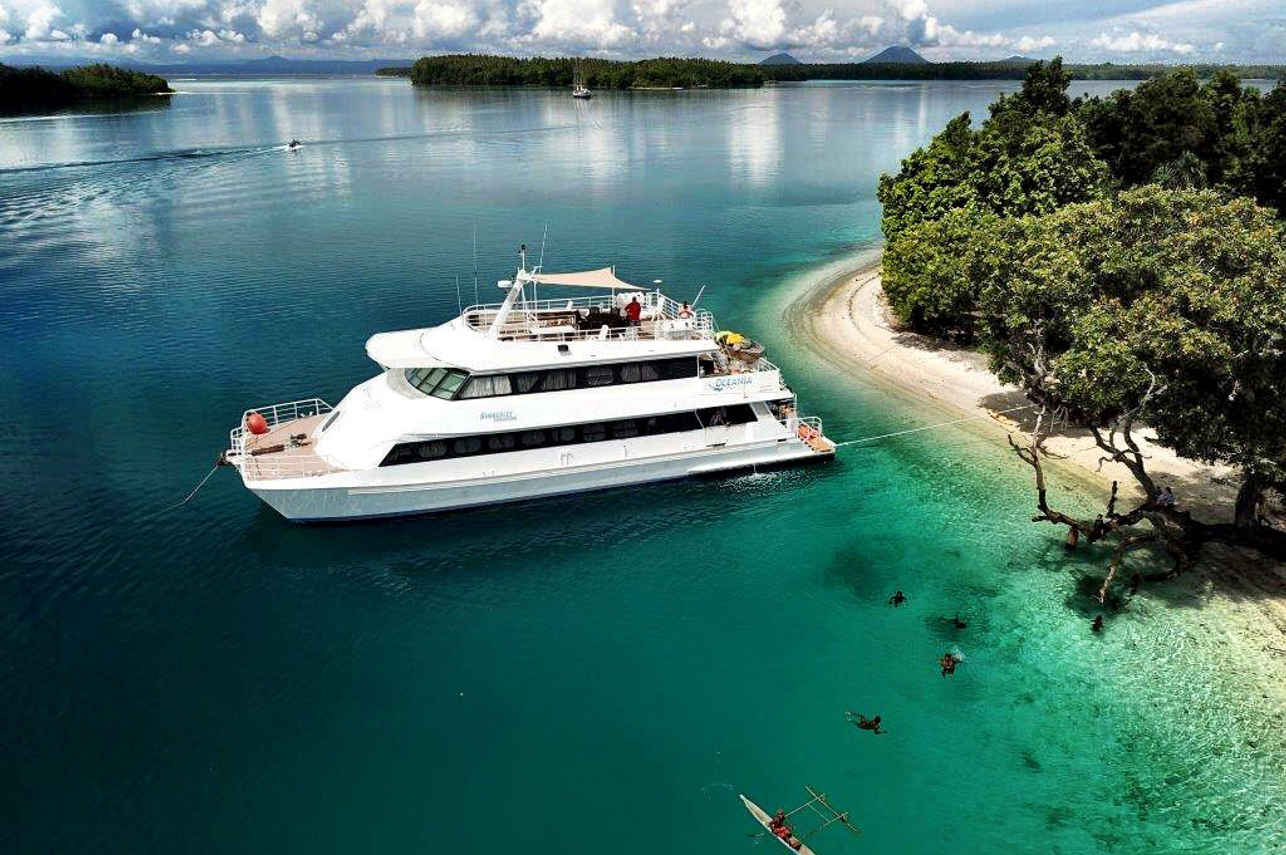
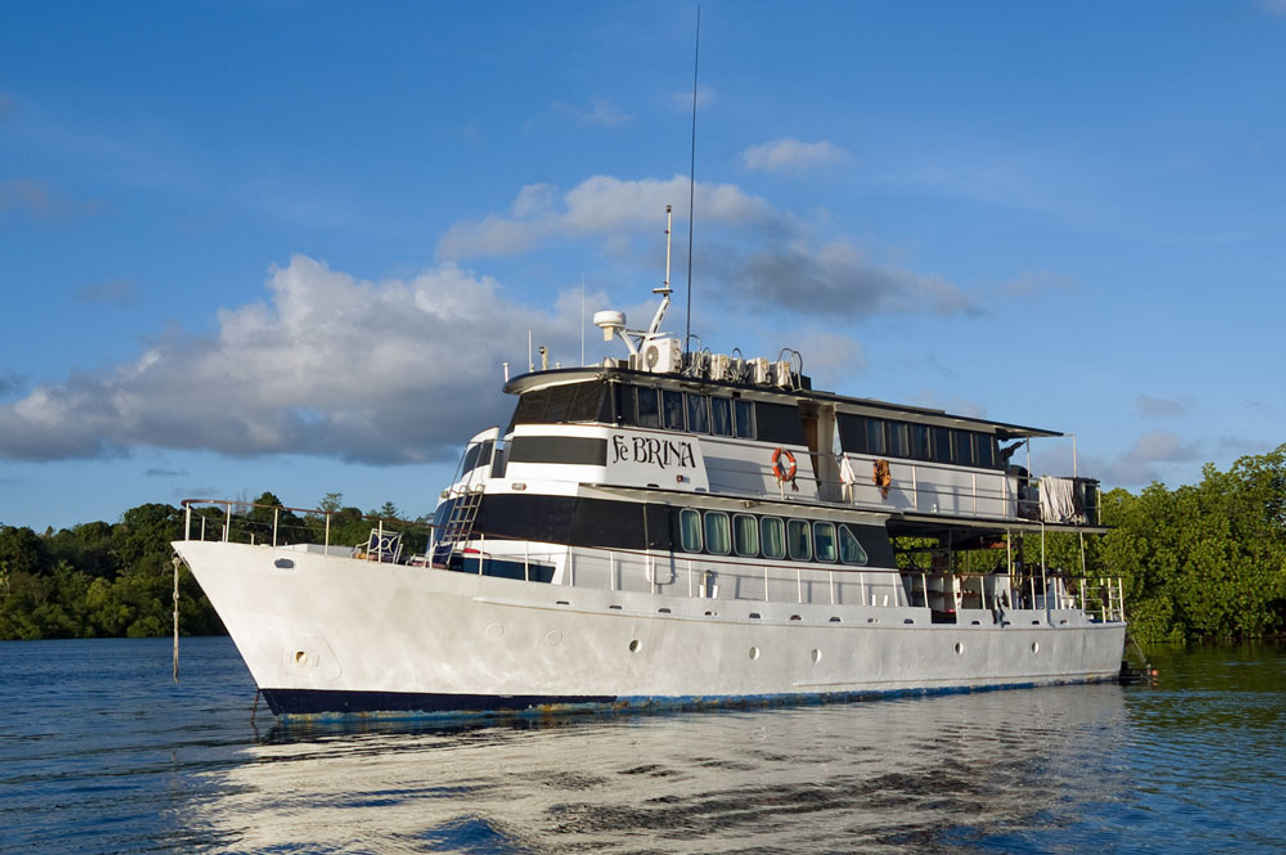
Why dive Tufi Fjords from a liveaboard?
Tufi Fjords is one of Papua New Guinea's signature dive sites. A liveaboard sleeps you on the water and puts you in the water for three to four guided dives per day, including dawn and night dives that day-boat operators rarely offer. You skip the daily commute back to port and reach quieter, less-crowded sites in the same region on a single trip.
Below are the liveaboards that include Tufi Fjords on their Papua New Guinea itineraries.
Liveaboards diving Tufi Fjords
These liveaboards may visit Tufi Fjords on selected itineraries — the exact dive sites depend on departure, weather and conditions.
Dive sites similar to Tufi Fjords
Same character, same waters — six more sites divers love for the exact same reasons.Compare seasons, access and liveaboard routes — then pick the site that fits your trip best.
© Esri — Maxar, Earthstar, GIS
Big La Laguna
Philippines
Big La Laguna is a beach community situated on the western edge of the Sabang Peninsula, a popular dive region on Mindoro Island, Philippines.
- Suitable for
- Intermediate
- Current
- Moderate
- Access
- Dayboat
- Depth
- 5–35 m
- Theme
- Reef / Wall
© Esri — Maxar, Earthstar, GIS
Rusa Pinnacle
Alor
Rusa Pinnacle is a challenging yet highly rewarding dive site situated in the Alor archipelago, part of Indonesia's East Nusa Tenggara.
- Suitable for
- Advanced
- Current
- Strong
- Access
- Liveaboard only
- Depth
- 6–30 m
- Theme
- Reef
Lipah Bay is situated on Bali's northeast coast within the Amed area, nestled against the dramatic backdrop of Gunung Agung.
- Suitable for
- Beginner
- Current
- Mild
- Access
- Liveaboard or dayboat
- Depth
- 5–30 m
- Theme
- Reef / Drift
© Esri — Maxar, Earthstar, GIS
Tangked Cave
Bali
Tangked Cave, sometimes referred to as Tangked Taked Shark Cave, is an advanced dive site situated in the open ocean off Bali's southeastern coast.
- Suitable for
- Advanced
- Current
- Moderate
- Access
- Liveaboard or dayboat
- Depth
- 15–40 m
- Theme
- Cave & cavern / Reef
© Esri — Maxar, Earthstar, GIS
Schools Out
Alor
Schools Out in Alor offers divers an exceptional encounter with healthy coral reefs and a rich variety of marine species.
- Suitable for
- Intermediate
- Current
- Mild
- Access
- Liveaboard only
- Depth
- 20–30 m
- Theme
- Reef
© Esri — Maxar, Earthstar, GIS
Batununggul
Bali
Batununggul, also known as Suana or Batumulapan by some operators, is a dynamic wall and sloping reef dive site situated on the eastern side of Nusa Penida, Bali.
- Suitable for
- Advanced
- Current
- Strong
- Access
- Liveaboard or dayboat
- Depth
- 10–40 m
- Theme
- Wall