About Peter’s Patch
Peter’s Patch is a renowned dive site located in the Kavieng region of Papua New Guinea, off Lissenung Island. This site stands out for its exceptional coral health and abundant marine life, often described as one of the prettiest in the area. It is nestled in a region celebrated for its pristine reefs and rich biodiversity, part of the Coral Triangle, where low fishing pressure contributes to its ecological integrity. Divers can expect to find a flourishing ecosystem that supports both macro and pelagic species, making it a well-rounded experience. The topography of Peter’s Patch features healthy hard and soft corals that form extensive carpets and structures, providing habitat for a diverse array of reef fish. While specific depth ranges are not detailed, the site is known for having mild currents and good visibility, contributing to a comfortable and engaging dive. The general Kavieng area offers a variety of dive profiles including channels, walls, and patch reefs, suggesting a varied underwater landscape for Peter’s Patch. The marine life here is particularly vibrant, with frequent sightings of large schools of fish and numerous anemonefish species. The conditions are often ideal, allowing divers to fully appreciate the intricate beauty of the corals and the dynamic activity of the schooling fish. This site is typically accessed by boat from nearby resorts, forming part of a wider Kavieng diving itinerary. Divers experience Peter’s Patch as a generally calm and visually rich dive. The combination of healthy coral, active fish life, and favorable conditions makes it a highlight for many who explore the Kavieng area. Its excellent visibility and mild currents ensure an enjoyable dive, suitable for observing both the intricate reef structure and the larger marine inhabitants.
Highlights
Abundant soft coralsLarge Clavularia fieldsDiverse fish schoolsMultiple anemonefish speciesMild current conditionsGood visibilityHealthy reef structure
Season calendar
Best months to dive here
Jan
Feb
Mar
Apr
May
Jun
Jul
Aug
Sep
Oct
Nov
Dec
Excellent
Good
Off-Season
May – Oct
Dry season with best visibility up to 30m. Calmer seas ideal for liveaboard expeditions.
Nov – Dec
Transition with increasing plankton attracting pelagics. Still good diving conditions.
Jan – Apr
Wet season with reduced visibility. Some areas remain excellent. Fewer boats and lower prices.
Dive site facts: Peter’s Patch
- Depth
- 12–30 m
- Current
- Mild
- Visibility
- Good
- Water temperature
- 79-88°F (26-31°C)
- Entry
- Boat
- Level
- Open Water Diver
- Dive type
- Coral reef, fish life
- Region / port
- Kavieng, New Ireland Province
- Coordinates
- 2.5997° S, 150.7766° E
Conditions & Currents
At Peter's Patch, divers typically experience mild currents, which contribute to the site's excellent visibility and support a rich diversity of marine life. While conditions are generally calm, the presence of currents is beneficial for the health of the soft corals and attracts schooling fish. Entry into the water is usually straightforward, allowing for a relaxed descent into the vibrant reef. Divers should be mindful of their buoyancy to avoid contact with the delicate coral structures, particularly in areas where the current might gently push them. The consistent, clear water often provides excellent visibility, enhancing the overall dive experience and making it suitable for divers who appreciate a less demanding environment.
Marine life & sighting chances
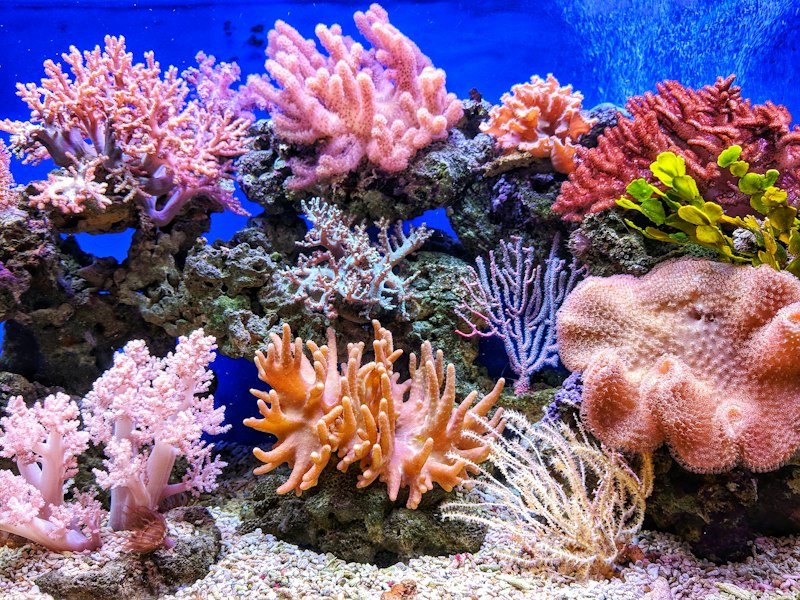
Soft corals
common
Crinoids
common
Tubastrea corals
commonClavularia coral
common
Rainbow runners
common
Batfish
common
Anemonefish
common
Snapper
occasional
Barracuda
occasionalDive profile & how the dive runs
A dive at Peter's Patch typically begins with a descent onto the vibrant reef, characterized by widespread soft corals and impressive fish schools. Divers often explore the main sections of the reef, noting the abundance of Clavularia coral and various anemonefish. With generally mild currents, the dive allows for a leisurely pace, moving along the reef structure to observe marine life at different depths. The focus is on appreciating the rich biodiversity and pristine conditions, rather than a specific depth target. The dive concludes with a gradual ascent, often incorporating a safety stop above the most colourful sections of the reef, ensuring divers can fully enjoy the diverse ecosystem until the very end.
Underwater photography
Peter's Patch is highly suitable for both wide-angle and macro photography due to its diverse marine life and healthy corals. For wide-angle shots, a fisheye or wide-angle rectilinear lens is ideal to capture the expansive soft coral fields and large schools of rainbow runners and batfish. For macro subjects, such as the five different kinds of anemonefish and various small critters within the corals, a macro lens is essential. Divers should maintain excellent buoyancy control to avoid disturbing the delicate coral formations, especially when getting close to subjects. Natural light is often sufficient given the good visibility, but strobes are recommended to bring out the true colors of the corals and fish.
Combine with nearby dive sites
- Albatross Passage
A channel dive known for fish schools and occasional sharks.
- Echuca Patch
A ridge with a wreck, attracting barracudas and jacks.
- Nautilus Reef
Features excellent hard coral sections.
- Lissenung House Reef
Ideal for macro and night diving with diverse critter life.
- The Bottleshop
A muck dive site rich in unique critters for macro photographers.
Getting there & logistics
Access to Peter's Patch is primarily via dive operators based in Kavieng, New Ireland Province, such as Lissenung Island Resort. International travelers typically fly into Jacksons International Airport (POM) in Port Moresby, then take connecting domestic flights, often with Air Niugini, to Kavieng. It's advisable to allow an extra day for travel due to potential logistical challenges with domestic flights. From Kavieng, a boat transfer to Lissenung Island is common, followed by short boat rides to dive sites. Dive trips often range from several days to a week or more, combining Peter's Patch with other sites in the Kavieng region. While specific park fees are not detailed for Peter's Patch, Papua New Guinea dive resorts often contribute a small fee to local reef owners, which helps in reef conservation.
Safety & environment
For diving in Papua New Guinea, including Peter's Patch, robust dive accident insurance is highly recommended given the remote nature of many sites. The nearest recompression chambers might be distant, requiring significant travel time in an emergency. Evacuation from remote areas to medical facilities can be challenging and expensive. Divers should ensure all equipment is well-maintained and that they adhere to safe diving practices, including conservative dive profiles. The mild currents at Peter's Patch generally present a low risk, but good buoyancy control is always essential to protect the delicate coral environment and prevent injuries. Staying hydrated is also crucial in the tropical climate.
Who it suits, and who it doesn't
Suited for
- Divers seeking pristine coral reefs
- Underwater photographers
- Divers who enjoy diverse fish life
- Those looking for mild current dives
- Divers staying at Lissenung Island Resort
Less suited for
- Divers focused exclusively on large pelagic encounters
- Those preferring deep wreck exploration
- Divers who dislike abundant soft corals
- Beginners without basic buoyancy control
- Divers expecting strong currents and drift dives
FAQ
Peter’s Patch FAQ
What kind of marine life can I expect at Peter's Patch?
Peter's Patch is teeming with diverse marine life. You can anticipate seeing extensive soft coral formations, crinoids, and specialized corals like Clavularia. The site is also home to large schools of rainbow runners and batfish, as well as multiple species of colorful anemonefish, making it a vibrant underwater spectacle.
Are the currents strong at Peter's Patch?
The currents at Peter's Patch are typically mild, contributing to excellent visibility and a relaxed diving experience. This makes the site comfortable for divers who prefer less challenging conditions while still enjoying the rich marine ecosystem that thrives with gentle water movement.
Is Peter's Patch suitable for underwater photography?
Yes, Peter's Patch is highly suitable for both wide-angle and macro underwater photography. The extensive soft coral gardens and schools of fish provide excellent wide-angle opportunities, while the numerous anemonefish and various small critters offer compelling macro subjects. Good buoyancy control is crucial to capture stunning images without disturbing the delicate environment.
How do I get to Peter's Patch?
Peter's Patch is accessed from Kavieng, Papua New Guinea, typically via dive operators like Lissenung Island Resort. Most international visitors fly into Port Moresby and then take a domestic flight to Kavieng. From Kavieng, it's a short boat ride to the resort and then to the dive site.
What is the best time of year to dive Peter's Patch?
The optimal time to dive Peter's Patch, and the Kavieng area in general, is from April to June and again from September to early December. During these months, divers can expect the best conditions, including good visibility and favorable currents, enhancing the overall dive experience at this vibrant site.
Why dive Peter’s Patch from a liveaboard?
Peter’s Patch is one of Papua New Guinea's signature dive sites. A liveaboard sleeps you on the water and puts you in the water for three to four guided dives per day, including dawn and night dives that day-boat operators rarely offer. You skip the daily commute back to port and reach quieter, less-crowded sites in the same region on a single trip.
Below are the liveaboards that include Peter’s Patch on their Papua New Guinea itineraries.
Liveaboards diving Peter’s Patch
These liveaboards may visit Peter’s Patch on selected itineraries, the exact dive sites depend on departure, weather and conditions.


Dive sites similar to Peter’s Patch
Same character, same waters, six more sites divers love for the exact same reasons.Compare seasons, access and liveaboard routes, then pick the site that fits your trip best.
Abila is a notable dive site located within the Alor Islands Marine Park, an area celebrated for its rich marine biodiversity due to its position in the Coral Triangle.
- Suitable for
- Beginner
- Current
- Mild
- Access
- Liveaboard only
- Depth
- —
- Theme
- Reef
© EsriMaxar, Earthstar, GIS
Adonara Channel
Alor
Adonara Channel stands as one of Alor's most iconic dive sites, celebrated for its dynamic currents and exceptionally rich biodiversity.
- Suitable for
- Advanced
- Current
- Strong
- Access
- Liveaboard or dayboat
- Depth
- 10–40 m
- Theme
- Drift / Wall
© EsriMaxar, Earthstar, GIS
Adonara Wall
Indonesia
Adonara is an Indonesian island dive site, renowned for its vibrant underwater topography characterized by submerged seamounts.
- Suitable for
- Intermediate
- Current
- Strong
- Access
- Liveaboard or dayboat
- Depth
- 5–35 m
- Theme
- Seamount / Wall
© EsriMaxar, Earthstar, GIS
Agnay Fish Sanctuary
Philippines
Agnay Fish Sanctuary is nestled in a sheltered bay near the village of Agnay in Romblon, a province celebrated for its rich marine biodiversity.
- Suitable for
- Beginner
- Current
- Mild
- Access
- Dayboat
- Depth
- 9–18 m
- Theme
- Reef
© EsriMaxar, Earthstar, GIS
Ai Island Reef
Banda Sea
Ai Island Reef, nestled within the Banda Sea, offers a remarkable diving experience characterized by its rich marine biodiversity and varied underwater topography.
- Suitable for
- Beginner
- Current
- Strong
- Access
- Liveaboard only
- Depth
- 3–30 m
- Theme
- Reef / Seamount
© EsriMaxar, Earthstar, GIS
Akitsushima
Philippines
The Akitsushima is a distinguished World War II Japanese seaplane tender, sunk in September 1944 during an American air raid in Coron Bay, Palawan.
- Suitable for
- Advanced
- Current
- Strong
- Access
- Dayboat
- Depth
- 22–38 m
- Theme
- Wreck