Longfin Bannerfish in its natural habitat — diving encounters and best destinations

Longfin Bannerfish

5-10 years

Want to dive with this animal?

Only destinations where this animal occurs.

The Longfin Bannerfish at a glance

The longfin bannerfish (Heniochus acuminatus), also widely known as the pennant coralfish, reef bannerfish, or coachman, is a striking member of the butterflyfish family Chaetodontidae. It is easily recognized by its laterally compressed body and the dramatically extended white filament formed by the elongated first rays of its dorsal fin. The primary body coloration is brilliant white, set off by two broad, dark diagonal bands that run across the sides, with the second band ending beyond the corner of the anal fin. Posterior to the second stripe, the soft dorsal fin and caudal fin display a bright yellow hue, which is mirrored by the yellow pectoral fins. Its head is white with black eyes connected by a dark band, ending in a slightly elongated, black-spotted snout.

Divers often confuse Heniochus acuminatus with the closely related schooling bannerfish (Heniochus diphreutes) and the Moorish idol. However, careful observation reveals key anatomical differences. The longfin bannerfish possesses a noticeably longer snout marked with darker spots, and its pelvic fin is longer with a rounded tip, contrasting with the smaller, more angular pelvic fin of the schooling bannerfish. Additionally, adult bannerfish show a distinct white area behind their second black band that is absent in juvenile specimens.

Behaviour & reproduction

Size
Unknown
Weight
Around 500 g
Lifespan
5-10 years
Status
Not Evaluated

The social habits of the longfin bannerfish change significantly as it matures. While adult bannerfish are typically observed swimming in established pairs along the reef, juveniles lead a solitary existence. Young individuals also display different ecological roles, frequently establishing cleaning stations where they pick items off other fish species. Adults grow to an average length of around 15 cm, though exceptional specimens can reach a maximum length of 25 cm.
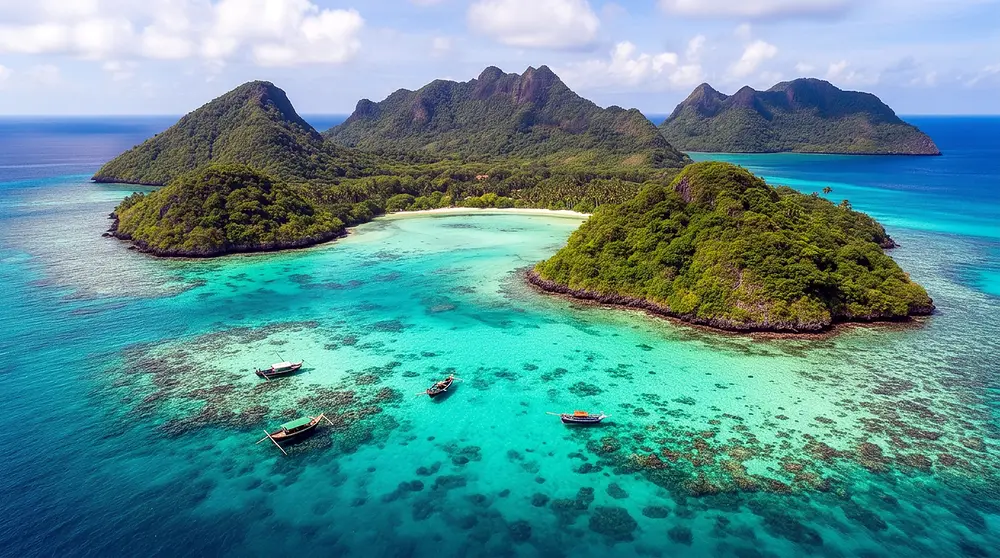

Where to dive with the Longfin Bannerfish: 20 top spots

Diving Tips

Encountering the longfin bannerfish underwater is a highlight for divers exploring tropical Indo-Pacific reefs. Because adult fish typically travel in pairs, spotting one individual often means another is nearby. Divers should scan protected lagoons, channels, and outer reef slopes at depths ranging from shallow 2-metre bays down to 75 metres. To observe their natural interactions, approach slowly without making sudden movements, as paired adults tend to maintain a steady cruising speed along coral formations.

Underwater photographers seeking clean shots of their elongated dorsal filaments should position themselves slightly below or level with the fish, allowing the white pennant to stand out against open water or rich coral backdrops. Keep an eye out for solitary juveniles in shallower reef zones, which can occasionally be observed displaying cleaner behaviour with other reef fishes. Unlike some schooling bannerfish species that form massive open-water aggregations, *Heniochus acuminatus* stays close to reef structures, so looking around coral heads and sheltered drop-offs will yield the best observations.

Fun facts about the Longfin Bannerfish

  • The first rays of the longfin bannerfish's dorsal fin stretch out into a long, white trailing filament.
  • Juvenile longfin bannerfish are solitary and sometimes act as cleaners by picking parasites off other fishes.
  • Adult longfin bannerfish can be distinguished from the similar schooling bannerfish by their longer snout and rounded pelvic fin.
  • While globally evaluated as Least Concern, local populations in the Persian Gulf are assessed as Vulnerable due to reef fragmentation.

Best time to see the Longfin Bannerfish

The longfin bannerfish is a resident, reef-associated species found throughout its expansive Indo-Pacific range. Because it does not undertake broad seasonal migrations, divers can observe this species year-round across major diving destinations. Regional weather patterns and water temperatures generally dictate the best operational windows for diving rather than the seasonal movement of the fish itself.

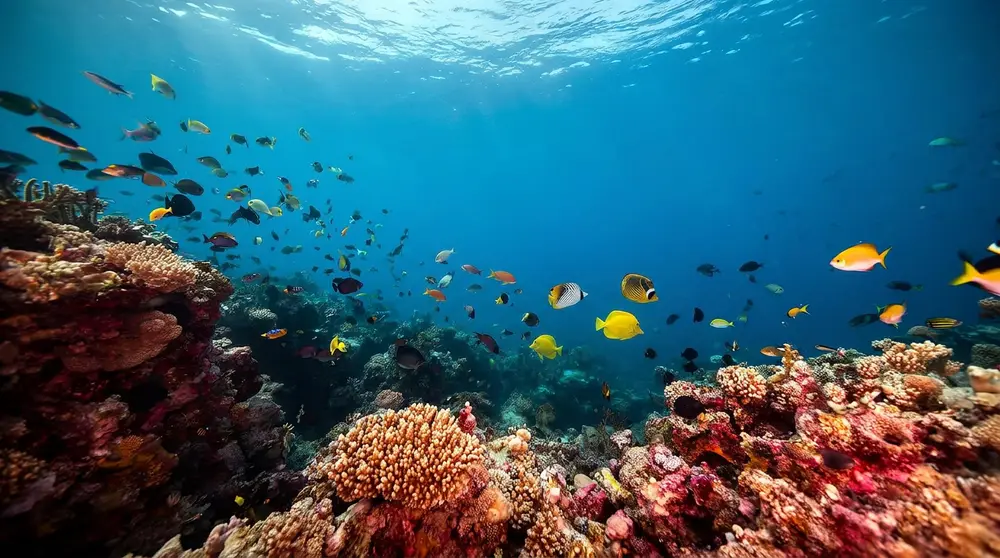
In tropical destinations such as the Red Sea, French Polynesia, Fiji, and Hawaii, water clarity and conditions remain favourable across most months, allowing consistent year-round sightings. In Australian waters, the longfin bannerfish occurs from south-western Western Australia around the tropical north down to southern New South Wales, with sightings occurring in sheltered coastal bays during local diving seasons. Because adult pairs maintain established home ranges along protected lagoon reefs and outer slopes, dive guides can frequently locate resident pairs in the same reef sectors across different times of the year, making encounters highly dependable regardless of the specific month visited.

Where the Longfin Bannerfish lives

The longfin bannerfish inhabits tropical and subtropical marine environments across a vast geographic distribution, spanning from the East Coast of Africa and the Red Sea through the Persian Gulf to Polynesia, Hawaii, Fiji, southern Japan, and Australia. In Australian waters, its range extends from south-western Western Australia around the tropical northern coastline to the southern coast of New South Wales, including the Great Barrier Reef.

Vertically, the species occupies a depth range between 2 metres and 75 metres. It shows a strong preference for sheltered coastal environments, protected lagoons, reef channels, and outer reef slopes where coral formations provide cover. While globally resilient, local populations face habitat challenges; for instance, in the Persian Gulf, the species is listed as Vulnerable due to severe coral reef damage and fragmentation that has destroyed contiguous coral assemblages. Nevertheless, across most healthy Indo-Pacific coral systems, it remains a common reef-associated resident.

What the Longfin Bannerfish eats

The longfin bannerfish possesses a small, terminal protractile mouth situated at the end of its slightly elongated snout. This specialised mouth morphology enables the fish to feed effectively on a varied opportunistic diet comprising zooplankton in the water column, individual coral polyps, and various bottom-living or benthic invertebrates attached to the reef substrate.

Feeding behaviour varies notably between life stages. Adults typically feed in pairs, hovering near reef structures or venturing slightly into the water column to pluck passing zooplankton and benthic organisms. Juveniles, operating as solitary individuals, display an entirely different feeding strategy by acting as cleaner fish. During this juvenile stage, they pick parasites and organic material off the bodies of larger reef fishes. This dual strategy allows the longfin bannerfish to utilize diverse food resources across both benthic substrate and open water columns within its reef environment.

Longfin Bannerfish: frequently asked questions

When is the best time to see Longfin Bannerfish?
The longfin bannerfish is a resident, reef-associated species found throughout its expansive Indo-Pacific range. Because it does not undertake broad seasonal migrations, divers can observe this species year-round across major diving destinations. Regional weather patterns and water temperatures generally dictate the best operational windows for diving rather than the seasonal movement of the fish itself. In tropical destinations such as the Red Sea, French Polynesia, Fiji, and Hawaii, water clarity and conditions remain favourable across most months, allowing consistent year-round sightings. In Australian waters, the longfin bannerfish occurs from south-western Western Australia around the tropical north down to southern New South Wales, with sightings occurring in sheltered coastal bays during local diving seasons. Because adult pairs maintain established home ranges along protected lagoon reefs and outer slopes, dive guides can frequently locate resident pairs in the same reef sectors across different times of the year, making encounters highly dependable regardless of the specific month visited.
How big does Longfin Bannerfish get?
Longfin Bannerfish: Unknown
Is Longfin Bannerfish dangerous for divers?
Encountering the longfin bannerfish underwater is a highlight for divers exploring tropical Indo-Pacific reefs. Because adult fish typically travel in pairs, spotting one individual often means another is nearby. Divers should scan protected lagoons, channels, and outer reef slopes at depths ranging from shallow 2-metre bays down to 75 metres. To observe their natural interactions, approach slowly without making sudden movements, as paired adults tend to maintain a steady cruising speed along coral formations. Underwater photographers seeking clean shots of their elongated dorsal filaments should position themselves slightly below or level with the fish, allowing the white pennant to stand out against open water or rich coral backdrops. Keep an eye out for solitary juveniles in shallower reef zones, which can occasionally be observed displaying cleaner behaviour with other reef fishes. Unlike some schooling bannerfish species that form massive open-water aggregations, *Heniochus acuminatus* stays close to reef structures, so looking around coral heads and sheltered drop-offs will yield the best observations.
What is the conservation status of Longfin Bannerfish?
Longfin Bannerfish: Not Evaluated
Plan your trip

Ready to dive with these animals?

Choose a destination or search every available vessel to find the liveaboard that matches the marine life you want to see.