About Big Reef
Big Reef is a highly renowned dive site located off the Bodrum Peninsula in Turkey, often combined with a holiday in the area. It features a massive underwater pinnacle that ascends to just 5 meters below the surface, making it accessible for various dive levels. The topography includes impressive walls that drop beyond 35 meters, along with canyons and overhangs. The site's varied structure supports a diverse ecosystem, offering stunning underwater landscapes. The reef is covered in marine life year-round, including frequent sightings of amberjack, honeycomb grouper, octopus, and barracuda. Loggerhead sea turtles are also commonly observed here, with prime conditions from May to October for best visibility and mild temperatures. During the summer, marine life activity is at its peak. Big Reef is primarily accessed by boat, typically involving short trips from nearby bays. Conditions are generally mild, making it suitable for both beginners exploring the shallow reef top and advanced divers venturing into deeper walls and canyons, though currents can be variable.
Highlights
Vast underwater pinnacleDramatic walls and canyonsAbundant marine lifeShallow reef top (5m)Dives to 35+ metersLoggerhead turtle sightingsGood for wide-angle photography
Season calendar
Best months to dive here
Jan
Feb
Mar
Apr
May
Jun
Jul
Aug
Sep
Oct
Nov
Dec
Excellent
Good
Dive site facts: Big Reef
- Depth
- 5–35+ m
- Current
- Variable / Moderate
- Visibility
- Very Good (20+ m)
- Water temperature
- 20–26°C (May-Oct)
- Entry
- Boat access
- Level
- All levels
- Dive type
- Reef, wall, pinnacle
- Region / port
- Bodrum Peninsula
- Coordinates
- 36.6331° N, 29.0583° E
Conditions & Currents
Currents at Big Reef are described as variable, meaning they can change in strength and direction depending on conditions. While Kaş, a nearby region, typically experiences mild to no currents below 15 meters, Big Reef specifically notes moderate current and light surge in its Bodrum location. Divers should anticipate the possibility of some current, particularly along the walls and at deeper sections, which may necessitate careful buoyancy control and finning techniques. Entry and exit are typically boat-based, and dive operators local to Bodrum manage the access and provide guidance on prevailing conditions. Visibility is generally very good, often exceeding 20 meters, but can be influenced by surge or seasonal factors. Dive planning should account for potentially changing current conditions, especially for longer dives or those exploring deeper areas.
Marine life & sighting chances
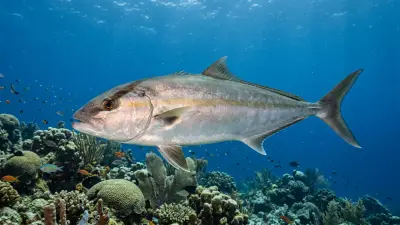
Amberjack
common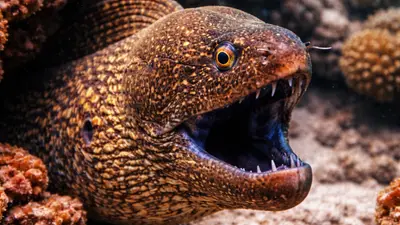
Snowflake Moray
occasional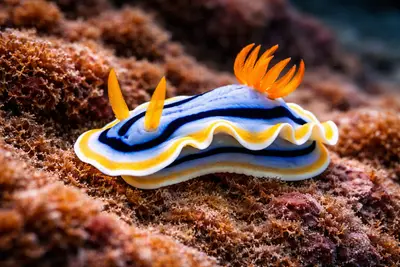
Nudibranch
common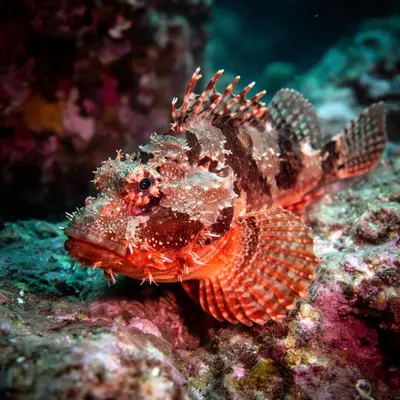
Scorpionfish
occasional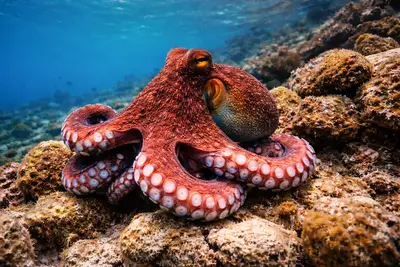
Octopus
common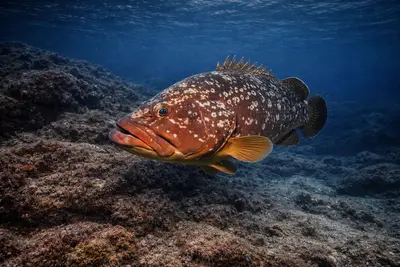
Honeycomb Grouper
common
Barracuda
common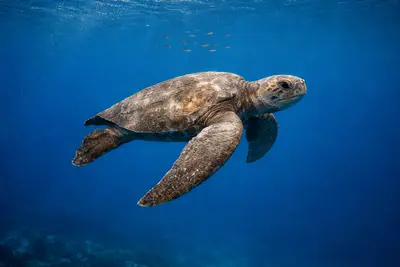
Loggerhead Sea Turtle
common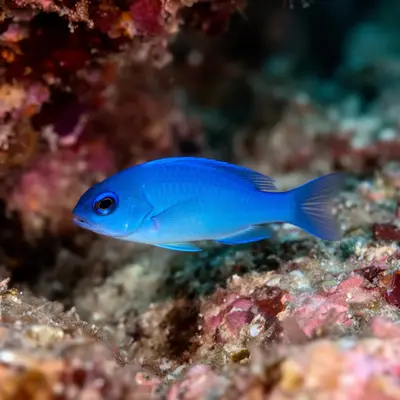
Yellowtail Damselfish
commonDive profile & how the dive runs
Your dive at Big Reef typically begins with a boat entry, positioning you near the pinnacle's shallowest point at 5 meters below the surface. Beginners can explore the expansive reef top, which is rich in activity and vibrant fish life. More advanced divers descend along the dramatic walls, navigating through natural canyons and overhangs that plunge to depths exceeding 35 meters. The route often follows the contours of the underwater mountain, allowing observation of various marine species inhabiting different depth bands. Turn points are usually determined by air consumption and bottom time, considering the variable current conditions. Safety stops are commonly conducted in the shallower, protected areas of the reef top, offering an excellent opportunity for decompression while observing smaller reef inhabitants.
Underwater photography
Big Reef offers excellent opportunities for both wide-angle and macro photography due to its diverse topography and abundant marine life. For wide-angle shots, consider a fisheye or wide rectilinear lens to capture the impressive walls, canyons, and the sheer scale of the underwater pinnacle. The clear visibility typically found here allows for striking scenic shots. For macro photography, a dedicated macro lens will be ideal for capturing the intricate details of nudibranchs, scorpionfish, and other smaller critters found among the reef's crevices. Using strobes is highly recommended to bring out the true colors of the marine life and coral, especially in deeper sections or within overhangs. Maintain excellent buoyancy control to avoid disturbing the delicate ecosystem and ensure sharp, well-composed images.
Combine with nearby dive sites
- SG115
Turkish Navy Wreck near Bodrum's Black Island
- Pinar 1
Wreck of a Turkish Navy ship, artificial reef
- C-47 Dakota
Aircraft wreck dive in the Bodrum area
- Orak Island
Known for Barracuda Point
- Small Reef
Another reef dive site in the Bodrum region
Getting there & logistics
Big Reef is located off the Bodrum Peninsula in Turkey, making Bodrum Milas Airport (BJV) the primary arrival point for international and domestic travelers. From the airport, transfers to Bodrum town are readily available. Diving at Big Reef is exclusively done via boat, with numerous dive operators in Bodrum offering day trips to this and other local sites. Typical dive excursions can range from half-day trips focusing on one or two sites to full-day excursions. Liveaboards operating in the region may also include Big Reef in their itineraries, though day boats are more common for this particular site. No specific permits or fees beyond standard dive trip costs are typically mentioned for diving Big Reef, but divers should confirm with their chosen operator. The site is frequently combined with other nearby Bodrum dive spots like SG115, Pinar 1 Wreck, or Small Reef.
Safety & environment
While Big Reef is suitable for all diving levels, awareness of site-specific hazards is crucial for diver safety. The primary concerns include variable currents, potential for depth exceeding recreational limits, and boat traffic. Divers should always follow their dive guide's instructions regarding current conditions and adhere to planned depth limits. Although a recompression chamber location is not specified in the sources, medical facilities are available in the Bodrum region. Divers are strongly advised to have comprehensive dive insurance that covers emergency medical treatment and evacuation. Adhere to safe diving practices, including proper gas planning, never diving alone, and maintaining good buoyancy control, especially when exploring deeper sections or navigating through canyons.
Who it suits — and who it doesn't
Suited for
- Open Water divers exploring shallow reef
- Advanced divers for deep walls and canyons
- Underwater photographers (wide-angle & macro)
- Divers seeking abundant marine life
- Those combining diving with a Bodrum holiday
FAQ
Big Reef FAQ
What kind of marine life can I expect to see at Big Reef?
At Big Reef, you can expect to encounter a vibrant array of marine species. Common sightings include schools of barracuda, large honeycomb groupers, and amberjacks. Divers also frequently spot fascinating creatures like octopuses, various nudibranchs, and scorpionfish hiding among the rocks. A highlight for many divers is the regular presence of loggerhead sea turtles.
Is Big Reef suitable for beginner divers?
Yes, Big Reef is suitable for divers of all levels, including beginners. The site features a shallow reef top that rises to just 5 meters below the surface, offering a safe and vibrant area for Open Water certified divers. More experienced divers can explore the deeper walls and canyons that extend beyond 35 meters.
How deep is Big Reef, and what is its underwater topography like?
Big Reef is characterized by a vast underwater pinnacle that reaches a minimum depth of 5 meters, acting as its shallowest point. From this pinnacle, impressive walls descend dramatically to depths exceeding 35 meters. The site's topography also includes natural canyons and overhangs, creating diverse habitats and interesting routes for exploration.
What are the typical conditions at Big Reef, particularly regarding currents and visibility?
Big Reef generally offers very good visibility, often exceeding 20 meters, making for clear underwater views. Water temperatures are mild, typically ranging from 20-26°C during the peak season. Currents at the site are described as variable and moderate, with some light surge possible. Divers should be prepared for potential current and manage their buoyancy accordingly.
How do I get to Big Reef, and which city is it near?
Big Reef is located off the Bodrum Peninsula in Turkey. The nearest major city and transportation hub is Bodrum. Access to the dive site is exclusively by boat, with numerous dive centers in Bodrum offering organized day trips. Bodrum Milas Airport (BJV) serves as the main airport for travelers visiting the region.
Why dive Big Reef from a liveaboard?
Big Reef is one of Turkey's signature dive sites. A liveaboard sleeps you on the water and puts you in the water for three to four guided dives per day, including dawn and night dives that day-boat operators rarely offer. You skip the daily commute back to port and reach quieter, less-crowded sites in the same region on a single trip.
Below are the liveaboards that include Big Reef on their Turkey itineraries.
Liveaboards diving Big Reef
These liveaboards may visit Big Reef on selected itineraries — the exact dive sites depend on departure, weather and conditions.
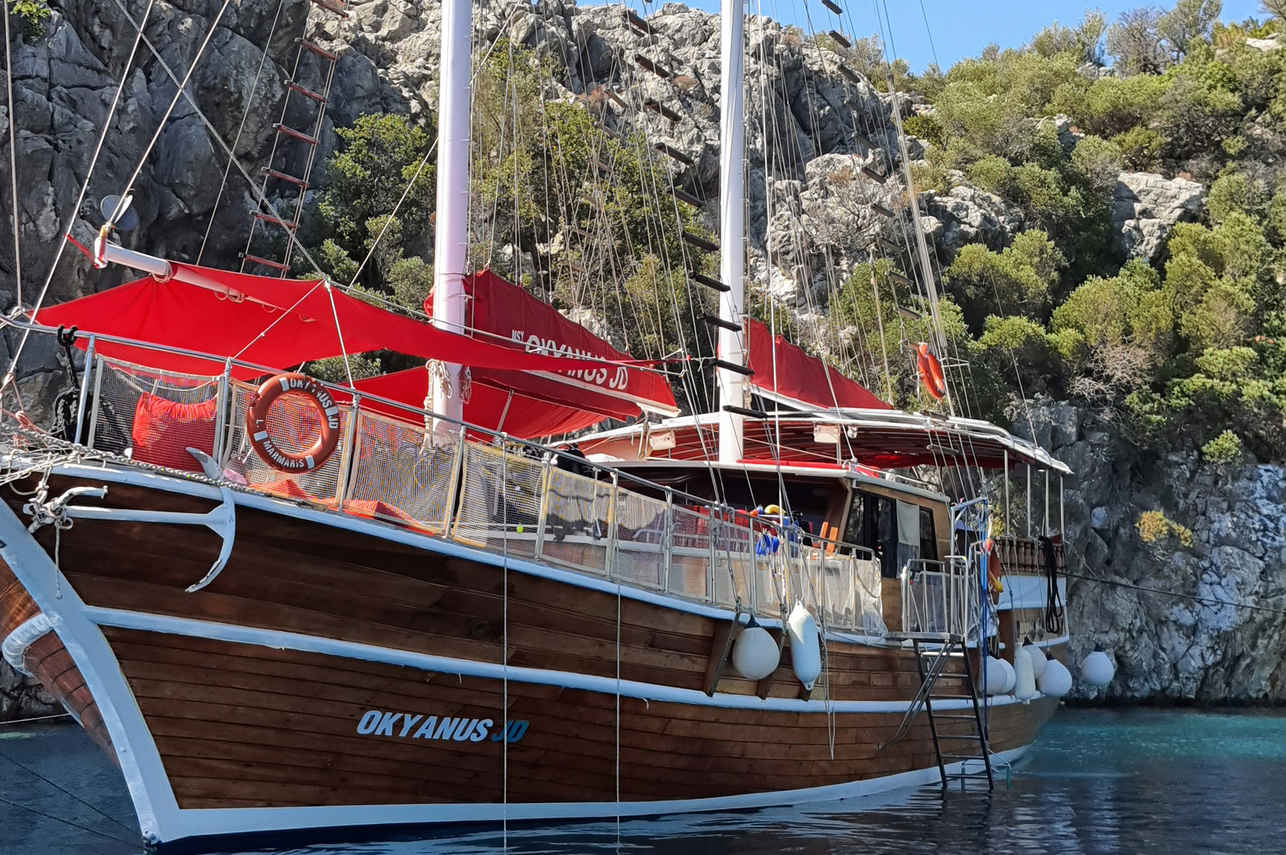
Okyanus JD
Turkey
12 guests24 m
$157/day
Dive sites similar to Big Reef
Same character, same waters — six more sites divers love for the exact same reasons.Compare seasons, access and liveaboard routes — then pick the site that fits your trip best.
© Esri — Maxar, Earthstar, GIS
Hidayet Koyu
Turkey
Hidayet Koyu is a well-known, sheltered bay located on the Kaş peninsula in Turkey, celebrated for its accessibility and vibrant marine ecosystem.
- Suitable for
- Beginner
- Current
- No current
- Access
- Liveaboard or dayboat
- Depth
- ≤ 32 m
- Theme
- Reef
© Esri — Maxar, Earthstar, GIS
Besmi Island
Turkey
Besmi Island, also known as Besmi Adası, is a challenging yet rewarding dive site located off Turkey's southwestern coast near Fethiye and southwest of Kaş.
- Suitable for
- Advanced
- Current
- Strong
- Access
- Dayboat
- Depth
- 4–60 m
- Theme
- Reef / Wall
© Esri — Maxar, Earthstar, GIS
Domuz Island
Turkey
Domuz Island, also known as Pig Island, is a celebrated dive destination nestled within the Göcek archipelago, part of Fethiye Bay.
- Suitable for
- Beginner
- Current
- Mild
- Access
- Dayboat
- Depth
- 5–15 m
- Theme
- Reef
© Esri — Maxar, Earthstar, GIS
Gökova Bay Canyon
Turkey
Gökova Bay Canyon is a renowned dive site in Turkey, celebrated for its unique underwater topography, which contrasts sharply with typical Mediterranean dive experiences.
- Suitable for
- Advanced
- Current
- Strong
- Access
- Liveaboard or dayboat
- Depth
- 15–35 m
- Theme
- Wall
© Esri — Maxar, Earthstar, GIS
Kızıl Island
Turkey
Kızıl Island, known locally as Kızılada, is a prominent dive site situated near Fethiye on Turkey's southwestern coast.
- Suitable for
- Intermediate
- Current
- Mild
- Access
- Dayboat
- Depth
- 8–40 m
- Theme
- Reef / Wall
© Esri — Maxar, Earthstar, GIS
Smugglers Bay
Turkey
Smugglers Bay, located near Bodrum in Turkey's Aegean Sea, is a beginner-friendly dive site renowned for its calm conditions and healthy marine environment.
- Suitable for
- Beginner
- Current
- Mild
- Access
- Dayboat
- Depth
- 3–35 m
- Theme
- Reef